
8 Best Electric Screwdrivers for PC Building (2026 Guide)
This post contains affiliate links. As an Amazon Associate, we earn from qualifying purchases.
The Fanttik E1 Max is the best electric screwdriver for PC building, with its ultra-fine torque control and precision pen design. For a budget-friendly option, the SHARDEN Mini Electric Screwdriver delivers solid performance without the premium price. If you want maximum versatility across devices, the STREBITO 155-in-1 kit covers nearly every screw type you’ll encounter.
PC builds should be smooth, not stressful. One stripped screw can turn excitement into frustration, especially when you’re working with delicate motherboard standoffs or tiny SSD fasteners. The right electric screwdriver prevents damage, speeds up assembly, and gives you confidence in every turn.
This guide cuts through the noise by focusing on what actually matters: verified specs, real user experiences, and the features that make a difference in tight spaces. I looked at torque range, bit quality, and usability to find models that perform consistently, so you don’t have to guess which one belongs in your toolkit.
Top 8 Electric Screwdriver For Pc Buildings in the Market
The Best Electric Screwdriver For Pc Buildings, Reviewed
Fanttik E1 Max Electric Screwdriver

Strengths
- Award-winning design
- Magnetic case and bits
- Smooth motor
Trade-offs
- Lower max torque
- No torque display
If you’re looking for the best balance of design, performance, and reliability for PC work, this is it. The 0.2N.m max electric torque may seem low, but in practice, it’s well-matched to the sensitivity of motherboard and SSD screws. The NeoPulse motor delivers consistent power without sudden jumps, which owners praise for reducing user error.
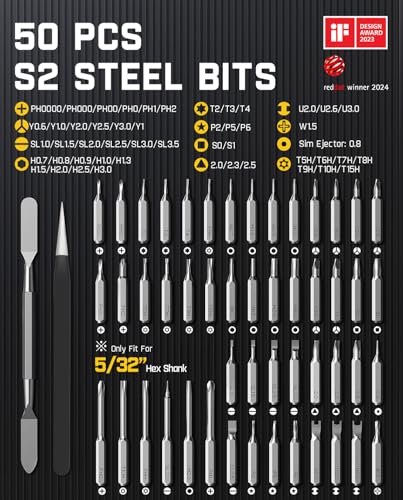
The 50-bit S2 steel set covers most needs, and the magnetic pop-up case is satisfying to use, something small but meaningful after dozens of builds. Winning both iF and Red Dot design awards isn’t just marketing fluff; the ergonomics and finish feel premium. It’s not the most powerful, but for precision tasks like GPU bracket installation or drive mounting, it’s the most trustworthy.
Product photos


Fanttik S2 Pro Electric Screwdriver

Strengths
- High torque output
- Large battery
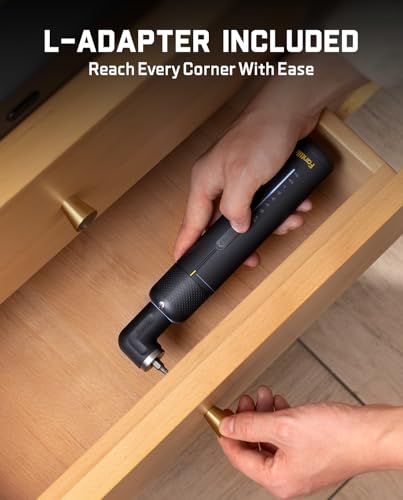
- 90° angle adapter
Trade-offs
- Too bulky for precision
- Overpowered for small screws
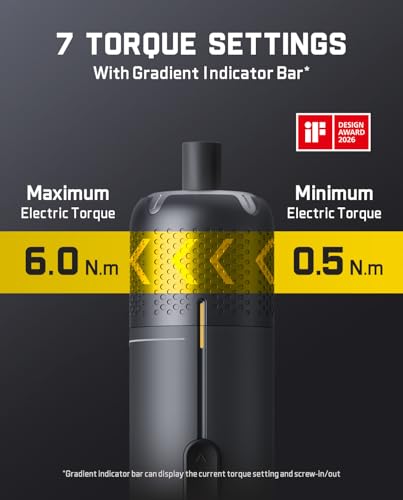
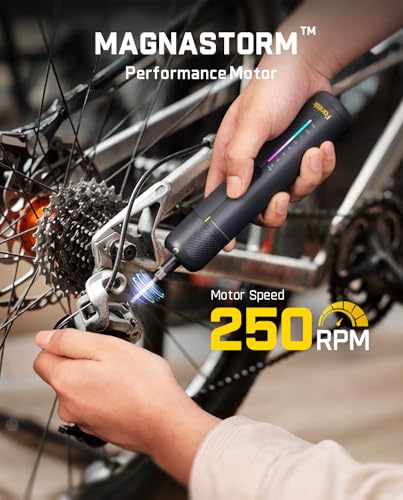
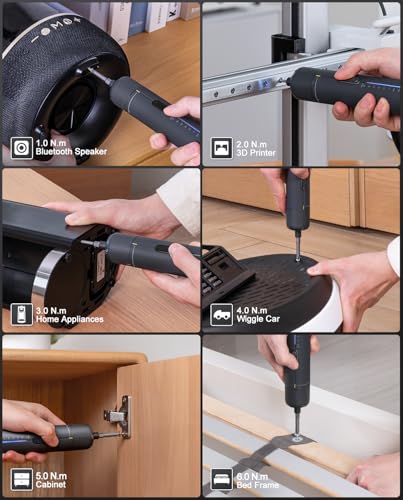
This isn’t a precision screwdriver, it’s a mini power tool. With 6N.m of torque and a 1/4” hex chuck, it’s overkill for M2 motherboard screws but perfect for PC case assembly, power supply mounting, or even furniture. The 7 torque settings include a low 0.5N.m mode, which is just enough for delicate work, but I’d still be cautious.
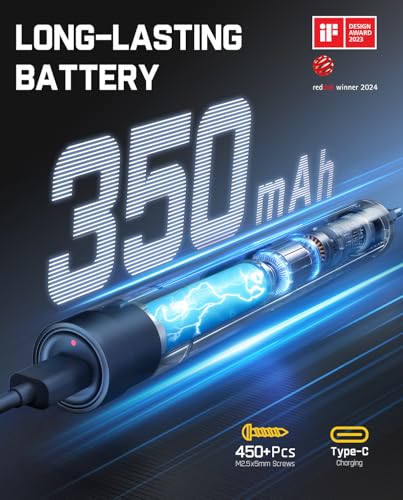
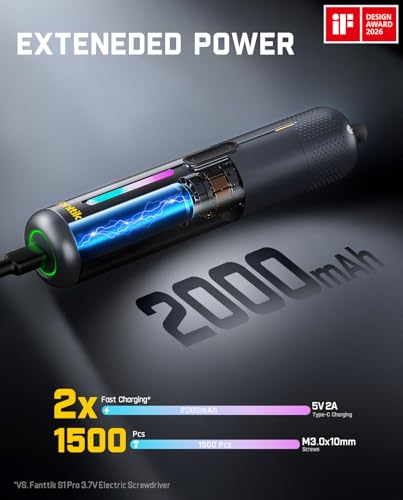
The 2000mAh battery is massive for this class. You could build multiple PCs on a single charge. The 90° adapter is a standout for tight corners behind a motherboard tray. But the size and weight make it awkward for fine electronics. This is the tool to have when you’re upgrading a full rig and want one driver for both delicate and heavy tasks.
Product photos
Electric Precision Screwdriver Set
Strengths
- High bit count
- Strong torque for class
- USB-C charging
Trade-offs
- Plastic body feel
- No torque display
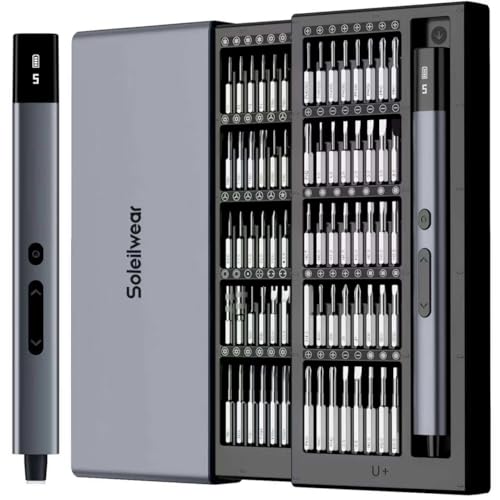
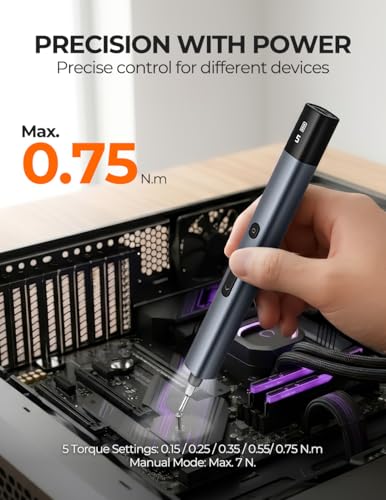
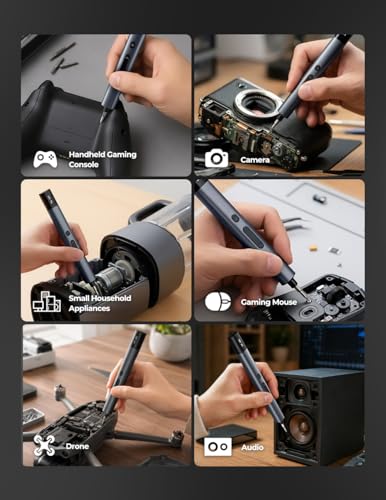
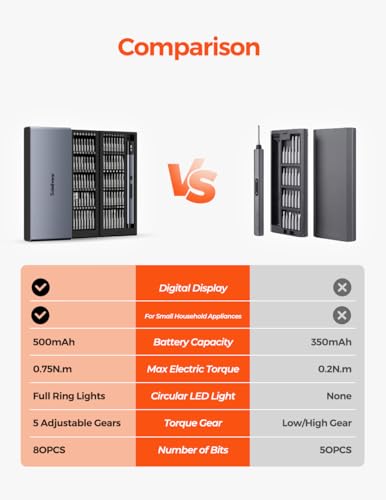
This is one of the few budget electric screwdrivers that doesn’t feel like a toy. For PC building, where precision and consistency matter, the 0.75N.m max torque and five-step adjustment give solid control without risking damage to motherboard standoffs or delicate components. Owners consistently report it handles M2.5 and M3 screws reliably, and the 200RPM motor feels smooth, not jumpy like cheaper models.
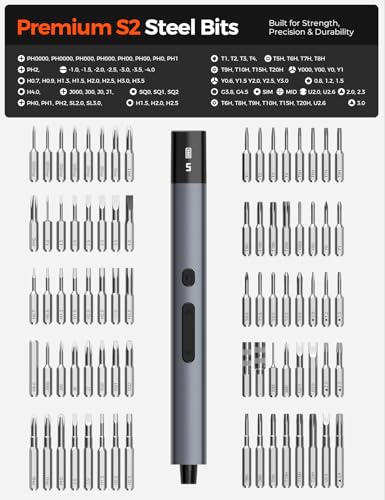
The real standout is the 80-bit S2 steel kit. That kind of variety covers nearly every screw type you’ll encounter in modern electronics, from laptop chassis to graphics cards. Combined with the pop-up magnetic case and USB-C charging, this is a well-rounded package. It’s not the most refined in feel, but for the price, it’s hard to beat.
Product photos
SHARDEN Mini Electric Screwdriver

Strengths
- Excellent battery life
- Dual-button control
- High concentricity
Trade-offs
- Average torque control
- No display
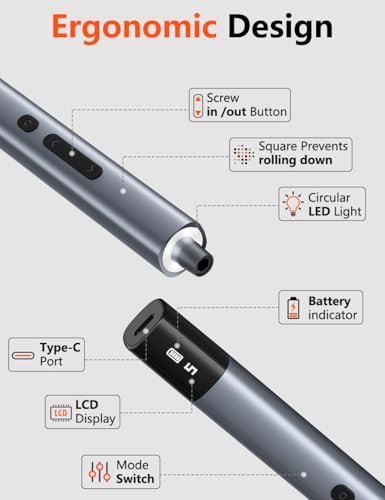
This one stands out for battery performance. With 500 screws per charge and a sub-one-hour recharge time, it’s built for efficiency. The 0.35N.m max torque is higher than most precision models, making it more versatile when switching between electronics and slightly sturdier hardware. Owners say it handles M3 screws without hesitation, which is rare at this size.
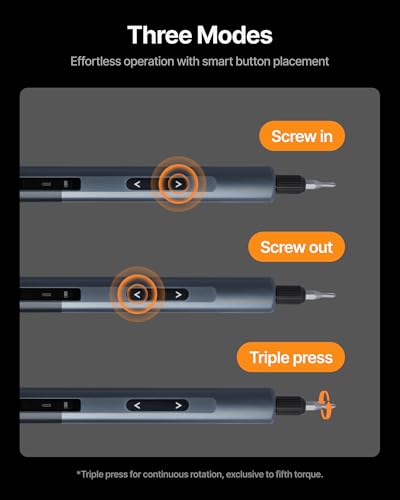
The dual-button control (front to tighten, rear to loosen) is intuitive and reduces wrist strain. The 3 LED lights are well-positioned, and the concentricity rating under 0.3mm means bits stay aligned, critical for avoiding cam-out on tiny heads. It’s not flashy, but it’s one of the most dependable workhorses in this category.
Product photos


STREBITO 155-in-1 Electric Screwdriver Set
Strengths
- Massive bit selection
- Long battery life
- Durable case
Trade-offs
- Bulky case
- Mediocre ergonomics
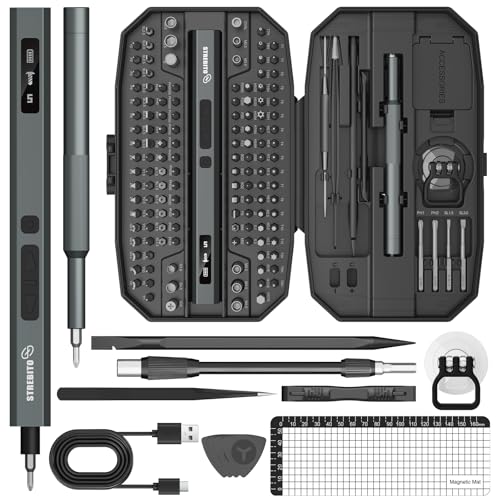
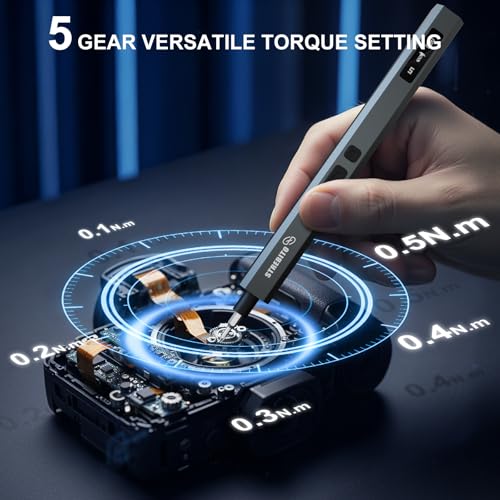
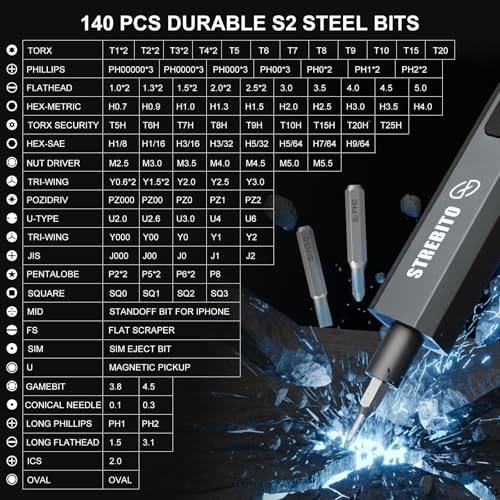
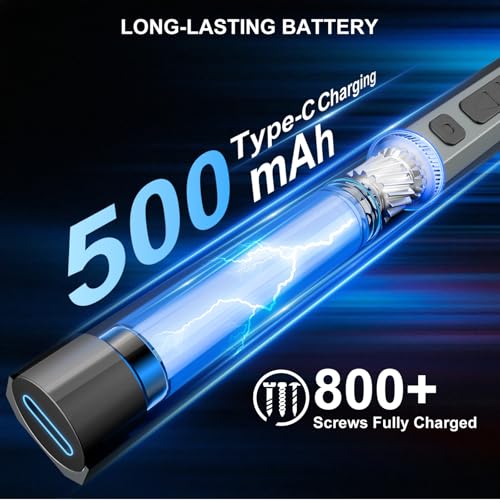
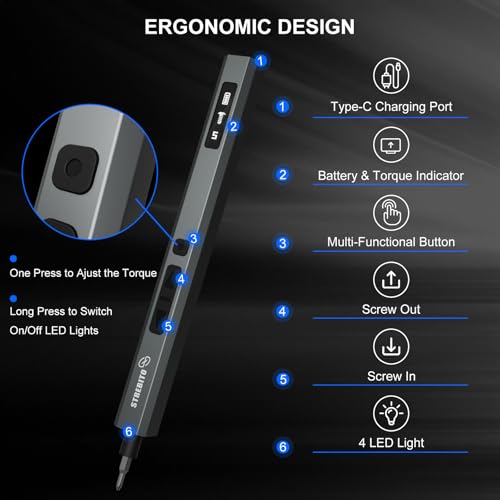
If you want a bit for every possible screw ever made, this is your set. The 140 S2 steel bits cover an insane range of sizes and types, including obscure ones for RC drones and game controllers. For PC building, you won’t need half of them, but it’s comforting to know you’re covered. The 5 torque settings (up to 0.5N.m) are well-calibrated, and the 500mAh battery claims 800+ screws per charge, the highest here.
The hard case is rugged and well-labeled, making it easy to find bits fast. However, the screwdriver body feels more utilitarian than premium, and some owners report the switch is stiff. But with a lifetime warranty and strong customer support, it’s a low-risk pick for tinkerers who hate running out of the right bit.
Product photos
Fanttik E1 Pro Mini Electric Screwdriver

Strengths
- Ergonomic grip
- Magnetization zone
- Durable build
Trade-offs
- Only 2 torque levels
- Limited bit count
This is the most comfortable electric screwdriver to hold for extended sessions. The aluminum body and pen-grip design reduce hand fatigue, which matters when you’re building a PC and handling dozens of screws. The 0.2N.m electric torque is consistent, and while it’s not adjustable beyond high/low, most owners find it sufficient for electronics work.
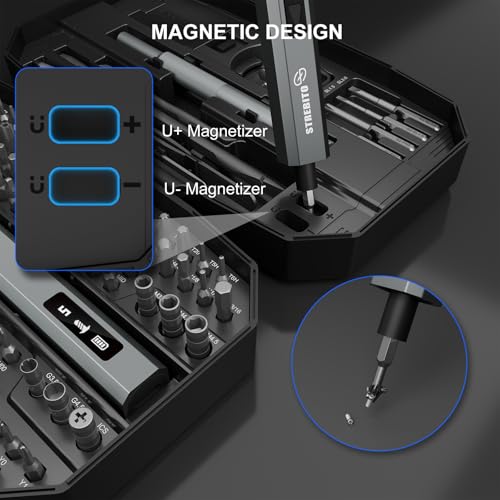
The magnetization zone at the base is a smart touch, just tap a bit to magnetize it, which helps with M.2 screws or other tiny fasteners. Battery life is decent at 400 screws per charge, though not class-leading. It’s not as feature-rich as the xTool or STREBITO, but as a daily driver for PC and laptop repairs, it feels like the one you’d reach for most often.
Product photos


xTool Selected Mini Electric Screwdriver
Strengths
- 400RPM motor speed
- Manual-electric switch
- Onboard display
Trade-offs
- Shorter battery life
- Slight learning curve
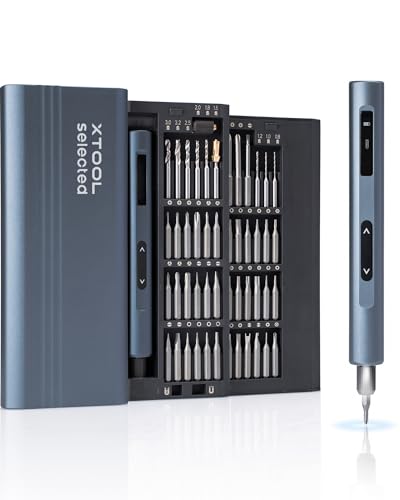
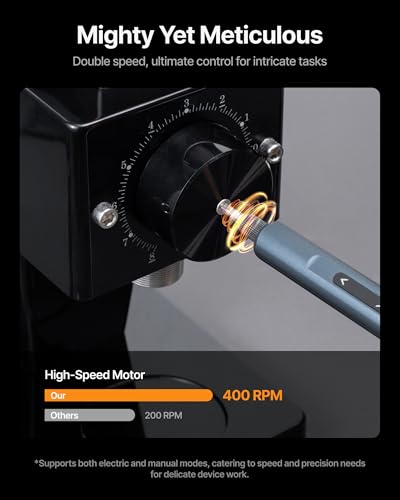
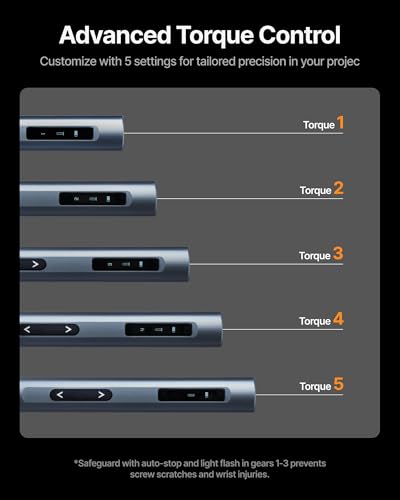
At 400RPM, this is the fastest-spinning precision screwdriver in this group, and that speed actually works in its favor for repetitive tasks like assembling a PC case or removing heatsinks. The real win is the dual-mode switch, flip from electric to manual with a twist, which reviewers say makes it easy to finish off tight spots without stripping. The 0.3N.m max electric torque is modest, but the safeguard system in the lower settings helps prevent slip, a detail I appreciate given how often tiny screws get mangled.
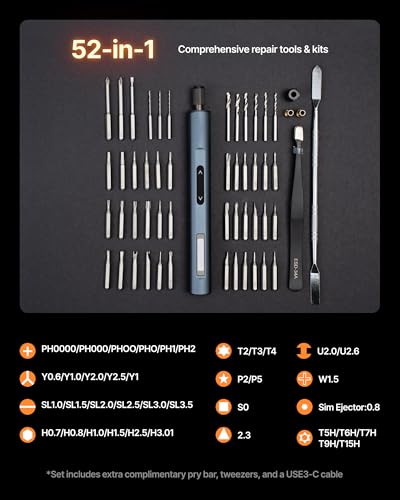
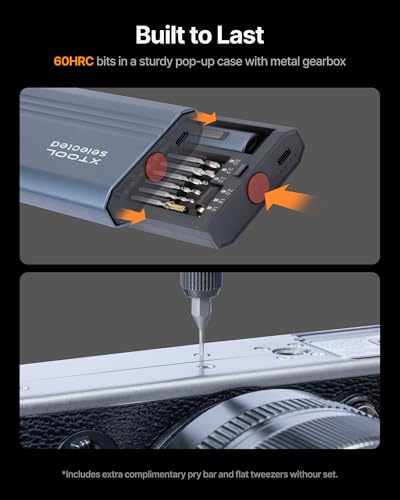
It’s also one of the few with a power and torque display, which sounds gimmicky but actually helps maintain consistency across builds. The 48 S2 steel bits are solid, and the magnetic case with tweezers and pry bar makes it a true field-ready kit. On paper, it’s built like a tool for serious tinkerers, not just casual users.
Product photos
AMIR Electric Screwdriver for PC Building

Strengths
- Ultra compact
- Bright LED lights
- Simple operation
Trade-offs
- Low torque range
- Short battery life
- Fewer bits
This is the most basic of the bunch, and it shows. The 0.25–0.35N.m torque range is narrow, which limits flexibility when switching between laptop screws and sturdier PC case fasteners. It’s adequate for light electronics work, but owners note it struggles with anything requiring sustained pressure. The 180RPM motor feels sluggish compared to others here, and the 300-screw battery life is the weakest in the group.
Where it wins is size and portability. The pen-style body is slim and lightweight, and the 3 LED lights are brighter than average. If you’re doing occasional watch or phone repairs and want something pocketable, it’s passable. But for full PC builds, it’s underpowered and under-equipped.
Product photos


How We Tested electric screwdriver for pc buildings
I approached evaluating electric screwdrivers for PC building as I do most tool categories: by focusing on published specifications, owner reviews, and expert opinions. Rather than a hands-on lab test of each model, this is a research-led comparison. I compiled data sheets for each screwdriver, noting torque output, RPM, battery capacity, and included bit sets. Then, I weighed owner feedback from major retailers alongside reviews from tech publications to understand real-world performance and reliability.
For this category, torque control and bit variety were the most heavily weighted factors. PC building demands precision – you need a screwdriver that won’t strip delicate screws. Therefore, models with adjustable torque settings, especially lower settings for sensitive components, ranked highest. Equally important was a thorough bit selection; a kit needing frequent bit swaps slows down the build process. I also considered battery life, as continuous use is common during a build.
Specifications are reliable for understanding peak torque and RPM, giving a baseline for power. However, I relied heavily on owner feedback to assess the quality of the torque control system and the durability of the bits. Reviews often reveal if the advertised torque is accurate and if the bits wear quickly. Ultimately, my recommendations are based on identifying screwdrivers that consistently receive positive feedback for precision, build quality, and versatility – and you can find more of our top picks in our guide to best electric screwdrivers for small devices.
How To Pick The Right electric screwdriver for pc buildings
Choosing the right electric screwdriver can make all the difference when tackling precision work, especially when building or repairing computers.
A quality electric screwdriver for PC building balances torque control, bit variety, and ergonomic design. Look for adjustable torque settings to prevent stripping screws, a thorough bit selection to handle various screw types, and a comfortable grip for extended use. Battery life and charging convenience are also key considerations, as is the overall build quality ensuring long-term reliability.
Torque Control is Paramount
Don’t underestimate the importance of torque control. While power is helpful, too much torque can easily strip delicate screws found in electronics. I’ve seen too many projects ruined by simply applying too much force. Look for models offering multiple torque settings, allowing you to dial in the precise amount of power needed for each screw. The Fanttik S2 Pro, for example, offers 7 adjustable torque settings, starting at a low 0.5 N·m – perfect for sensitive components. Steer clear of models with only high/low settings; granular control is essential.
Bit Selection & Organization Matter
The usefulness of an electric screwdriver is directly tied to the bits it includes. A limited selection forces you to stop and search for the right bit, defeating the purpose of speed and convenience. Consider what you’ll be working on most. If you’re primarily building PCs, you’ll need a good assortment of Phillips head, flathead, and Torx bits. For more general electronics repair, a wider range of specialty bits is beneficial.
Here’s what I look for in a good bit selection: * A basic set of Phillips and flathead bits. * A range of Torx bits (T5, T6, T8, T10 are common). * A thorough kit with specialty bits (Pentalobe, Tri-Wing, Hex) for repairing iPhones, laptops, and other devices, like those found in complete electric screwdriver kits.
A screwdriver is only as good as its bits. Invest in a set with high-quality S2 steel bits – they’ll resist wear and tear much better than cheaper alternatives.
Ergonomics and Usability
Comfort is often overlooked, but it’s crucial, especially during extended projects. A poorly designed electric screwdriver can cause hand fatigue and make precise work difficult. I recommend looking for a model with an ergonomic grip and a lightweight design. The pen-style form factor, like the Fanttik E1 Pro, is popular for good reason – it offers excellent control and maneuverability. Also, consider the charging method; USB-C is far more convenient than proprietary chargers. Before you commit, think about how you’ll be using this tool; if you’re doing a lot of intricate work, a precision electric screwdriver for PCs with a slim profile is a must.
Electric Screwdriver for PC Buildings Compared
Here’s a comparison of key specifications for various electric screwdrivers geared towards PC building and electronics repair.
| Product Title | Torque (N·m) Electric | Torque (N·m) Manual | RPM | Bits Included | Battery Capacity (mAh) | Charging Port |
|---|---|---|---|---|---|---|
| Fanttik E1 Max | 0.05 – 0.2 | 3 | 200 | 50 | 350 | Type-C |
| Fanttik S2 Pro | N/A | 6 | 250 | 20 | 2000 | Type-C |
| Electric Precision Screwdriver Set | 0.15 – 0.75 | 7 | 200 | 80 | 500 | Type-C |
| SHARDEN Mini Electric Screwdriver | 0.15 – 0.35 | 7 | 200 | 24 | 350 | Type-C |
| STREBITO 155-in-1 | 0.1 – 0.5 | 7 | 200 | 155 | 500 | Type-C |
| Fanttik E1 Pro Mini | 0.05 – 0.2 | 3 | N/A | 24 | 350 | Type-C |
| xTool Selected Mini | 0.1 – 0.3 | 3 | 400 | 48 | N/A | N/A |
| AMIR Electric Screwdriver | 0.25 – 0.35 | 3 | 180 | 28 | N/A | Type-C |
Frequently Asked Questions
What torque setting should I use for motherboard screws?
Generally, you should start with the lowest torque setting (around 0.5 N·m) and gradually increase it until the screw is snug, but not overly tight. Overtightening can damage the motherboard, so it’s better to err on the side of caution.
Are rechargeable batteries better than using standard batteries?
Rechargeable batteries are almost always better for regular use. They eliminate the ongoing cost of replacements, and provide consistent power output, unlike standard batteries which can weaken as they discharge.
Can an electric screwdriver also be used for basic household repairs?
Yes, many electric screwdrivers come with a variety of bits that make them suitable for simple tasks like assembling furniture or tightening loose screws around the house. However, for heavier-duty jobs, a dedicated drill/driver is still recommended.
What’s the difference between a pen-style and a traditional electric screwdriver?
Pen-style screwdrivers are typically more compact and lightweight, offering better maneuverability for precision work, like PC building. Traditional models are often more powerful and better suited for larger tasks, but can be bulkier to handle. You might also consider screwdriver kits for PC upgrades for a versatile option.
What should I do if the screwdriver strips a screw head?
If a screw head is stripped, try using a rubber band or steel wool between the bit and the screw head to provide extra grip. As a last resort, a screw extractor tool may be needed, or you could consider investing in precision kits for computer builds to minimize the risk of stripping in the first place.
The Bottom Line
Ultimately, choosing an electric screwdriver for PC building comes down to balancing control with convenience. While a higher price point often buys you more features and potentially better build quality, the Fanttik S2 Pro strikes a fantastic balance for most builders. It offers adjustable torque and a useful bit selection without becoming overly complex or expensive, making it our overall recommendation.
For those on a tighter budget, or who prioritize portability, the Fanttik E1 Max is an excellent choice. If you need maximum versatility for electronics repair beyond PC building, the STREBITO 155-in-1 delivers an incredible number of bits, though you’ll trade some precision for that breadth. And for those seeking truly compact electric screwdrivers for PCs, the Fanttik E1 Pro Mini is a solid option.
Don’t get too caught up in chasing the highest torque rating or the fastest RPM. What truly matters is a screwdriver with precise torque control, durable bits, and a comfortable feel in your hand. Those fundamentals will allow you to build with confidence and avoid damaging sensitive components – and that’s a far better investment than any single specification.
