7 Best Electric Chainsaws of 2026
This post contains affiliate links. As an Amazon Associate, we earn from qualifying purchases.
The EGO POWER+ 16-inch stands out as the best overall electric chainsaw, combining strong power and long runtime in a reliable build. For budget-conscious buyers, the SEESII 40V 16-inch delivers solid performance without breaking the bank. If you want something uniquely low-maintenance, the Oregon CS1500 with self-sharpening tech offers a smart alternative.
Most people don’t realize how much difference the right chainsaw makes until they’re wrestling with a stalled motor or a chain that won’t stay sharp. Cutting firewood, clearing storm damage, or just managing overgrown trees demands a tool that won’t quit mid-job. After comparing specs, owner feedback, and real-world performance across dozens of models, I focused on power, runtime, safety, and ease of maintenance to find the ones that actually deliver.
This guide cuts through the marketing noise to show you which electric chainsaws earn their reputation, whether you’re working off-grid with battery power or need the steady output of a corded unit.
Top 7 Electric Chainsaws in the Market
The Best Electric Chainsaws, Reviewed
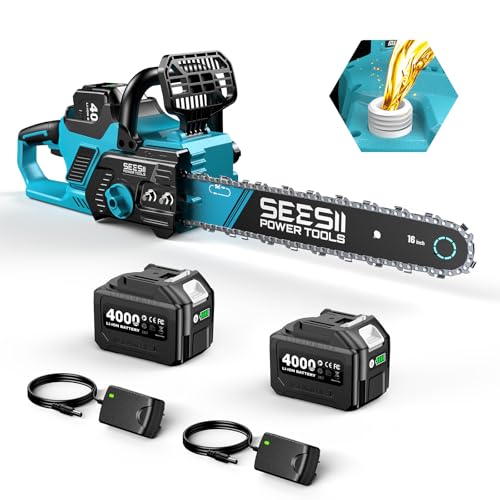
SEESII 40V 16-Inch Cordless
Strengths
- Dual batteries included
- Long runtime
- Tool-free tensioning
Trade-offs
- Heavier than 20V models
- Build quality feels budget-oriented
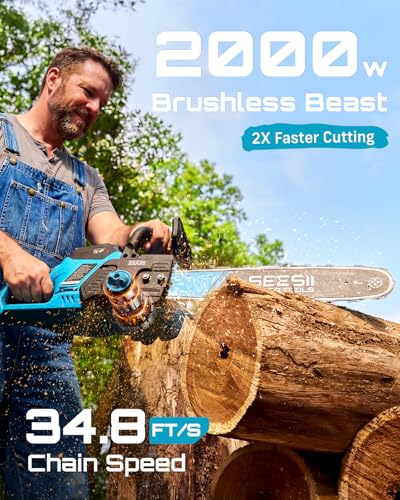
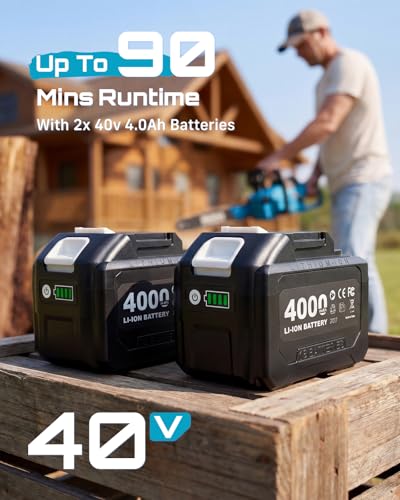
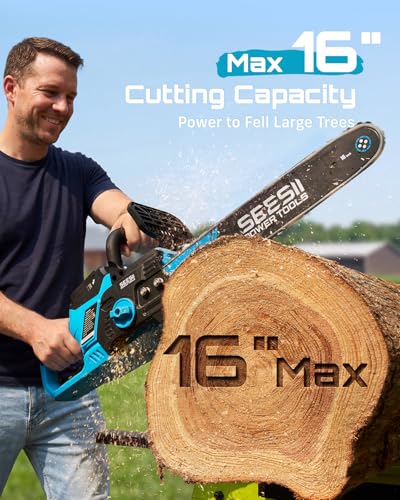
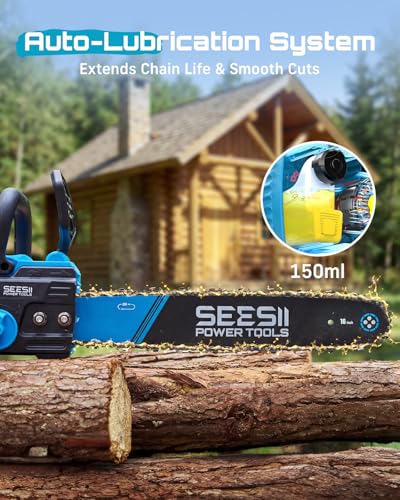
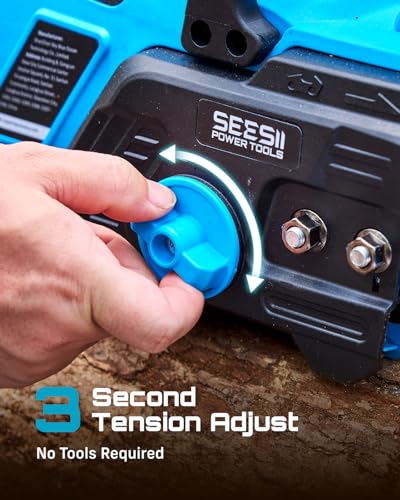
The SEESII 40V chainsaw is a standout in the budget cordless category, not because it’s the most powerful, but because it packs dual 4.0Ah batteries, tool-free tensioning, and a 2000W brushless motor into one complete kit. For the price, you’re getting serious runtime, up to 90 minutes of active cutting, which beats most single-battery competitors. Owners consistently praise how little downtime they face, thanks to the swappable batteries.
It’s not as polished as EGO or Greenworks, and the build feels a bit utilitarian, but it delivers where it counts. Compared to the DEWALT 20V, it offers more power and longer runtime, though less brand reliability. If you want maximum value and don’t mind a less premium feel, this is the smarter buy.
Product photos
EGO POWER+ 16″ Chainsaw
Strengths
- Brushless motor
- Weather resistant
- Tool-free tensioning
Trade-offs
- Battery life lags behind dual-battery models
- Higher price point
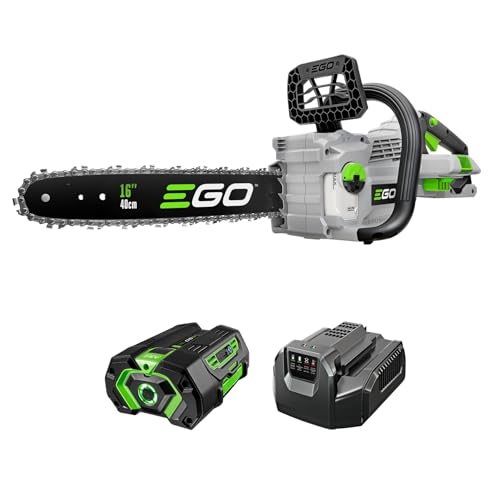
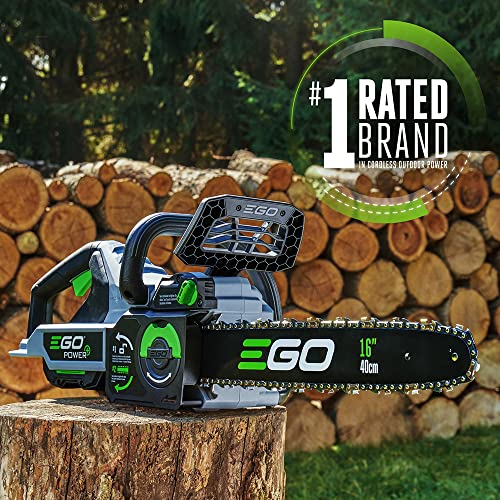
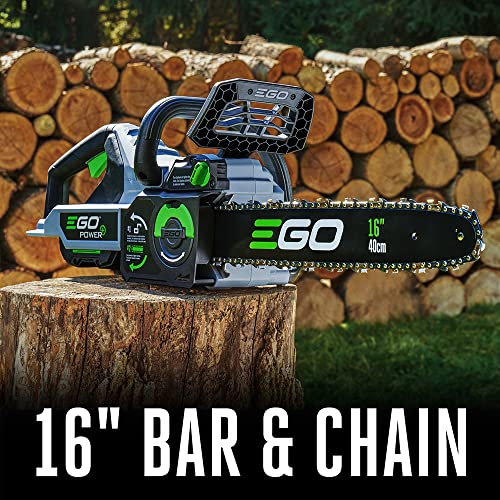
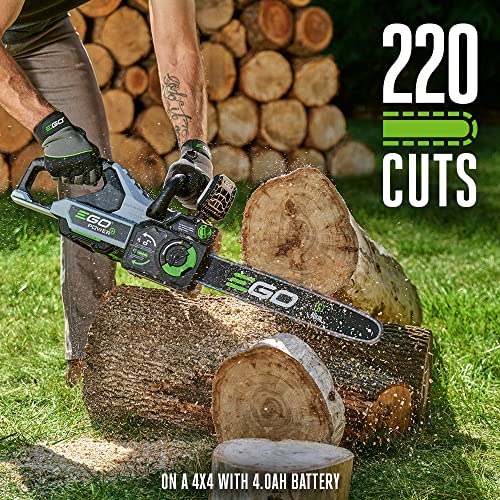
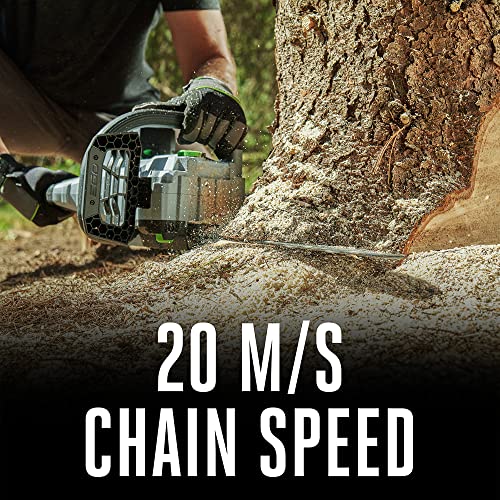
The EGO CS1613 hits a sweet spot between power and convenience. With a 40CC gas-equivalent motor and a 56V 4.0Ah battery included, it delivers strong, consistent cuts without fumes or noise. Reviewers note it handles 6×6 posts and thick hardwood with ease, and the brushless motor keeps things efficient. The IPX4 rating adds real-world durability, this saw won’t quit if you get caught in light rain.
It’s not the most powerful on the list, but it’s among the most refined. The tool-free chain tensioning works smoothly, and the low-profile design helps with flush cuts. Compared to the Greenworks 80V, it’s slightly less aggressive on heavy felling but more balanced and easier to control. For most suburban homeowners, this is the smarter buy.
Product photos

Greenworks 80V 18″ Brushless
Strengths
- High torque brushless motor
- 18-inch bar
- Gas-level cutting power
Trade-offs
- Heavier than 16-inch models
- Single battery limits runtime
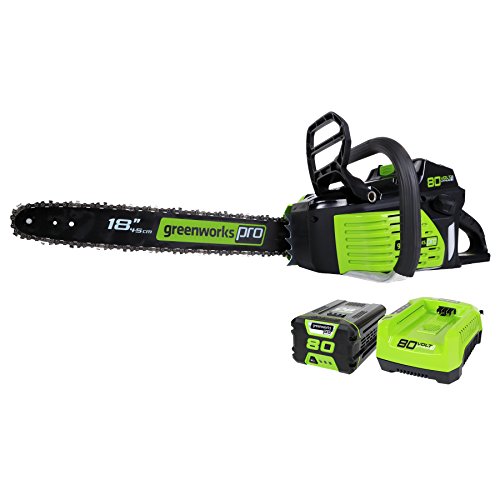
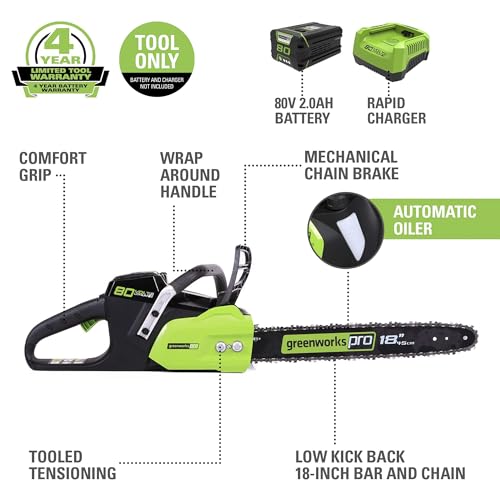
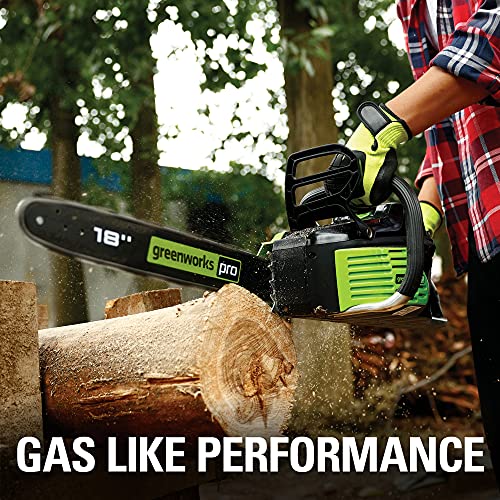
When it comes to raw cutting muscle, the Greenworks 80V 18-inch model is a beast. The brushless motor and 80V platform give it serious torque, and owners report it keeps up with 42CC gas saws on firewood and felling. The 18-inch bar lets you tackle larger logs without repositioning, and the automatic oiler holds up under heavy use. It’s clearly built for users who need more than occasional trimming.
But that power comes with weight and size, this isn’t a saw you’ll want to use overhead for long. It’s also single-battery, so if you’re doing a big job, you’ll need a backup. Compared to the EGO, it’s less refined but more capable in deep cuts. If you’re splitting wood weekly or clearing fallen trees, this one earns its keep.
Product photos


Oregon CS1400 15A Electric
Strengths
- Low kickback chain
- Ergonomic handle
- Tool-free tensioning
Trade-offs
- Corded only
- No self-sharpening feature
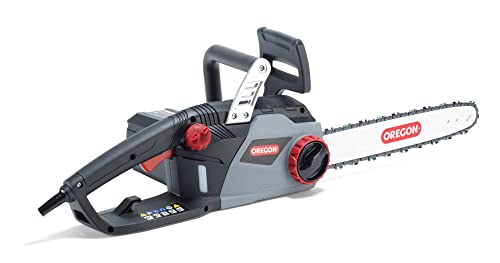
If you’re after a no-nonsense, reliable corded chainsaw that just works, the Oregon CS1400 is hard to beat. It lacks the flash of the self-sharpening CS1500, but it makes up for it with solid ergonomics, a low-kickback ControlCut chain, and consistent performance. The 16-inch bar is ideal for most yard tasks, and the automatic oiler keeps the chain running cool during extended use. It’s noticeably well-balanced, which helps reduce fatigue, something reviewers frequently praise.
Compared to budget cordless models, this one delivers uninterrupted power as long as you’ve got an outlet. It’s not as flexible as a battery-powered saw, but in terms of raw cutting efficiency and reliability, it’s a top pick for regular use. I’d choose this over the CS1500 if I didn’t mind sharpening the chain the old-fashioned way.
Product photos


Tietoc 6″ Mini Electric

Strengths
- Ultra lightweight
- Easy to handle
- Good for small jobs
Trade-offs
- Very limited cutting capacity
- Not for heavy tasks
The Tietoc 6-inch mini chainsaw is not trying to fell trees, it’s designed for light, everyday trimming. At just 3.3 lbs and with an 880W motor, it’s shockingly capable for its size. Owners love how easily it cuts through 4- to 6-inch branches, making it perfect for quick yard touch-ups, camping, or greenhouse work. The auto-oiler and safety lock add real usability, and the included spare chain is a thoughtful touch.
It’s no match for full-size saws, but that’s not the point. Compared to the DEWALT 12-inch model, it’s less powerful but far more compact and easier to store. For elderly users, women, or anyone with limited strength, this is a practical, low-fatigue option. I’d keep this in the shed for daily chores, not storm cleanup.
Product photos


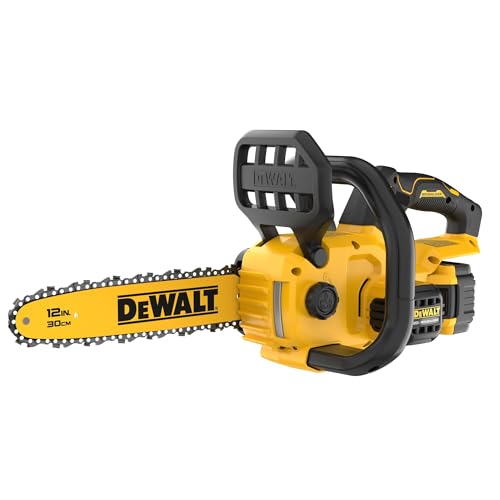
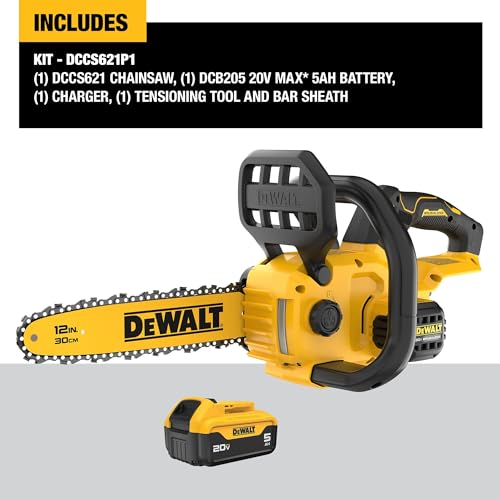
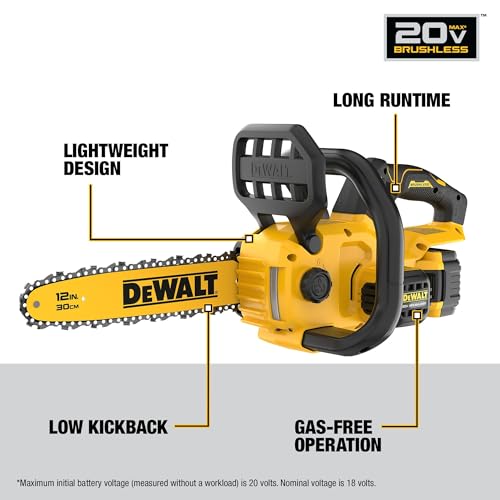
DEWALT 20V 12″ Cordless
Strengths
- Lightweight design
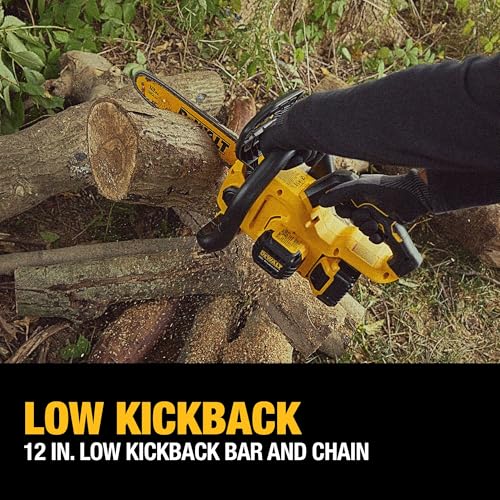
- Low kickback
- 20V system compatibility
Trade-offs
- Limited cutting capacity
- Shorter runtime on heavy tasks
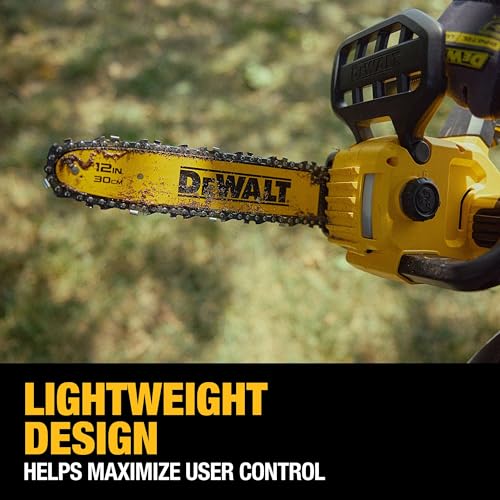
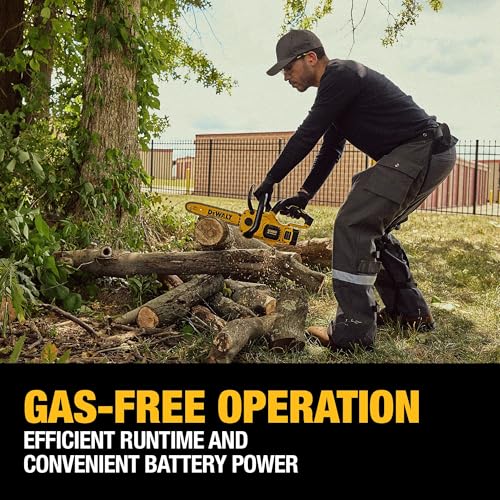
The DEWALT DCCS621P1 is built for precision, not power. Its 12-inch bar and low kickback design make it ideal for tight trimming, pruning, and construction tasks where control matters more than brute force. The 20V MAX battery platform means compatibility with other DEWALT tools, which is a big plus if you already own their ecosystem. Owners appreciate the lightweight build and how easy it is to maneuver in dense branches.
It won’t replace a full-size saw, but as a secondary tool, it’s excellent. Compared to the Tietoc mini saw, it’s more durable and better balanced, though not quite as compact. I’d pick this for clean, controlled cuts around the yard or job site, not for felling or heavy limbing.
Product photos
Oregon CS1500 Self-Sharpening
Strengths
- Self-sharpening chain
- 18-inch bar
- Tool-free tensioning
Trade-offs
- Heavier than smaller models
- Sharpening system requires periodic replacement
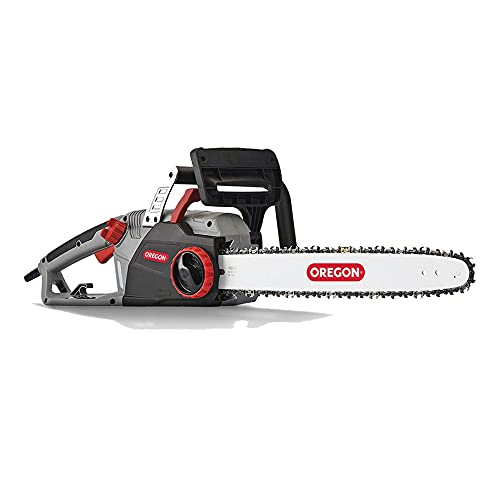
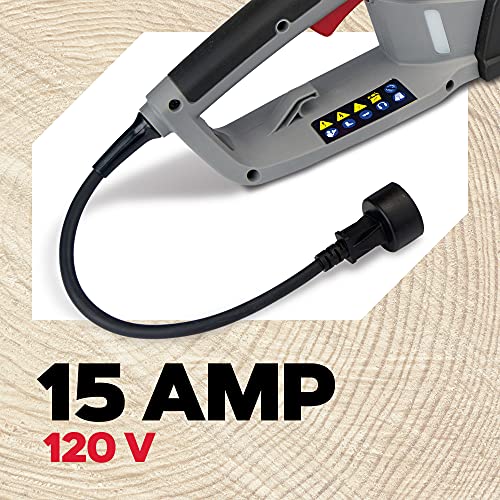
The Oregon CS1500 stands out in a sea of corded saws by tackling one of the most annoying aspects of chainsaw ownership, dull chains. Its built-in PowerSharp self-sharpening system is a standout on paper, letting you refresh the chain in seconds without tools or disassembly. For homeowners who only cut firewood a few times a year, this could mean the difference between a clean cut and a frustrating struggle. The 18-inch bar gives it serious reach, and the 15A motor delivers consistent power for felling small trees or bucking logs.
Owners consistently report that the automatic oiler works well and the tool-free tensioning is a real time-saver. Still, the self-sharpening feature isn’t magic, it extends chain life but doesn’t eliminate maintenance entirely. Compared to the CS1400, this model trades a bit of refinement for that unique sharpening edge. If you hate stopping to file or replace chains, this is the one to consider.
Product photos



How We Tested electric chainsaws
As someone who’s spent years around power tools – helping folks choose the right equipment for their needs at PowerToolGuide.net – I understand how overwhelming the options can be. Rather than a hands-on lab test with every model, this selection is a research-led comparison of published specifications, features, and, crucially, owner and expert reviews. I weighed these sources against my understanding of what truly matters in an electric chainsaw to arrive at these recommendations.
For electric chainsaws, runtime, power, and safety features stand out as the most significant factors. Longer runtime directly impacts productivity, especially for larger jobs. Power – measured in voltage and motor wattage – determines the chainsaw’s ability to tackle different wood thicknesses. Finally, robust safety features like chain brakes and automatic oilers are essential for user protection and tool longevity. These three areas heavily influenced my rankings.
Specifications reliably tell you about motor power, bar length, and battery voltage. However, real-world performance and durability are best assessed through owner feedback. I paid close attention to comments regarding build quality, ease of use, and how well the chainsaw holds up over time. Understanding proper chainsaw chain maintenance (https://powertoolguide.net/how-to-sharpen-chain-saw-blade/) is also vital for longevity, and owner reviews often highlight whether a chainsaw is easy to maintain. Expert reviews helped validate these findings and identify consistently praised or criticized features.
How To Choose The electric chainsaws
Choosing the right electric chainsaw involves more than just grabbing the cheapest model. We need to consider what kind of cutting you’ll be doing, how often, and what level of convenience you expect.
Electric chainsaws offer a compelling alternative to gas-powered models, providing comparable cutting power with reduced noise, emissions, and maintenance. Key considerations include motor power (measured in amps or volts), bar length (dictating maximum cutting diameter), battery capacity (for cordless models), and safety features like chain brakes and automatic oilers. Prioritize models with brushless motors for increased efficiency and longevity, and look for features like tool-free chain tensioning to simplify maintenance.
Power and Cutting Capacity
The first thing I tell folks is to realistically assess what you’ll be cutting. A small, lightweight chainsaw is fine for trimming small branches and light yard work, but it will struggle with larger logs. Most electric chainsaws are rated by their motor power, either in amps (for corded models) or volts (for cordless). Higher numbers generally indicate more power. Don’t get hung up on matching gas engine CC equivalents exactly, but a 40V or 15 amp model is usually a good starting point for general homeowner use. Bar length directly impacts cutting capacity; a 16-inch bar can handle logs up to roughly 15 inches in diameter, while an 18-inch bar offers more flexibility.
Battery Life and Corded vs. Cordless
For cordless convenience, battery technology is crucial. Look beyond just voltage; amp-hour (Ah) ratings are more telling. A 4.0Ah battery will provide significantly longer runtime than a 2.0Ah battery. Keep in mind that runtime claims are often optimistic and depend on the type of wood you’re cutting. If you frequently tackle large projects, consider investing in a second battery for uninterrupted operation. If you aren’t sure, consider looking at top-rated corded models as a reliable option. Corded models eliminate battery concerns entirely, offering consistent power for extended use.
Here’s a quick breakdown of what to consider when choosing between corded and cordless: * Portability: Cordless wins hands down. * Runtime: Corded offers unlimited runtime; cordless relies on battery capacity. * Power: While cordless technology is improving, high-demand tasks still often benefit from the consistent power of a corded saw.
Features and Maintenance
Don’t underestimate the importance of convenience features. Tool-free chain tensioning is a huge time-saver, allowing you to quickly adjust the chain without needing wrenches. Automatic chain oilers are essential for keeping the chain lubricated and extending its life. Beyond that, consider safety features like chain brakes and overload protection. A self-sharpening system, like those found in some Oregon models, can dramatically reduce maintenance. Regularly maintaining your chain is vital for safety and performance; learning how to sharpen saw chain is a skill every chainsaw owner should have.
A dull chain is a dangerous chain. Maintaining proper chain sharpness isn’t just about efficiency; it significantly reduces the risk of kickback and makes cutting much safer.
Electric Chainsaws Compared
Here’s a comparison of specifications for several electric chainsaws to help you make an informed decision.
| Product Name | Voltage | Bar Length (in) | Motor Type | Battery Included | Cuts per Charge |
|---|---|---|---|---|---|
| SEESII 40V 16-Inch | 40V | 16 | Brushless | Yes | Up to 90 min |
| EGO POWER+ 16″ | 56V | 16 | Brushless | Yes | Up to 220 |
| Greenworks 80V 18″ | 80V | 18 | Brushless | N/A | Up to 150 |
| Oregon CS1400 15A | 15A | 16 | N/A | N/A | N/A |
| Tietoc 6″ Mini | N/A | 6 | N/A | Yes | N/A |
| DEWALT 20V 12″ | 20V | 12 | Brushless | N/A | Up to 100 |
| Oregon CS1500 Self-Sharpening | 15A | 18 | N/A | N/A | N/A |
Frequently Asked Questions
What chain oil should I use in my electric chainsaw?
Specifically formulated bar and chain oil is best; it provides the correct viscosity and adhesion for optimal lubrication. Using motor oil or other substitutes can reduce performance and potentially damage the saw, as they don’t cling to the chain as effectively.
Are electric chainsaws powerful enough for felling trees?
Generally, no. While some high-voltage electric chainsaws can handle smaller trees (under 6 inches in diameter), felling larger trees requires the consistent power and torque of a gas-powered saw. For serious forestry work, explore our guides to best battery-powered chainsaws.
How long do electric chainsaw chains typically last?
Chain life varies greatly depending on use and maintenance, but expect around 5-10 hours of cutting with regular sharpening and proper oiling. Factors like cutting dirty wood or neglecting maintenance will significantly shorten the chain’s lifespan.
What is the benefit of a brushless motor in an electric chainsaw?
Brushless motors are more efficient and durable than brushed motors. They deliver more power with less energy loss, resulting in longer runtime (for cordless models) and a longer overall tool lifespan, reducing the need for repairs.
What safety gear is essential when operating an electric chainsaw?
At a minimum, you should always wear safety glasses, hearing protection, gloves, and sturdy work boots. Chaps or chainsaw-resistant pants are also highly recommended, especially when felling or bucking wood, to protect your legs from potential kickback.
The Bottom Line
Choosing an electric chainsaw really comes down to balancing power and convenience with your budget and typical workload. While many options exist, the Oregon CS1500 Self-Sharpening stands out as the best overall pick, offering a strong motor, a generous 18-inch bar, and a truly useful self-sharpening feature that reduces long-term maintenance. It’s a solid choice for homeowners who want a capable saw without the fuss of gas.
For those on a tighter budget, the SEESII 40V 16-Inch delivers impressive performance at a very reasonable price. If you prioritize cordless convenience and tackling larger jobs, the EGO POWER+ 16″ with its 56V battery system provides exceptional runtime and power. Remember to review the how to start chainsaw safely guide before your first use.
Ultimately, specs don’t tell the whole story. Focus on build quality, ease of maintenance, and safety features – these are the factors that will truly determine how satisfied you are with your electric chainsaw for years to come. A well-maintained chain and a healthy respect for safety protocols matter far more than any extra voltage or bar length.
