8 Best Dent Repair Tools of 2026
This post contains affiliate links. As an Amazon Associate, we earn from qualifying purchases.
The QwikFix 139PCS Dent Puller Kit stands out as the overall best, offering a wide range of tools and strong owner feedback for most common repairs. For those on a budget, the BESTGLOAL 135pcs kit delivers solid performance without breaking the bank, while the Sigoobal 135pcs kit is a smart pick if you’re dealing with larger dents.
Most DIYers struggle with choosing a dent repair kit that actually works when they need it, not just one that looks impressive in the box. Too many kits promise professional results but fall short on glue strength, tool durability, or the right accessories for real-world damage.
This guide cuts through the noise. I compared specs and real owner experiences to find kits that deliver where it matters, adhesive reliability, tool quality, and the ability to handle different dent types. You’ll see what actually works, based on performance, not packaging.
Top 8 Dent Repair Tools in the Market
The Best Dent Repair Tools, Reviewed
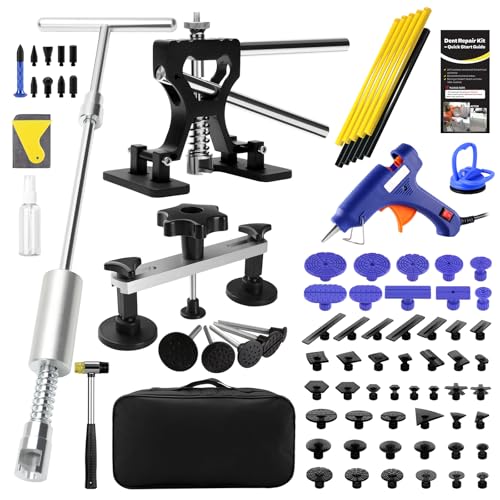
QwikFix 139PCS Dent Puller Kit
Strengths
- Strong hot melt glue
- Ergonomic handles
- Adjustable bridge design
Trade-offs
- Glue cleanup required
- No stud welder option
- Limited for deep dents
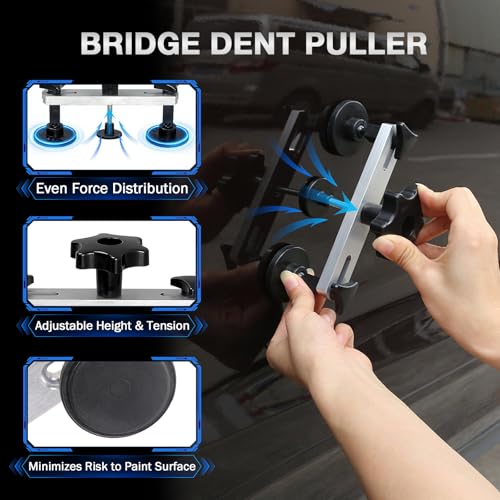
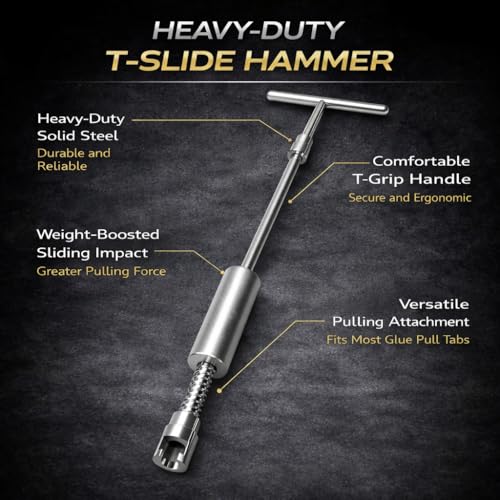
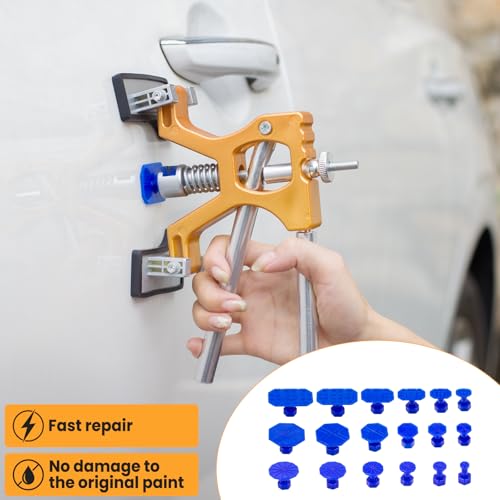
If you’re after a balanced, well-built glue-pull system that works for everything from door dings to hail damage, this QwikFix kit stands out. The use of high-viscosity hot melt glue and strong alloy tools means owners are pulling out dents without paint damage, a claim backed by consistent feedback across forums and reviews. The 2-in-1 T-slide hammer with a spring buffer is a smart touch, reducing shock and improving control, especially on curved panels. And the ergonomic handle design? That’s not just marketing, reviewers actually mention less hand fatigue during extended use.
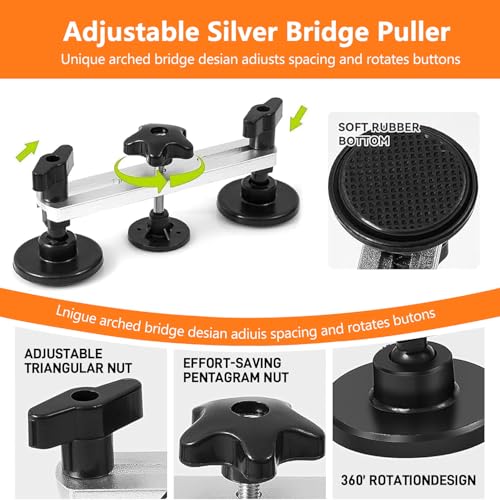
Compared to cheaper kits, the build quality here feels more deliberate. The adjustable bridge puller and rotating tabs let you align force precisely, which matters on tricky angles. While it lacks the brute strength of a stud welder, for 90% of common dents, especially on modern, thinner panels, this is more than capable. My recommendation? This is the smart pick for DIYers who want pro-level results without overcomplicating things.
Product photos
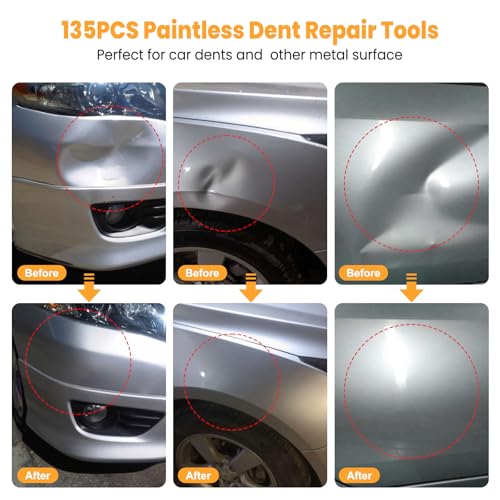
BESTGLOAL 135pcs Dent Puller Kit
Strengths
- High part count
- Strong glue adhesion
- Includes tap-down tools
Trade-offs
- Inconsistent build quality
- Overwhelming for beginners
- Bulkier storage
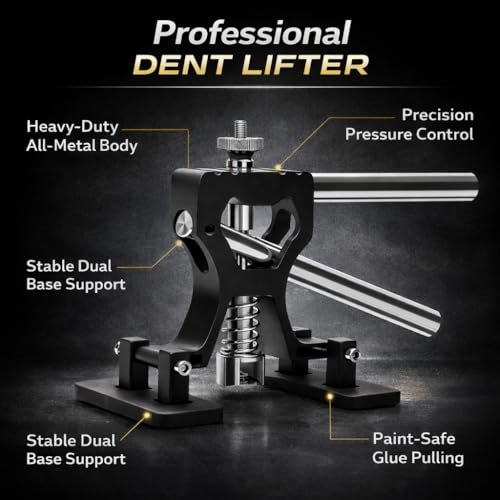
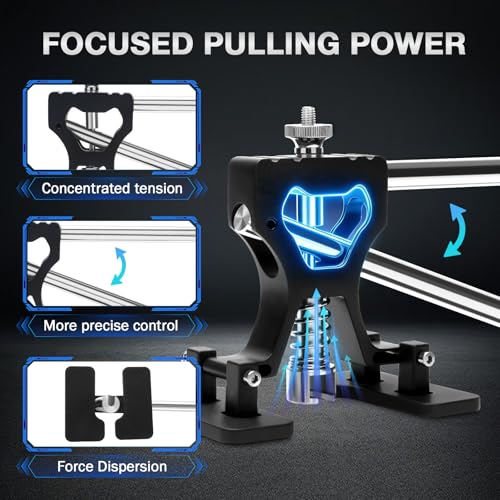
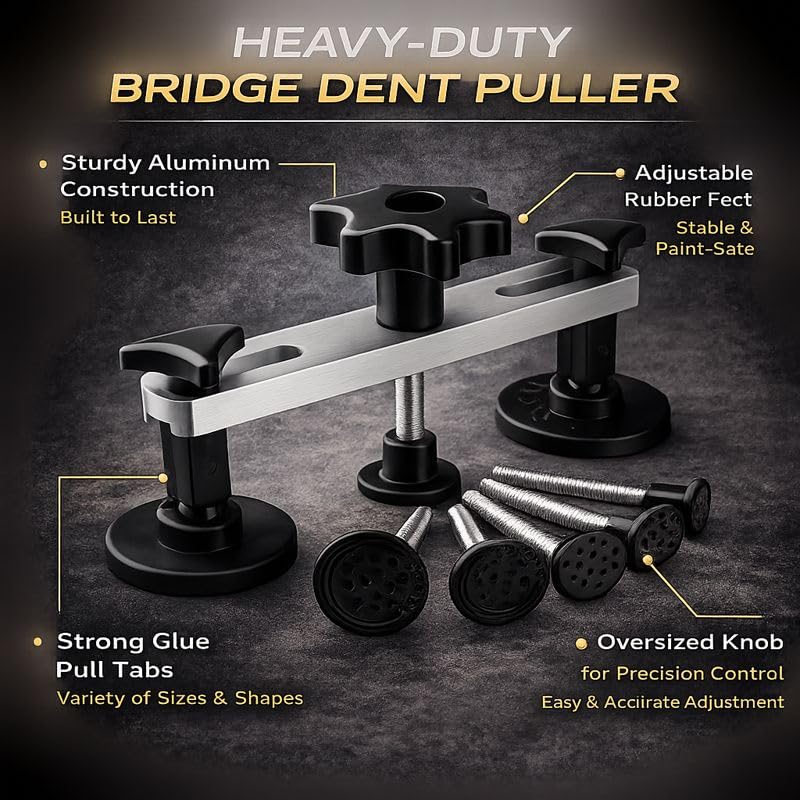
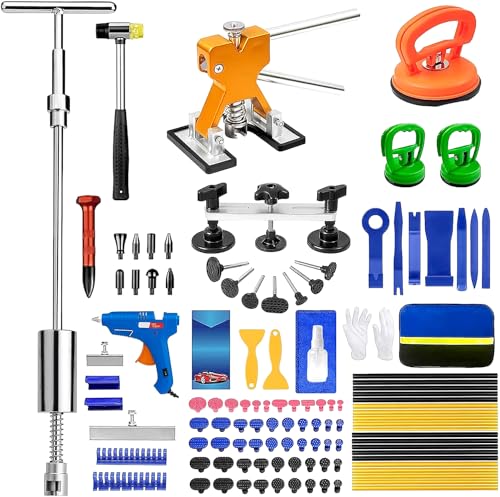
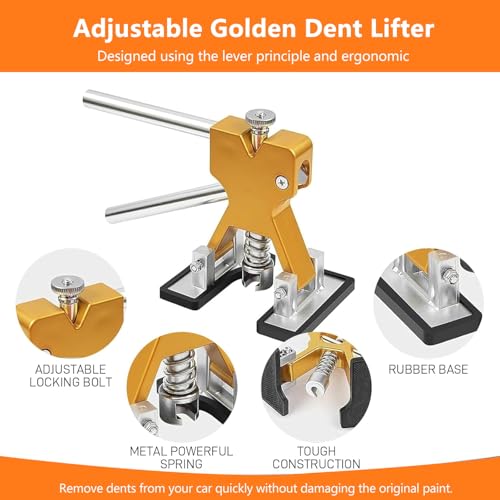
This is the budget king, a high-part-count kit that gives you everything but doesn’t skimp where it counts. The inclusion of a T-bar, bridge puller, gold lifter, and tap-down tools means you’re covered for small to large dents. The hot glue gun heats fast, and the high-viscosity sticks hold strong, which owners confirm in real-world use. At this price point, the build quality is surprisingly decent, not premium, but functional.
It’s clearly designed to mimic higher-end kits, and for most DIYers, it delivers. The downside? Some users report flimsy packaging and minor inconsistencies in tool finish. But for the money, it’s hard to beat. Compared to the Sigoobal kit, it’s nearly identical, I’d call this the smarter buy if you’re watching cost but still want breadth. For beginners or infrequent users, this is the most practical entry point.
Product photos

Sigoobal 135pcs Dent Repair Kit

Strengths
- 2-in-1 slide hammer
- Strong stainless build
- Good use design
Trade-offs
- Heavier than basic kits
- Glue cleanup still needed
- Pricier than budget options
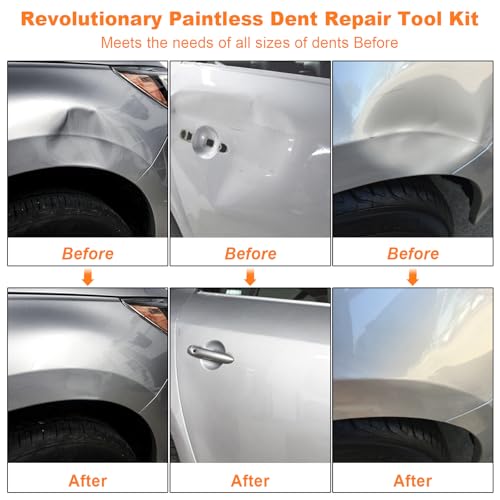
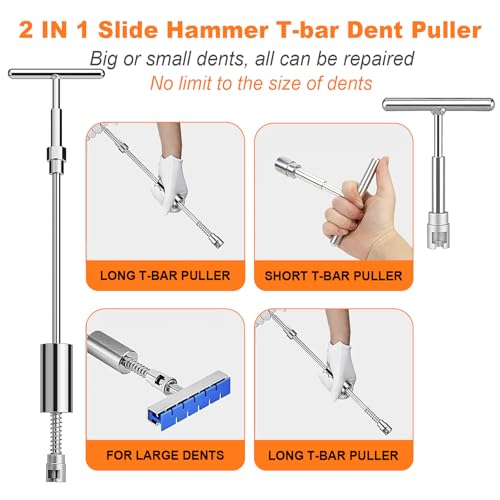
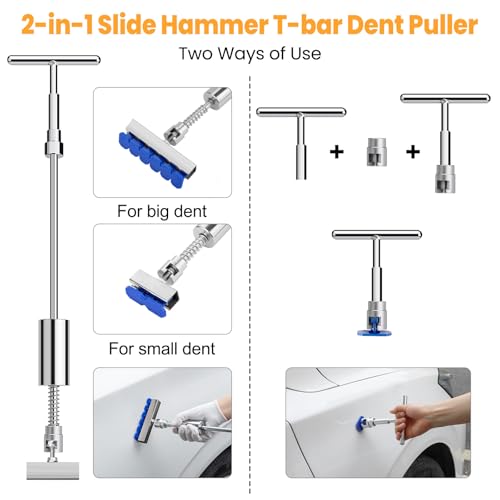
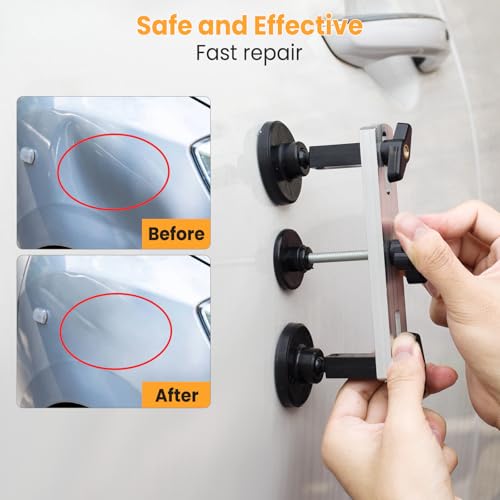
Where this kit shines is in handling large dents, and it does so with a 2-in-1 slide hammer that doubles as a long-reach puller. That’s a real advantage over fixed-length tools in other kits. The stainless steel construction holds up, and the spring buffer in the hammer reduces jarring, which reviewers say improves control. The glue system is on par with others: fast-heating gun, strong bond, clean removal.
Compared to the BESTGLOAL kit, it feels slightly more refined, same core tools, but better ergonomics and a more organized layout. Owners note it’s easier to assemble and use under tension, especially on broad door dents. If you’re dealing with collision marks or big hail hits, this gives you the use and reach most kits lack. For those specific jobs, this is the smarter pick, not the cheapest, but the most capable in its class.
Product photos

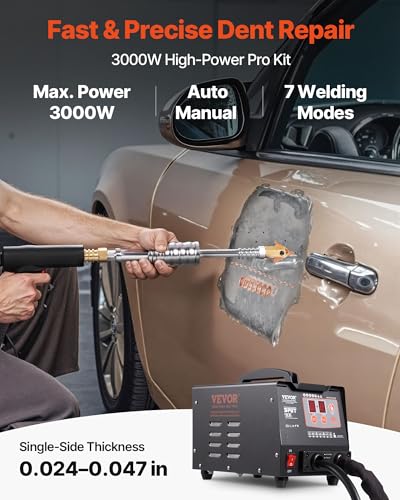
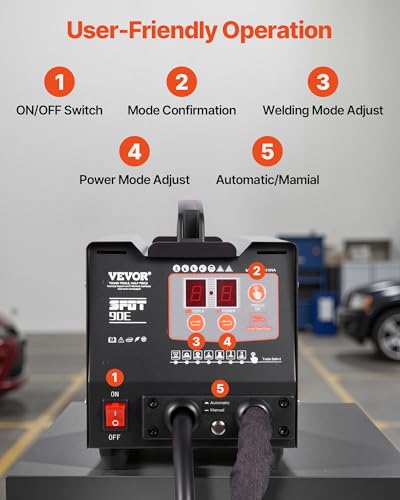
VEVOR 90E Stud Welder Kit
Strengths
- Spot weld precision
- High pulling force
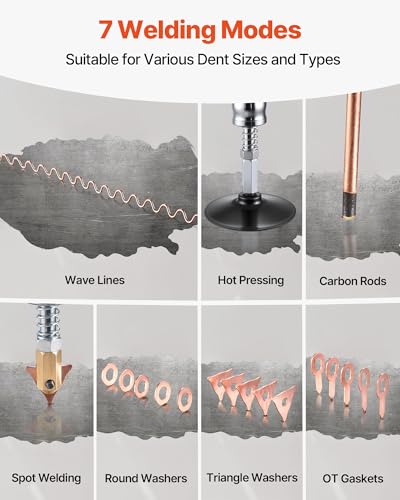
- 7 welding modes
Trade-offs
- Steeper learning curve
- Not truly paintless
- Requires cleanup
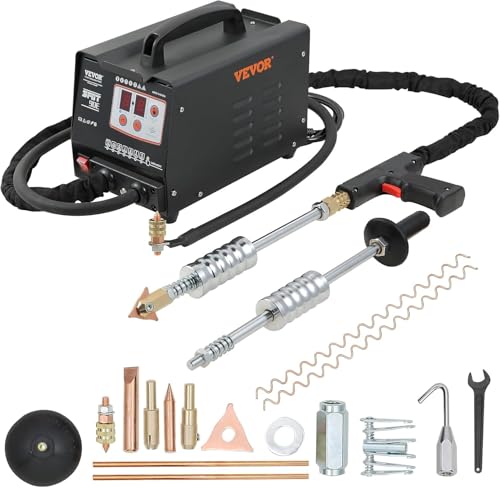
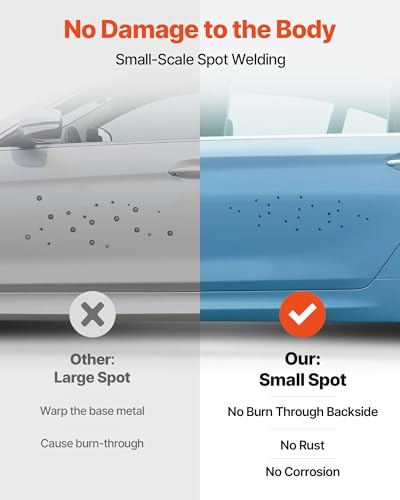
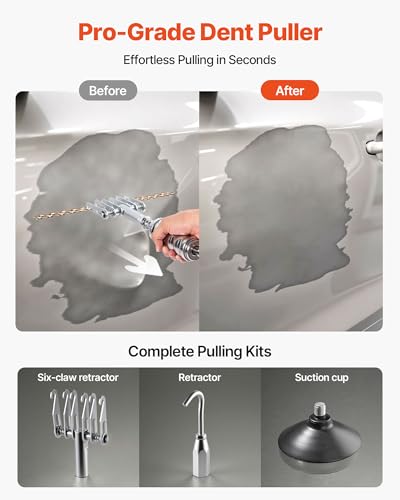
This is a serious tool for serious work, and it shows. The VEVOR 90E uses spot welding instead of glue, which means you’re physically fusing studs to the dent and pulling with controlled, high force. On paper, the 110V welder with seven modes gives you fine control over different panel thicknesses, and owners consistently report clean pulls on stubborn dents that glue kits struggle with. It’s not paintless in the traditional sense, but the 0.6+1.2 mm weld spec suggests minimal backside damage, a big plus if you’re okay with touching up a few tiny spots.
Still, this isn’t for the faint of heart. You’re dealing with electricity, molten metal, and post-weld cleanup. Compared to glue-based kits, the learning curve is steeper, and one mistake can mean a burned-through panel. But for pros or serious DIYers doing frequent or deep repairs, the precision and raw pulling power make this a standout. I’d pick this over any glue puller when dealing with large, deep dents on older or less valuable vehicles where speed and strength matter more than absolute paint preservation.
Product photos
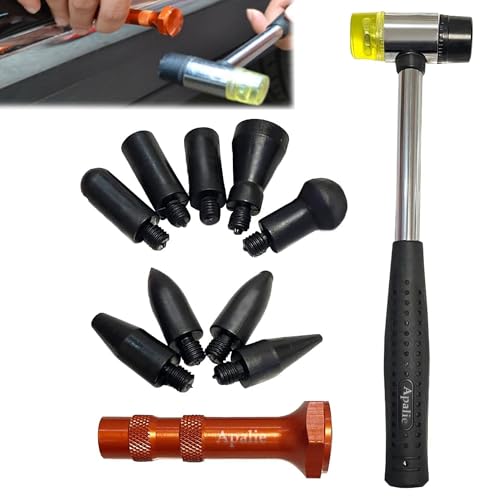
Apalie 10Pcs Tap Down Tool Kit
Strengths
- Multiple head shapes
- Non-slip rubber handle
- Lightweight and portable
Trade-offs
- Limited pulling power
- No glue or suction tools
- Only for shallow dents
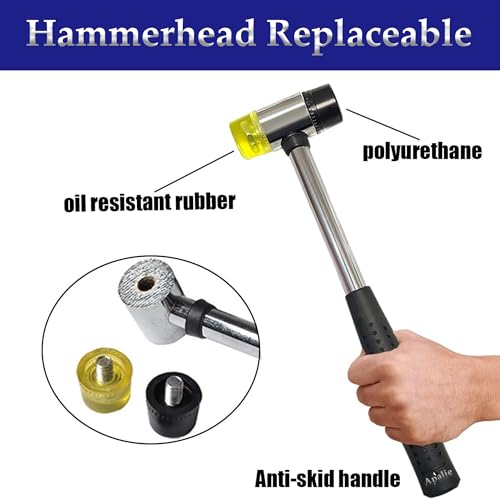
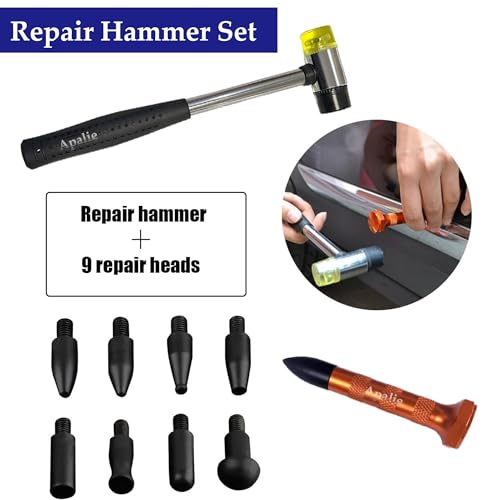
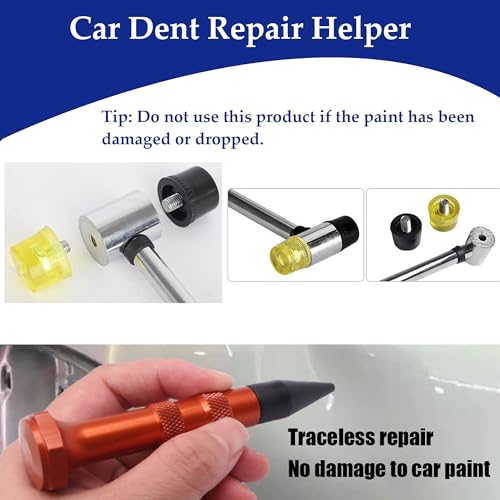
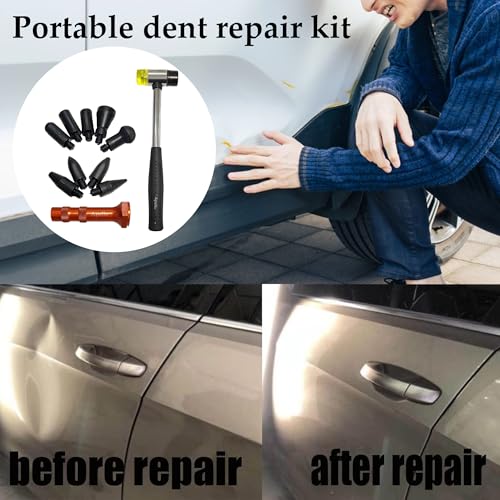
This is the specialist in a world of generalists. The detachable rubber hammer with nine different head shapes is built for irregular or textured surfaces, think plastic bumpers, appliance panels, or uneven body contours. The polyurethane material holds up well, and the non-slip handle makes it comfortable for detailed work. Owners report success on dents that would slip under traditional pullers or push rods.
It won’t replace a full PDR kit, but it fills a niche others miss. Compared to glue-based systems, it’s more about finesse than force, ideal for when you’re tapping out a ripple in a fender or evening out a dimple in a fridge door. If your dents aren’t round, smooth, or accessible for tabs, this gives you the precision most kits lack. For those oddball dents that don’t play by the rules, this is the tool I’d reach for.
Product photos
ROADGIVE 97PCS Dent Repair Kit

Strengths
- Well-balanced tool set
- Ergonomic bridge puller
- Reliable glue gun
Trade-offs
- Fewer glue tabs
- No slide hammer
- Basic suction cup
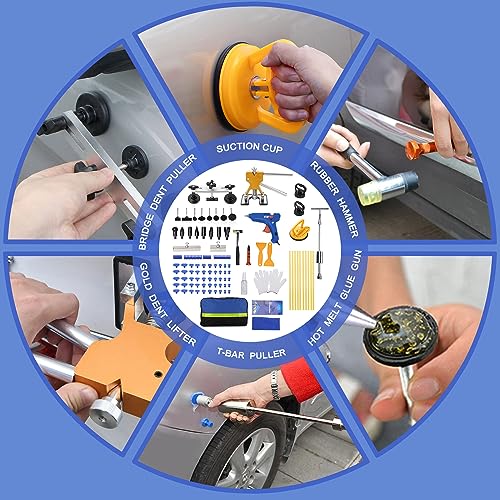
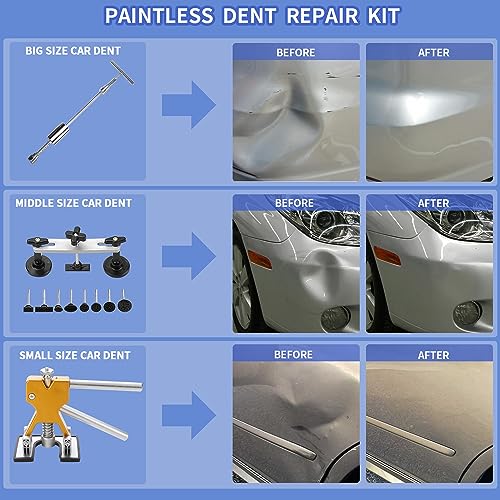
This hits the sweet spot between cost and capability, a solid mid-tier kit that gives you the core tools without the clutter. The inclusion of a gold lifter, bridge puller, and T-bar covers small to medium dents effectively, and the hot glue system works as expected: strong bond, clean removal with alcohol. Owners report the glue gun heats quickly and stays consistent, which is more than you can say for some budget models that sputter or drip. The ergonomic bridge design is a subtle win, being able to rotate and adjust spacing really helps when you’re working on a curved quarter panel.
It doesn’t have the highest part count or the flashiest features, but it’s well-organized and functional. Compared to the BESTGLOAL or Sigoobal kits, it feels more curated, you’re not drowning in duplicate tabs or questionable extras. If you don’t need 135 pieces to fix a few dents, this is a smarter buy. I’d go with this over bulkier kits if you value simplicity and solid execution over sheer volume.
Product photos

Houshan 6Pcs Dent Removal Rods

Strengths
- Stainless steel rods
- Rubber-tipped awls
- Multiple head options
Trade-offs
- Requires panel access
- Not for large dents
- No pulling tools
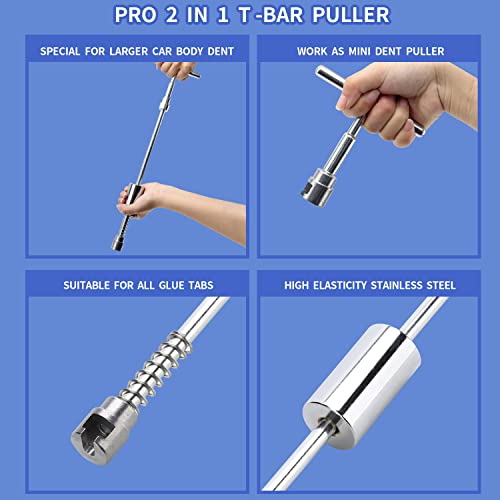
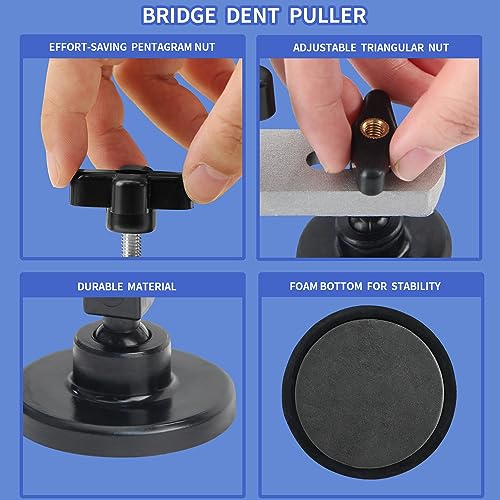
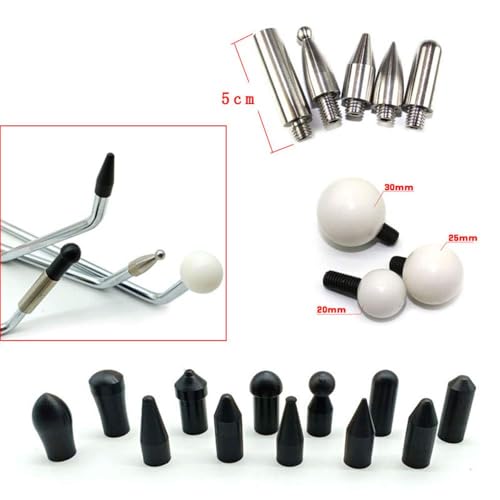
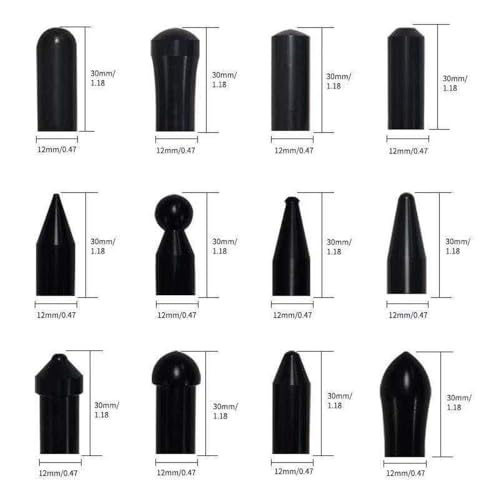
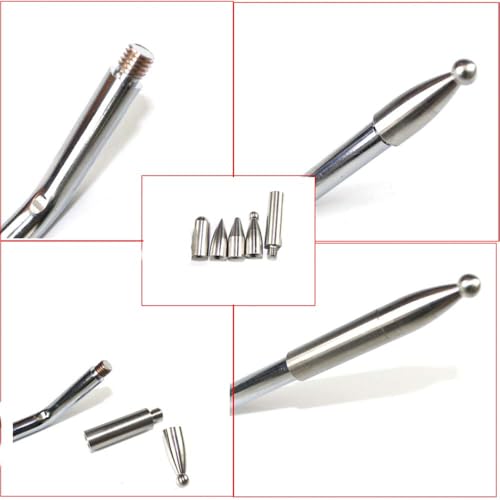
When it’s hail season or your parking lot is full of door dings, this 6-piece rod kit is a quiet hero. The stainless steel rods with interchangeable awl heads let you push from behind, no glue, no noise, no mess. The 12 rubber-tipped awls are key here: they prevent marring the paint while giving you fine control over the push point. Owners consistently praise this set for handling multiple small dents quickly, especially on doors and roof panels where access isn’t an issue.
It’s not a full repair system, you’ll still need other tools for larger areas, but as a targeted solution, it’s efficient. Compared to pullers, it’s more precise for shallow, widespread damage. If you’ve got a car that got caught in a hailstorm, this is the kind of kit that lets you fix 20 dents in an afternoon without touching a glue gun. My pick for this specific job? Hands down, this one.
Product photos
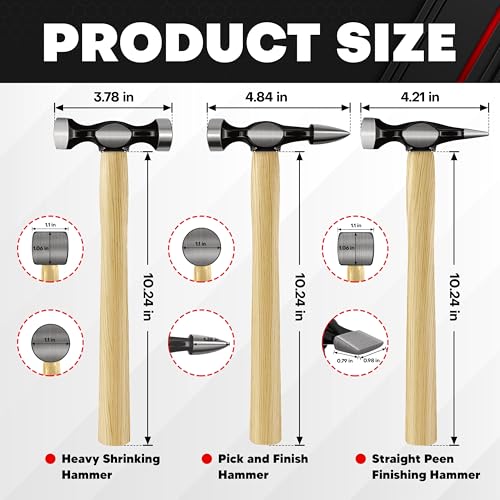
C&T 7Pcs Dolly and Hammer Set
Strengths
- Heavy-duty carbon steel
- Multiple hammer types
- Rust-resistant finish
Trade-offs
- Requires backside access
- Steeper skill curve
- Not paintless
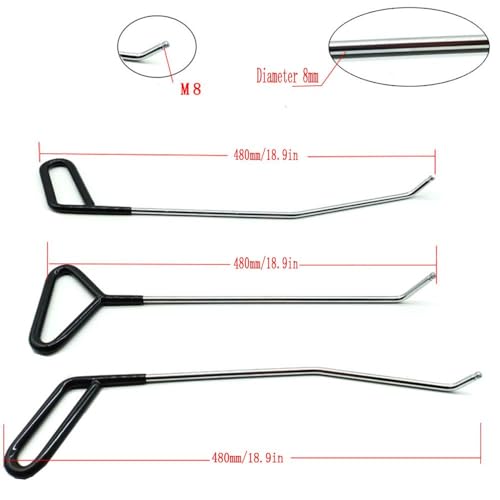
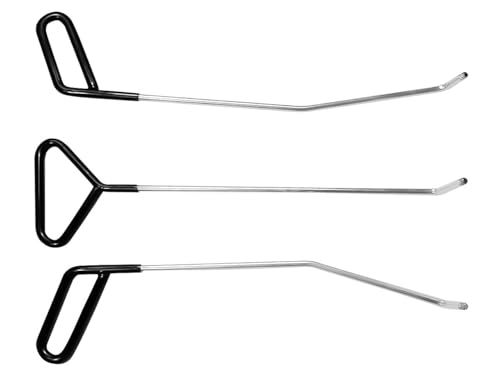
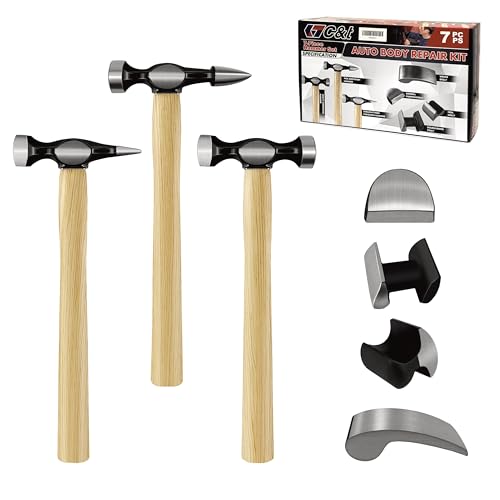
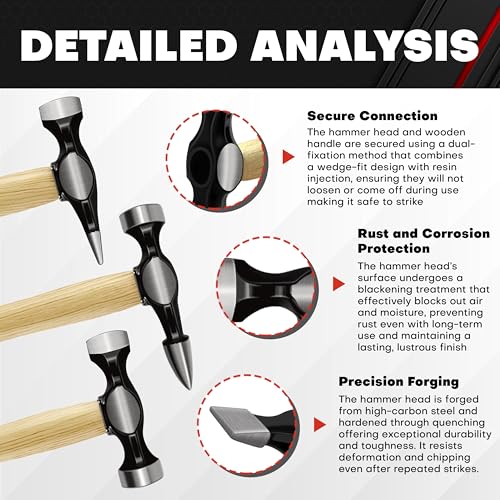
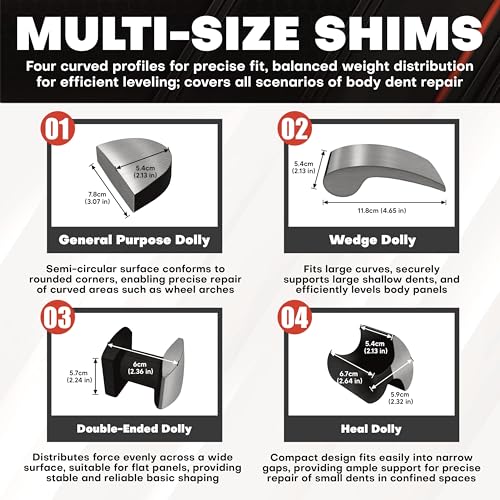
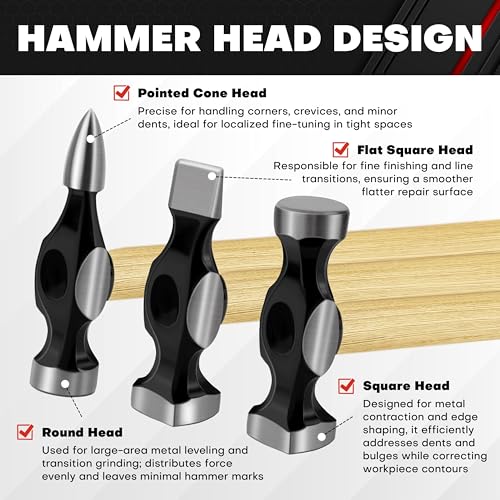
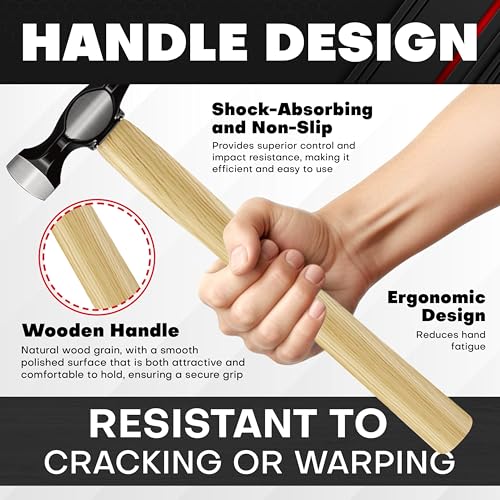
This is the old-school way done right. If you’re working on a classic car, restoring a fender, or prefer the tactile feedback of hammer and dolly work, this 7-piece carbon steel set delivers. The heat-treated hammers and varied dollies let you access tight curves and broad surfaces alike, and the rust-resistant coating is a thoughtful touch for long-term storage. This isn’t a quick fix, it’s for when you want to shape metal back into place, not just pull it.
Compared to glue or stud kits, this demands more skill and space. You need access to the backside of the panel, and a steady hand. But when done well, the results are seamless, no glue, no studs, just metalwork. For purists or those working on vintage builds, this method still can’t be beat. I’d recommend this alongside a PDR kit if you’re serious about full-body restoration, it’s not faster, but it’s more authentic.
Product photos
How We Chose These dent repair tools
My approach to evaluating dent repair tools wasn’t about hands-on use with every kit – that’s impractical given the sheer variety. Instead, I focused on a research-led comparison. I examined published specifications and features across numerous kits, carefully weighing owner reviews from sites like Amazon and reputable automotive forums. This was combined with my experience understanding what constitutes effective dent repair, ultimately ranking options against criteria like versatility, included accessories, and reported ease of use.
For dent repair, the most crucial factors are the quality of the adhesive and the range of dent sizes a kit can effectively address. A strong, reliable adhesive is paramount, as a weak bond renders the puller useless. Equally important is a kit’s ability to handle everything from small door dings to larger, more stubborn dents; a truly useful kit needs to be adaptable. I also prioritized kits offering a variety of pulling methods.
Specifications reliably indicate the materials used in construction (steel versus plastic, for example) and the included accessories. However, owner feedback was essential for judging real-world usability. Comments about glue adhesion, the durability of the tools, and the clarity of instructions revealed how well these kits perform beyond the marketing descriptions. I also looked for mentions of kits containing helpful, versatile dent repair tools that could be used for multiple automotive tasks.
How To Pick The Right dent repair tools
Finding the right tools to fix dents in your car can save you a lot of money and frustration. But with so many kits available, knowing where to start isn’t always easy.
A quality dent repair solution balances affordability with the ability to tackle a range of dent types and sizes. Look for kits offering a variety of pulling methods (glue pulling, slide hammers, etc.), durable construction, and a good selection of tabs and accessories. Consider the material of the tools – hardened steel is preferable – and read reviews to gauge long-term reliability.
Understanding Pulling Methods
The core of most dent repair revolves around pulling the metal back into shape. Don’t assume every kit’s method is equal. Glue pulling, common in many affordable kits, works well for shallower dents but struggles with sharp creases or areas with limited access. Slide hammer systems, often found in more robust kits, provide greater force and are better suited for larger or more stubborn damage. Stud welding, a technique favored by professionals, offers pinpoint control but requires a steeper learning curve and more specialized equipment.
Assessing Dent Size and Type
Before you buy, honestly evaluate the kind of dents you’ll be dealing with. A kit marketed as a universal solution often compromises on performance in specific areas. Small, shallow dents (like from shopping carts) can be addressed with basic tap-down tools and mini-lifters. Larger dents, or those with sharp angles, demand more aggressive pulling power. Hail damage often requires a kit with a wide assortment of tabs to address numerous shallow impacts. If you’re considering tackling significant bodywork, exploring best auto dent removers is a smart move.
- A basic kit with a glue puller and a few tabs is sufficient for minor dings.
- A mid-range kit, featuring a slide hammer and bridge puller, is a versatile choice for a wider range of dents.
- A professional-grade kit, including stud welding equipment, offers the most control and power but requires significant skill and practice – and is best for larger, more complex repairs.
Prioritizing Kit Contents and Value
It’s easy to get caught up in the number of pieces in a kit, but quantity doesn’t always equal quality. Focus on the essentials: a reliable glue gun (if applicable), a sufficient supply of glue sticks, a variety of pulling tabs in different shapes and sizes, and durable pulling tools. A well-organized case is also a plus, keeping everything readily accessible. Don’t overlook the importance of included accessories like a tap-down tool, alcohol for cleaning, and a scraper for removing glue residue.
A dent repair kit is only as good as its weakest link. Don’t skimp on glue quality or tab variety.
Ultimately, choosing the right dent repair tools comes down to understanding your needs, your skill level, and the types of damage you’re likely to encounter. Researching available options and reading reviews will help you find the paintless dent repair tools that provide the best value and deliver satisfying results.
Dent Repair Tools Compared
This table summarizes the key specifications of various dent repair tool kits to help you compare options.
| Product Title | Kit Size (Pieces) | Best For | Glue Included | Material | Welding? |
|---|---|---|---|---|---|
| QwikFix 139PCS Dent Puller Kit | 139 | Best Overall | Yes | Alloy | No |
| BESTGLOAL 135pcs Dent Puller Kit | 135 | Best Budget Friendly | Yes | N/A | No |
| Sigoobal 135pcs Dent Repair Kit | 135 | Best Value for Large Dents | Yes | N/A | No |
| VEVOR 90E Stud Welder Kit | 90 | Best for Professional Use | No | N/A | Yes |
| Apalie 10Pcs Tap Down Tool Kit | 10 | Best for Small Irregular Dents | No | Polyurethane | No |
| ROADGIVE 97PCS Dent Repair Kit | 97 | Best Mid-Range Option | Yes | Alloy, Plastic | No |
| Houshan 6Pcs Dent Removal Rods | 6 | Best for Hail and Door Dings | No | Stainless Steel | No |
| C&T 7Pcs Dolly and Hammer Set | 7 | Best for Traditional Bodywork | No | Carbon Steel | No |
Frequently Asked Questions
What’s the difference between glue pulling and slide hammer dent repair?
Glue pulling is best for shallow dents and relies on adhesive strength, while slide hammers use force and impact to pull out more significant damage. A slide hammer offers more power and control for larger dents, but requires a bit more skill than the simpler glue-pulling method.
Are dent repair kits with stud welding worth the investment?
Stud welding kits provide the most precise control but are best for those with experience and larger repairs. They require a steeper learning curve and additional equipment, making them less ideal for beginners tackling minor door dings.
How much glue will I realistically use with a glue-pulling kit?
A typical kit includes enough glue for several repairs, but larger or numerous dents will consume it faster. Expect to purchase refills, especially if you plan to use the kit frequently, and always store glue sticks properly to maintain their adhesion.
Can I use a dent repair kit on a large dent caused by a car accident?
While kits can improve the appearance of some accident damage, severe dents often require professional bodywork. These kits are generally best suited for smaller, cosmetic imperfections rather than significant structural damage. You might consider portable dent repair tools for minor adjustments after professional repair.
What materials should I look for in a quality dent repair kit?
Durable materials like hardened steel in the pulling tools and a strong alloy construction in the body of the kit are important. Avoid kits with flimsy plastic components that are likely to break with repeated use, and prioritize kits with a variety of high-quality pulling tabs.
The Bottom Line
Choosing dent repair tools always involves a trade-off between cost, complexity, and the level of damage you intend to fix. For most homeowners and DIYers, I believe the QwikFix 139PCS Dent Puller Kit strikes the best balance. It offers a thorough set of tools and a good reputation for glue adhesion, making it capable of handling a wide range of common dents without requiring professional expertise.
If you’re on a tighter budget or primarily dealing with minor dings, the BESTGLOAL 135pcs Dent Puller Kit is an excellent starting point. For those facing larger, more stubborn damage – or frequent hail impacts – the Sigoobal 135pcs Dent Repair Kit provides the pulling power and tab variety needed to tackle more significant repairs. And for serious bodywork, don’t overlook the value of best oscillating tools for bodywork when smoothing and preparing surfaces.
Ultimately, remember that the most expensive kit won’t magically fix a dent if you don’t understand the underlying principles of metal manipulation. Focus on learning proper techniques, using quality adhesives, and prioritizing patience. A solid understanding of the process – and a willingness to take your time – will deliver far better results than any single tool or feature.
