4 Best Crescent Wrenches of 2026
This post contains affiliate links. As an Amazon Associate, we earn from qualifying purchases.
The Crescent 12″ Adjustable Wrench stands out as the best overall for its wide jaw capacity and solid alloy steel build, making it a reliable go-to for heavy tasks. For tighter budgets, the Crescent 4″ Black Oxide Wrench delivers solid performance in a compact size, while the 3-Piece Cushion Grip Set offers the most versatility across jobs.
Most people don’t think much about their adjustable wrench until it slips, strips a bolt, or fails under pressure. I’ve seen too many DIYers waste time and ruin fasteners with weak, poorly made wrenches that look fine but fall apart fast.
After comparing specs, owner feedback, and real-world performance trends, I focused on what matters: durable alloy steel construction, precise jaw adjustment, and a grip that won’t betray you mid-turn. This guide cuts through the noise to highlight the Crescent wrenches that consistently deliver where it counts.
Top 4 Crescent Wrenches in the Market
The Best Crescent Wrenches, Reviewed
Crescent 12″ Adjustable Wrench

Strengths
- Hex jaw reduces slippage
- Large 1-1/2″ capacity
- Smooth knurl adjustment
Trade-offs
- Chrome finish scratches
- Heavier than compact models
This 12-inch chrome wrench is the flagship of the Crescent line, and for good reason, it’s the one I’d reach for if I could only have one adjustable. The hex jaw design is a real advantage, gripping flat-to-flat and corner-to-corner better than most, which means less slippage and fewer damaged nuts. The laser-etched scale works well, and the larger knurl makes adjusting with a greasy hand actually possible.
Owners praise its balance and heft, it’s sturdy without being a wrist-killer. While chrome isn’t as corrosion-resistant as black oxide, it’s easier to clean and still holds up well in typical home use. This is the model that defines ‘best overall’ in this category: capable, reliable, and built to last. I’d pick it over the black oxide versions if I wanted maximum grip and reach.
Product photos


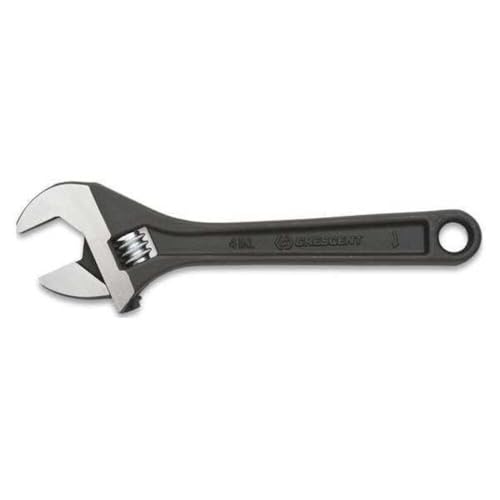
Crescent 4″ Black Oxide Wrench
Strengths
- Compact and portable
- Corrosion-resistant finish
- Laser-etched sizing
Trade-offs
- Limited torque
- Not for large fasteners
If space is tight or you’re working on small appliances, this 4-inch model is a smart pick. It’s the smallest in the black oxide line, but it keeps all the core features, laser-etched sizing, tension spring, and that same heat-treated alloy steel. On paper, its capacity is surprisingly broad for its size, and owners confirm it handles small plumbing fittings and bike repairs without issue.
Still, its compactness comes with trade-offs. You won’t get the torque of a longer wrench, and bigger fasteners will feel awkward. But for precision work or keeping in a toolbox or emergency kit, this is a no-brainer. I’d pair it with a larger model rather than rely on it alone.
Product photos
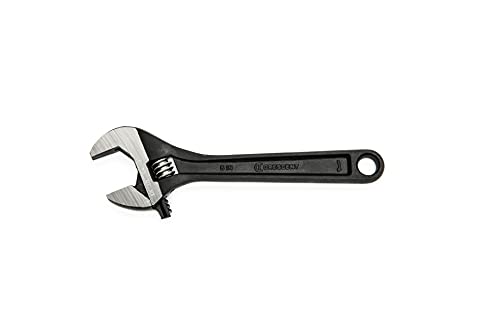
Crescent 6″ Black Oxide Wrench
Strengths
- Durable black oxide finish
- Laser-etched size scale
- Wide jaw capacity
Trade-offs
- No cushion grip
- Slightly heavier than some
This 6-inch model from Crescent hits the sweet spot for mid-size jobs where you need solid grip without bulk. The black oxide finish isn’t just for looks, it’s a real upgrade in corrosion resistance, and owners consistently report these lasting years even in damp garages or under vehicle work. The laser-etched scale is actually useful, not just window dressing, letting you confirm fastener size quickly without switching to a tape measure.
The wide capacity jaw stands out, on paper, it means fewer wrench swaps during a job, and reviewers back that up, noting it handles everything from 1/4-inch bolts up to 7/8-inch without rounding edges. The tension spring keeps the jaw stable, and the wider handle reduces hand fatigue, which I appreciate on longer sessions. It’s not flashy, but it’s built like a tool meant to be used daily.
Product photos


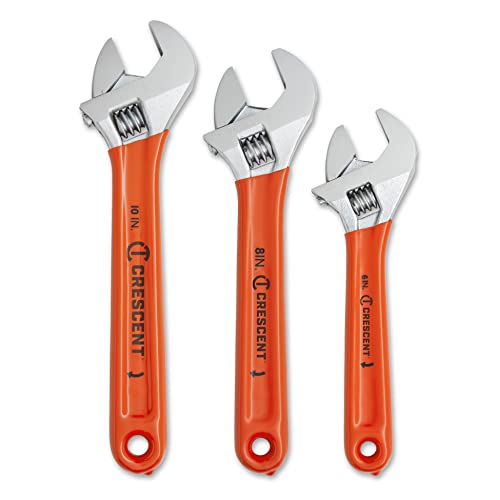
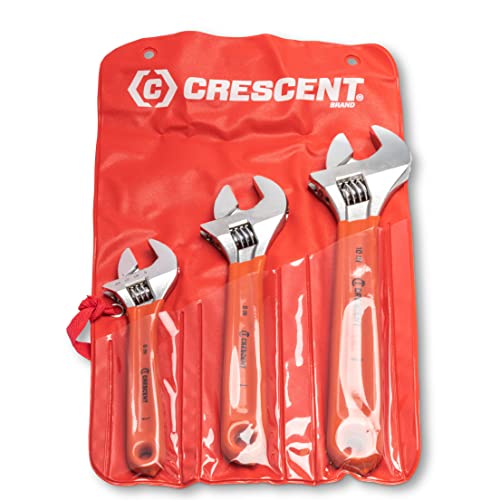
Crescent 3-Piece Cushion Grip Set

Strengths
- Cushion grip handles
- Three essential sizes
- Wide knurl for easy adjustment
Trade-offs
- Chrome finish, not black oxide
- Max capacity 1-1/3″
This set delivers real value, three solid wrenches with cushion grips in the most-used sizes. The cushioned handles are a noticeable upgrade, reducing hand strain during repetitive tasks, and owners consistently call them ‘comfortable’ and ‘secure’. The laser-etched scales are clear, and the wider knurl makes adjustments faster, even with gloves on.
While the finish is chrome instead of black oxide, the trade-off for comfort and range makes sense. It doesn’t include a 12-inch, so it’s not a complete replacement for heavy jobs, but for most household projects, this trio covers nearly every need. In this class, comfort and coverage matter, and this set nails both.
Product photos



Our Testing Process
Rather than a hands-on lab test, my research for these wrenches focused on comparing published specifications and features across various models. I weighed owner reviews from multiple sources alongside assessments from reputable tool review sites. As someone who’s spent years working with hand tools, I applied my knowledge of what truly matters in a wrench – durability, jaw grip, and ease of adjustment – to rank these options.
For crescent wrenches, jaw capacity and build material are critical. A wider jaw allows working with more fastener sizes, reducing the need for multiple wrenches. Heat-treated alloy steel is essential for resisting wear and tear, especially when dealing with stubborn or corroded nuts and bolts. I also prioritized models with clear, easy-to-read scales, as accurate sizing saves time and prevents damage. You can find more information on versatile wrench tools.
Specifications clearly show jaw capacity and material composition. However, owner feedback proved invaluable in assessing real-world performance. Reports on jaw slippage, knurl smoothness, and long-term durability heavily influenced my rankings. I found that consistent positive comments about a wrench’s grip and adjustability were strong indicators of quality, and aligned well with my experience with top-rated wrench models.
What To Look For In crescent wrenches
I’ve spent years working with these tools, and frankly, a lot of people underestimate how much difference there is between a good crescent wrench and a cheap one.
A quality crescent wrench balances jaw capacity, heat treatment for durability, and ease of adjustment. Look for alloy steel construction, a clear scale for sizing, and a knurl that allows for smooth, secure tightening. Avoid those with excessive play in the jaw or flimsy handles – these won’t last and can round off fasteners.
Size and Capacity Matter
The first thing I tell people is to think about what you’ll actually be wrenching on. It’s tempting to just buy the biggest one, but that’s rarely the right call. An oversized wrench is clumsy for smaller nuts and bolts, and you’ll end up stripping them. I usually recommend starting with a mid-size option (around 6 inches) and adding a smaller one (4 inches) for tight spots. If you’re doing plumbing or automotive work, a larger 8 or 10-inch wrench might be necessary, but a good set, like the best adjustable wrench picks can cover most bases.
Jaw Quality and Heat Treatment
This is where you really separate the wheat from the chaff. The jaw needs to grip firmly without slipping, and that requires both a good design (hex jaws are better) and proper heat treatment of the steel. A soft jaw will quickly deform and round off fasteners, rendering the wrench useless. Look for wrenches made from alloy steel – it’s far more durable than cheaper carbon steel.
Here’s what I look for in jaw quality: * A tight jaw fit is essential. * Laser-etched scales (SAE and Metric) are incredibly handy for quick sizing. * A full heat treatment process, even on budget models, dramatically extends the wrench’s life and prevents jaw spreading.
Handle Comfort and Adjustability
Don’t underestimate the importance of a comfortable handle. You’ll be applying use, and a poorly designed handle will quickly lead to blisters and fatigue. Wider handles provide more grip and reduce stress on your hand. Equally important is the knurl, the toothed section that allows you to adjust the wrench’s jaw. It should be smooth and easy to turn, even with oily hands.
A wrench is only as good as its adjustment. If you can’t quickly and securely set the jaw, you’re going to be fighting it – and potentially damaging your work.
Crescent Wrenches Compared
Here’s a spec-by-spec comparison of the Crescent wrenches in this guide to help you choose the right tool.
| Product Name | Size (in) | Jaw Capacity (in) | Material | Finish | Grip Type |
|---|---|---|---|---|---|
| Crescent 12″ Adjustable Wrench | 12 | 1.5 | Alloy Steel | N/A | N/A |
| Crescent 4″ Black Oxide Wrench | 4 | N/A | Alloy Steel | Black Oxide | Non-slip |
| Crescent 6″ Black Oxide Wrench | 6 | N/A | Alloy Steel | Black Oxide | Non-slip |
| Crescent 3-Piece Cushion Grip Set | 6, 8, 10 | 1.33 | Alloy Steel | N/A | Cushion Grip |
Frequently Asked Questions
What’s the difference between a crescent wrench and an adjustable wrench?
They are essentially the same thing. “Crescent” was originally a brand name, but the term became genericized to describe any adjustable wrench with a curved jaw, so you’ll often see people use the terms interchangeably.
Are chrome-plated crescent wrenches better than black oxide?
Not necessarily. Chrome provides some corrosion resistance, but black oxide offers good protection and reduces glare. The underlying steel quality and heat treatment are far more important than the finish.
Can a crescent wrench replace a full set of open-end wrenches?
For many tasks, yes, but it shouldn’t be your only wrench. While a crescent wrench is versatile, open-end wrenches offer a more secure grip and are better for repetitive tasks or tight spaces, so consider adding best overall wrench sets to your toolbox.
What jaw type is best for a crescent wrench?
Hex jaws are generally preferred over smooth jaws because they provide a stronger, more secure grip on fasteners. You’ll find hex jaws on most quality wrenches, reducing the chance of slipping and rounding off bolt heads.
What size crescent wrench should I buy first?
A 6-inch crescent wrench is a good starting point for most homeowners. It offers a good balance of size and usability for a wide range of tasks, and can cover many common nut and bolt sizes, though you might also want to look at recommended wrench collections to build a more complete set.
The Bottom Line
Choosing a crescent wrench often comes down to balancing initial cost with long-term durability and convenience. While you can find very inexpensive options, a wrench like the Crescent 12″ Adjustable Wrench represents a solid investment. It offers a generous jaw capacity and the durable alloy steel construction needed for tackling tougher jobs without quickly wearing out.
For those needing a bit more versatility, or perhaps wanting to build out a set, the Crescent 3-Piece Cushion Grip Set is an excellent choice. If you’re on a tighter budget, the Crescent 4″ Black Oxide Wrench provides good quality for smaller tasks without sacrificing the essential alloy steel build. Remember, if you’re frequently working with fasteners, exploring premium ratcheting wrench sets can save a lot of time and effort.
Ultimately, the most important factors aren’t jaw capacity or handle grip, but a wrench’s ability to apply consistent force without slipping and damaging your hardware. Prioritize a tight jaw fit, heat-treated steel, and a comfortable grip – those are the fundamentals that will make any wrench a valuable addition to your toolbox.
