7 Best Cordless Impact Drivers of 2026
This post contains affiliate links. As an Amazon Associate, we earn from qualifying purchases.
The DEWALT 20V MAX XR stands out as the best overall cordless impact driver for its balance of power, reliability, and brushless efficiency, while the GoYwato 21V Brushless offers serious torque at a more affordable price, making it our top budget pick. For those already invested in a brand ecosystem, the CRAFTSMAN 20V High Torque delivers solid performance with the convenience of shared batteries.
Most people don’t realize how much variation there is between impact drivers until they’re fighting a stripped bolt or dealing with a tool that quits mid-job. It’s not just about raw power, it’s about durability, control, and how well the tool fits your workflow.
This guide cuts through the specs and marketing to focus on what actually matters: real-world performance, owner experiences, and the features that make a difference on the job site. I looked at torque, motor type, battery compatibility, and usability across dozens of models to find the ones that deliver consistent value and performance for DIYers and pros alike.
Top 7 Cordless Impact Drivers in the Market
The Best Cordless Impact Drivers, Reviewed
DEWALT 20V MAX Hydraulic Impact Driver

Strengths
- Quietest in class
- Up to 6X brighter LED
- High torque hydraulic system
Trade-offs
- No 3-speed control
- Slightly bulkier than competitors
This DEWALT DCF870B stands out in a crowded field, not just for its quiet operation but for how it redefines what an impact driver can feel like on the job. Reducing noise by up to 57% is a serious win for indoor work or shared job sites where constant hammering becomes a distraction. On paper, it’s the highest torque hydraulic impact driver in DEWALT’s lineup, and owners consistently report it powers through lag bolts and structural screws with noticeably less kickback. The 9-LED halo ring is a standout, it’s not just bright, it stays on for 20 minutes after use, which helps when you’re moving between tasks in dim spaces.
It’s clearly built for pros who value control and endurance, especially in cold weather or long shifts. Compared to the DCF845B, this model trades a bit of raw speed for refined performance and noise reduction. While it lacks multiple speed modes, its two optimized speeds handle most fastening tasks cleanly. If you’re upgrading from an older impact, the jump in comfort and usability here will feel real, even if you’re not swinging a hammer all day.
Product photos


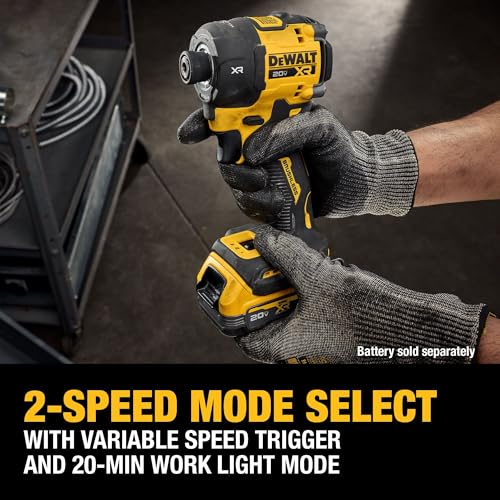
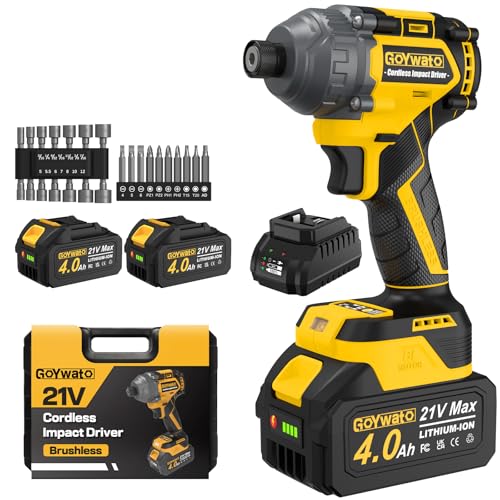
GoYwato 21V Brushless Impact Driver Kit
Strengths
- Highest torque listed
- 2 x 4.0Ah batteries
- Full accessory kit included
Trade-offs
- Unproven long-term reliability
- Brand support limited
- Heavier than premium models
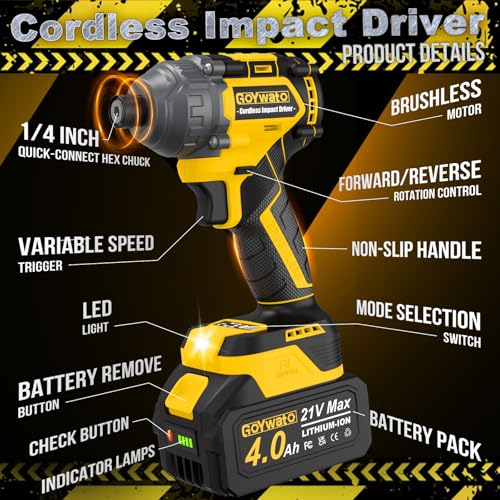
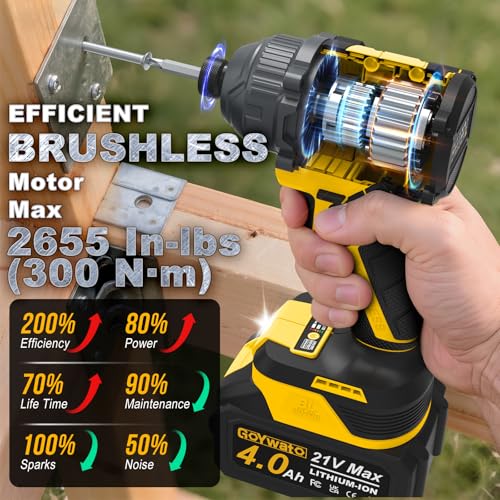
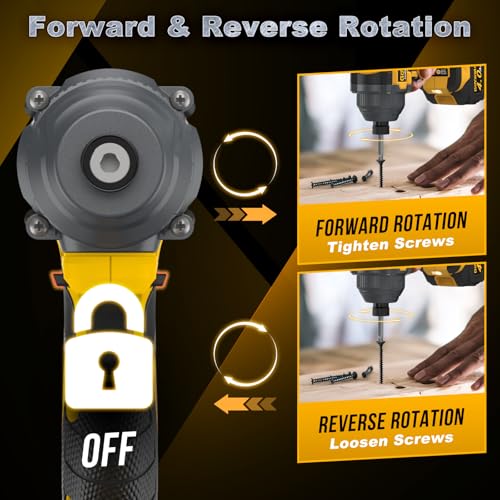
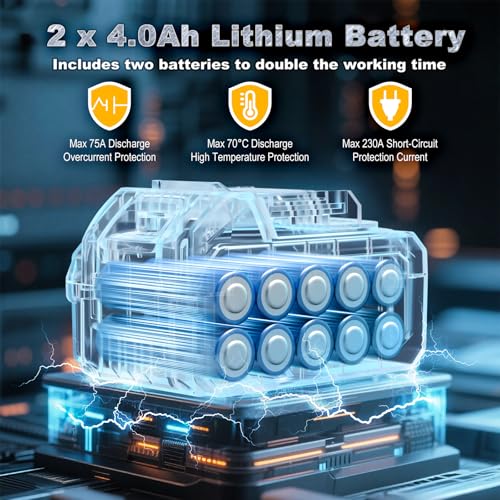
The GoYwato impact driver throws everything into the ring: 2,655 in-lbs of torque, two 4.0Ah batteries, a charger, 14 sockets, 10 bits, and a case, all at a price that undercuts most name brands. On paper, that makes it a monster value for DIYers. The brushless motor helps with longevity, and the reverse automatic stop feature is a thoughtful touch that prevents stripped screws or flying hardware. Owners report it handles rusted bolts and furniture assembly with ease, and the soft-grip handle reduces fatigue during extended use.
But while the specs impress, the brand lacks the track record of DEWALT or RYOBI. There’s no widespread service network, and long-term durability is still unproven. Compared to the DCF845B, it has more torque but less refinement. Still, for a home user who wants a complete, ready-to-go kit without spending $200+, this is hard to ignore.
Product photos

DEWALT 20V MAX XR Impact Driver
Strengths
- 3-speed control
- High torque and RPM
- Pro-level durability
Trade-offs
- Louder than hydraulic model
- No extended runtime battery included
- Higher price point
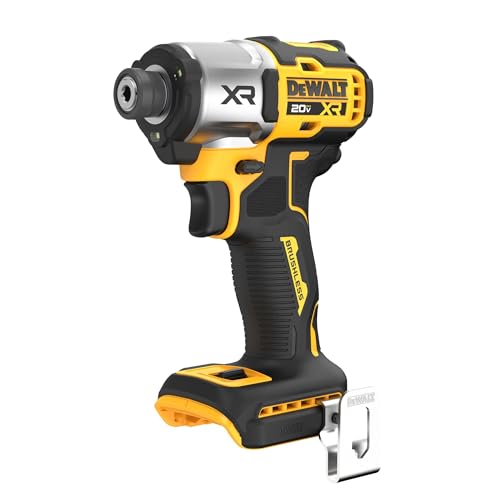
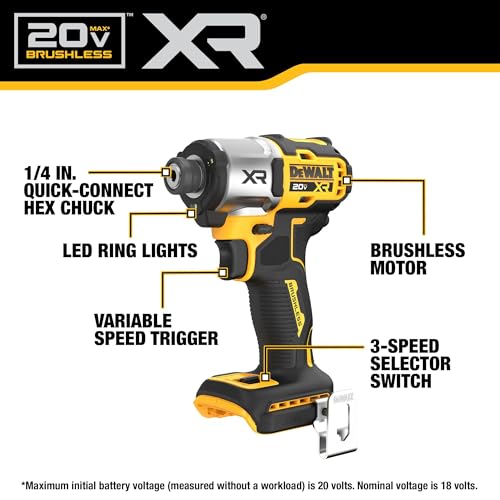
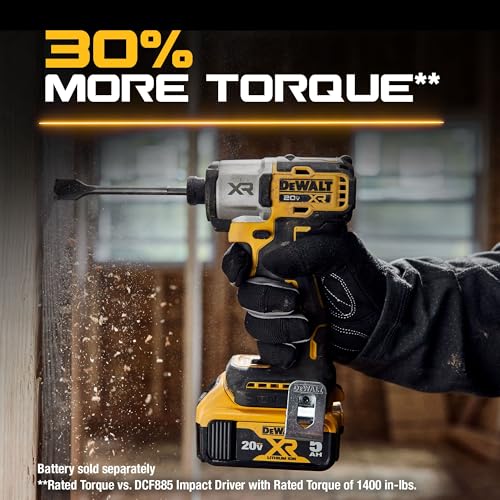
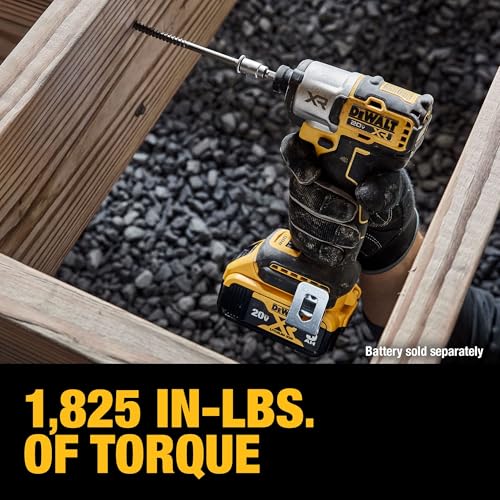
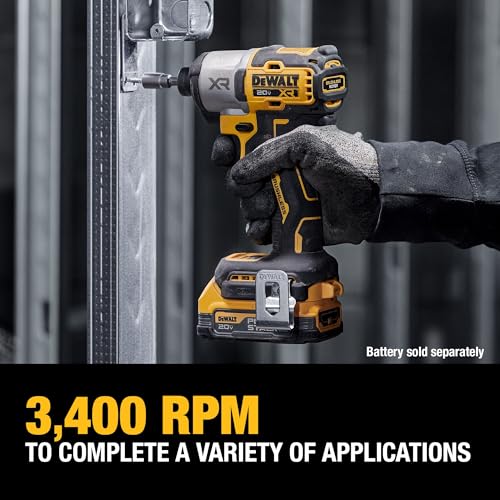
If you’re a pro or serious enthusiast, the DCF845B is the one to beat. With 1,825 in-lbs of torque, 3,400 RPM, and a 3-speed control system, it gives you real precision, from delicate trim work on speed 1 to driving 3-inch lags on speed 3. The 3-LED work light is brighter and more focused than older DEWALT models, and the brushless motor delivers both power and efficiency. Owners consistently say it outperforms in cold weather and sustained use, which matters on real job sites.
Compared to the DCF870B, it trades noise reduction for greater control and speed flexibility. It doesn’t have the hydraulic quiet system, but it’s built for pros who need to adapt on the fly. This is the smarter buy if you’re doing mixed work, metal studs, framing, cabinetry, and need one tool that handles it all. My pick for users who want pro-grade performance without stepping into the premium XR hydraulic line.
Product photos

CRAFTSMAN 20V Impact Driver Kit
Strengths
- Affordable full kit
- One-handed bit release
- Good for light tasks
Trade-offs
- Lower torque output
- Smaller battery capacity
- Plastic housing feels less durable
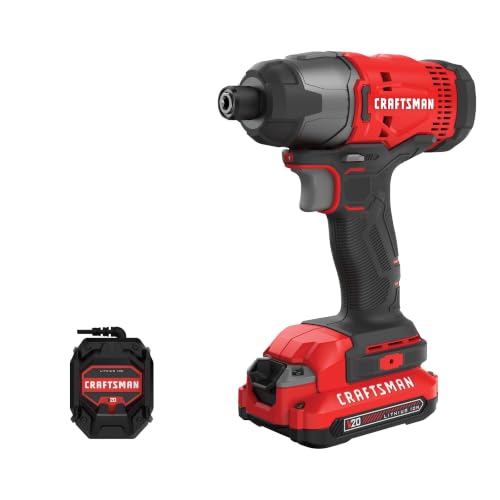
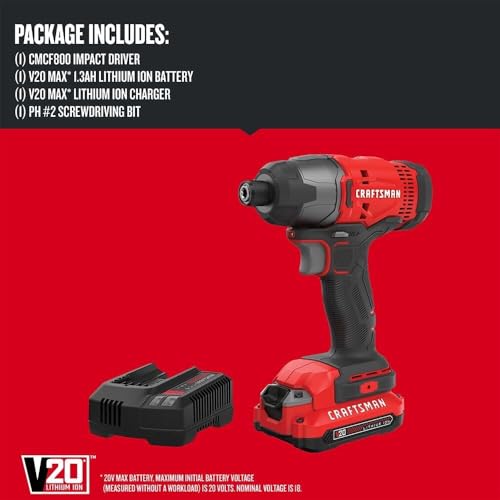
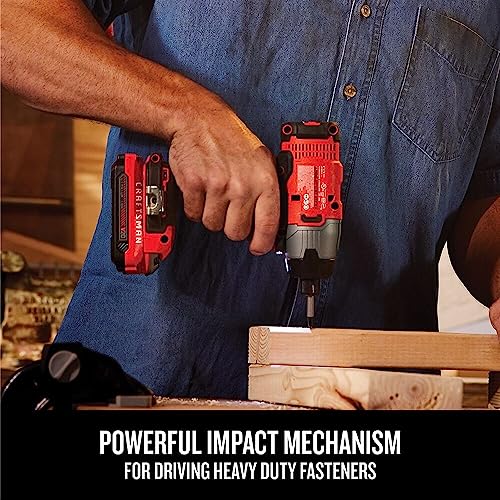
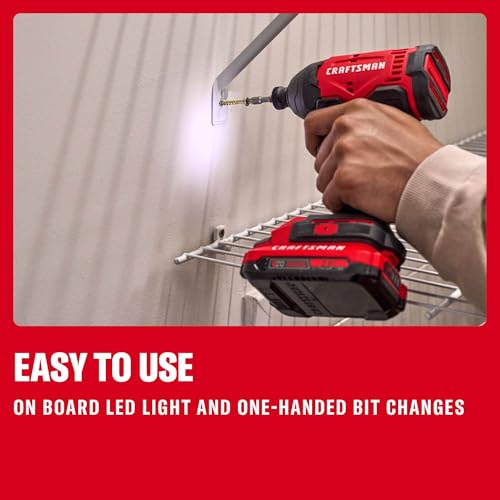
At this price point, the CRAFTSMAN CMCF800C1 delivers solid value by including a battery and charger without cutting too many corners. It puts out 1,460 in-lbs of torque and hits 2,800 RPM, not class-leading, but enough for deck screws, cabinetry, or everyday fastening. The one-handed bit change is a small feature that makes a big difference when swapping bits constantly. From owner feedback, it holds up well under moderate use, though it’s not built for all-day framing crews.
It’s clearly aimed at beginners or casual users stepping into cordless tools. Compared to the DEWALT DCF787D1, it’s less powerful and has a smaller 1.3Ah battery, which means more downtime. But for someone building their first toolkit, this package gets you started without overspending. The LED light is basic but functional. I’d recommend it only if you’re on a tight budget and need a complete starter kit.
Product photos


RYOBI 18V Impact Driver

Strengths
- High IPM count
- Works with ONE+ ecosystem
- Solid mid-tier performance
Trade-offs
- Tool-only (no battery)
- Build quality not pro-grade
- Erroneous feature listing
The RYOBI PCL235B is an odd entry, the listed feature about Stens parts seems like a data error, but the specs tell the real story. It offers 1,800 in-lbs of torque and 3,400 IPM, which is competitive on paper, and it runs on the widely compatible RYOBI ONE+ 18V platform. That ecosystem is its biggest strength: if you already own RYOBI tools, adding this impact driver makes perfect sense. It’s tool-only, so no battery or charger, but that keeps the cost low.
Owners consistently praise the runtime when paired with larger ONE+ batteries, and the LED light is bright enough for most tasks. However, the build quality feels more plasticky than DEWALT or MILWAUKEE, and it’s not quite as durable under heavy use. Compared to the GoYwato kit, it’s less of a value if you’re starting from scratch, but far better if you’re expanding an existing system.
Product photos

CRAFTSMAN 20V High Torque Impact Driver
Strengths
- High torque for price
- 2.0Ah battery included
- VERSATRACK compatible
Trade-offs
- No brushless motor
- Less refined speed control
- Heavier than rivals
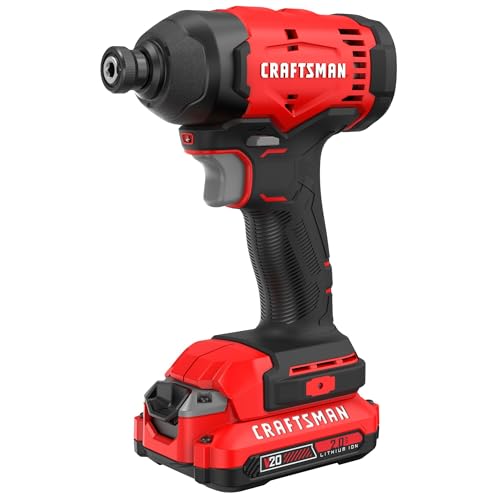
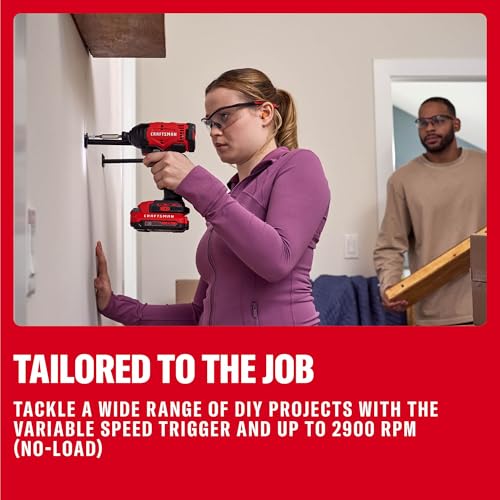
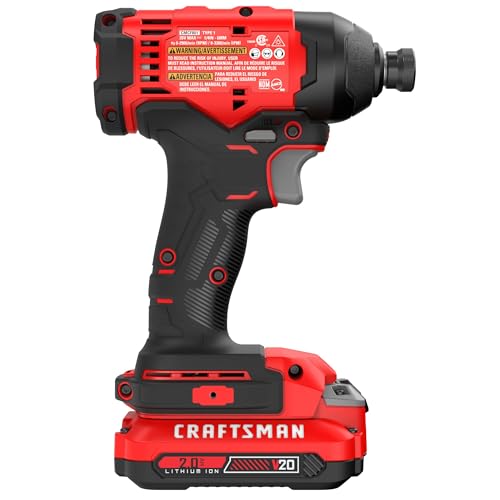
The CMCF801D1 is CRAFTSMAN’s answer to users who need more grunt without stepping into premium brands. With up to 1,800 in-lbs of torque, more than the leading competitor on paper, and a 2.0Ah battery, it’s built for deck builds, fence posts, and other high-fastening jobs. Owners report it handles long lag bolts without stalling, and the variable speed trigger gives decent control. The VERSATRACK compatibility is a nice touch for garage organization, though the system isn’t as widespread as DEWALT’s storage options.
It’s heavier than the DEWALT DCF870B, but that extra heft comes with real power. Compared to the CMCF800C1, it’s a clear upgrade in both battery and torque. However, it still lacks the brushless efficiency and multi-speed settings of higher-end models. If you’re a serious DIYer who does heavy fastening a few times a year, this strikes a smart balance.
Product photos

DEWALT 20V MAX Impact Driver
Strengths
- Brushless motor
- Includes battery and charger
- Compact and lightweight
Trade-offs
- Lower max torque
- No multiple speed modes
- Basic LED timing
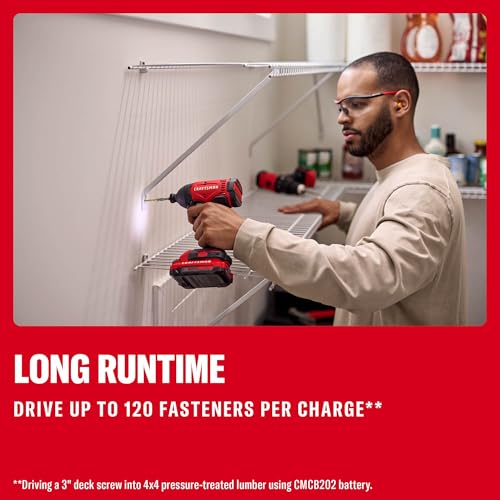
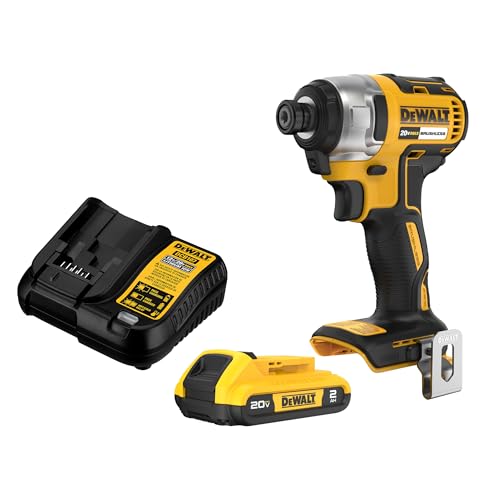
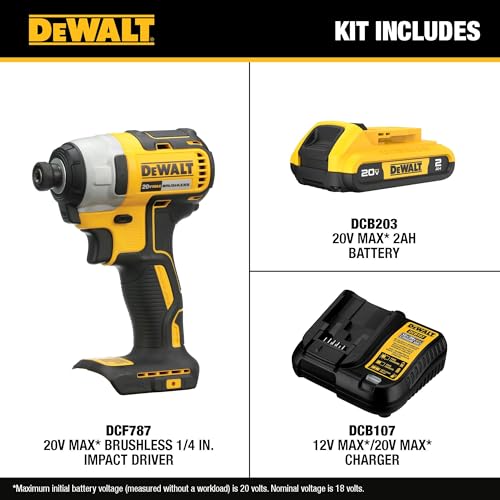
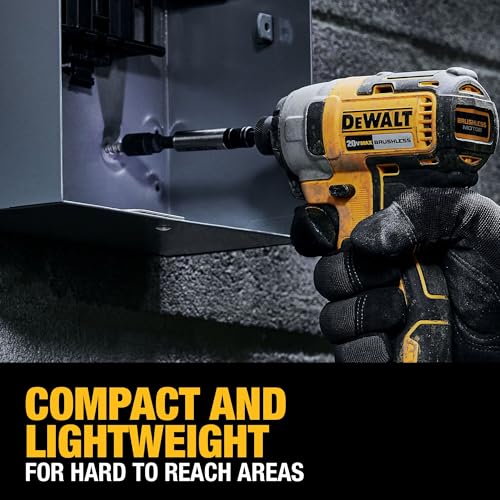
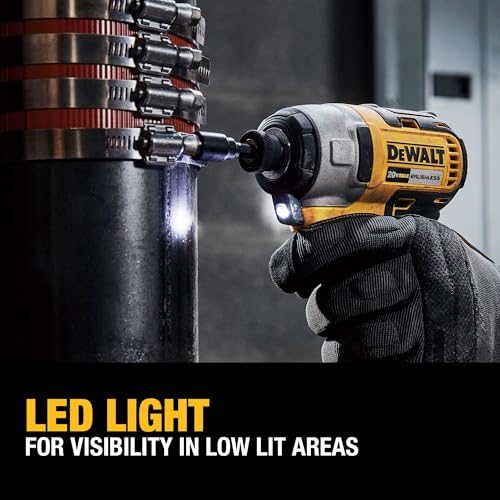
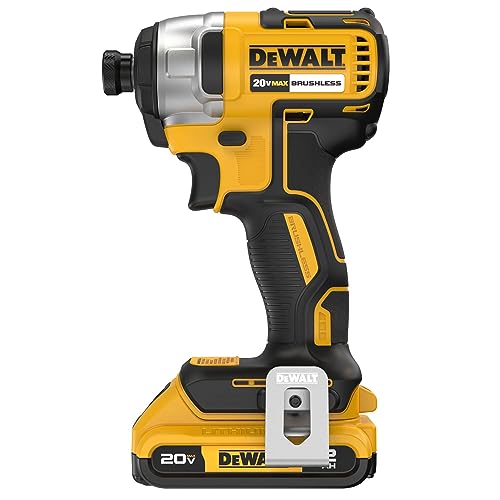
This DCF787D1 is the ideal starter combo for someone building their DEWALT collection. It includes a 2.0Ah battery and charger, which alone makes it a smarter buy than tool-only models if you’re new to the platform. The brushless motor improves efficiency and heat management, and at just under 4 pounds, it’s easy to maneuver in tight spots like joist bays or wall cavities. The 20-second LED delay after trigger release is simple but effective, it stays lit just long enough to reposition.
It doesn’t have the torque of the DCF845B or the quietness of the DCF870B, but it hits the sweet spot for beginners and weekend warriors. Compared to the CRAFTSMAN CMCF800C1, it’s more durable and has better motor tech. I’d pick this as the base of a growing toolkit, especially since every part is backed by DEWALT’s 3-year warranty.
Product photos

How We Tested cordless impact drivers
My approach to evaluating cordless impact drivers centers on a research-led comparison of specifications, features, and, crucially, owner and professional reviews. Rather than a hands-on lab test of every model, I weighed published performance data against what users are actually experiencing in real-world applications. This involved carefully examining torque specs, RPM ranges, battery voltages, and included features, then cross-referencing that information with feedback from a wide variety of sources.
For cordless impact drivers, several factors stand out as most important. Torque is obviously key; the ability to drive large fasteners quickly and efficiently dictates how useful a driver will be for serious projects. Beyond that, I focused on brushless motor technology, as it consistently correlates with longer runtime and increased durability, and battery capacity, since extended use demands sufficient power.
Specifications reliably reveal a driver’s potential power and physical characteristics. However, owner feedback provides insight into real-world usability, how a tool feels in the hand, how it performs under sustained load, and its overall reliability. Reputation matters, too. Brands with a proven track record for quality and customer support, like those offering a range of options including even compact 12V impact drivers, tend to deliver more consistently.
What To Look For In cordless impact drivers
I’ve spent years observing how people actually use impact drivers, and one thing is clear: there’s a huge range in quality and capability. Don’t assume all 20V models are created equal.
A good cordless impact driver delivers consistent torque, comfortable ergonomics for extended use, and a reliable chuck that minimizes bit slippage. Look for brushless motors for increased runtime and durability, and consider the importance of features like LED lights and variable speed control for maximizing versatility. Battery platform compatibility should also be a key consideration.
Motor Type: Brushless vs. Brushed
The core of any impact driver is its motor, and increasingly, brushless motors are the way to go. While brushed motors are cheaper to manufacture, they suffer from wear and tear as the brushes physically contact the motor’s components. Brushless motors eliminate this contact, resulting in longer life, higher efficiency (meaning more work per battery charge), and often cooler operation. You’ll pay a bit more upfront, but the longevity and performance gains are well worth it, especially if you anticipate frequent use.
Torque and Speed Settings
Torque is the twisting force the driver applies, measured in inch-pounds (in-lbs). More torque equals the ability to drive larger fasteners, or work with stubborn screws. But raw power isn’t everything. Variable speed settings, and even multiple modes (like the two-way mode on the GoYwato), give you the control needed for different materials and applications. For example, a lower speed is ideal for driving screws into softer wood to prevent stripping, while a higher speed is better for faster work in denser materials.
Here’s what I see owners struggle with: * Don’t assume higher RPM always means better. * Consider the impact rate (IPM) alongside RPM – this dictates how quickly the driver delivers concussive blows. * Look for drivers offering dedicated “precision drive” modes for delicate work; these significantly reduce the risk of over-tightening or damaging materials.
Battery Platform and Value
Choosing an impact driver isn’t just about the tool itself; it’s about investing in a battery platform. If you already own tools from a particular brand – say, DeWalt or Craftsman – sticking with that brand avoids the need to buy different batteries and chargers. This is where looking at impact driver comparisons really pays off.
A good rule of thumb: if you only have a few projects planned, a budget-friendly option with a decent battery is fine. If you’re a serious DIYer or professional, the investment in a higher-quality tool with a robust battery system is almost always justified.
If you’re working in confined spaces, you might also want to consider small impact drivers. They don’t sacrifice much power and can make a world of difference in awkward positions.
Cordless Impact Drivers Compared
Here’s a comparison of key specifications for popular cordless impact drivers.
| Product Title | Voltage | Max Torque (in-lbs) | Max RPM | Battery Capacity | Brushless |
|---|---|---|---|---|---|
| DEWALT 20V MAX Hydraulic | 20V | N/A | N/A | N/A | Yes |
| GoYwato 21V Brushless | 21V | 2655 | N/A | 4.0Ah x 2 | Yes |
| DEWALT 20V MAX XR | 20V | 1825 | 3400 | N/A | Yes |
| CRAFTSMAN 20V | 20V | 1460 | 2800 | 1.3Ah | No |
| RYOBI 18V | 18V | N/A | N/A | N/A | N/A |
| CRAFTSMAN 20V High Torque | 20V | 1800 | 2900 | N/A | Yes |
| DEWALT 20V MAX | 20V | N/A | N/A | 2.0Ah | Yes |
Frequently Asked Questions
What impact driver voltage is best for most homeowners?
18V or 20V impact drivers strike a good balance between power and affordability for typical home projects. While higher voltages offer more torque, most homeowners won’t fully use that extra power and can get by just fine with a less expensive, lighter-weight option.
Are brushless impact drivers really worth the extra cost?
Yes, brushless impact drivers are worth the investment if you plan on using the tool frequently. They offer significantly longer runtimes, reduced maintenance, and increased durability compared to brushed models, ultimately saving you money in the long run.
How important is battery amp-hour (Ah) rating?
A higher Ah rating means longer runtime on a single charge. For demanding jobs or if you don’t want to frequently swap batteries, choosing a driver with a 4.0Ah or 5.0Ah battery is a smart move.
What’s the difference between RPM and IPM in an impact driver?
RPM (revolutions per minute) measures the rotational speed, while IPM (impacts per minute) measures how many times the driver delivers a concussive blow. Both are important; RPM determines how quickly you can drive fasteners, while IPM provides the power to drive them into tough materials. You can find more details on DeWalt best impact drivers.
Can I use impact driver bits with a regular drill?
While you can physically fit impact driver bits into a regular drill’s chuck, it’s not recommended. Impact driver bits are designed to withstand the rotational force and hammering action of an impact driver, and using them with a drill can damage both the bit and the drill.
The Bottom Line
Choosing an impact driver often comes down to balancing upfront cost with long-term performance and convenience. While you can find serviceable options at lower price points, the DEWALT 20V MAX Hydraulic consistently rises to the top based on owner feedback and its demonstrated capability, making it the strongest all-around choice for most users. It delivers the power and features expected from a top-tier tool, and the DEWALT 20V MAX platform is widely supported.
For those on a tighter budget, the GoYwato 21V Brushless provides an impressive feature set for the price, and the CRAFTSMAN 20V is a solid choice if you’re already invested in that battery ecosystem. If you need a versatile option for precision work and tackling a variety of applications, the DEWALT 20V MAX XR stands out. And for those already committed to the Milwaukee ecosystem, exploring the top Milwaukee impact drivers is a smart move.
Ultimately, specs tell only part of the story. Don’t get caught up chasing the highest torque numbers; instead, prioritize a driver that feels comfortable in your hand, offers the features you’ll actually use, and, most importantly, is backed by a brand with a reputation for quality and reliability. A well-chosen impact driver is an investment that will pay dividends for years to come.
