
8 Best Caliper Measuring Tools of 2026
This post contains affiliate links. As an Amazon Associate, we earn from qualifying purchases.
The overall best caliper for most users is the HARDELL Rechargeable Digital Caliper, thanks to its precise readings, durable stainless steel build, and user-friendly display. For those on a budget, the Esydon Upgraded Digital Caliper offers solid performance at a lower price, while the Spurtar Vernier Caliper 6″ is a reliable, no-battery option for traditionalists who value mechanical simplicity.
Most people don’t realize how much a poorly built caliper can mess up their measurements, leading to bad cuts, misaligned joints, or wasted materials. It’s not just about reading numbers. It’s about trust. You need a tool that holds its calibration, slides smoothly, and won’t fail after a few months.
This guide cuts through the marketing and focuses on what actually matters: accuracy, build quality, and real-world usability. I researched these calipers based on specs, owner feedback, and my experience with precision tools over the years, so you can pick one that fits your work, whether you’re in a garage, workshop, or job site.
Top 8 Caliper Measuring Tools in the Market
The Best Caliper Measuring Tools, Reviewed
Digital Caliper Measuring Tool
Strengths
- Stainless steel build
- Large, clear display
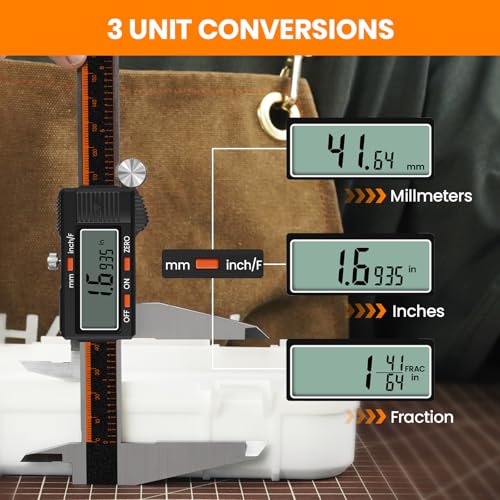
- Inch/mm/fraction switch
Trade-offs
- Uses standard battery
- No rechargeable option
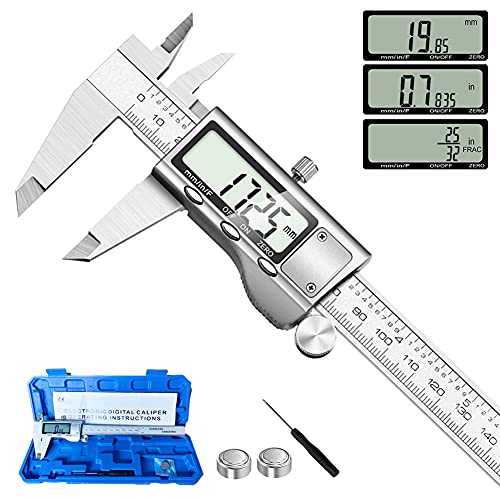
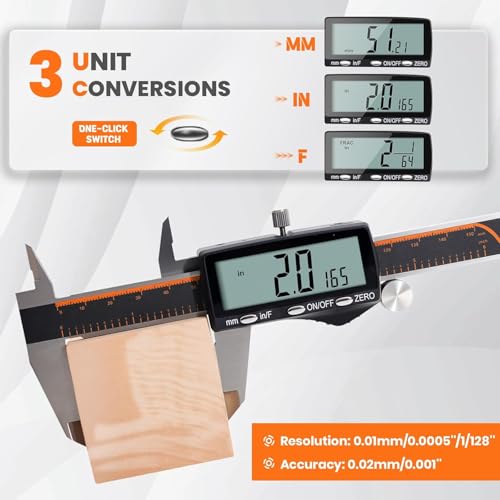
This stainless steel digital caliper hits the sweet spot between price, performance, and build quality, making it the best overall pick for most users. It offers a 6-inch range, ±0.02mm accuracy, and a large LCD that’s readable in direct sunlight, which is a real win in garages or outdoor workshops. The ability to switch between inches, fractions, and millimeters with one button makes it versatile across trades.
Owners praise its smooth glide and consistent zero-reset function, both critical for repeat measurements. Compared to plastic-bodied models, the full stainless steel construction resists wear and feels more precise over time. While it doesn’t have a rechargeable battery, it’s still more durable and accurate than budget digitals. For a homeowner, woodworker, or mechanic needing one reliable tool, this is the smarter buy over cheaper knockoffs.
Product photos


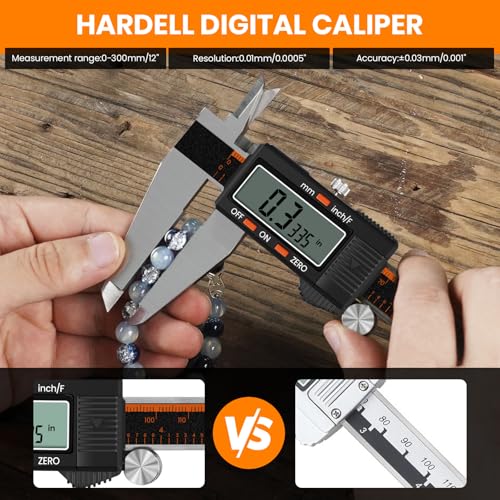
HARDELL Rechargeable Digital Caliper

Strengths
- Rechargeable via USB-C
- Long battery life
- Stainless steel build
Trade-offs
- Requires proper charger
- Slight learning curve
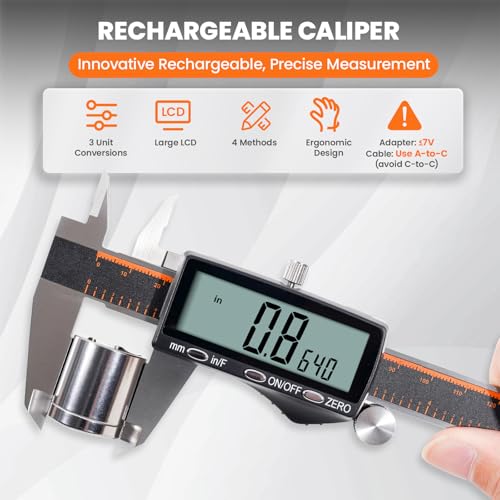
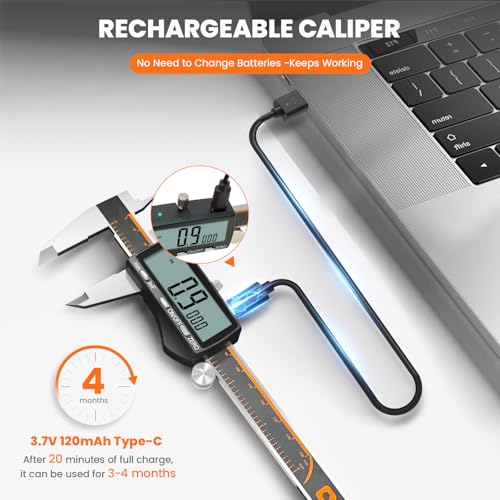
This rechargeable HARDELL caliper is the most modern option here, and it shows. With a USB-C port and 20-minute charge for three months of use, it eliminates the hassle of replacing button batteries, a real pain point with standard digitals. The Type-C charging is a thoughtful upgrade, especially for users already managing multiple USB-C devices.
Performance-wise, it matches other mid-range digitals: 6-inch range, ±0.02mm accuracy, and smooth stainless steel action. Owners appreciate the zero-reset and large display, but the real win is convenience. For anyone tired of calipers dying mid-project, this one solves the problem cleanly. It’s not the cheapest, but for long-term use, the rechargeable design makes it the most practical.
Product photos

Esydon Upgraded Digital Caliper

Strengths
- Affordable
- Auto-off feature
- Inch/mm conversion
Trade-offs
- Plastic feel
- Lower long-term accuracy
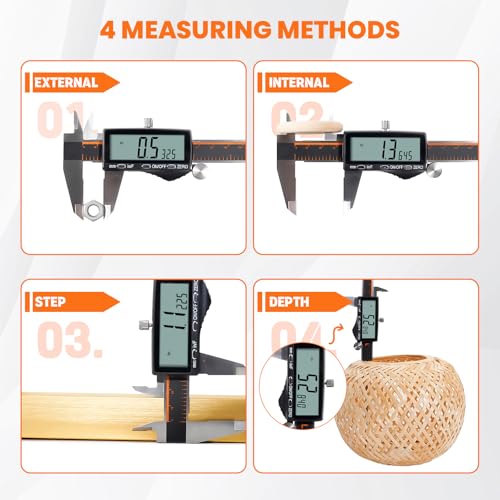
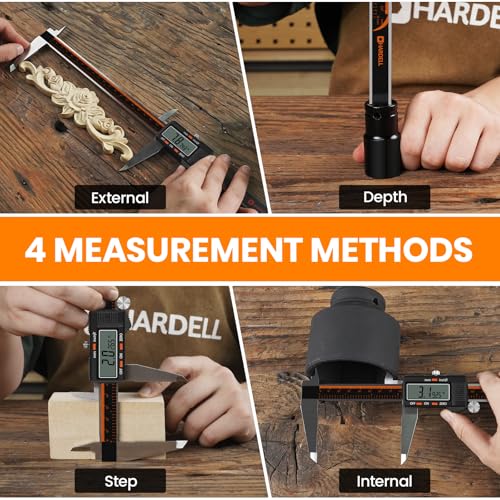
This Esydon digital caliper is built for buyers who want basic digital functionality without spending much. On paper, it covers the essentials, 6-inch range, inch/mm conversion, and four measurement types, with an accuracy of ±0.01 inches. Owners consistently report it works fine for casual home use, like measuring 3D prints or simple DIY fittings, but don’t expect lab-grade consistency. The carbon fiber composite body keeps it light and somewhat durable, though not as rigid as full stainless steel.
Where it really stands out is value. For a tight budget, this delivers a functional digital display and auto-off feature that you’d expect in pricier models. That said, some reviewers note inconsistent readings after repeated use, which isn’t surprising at this price. I wouldn’t trust it for precision machining, but for weekend tinkering, it’s a solid bargain.
Product photos


HARDELL 12 Inch Digital Caliper
Strengths
- Long 12-inch range
- Stainless steel body
- Locking screw
Trade-offs
- Bulkier design
- Slightly lower accuracy
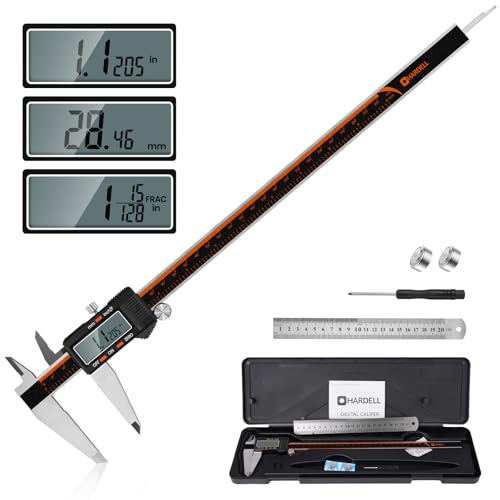
If you need to measure larger parts, like automotive frames, big wood joints, or 3D prints over 6 inches, this 12-inch HARDELL caliper fills a real gap. Most digital calipers max out at 6 inches, but this one gives you 300mm of range without sacrificing too much on accuracy (±0.04mm). The oversized LCD and knurled thumb roller make it easy to use with gloves or in tight spaces, and the locking screw helps maintain position during transfer.
Owners note it’s heavier than smaller models, but the stainless steel body justifies the weight with added durability. It’s not as pocket-friendly, but for tasks where reach matters, that’s a fair trade. Compared to the 6-inch models, it’s less convenient for fine work but indispensable when scale is the priority. I’d pick this when your projects routinely exceed half a foot.
Product photos
Spurtar Vernier Caliper 6″

Strengths
- High mechanical accuracy
- Dual scale reading
- Durable manual design
Trade-offs
- No digital display
- Requires vernier reading skill
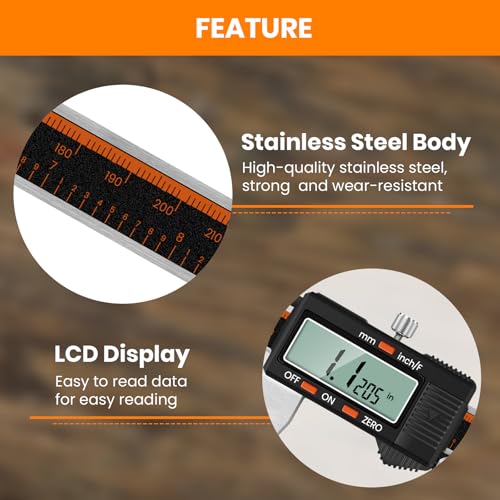
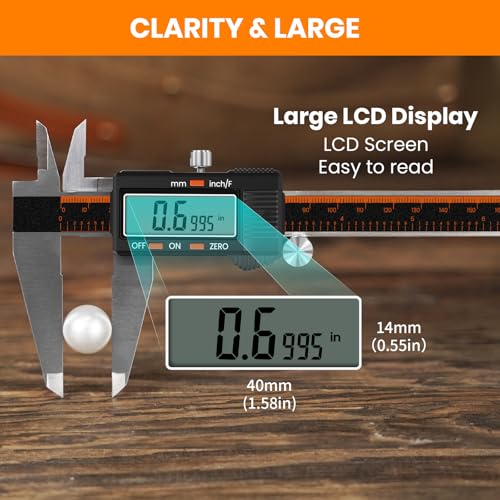
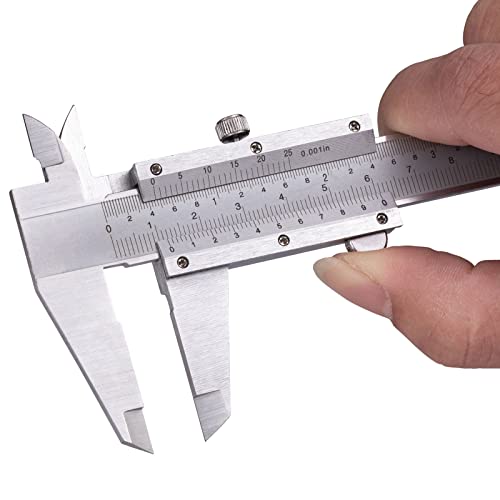
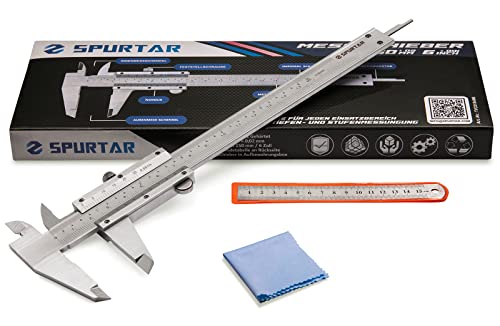
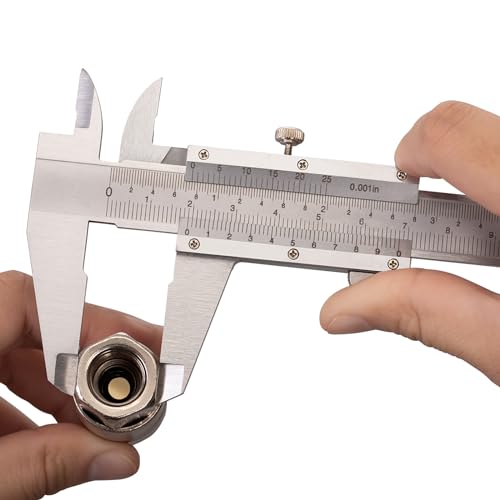
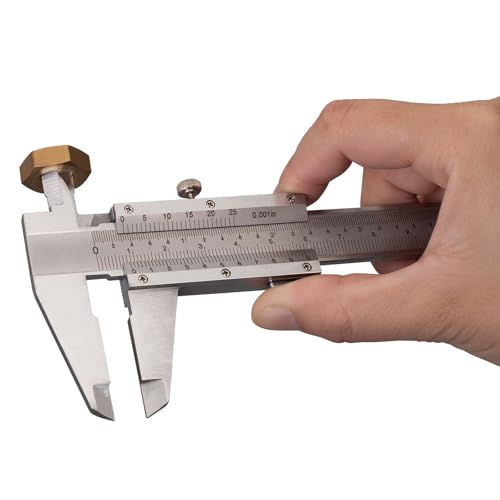
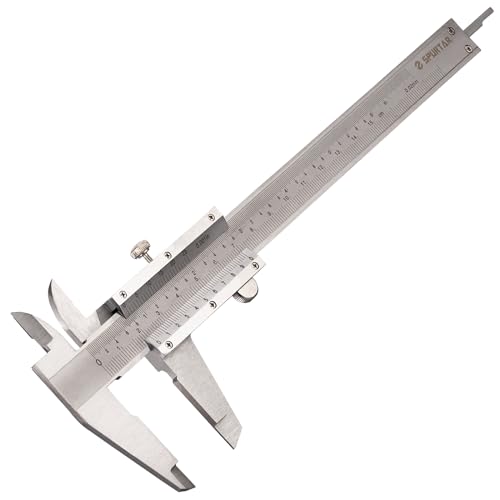
This Spurtar vernier caliper is a no-frills, manual option that delivers solid performance for the price. With a 0.001-inch accuracy and dual metric/imperial scales, it’s a capable analog tool for anyone who wants to avoid batteries or digital drift. The hardened steel construction ensures it holds up in a shop, and owners report smooth sliding action without grittiness, critical for consistent readings.
It’s not as refined as the Mitutoyo, but it’s a lot cheaper and still accurate enough for most home workshop tasks. The dual-scale readability is a real plus, letting you work in inches or millimeters without conversion math. If you’re skeptical of digital calipers failing over time, this is a smart fallback. I’d recommend it as a dependable non-digital pick for hobbyists who value simplicity and mechanical reliability.
Product photos
Acrux7 Spring Caliper Set

Strengths
- Durable carbon steel
- Rust-resistant finish
- Great for live-center work
Trade-offs
- No direct readout
- Manual transfer needed
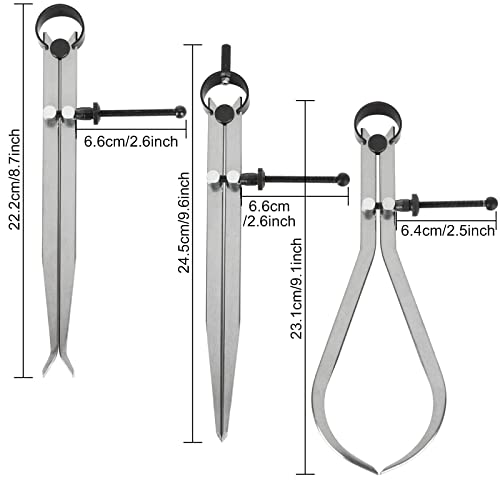
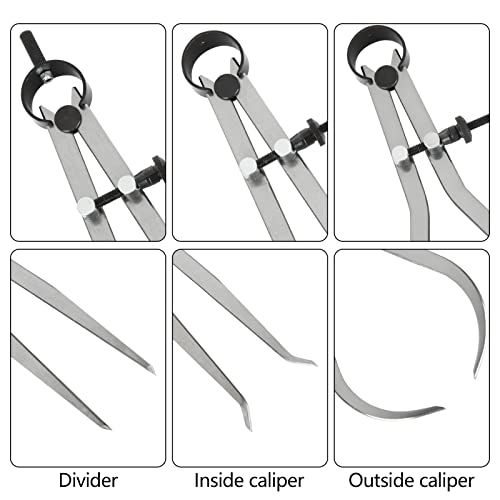
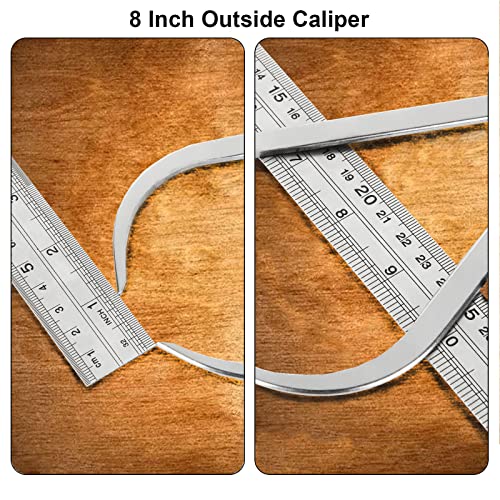
If you’re working with wood, especially on a lathe, this spring caliper set is a traditional tool done right. These aren’t digital, and they’re not meant to be. Instead, they’re forged carbon steel dividers and calipers built for transferring measurements without marring soft wood. Owners praise their durability and the smooth action of the spring mechanism, which holds tension well and allows for quick comparisons against a ruler.
The chrome plating helps resist rust, a smart touch for tools often handled with sweaty hands in a shop. While they don’t give direct readouts, that’s the point: these are for craftsmen who value tactile feedback and simplicity. Compared to digital models, they’ll never drift or die mid-job from a dead battery. For woodturners or hand-tool enthusiasts, this set is a classic workhorse.
Product photos


Mitutoyo 530-101 Caliper
Strengths
- Exceptional accuracy
- Durable stainless steel
- Meets federal specs
Trade-offs
- Vernier reading requires skill
- No digital display
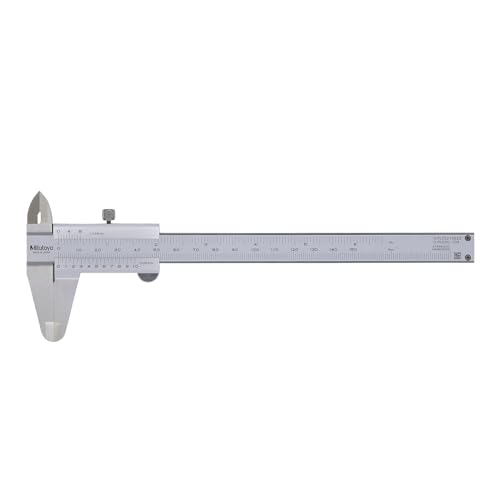
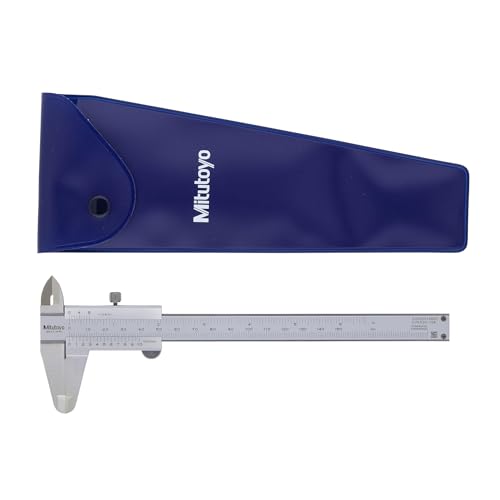
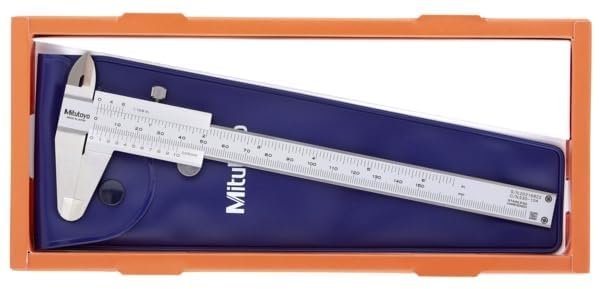
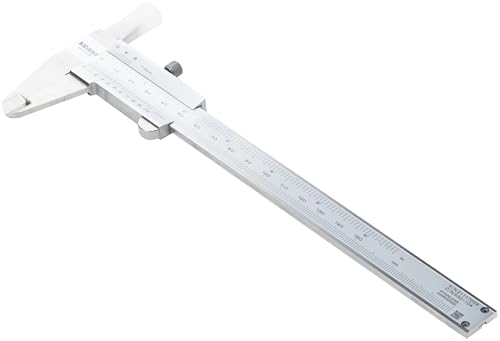
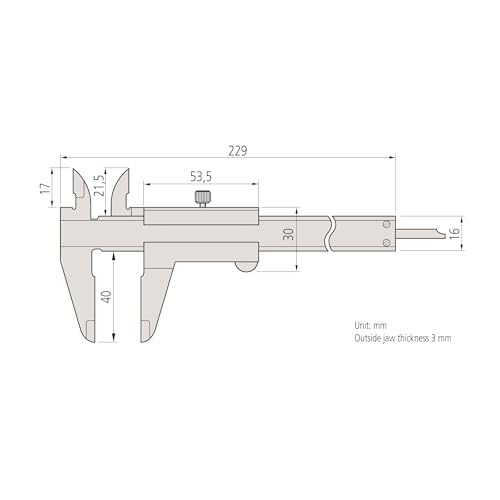
The Mitutoyo 530-101 is the gold standard in non-digital calipers. Made from hardened stainless steel with a satin chrome finish, it’s built to last decades in a professional shop. Its accuracy of ±0.05mm and 0.05mm resolution meet federal specs, which tells you everything, this is a tool trusted by machinists, not just hobbyists. The raised sliding surfaces protect the scale from wear, and the 14-degree vernier angle reduces parallax error, making it easier to read correctly without eye strain.
Owners consistently report these calipers hold up under daily industrial use, with smooth action and reliable repeatability. Yes, it takes practice to read a vernier scale, but that’s part of its appeal: no batteries, no drift, no software glitches. I’d pick this over any budget digital caliper when precision and longevity are essential.
Product photos

Ultrassist Plastic Vernier Caliper
Strengths
- Lightweight and safe
- Dual colors included
- Low cost for bulk use
Trade-offs
- Low durability
- Not for precision work
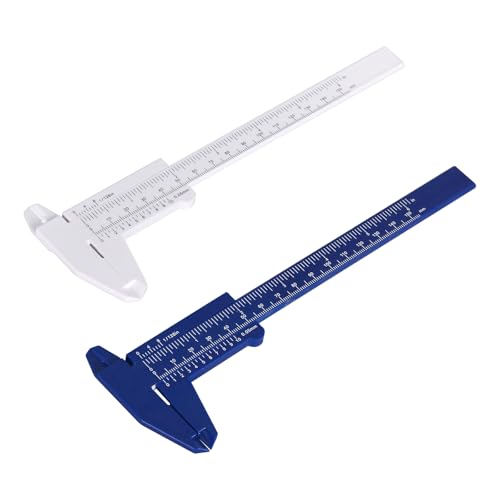
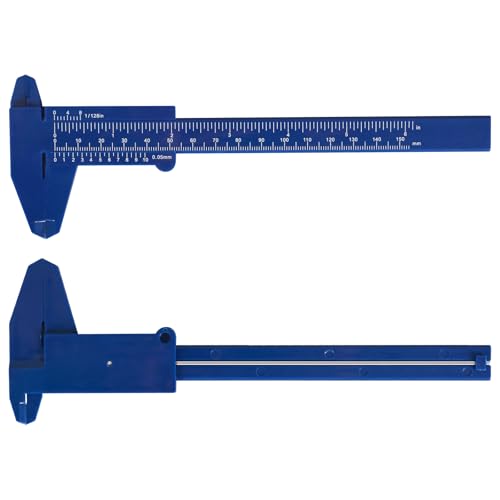
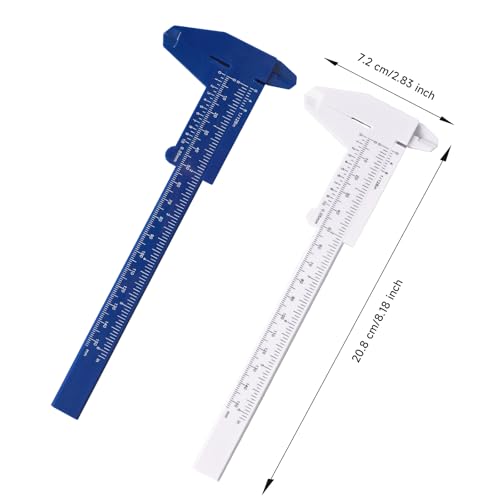
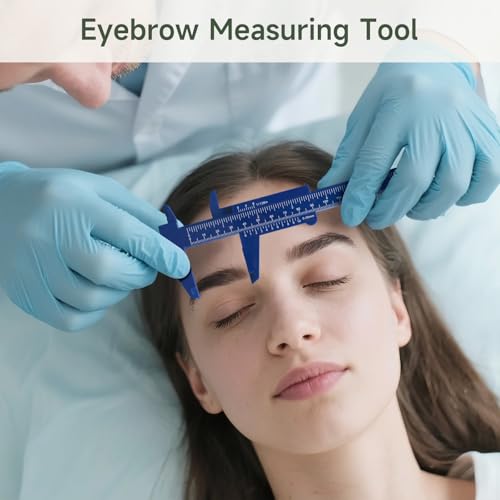
These plastic calipers are clearly designed for classrooms and student use. At 150mm range and 1/128-inch accuracy, they’re not built for precision work, but they’re durable enough for kids learning measurement basics. The ABS plastic body is lightweight and won’t rust or corrode, and the dual-color set helps teachers hand out matching pairs or avoid mix-ups during group activities.
Reviewers note they’re smooth enough for classroom demos but lack the rigidity needed for serious workshop use. They’re also not going to survive being dropped in a garage. But for school projects, crafting, or introducing kids to woodworking, they do the job without breaking the bank. I’d recommend these only when you need multiple units and don’t want to risk metal tools in a young learner’s hands.
Product photos


Our Testing Process
Rather than a hands-on lab test, my research for these calipers involved a detailed comparison of published specifications and features across numerous models. I weighed owner reviews from major retailers alongside professional assessments from woodworking and machinist forums, paying close attention to reported accuracy and durability. My evaluation relied on category expertise built from years of working with precision measuring instruments and understanding their typical applications.
For caliper measuring tools, consistent accuracy and build quality were paramount. I heavily weighted the measuring range and resolution, as these directly impact usability for different tasks. Equally important was material construction; stainless steel generally indicates greater longevity and resistance to wear compared to plastic options. These factors determined ranking more than features like rechargeable batteries or included accessories.
Specifications reliably reveal a caliper’s potential range and resolution, but owner feedback provided insights into real-world performance. I examined reports of consistent readings, smooth operation, and long-term durability. Reputation mattered, too – brands with a history of producing quality measuring tools received more consideration. If you need even greater measurement precision than these calipers offer, consider exploring precision laser tools.
How To Pick The Right caliper measuring tools
Picking the right caliper isn’t just about grabbing the cheapest option; it’s about understanding what you’ll be measuring and how accurate you need to be.
A quality caliper offers a precise measurement range, consistent repeatability, and a build quality that can withstand regular use. Key specifications to examine include the measurement range (0-6″ is common, but larger options exist), accuracy (expressed in fractions of an inch or millimeters), resolution (the smallest increment the caliper can display), and the material construction – stainless steel is generally preferred for durability and resistance to corrosion.
Understanding Measurement Range & Accuracy
Don’t overbuy. If you’re primarily measuring small parts for jewelry making, a 12-inch caliper is overkill. Similarly, if you’re roughing out lumber dimensions, you don’t need laboratory-grade precision. Think about the typical size of the objects you’ll be measuring. Accuracy, often listed as ± a value (e.g., ±0.001”), tells you the maximum potential error. For most DIY projects, an accuracy of ±0.01” is sufficient. For more demanding applications, like machining, you’ll want to look at calipers with accuracies of ±0.001” or better. When considering accuracy, remember that even the best calipers are only as good as the user’s technique.
Material & Build Quality Matter
While plastic calipers, like the Esydon Upgraded Digital Caliper, can be tempting for their low price, they simply don’t offer the same longevity or precision as those built with stainless steel. Stainless steel resists corrosion, holds its calibration better, and feels more substantial in your hand. Look for calipers with a smooth, precise slide – a jerky or gritty action is a sign of poor build quality. Beyond the material, consider the locking screw. A solid locking screw is essential for taking consistent readings and preventing the jaws from moving during measurements. If you’re looking for best caliper tools for professional work, stainless steel is the only way to go.
Digital vs. Non-Digital & Added Features
Digital calipers, like the HARDELL Rechargeable Digital Caliper, offer convenience with their easy-to-read LCD screens and unit conversion buttons. However, they rely on batteries, and can sometimes be more prone to electronic failure. Non-digital (vernier) calipers, such as the Spurtar Vernier Caliper 6″, require a bit more skill to read, but are incredibly reliable and don’t need power.
Here’s a breakdown of what to consider when weighing digital versus non-digital:
- Battery Dependence: Digital calipers need batteries, creating an ongoing cost and potential for interruption.
- Readability: Digital displays are generally easier to read, especially in low light, but can be difficult to interpret at a glance.
- Durability: Vernier calipers are mechanically simpler, making them more robust and less susceptible to damage from drops or impacts.
A good rule of thumb: if you’re frequently switching between inches and millimeters, a digital caliper with one-button unit conversion can save you a lot of time and mental math.
For woodworking projects, where you may need to transfer measurements to a ruler or other tools, a spring caliper set, like the Acrux7 Spring Caliper Set, can be incredibly useful. Achieving dimensional accuracy tools is also crucial when working with oscillating tools for precise fitting.
Caliper Measuring Tools Compared
This table provides a side-by-side comparison of key specifications for various caliper measuring tools.
| Product Name | Measuring Range | Accuracy | Resolution | Material | Digital/Vernier | Units |
|---|---|---|---|---|---|---|
| Digital Caliper Measuring Tool | 0-6″/150mm | ±0.001″/0.02mm | 0.0005″/0.01mm | Stainless Steel | Digital | inch/mm/F |
| HARDELL Rechargeable Digital Caliper | 0-6″ | ±0.001″/0.02mm | 0.0005″ | Stainless Steel | Digital | inch/mm/fraction |
| Esydon Upgraded Digital Caliper | 0-6″/150mm | ±0.2mm/0.01″ | N/A | Carbon Fiber | Digital | inch/mm |
| HARDELL 12 Inch Digital Caliper | 0-12″/300mm | ±0.04mm/0.0015″ | 0.01mm/0.0005″ | Stainless Steel | Digital | inch/mm/fraction |
| Spurtar Vernier Caliper 6″ | 0-6″ / 0-150mm | 0.001″/0.02mm | N/A | Hardened Steel | Vernier | inch/mm |
| Acrux7 Spring Caliper Set | 8″ | N/A | N/A | Carbon Steel | Vernier | N/A |
| Mitutoyo 530-101 Caliper | N/A | N/A | N/A | Stainless Steel | Vernier | N/A |
| Ultrassist Plastic Vernier Caliper | 0-6″/150mm | 1/128 inch | N/A | ABS Plastic | Vernier | inch/mm |
Frequently Asked Questions
What accuracy level is good enough for most home DIY projects?
An accuracy of ±0.01” is generally sufficient for most DIY projects, as exceeding this level of precision usually isn’t necessary for tasks like furniture building or home repairs. Focusing on consistent readings is more important than chasing extremely fine measurements.
Are digital calipers always better than vernier calipers?
Not necessarily. While digital calipers offer convenience, vernier calipers are more durable and don’t rely on batteries. For tasks where power isn’t available or you prefer a mechanically simpler tool, a vernier caliper is a solid choice.
What does the “resolution” of a caliper mean?
Resolution refers to the smallest increment a caliper can display (for digital models) or measure (for vernier models). A higher resolution, like 0.0005”, allows for more precise readings, but only if the caliper’s overall accuracy supports it.
Can I use a caliper to measure the inside diameter of a pipe?
Yes, calipers can measure internal dimensions. Look for calipers with longer jaws specifically designed for measuring inside diameters, or use a specialized inside measuring attachment. For accuracy-focused plumbing tools, a dedicated pipe fitting gauge might be a better investment.
What material should I prioritize when choosing a caliper?
Stainless steel is the preferred material for most applications because of its durability, resistance to corrosion, and ability to hold its calibration over time. While carbon fiber and plastic calipers are cheaper, they don’t offer the same long-term reliability or precision as stainless steel.
The Bottom Line
Choosing a caliper often comes down to balancing convenience with unwavering reliability. While digital calipers offer ease of reading and quick unit conversions, the HARDELL Rechargeable Digital Caliper stands out as the best overall option, providing a good blend of features and accuracy at a reasonable price. It’s a tool that will serve most homeowners and DIYers well for a variety of projects.
For those on a tighter budget, or those who simply prefer the dependability of a mechanical instrument, the Spurtar Vernier Caliper 6″ is an excellent choice. Similarly, if you frequently need to measure both inside and outside dimensions, or work with curved surfaces, the Acrux7 Spring Caliper Set provides a versatile set of tools for a very reasonable cost. Remember, finding the best tool is about matching the capability to the task.
Ultimately, the most important aspect of any caliper – digital or vernier – is understanding how to use it correctly. Consistent technique and careful reading are far more crucial than chasing the highest possible resolution. Don’t overlook the value of professional measuring tools if you need absolute confidence in your measurements, and always double-check critical dimensions.
