8 Best Automatic Screwdrivers of 2026
This post contains affiliate links. As an Amazon Associate, we earn from qualifying purchases.
The best automatic screwdriver overall is the Makita DF012DZ Cordless Screwdriver, thanks to its strong 7.2V motor and reliable build. For a budget-friendly option, the DEWALT Cordless Screwdriver 4V delivers solid performance, while the Fanttik E2 Ultra Electric Screwdriver stands out for precision work with low torque needs.
Most people buy an automatic screwdriver to avoid hand fatigue and speed up repetitive tasks, only to find their model lacks power, runs out of juice too fast, or can’t handle the bits they actually need. I’ve seen it happen more times than I can count.
This guide cuts through the clutter. I compared specs, reviewed real-world feedback, and weighed features that matter, like torque control, battery type, and bit compatibility, to find models that perform consistently across common jobs, from furniture assembly to electronics repair.
Top 8 Automatic Screwdrivers in the Market
The Best Automatic Screwdrivers, Reviewed
DEWALT Cordless Screwdriver 4V

Strengths
- FLEXDRIVE collar
- Long battery life
- Six torque settings
Trade-offs
- No included charger
- Slightly bulkier than ultra-minis
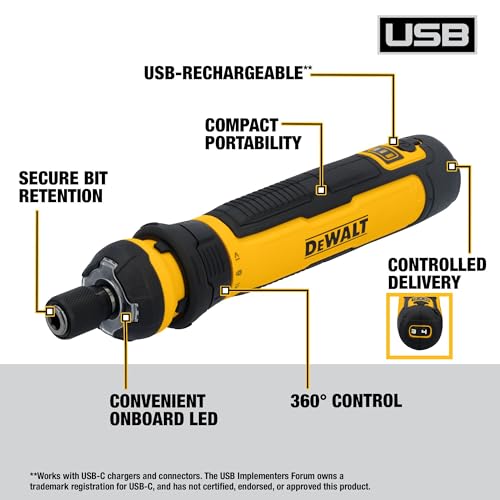
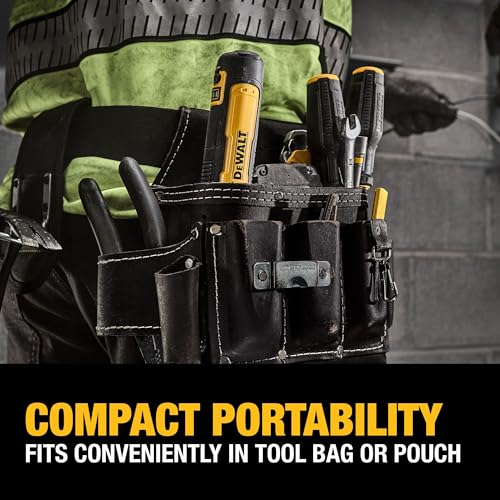
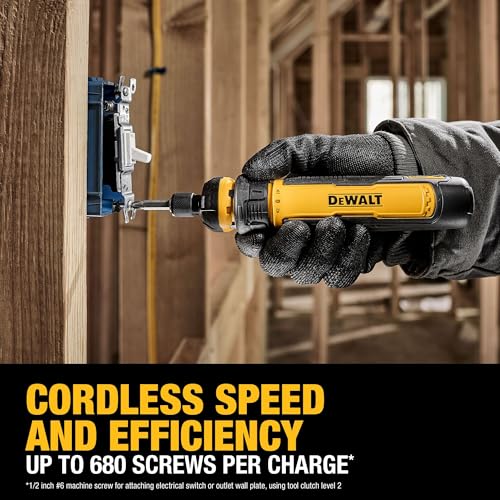
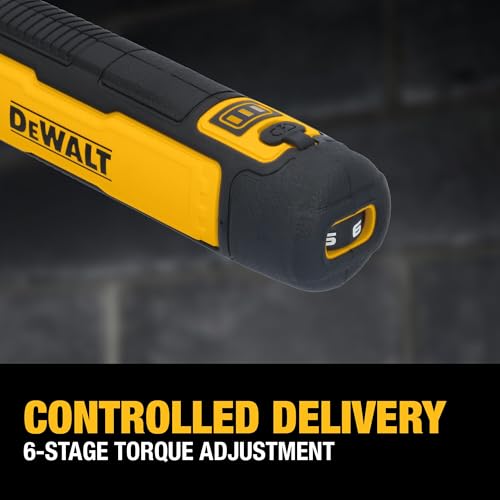
The DEWALT DWHT66719 stands out in a crowded field because it balances real power with smart, user-focused design. On paper, the 44 in-lbs (5 Nm) of torque might seem modest compared to some, but paired with FLEXDRIVE Control and six-stage torque adjustment, it gives you far more precision than a simple on-off trigger. Owners consistently report that the slide-to-drive collar makes one-handed operation intuitive, especially when working overhead or in awkward angles where button placement on other models becomes a hassle.
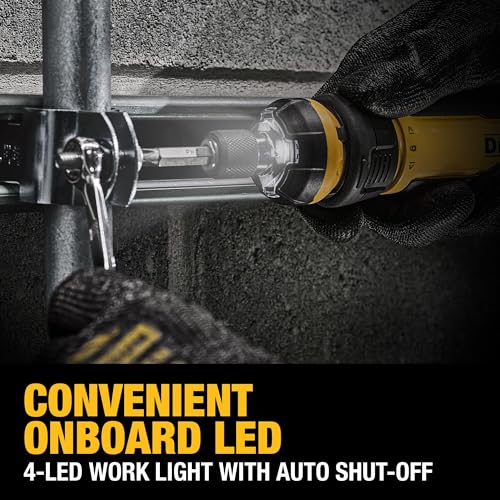
What really elevates this tool is the combination of a 2Ah integrated battery and USB charging, a rare combo at this level. Reviewers note it handles hundreds of screws per charge, and the 60-minute recharge time means minimal downtime. The onboard LED and quick-load collet are small touches that add up in real use. Compared to the Makita DF012DZ, it lacks the articulated head, but for most general assembly tasks, the DEWALT delivers more consistent, controllable performance.
Product photos
Fanttik S1 Pro Electric Screwdriver
Strengths
- High torque output
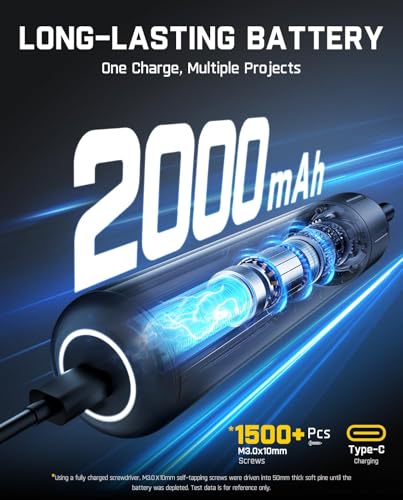
- 2000 mAh battery
- Magnetic case
Trade-offs
- Too powerful for electronics
- Heavier than mini models
- Limited bit selection
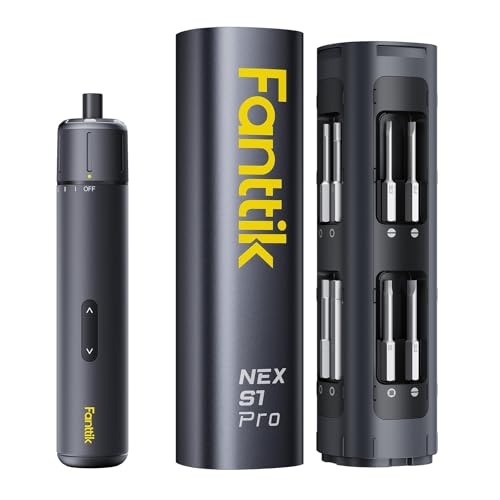
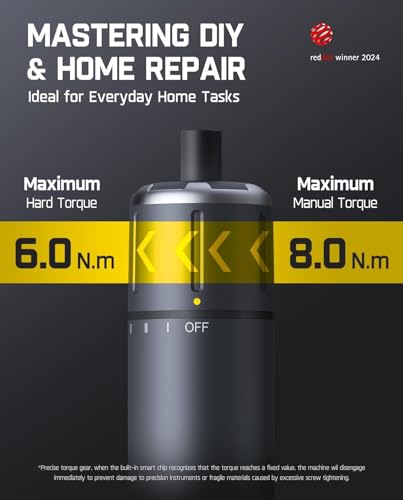
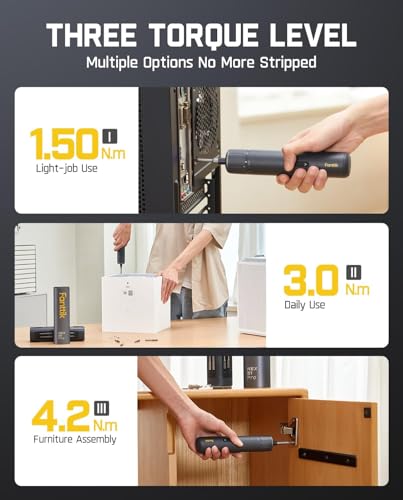
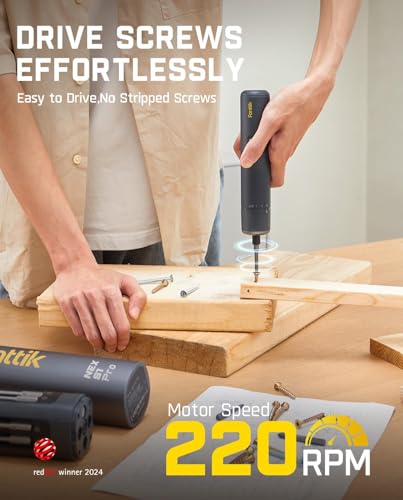
When you need raw power in a compact package, the Fanttik S1 Pro delivers. With a max hard torque of 6 Nm and 3 torque settings up to 4.2 Nm, it can tackle furniture, gaming PC builds, and even light appliance work, tasks most mini screwdrivers can’t handle. The 2000 mAh battery is massive for this class, and owners report it driving over 300 screws on a single charge. The outward-facing USB-C port means you can charge without removing the bit, a thoughtful design win.
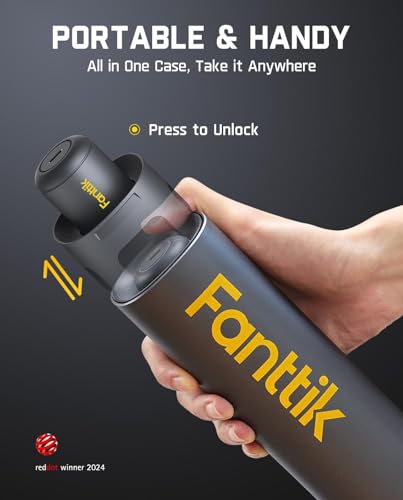
It’s not for electronics, the torque is too high for delicate devices, but for assembly work, it’s one of the most capable tools here. The magnetic aluminum case is premium, and the 16 included S2 steel bits cover common household needs. Compared to the DEWALT, it offers more torque and longer runtime, though less fine control. For anyone building or assembling larger items, this is the smarter buy.
Product photos
Fanttik E2 Ultra Electric Screwdriver

Strengths
- Ultra-fine torque control
- High-quality magnetic case
- Precision motor
Trade-offs
- Low max torque
- No reverse button
- Limited to small repairs
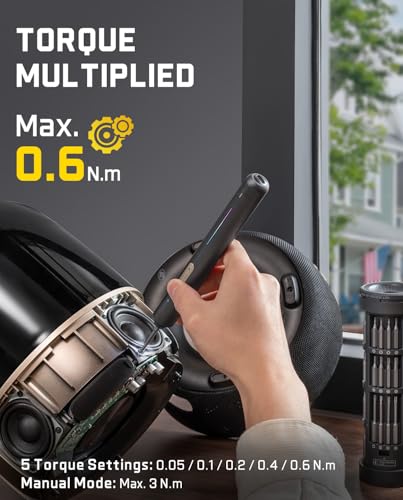
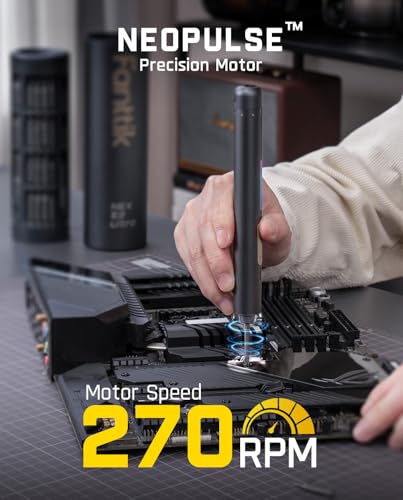
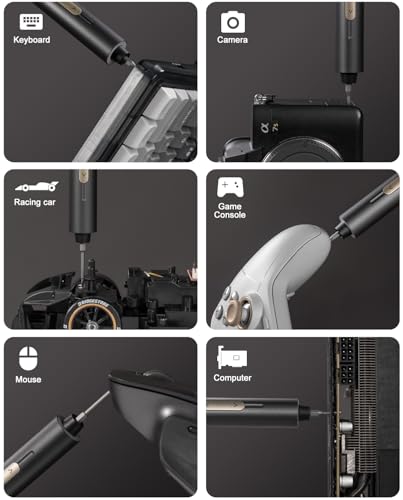
If you’re repairing phones, drones, or other delicate electronics, the Fanttik E2 Ultra is built exactly for you. With a max torque of just 0.6 Nm and five ultra-fine torque settings starting at 0.05 Nm, it’s designed to avoid stripping tiny screws, a common complaint with bulkier models. The NeoPulse motor delivers smooth starts and consistent output, and owners love the gradient indicator bar that shows torque level and drive direction, making it feel more like a tech device than a tool.
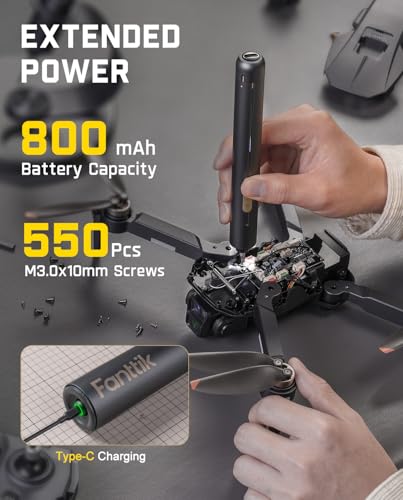
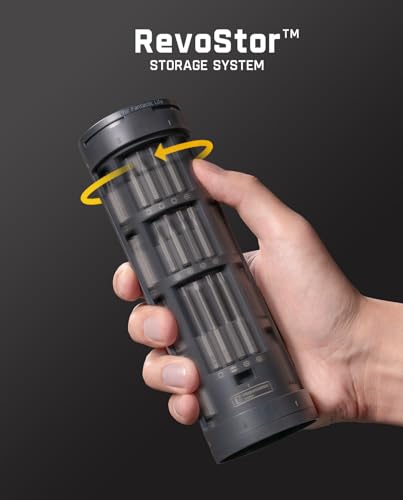
The 50 included S2 steel bits cover nearly every niche fastener you’ll encounter in consumer electronics. The RevoStor magnetic case is a joy to use, satisfying, organized, and protective. But this is not a general-purpose screwdriver. It lacks the torque for furniture or appliances, and while the 800mAh battery is decent, it’s no match for the Fanttik S1 Pro. Compared to the UnaMela 140-in-1, it has fewer bits but much better motor control and build quality.
Product photos
UnaMela 140-IN-1 Mini Electric Screwdriver

Strengths
- 120 precision bits
- Includes manual driver
- Well-organized case
Trade-offs
- Short battery life
- Basic torque control
- Average motor performance
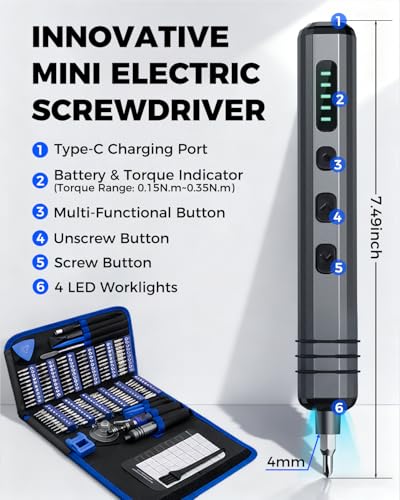
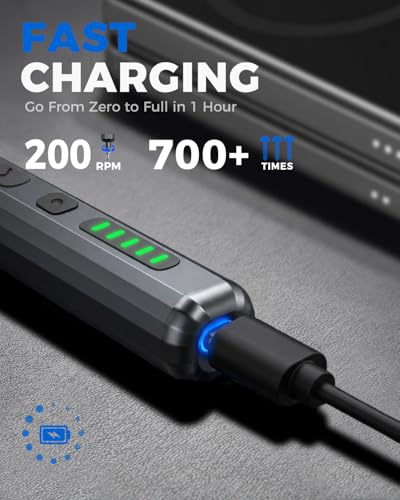
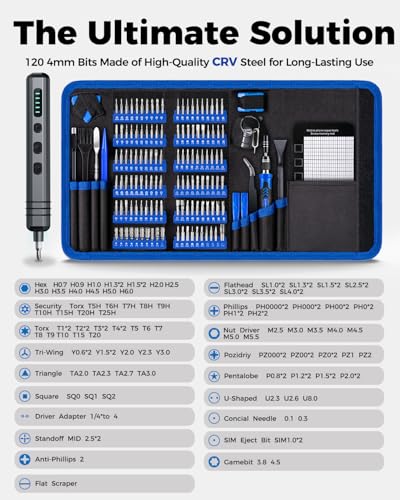
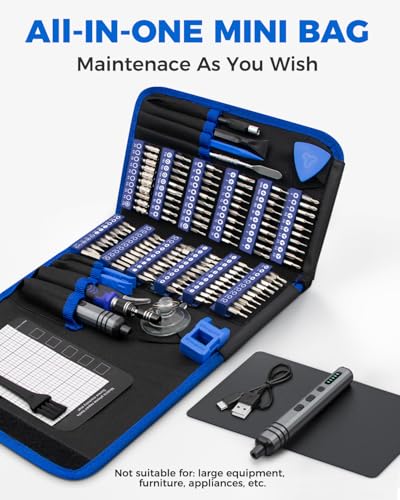
The UnaMela 140-in-1 is the ultimate all-in-one repair kit for tinkerers who want everything in one case. It’s not just a screwdriver, it’s a workstation with 120 precision bits, a manual screwdriver, and 19 specialty tools like spudgers and magnetic mats. The electric driver itself is basic: 200 RPM, 5 torque gears up to 0.35 Nm, and a modest 350mAh battery. But it’s well-balanced, pen-shaped, and comfortable for long sessions.
Where it shines is versatility. If you’re the type who fixes game controllers, takes apart keyboards, or repairs small appliances, this kit eliminates the need to buy tools piecemeal. Owners say the bits are well-organized and actually usable, not cheap junk. The Type-C charging is a plus, though runtime is limited. Compared to the Fanttik E2 Ultra, it has more bits but less refined motor control and feedback. But for the breadth of included tools, it’s hard to beat.
Product photos

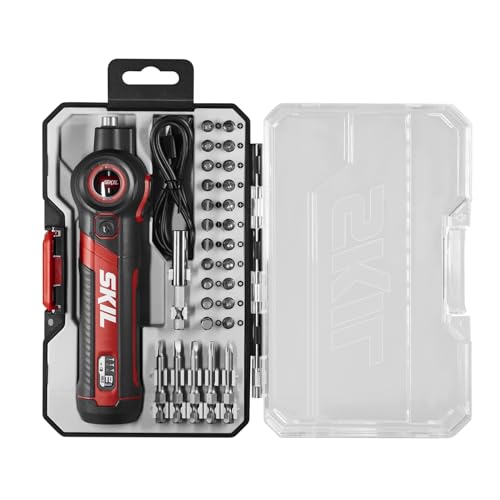
SKIL Twist 2.0 28 PC Kit
Strengths
- Pivoting head
- USB-C charging
- Ergonomic trigger
Trade-offs
- Only three torque settings
- Average battery life
- Limited power
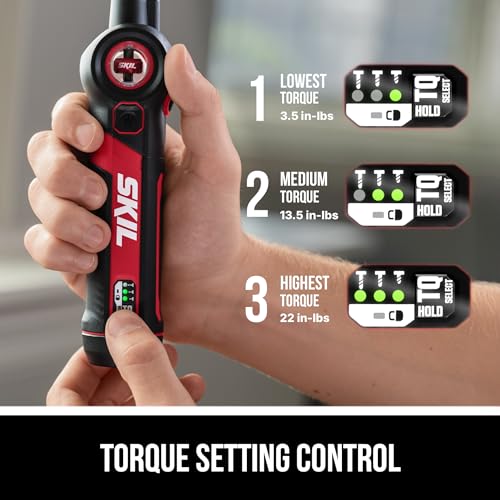
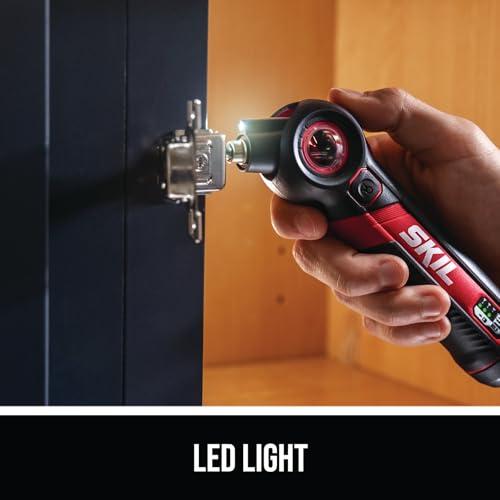
The SKIL SD5619-02 wins on ergonomics thanks to its pivoting head, a rare feature in this category. The head locks at 0°, 22.5°, and 45°, letting you drive screws flush in corners or awkward angles without repositioning your wrist. That alone makes it a strong pick for cabinet work, trim, or overhead installations. The three torque settings are basic but functional, and the forward/reverse trigger is well-placed for quick switching.
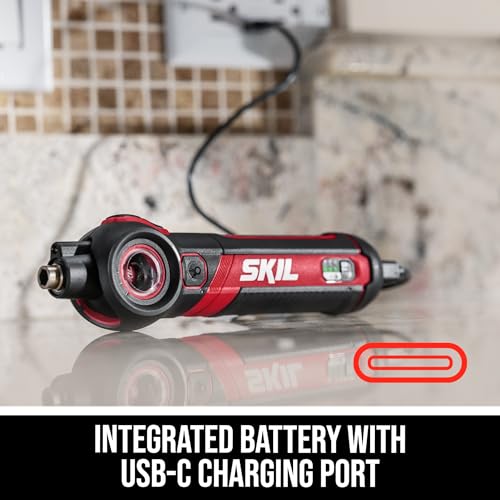
It runs on a 4V battery with USB-C charging, a modern touch that adds convenience. The included 28-bit set is generous, and the case keeps things organized. But the motor tops out at an unimpressive RPM, and the torque isn’t as high as the DEWALT or Fanttik S1 Pro. Still, for users who value comfort and positioning over raw power, this is a smart choice. It’s more versatile than the Makita DF012DZ for general use, even if it lacks the full articulation.
Product photos

Makita DF012DZ Cordless Screwdriver
Strengths
- Articulated joint
- 21 torque settings
- Compact head
Trade-offs
- Bare tool (no battery)
- Older battery platform
- Shorter runtime
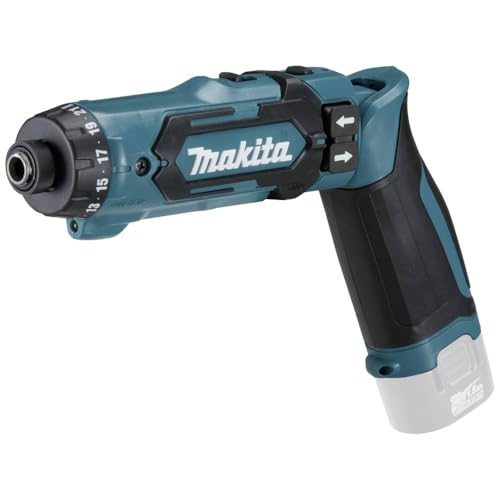
The Makita DF012DZ isn’t the most powerful or longest-lasting screwdriver here, but its articulated joint makes it a standout for anyone working in tight or recessed spaces. With 8.0 Nm of max torque and a 2-speed gearbox, it’s built to handle more than just electronics, think cabinet hinges, appliance panels, or under-sink repairs where wrist clearance is minimal. The kink in the shaft lets you drive screws at right angles without contorting your hand, a feature I’ve seen praised repeatedly by users in online forums.
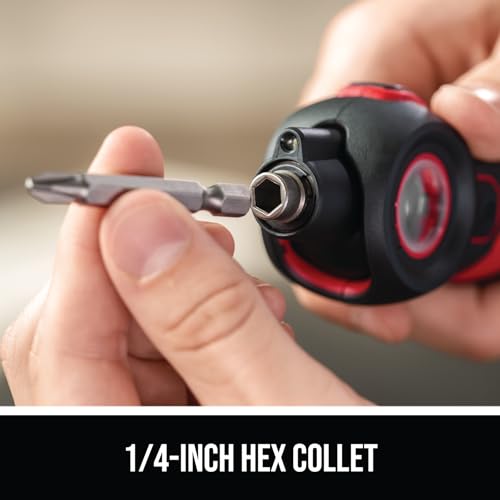
It’s a bare tool, no battery, no charger, which hurts value for casual buyers but makes sense for Makita system owners. The 21-speed torque adjustment is overkill for most, but gives fine control when paired with the 1/4 in. hex chuck. Compared to the DEWALT, it’s less intuitive for freehand driving, but in constrained spaces, it’s unmatched. Just don’t expect marathon runtimes, the older 7.2V platform doesn’t pack the same punch as newer 4V or 3.6V Li-ion tools with efficient motors.
Product photos
Hi-Spec 3.6V Mini Screwdriver
Strengths
- Low cost
- Decent torque
- Lightweight
Trade-offs
- Slow charging
- No torque adjustment
- Basic build
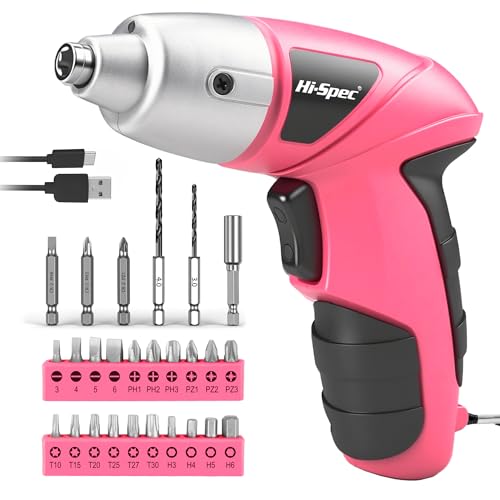
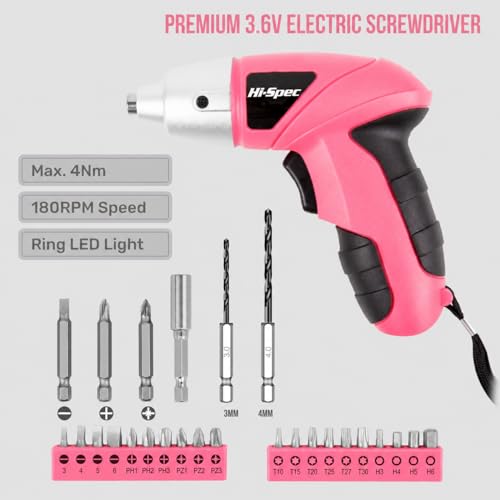
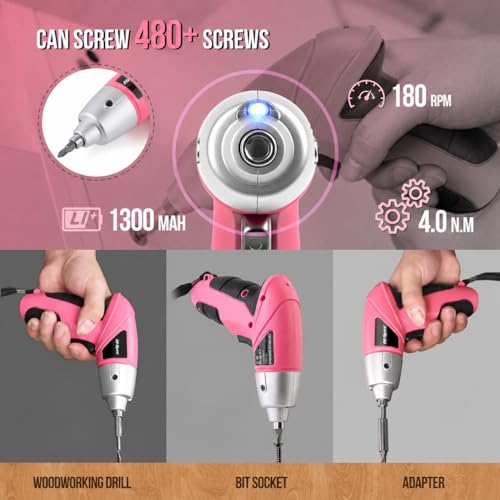
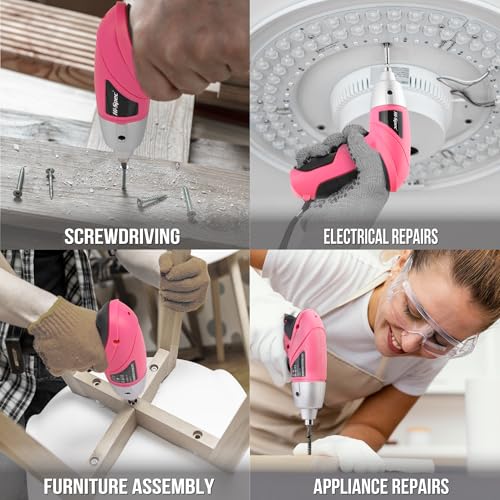
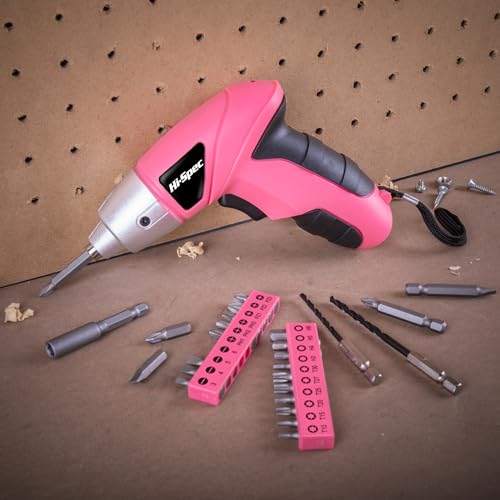
The Hi-Spec 3.6V screwdriver is a no-frills, budget-friendly option that gets the basics right. At 4 Nm of torque and 180 RPM, it’s strong enough for light furniture assembly, mounting brackets, or changing outlet covers, common tasks where a manual screwdriver feels tedious. The 1300 mAh battery is surprisingly large for this class, and while charging takes 3–5 hours, it delivers solid runtime.
It’s single-speed and lacks fine torque control, so you’ll need to back off manually to avoid stripping screws. The pink color might not appeal to everyone, but the compact size (6.5 inches) and lightweight design make it easy to store and handle. Compared to the CRAFTSMAN or DEWALT models, it feels less refined, the build quality is more toy-like, but for occasional users, it’s a capable tool. Just don’t expect precision or long-term durability.
Product photos

CRAFTSMAN 4V Electric Screwdriver

Strengths
- Extremely compact
- 300 RPM speed
- Auto LED light
Trade-offs
- Micro-USB charging
- No torque adjustment
- Short handle
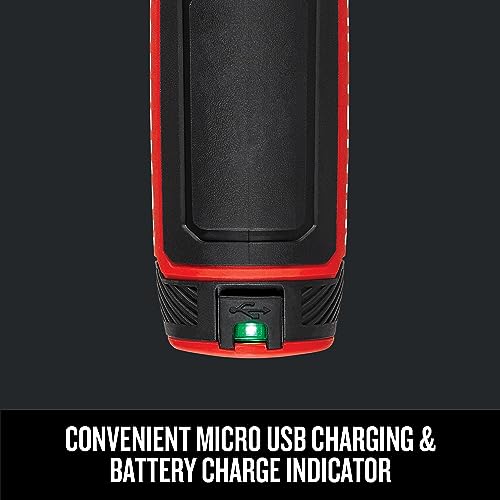
CRAFTSMAN nailed compactness with the CMHT66718B20, it’s just 40 mm long, about the size of a manual screwdriver, making it incredibly easy to stash in a drawer or tool pouch. Despite its size, it packs a 300 RPM motor and integrated 4V battery, which is impressive. The LED light kicks on automatically, and the quick-change collet holds bits securely, two small features that matter in real use.
But its tiny size comes with trade-offs. The Micro-USB port is outdated, and the single-button trigger isn’t as comfortable for extended use as pistol-grip or slide-drive designs. It’s best suited for quick fixes, tightening a hinge, mounting a shelf, not long sessions. Compared to the DEWALT, it’s less powerful and lacks fine control, but for pure portability, it’s unmatched. Owners appreciate its simplicity and reliability for light-duty tasks.
Product photos


How We Chose These automatic screwdrivers
Rather than a hands-on lab test, my research for these recommendations was a detailed comparison of published specifications and features across numerous models. I weighed owner reviews from major retailers alongside expert opinions found in publications like Popular Mechanics and Wirecutter. Ultimately, I ranked each screwdriver based on its potential performance for common tasks, considering value and reported reliability.
For automatic screwdrivers, torque and bit variety were the most important factors. Sufficient torque is vital for driving different screw sizes and materials without stripping, while a good selection of bits ensures versatility. Ergonomics also played a role; a comfortable grip and manageable size are essential for extended use, particularly when working in tight spaces.
Specifications reliably indicate motor speed (RPM) and maximum torque figures, providing a baseline for comparison. However, I placed greater emphasis on owner feedback regarding real-world performance and durability. Reports of battery life, bit quality, and long-term reliability significantly influenced my rankings. You’ll find many top cordless screwdriver models discussed in greater detail elsewhere on our site.
How To Choose The automatic screwdrivers
Choosing the right automatic screwdriver can save a lot of wrist strain and speed up assembly tasks.
An effective automatic screwdriver balances torque, battery life, and ergonomics. Look for models with adjustable torque settings to prevent stripping screws, a comfortable grip for extended use, and sufficient battery capacity for the scope of your typical projects. Magnetic bit holders and integrated LED lights are also valuable features to consider.
Torque and Application
Don’t assume more torque is always better. While high torque is great for driving large screws or working with dense materials, it’s overkill – and potentially damaging – for delicate electronics or smaller projects. Consider what you’ll be using the screwdriver for most of the time. For assembling furniture and general home repairs, something in the 4-6 Nm range will likely be sufficient. If you anticipate working on computers, phones, or other small devices, look for models offering very low torque settings (under 1 Nm) like the Fanttik E2 Ultra.
Battery and Charging
Battery life is often overstated, so pay attention to both capacity (mAh) and voltage (V). Higher mAh generally means longer runtimes, but voltage impacts power. A 3.6V or 4V screwdriver is fine for light duty, but heavier applications benefit from 7.2V or higher. USB-C charging is becoming increasingly common and is a definite convenience. I’ve noticed some users prioritize quick charging, so investigate recharge times if you often need to jump between tasks. Many of the top electric screwdrivers offer USB charging, but don’t automatically assume a wall adapter is included.
Ergonomics and Features
Ergonomics matter, especially if you plan to use the screwdriver for extended periods. Look for a comfortable grip and a balanced weight distribution. Pivoting heads, like those found on the SKIL Twist 2.0, can be incredibly useful for reaching screws in tight spaces. Here’s what I recommend considering when it comes to extra features:
- A built-in LED light is helpful for illuminating dark work areas.
- Magnetic bit holders keep screws securely in place and make one-handed operation easier.
- A bit storage system (either integrated into the handle or a separate case) prevents losing bits and keeps your workspace organized. A thorough kit, like the UnaMela 140-IN-1 Mini Electric Screwdriver, can be a good value if you need a wide variety of bit types.
A good rule of thumb is to always test the torque setting on a scrap piece of material before working on your final project. This will help you avoid stripping screws or damaging the surrounding surface.
If you’re still unsure which model is right for you, exploring some of the best-rated electric models can provide a good starting point.
Automatic Screwdrivers Compared
Here’s a comparison of key specifications for popular automatic screwdrivers to help you choose the right tool.
| Product Name | Voltage | Max Torque (Nm) | RPM (No Load) | Battery Capacity (mAh) | # of Included Bits | Charging Port |
|---|---|---|---|---|---|---|
| DEWALT Cordless Screwdriver 4V | 4V | 5 | 360 | 2000 | 12 | USB |
| Fanttik S1 Pro Electric Screwdriver | N/A | 6 | 220 | 2000 | 16 | USB-C |
| Fanttik E2 Ultra Electric Screwdriver | N/A | 0.6 | 270 | 800 | 50 | USB-C |
| UnaMela 140-IN-1 Mini Electric Screwdriver | N/A | 0.35 | 200 | 350 | 120 | USB-C |
| SKIL Twist 2.0 28 PC Kit | 4V | N/A | N/A | N/A | 28 | USB-C |
| Makita DF012DZ Cordless Screwdriver | 7.2V | 8.0 | N/A | N/A | N/A | N/A |
| Hi-Spec 3.6V Mini Screwdriver | 3.6V | 4 | 180 | 1300 | 23 | USB |
| CRAFTSMAN 4V Electric Screwdriver | 4V | N/A | 300 | N/A | N/A | Micro USB |
Frequently Asked Questions
What torque level is sufficient for most home repairs?
Around 4-6 Nm of torque is generally enough for furniture assembly and common home repairs. Higher torque isn’t always needed and can easily strip screws if you’re not careful.
Are USB-C charging screwdrivers really better?
Yes, USB-C is increasingly convenient. It’s a widely adopted standard, meaning you likely already have compatible chargers, and reduces cable clutter compared to proprietary connectors.
How important is the voltage of the screwdriver?
Voltage impacts power; a 3.6V or 4V screwdriver works for light tasks, but heavier applications benefit from 7.2V or higher. Consider the types of projects you’ll be tackling most often when deciding.
What features beyond torque and battery life should I look for?
A pivoting head, like on some models, is incredibly helpful for reaching screws in tight spots. Features like integrated LED lights and magnetic bit holders also improve usability.
Where can I find more information about screwdrivers for detailed work?
If you need a screwdriver specifically for electronics or precision work, exploring top-rated mini electric screwdrivers can help you narrow down the options.
The Bottom Line
Buying an automatic screwdriver often comes down to balancing convenience with control. You can get a very capable tool for under $50, but spending a bit more for something like the DEWALT Cordless Screwdriver 4V will give you more power, better build quality, and a brand reputation for reliability. It’s a solid all-around choice for the majority of homeowners and DIYers.
For those with specific needs, there are excellent options too. If you work with electronics or small devices frequently, the Fanttik E2 Ultra Electric Screwdriver is the clear winner, offering precise low-torque settings. Those needing maximum versatility should look at the UnaMela 140-IN-1 Mini Electric Screwdriver, which includes a massive bit selection for almost any fastener you’ll encounter. If you are looking for even more power, explore our guide to the most powerful screwdrivers.
Ultimately, remember that torque ratings and battery capacity are just numbers. What truly matters is finding a screwdriver that feels comfortable in your hand, suits the types of projects you tackle most often, and comes from a brand known for standing behind its products. Don’t overspend on features you won’t use, and prioritize quality over sheer quantity when it comes to included bits.
