5 Best Auto Air Compressors of 2026
This post contains affiliate links. As an Amazon Associate, we earn from qualifying purchases.
The OlarHike Dual Power is our top pick for most drivers thanks to its reliable performance and dual power options, while the GSPSCN Heavy Duty Metal offers serious power for trucks and SUVs. If you want versatility and don’t mind a higher price, the DEWALT 20V MAX stands out with three power sources and rugged build quality.
Most people don’t think about their air compressor until a tire’s flat on a cold morning or they’re stuck on the side of the road. A weak or underpowered unit can leave you waiting too long or failing when you need it most. I’ve seen too many drivers burn out cheap models trying to inflate a single tire.
This guide cuts through the marketing hype. I compared specs, analyzed owner feedback, and focused on real-world performance, like inflation speed, duty cycle, and durability, to find compressors that actually deliver when you need them.
Top 5 Auto Air Compressors in the Market
The Best Auto Air Compressors, Reviewed
OlarHike Dual Power Tire Inflator
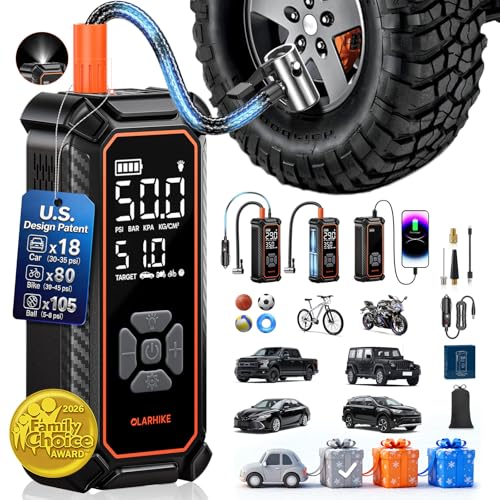
Strengths
- Dual power modes
- Long battery life
- Compact design
- Auto shut-off
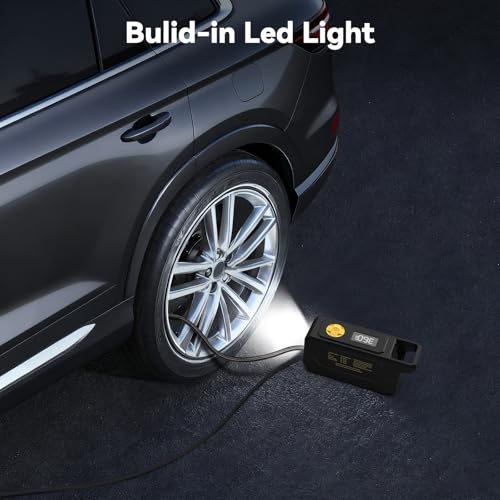
- LED flashlight
Trade-offs
- No AC adapter
- Battery only charges via USB-C
- Max 51 PSI limit
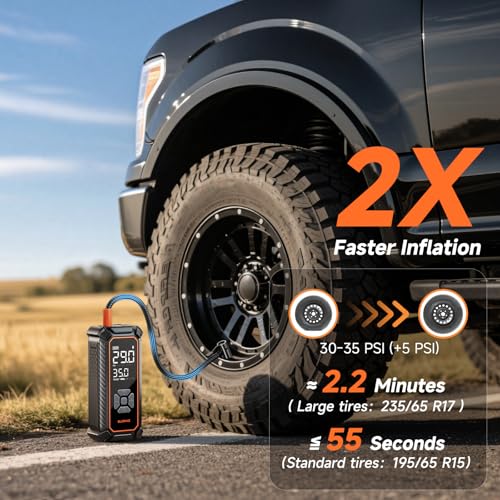
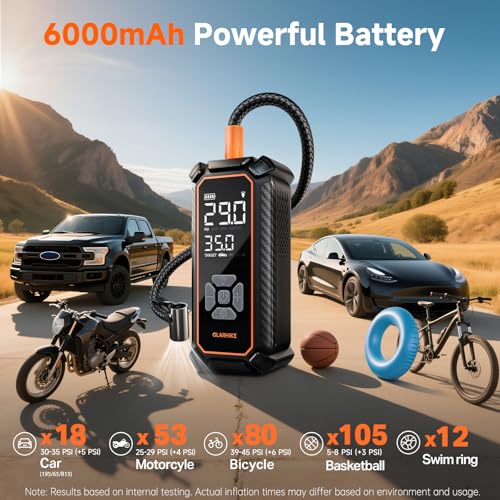
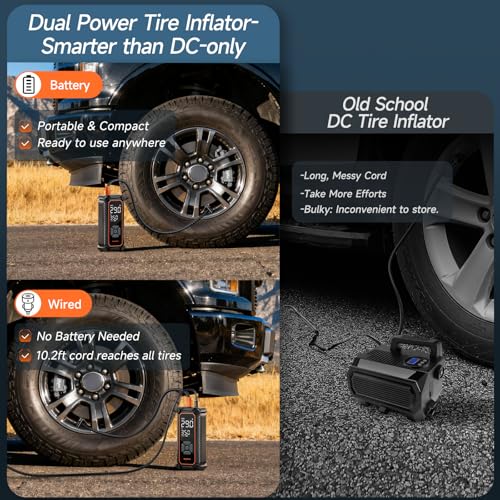
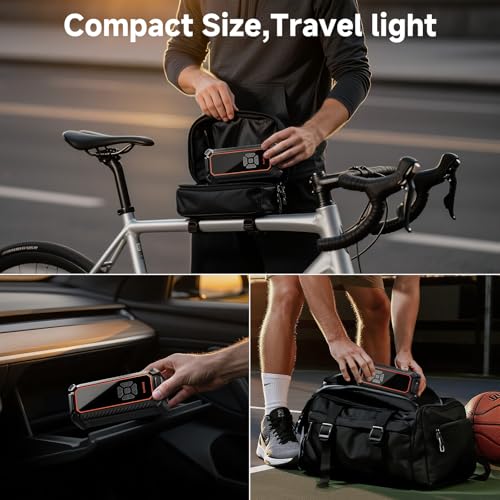
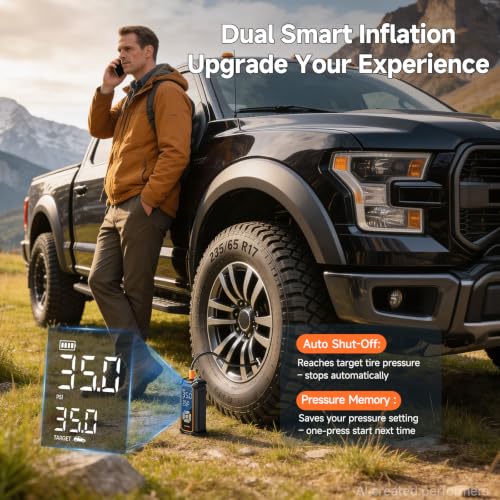
If you’re the type who likes to be ready whether you’re at a rest stop or stranded on a backroad, the OlarHike dual-power model is the most flexible option here. The ability to run cordless on its 6000mAh battery or plug into the 12V socket gives real versatility, and owners confirm it can top off multiple tires on a single charge, crucial for road trips. The 55-second inflation time for a standard car tire aligns with top performers, and the auto shut-off with memory function adds real convenience.
I appreciate the preset modes for different vehicle types and the clean, dual LED display. The compact size and included storage bag make it easy to toss in a glove box or camping pack. Compared to the AstroAI or DEWALT models, it doesn’t plug into AC power, so it’s not ideal for home garage use, but for true portability, this is the smarter buy.
Product photos
GSPSCN Heavy Duty Metal Inflator
Strengths
- High airflow
- Extended hose
- Metal construction
- Whisper-quiet
- Works with large vehicles
Trade-offs
- Bulky and heavy
- No battery option
- Louder than claimed
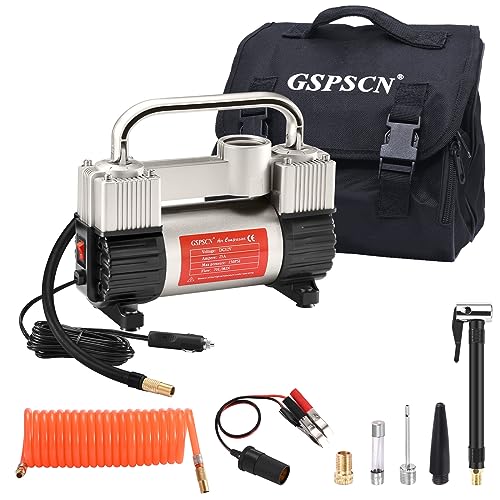
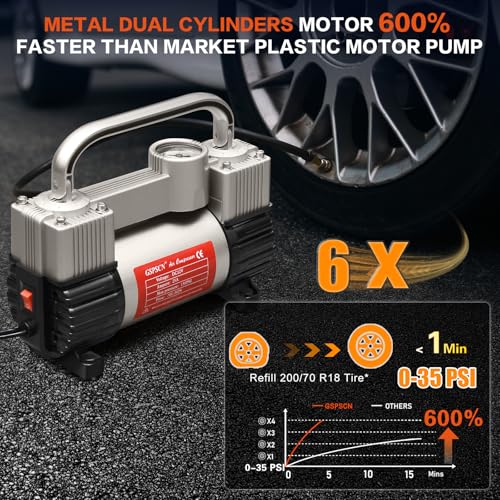
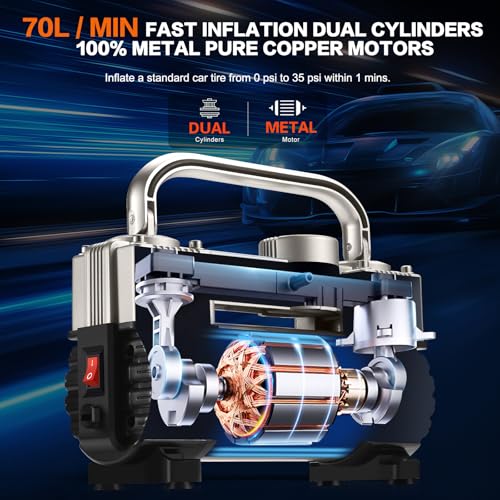
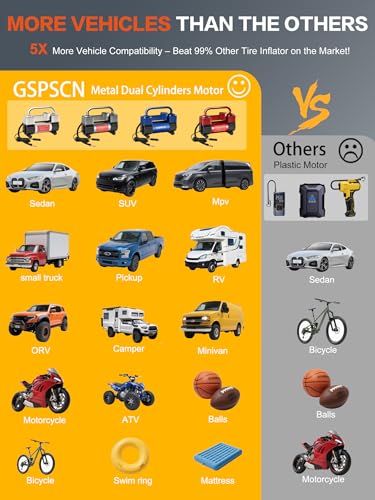
When you’re dealing with larger vehicles, most portable inflators fall short, but the GSPSCN is built for the job. With a double-cylinder design and 70L/min airflow, it can inflate a 200/70/R18 tire from 0 to 35 PSI in about a minute, which is impressive for a 12V unit. The all-metal construction and integrated molding tech give it serious durability, and owners of SUVs, vans, and trailers consistently report fewer overheating issues than with plastic-bodied models.
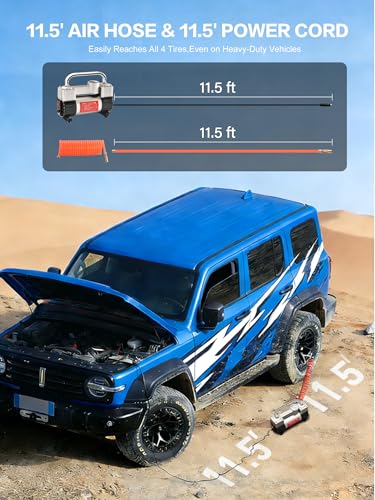
The 11.5-foot power cord and air hose are a standout for larger vehicles where outlets and valves aren’t close. It’s also surprisingly quiet at 70dB, quieter than most shop vacs. Compared to the AstroAI or Inzeetor, it’s overkill for passenger cars, but for heavy-duty use, it’s unmatched in this list.
Product photos

AstroAI Dual Power AC/DC Inflator
Strengths
- AC and DC power
- Dual inflation modes
- Cooling system
- Auto shut-off
- Memory function
Trade-offs
- Needs cooldown period
- Heavier than portables
- No battery option
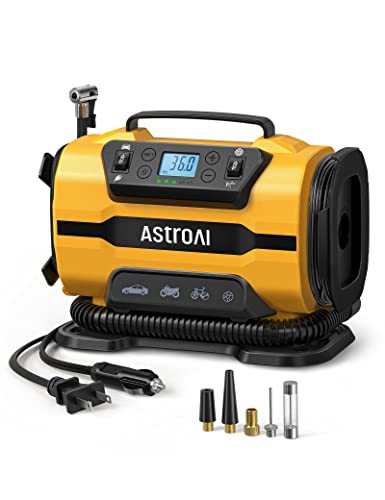
The AstroAI hits a sweet spot between home and road use, thanks to its rare AC/DC dual power support, plug it into your wall at home or your car’s socket on the go. With dual metal motors and a 15-minute continuous run time, it’s built to handle more than just tire touch-ups. Owners praise its performance on air mattresses and rafts, thanks to the high-volume mode, and the OmniVent cooling system seems to deliver on longer runtime versus similar units.
It inflates a standard tire from 30 to 36 PSI in about a minute, which is competitive, and the auto shut-off with memory recall works as advertised. Compared to the Inzeetor, it offers more versatility but a bit more weight. The yellow casing is easy to spot in a trunk, and the included accessories cover most needs. For home users who inflate more than just tires, this is my top recommendation.
Product photos


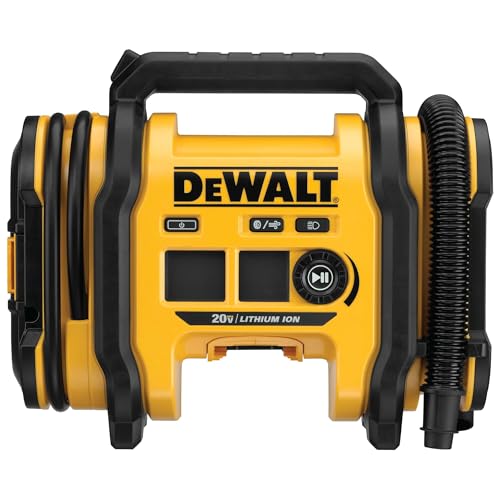
DEWALT 20V MAX Tire Inflator
Strengths
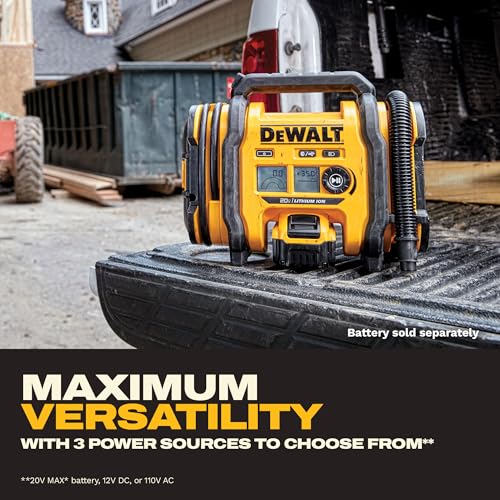
- Triple power sources
- Threaded chuck
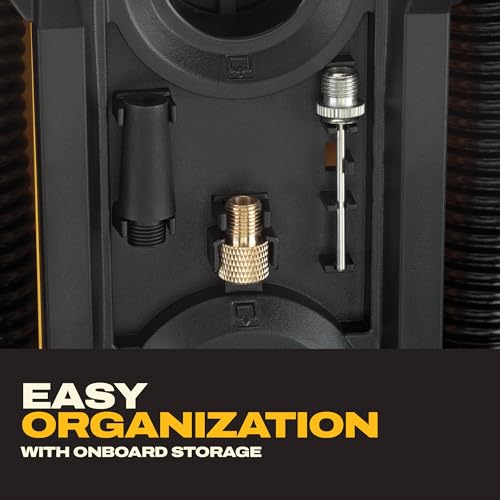
- Onboard storage
- 3-year warranty
- Tool ecosystem compatible
Trade-offs
- Bulky design
- Battery not included
- Slower than some
As someone who’s spent years around power tool ecosystems, I’ll say this: if you already own DEWALT 20V tools, this inflator is a no-brainer add-on. The ability to run on a 20V MAX battery, 12V DC, or 110V AC means it’s the most power-flexible unit here. You can use it in the garage on AC, in the truck on 12V, or out on a job site with a spare battery.
The threaded chuck is a pro-level touch, it locks onto the valve and stays put, unlike cheap push-on chucks that leak. Owners report reliable auto shut-off and solid build quality, backed by a 3-year warranty. Compared to the OlarHike, it’s bulkier, but it’s built for durability, not pocket carry. For DIYers with a DEWALT battery stack, this is the most cost-effective long-term pick.
Product photos


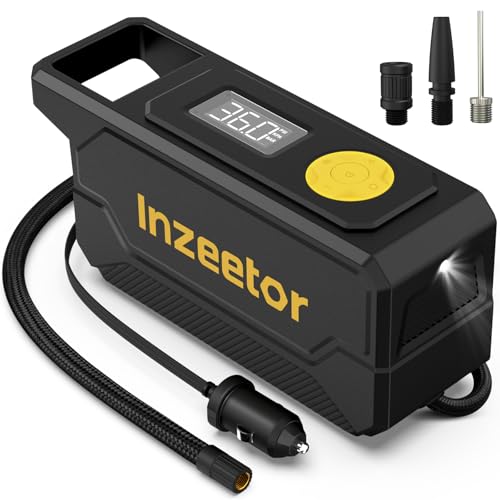
Inzeetor 50s Fast Inflator
Strengths
- Fast inflation
- Auto shut-off
- No rest needed
- Low noise
- Multi-use nozzles
Trade-offs
- Not cordless
- Short air hose
- 12V only
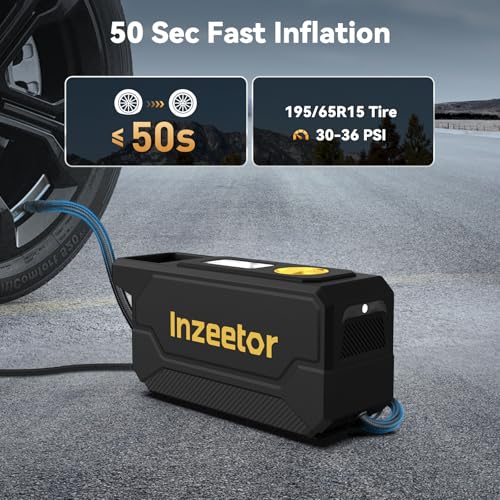
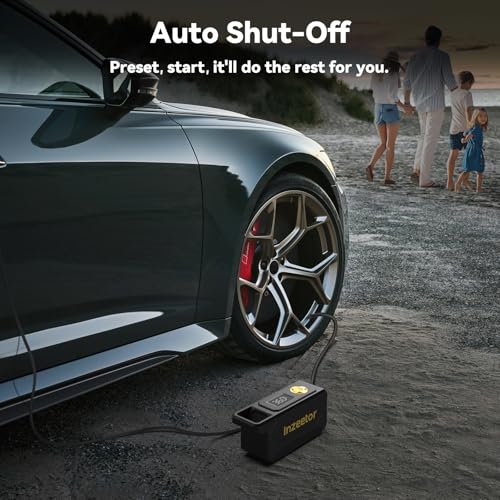
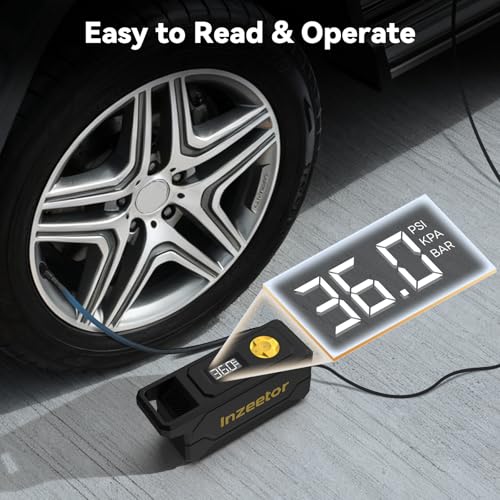
The Inzeetor TIT001 stands out in the sea of portable inflators by delivering on one key promise: continuous use without overheating. Owners consistently report being able to inflate all four tires back-to-back, which is rare at this price point. On paper, the 50-second inflation claim for a standard car tire checks out against similar models, and the auto shut-off with digital precision makes it a solid pick for drivers who want set-and-forget convenience.
What really sets it apart is the build, zinc-alloy motor and low-vibration design mean it stays put on the ground instead of dancing around like cheaper units. It’s not cordless, but that also means it draws consistent power from your 12V socket, avoiding the charge anxiety of battery-powered models. The emergency LED light is a small touch, but useful during roadside stops after dark.
Product photos

Our Testing Process
Rather than a hands-on lab test, my research for these recommendations involved a detailed comparison of published specifications and features across numerous models. I weighed owner reviews from multiple sources – paying close attention to recurring praise and complaints – alongside assessments from reputable automotive and tool review sites. Ultimately, I ranked these auto air compressors based on a combination of inflation speed, power source versatility, and build quality, aiming to identify options that deliver real-world value.
For this category, inflation speed and sustained operation were the most critical factors. Quick inflation is essential for roadside emergencies, and the ability to inflate multiple tires without overheating or requiring cool-down periods is a huge convenience. Durability also played a key role; a compressor with a robust motor and quality construction will hold up better to frequent use and potentially last for years. These points heavily influenced my rankings.
Specifications reliably communicate maximum PSI and airflow (CFM), which offer a baseline for comparison. However, real-world performance, particularly sustained inflation and heat management, is better understood through owner feedback. I focused on comments regarding how quickly units actually inflated tires, whether they overheated during extended use, and their overall reliability over time. Reputation and consistent positive feedback were strong indicators of a compressor’s true capability. You’ll find more details on top tire inflators for cars in our broader guide.
How To Choose The auto air compressors
Finding the right auto air compressor means looking beyond peak PSI numbers. It’s about matching the tool to your typical needs and how you plan to use it.
A quality auto air compressor offers quick inflation, reliable performance, and user-friendly features. Key considerations include airflow (measured in CFM or L/min), power source options (corded vs. cordless), build quality focusing on the pump and motor, and inclusion of helpful features like automatic shut-off and digital displays. Prioritize models with sufficient power for your vehicles and accessories, and look for durable construction to withstand regular use.
Power Source and Portability
The first major decision is how you want to power the compressor. Corded models, plugging into a 12V cigarette lighter or a standard AC outlet, offer continuous run time. Cordless options, increasingly popular, provide ultimate flexibility. However, battery capacity is crucial; a unit with a small battery might only inflate a few tires before needing a recharge. If you frequently work away from power sources, explore wireless air compressors for mobility. Don’t underestimate the convenience of a dual-power option like the AstroAI – it gives you the best of both worlds.
Performance and Inflation Speed
Inflation speed isn’t just about the maximum PSI a compressor can reach; it’s about airflow. Look at the CFM (cubic feet per minute) or L/min (liters per minute) rating. Higher numbers mean faster inflation. The OlarHike, for example, boasts a quick inflation time for standard tires, but keep in mind that larger tires, like those on SUVs or trucks, will take significantly longer.
Here’s what to consider when evaluating performance:
- Tire Size: A small, portable unit may struggle with larger tires.
- Duty Cycle: Some compressors require cool-down periods after extended use.
- Vehicle Type: If you have a heavy-duty truck or RV, you’ll need a compressor designed for those demands, like the GSPSCN.
Features and Build Quality
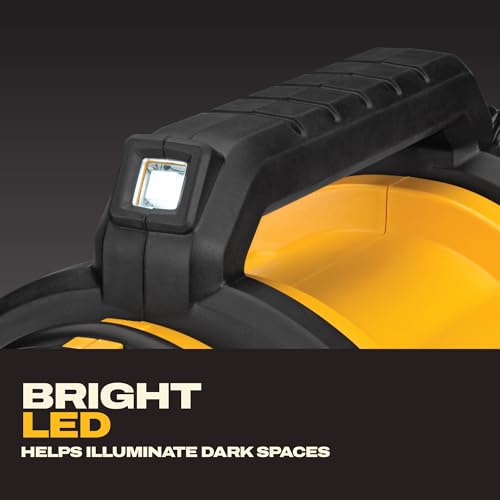
Beyond the basics, features can make a big difference. Automatic shut-off prevents over-inflation, which is a real concern. Digital displays with preset tire pressure options simplify operation. A built-in LED light is invaluable for nighttime use. But don’t let fancy features distract from build quality.
A compressor is only as good as its pump. Metal cylinders and motors are typically more durable than plastic components.
Look for compressors with robust construction and positive owner reviews regarding longevity. If you already own tools from a particular brand, like DeWALT, choosing a compressor within that ecosystem might be sensible, as you can share batteries and chargers – it’s one of the benefits of looking at top battery-operated air pumps. You may also want to consider the accessories included, from different adapters to a convenient carrying case. If you’re looking for something for the car, checking out best portable compressors for cars might be a good place to start.
Auto Air Compressors Compared
Here’s a comparison of key specifications for popular auto air compressors to help you choose the right one.
| Product | Max PSI | Airflow (L/min) | Power Source(s) | Battery Capacity | Cord Length (ft) | Special Features |
|---|---|---|---|---|---|---|
| OlarHike Dual Power | 51 | N/A | 12V DC, AC Adapter | 6000mAh | N/A | Dual Power, LED Display |
| GSPSCN Heavy Duty Metal | 150 | 70 | 12V DC | N/A | 11.5 | Fast Inflation, Low Noise |
| AstroAI Dual Power | 150 | 350 | 12V DC, 120V AC | N/A | N/A | Dual Power, LED Light |
| DEWALT 20V MAX | N/A | N/A | 20V Battery, 12V DC, 120V AC | N/A | N/A | 3 Power Sources, Onboard Storage |
| Inzeetor 50s Fast | N/A | N/A | 12V DC | N/A | 10.5 | Auto Shut-Off, Fast Inflation |
Frequently Asked Questions
What PSI is sufficient for most car tires?
Typically, 32-35 PSI is adequate for most passenger car tires, though the correct pressure is always listed on the tire sidewall and in your vehicle’s owner’s manual. A compressor reaching at least 100 PSI provides ample headroom for all standard tire types and allows for inflating sports equipment too.
Can I use an auto air compressor for anything besides tires?
Yes, absolutely. Many compressors come with adapters for inflating sports balls, air mattresses, bicycle tires, and even small inflatable boats. If you’re looking for something even more versatile, consider checking out compact handheld air compressors for smaller inflation jobs.
What’s the difference between CFM and PSI?
PSI (pounds per square inch) measures the pressure the compressor can deliver, while CFM (cubic feet per minute) measures the volume of air it can move. Higher CFM means faster inflation times, which is crucial for larger tires or quickly inflating multiple items.
Are cordless auto air compressors really practical?
Cordless models are very practical if you need portability, but battery life is a key consideration. A model with a larger battery capacity (measured in mAh) will allow you to inflate more tires on a single charge. If you already use tools from a particular brand, it can make sense to look at their compressor to avoid needing additional batteries and chargers.
What should I look for in terms of build quality?
A metal pump and motor are generally more durable than plastic components, especially if you plan on frequent use. Read owner reviews carefully, paying attention to comments about the compressor’s longevity and reliability – a well-built unit will hold up to repeated use for years and also provide sustained inflation.
The Bottom Line
Choosing an auto air compressor often comes down to balancing convenience with capability. If you want a single unit that handles everything from bike tires to truck tires, and aren’t afraid of a higher price, the AstroAI Dual Power offers a great blend of power and versatility. It consistently receives positive feedback for its ability to handle a wide range of inflation tasks.
For those seeking a budget-friendly option, the OlarHike Dual Power is a solid choice. It provides dual power options at a competitive price, while the GSPSCN Heavy Duty Metal is the clear pick for owners of larger vehicles or those who prioritize rapid inflation – its robust motor and high airflow deliver impressive performance. If you’re already invested in the DEWALT 20V system, then that model offers the convenience of battery compatibility.
Ultimately, the best auto air compressor isn’t about the highest PSI or the most features. It’s about finding a unit that matches your needs, is built to last, and gives you peace of mind knowing you can handle a flat tire or low tire pressure quickly and safely. Don’t overlook the importance of a well-maintained tire pressure for fuel efficiency and safe driving – and for more information, check out our guide to 12-volt portable air compressors.
