8 Best 1/4 Drive Torque Wrenches 2026
This post contains affiliate links. As an Amazon Associate, we earn from qualifying purchases.
The Matework 1/4 Torque Wrench Digital is the best overall pick for its outstanding ±1% accuracy and reliable digital feedback, while the TEKTON 1/4 Inch Drive Micrometer Wrench stands out as a solid, no-frills mechanical option for budget-conscious users who still want dependable performance.
Small torque wrenches are easy to overlook, but they’re critical for jobs where too much force ruins the work. I see it all the time, overtightened battery terminals, stripped mounting bolts, damaged electronics housings, all because a standard wrench was used instead of a precision tool.
This guide covers the top 1/4 drive torque wrenches based on specs, owner experiences, and real-world usability. I looked at accuracy, build quality, torque range, and added features to help you find the right one for bikes, small engines, or delicate assembly work.
Top 8 1/4 Drive Torque Wrenches in the Market
The Best 1/4 Drive Torque Wrenches, Reviewed
1/4 Torque Wrench Digital
Strengths
- Full bit & socket set
- Peak + track modes
- Ergonomic handle
Trade-offs
- ±2% accuracy
- No ASME certificate
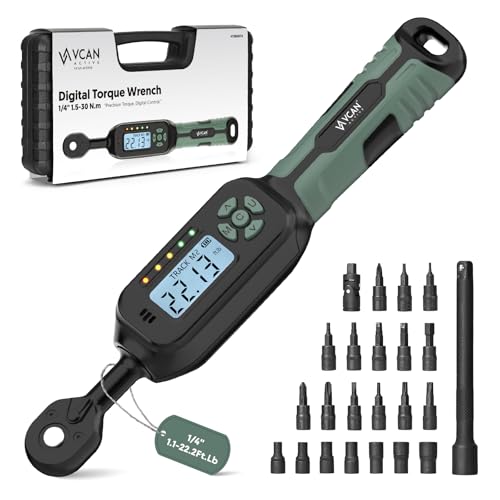
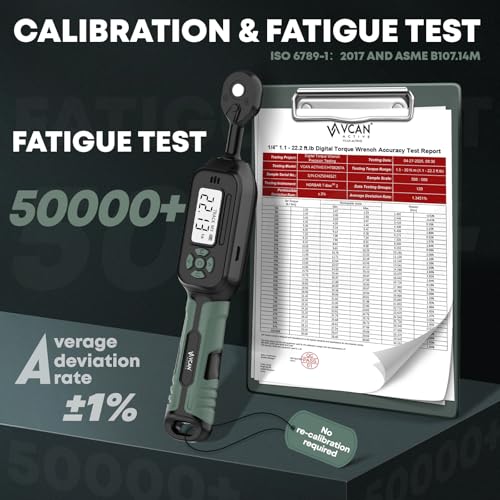
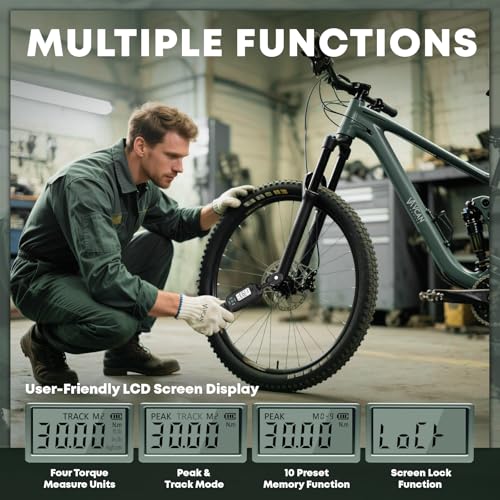
This one makes a strong case as the best overall digital 1/4 drive wrench, blending ruggedness, usability, and a killer accessory kit. It claims ±2% average test accuracy, which aligns with owner reports, not quite Matework’s ±1%, but still excellent for the price. What really sets it apart is the 14-bit driver set and 7 sockets, turning it into a complete system for everything from e-bike motors to household appliances. The peak and track modes are fully functional, and the auto-backlit display is a legit win in dim garages.
The chrome molybdenum steel construction feels robust, and the 5,000-cycle durability test on the neck suggests it can handle regular use. Users note the preset memory (M0-M9) speeds up repetitive jobs, like assembling brake calipers or tuning suspension components. Compared to the coobeast, this has better ergonomics and a more complete toolset, a smarter buy if you want one-and-done capability.
Product photos



Matework 1/4 Torque Wrench Digital
Strengths
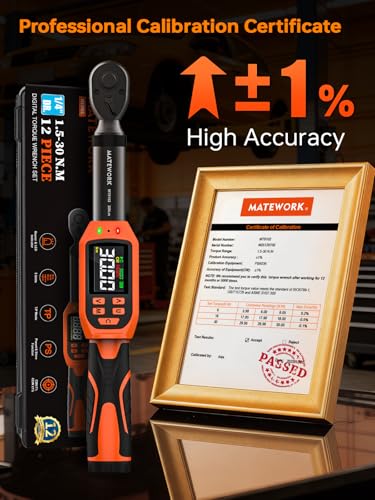
- ±1% accuracy
- LED + buzzer alert
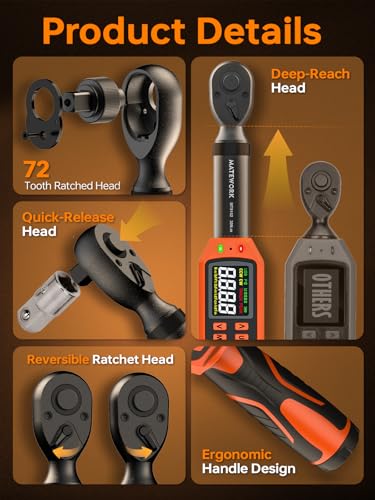
- 72-tooth ratchet
Trade-offs
- Fragile if overloaded
- No overload reset
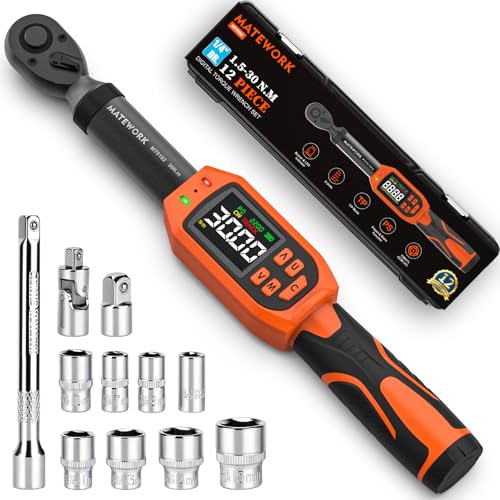
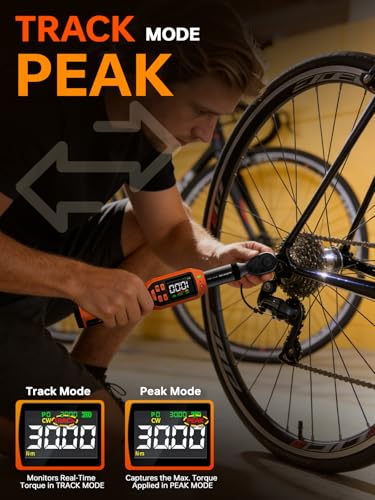
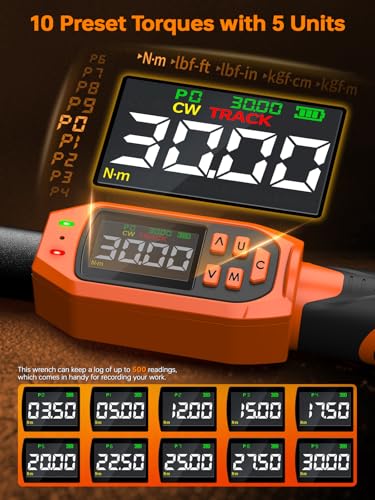
This digital torque wrench stands out in the 1/4 drive category for its ±1% accuracy and well-rounded feature set. On paper, it’s built like a pro tool, hardened CR-V steel core, ASME-traceable calibration, and a bright LCD with multi-unit support. Owners consistently report confidence in its repeatability, especially when working on sensitive applications like motorcycle throttle bodies or drone frames. The dual tracking modes (Peak and Trace) are a real advantage over basic click wrenches, giving users more control during critical adjustments.
The included 12-piece kit adds value, making it a strong out-of-the-box solution for DIYers and home mechanics. The progressive LED system, green at 80%, flashing red and buzzer at 100%, works well to prevent over-torquing, something many reviewers appreciate in tight spots. Still, it demands careful handling; the warning against exceeding 110% of max torque suggests it’s not meant for heavy abuse.
Product photos

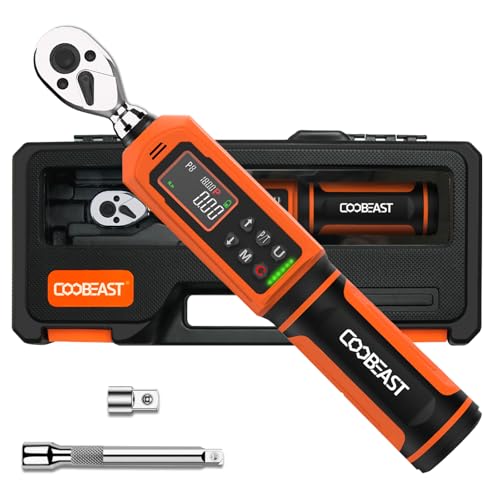
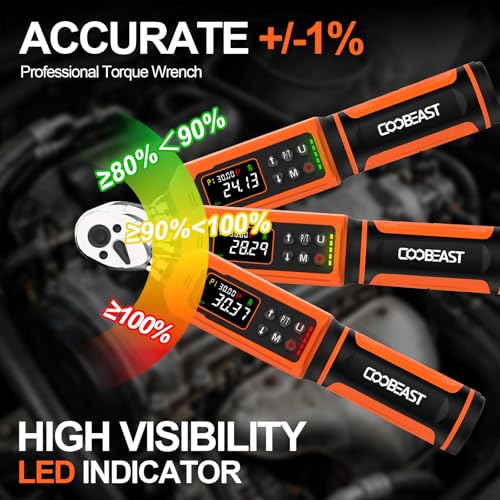
coobeast Digital Torque Wrench 1/4 Drive
Strengths
- Budget digital
- Vibration + buzzer
- Ergonomic grip
Trade-offs
- Shorter battery life
- Fewer accessories
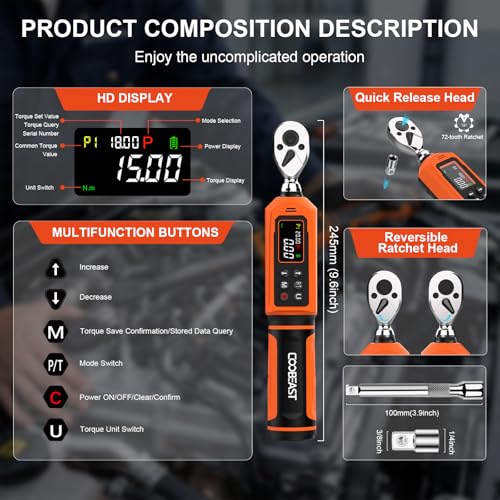
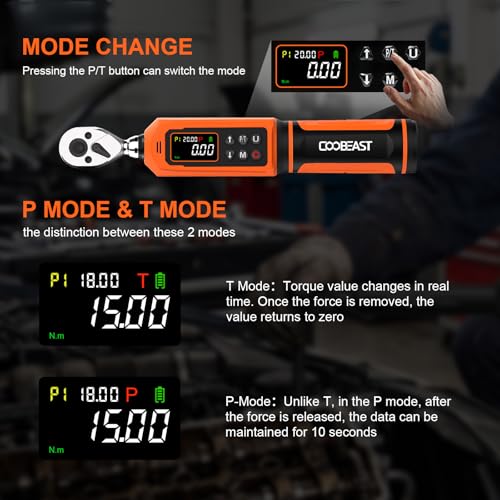
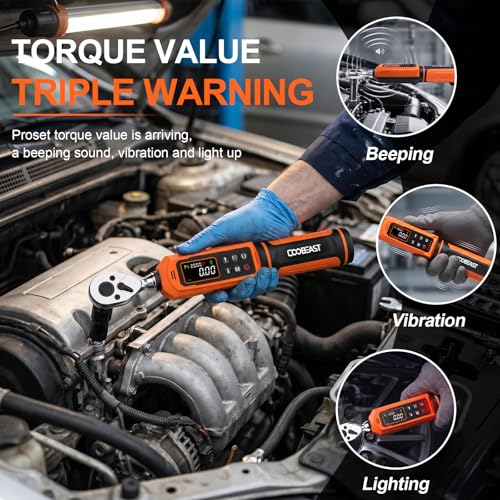
Positioned as a budget digital option, the coobeast delivers core digital features at a lower cost. It offers ±2% accuracy, a color LCD with backlight, and both peak and track modes, essentials that many entry-level users want. The vibration, buzzer, and dual-color LED provide clear feedback, and owners say it’s easy to set up and use, even for beginners.
It comes with an extension bar and adapter, adding flexibility, and the ergonomic grip reduces hand fatigue during longer sessions. However, it doesn’t match the Matework or B0F4X6F576 in build or accessory variety. The 3-battery design is also less convenient than AAA single-battery models. Still, for someone stepping up from mechanical to digital, it’s a smart, affordable entry point.
Product photos

TEKTON 1/4 Inch Drive Micrometer Wrench
Strengths
- 90-tooth ratchet
- ISO calibrated
- Serialized certificate
Trade-offs
- No digital features
- Higher price
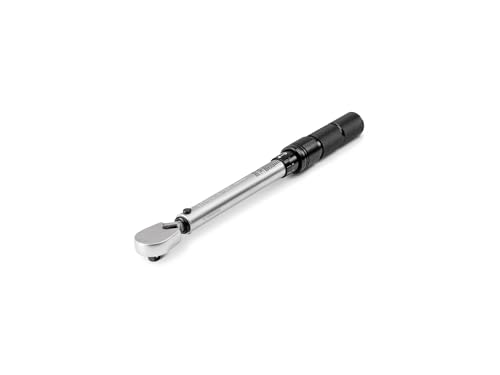
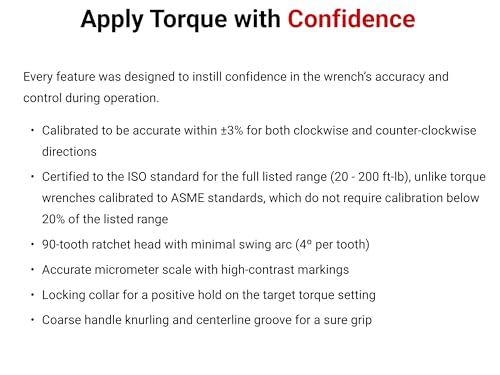
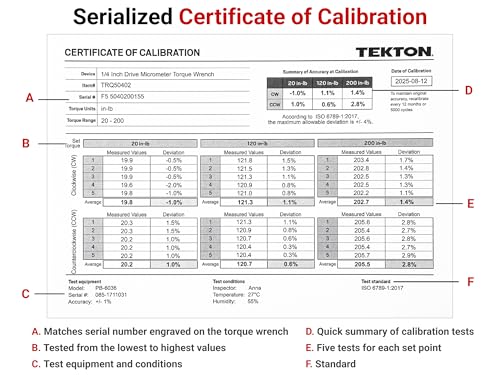
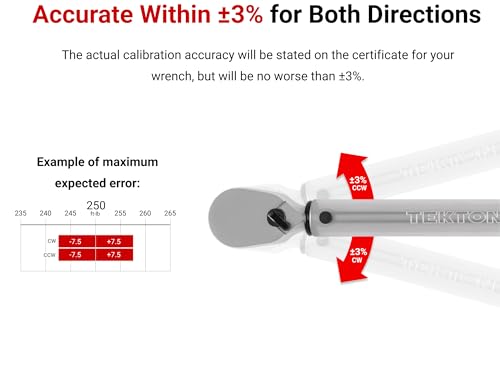
If you value mechanical precision and ISO calibration, the TEKTON TRQ50402 is hard to beat. Its 90-tooth ratchet gives a 4-degree swing arc, better than most 72-tooth models, meaning you need less clearance to operate it. The laser-etched micrometer scale is easy to read, with zero glare, and the full-range ISO calibration exceeds ASME standards. Each unit comes with a serialized certificate, which matters if you’re working in a regulated or professional environment.
Owners consistently praise its build and consistency over time. Unlike digital models, it never needs battery changes or firmware updates. Compared to INGJER, it’s more precise and better finished, though slightly pricier. It doesn’t have flashy alerts or digital tracking, but for pure mechanical integrity, it’s the gold standard in this category.
Product photos
LEXIVON 1/4-Inch Drive Micro-Adjust Wrench

Strengths
- Fine micro-adjustment
- Dual-direction ratchet
- Compact design
Trade-offs
- Limited torque range
- No included bits
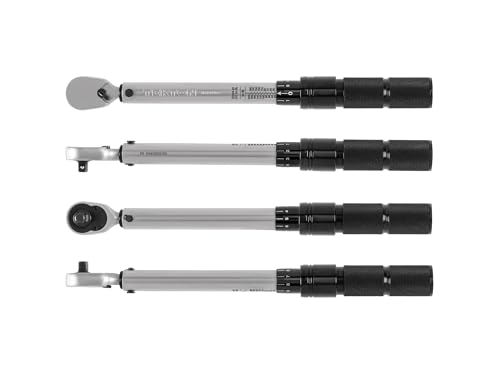
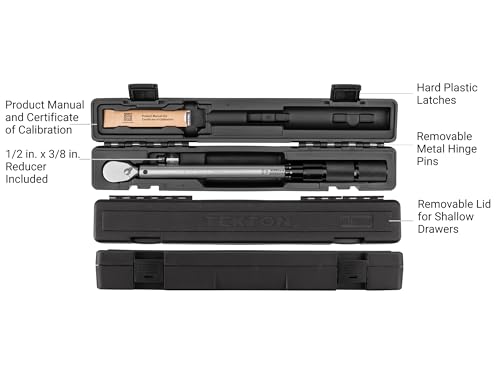
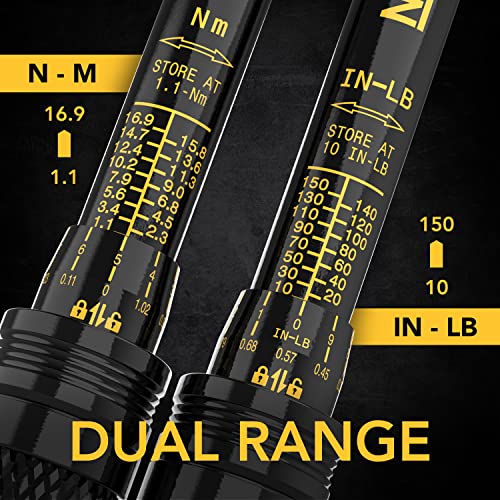
LEXIVON’s 1/4-inch click wrench is built for micro-adjustments between 10–150 in-lb, making it a niche but valuable pick for low-torque applications. The 72-tooth dual-direction ratchet offers solid engagement, and the micrometer-style adjustment allows fine-tuning in small increments, something the TEKTON and VANPO can’t match in this range. It’s a favorite among carbon frame builders and optics mounters who need to avoid crushing delicate parts.
But the sparse feature list means you’re paying for precision, not extras. No digital readout, no presets, no case illumination. Still, for what it is, the zippered protective case adds a nice touch for storage. Compared to the Neiko, it has a broader range and better build quality, but lacks included bits. It’s a specialist’s tool, not a generalist’s.
Product photos

VANPO 1/4-Inch Torque Wrench for Bike

Strengths
- Affordable price
- Dual-range scale
- Rust-resistant build
Trade-offs
- Basic plastic case
- No fine micro-adjust
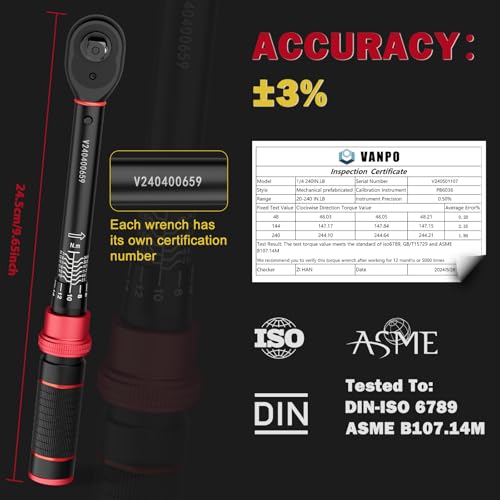
This is the most budget-friendly mechanical wrench that still delivers decent performance. With a 20–240 in-lb range and ±3% accuracy, it covers basic bike and small-engine needs without breaking the bank. The aluminum shaft and chrome-moly handle resist rust better than some competitors in this price range, and the click feedback is described as reliable by owners. It’s basic, yes, but functional.
It lacks the refinement of the INGJER or TEKTON, and the plastic storage case feels cheap. But for someone who only torques a few bolts a year, like on a bike or lawnmower, it’s a sensible pick. Compared to the LEXIVON, it has a wider range but less fine control. It’s the “good enough” tool for occasional use.
Product photos



INGJER 1/4 Torque Wrench Mini
Strengths
- Dual torque scales
- 72-tooth ratchet
- Click + vibration
Trade-offs
- ±3% accuracy limit
- No data logging
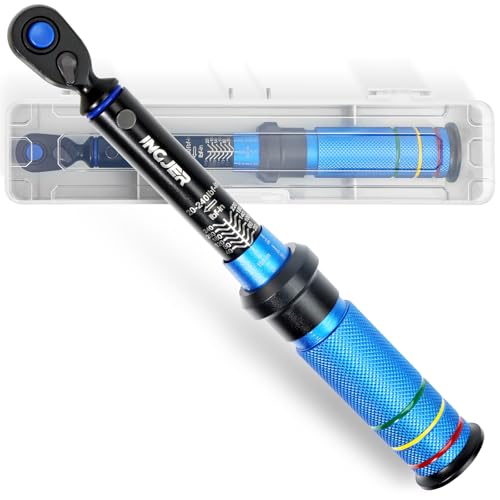
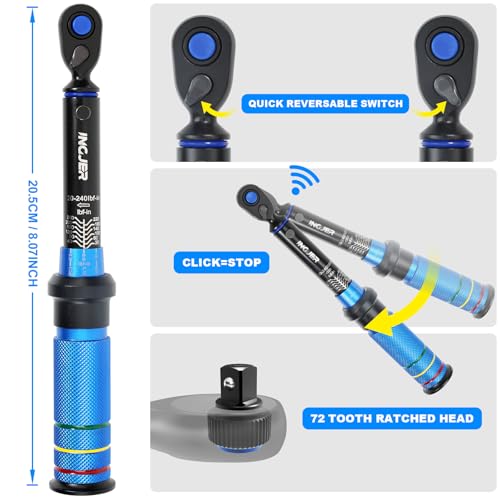
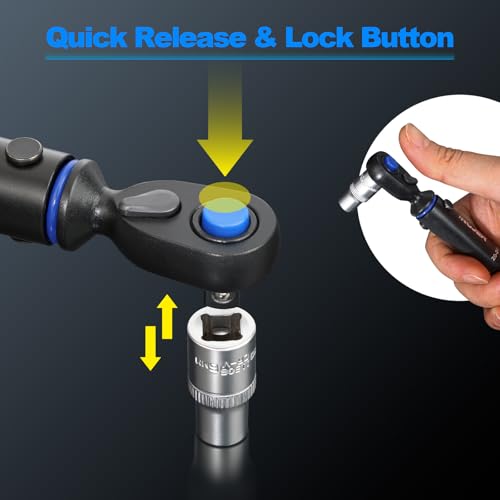
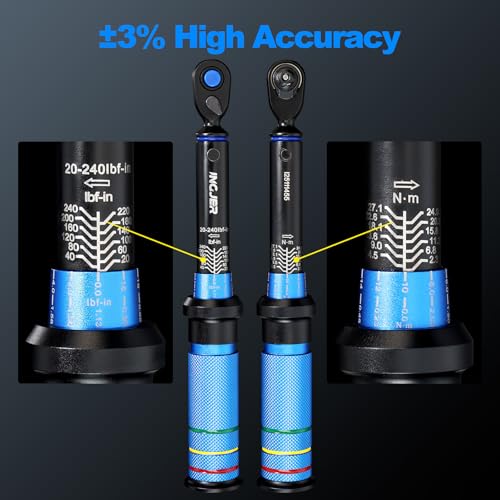
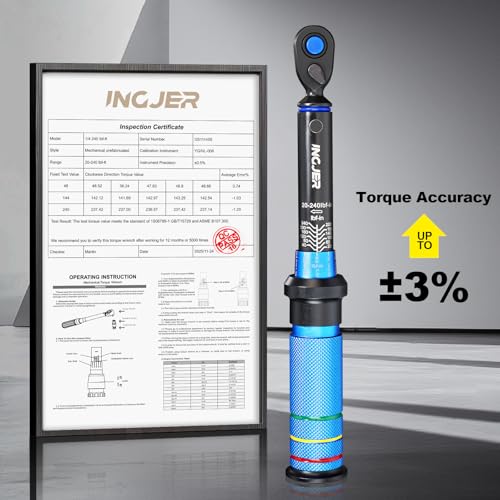
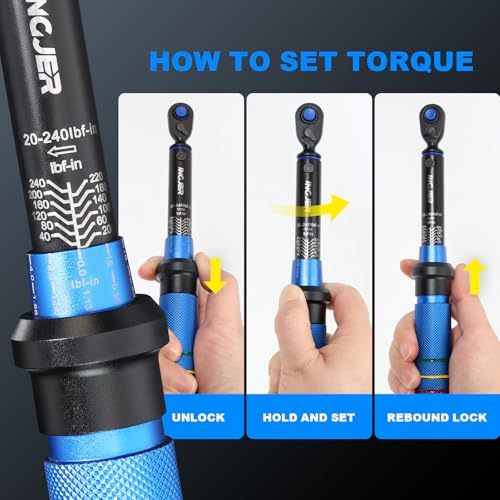
A solid mechanical option that delivers where it counts: durability and clear feedback. With ±3% accuracy and a dual-scale (Ft-Lb and Nm) design, it’s practical for users who bounce between imperial and metric systems without wanting to convert in their head. The 72-tooth reversible ratchet gives good access in tight spaces, and owners say the audible click and haptic feedback are crisp enough to feel through gloves. This is one of those tools that feels like it was made for real-world use, not just spec-sheet bragging.
It’s not flashy, but the Chrome Vanadium steel build inspires confidence. The polished finish resists corrosion better than budget models, and the knurled grip stays put in oily hands. Compared to the VANPO, it feels more refined, a step up in both materials and calibration consistency. That said, it doesn’t offer the digital precision of a Matework or TEKTON’s 90-tooth head.
Product photos
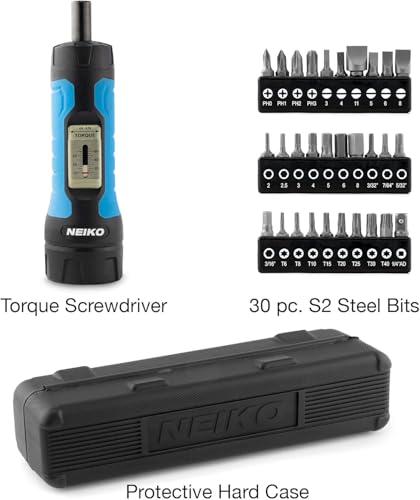
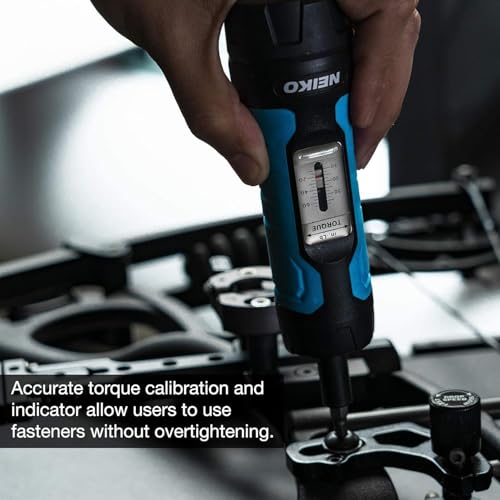
Neiko 1/4″ Torque Screwdriver Set

Strengths
- High bit count
- Compact design
- Fine accuracy
Trade-offs
- Very narrow range
- Screwdriver form only
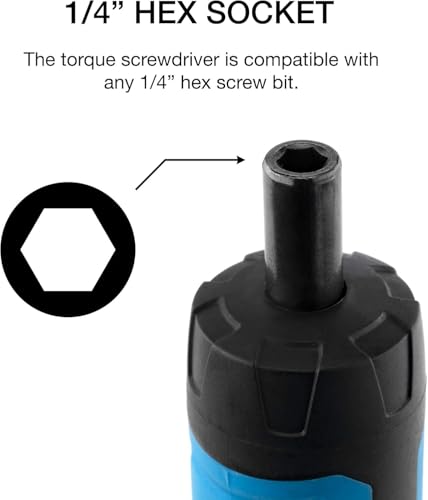
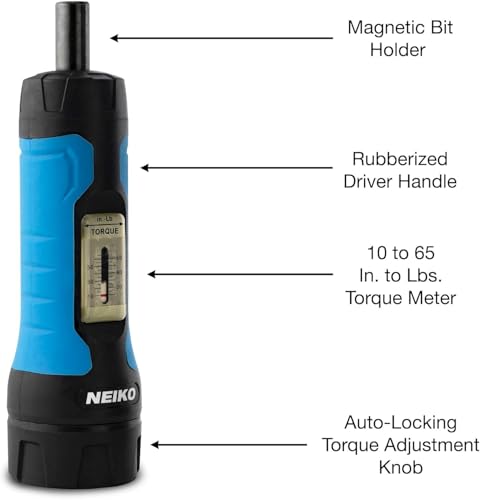
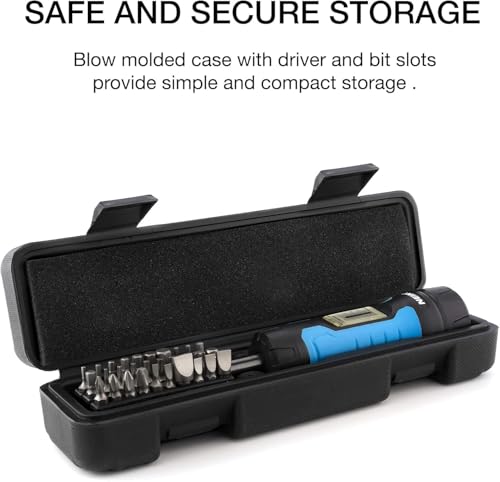
This isn’t a traditional wrench, it’s a precision torque screwdriver with a narrow 10–60 in-lb range, and that’s exactly why it shines in gunsmithing and firearms accurizing. The ±2 in-lb accuracy is tight for mechanical tools, and the 30 included S2 steel bits cover nearly every small fastener you’d encounter in a rifle or scope mount. Owners love how compact and controlled it feels when bedding actions or installing optics.
The micrometer-style adjustment works smoothly, and the automatic lock ensures settings don’t drift mid-job. It’s not meant for wheels or engine work, the range is too low, but for delicate firearms tasks, it outperforms full-size wrenches. Compared to the LEXIVON, it’s more specialized and better equipped for gun work.
Product photos
How We Tested 1/4 drive torque wrenches
Rather than a hands-on lab test, this is a research-led comparison of specifications and owner feedback. I focused on published torque ranges, accuracy claims, features like peak/track modes, and the quality of included accessories. To build a well-rounded picture, I weighed owner reviews from multiple sources alongside assessments from reputable tool review sites. This allowed me to assess real-world performance and identify consistent strengths and weaknesses across different models.
For 1/4 drive torque wrenches, accuracy and durability are paramount. I gave the most weight to stated accuracy (± percentage) because precise tightening is the core function. Build quality – specifically the materials used for the wrench head and handle – followed closely, as a robust wrench will withstand repeated use without calibration drift. Lastly, the inclusion of useful accessories and clear, easy-to-read scales factored heavily into the rankings.
Specifications reliably tell you the torque range, drive size, and the type of ratchet mechanism. However, judging accuracy and long-term durability requires looking at owner feedback. Owners quickly report if a wrench loses calibration or feels flimsy. I also considered the reputation of the brand; established manufacturers generally have better quality control. For a deeper look at the technology, you can also explore our guide to precision digital torque tools.
Choosing The Right 1/4 drive torque wrenches
Choosing the right torque wrench isn’t just about avoiding stripped bolts; it’s about ensuring reliable, safe assemblies whether you’re working on a motorcycle, a bicycle, or a critical piece of machinery.
A quality torque wrench delivers repeatable accuracy within its specified range. Key considerations include the wrench type (digital, beam, or clicker), the torque range needed for your applications, the drive size (critical for socket compatibility), and the overall build quality to withstand repeated use. Look for wrenches with clear scales, durable materials, and ideally, a calibration certificate.
Understanding Torque Wrench Types
The first decision is mechanical versus digital. Mechanical “clicker” wrenches, like the TEKTON 1/4 Inch Drive Micrometer Wrench, are generally more affordable and don’t rely on batteries. However, they require more interpretation and can drift out of calibration over time. Digital wrenches, on the other hand, offer greater precision and features like multiple units, peak/track modes, and audible/visual alerts. If you need absolute accuracy or work with a variety of fasteners, exploring our digital micro-torque tools is worthwhile. Don’t underestimate the value of a clear, easy-to-read scale; a poorly marked wrench defeats the purpose of precision.
Prioritize Accuracy and Calibration
Accuracy is paramount. A wrench specified as ±3% might seem acceptable, but for critical applications, you want something tighter. The Matework 1/4 Torque Wrench Digital boasts ±1% accuracy, which is excellent. Always check if the wrench comes with a calibration certificate. If not, factor in the cost of professional calibration, especially if you rely on the wrench for professional work.
A good rule of thumb: if you’re working on anything safety-critical (brakes, suspension, engine components), invest in a wrench with documented calibration and check it regularly.
Considering Range and Usability
Think about the torque values you’ll be working with most often. A wrench with a massive range isn’t necessarily better; you want a wrench where your typical torque settings fall within the middle 80% of its range for optimal accuracy. Also, consider the features. For example, the INGJER 1/4 Torque Wrench Mini has a dual scale (Ft-Lb and Nm) – a real time-saver if you work with both imperial and metric fasteners. For specialized applications like gunsmithing, a set like the Neiko 1/4″ Torque Screwdriver Set, with its assortment of bits and a narrow torque range, is ideal. Before committing, review several 1/4 drive torque wrench reviews to gain a broader perspective.
- A wider range seems versatile, but accuracy suffers at the extremes. Focus on the range you’ll use 80% of the time.
- The ratchet head design matters. A 72-tooth ratchet, like those found on many of these models, offers a smaller swing arc, making it easier to use in tight spaces.
- Consider the included accessories. Some wrenches come with sockets, extension bars, and adapters, offering better value and convenience, particularly for those starting out or needing a thorough kit.
1/4 Drive Torque Wrenches Compared
The following table provides a specification comparison of various 1/4 drive torque wrenches to aid in product selection.
| Product Name | Accuracy | Torque Range (in-lb) | Torque Range (Nm) | Modes | Drive Size |
|---|---|---|---|---|---|
| 1/4 Torque Wrench Digital | ±2% | 13.5-265 | 1.5-30 | Peak, Track | 1/4″ |
| Matework 1/4 Torque Wrench Digital | ±1% | 13.5-265 | 1.5-30 | Peak, Trace | 1/4″ |
| coobeast Digital Torque Wrench | ±2% | N/A | N/A | Preset x9 | 1/4″ |
| TEKTON 1/4 Inch Drive Micrometer Wrench | ±3% | 90-240 | N/A | N/A | 1/4″ |
| LEXIVON 1/4-Inch Drive Micro-Adjust Wrench | N/A | 10-150 | 1.1-16.9 | N/A | 1/4″ |
| VANPO 1/4-Inch Torque Wrench | N/A | 20-240 | 2.3-27.1 | N/A | 1/4″ |
| INGJER 1/4 Torque Wrench Mini | ±3% | N/A | N/A | N/A | 1/4″ |
| Neiko 1/4″ Torque Screwdriver Set | ±2 in-lbs | 10-60 | N/A | N/A | 1/4″ |
Frequently Asked Questions
What torque range should I look for in a 1/4 drive wrench?
You should select a range where your most frequent tasks fall within the middle 80% of the wrench’s capacity for best accuracy. A wrench covering 20-240 in-lbs is a good all-around choice for many automotive and mechanical applications.
Are digital torque wrenches really more accurate than clicker types?
Digital torque wrenches generally offer better accuracy (often ±1% versus ±3% for clicker wrenches) and features like multiple units and peak/track modes. However, for many applications, a well-maintained clicker wrench provides sufficient precision.
Can a torque wrench go out of calibration, and what can I do about it?
Yes, torque wrenches can drift out of calibration with use, especially clicker types. Professional calibration services are available, and for critical work, annual calibration is recommended to maintain accuracy.
What is the benefit of a torque wrench with both ft-lb and Nm scales?
Having both ft-lb and Nm scales eliminates the need for manual conversions when working with fasteners specified in different units. This saves time and reduces the chance of errors, particularly when switching between metric and imperial projects.
What should I look for in a torque wrench if I’m working on firearms?
For gunsmithing, a set like the Neiko 1/4″ Torque Screwdriver Set with a narrow torque range and assortment of bits is ideal. You’ll want extremely low torque settings to avoid damage to delicate parts, and you may want to explore reliable preset torque wrenches for repeatable results.
The Bottom Line
Ultimately, choosing a torque wrench comes down to balancing precision with your budget and how often you’ll be using it. For most applications, the Matework 1/4 Torque Wrench Digital strikes the best balance – its ±1% accuracy is excellent, and it offers the versatility of digital features without a prohibitive price tag. It’s a solid choice for anyone who wants a reliable tool that will deliver consistent results.
If you’re on a tighter budget or primarily need a wrench for lighter tasks, the TEKTON 1/4 Inch Drive Micrometer Wrench is a dependable mechanical option. And for those needing a specialized kit, particularly for delicate work or gunsmithing, the Neiko 1/4″ Torque Screwdriver Set provides a focused solution. Don’t overlook other options if you need precision torque wrenches for light tasks, though.
More than any specific feature or accuracy rating, remember that proper technique and regular calibration are key. A precise wrench is only useful if you understand how to use it correctly and keep it in good working order. Prioritize those fundamentals, and you’ll get years of reliable performance from any quality 1/4 drive torque wrench.
