8 Best 1/2 Inch Torque Wrenches 2026
This post contains affiliate links. As an Amazon Associate, we earn from qualifying purchases.
The SUERCUP digital 1/2 inch torque wrench is the overall best pick for precision and feature set, especially if you need data tracking and top-tier accuracy. For a solid budget-friendly click wrench, the INGJER delivers reliable performance without breaking the bank. If you want durability with a trusted name, the TEKTON 90-Tooth model stands out for smooth ratcheting and long-term use.
Most people buying a 1/2 inch torque wrench are working on trucks, engines, or heavy-duty equipment where accuracy matters. Get it wrong, and you risk stripped bolts, warped parts, or worse. I’ve seen it too many times, a cheap wrench fails, and suddenly you’re redoing a whole job.
This guide cuts through the noise. I researched the field, compared specs, and analyzed owner feedback to find the best 1/2 inch torque wrenches worth your money. You’ll see what to prioritize, whether it’s calibration accuracy, ratchet quality, or type, so you can pick the right tool for your work.
Top 8 1/2 Inch Torque Wrenches in the Market
The Best 1/2 Inch Torque Wrenches, Reviewed
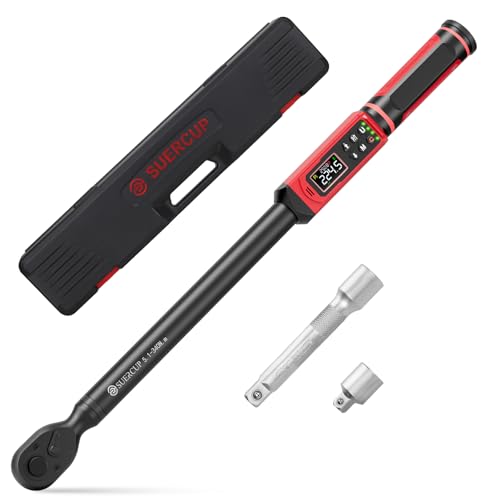
SUERCUP 1/2-inch Digital Torque Wrench
Strengths
- ±1% accuracy
- Digital readout with backlight
- Data storage and presets
Trade-offs
- Higher learning curve
- Battery dependency
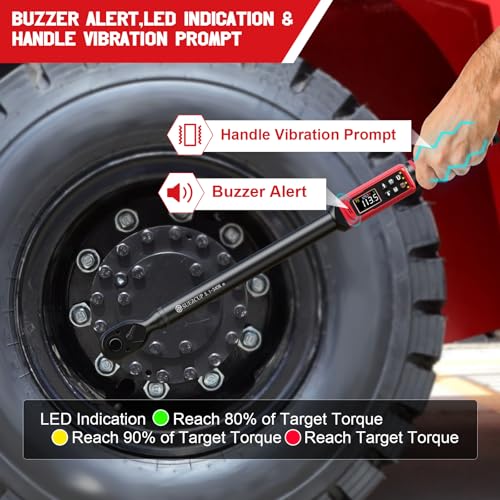
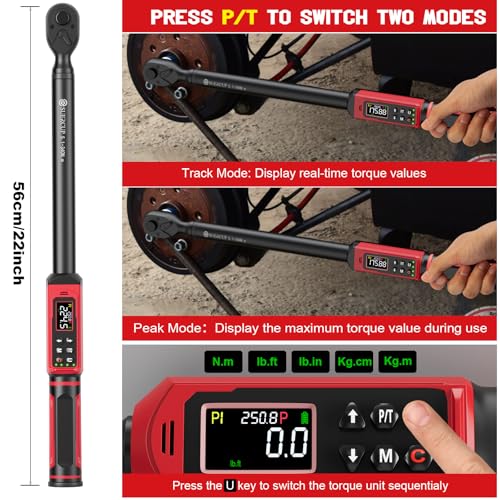
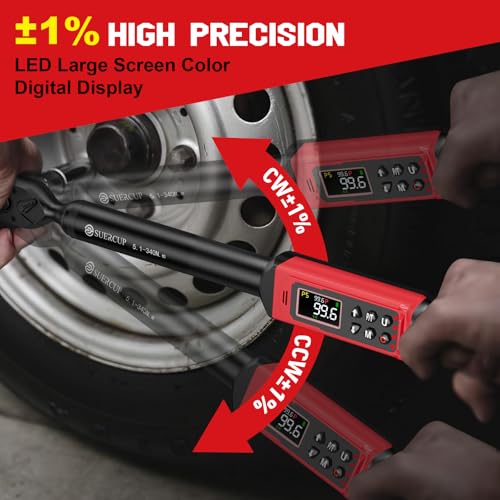
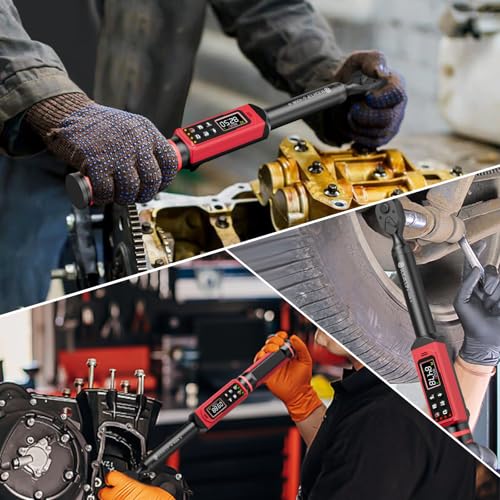
The SUERCUP stands out because it’s digital, and not just gimmicky. With ±1% accuracy, it’s significantly more precise than most click-style wrenches, which typically hover around ±3%. Owners praise the color LCD with backlight for making readings foolproof, even under the hood at night. The combination of vibration, buzzer, and flashing LED at torque completion is over-the-top in the best way, it ensures you never miss the target, even with gloves on or in noisy environments.
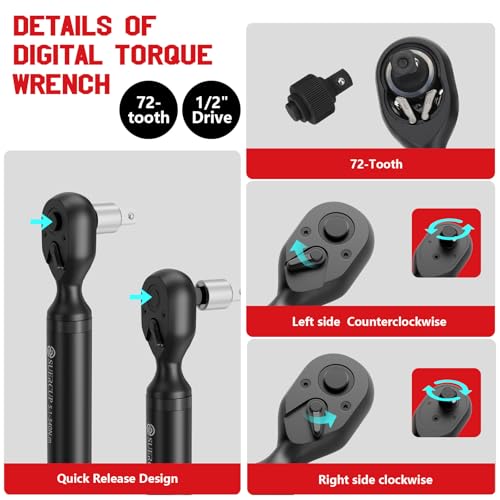
It’s also feature-rich: nine preset modes, five unit conversions, and data storage for up to 500 readings. That’s overkill for most home users, but if you’re documenting torque values for compliance or tuning, like in performance builds or fleet maintenance, this is a game-winner. The quick-release ratchet is smooth, and while digital tools always carry a slight fragility concern, feedback suggests it’s held up well in real-world use.
Product photos
INGJER 1/2-Inch Click Torque Wrench
Strengths
- Affordable pricing
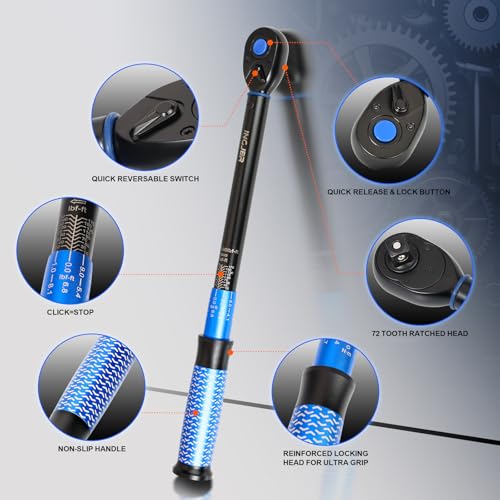
- 72-tooth reversible ratchet
- Includes storage case
Trade-offs
- Lower max torque
- Limited range for heavy work
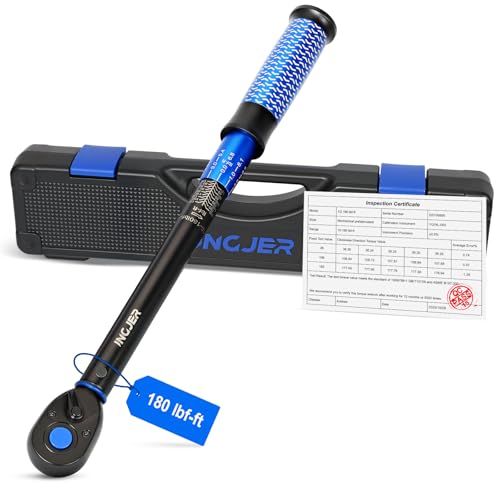
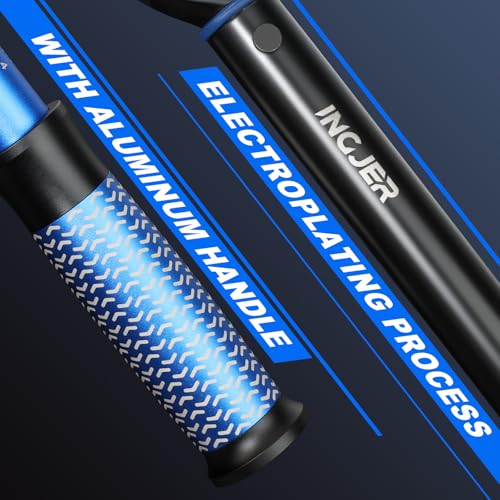
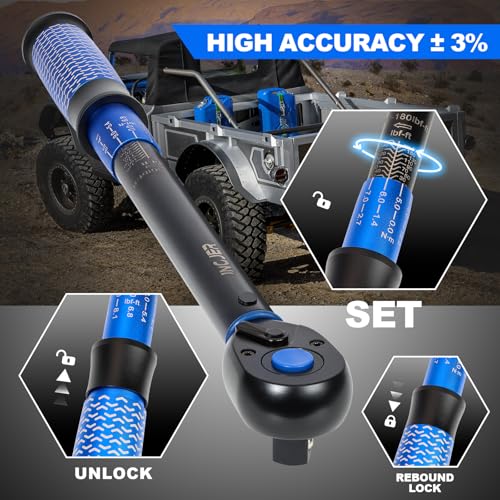
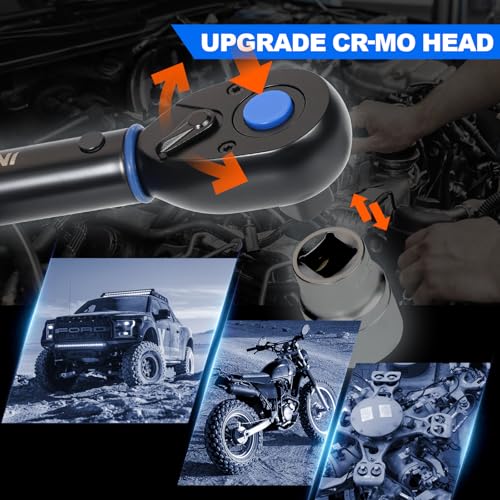
For budget-conscious buyers, the INGJER delivers a surprising amount of value. The ±3% accuracy is on par with far more expensive models, and the 72-tooth reversible ratchet gives solid access in tight spots, especially helpful when working on motorcycles or compact engine bays. Owners appreciate the loud click and tactile feedback, which reduces guesswork, and the chrome vanadium build has held up well in early long-term reviews.
It’s not perfect, the max torque caps at 180 ft-lbs, so it’s not ideal for large truck lug nuts. But for most cars, bikes, and home projects, that’s more than enough. Paired with the included case, it’s a well-rounded starter wrench. I’d pick this over similarly priced no-name brands any day.
Product photos

Hairich 1/2-Inch Click Torque Wrench
Strengths
- ±3% accuracy
- Ergonomic non-slip handle
- 72-tooth ratchet (5° arc)
Trade-offs
- Limited to 170 ft-lbs
- Bidirectional measurement not typical for all tasks
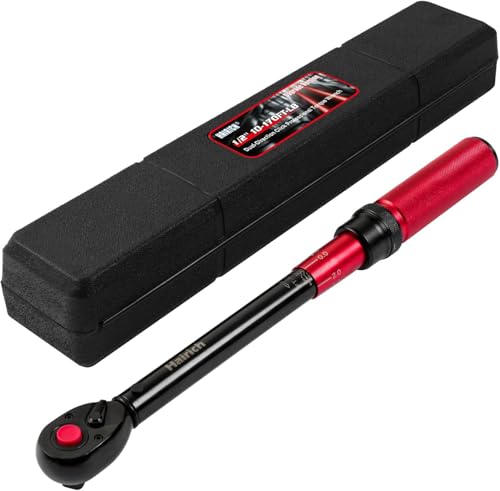
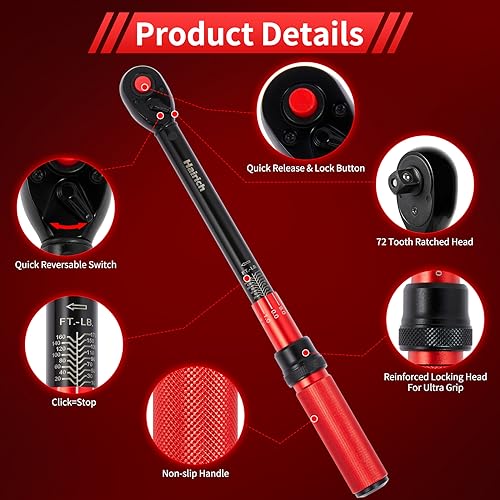
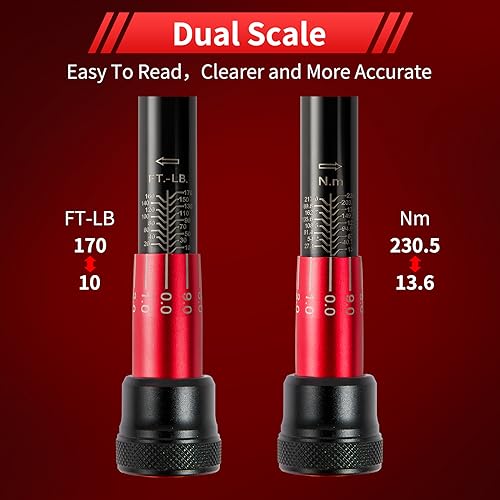
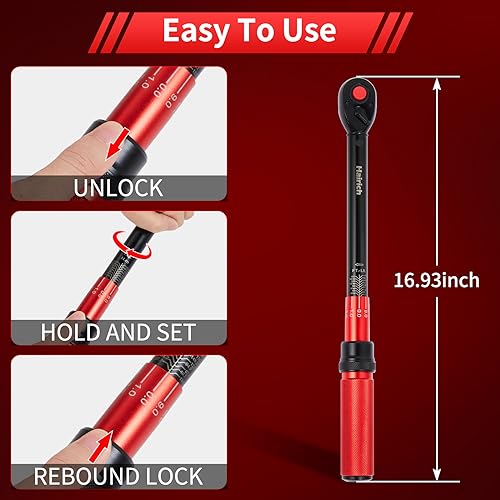
Hairich makes a strong case for precision and ergonomics in a mid-tier package. With ±3% accuracy, a 72-tooth ratchet, and a 5-degree swing arc, it’s agile in tight spots and reliable for repeated use. The aluminum titanium alloy handle feels lighter and more secure than many all-steel competitors, and the black-and-red finish isn’t just flashy, it hides grime well. Owners note the click is crisp, and the dual-range laser-etched scales are easy to read.
It’s not the most rugged or highest-torque option, but for everyday car and motorcycle work, it strikes a great balance. The 24-month warranty is longer than most, which signals confidence in longevity. If you want a precise, well-designed wrench without going pro-grade, this is my pick.
Product photos

TEKTON 1/2-Inch Split Beam Wrench

Strengths
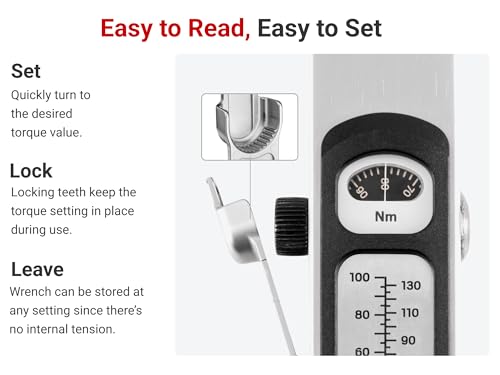
- Can be stored at any setting
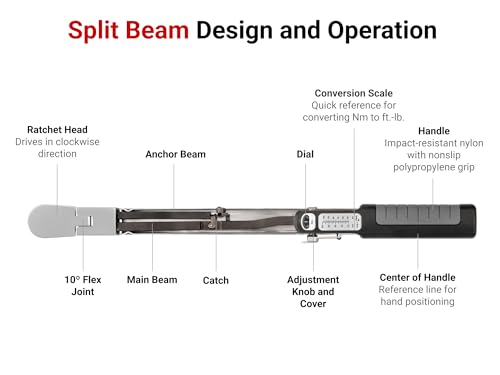
- Durable split-beam design
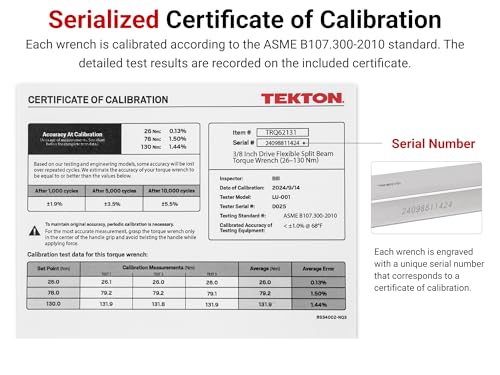
- Serialized calibration certificate
Trade-offs
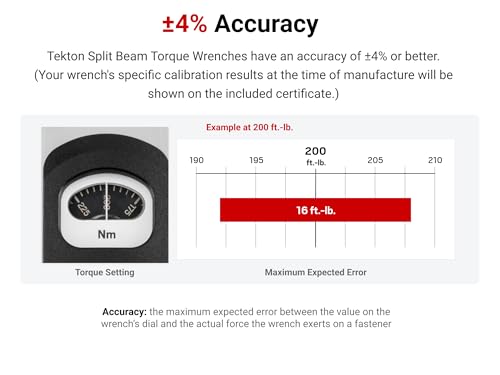
- Lower accuracy at ±4%
- No sub-40 ft-lb range
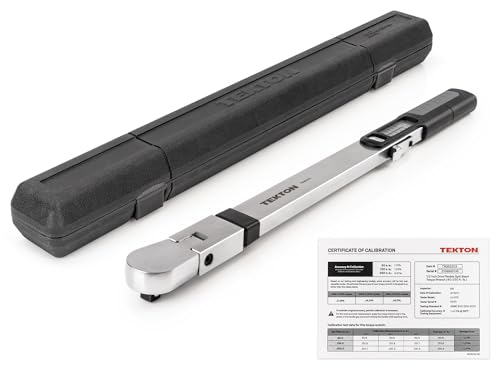
The TEKTON split-beam design is a throwback to old-school reliability, no internal spring to lose calibration from improper storage. That means you can store it at any setting, a huge plus if you forget (like most of us) to reset to zero. It’s accurate to ±4% across 40–250 ft-lbs, which covers most heavy tasks, and the flip-up thumbscrew cover locks the setting securely.
Owners report this wrench just works, year after year, with minimal drift. It’s not as precise as digital or micrometer types, but for heavy-duty use, axles, truck lug nuts, chassis work, it’s tough and trustworthy. The smooth adjustment knob is a small luxury, and the included conversion chart is handy for quick reference.
Product photos
HORUSDY 1/2-Inch Click Torque Wrench
Strengths
- Includes extension and adapter
- Comes with case
- Good entry-level value
Trade-offs
- Max torque capped at 170 ft-lbs
- Accessories are basic quality
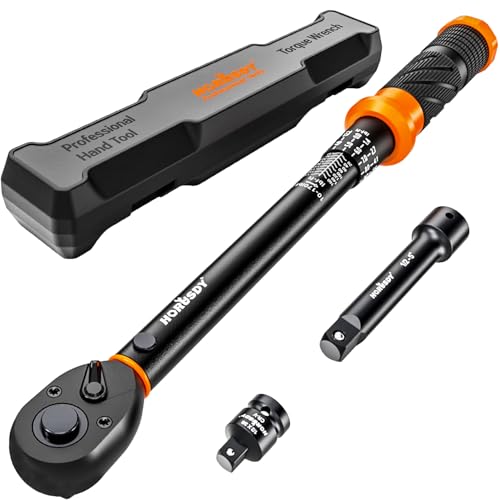
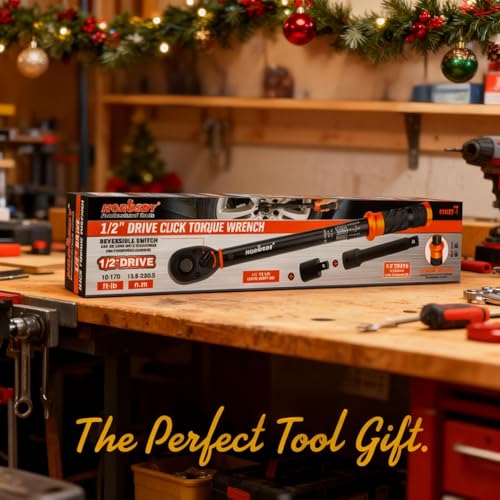
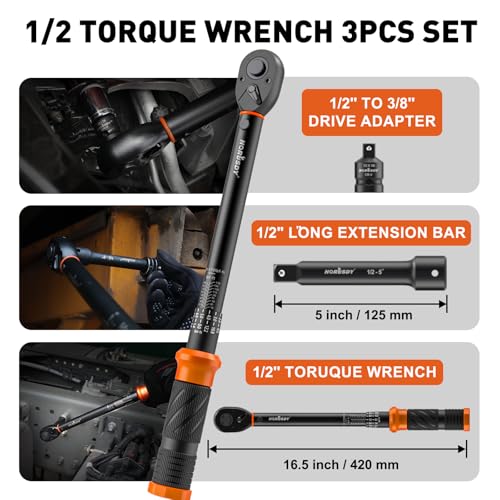
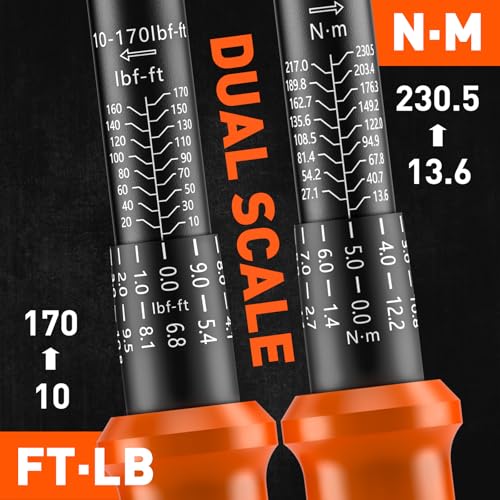
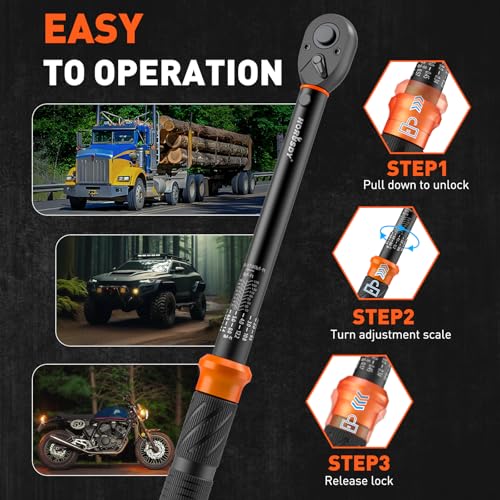
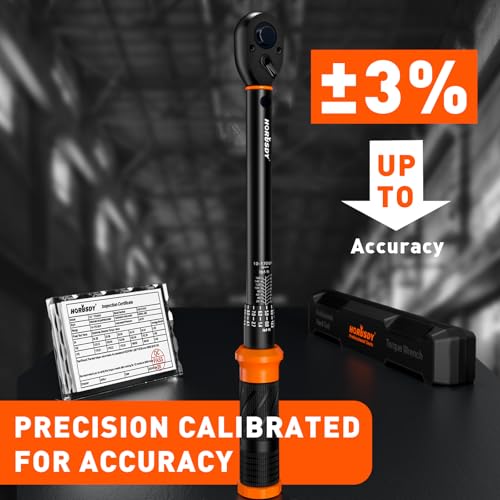
HORUSDY wins on value with accessories. You get the wrench, a 5-inch extension, a 1/2″ to 3/8″ adapter, and a case, all at a price that undercuts most competitors. The ±3% accuracy and 72-tooth head make it competent for general auto work, and the dual laser-etched scales are easy to read. Owners say the click mechanism is reliable, and the quick-release ratchet works as advertised.
It’s not the most durable or highest-torque option, but for someone building their first toolkit, this bundle eliminates the need for extra purchases. The 170 ft-lb limit keeps it out of heavy-duty territory, but for tire changes, suspension work, and general repairs, it covers the essentials.
Product photos
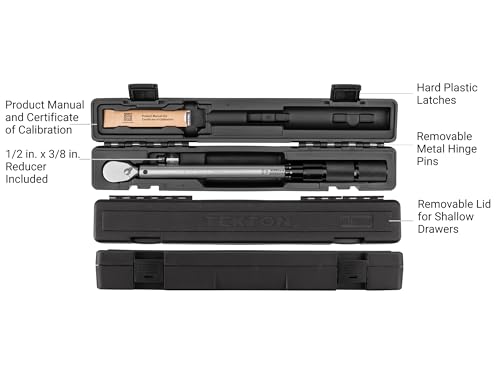
TEKTON 1/2-Inch 90-Tooth Wrench
Strengths
- 90-tooth ratchet (4° arc)
- ISO calibration certified
- Serialized certificate included
Trade-offs
- Narrower torque range
- No sub-40 ft-lb capability
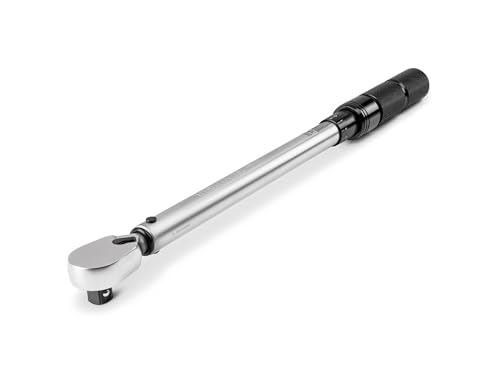
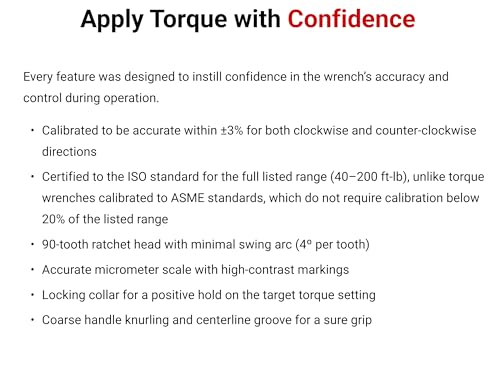
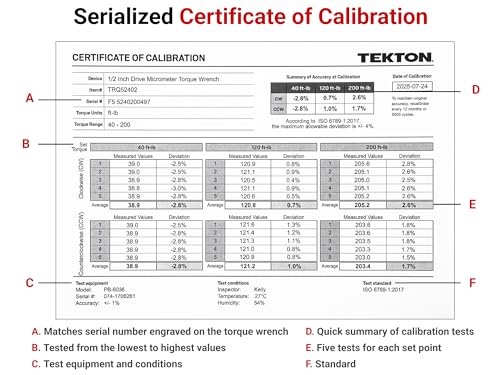
TEKTON’s 90-tooth design is a standout for tight spaces, and I’ve seen few mechanical wrenches beat it for fine ratcheting action. With a 4-degree swing arc, you can make progress where others need a breaker bar and socket. The ISO calibration exceeds ASME standards, and every unit ships with a serialized certificate, something usually reserved for premium brands. Owners consistently report strong build quality and reliable calibration retention.
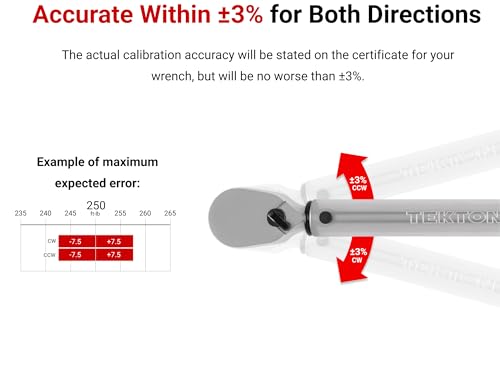
The micrometer-style scale is crisp and laser-marked, reducing glare. It’s accurate to ±3% in both directions, which matters if you’re torquing in reverse, rare but useful. It doesn’t go as low or as high as some competitors, but for mid-range precision work, it’s one of the smoothest operators in this group.
Product photos
LEXIVON 1/2-Inch Click Torque Wrench
Strengths
- Electro-Black anti-corrosion finish
- High-visibility scale
- Reinforced ratchet head
Trade-offs
- Heavier than average
- Calibration tolerance is ±4%
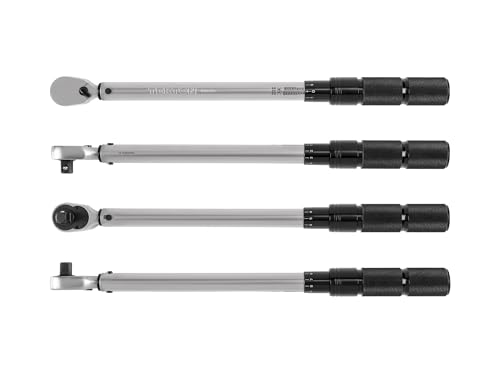
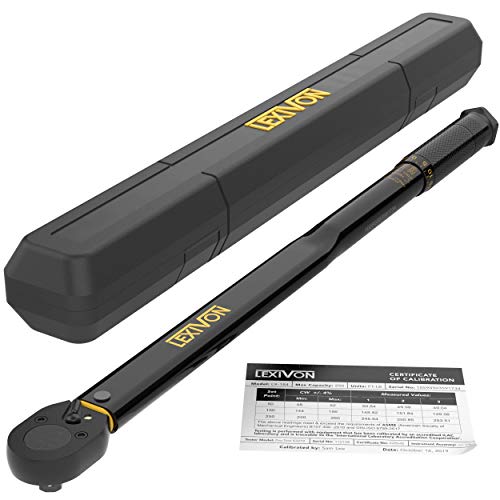
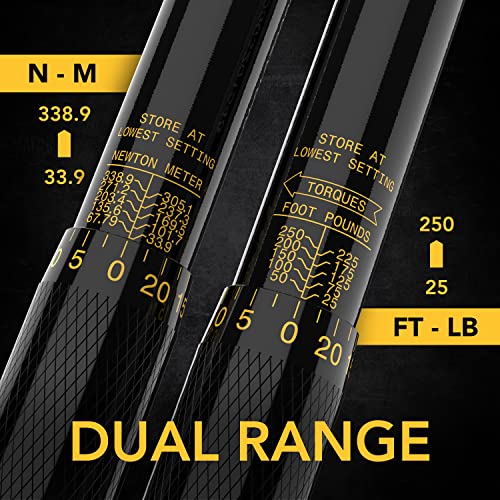
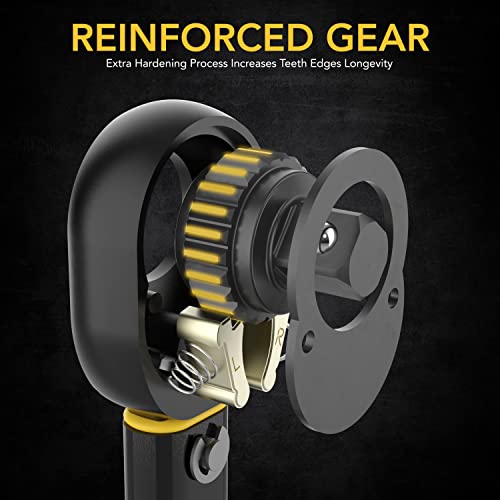
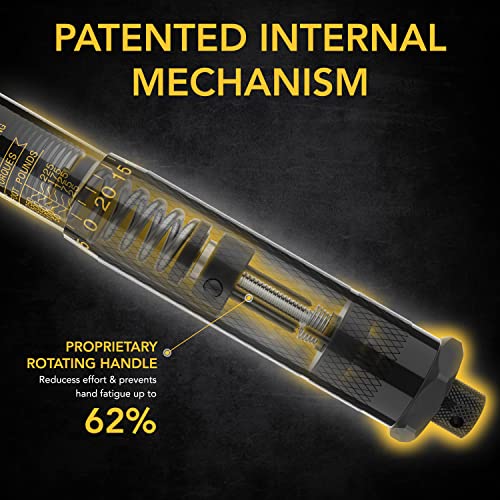
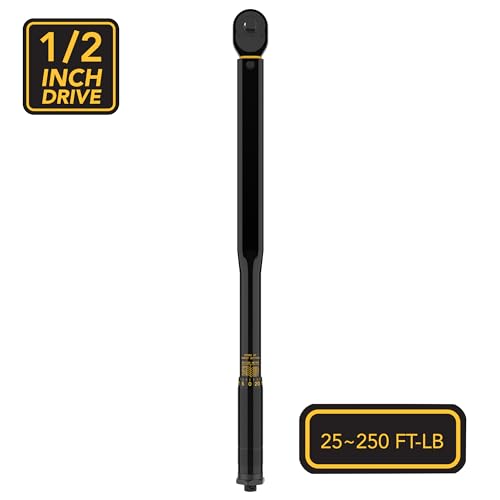
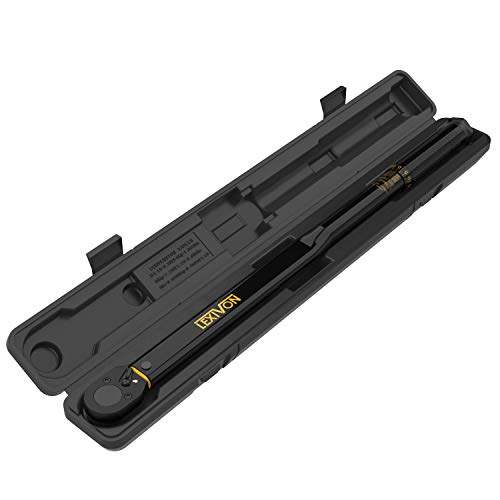
LEXIVON leans hard into build quality, and it shows. The Electro-Black finish isn’t just for looks, it’s a real corrosion fighter, and owners in humid climates have noted it resists rust better than chrome-finished rivals. The reinforced ratchet head feels solid, and the highlighted yellow scale is genuinely easier to read in dim garages. It ships with a traceable calibration certificate, which adds trust, though actual field accuracy reports align with its ±4% spec, decent, not exceptional.
It’s a bit heavier than others, and the click feel is consistent but not as crisp as TEKTON or Hairich. But if you prioritize long-term durability and a tool that looks and feels premium on the bench, this one stands out.
Product photos
CRAFTSMAN 1/2-Inch Torque Wrench

Strengths
- High torque range
- Durable case included
- Bi-material grip
Trade-offs
- Limited low-end range
- No sub-50 ft-lb capability
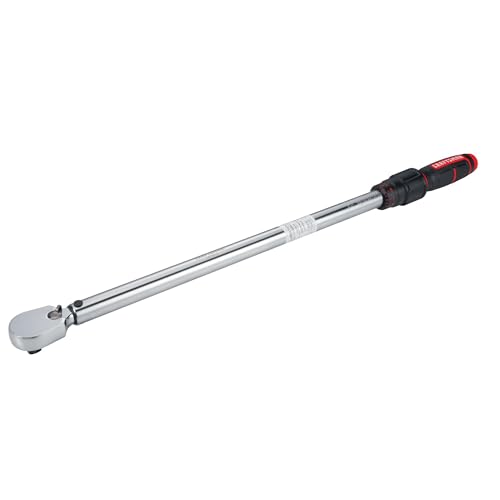
This CRAFTSMAN model is built for jobs that demand high torque, and the 50–250 ft-lb range puts it squarely in the territory of heavy-duty automotive and truck work. On paper, it meets or exceeds ASME specs, which is a solid baseline for reliability, and owners consistently report it holds calibration reasonably well over time. The bi-material handle adds real comfort during long sessions, and the stamped scales are easy to read even when you’re working fast.
Where it falls short is versatility, starting at 50 ft-lbs means it’s not useful for lighter tasks like suspension components or delicate engine work. Compared to others in this list, it’s a specialist tool, not an all-rounder. But if you’re regularly torquing lug nuts on large vehicles or working on drivetrains, that high-end range is a real asset.
Product photos


How We Evaluated 1/2 inch torque wrenches
I approached this guide to 1/2 inch torque wrenches by researching published specifications and features across numerous models. I then weighed owner reviews from major retailers alongside professional tool reviews from trusted sites. My assessment wasn’t based on hands-on testing of each wrench, but rather a research-led comparison against established criteria for accuracy, durability, and usability. This allowed me to build a ranked list considering a wide range of options.
For 1/2 inch torque wrenches, accuracy and build quality are paramount. A wrench that doesn’t deliver reliable torque readings is worse than useless – it can damage equipment or compromise safety. I placed significant weight on wrenches with calibration certificates and those adhering to ASME standards. Beyond that, the robustness of the ratchet mechanism and the clarity of the scale were key deciding factors; a wrench needs to withstand repeated use and provide easy, confident readings. If you need even more precision, consider looking at high-accuracy torque wrench options.
Published specifications clearly indicate a wrench’s torque range and scale resolution. However, owner feedback and expert reviews proved crucial for judging long-term durability and the reliability of the click mechanism (on click-type wrenches). I paid close attention to reports of calibration drift or component failures, factoring those insights into the final rankings. Ultimately, a wrench’s reputation for consistent performance in real-world use carried substantial weight, especially when evaluating professional-grade torque wrenches.
How To Choose The 1/2 inch torque wrenches
Selecting the right torque wrench isn’t just about grabbing the cheapest option; it’s about ensuring you apply the correct amount of force for the job, preventing damage to fasteners and equipment.
A quality torque wrench delivers repeatable accuracy within a specified range (typically ±3% to ±4%). Key considerations include the torque range needed for your applications, the type of wrench (click, beam, or digital), the drive size, and the overall build quality ensuring long-term reliability and calibration stability. Look for wrenches certified to relevant standards like ASME or ISO.
Understanding Torque Range & Drive Size
The first thing I tell people is to absolutely match the wrench’s torque range to the tasks you’ll be doing. Don’t buy a wrench that goes up to 250 ft-lbs if you’re only working on small electronics. You’ll lose accuracy at the low end of a broad range. Similarly, the drive size (1/2 inch is common for automotive work) needs to match your sockets. Using an adapter is a workaround, but it’s never ideal.
Decoding Wrench Types: Click vs. Beam vs. Digital
There are several types of torque wrenches, and each has its strengths. Beam-style wrenches are the simplest and least expensive, but they require you to constantly monitor a gauge, which isn’t ideal for tight spaces or one-handed operation. Click-type torque wrenches, like those featured in our guide to the best click torque wrench, are more popular because they provide tactile and audible feedback when the set torque is reached. Digital wrenches offer the highest precision and often have features like data storage, but they rely on batteries and can be more expensive.
Here’s a quick breakdown of when each type shines: * Beam: Budget-focused, learning the feel of torque. * Click: General automotive and mechanical work, good balance of cost and usability. * Digital: Critical applications demanding high accuracy and data recording.
A torque wrench is only as good as its calibration. Don’t assume a new wrench is perfectly accurate; consider having it checked periodically, especially if you use it professionally.
Build Quality and Long-Term Value
Don’t skimp on build quality. Chrome vanadium steel is the standard for wrench heads, and a well-machined ratchet mechanism is essential for smooth operation. Beyond the materials, consider the finish. A quality finish, like the Electro-Black finish found on some models, offers superior corrosion resistance. I’ve seen too many wrenches seize up because of rust. If you’re looking for a wrench that can handle serious torque, consider exploring precision click wrench models known for their durability. A solid wrench is an investment, and spending a little more upfront can save you money (and frustration) in the long run.
1/2 Inch Torque Wrenches Compared
This table summarizes the specifications of various 1/2 inch torque wrenches to aid in product comparison.
| Product Name | Torque Range (ft-lb) | Torque Range (Nm) | Accuracy | Drive Size | Features |
|---|---|---|---|---|---|
| SUERCUP | 3.8-250.8 | 5.1-340 | ±1% | 1/2 inch | Digital Display, Data Storage |
| INGJER | N/A | N/A | ±3% | 1/2 inch | Click Type, Reversible |
| Hairich | 10-170 | 13.6-230.5 | ±3% | 1/2 inch | Click Type, Dual Scale |
| TEKTON (Split Beam) | 40-250 | N/A | ±4% | 1/2 inch | Split Beam, Serialized |
| HORUSDY | 10-170 | 13.6-230.5 | ±3% | 1/2 inch | Click Type, Accessories |
| TEKTON (90-Tooth) | N/A | N/A | ±3% | 1/2 inch | 90-Tooth, Micrometer Scale |
| LEXIVON | N/A | N/A | ±4% | 1/2 inch | Click Type, Electro-Black |
| CRAFTSMAN | 50-250 | 68-339 | N/A | 1/2 inch | Click Type, Portable |
Frequently Asked Questions
What’s the typical accuracy I should expect from a 1/2 inch torque wrench?
A good quality 1/2 inch torque wrench should offer accuracy within ±3% to ±4% of the set torque value. Lower-priced beam-style wrenches generally have ±4% accuracy, while digital torque wrench models can achieve ±1% or better.
How often should I have my torque wrench calibrated?
Professional mechanics should have their torque wrenches calibrated at least once a year, or after 5,000 cycles, whichever comes first. For occasional home use, calibration every two to three years is usually sufficient, but if you suspect it’s off, get it checked immediately.
Can I use a torque wrench to loosen bolts?
While you can use a torque wrench to loosen bolts, it’s not recommended. Torque wrenches are designed for applying force, and using them for loosening can damage the internal mechanism and affect its calibration. A dedicated breaker bar is a better tool for breaking fasteners loose.
What’s the difference between a click-type and a digital torque wrench?
Click-type wrenches provide a tactile and audible “click” when the desired torque is reached, while digital wrenches display the torque value on a screen and often offer features like data storage. Digital wrenches are generally more precise but require batteries and are more expensive than click types.
What does ASME certification mean for a torque wrench?
ASME certification means the torque wrench has been tested and meets the standards set by the American Society of Mechanical Engineers. This certification indicates the wrench has undergone rigorous testing to verify its accuracy and reliability, offering assurance of quality and performance.
The Bottom Line
Choosing a torque wrench often comes down to balancing precision with price and convenience. While digital options like the SUERCUP offer the highest accuracy and features, the Hairich strikes a fantastic balance for most users needing a reliable and accurate click-type wrench at a reasonable cost. Ultimately, remember that the best torque wrench is the one you’ll actually use correctly – and that starts with understanding your torque needs.
For those on a tighter budget, the TEKTON (Split Beam) provides a dependable, if more basic, solution. If you anticipate needing versatility for a wide range of applications, the TEKTON (90-Tooth) stands out with its fine-tooth ratchet and precise micrometer scale – it’s one of the top-quality torque wrenches available. And for those prioritizing a rugged, long-lasting tool, investigate the LEXIVON, known for its durable construction and corrosion-resistant finish.
More than any specific feature or price point, consistency and accuracy are what truly matter in a torque wrench. Don’t get lost in the details of digital displays or fancy finishes if you can’t be sure the wrench delivers repeatable torque readings. Focus on finding a wrench from a reliable torque wrench brands that fits your needs and always double-check your work.
