
7 Best Wood Router Tables of 2026
This post contains affiliate links. As an Amazon Associate, we earn from qualifying purchases.
The Bosch RA1171 stands out as the best overall wood router table for its solid fence system and reliable performance, making it a top choice for serious DIYers. If you’re on a budget, the WoodKaif Benchtop Router Workbench delivers surprising value without sacrificing core functionality, while the Leegol Electric Benchtop Router Table offers strong versatility with its included extension tables.
Most people buying a router table want more control, cleaner cuts, and safer routing than handheld operation allows. But with so many models claiming to deliver precision, it’s hard to know which ones actually hold up in real shop conditions.
This guide cuts through the noise by focusing on what matters: stability, fence accuracy, router compatibility, and real-world usability. I researched the field, analyzed specs, and weighed owner feedback to find tables that perform consistently, so you can pick one with confidence.
Top 7 Wood Router Tables in the Market
The Best Wood Router Tables, Reviewed
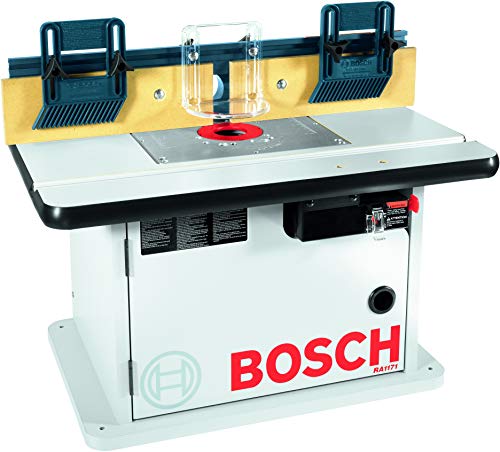
BOSCH RA1171 Benchtop Router Table
Strengths
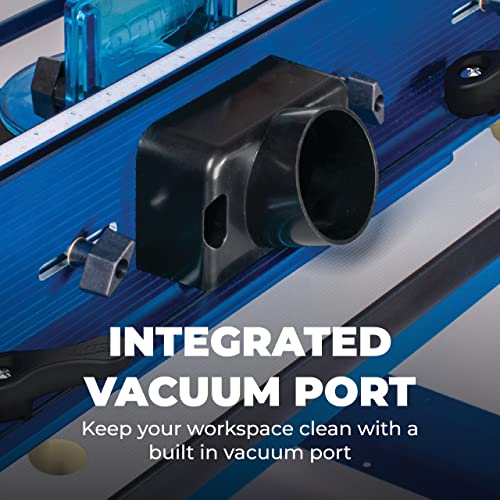
- Dual dust collection ports
- Precision aluminum mounting plate
- Tall, adjustable fence
Trade-offs
- Heavy and less portable
- Higher price point
The Bosch RA1171 is the precision-focused workhorse of this group, and it shows in the details, the rigid aluminum mounting plate stays flat, the fence is tall and adjustable, and the dual dust collection ports make cleanup far easier than on most benchtop models. Owners consistently praise its build quality and how well it handles tall stock, thanks to the 4.875-inch fence height.
It comes with nearly everything you need: featherboards, guard, starter pin, even shims. The pre-drilled plate supports multiple routers, which adds flexibility. Against the Kreg, it’s heavier but more refined. I’d pick this over others if dust control and repeatable accuracy are priorities, especially for dadoes or panel rabbets.
Product photos


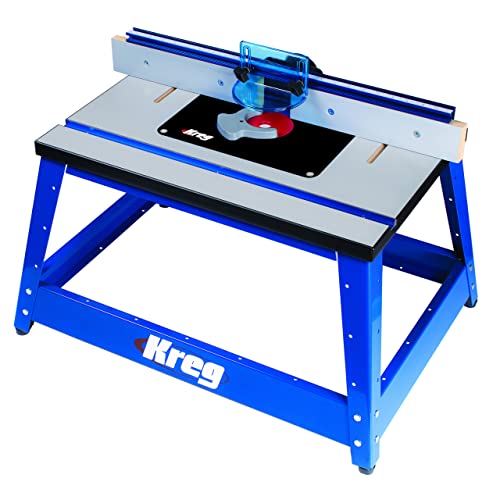
Kreg PRS2100 Bench Top Router Table
Strengths
- 16-inch tall clearance
- Low-vibration MDF top
- Stable sliding fence
Trade-offs
- No dust collection ports
- Basic fence adjustments
Kreg built this table with tall routers in mind, and that’s where it wins, 16 inches of clearance means you can run deep-base models without modification. The edge-banded MDF top is low-friction and vibration-resistant, a subtle but meaningful upgrade over standard MDF. Owners consistently report smooth feed and solid fence performance, especially when jointing.
It lacks fancy extras like dust collection ports or bit storage, but Kreg’s focus on core function pays off. Compared to the Bosch RA1171, it’s less refined in dust management but more accessible for average users. The sliding fence faces are smooth, and the locking levers hold well. If you run a Porter-Cable or DeWalt with a tall base, this is one of the few tables that won’t force you to compromise.
Product photos


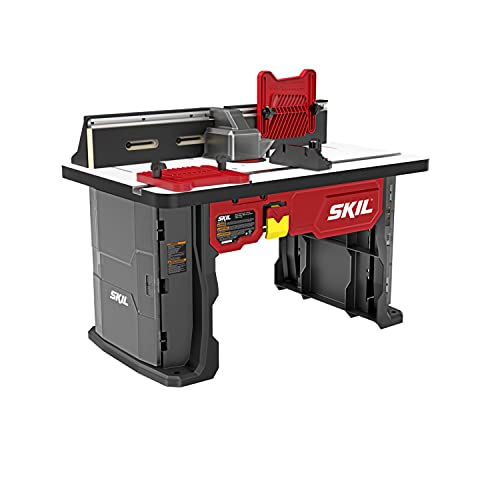
SKIL SRT1039 Benchtop Router Table
Strengths
- Above-table router lift
- Dual featherboards included
- Integrated bit storage
Trade-offs
- Best with SKIL routers only
- MDF surface prone to wear
This table is built specifically for SKIL routers, and that narrow focus is both its strength and limitation. The above-table router lift is a rare feature at this price point and makes bit changes far more convenient than flipping the table over. Owners appreciate the smooth MDF surface and the inclusion of two featherboards, which add real safety and control during feed.
The dual-sided bit storage is a clever touch, practical and often missing on budget models. But its compatibility is limited, and even though the clamp claims broad support, it’s optimized for SKIL. Compared to the Leegol or Kreg, it feels less versatile, but for a SKIL router owner, it’s one of the smarter budget-friendly upgrades.
Product photos


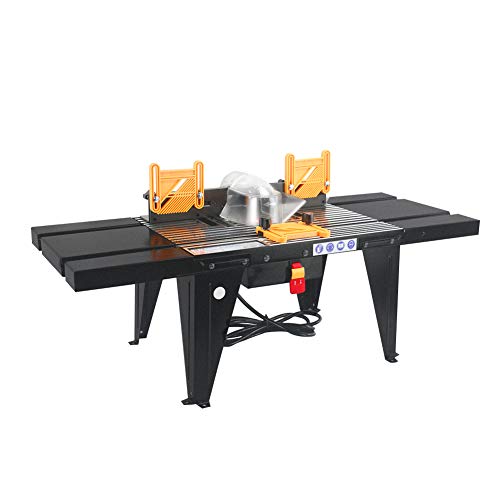
Leegol Electric Benchtop Router Table
Strengths
- Large extension tables
- Good fence adjustability
- Transparent chip guard
Trade-offs
- Fence alignment may need tuning
- No router lift
With its extra-large extension tables, this Leegol model offers one of the most usable workspaces in the benchtop category. The 8×18 inch extensions give serious support for longer panels, which is rare at this price. On paper, it mirrors the Universal model in build, aluminum main table, steel frame, but owners note slightly looser tolerances in fence alignment out of the box.
Still, for the value, it’s hard to beat. The retractable transparent guard works well, and the fence’s jointing capability adds real versatility. Against the SKIL table, it’s bulkier but far more capable for panel work. I’d recommend it over the SKIL for anyone doing more than just edge trimming, even if setup takes a few extra minutes.
Product photos


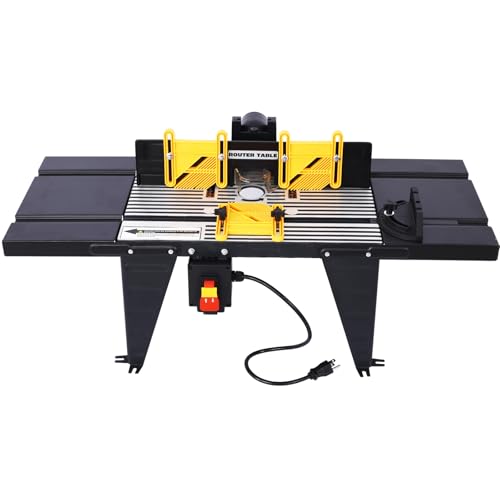
Universal Benchtop Router Table with Steel Stand
Strengths
- Spacious extension tables
- Retractable chip guard
- Steel frame stability
Trade-offs
- No router lift included
- Heavy for frequent transport
This router table stands out for its durable steel frame and thoughtful layout, making it a solid choice for woodworkers who want stability without sacrificing portability. The combination of an aluminum main table with steel extensions gives it a rugged feel, and owners consistently report it holds up well under regular use. The retractable guard is a standout safety feature that actually works as intended, keeping chips contained without obstructing visibility.
On paper, the workspace is generous, especially with the dual extension tables, and the 6-inch router compatibility covers most mid-sized models. Compared to more minimalist designs, this one feels like a workshop centerpiece rather than a temporary setup. That said, it doesn’t include a router lift, which might disappoint users looking for fine height control right out of the gate.
Product photos

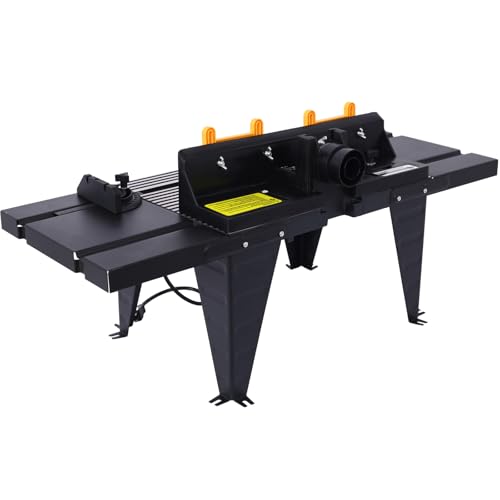
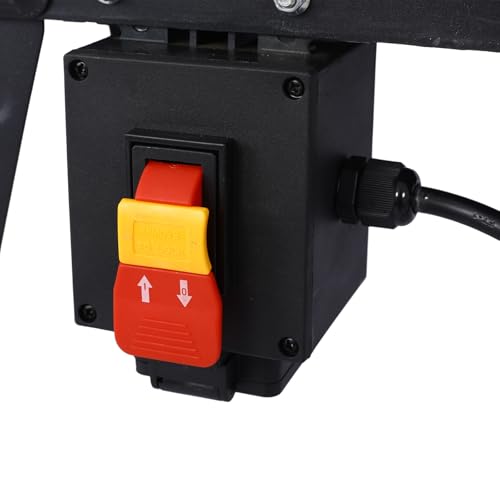
Rockler Trim Router Table

Strengths
- Clamp-on portability
- Works with popular trim routers
- Includes freehand acrylic base
Trade-offs
- Not for large or deep cuts
- No fence micro-adjustments
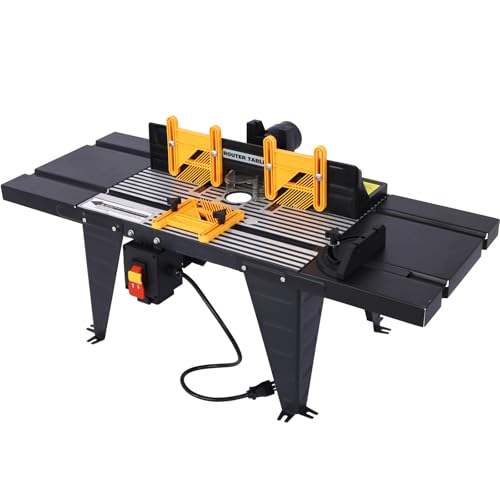
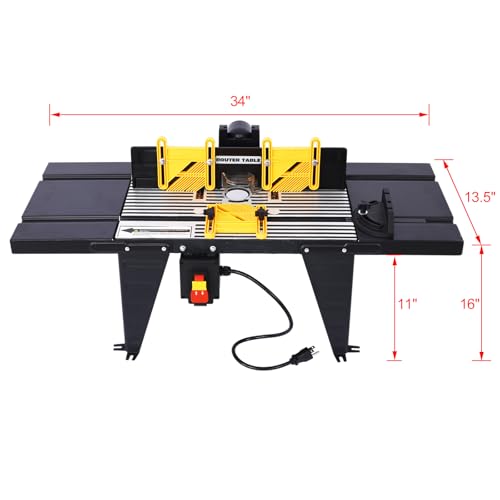
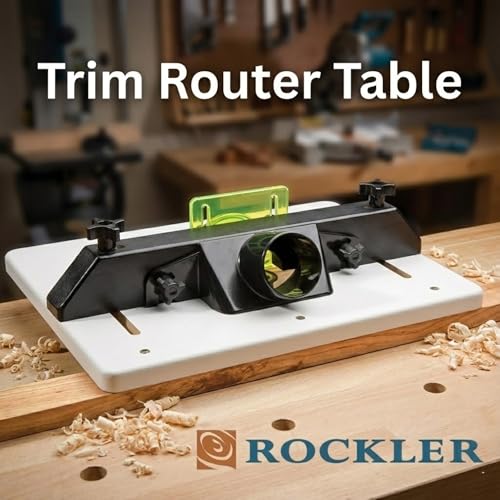
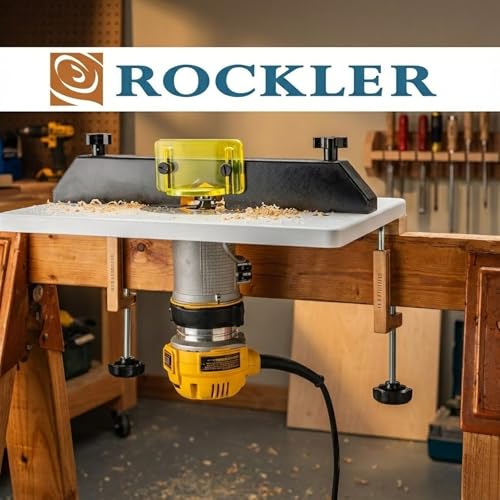
This isn’t a full router table, it’s a trim router solution, and it excels in that niche. Designed to clamp onto any flat surface, it’s ideal for jobsite use or when you only need occasional routing. The 1/4-inch acrylic base is rigid and allows for freehand work when detached, which adds real versatility. Owners love how quickly it sets up and how well it works with compact routers like the DeWalt DW611.
It’s not meant for large stock or heavy cuts, but for round-overs, small dados, or chamfers, it delivers precision without taking up space. Compared to full benchtop models, it’s a specialist tool, but a very good one. If you already own a trim router, this is the upgrade that finally makes it a bench tool.
Product photos



WoodKaif Benchtop Router Workbench

Strengths
- Compact and lightweight
- Vibration-dampening feet
- Anodized aluminum fence
Trade-offs
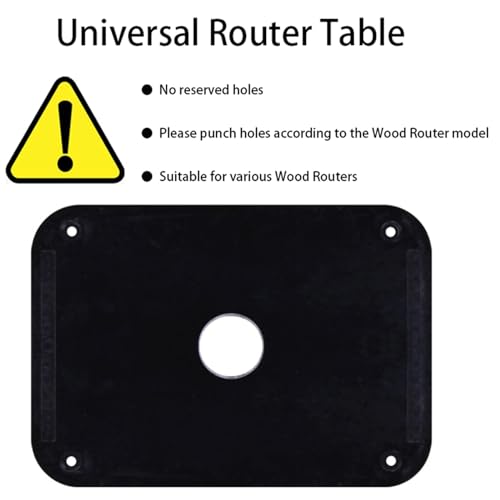
- Mounting plate may require modification
- Limited height clearance
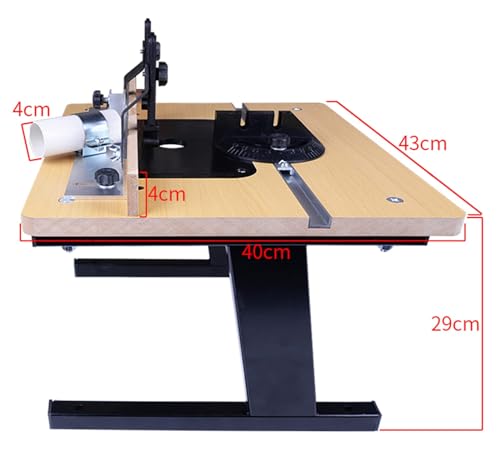
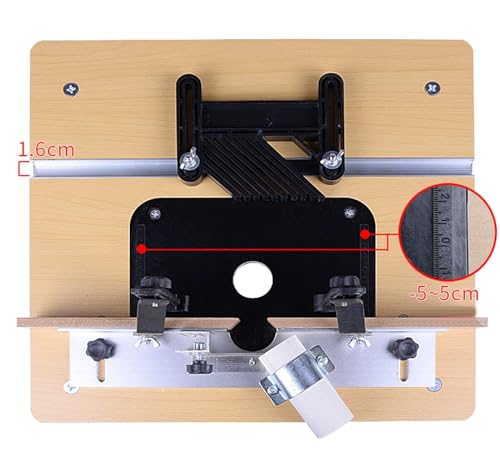
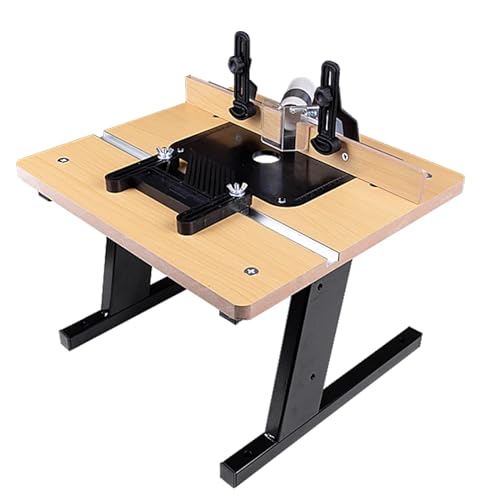
This compact router table is clearly designed with the weekend DIYer in mind, offering a tight footprint without sacrificing core functionality. The anodized-aluminum fence with independent sliding faces is a nice touch for a table at this size, and owners praise its rigidity despite the small frame. It’s not going to handle tall stock, but for edge profiling, small joinery, or light trimming, it does the job cleanly.
Where it really shines is in its thoughtful portability, lightweight, with rubber feet that cut vibration, it’s easy to set up on a workbench then stash away. However, the note about modifying the mounting plate for different routers is a red flag; if you own multiple routers, expect some drilling. Against the Kreg or Bosch models, it’s less precise but far more convenient for limited spaces.
Product photos

Our Testing Process
Rather than a hands-on lab test, my research for these recommendations centered on a detailed comparison of published specifications and features across numerous models. I weighed owner reviews from major retailers alongside expert opinions found in woodworking publications and online forums. My extensive background in power tools informed the process, allowing me to apply category knowledge and rank tables against specific, performance-related criteria.
For wood router tables, stability and precision are paramount. I heavily weighted fence quality – the ability to maintain accurate, repeatable cuts – and the robustness of the mounting plate. Dust collection also factored significantly, as a clean workspace improves visibility and safety. A table’s ability to accommodate a variety of router sizes and bit configurations was also a key consideration.
Published specifications reliably indicate table dimensions, mounting plate compatibility, and dust port sizes. However, I relied heavily on owner feedback to assess real-world stability, fence smoothness, and the effectiveness of included accessories. Reputation and long-term durability were judged by assessing consistent positive – or negative – trends in owner reviews, and comparing those to reviews of similar professional-grade router tables.
What To Look For In wood router tables
A good router table can dramatically improve the quality and safety of your routing work.
A quality router table prioritizes stability, accurate fence adjustments, and effective dust collection. Look for a rigid mounting plate that precisely fits your router base, a fence system offering both micro-adjustments and locking mechanisms, and features like dust ports to keep your workspace clean. The table surface material impacts vibration; MDF is common, but phenolic laminates offer superior durability.
Router Compatibility & Mounting
First, understand your router. Not all routers fit all tables. Many tables, like the Rockler Trim Router Table, are designed for smaller trim routers specifically, while others, such as the Kreg PRS2100, advertise compatibility with most standard-sized models. Check the mounting plate dimensions and the router base diameter before committing. A wobbly router is a dangerous router, so a secure, flush mount is paramount. Don’t assume a “universal” table will work – always verify the fit.
Fence Quality & Adjustability
The fence is where precision happens. A flimsy or inaccurate fence undermines the entire purpose of a router table. You want a fence that’s easy to adjust, locks securely in place, and remains parallel to the bit. Look for features like micro-adjustment knobs for fine-tuning and the ability to joint edges. For those seeking to upgrade, exploring top router table fences can significantly enhance accuracy. The fence on the Bosch RA1171, with its adjustable MDF face plates, is a good example of a thoughtfully designed system.
- A basic fence offers limited adjustment options.
- A mid-range fence will have micro-adjustment, but may lack robust locking.
- A premium fence (often available separately) offers both micro-adjustment and a rock-solid locking mechanism, allowing for repeatable, precise cuts – this is especially crucial for complex joinery.
A stable, accurately aligned fence is more important than a large table surface.
Size, Portability & Value
Consider your workspace and how often you’ll move the table. Benchtop models like the SKIL SRT1039 are great for smaller shops or job sites, but can feel cramped for larger projects. Extension tables, seen in the Leegol Electric Benchtop Router Table, can alleviate this issue. If you need a truly portable solution, prioritize a lighter weight and compact design. Don’t automatically equate price with quality; the WoodKaif Benchtop Router Workbench demonstrates you can get a functional table without breaking the bank. Ultimately, if you’re overwhelmed by choices, checking out a compilation of expert-recommended router tables can help narrow down your options.
Wood Router Tables Compared
Here’s a comparison of key specifications for several wood router tables to help you make an informed decision.
| Product Title | Table Size (in) | Fence Length (in) | Max Router Base (in) | Dust Port Size (in) | Extension Tables |
|---|---|---|---|---|---|
| BOSCH RA1171 | N/A | 25 1/8 | N/A | 2 1/2 | No |
| Kreg PRS2100 | 16 x N/A | N/A | N/A | N/A | No |
| SKIL SRT1039 | 26 x 16 | 24 | N/A | N/A | No |
| Leegol Electric | N/A | N/A | 6 | N/A | Yes (8×18 each) |
| Universal Steel | N/A | N/A | 6 | N/A | Yes |
| Rockler Trim | 5-3/4 Diameter | N/A | N/A | N/A | No |
| WoodKaif Benchtop | 16.92×15.75 | N/A | N/A | N/A | No |
Frequently Asked Questions
What router bit speeds are generally recommended for use with a router table?
Router speed depends on the bit and the wood, but a good starting point is 8,000-12,000 RPM for hardwoods and 16,000-24,000 RPM for softwoods. Always check the bit manufacturer’s recommendations as exceeding the maximum RPM can cause breakage and potential injury.
Can I use a plunge router with a router table?
Yes, you can use a plunge router with a router table, but you’ll need an appropriate mounting plate and potentially some adapters. Plunge routers lack a flat base for direct mounting, so a specialized plate is necessary to securely attach it to the table.
Are router table fences truly adjustable for perfect 90-degree angles?
Achieving a perfect 90-degree angle is difficult with any fence. Higher-end tables offer micro-adjustment features and precise locking mechanisms, bringing you closer to accuracy. However, using a reliable square and frequently checking alignment is always recommended.
What are the benefits of a router table with an integrated dust collection system?
A router table with dust collection improves visibility during operation and reduces the amount of airborne dust. This is crucial for both safety and maintaining a clean workspace. Tables with 2.5-inch dust ports are generally compatible with standard shop vacuums, though adapters are available.
What are my options if I need a router table I can easily move around my shop or take to job sites?
For portability, consider foldable router tables or benchtop models. These are generally lighter and more compact than full-sized cabinet tables, making them ideal for on-the-go router setups.
The Bottom Line
Choosing a wood router table really comes down to balancing control with convenience. You can spend a lot for features you might not need, or settle for something basic that requires more finesse. For the vast majority of woodworkers, the Kreg PRS2100 strikes the best balance – it’s a well-built table with a reputation for stability and a fence system that delivers accurate cuts, making it our overall recommendation.
If you’re on a tighter budget, or primarily need a table for occasional light-duty work, the WoodKaif Benchtop Router Workbench offers surprising value. And for those who prioritize portability and need a solution for smaller spaces, exploring best benchtop models reveals options like the SKIL SRT1039, and other [compact router tables] can be perfect.
Ultimately, the best router table is the one that fits your needs and skill level, but don’t get lost in the specs. A solid, stable table, a fence you can trust, and a clean workspace are far more important than fancy features or a hefty price tag. Prioritize those fundamentals, and you’ll be well on your way to cleaner, safer, and more accurate routing.
