8 Best Welding Hoods of 2026
This post contains affiliate links. As an Amazon Associate, we earn from qualifying purchases.
The Lincoln Electric VIKING 3350 is our top pick for its superior optical clarity, wide viewing area, and reliable performance. For a more budget-friendly option, the ARCCAPTAIN Intelligent Panoramic delivers strong features without breaking the bank. If you need maximum versatility across welding types, the YESWELDER Large View Auto-Darkening offers excellent adjustability and a clear field of view.
Welding hoods aren’t one-size-fits-all. Too many people buy based on price alone, only to end up with foggy lenses, neck strain, or poor visibility that makes clean welds harder to achieve. Comfort and clarity matter just as much as protection.
This guide cuts through the marketing noise. I compared specs, analyzed owner feedback, and evaluated real-world performance to highlight the hoods that deliver where it counts, optical quality, durability, and fit. You’ll see what sets the best apart and how to choose the right one for your work.
Top 8 Welding Hoods in the Market
The Best Welding Hoods, Reviewed
Lincoln Electric VIKING 3350 Helmet
Strengths
- Best-in-class optics
- X6 balanced headgear
- Large 12.5 sq in lens
Trade-offs
- No side windows
- Higher price point
- Solar-only charging
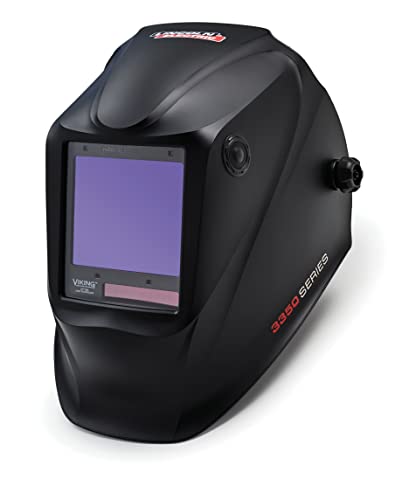
The Lincoln Viking 3350 is the benchmark many auto-darkening helmets are measured against. The 4C lens technology delivers truly distortion-free vision, and the 12.5 sq in viewing area is massive, it gives you room to see the full weld zone without moving your head constantly. Owners consistently praise the clarity and natural color rendering, which makes tracking the puddle easier, especially in TIG.
The X6 headgear is a standout: it balances the weight so well that the helmet feels lighter than it is, even after hours of use. The 5-year warranty is a strong signal of confidence in durability. Compared to the ARCCAPTAIN panoramic model, it lacks side windows, but the optical quality and ergonomics are superior. If you’re doing serious welding day in and day out, this is the smarter buy.
Product photos


ARCCAPTAIN Intelligent Panoramic Welding Helmet
Strengths
- Panoramic 180° view
- Built-in LED light
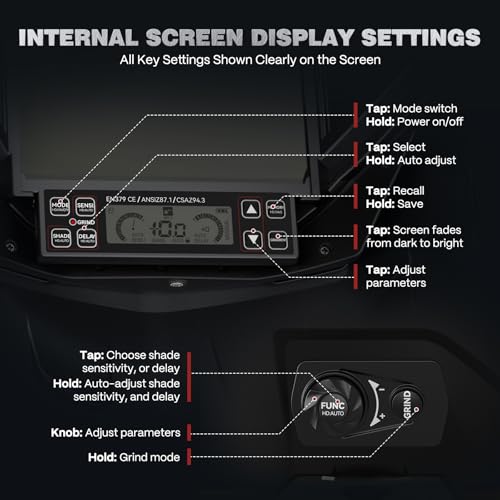
- Internal display controls
Trade-offs
- Slightly bulky
- Longer charge time
- Fit less balanced than premium models
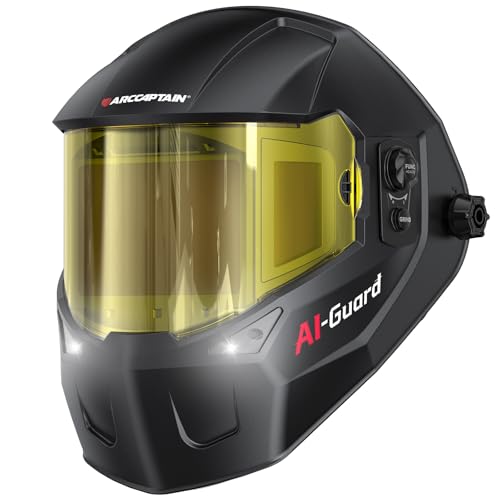
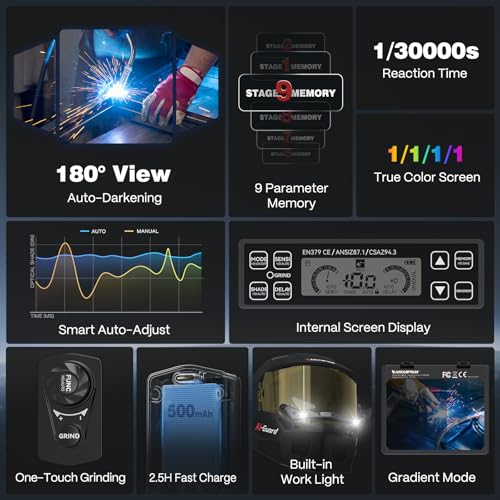
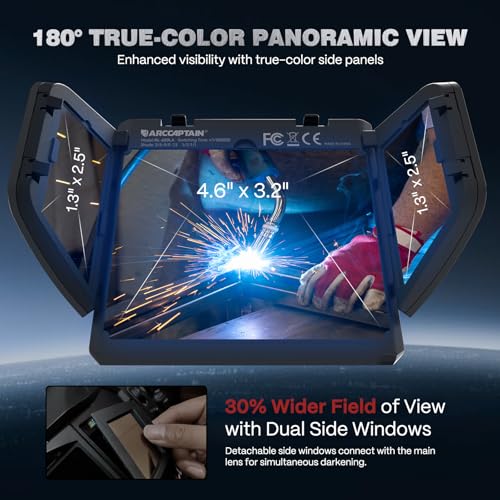
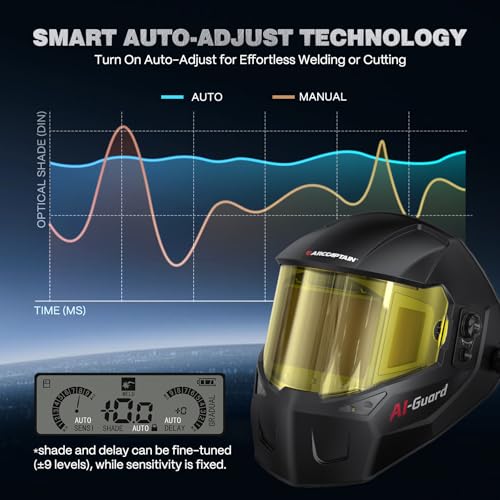
This ARCCAPTAIN model pushes into near-premium territory with its 180° panoramic view and internal display, features you’d expect to see on helmets twice the price. The 4.6″ x 3.2″ main lens plus side windows deliver exceptional peripheral vision, and owners report a noticeable drop in eye strain during long welds. The 1/1/1/1 clarity and fast 1/30000s response are on par with top-tier units, and the seven arc sensors improve reliability, especially in tricky angles.
The built-in LED work light is a standout, not a gimmick. It’s genuinely useful for low-light setups or deep joints, and having internal controls lets you tweak settings without removing the helmet. Battery life is strong thanks to solar assist, but some users note the charging time is a bit long. Compared to the Lincoln Viking 3350, it’s not quite as refined in balance or optics, but it offers more features for less. I’d pick this over most mid-range helmets if you want precision and visibility without the premium price tag.
Product photos
YESWELDER Large View Auto-Darkening Helmet
Strengths
- Large 1/1/1/1 lens
- Blue light protection
- Durable PP build
Trade-offs
- Solar-only power
- Average low-light performance
- Headgear less premium
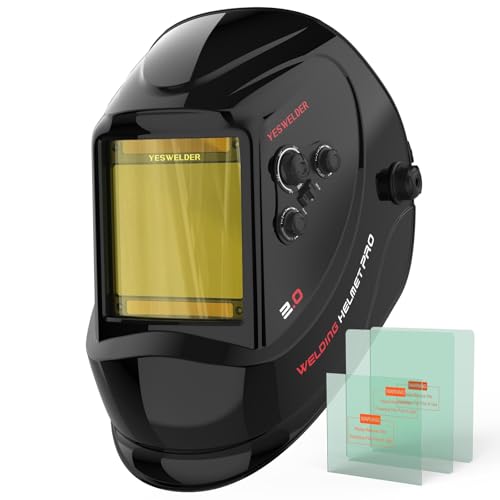
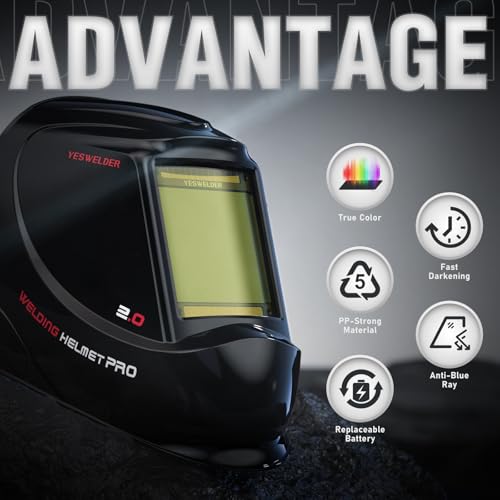
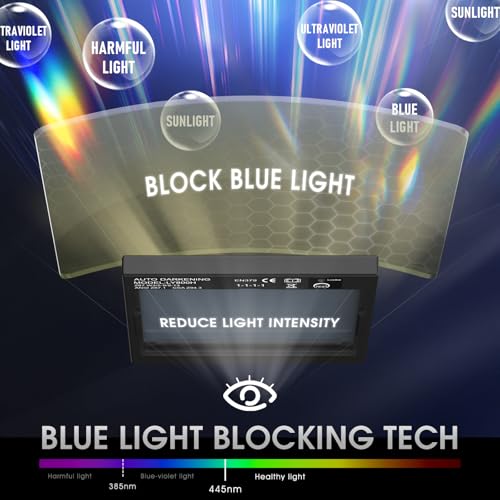
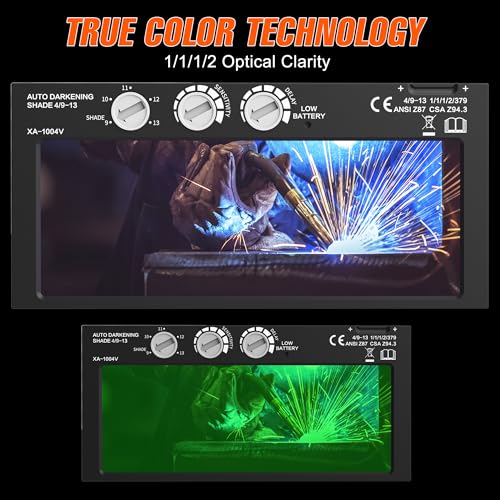
The YESWELDER Large View model is a strong contender for welders who value screen real estate. Its 3.93″ x 3.66″ lens matches some pricier helmets in size, and the 1/1/1/1 optical clarity with true color tech makes for a clean, natural-looking weld pool view. The blue light blocking outer lens is a smart touch, it’s not just marketing, owners say it reduces eye fatigue during extended sessions.
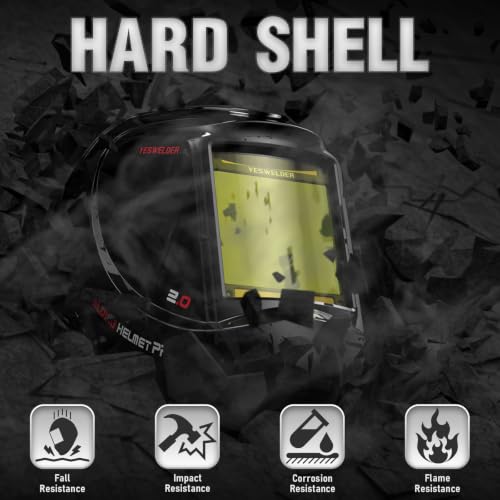
It runs on solar power with a backup battery, which is standard, but the arc-to-energy conversion is efficient. The headgear is comfortable, though not as refined as Lincoln’s X6 system. Compared to the ARCCAPTAIN budget model, it feels slightly more durable thanks to reinforced PP, and the four sensors are more consistent. It’s not the best for ultra-fine TIG, but for general shop use, it’s a smart, well-rounded pick.
Product photos
ARCCAPTAIN Large View True Color Helmet

Strengths
- Large viewing area
- Affordable price
- LED light included
Trade-offs
- PP material less durable
- Occasional sensor lag
- Basic headgear adjustability
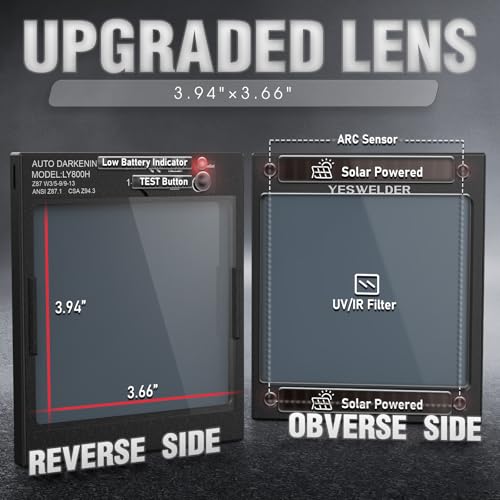
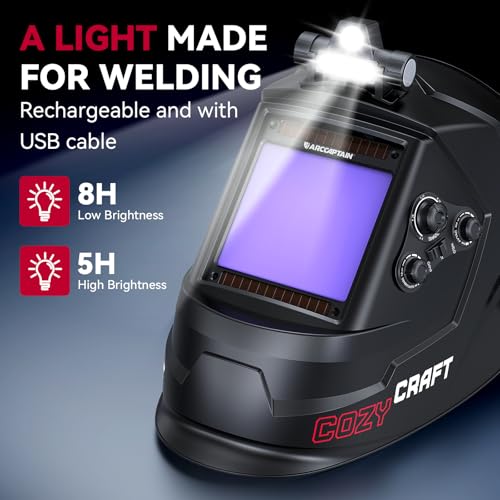
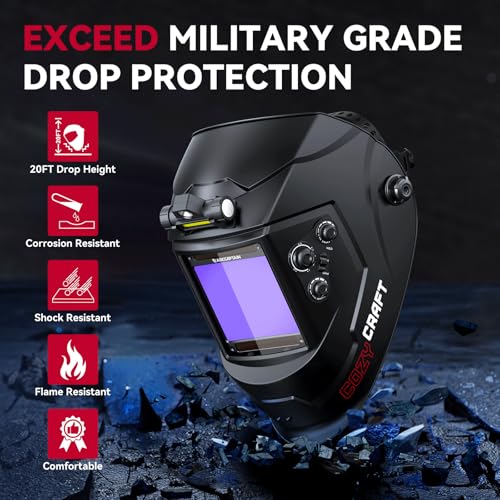
For the budget-conscious welder, this ARCCAPTAIN model hits a sweet spot. It offers a large 3.94″ x 3.66″ viewing area with 1/1/1/1 clarity, rare at this price point, and the USB-powered LED light is a thoughtful addition, even if it ships uninstalled. The 4 arc sensors and 1/25000s darkening speed are solid for MIG and stick work, and the wide shade range covers most common applications.
It’s built with PP material, which keeps it light at just 1 lb, and the ergonomic headgear with breathable padding earns consistent praise for comfort. Where it falls short is in sensor reliability, some owners report occasional misfires in low-amperage TIG work. It’s not as polished as the Lincoln or Miller units, but for weekend projects or light fabrication, it delivers strong value.
Product photos


Miller Classic Series Welding Helmet

Strengths
- Excellent for low-amp TIG
- ClearLight optics
- Reliable auto-darkening
Trade-offs
- Smaller viewing area
- Only two arc sensors
- Average battery life
Miller’s reputation in TIG welding isn’t just hype, and this Classic Series helmet backs it up. The ClearLight lens tech delivers a noticeably brighter light state and crisper transition, which matters when you’re welding at low amperages. The 6 sq in viewing area isn’t the largest, but the high-definition optics make up for it, owners say it’s easier to see the puddle initiation and control bead width.
With a 1/23,000 sec switch speed and two arc sensors, it’s reliable, though not as fast or sensitive as models with four or more sensors. The ratchet headgear is comfortable and secure, but it doesn’t distribute weight as well as Lincoln’s X6. Still, for TIG-focused work, this helmet stands out. I’d choose it over the Lincoln for low-amp TIG, but not for all-day MIG where screen size and balance matter more.
Product photos


Jackson Safety PL280 Pipeline Helmet

Strengths
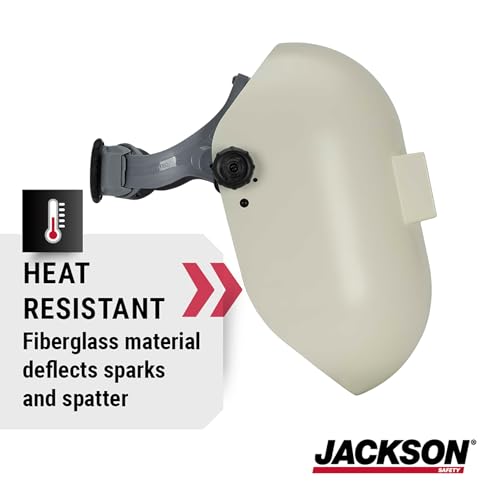
- Lightweight fiberglass
- Compact fit for tight spaces
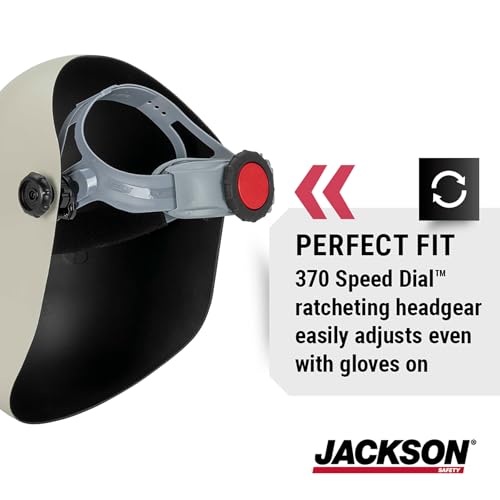
- Speed Dial headgear
Trade-offs
- Fixed shade lens
- No auto-darkening
- Smaller viewing area
If you’re working pipelines or confined overhead spaces, the Jackson PL280 makes a strong case for itself. Its compact bucket-style fiberglass design is purpose-built for tight quarters, and the lightweight build is a real advantage when you’re looking up for hours. Fiberglass gives it better heat resistance than standard plastic, and the smooth surface sheds sparks well, a detail many pipeline welders highlight in reviews.
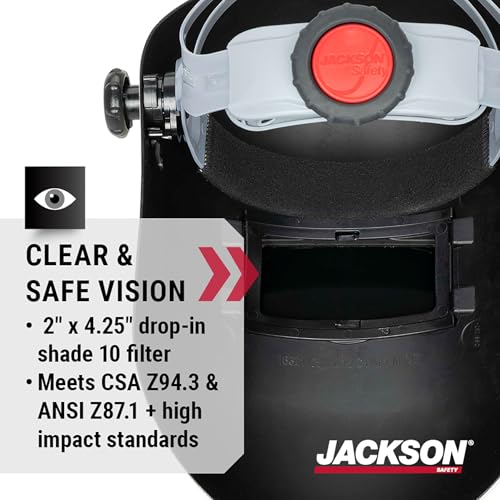
The fixed shade 10 lens is basic, but that’s expected in this category. Where it pulls ahead is fit: the 370 Speed Dial headgear is a proven design, offering quick micro-adjustments and solid stability. It’s not an auto-darkening unit, so it won’t compete with digital helmets for versatility. But for a traditional flip-front hood, it’s one of the most comfortable and job-specific options out there.
Product photos

Fibre-Metal Tigerhood Classic Helmet
Strengths
- Heat resistant
- Durable shell
- Meets ANSI/CSA standards
Trade-offs
- No auto-darkening
- Heavier than fiberglass
- Limited visibility
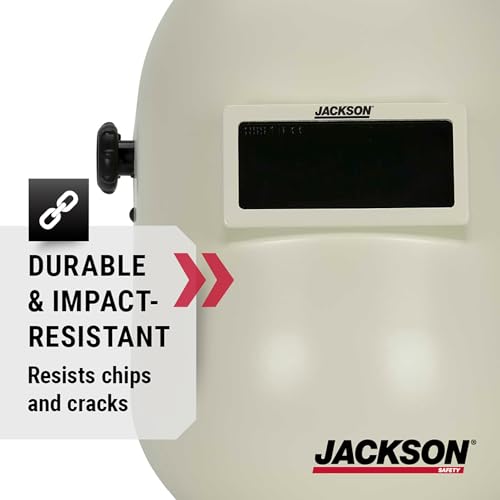
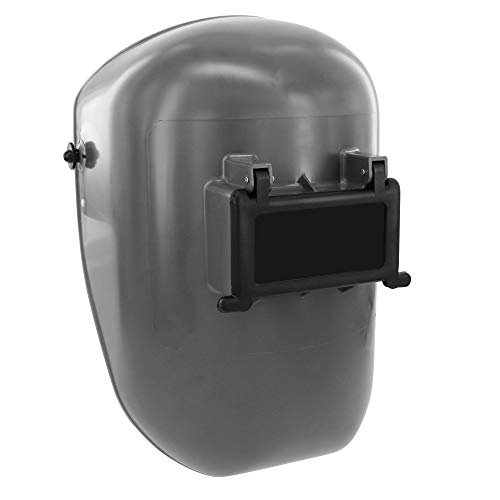
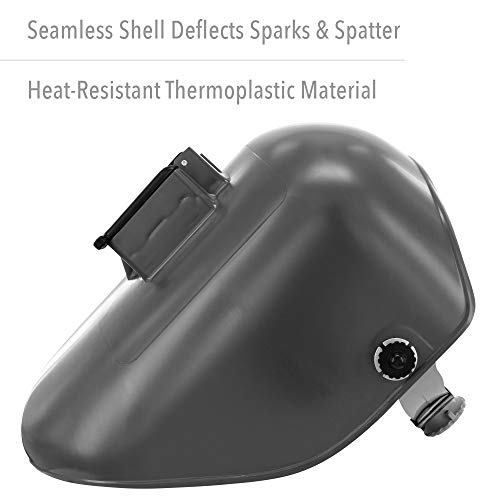
The Fibre-Metal Tigerhood stands out in the passive welding hood category for its rugged, no-nonsense build. On paper, its Noryl thermoplastic shell is a major win for welders regularly exposed to high heat and constant spatter, this isn’t a helmet that’s going to crack or burn through easily. Owners consistently report it holding up well in industrial environments, especially in fabrication shops where durability trumps high-tech features.
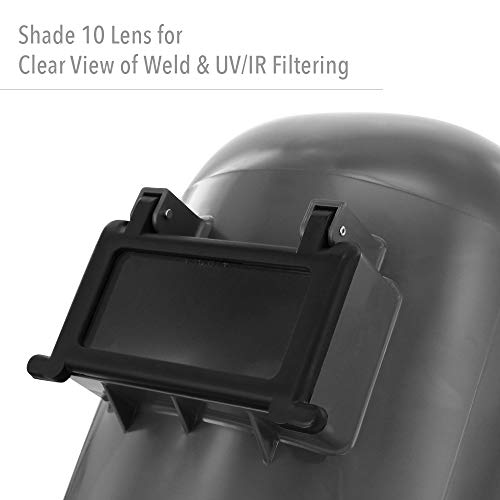
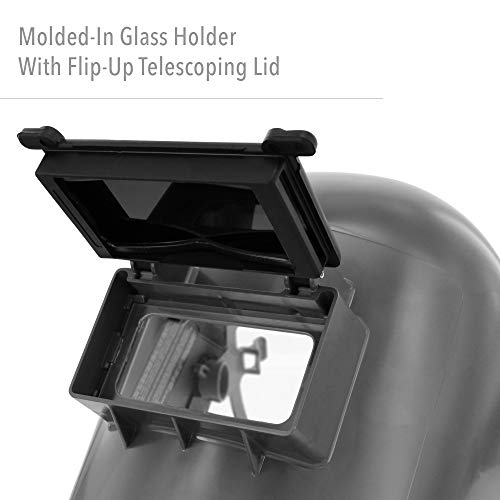
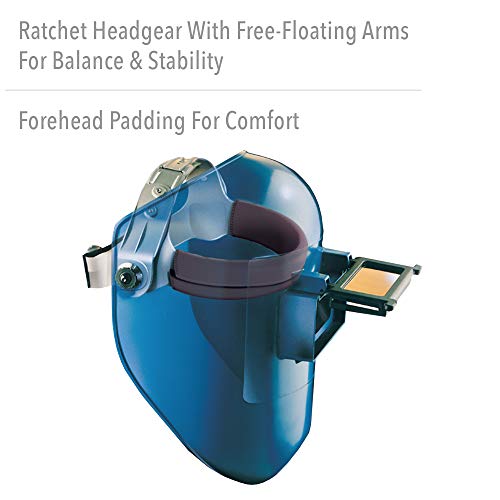
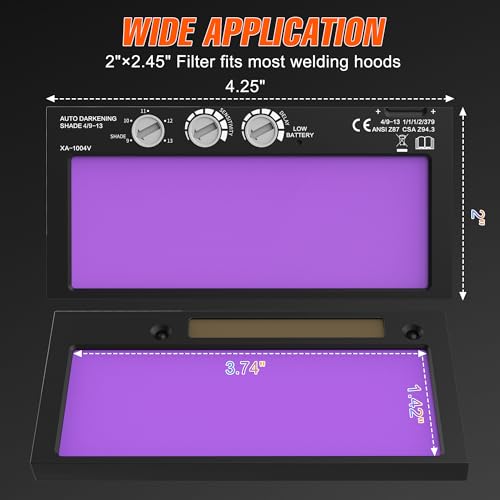
It’s not flashy, but the flip-up 2 x 4 1⁄4″ lens with shade 10 gives reliable visibility, and the ratchet headgear offers solid adjustability. The design promotes airflow to clear fumes, which helps comfort during longer sessions. But you’re trading modern conveniences like auto-darkening and panoramic views for raw resilience. Compared to auto-darkening models, this one forces you to flip manually, a real limitation if you’re switching between grinding and welding often.
Product photos
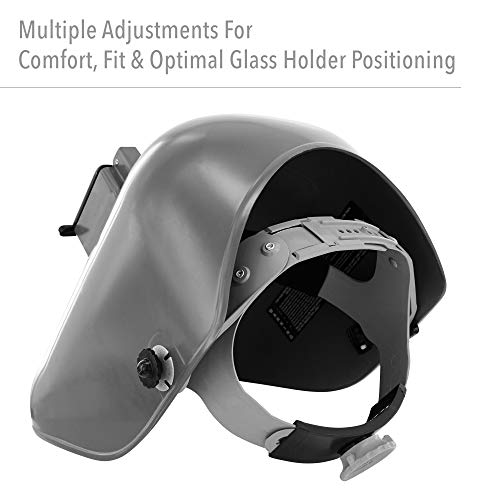
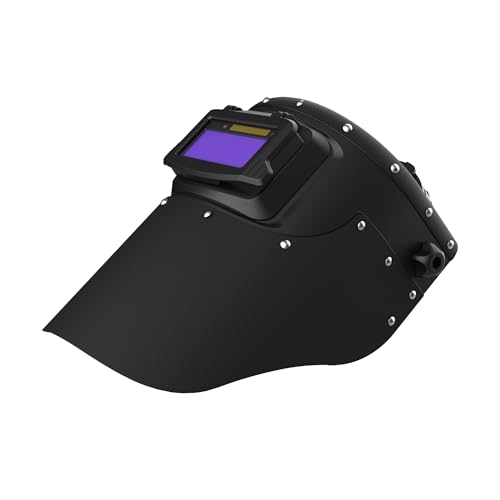
SHINE Leather Auto Darkening Helmet
Strengths
- Genuine leather shell
- Excellent heat resistance
- Lightweight design
Trade-offs
- Lower optical clarity
- Leather requires maintenance
- Not for precision welding
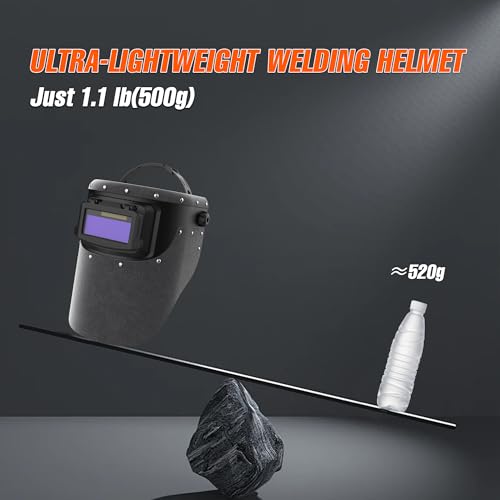
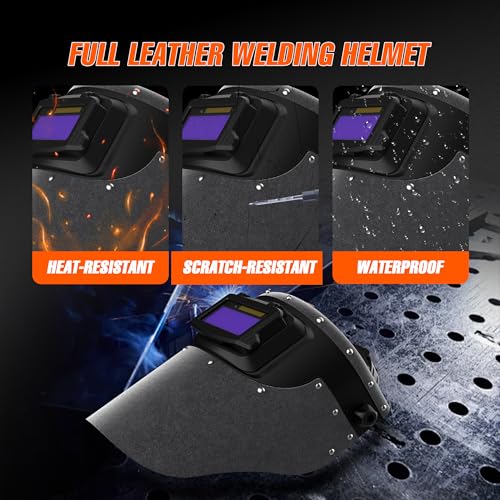
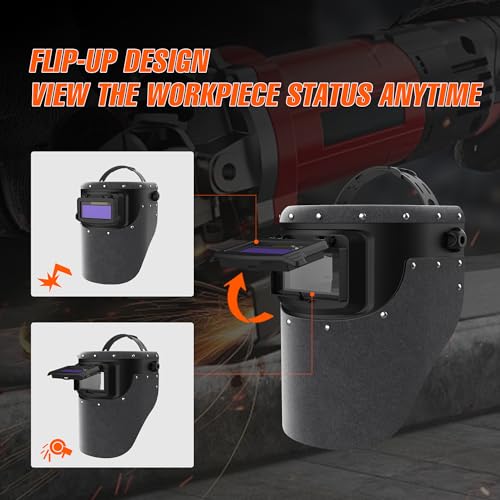
The SHINE leather helmet is a niche pick, but it shines in high-risk heat and spatter environments. Genuine cowhide leather isn’t just for looks, it’s naturally flame-resistant and develops a protective patina over time. At just 17 oz, it’s impressively light for a leather build, and the flip-up design lets you switch tasks quickly without removing the helmet.
The 1/1/1/2 optical rating is a step below 1/1/1/1, so don’t expect the same level of clarity as the Lincoln or ARCCAPTAIN models. But for stick and heavy fabrication work where sparks fly, the material advantage outweighs the optical compromise. Owners note it’s not ideal for TIG or fine work, but for outdoor or industrial settings with constant spatter, it’s a durable, protective option few others match.
Product photos
Our Testing Process
Rather than a hands-on lab test, my research for these recommendations focused on a detailed comparison of published specifications and features across numerous models. I weighed owner reviews from multiple sources – Amazon, welding forums, and retailer sites – alongside assessments from reputable experts in the field. This process allowed me to rank hoods based on factors important to a variety of welders, from hobbyists to professionals.
For welding hoods, optical clarity, viewing area, and durability consistently emerged as the most critical factors. A large viewing area, like those found in the recommended welding helmets for pros, increases control and reduces fatigue. Equally important is the lens quality; a 1/1/1/1 rating ensures minimal distortion and accurate color representation, essential for precise work. Finally, the hood’s ability to withstand heat, sparks, and impacts is paramount for safety and longevity.
Specifications reliably indicate lens clarity ratings and viewing area dimensions. However, I placed greater emphasis on owner feedback regarding real-world comfort – particularly the headgear design – and long-term durability. Reputation and expert reviews helped validate claims about auto-darkening speed and the effectiveness of features like solar charging or integrated work lights, providing a more holistic view than specs alone. You’ll find many of these top-rated welding helmets consistently praised for their overall value.
How To Pick The Right welding hoods
Finding the right welding hood is about more than just blocking the light; it’s about clarity, comfort, and protecting your eyes and face for years to come.
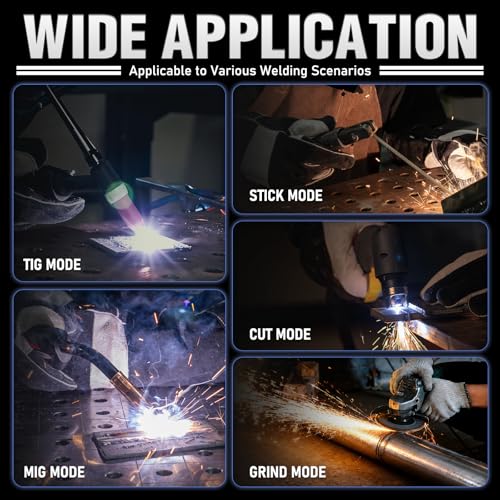
A quality welding hood prioritizes optical clarity (look for 1/1/1/1 ratings), a comfortable and secure fit, and robust construction to withstand the demands of the workshop or jobsite. Consider the type of welding you’ll be doing – TIG, MIG, stick – as shade range requirements vary. Auto-darkening features are nearly essential now, and lens size impacts your peripheral vision and control.
Understanding Auto-Darkening Technology
The days of manually flipping your welding hood are largely behind us, and for good reason. Auto-darkening lenses (ADF) are the standard now, but not all are created equal. Pay attention to the switching speed – faster is better, ideally 1/25,000 of a second or quicker – to prevent flash blindness. Sensitivity controls are also vital; you’ll want to be able to adjust how much light triggers the darkening effect, especially when working in varying ambient conditions or with different welding processes. Don’t assume a lower price means a good value; cheaper ADFs often sacrifice clarity and reliability.
Prioritizing Optical Clarity and Lens Size
Optical clarity is paramount. The 1/1/1/1 rating system assesses distortion, blurriness, shade consistency, and angle uniformity. While many hoods claim this rating, read owner reviews to see if that claim holds up in real-world use. Beyond the rating, consider the lens size. A larger viewing area, like those offered by the top welding hoods with auto-darkening, improves your situational awareness and control.
Here’s a breakdown of what to consider when assessing lens area: * Smaller (under 2” x 4”): Acceptable for hobbyists or occasional use. * Medium (2” x 4” to 3.5” x 5”): A good balance for most common welding tasks, providing decent peripheral vision. * Large (3.5” x 5” and up): Ideal for professional welders or those who value maximum visibility and control, especially when working in tight spaces.
Balancing Comfort, Durability, and Value
A comfortable hood is one you’ll actually wear consistently. Look for adjustable headgear with a ratchet system and ample padding. The weight distribution is crucial; a poorly balanced hood will lead to neck strain during longer projects. Durability is also key; a flimsy hood won’t last, and a cracked lens is a safety hazard.
A good rule of thumb: don’t skimp on the headgear. A comfortable and secure fit is worth a little extra investment.
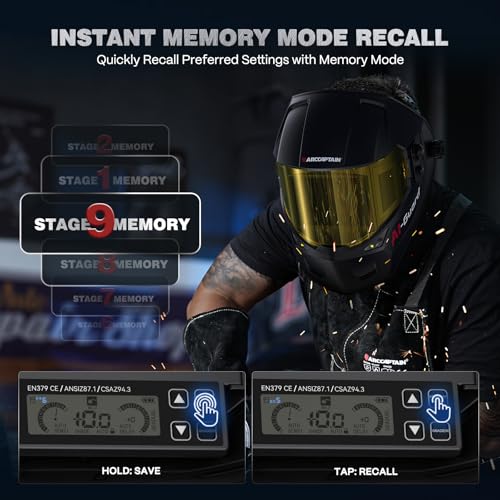
When assessing value, think about the features you actually need. Do you require the extra protection of a leather hood, or will a durable polycarbonate shell suffice? Do you need advanced features like grind mode or memory settings? If you’re looking for a budget-friendly option, the best auto-darkening hoods offer a solid balance of features and price. While a premium model might offer marginal improvements, those improvements often come at a significant cost.
Welding Hoods Compared
Here’s a comparison of key specifications for several welding hoods to help you make an informed decision.
| Product Title | Viewing Area (sq. in) | Optical Clarity | Shade Range | Auto-Darkening Speed (sec) | Power Source | Material |
|---|---|---|---|---|---|---|
| Lincoln Electric VIKING 3350 Helmet | 12.5 | 1/1/1/1 | 5-13 | N/A | Solar/Battery | N/A |
| ARCCAPTAIN Intelligent Panoramic | 7.2 | 1/1/1/1 | 4/5-8/9-13 | 1/30000 | Rechargeable/Solar | N/A |
| YESWELDER Large View Auto-Darkening | 3.93″x3.66″ | 1/1/1/1 | 3/5-9/9-13 | 1/30000 | Solar/Battery | N/A |
| ARCCAPTAIN Large View True Color | 3.94” x 3.66″ | 1/1/1/1 | 4/5-8/9-13 | 1/25000 | Solar/Battery | N/A |
| Miller Classic Series | 6 | N/A | 8-13 | 1/23000 | Battery | N/A |
| Jackson Safety PL280 Pipeline | N/A | N/A | 10 | N/A | N/A | Fiberglass |
| Fibre-Metal Tigerhood Classic | N/A | N/A | 10 | N/A | N/A | Thermoplastic |
| SHINE Leather Auto Darkening | N/A | N/A | 4/9-13 | N/A | N/A | Leather |
Frequently Asked Questions
What shade number should I choose for my welding hood?
The appropriate shade number depends on the welding process and amperage. Shade 8 is generally recommended for stick welding at lower amperages, while MIG and TIG welding typically require shade 9 to 14; always consult a shade chart for your specific application.
How often do I need to replace the auto-darkening lens?
The lifespan of an auto-darkening lens varies, but generally, you should expect to replace it every 2-5 years, or sooner if you notice distortion or inconsistent darkening. Battery life and UV exposure significantly influence longevity.
Are more expensive welding hoods always better?
Not necessarily. While premium hoods often offer features like larger viewing areas and faster switching speeds, a mid-range hood with a 1/1/1/1 optical clarity rating can provide excellent performance for most hobbyists and even many professionals. Consider your specific needs and budget.
What is “grind mode” and why is it useful?
Grind mode is a setting that disables the auto-darkening function, allowing you to see clearly while grinding, cutting, or performing other tasks that don’t require a dark lens. This saves you from repeatedly lifting the hood, increasing efficiency and eye protection.
Where can I find reliable reviews and comparisons of different welding hoods?
Beyond manufacturer specifications, owner reviews on sites like Amazon and welding forums are valuable. For curated recommendations and in-depth comparisons, check out resources like best auto-darkening helmets to help narrow your choices.
The Bottom Line
Choosing a welding hood often comes down to balancing control and convenience. While top-of-the-line features are appealing, the Lincoln Electric VIKING 3350 Helmet strikes a great balance of clarity, viewing area, and reliability for most welders looking for a professional-grade experience. It’s a significant investment, but one that pays dividends in comfort and precision.
If you’re starting out or working on occasional projects, the YESWELDER Large View Auto-Darkening hood delivers excellent value. Similarly, for those prioritizing affordability without sacrificing essential safety features, the ARCCAPTAIN Intelligent Panoramic hood is a strong contender. Don’t overlook the importance of finding a hood that fits comfortably and meets your specific welding needs – explore options like the best welding masks to narrow down your search.
Ultimately, the best welding hood isn’t about the highest number or fanciest feature. It’s about a clear view, a secure fit, and dependable protection, allowing you to focus on the quality of your work and stay safe while doing it. Prioritize optical clarity and a comfortable headgear system above all else, and you’ll be well-equipped for any project.
