
8 Best TPMS Programming Tools of 2026
This post contains affiliate links. As an Amazon Associate, we earn from qualifying purchases.
The Autel MaxiTPMS TS508WF stands out as the best overall TPMS programming tool, offering reliable universal coverage, sensor programming, and solid diagnostics. For those on a budget, the VXDAS TPMS Tool for GM delivers strong performance if you’re working primarily on General Motors vehicles. And if you want maximum versatility across brands, the THINKTPMS VENU90 Scanner brings advanced OBD2 integration and broad compatibility into the mix.
Dealing with a blinking TPMS light or replacing sensors shouldn’t mean guessing what’s wrong or buying a new tool for every car. Most people just want something that works quickly and reliably, whether they’re resetting after a tire rotation or programming a new sensor.
This guide cuts through the confusion by focusing on real-world usability, coverage, and what owners actually report. I compared specs and feedback across top models to identify the ones that deliver consistent results without unnecessary complexity. You’ll see what separates basic relearn tools from true programming devices, and how to pick the right one based on your vehicles and needs.
Top 8 Tpms Programming Tools in the Market
The Best Tpms Programming Tools, Reviewed
Autel MaxiTPMS TS508WF

Strengths
- Dual operation modes
- OBD relearn supported
- Free lifetime updates
- Programs Autel MX-sensors
- Includes OBD2 code reader
Trade-offs
- Autel sensor only programming
- Higher price point
- No multi-brand sensor support
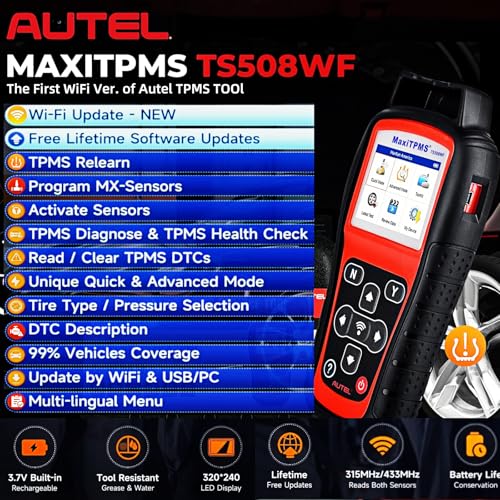
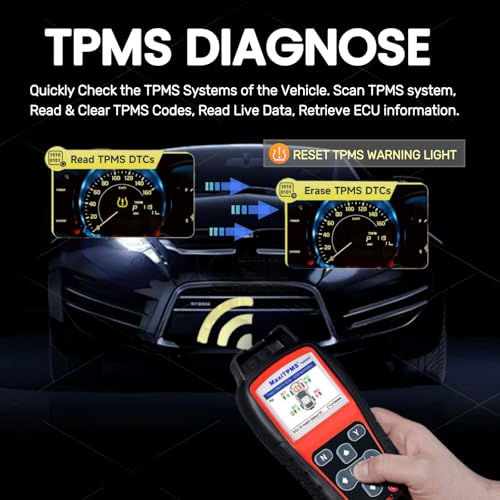
The Autel TS508WF stands out in the crowded TPMS tool market by delivering a refined, dual-mode interface that makes it easy to choose between quick resets and full diagnostics. On paper, it’s a clear evolution from the TS508, offering both Quick Mode for fast sensor checks and Advanced Mode for deeper system diagnostics and relearn procedures. Owners consistently report that the ability to relearn via OBD, along with solid sensor activation across both 315MHz and 433MHz frequencies, makes it a reliable shop staple.
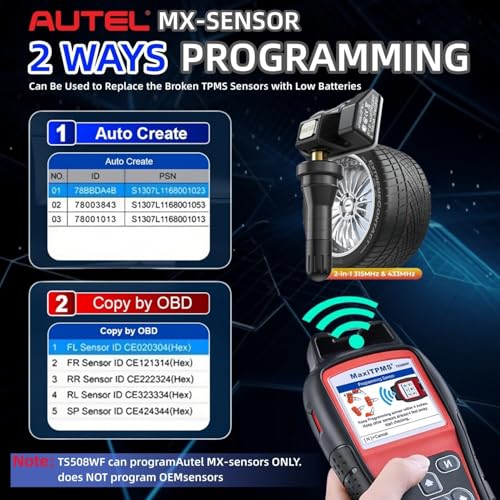
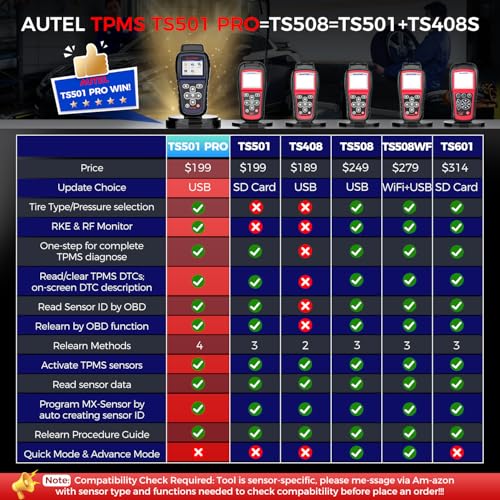
It’s not without limits, you’re locked into programming only Autel MX-sensors, which could be a dealbreaker if you prefer mixing brands. But for those already invested in the Autel ecosystem, the lifetime updates and included OBD2 code reader add real value. Compared to the TS501 PRO, it offers a cleaner UI and slightly more intuitive workflow, though both are strong performers in the mid-to-high tier.
Product photos


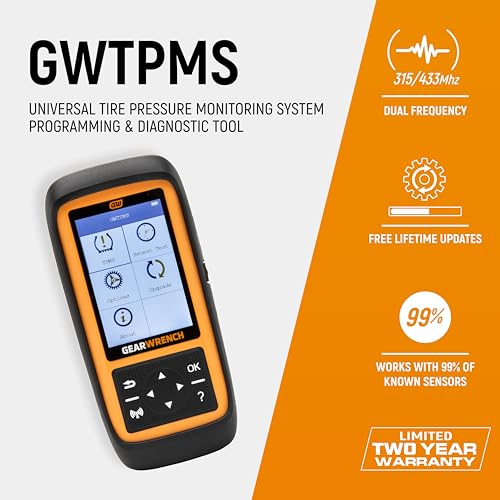
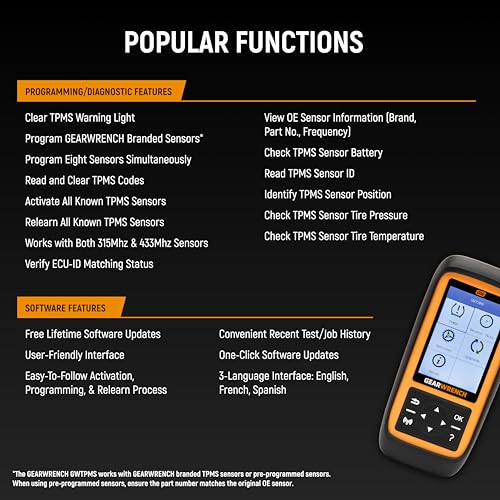
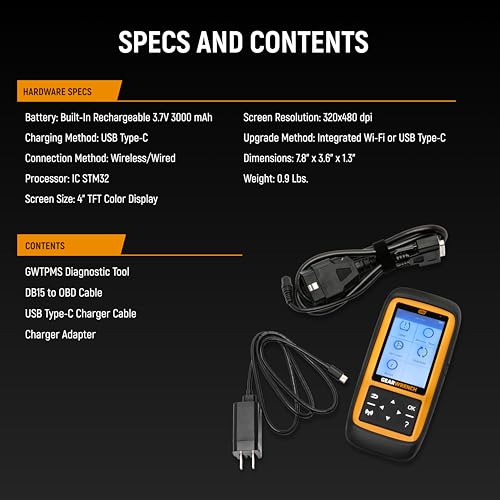
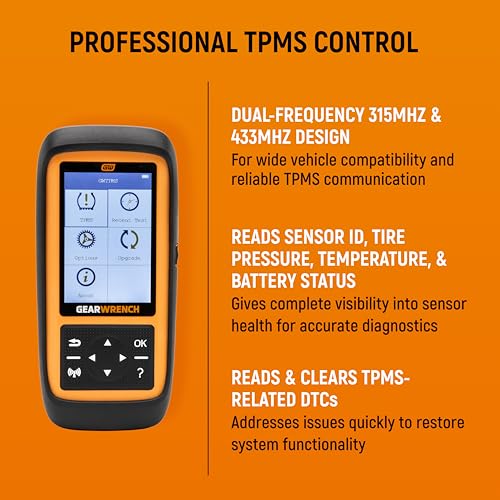
GEARWRENCH GWTPMS Tool
Strengths
- Universal vehicle coverage
- Programs GEARWRENCH sensors
- Reads and clears TPMS codes
- Simultaneous 8-sensor programming
- Affordable price
Trade-offs
- Branded sensor only
- Basic interface
- No full OBD2 diagnostics
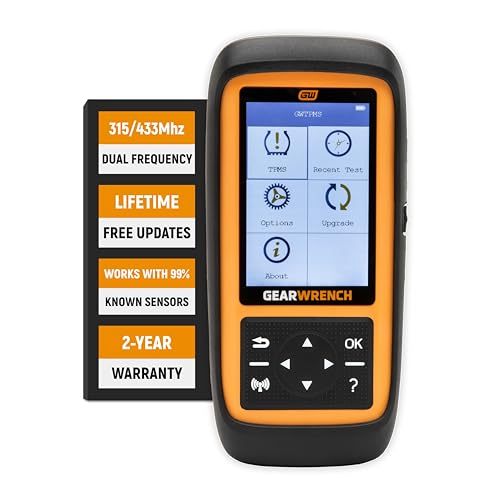
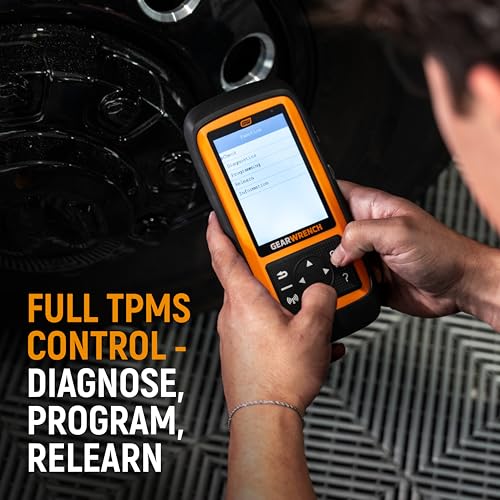
The GEARWRENCH GWTPMS is a breath of fresh air for budget-conscious DIYers who still want universal functionality. It supports both 315MHz and 433MHz sensors and can program all GEARWRENCH branded sensors, which is a big plus. The ability to read and clear codes, check battery status, and relearn sensors on nearly any vehicle makes it surprisingly capable for the price.
Owners note it’s straightforward and responsive, though the interface isn’t as polished as Autel’s. It doesn’t offer OBD-based relearn on all models, and you’re tied to GEARWRENCH sensors for programming, but that’s typical in this segment. Compared to the THINKTPMS VENU90, it lacks full OBD2 functions, but it’s more affordable and simpler to use for basic TPMS tasks.
Product photos
VXDAS TPMS Tool for GM
Strengths
- GM-specific reliability
- Fast activation
- Gold-plated circuit board
- Durable build
- Simple operation
Trade-offs
- GM vehicles only
- No programming capability
- Requires pre-programmed sensors
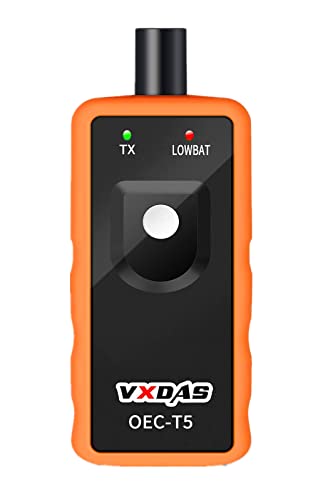
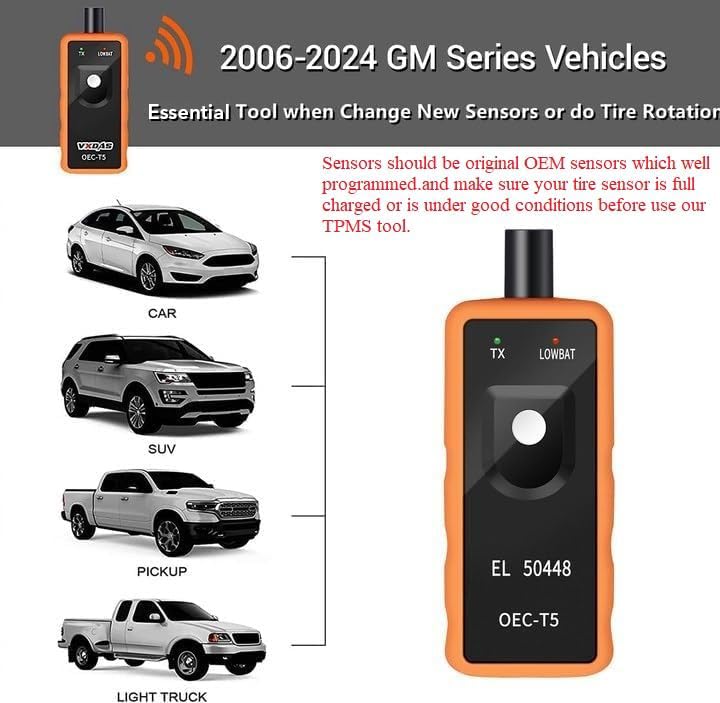
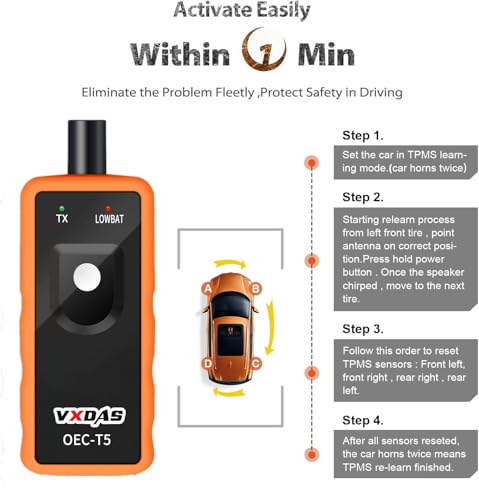
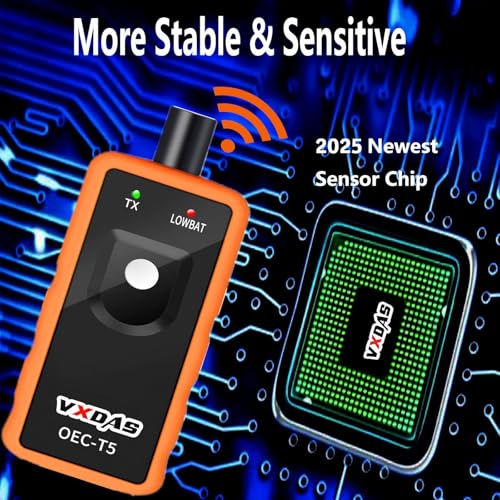
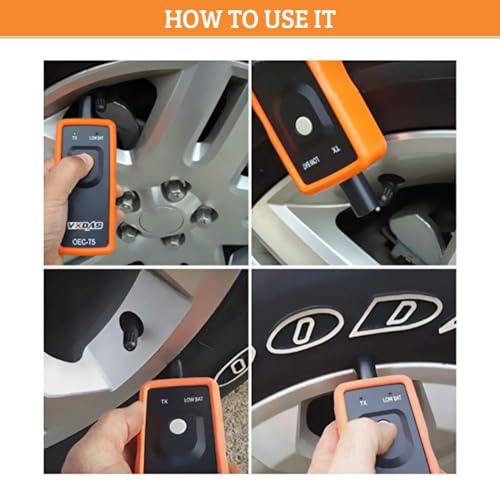
The VXDAS OEC-T5 is a no-nonsense, GM-only reset tool that gets the job done for Chevrolet, Buick, GMC, and Cadillac owners. It’s designed for vehicles from 2006 to 2024 and works with both 315MHz and 433MHz sensors, which covers most modern GMs. Owners report fast activation times, usually under two minutes, and strong build quality thanks to the gold-plated circuit board.
Like other single-brand tools, it doesn’t program sensors, just relearns them. You’ll need to ensure your sensors are already programmed and in good condition. It’s simpler than universal tools, which makes it less intimidating for beginners. Compared to the GL50448, it’s more focused, great if you only work on GMs, but redundant if you need Ford support.
Product photos

VXDAS 2IN1 TPMS Tool GMFord

Strengths
- G/F model switch button
- Simple one-button use
- Reliable signal strength
- Durable build
- Cost-effective
Trade-offs
- No sensor programming
- 9V battery required
- Ford and GM only
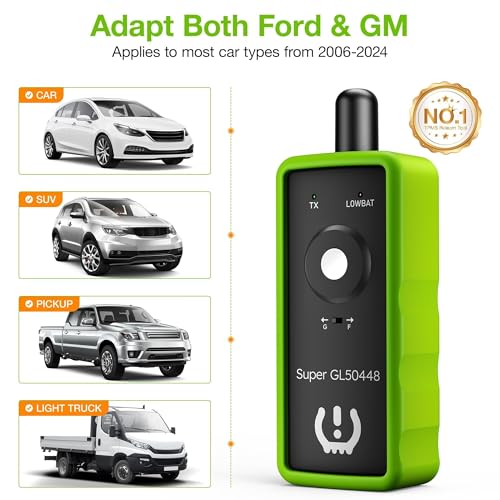
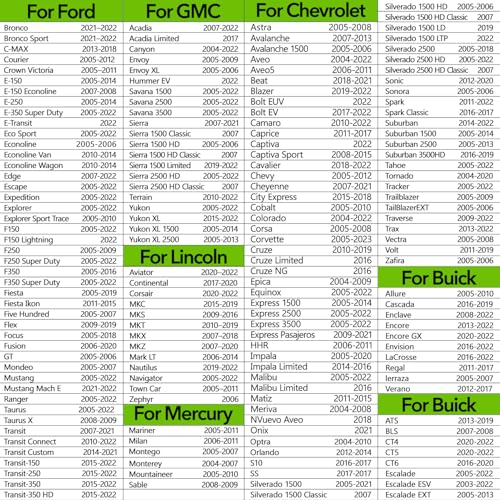
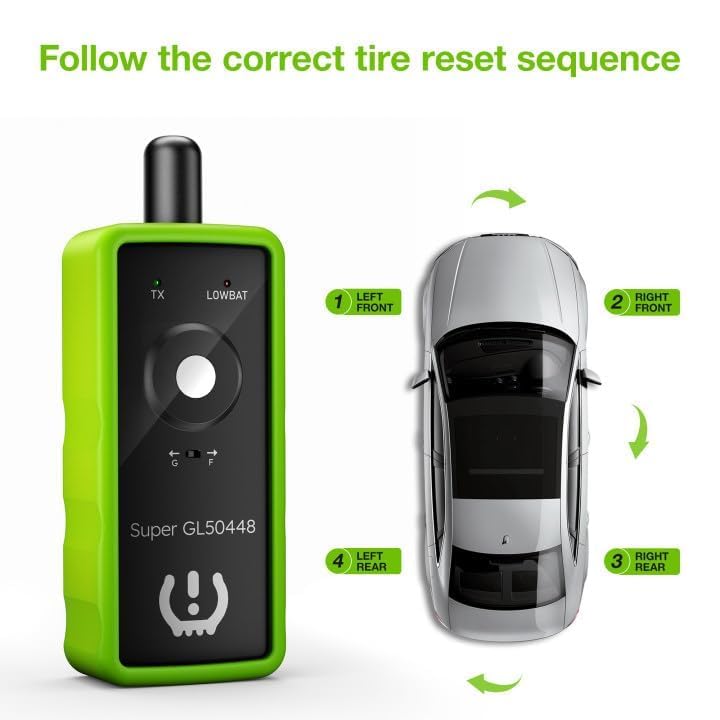
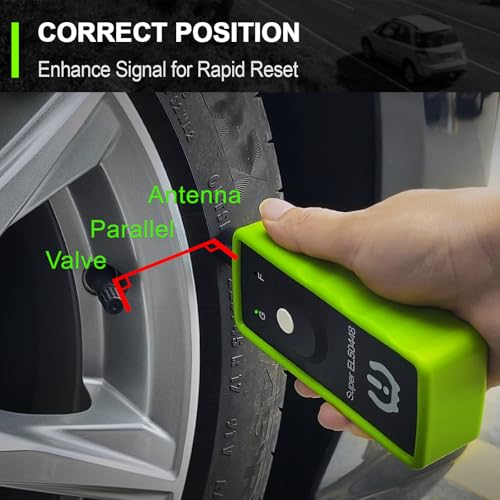
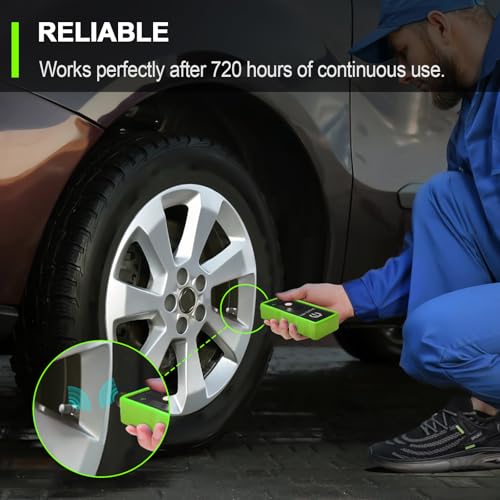
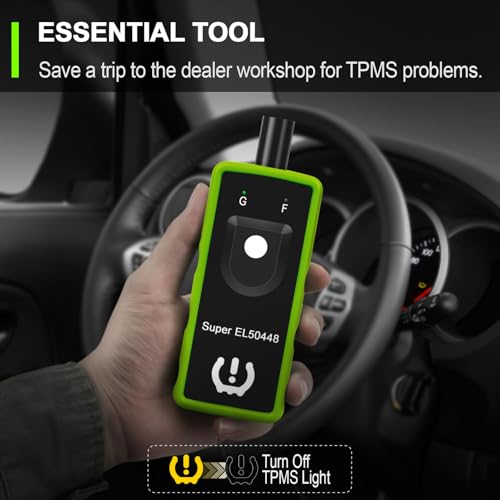
The VXDAS GL50448 improves on older 2-in-1 designs with a handy G/F model switch button, making it easier to toggle between GM and Ford modes without guesswork. That small detail gets praise from owners who’ve used earlier JDIAG-style tools. It works reliably on most light-duty GM and Ford models, activating sensors quickly with a single button press, ideal after tire rotations or sensor swaps.
Like its competitors, it doesn’t program sensors, just relearns them, so you’ll need pre-programmed units. It runs on a 9V battery, and users recommend keeping a fresh one on hand for strong signal performance. Compared to the JDIAG EL50448, it’s slightly more user-friendly thanks to the physical switch, though both tools are otherwise very similar.
Product photos


FIRSTOOL TPMS Tool for Ford
Strengths
- Compact and portable
- Long battery life
- OEM-style design
- Easy 4-step process
- Affordable
Trade-offs
- Ford only
- No sensor programming
- Requires pre-programmed sensors
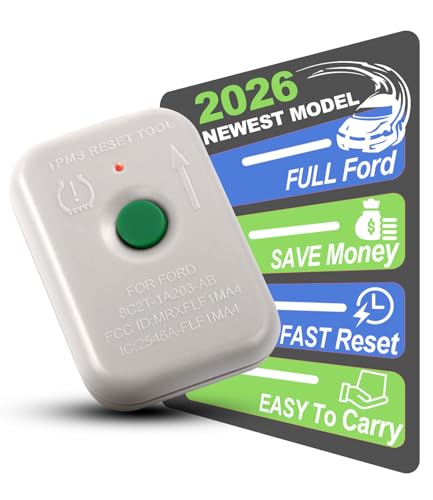
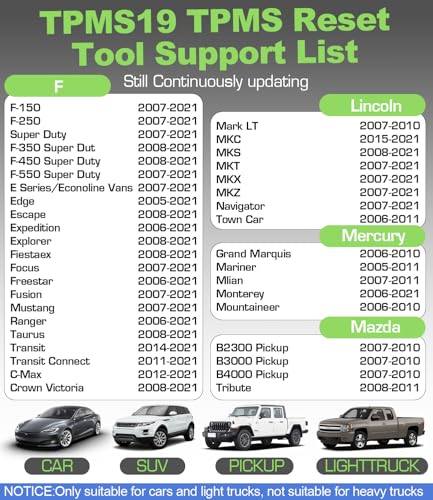
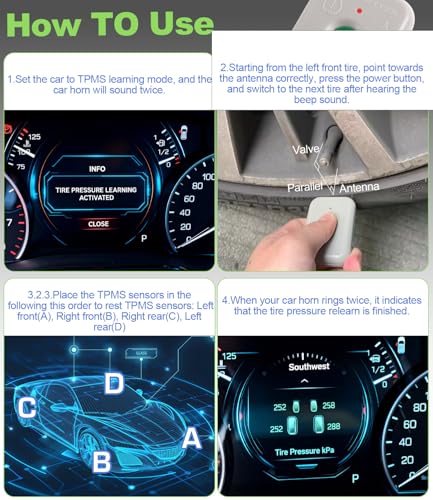
The FIRSTOOL TPMS19 is a compact, dedicated reset tool built specifically for Ford, Lincoln, and Mercury owners, and it does its job well. It’s lightweight, pocket-sized, and powered by a built-in battery that reportedly lasts 2–3 years, which is a nice touch over replaceable 9V models. Owners say it reliably activates sensors in the correct sequence, and the 4-step process is easy to follow.
But it’s not a programmer. You can’t encode new sensors, only relearn them once they’re already programmed. That means it’s best paired with pre-programmed sensors. Compared to the VXDAS GL50448, it’s more Ford-focused and lacks multi-brand support, but its long battery life and OEM-style build make it a solid single-vehicle tool.
Product photos

Autel MaxiTPMS TS501 PRO
Strengths
- OBD relearn supported
- Tire type/pressure setting
- Four programming options
- Lifetime software updates
- Strong diagnostics
Trade-offs
- Autel sensor only
- Requires PC registration
- No built-in code reader
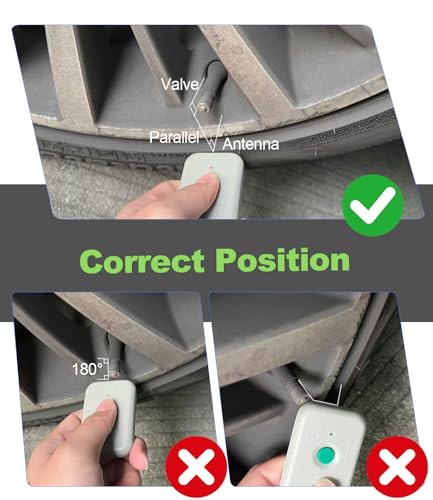
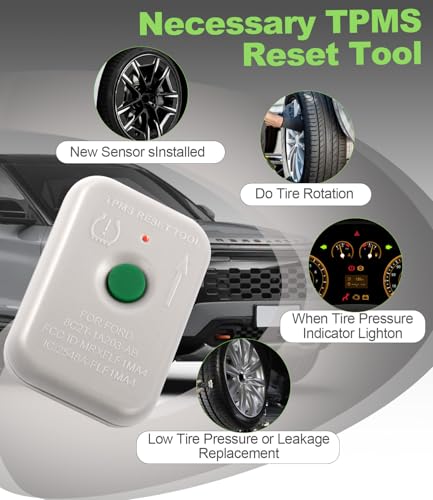
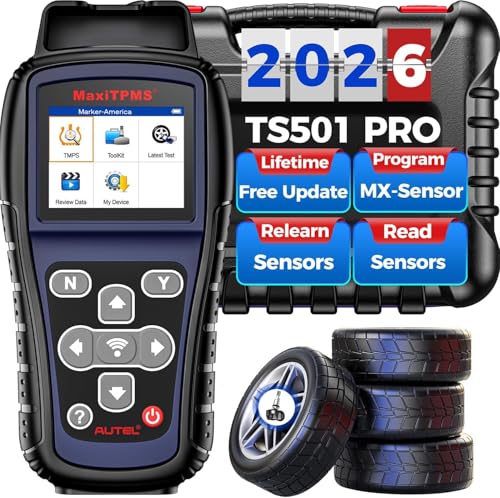
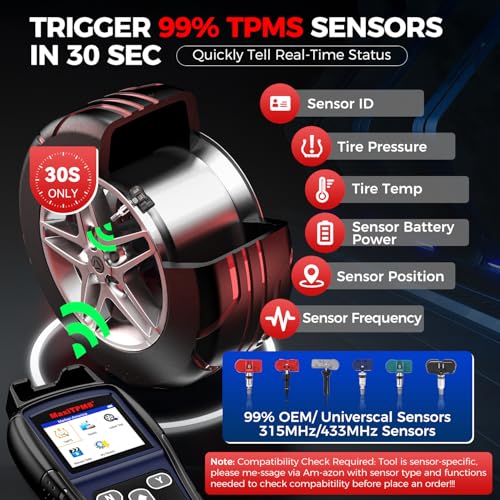
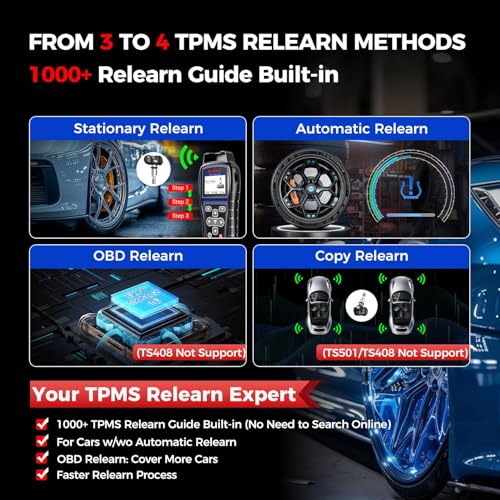
The TS501 PRO is Autel’s mid-range powerhouse, and it’s easy to see why it’s a favorite among mobile technicians. It handles 99% of TPMS jobs with solid activation, relearn, and diagnostics, and the OBD relearn function is a standout, it writes sensor IDs directly to the ECU, which saves time. The addition of tire type/pressure selection is useful when the TPMS light won’t clear after a reset, a real pain point many owners report.
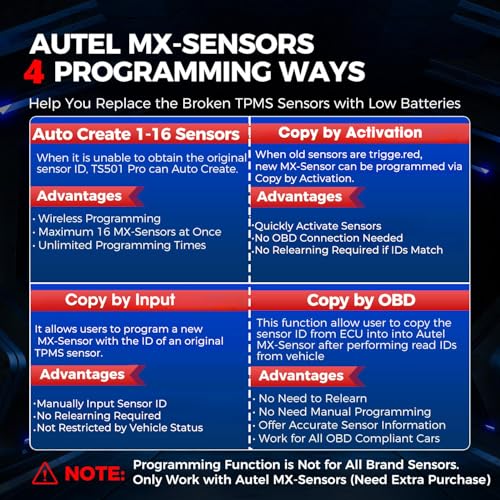
Like other Autel tools, it’s limited to programming only MX-sensors, but the four programming methods, including Copy by OBD, make replacements fast. It requires PC registration before full use, which can be a minor hurdle, but owners say it’s worth it. Compared to the TS508WF, it’s nearly identical in function but lacks the dual-mode UI refinement.
Product photos
THINKTPMS VENU90 Scanner
Strengths
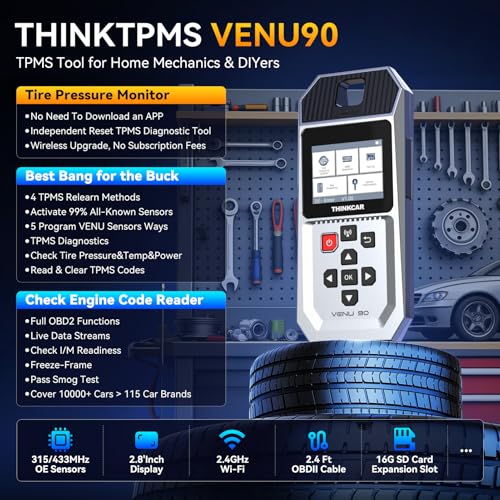
- Full OBD2 diagnostics
- Lifetime Wi-Fi updates
- Multi-sensor programming
- No app required
- Supports 315/433MHz sensors
Trade-offs
- Pressure in kPa only
- THINKCAR sensors only
- Occasional software lag
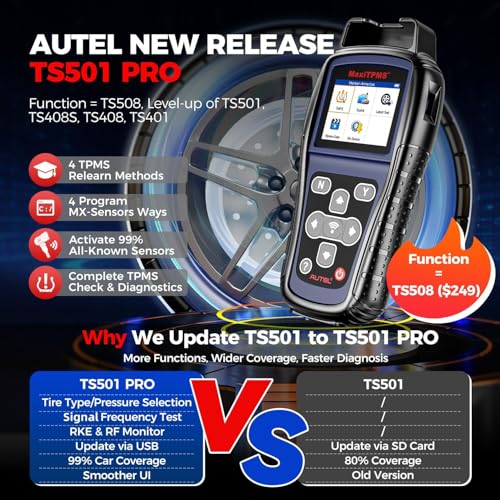
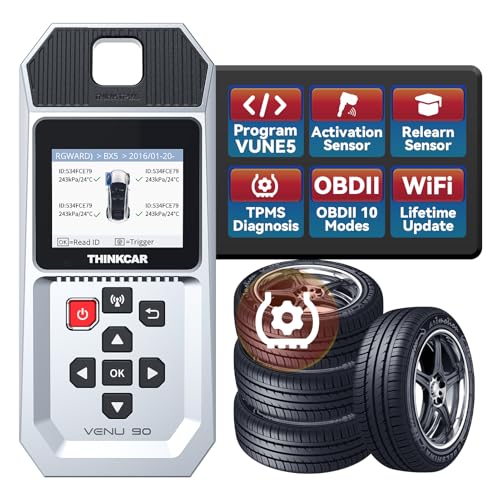
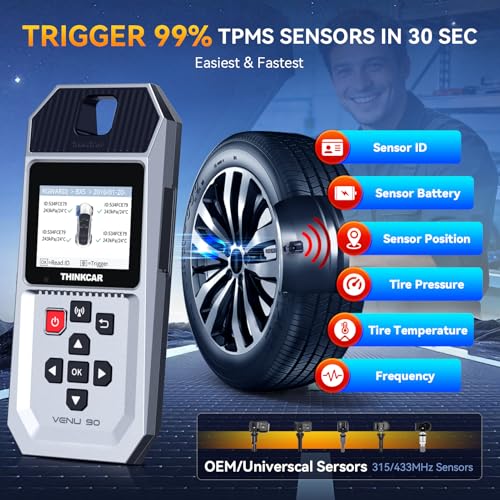
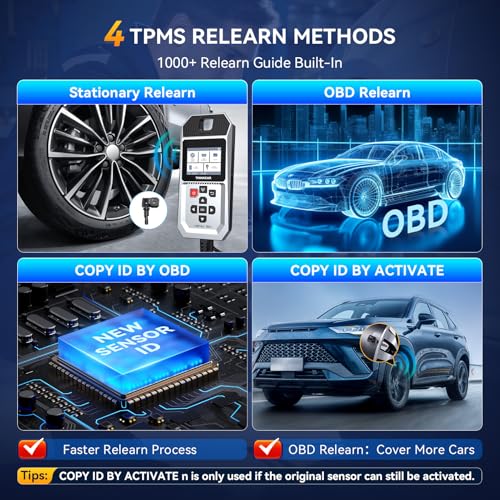
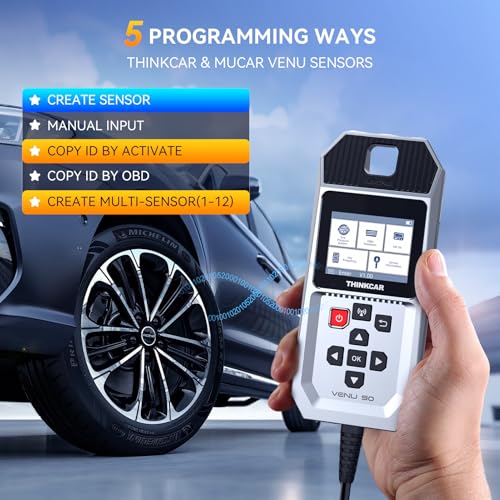
The THINKTPMS VENU90 is one of the few tools in this category that doubles as a full OBD2 scanner, and that’s where it shines. Beyond TPMS functions like activation, relearn, and programming, it reads engine codes, checks I/M readiness, and runs live data tests, making it a true all-in-one for driveway mechanics. Owners appreciate the lifetime Wi-Fi updates and pre-loaded software covering over 10,000 models, which reduces setup hassle.
But there are quirks: it only programs THINKCAR/MUCAR sensors and displays pressure in kPa only, which can be annoying for U.S. users used to PSI. Some report minor software hiccups with older vehicles, but the 24-hour support helps. Compared to the Autel TS501 PRO, it offers broader OBD2 functionality but slightly less polished TPMS-specific workflows.
Product photos

JDIAG 2IN1 TPMS Tool GMFord
Strengths
- One-button operation
- Strong Ford and GM coverage
- Cost-effective
- Durable build
- No software updates needed
Trade-offs
- No sensor programming
- Battery not included
- Limited to Ford and GM only
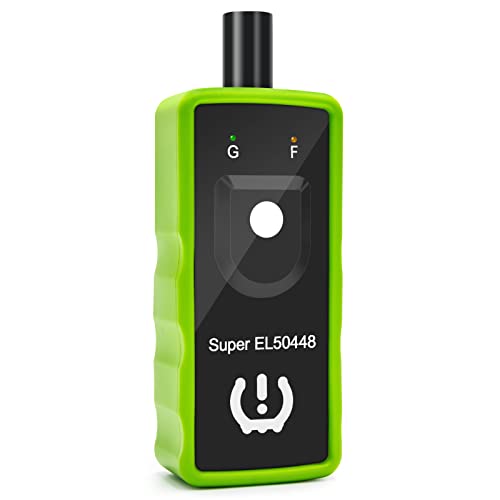
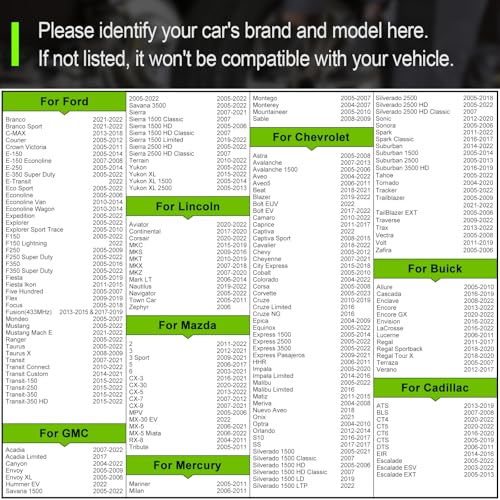
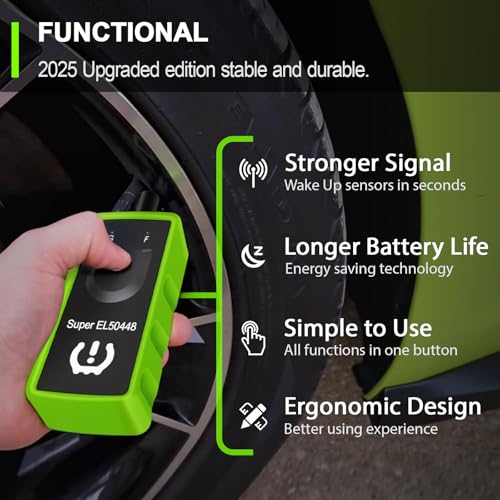
If you own a Ford or GM vehicle and want a no-frills, reliable way to reset the TPMS light after tire work, the JDIAG EL50448 delivers. It’s a dedicated 2-in-1 tool that covers most light-duty models from Ford, Lincoln, Chevrolet, GMC, and more, and owners say it works consistently when the vehicle is in learn mode. The one-button operation is as simple as it gets, which makes it ideal for beginners or occasional users.
That said, it’s not a programming tool. You can’t reprogram sensors, just activate and relearn them. This means you’ll need to buy pre-programmed sensors, which adds to the overall cost. Still, at this price, it’s a solid value compared to dealership visits. Compared to the VXDAS GL50448, it lacks a model switch button, which can make mode selection slightly less convenient.
Product photos
How We Picked These tpms programming tools
Rather than a hands-on lab test, our evaluation of TPMS programming tools is a research-led comparison of published specifications and features combined with a careful weighing of owner reviews and reputable expert assessments. I looked at a range of tools, focusing on those frequently discussed as solutions for common TPMS issues. We then ranked these tools against a set of criteria designed to identify the most effective options for different needs and vehicle types.
For this category, the most important factors were programming versatility and ease of use. A tool’s ability to handle a wide range of vehicles – particularly GM and Ford, given their prevalence – significantly impacted its ranking. Equally important was how easily a user could operate the tool; complex interfaces or unclear instructions were penalized. We also prioritized tools that offered diagnostic capabilities beyond simple sensor activation, like reading sensor data and clearing fault codes.
Specifications reliably tell you which frequencies a tool supports (315MHz and 433MHz are standard) and whether it can program sensors at all. However, I judged a tool’s real-world effectiveness largely from owner feedback regarding reliability, speed, and how well it worked with specific vehicle makes and models. Reputation, as reflected in expert reviews of these TPMS scan tools, also played a key role in our final assessments, helping to separate genuinely useful devices from those with overstated claims.
Choosing The Right tpms programming tools
Choosing the right TPMS programming tool can save a lot of frustration–and money–when dealing with low tire pressure warnings or sensor replacements.
A truly useful TPMS tool should quickly and accurately activate or relearn sensors, handle a broad range of vehicle makes and models, and offer clear, easy-to-understand feedback on sensor status. Prioritize tools that can not only reset the TPMS light but also read sensor data like pressure, temperature, and battery life. Consider whether you’ll primarily be resetting existing sensors or programming new ones, as this dictates the features you’ll require.
Programming Capabilities Are Key
The core function of a TPMS tool is, of course, programming. However, not all tools offer the same level of programming capability. Some are limited to simply activating existing sensors after a rotation or replacement, while others can actually program new sensors. If you plan to replace sensors frequently, investing in a tool capable of programming Autel MX-sensors (or another brand compatible with your vehicles) is a smart move. Be aware that many budget-friendly options only perform relearns and won’t program new sensors at all.
Vehicle-Specific vs. Universal Coverage
Many TPMS tools are designed to work with a specific manufacturer, like the VXDAS TPMS Tool for GM vehicles. These can be excellent choices if you exclusively drive cars from that brand, offering streamlined compatibility and potentially faster operation. However, if you work on a variety of vehicles – or simply want a tool that can handle future cars – a universal tool like the Autel MaxiTPMS TS508WF is a better bet. These universal tools often require a bit more setup, but they provide broader coverage and greater flexibility.
Beyond Relearning: Diagnostic Features to Consider
Don’t overlook the value of diagnostic features. While resetting the TPMS light is helpful, a tool that can read sensor data, like battery life and temperature, provides valuable insight into the health of your tire pressure monitoring system. Some advanced tools can even diagnose TPMS system faults, helping you pinpoint the source of a problem before resorting to expensive repairs. If you’re comfortable with a bit more complexity, exploring tools with full OBD2 functionality, such as the THINKTPMS VENU90 Scanner, can give you even more diagnostic power.
- A basic tool might only reset the light.
- A mid-range tool will add sensor data reading (pressure, temperature, battery).
- A higher-end tool will include full OBD2 diagnostics and advanced programming options, providing the most thorough solution.
A good rule of thumb: if you’re only swapping tires seasonally, a simple relearn tool will likely suffice. If you’re frequently replacing sensors or diagnosing complex TPMS issues, invest in a tool with programming and diagnostic capabilities.
Ultimately, the best TPMS programming tool for you will depend on your specific needs and budget. If you’re looking for a more detailed comparison of options, check out our guide to the best TPMS relearn tools. We’ve also covered a range of sensor programming tools to help you find the right fit. For those needing more than just a reset function, exploring various TPMS programming devices can unlock advanced features. And if you’re unsure which tool is right for your needs, consider a versatile option like relearn and reset tools that offer a balance of functionality and affordability.
TPMS Programming Tools Compared
The following table provides a specification comparison of various TPMS programming tools available on the market.
| Product Name | Sensor Programming | OBD Relearn | Activation | Diagnostics | Vehicle Compatibility |
|---|---|---|---|---|---|
| Autel MaxiTPMS TS508WF | Autel MX-Sensors | Yes | Yes | Yes | All (with VIN check) |
| GEARWRENCH GWTPMS Tool | GEARWRENCH Sensors | N/A | Yes | Limited | Nearly All |
| VXDAS TPMS Tool for GM | N/A | N/A | Yes | No | GM (2006-2023) |
| VXDAS 2IN1 TPMS Tool GMFord | N/A | N/A | Yes | No | GM & Ford |
| FIRSTOOL TPMS Tool for Ford | N/A | N/A | Yes | No | Ford, Lincoln, Mercury |
| Autel MaxiTPMS TS501 PRO | Autel MX-Sensors | Yes | Yes | Yes | All (with VIN check) |
| THINKTPMS VENU90 Scanner | THINKCAR Sensors | Yes | Yes | Yes | Wide (check coverage list) |
| JDIAG 2IN1 TPMS Tool GMFord | N/A | N/A | Yes | No | GM & Ford |
Frequently Asked Questions
Will a TPMS tool work on any vehicle?
Not necessarily. While universal tools like the Autel MaxiTPMS TS508WF offer broad coverage, many tools are vehicle-specific, such as those designed only for GM or Ford. Always check compatibility lists before purchasing to confirm it supports your car’s make and model.
Can a TPMS tool fix a faulty TPMS sensor?
A TPMS tool cannot repair a damaged sensor. However, it can read data from the sensor – like battery level – to help diagnose if a sensor is failing, and it can program a replacement sensor if needed, saving you a trip to the shop.
What’s the difference between relearn and programming?
Relearning simply resets the system to recognize existing, functioning sensors, often after a tire rotation. Programming involves telling the vehicle’s computer to recognize new sensors, which requires a tool with programming capabilities and compatible sensors.
Are more expensive TPMS tools always better?
Not always. A basic tool might be sufficient if you only need to reset the system seasonally. However, if you frequently replace sensors or need diagnostic information, investing in a tool with programming and diagnostic features is worthwhile. Consider portable diagnostic tools for a truly versatile solution.
Do I need to purchase sensors with the tool?
Not always, but it’s common. Some tools, like those from Autel and THINKTPMS, work best with their proprietary sensors. Other tools are compatible with a wider range of aftermarket sensors. Using compatible sensors ensures proper programming and system functionality, and can save you troubleshooting headaches.
The Bottom Line
Choosing a TPMS programming tool often comes down to balancing control with convenience. If you want thorough coverage and the ability to program sensors yourself, the Autel MaxiTPMS TS508WF stands out as the most capable all-around option. It handles a wide variety of vehicles and provides detailed diagnostic information, making it a solid investment for those who work on multiple cars or anticipate needing advanced features.
For readers focused on a specific need, the VXDAS TPMS Tool for GM is a straightforward and reliable choice if you only drive General Motors vehicles. Those looking for an affordable solution for basic relearns should consider the GEARWRENCH GWTPMS Tool. And for mechanics or serious DIYers who require a full suite of diagnostic capabilities, the THINKTPMS VENU90 Scanner, along with other diagnostic and repair tools, offers a powerful and versatile solution.
Ultimately, the most important thing isn’t a specific feature or price point, but understanding your vehicles’ systems and having a tool that provides accurate information. Prioritize a tool that allows you to confidently confirm sensor functionality and address any underlying TPMS issues, rather than simply masking a warning light. A well-maintained TPMS contributes to safety and fuel efficiency, and that’s worth a little investment.
