8 Best Survival Saws of 2026
This post contains affiliate links. As an Amazon Associate, we earn from qualifying purchases.
The REXBETI 14 Inch Folding Saw is the best overall survival saw for its aggressive teeth, full-size blade, and reliable SK-5 steel. For lightweight portability, the AGAWA BOREAL21 stands out with its replaceable blade and aluminum frame. If you need maximum versatility, the MOSSY OAK 3-in-1 Multi-Blade Saw offers three different cutting options in one compact tool.
Most people don’t realize how quickly a poor-quality saw becomes a liability in the field. A blade that binds, dulls fast, or fails under pressure can turn a simple task into a dangerous struggle. After comparing the field and analyzing specs, owner feedback, and design details, I focused on models that deliver real cutting performance without compromising safety or portability.
This guide breaks down exactly what makes a survival saw trustworthy, blade steel, tooth design, and ergonomic build, so you can pick one that won’t let you down when it matters most.
Top 8 Survival Saws in the Market
The Best Survival Saws, Reviewed
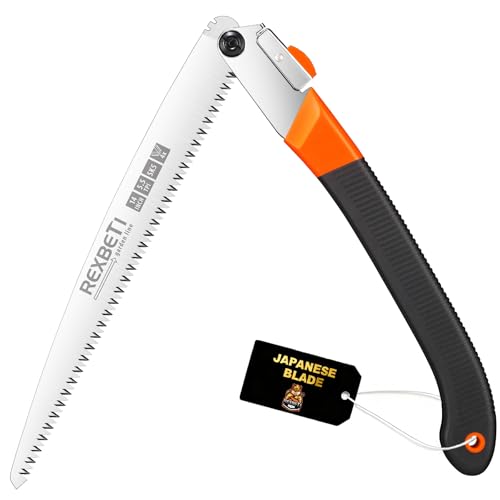
REXBETI 14 Inch Folding Saw
Strengths
- 14-inch blade reach
- 5.5 TPI aggressive teeth
- Comfortable long handle
Trade-offs
- Slightly bulky
- Not for precision work
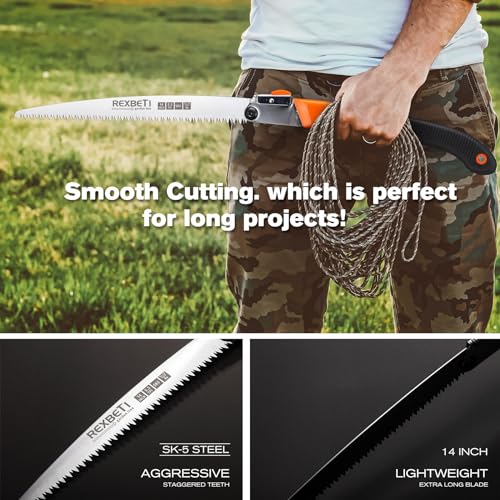
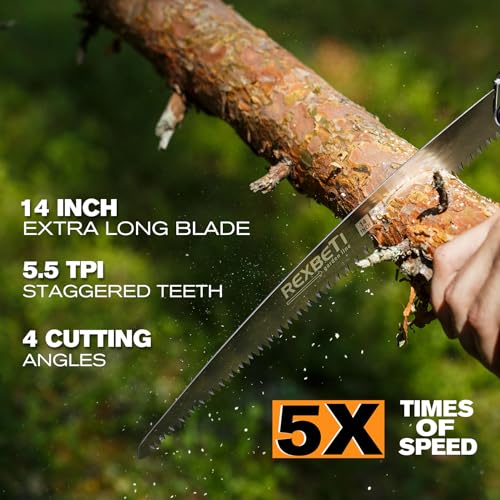
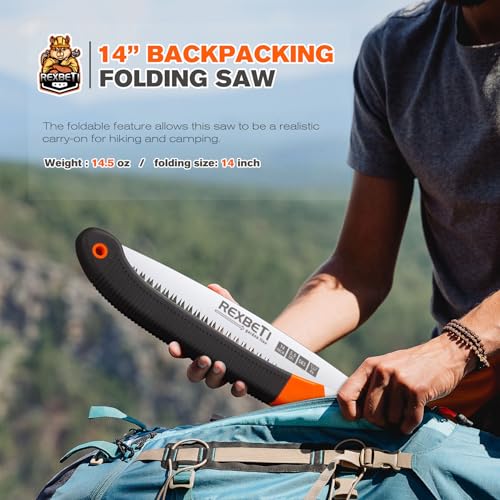
This is the most complete package for serious outdoor work. The 14-inch SK-5 steel blade with 5.5 TPI staggered teeth delivers fast, smooth cuts through 7–10 inch branches, exactly what you want when splitting firewood or clearing storm debris. At 14.5 oz, it’s light for its size, and the 8-inch rubber-coated handle gives excellent use and grip in wet conditions.
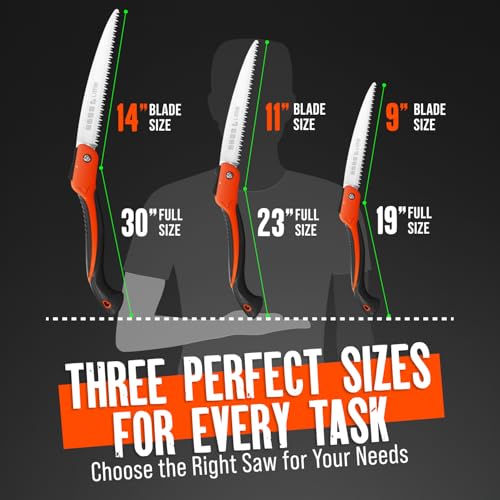
Compared to the 11-inch REXBETI, this model adds meaningful reach and cutting speed without sacrificing portability. Owners consistently rank it as their go-to for camping and survival use. If you want one saw that does it all without compromise, this is the smarter buy.
Product photos


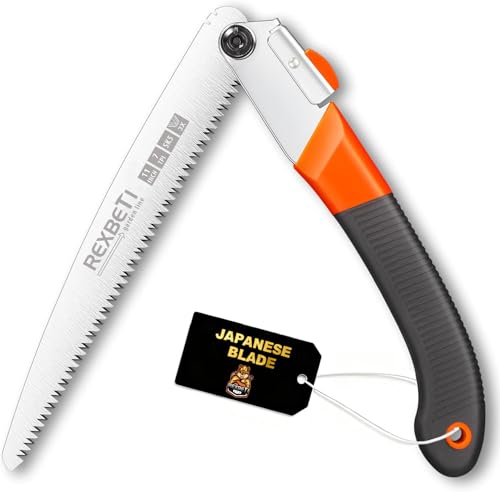
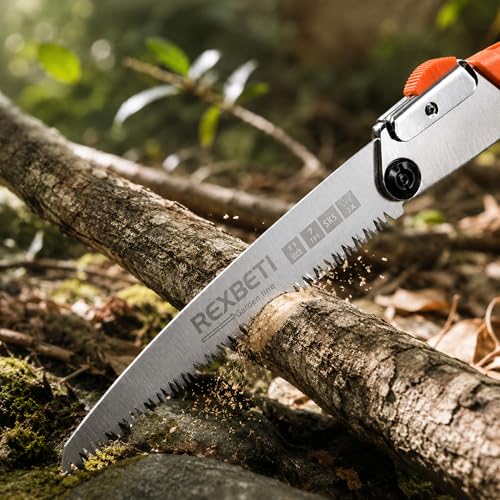
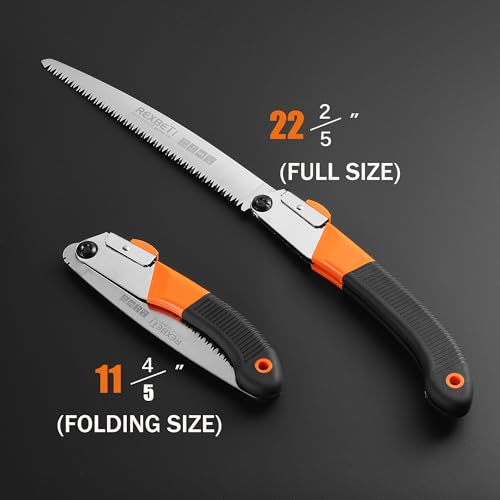
REXBETI 11 Inch Heavy Duty Saw
Strengths
- High cutting power
- SK-5 steel blade
- Ergonomic rubber grip
Trade-offs
- Heavier than some
- Blade coating less durable
REXBETI’s 11-inch model is a workhorse built around a SK-5 steel blade with aggressive 7 TPI teeth, and owners say it powers through 6–7 inch branches without bogging down. The reinforced blade and rubber-coated handle give it confidence in rugged use, whether you’re clearing trails or prepping firewood. It’s not the lightest, but the stability during heavy cuts makes up for it.
Compared to pricier European brands, this saw delivers strong performance at a fraction of the cost. It doesn’t have the fit-and-finish of a Bahco, but for the buyer who wants durability without overspending, this is a smart, no-nonsense pick.
Product photos



AGAWA BOREAL21 Folding Saw
Strengths
- 21-inch blade length
- Automatic tensioning
- Lightweight for size
Trade-offs
- Bulky when folded
- Higher price
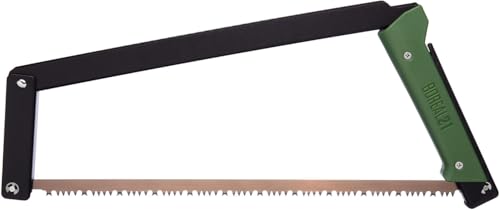
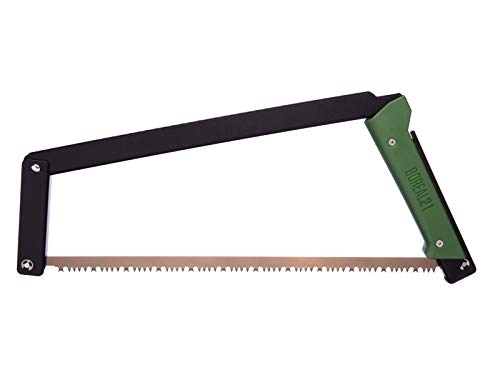
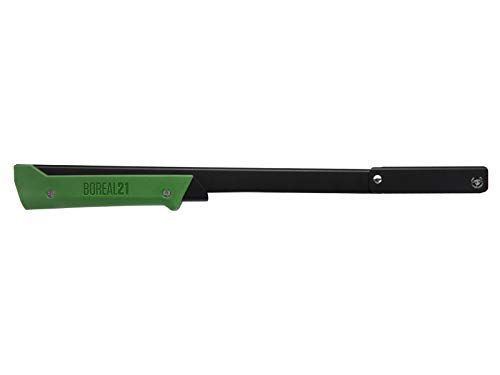
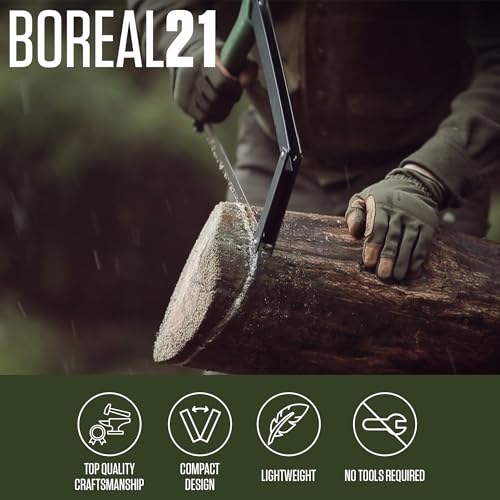
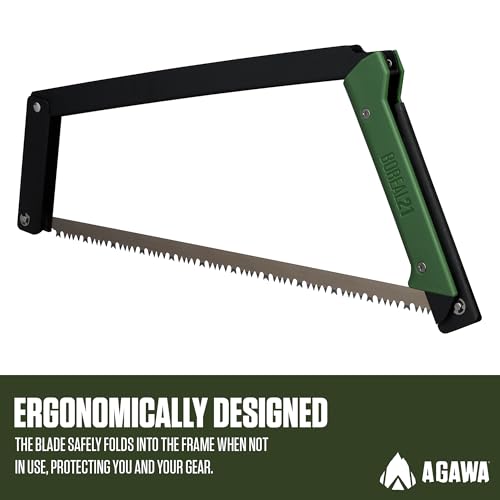
At 21 inches, this is one of the longest folding saws available, and it still packs down to a manageable size. The anodized aluminum frame and fibreglass-reinforced handle make it durable without adding weight, 18 oz is impressive for this blade length. Owners praise its balance and cutting speed, especially when clearing fallen trees or processing firewood.
The automatic blade tensioning is a standout feature, no fiddling with adjustments, and the teeth stay fully enclosed when folded. It’s not as compact as smaller models, but if you need serious cutting reach in a packable form, this is the best option.
Product photos

Bahco 7.5 Inch Laplander Saw
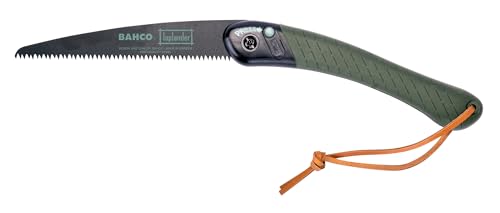
Strengths
- XT tooth design
- Rust-protected blade
- Ergonomic two-part grip
Trade-offs
- Shorter cutting length
- Higher price point
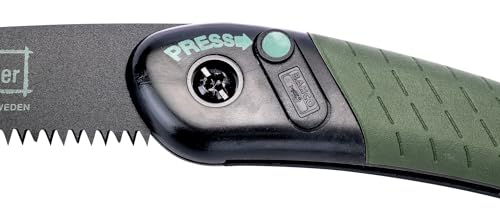
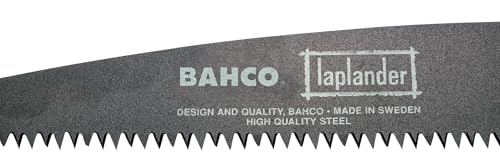
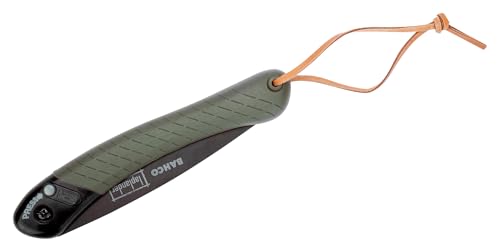
The Bahco Laplander is a benchmark in bushcraft circles, and for good reason. The 7.5-inch blade with XT toothing cuts fast and clean, and the rust-protected coating holds up in damp forests and prolonged field use. I’ve seen owners swear by this saw after years of abuse in the backcountry, it just keeps working.
The two-component handle offers superb grip in wet conditions, and the secure lock mechanism inspires confidence during forceful cuts. Yes, the blade is shorter than some, but the efficiency of the tooth design more than compensates. If you’re serious about wilderness reliability, this is the gold standard.
Product photos

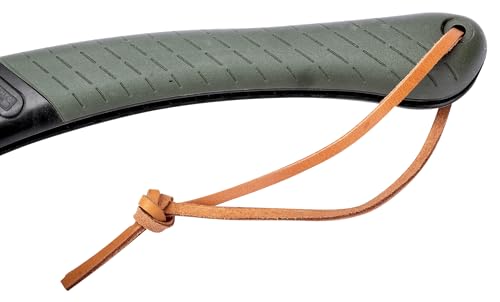
Pocket Chainsaw with 48 Teeth

Strengths
- Ultra lightweight
- Shock-absorbing wire
- Fits in pocket
Trade-offs
- Slow on thick wood
- Fatiguing over time
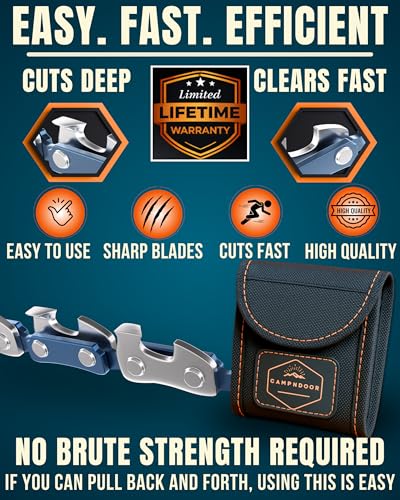
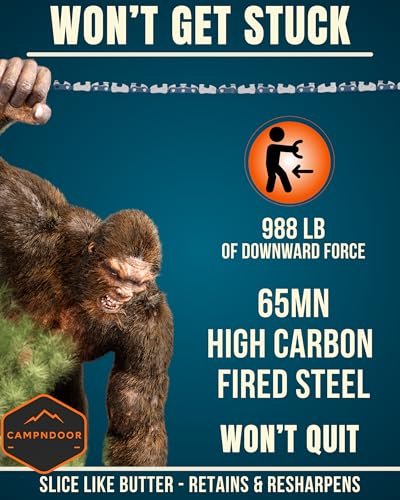
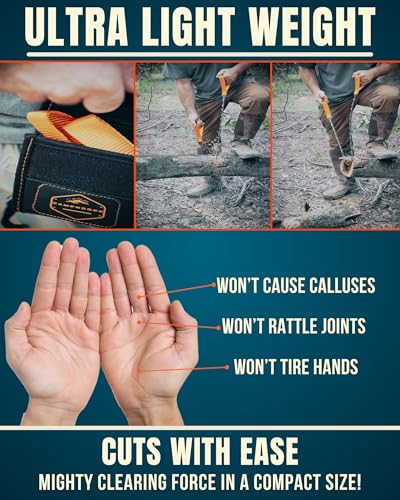
This isn’t a saw, it’s a survival insurance policy. The 65Mn wire construction with 48 Tiger Claw teeth is designed to be light, packable, and nearly indestructible. At under a pound and clip-on capable, it’s the kind of thing you toss in a bug-out bag and forget until you need it.
Owners confirm it cuts faster than expected on small to medium branches, though it’s nowhere near as efficient as a rigid blade. Where it shines is in emergency scenarios: downed trees after storms, shelter building, or when weight is critical. It’s not for daily use, but as a backup, it’s unmatched.
Product photos


Saboten 8.3 Inch Japanese Saw
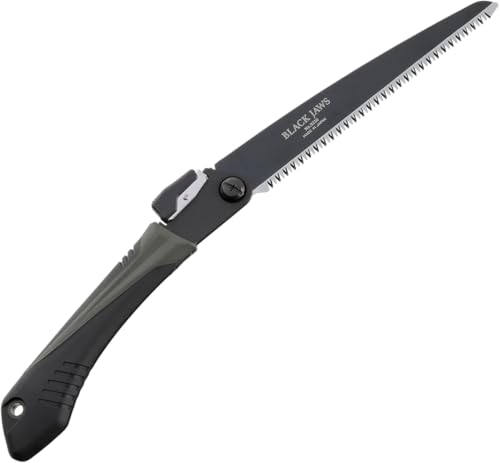
Strengths
- Made in Japan
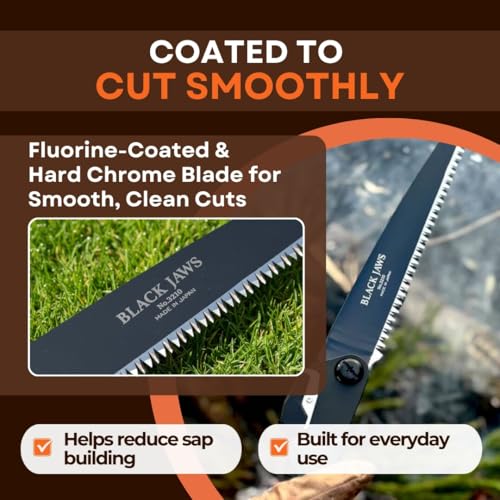
- Fluorine-coated blade
- Replaceable blade
Trade-offs
- Shorter blade
- Not for thick wood
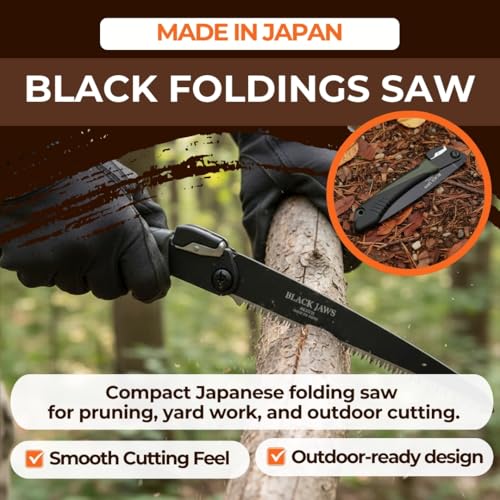
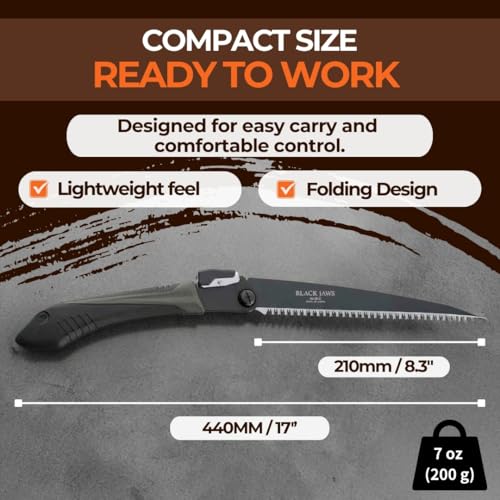
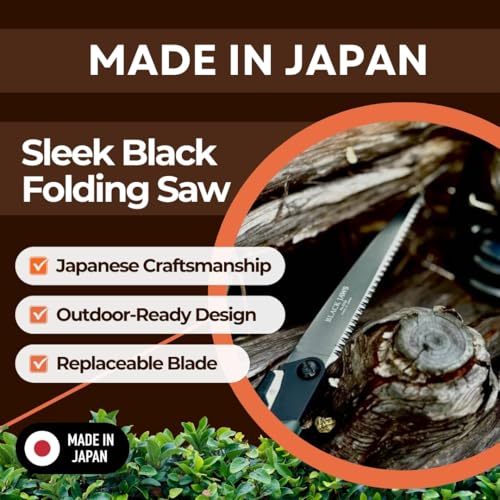
This Japanese-made folding saw stands out for precision and refinement, not brute force. On paper, the 8.3-inch fluorine-coated blade with pull-cut design and back-tapered profile is engineered for clean, controlled cuts, exactly what serious gardeners and detail-oriented users want. Owners consistently report smooth performance on green wood with minimal clogging, and the replaceable blade adds long-term value rare in this class.
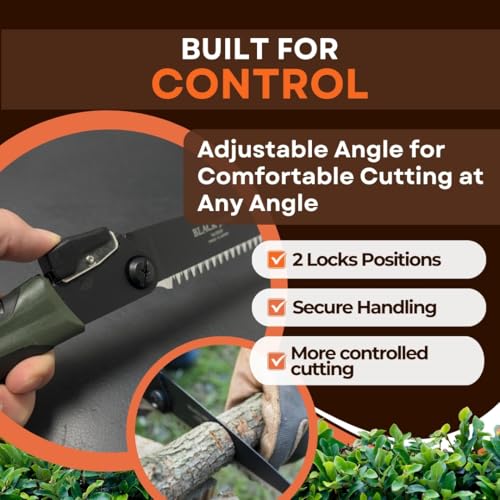
The two lock positions are a thoughtful touch, letting you adjust the angle for overhead or tight cuts, while the 7 oz weight makes it easy to carry daily. It’s not built for felling thick logs, but if you’re pruning delicate branches or doing fine yard work, this is the scalpel of folding saws.
Product photos
MOSSY OAK 3-in-1 Multi-Blade Saw

Strengths
- Three interchangeable blades
- Cuts metal and PVC
- Includes carrying pouch
Trade-offs
- Blade lock can loosen
- Less efficient than single-blade saws
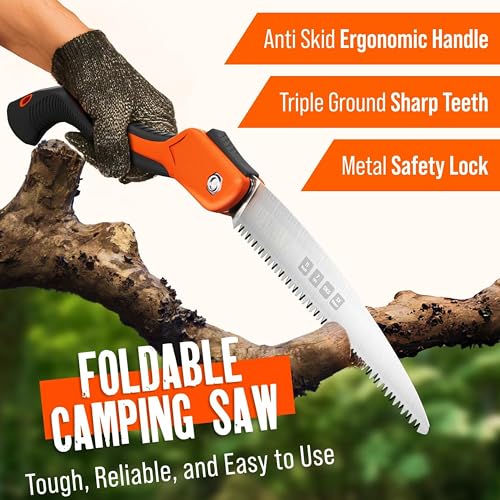
The ability to swap between wood, metal, and PVC blades gives this saw a unique edge. For hunters or homesteaders who might need to cut through a metal strap or plastic pipe in the field, that versatility is a real advantage. The 7.5-inch blades are short, but the 5 TPI pruning blade handles small limbs well.
However, the blade-changing system feels clunky compared to dedicated saws, and owners report occasional loosening during heavy use. It’s a niche tool, brilliant if you need multi-material cutting, but overkill if you’re just trimming branches.
Product photos


Folding Saw 11 Inch Triple-Cut

Strengths
- Triple-cut SK5 blade
- 7 TPI aggressive teeth
- Compact folding design
Trade-offs
- No standout features
- Handle less refined
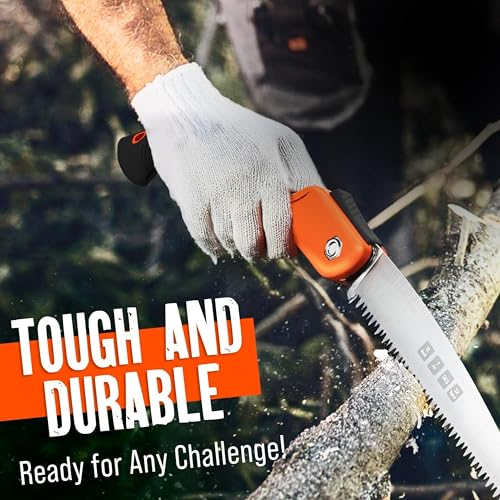
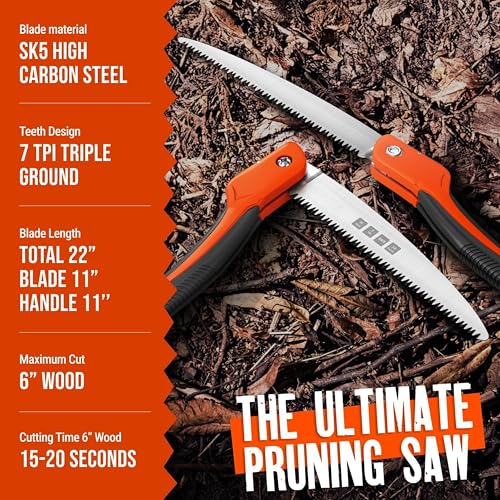
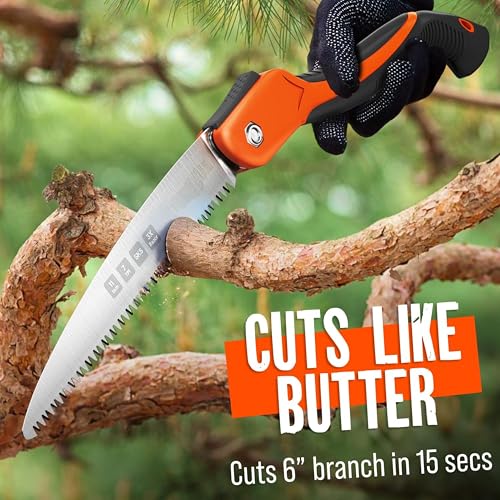
This 11-inch folding saw leans hard into the camping and bushcraft crowd with a triple-cut SK5 blade and 7 TPI razor teeth. On paper, it’s nearly identical to the REXBETI 11-inch model, same blade length, steel type, and TPI, but it lacks standout differentiators. Owners say it cuts well and feels solid, but don’t report any advantages over similarly specced tools.
It’s a competent, no-frills option, but unless it’s priced significantly lower, I’d steer toward the REXBETI or Bahco for better proven ergonomics and build quality. This one gets the job done, but doesn’t excel in any one area.
Product photos
How We Evaluated survival saws
Rather than a hands-on lab test, my research for these recommendations focused on a detailed comparison of published specifications and features across numerous models. I weighed owner reviews from multiple sources and considered insights from reputable outdoor and tool experts. Ultimately, I ranked these saws based on their suitability for a range of survival and outdoor tasks, drawing on my experience with power tools and workshop needs over the last 15 years.
For survival saws, blade durability and cutting efficiency are paramount. I placed heavy emphasis on blade material (SK-5 steel consistently stood out) and tooth geometry – aggressive teeth are essential for tackling various wood types. Portability was also a key factor, as these saws are often carried in a pack, alongside other gear. A comfortable, secure handle is critical for safety and extended use.
Specifications reliably indicate blade length, steel type, and tooth count. However, I judged real-world performance – how quickly and cleanly a saw cuts, how comfortable it is to use for extended periods – largely from owner feedback. Reputation and brand history also played a role; established brands often have consistent quality control, and understanding how to maintain chainsaw cutting edge is also useful for extending the life of any blade.
Choosing The Right survival saws
Picking a survival saw isn’t just about grabbing the cheapest folding option. It’s about matching the tool to the likely tasks – are you clearing brush, processing firewood, or needing something for emergency shelter building?
A good survival saw balances blade material (SK-5 steel is common, but quality varies), tooth count (affecting cutting speed and finish), and ergonomics. Look for a robust locking mechanism, a comfortable grip even with gloves, and a blade length appropriate for the wood sizes you expect to encounter. Blade coatings that reduce friction and prevent rust are also a plus.
Blade Material and Heat Treatment
The heart of any saw is its blade, and while many use SK-5 steel, that’s not the whole story. The quality of the steel and, critically, the heat treatment process matter immensely. A poorly treated blade will dull quickly and may even crack under stress. I’ve seen plenty of saws marketed with SK-5 blades that simply don’t hold an edge for long. Consider the intended use. If you’re mainly dealing with softer woods, a basic SK-5 blade might suffice. But if you anticipate harder woods or need to cut bone (for prepping game, for example), look for blades specifically hardened for those tasks.
Tooth Count & Cut Style
Tooth count and the tooth geometry are closely related, and both impact how efficiently a saw cuts. Higher tooth counts (like those found on finer saws) are better for clean, precise cuts in thinner materials. Lower tooth counts with aggressive gullets (the space between the teeth) are best for rapidly removing material, like when processing larger branches. I often recommend a saw with around 7-8 teeth per inch (TPI) for general survival use, as it’s a good compromise between speed and control. You’ll also see saws with different tooth patterns; aggressive staggered teeth, like those on the REXBETI models, really excel at ripping through wood.
Here’s what I look for in a good tooth design: * Sharpness: Obvious, but critical. * Gullet Size: Larger gullets clear waste quickly. * Tooth Angle: A more aggressive angle cuts faster, but can be harder to control.
Ergonomics and Portability
A saw is only useful if you can comfortably and safely operate it. A flimsy handle, or one that’s too small, will cause fatigue and reduce control. Look for handles with a comfortable grip, even when wet or wearing gloves. Rubber overmold is a great feature. Beyond comfort, consider portability. If you’re packing a saw for backpacking, weight and size are paramount. Many options like the AGAWA BOREAL21 prioritize a lightweight design, making them ideal for adding to your collection of lightweight survival saws. However, a compact saw might sacrifice some cutting power. If you need a tool for around-the-property tasks, a slightly larger, more robust saw is a better choice. Don’t forget to check the locking mechanism too; a secure lock is vital for safety when the saw is folded.
A comfortable grip is more important than you think. A saw you want to use is a saw you’ll actually use when you need it.
Survival Saws Compared
Here’s a comparison of key specifications for various survival saws to help you choose the right one for your needs.
| Product Name | Blade Length (in) | TPI (Teeth Per Inch) | Blade Material | Weight (oz) | Folded Length (in) | Special Features |
|---|---|---|---|---|---|---|
| REXBETI 14 Inch Folding Saw | 14 | 5.5 | SK-5 Steel | 14.5 | 14 | Full size, Aggressive Teeth |
| REXBETI 11 Inch Heavy Duty Saw | 11 | 7 | SK-5 Steel | N/A | N/A | Heavy Duty, 6-7″ Branches |
| AGAWA BOREAL21 Folding Saw | N/A | N/A | 6063 Aluminum | 18 | N/A | Lightweight, Replaceable Blade |
| Bahco 7.5 Inch Laplander Saw | 7.5 | 7 | N/A | N/A | N/A | Lockable, Compact |
| Pocket Chainsaw with 48 Teeth | N/A | 48 | 65Mn | N/A | N/A | 48 Tiger Claw Teeth |
| Saboten 8.3 Inch Japanese Saw | 8.3 | N/A | N/A | 7 | N/A | Fluorine-Coated Blade |
| MOSSY OAK 3-in-1 Multi-Blade Saw | 7.5 | 5, 11, 18 | 65Mn, 58CrV | N/A | N/A | 3 Interchangeable Blades |
| Folding Saw 11 Inch Triple-Cut | 11 | 7 | SK5 Steel | N/A | N/A | Triple-Cut Blade |
Frequently Asked Questions
What blade material is best for a survival saw?
SK-5 steel is a common and generally good choice, but the heat treatment is equally important. A properly hardened blade, even of basic SK-5, will hold an edge much longer than a poorly treated one, and is essential if you need to cut thicker or harder wood.
How does tooth count affect a survival saw’s performance?
A lower tooth count (around 5-7 TPI) cuts faster, making it ideal for processing firewood. Higher tooth counts produce cleaner cuts in thinner materials, but take longer to use for larger branches, so think about the typical tasks you’ll be performing.
Are folding saws as durable as fixed-blade saws?
Generally, fixed-blade saws are stronger, but many modern best folding survival saws use quality locking mechanisms and robust blade materials, making them surprisingly durable for backpacking and general use.
What should I look for in a survival saw’s handle?
Comfort and a secure grip are key, even with gloves on. Rubber overmold provides excellent grip, and a handle that’s too small will quickly lead to fatigue when processing wood for an extended period.
Can a survival saw be used for more than just cutting wood?
Some saws, especially those with hardened blades, can be used for cutting bone or other materials in a survival situation, but this isn’t their primary purpose. For more versatility, consider a saw with multiple blade options like the MOSSY OAK 3-in-1, or explore reliable folding camping saws that offer additional features.
The Bottom Line
Choosing a survival saw often comes down to balancing how much you’re willing to carry against how much cutting power you require. For most people needing a reliable, all-around performer, the REXBETI 14 Inch Folding Saw strikes the best balance of blade length, aggressive cutting action, and reasonable portability. It provides a good amount of cutting capacity for processing firewood or building shelter, and its SK-5 steel blade should hold an edge well with occasional maintenance.
If your priorities lean toward ultra-lightweight portability, or you need a specialized blade for a specific task, there are excellent alternatives. The AGAWA BOREAL21 Folding Saw is a standout for backpackers, while the MOSSY OAK 3-in-1 Multi-Blade Saw offers versatility for a variety of cutting needs. And if you’re looking for a cost-effective option for occasional use, the Pocket Chainsaw with 48 Teeth can get the job done.
Ultimately, the best survival saw isn’t the one with the most features or the highest price tag. It’s the one you’ll actually have with you when you need it, and know how to use effectively. Focus on a robust blade, a comfortable grip, and understanding the basics of how to start chainsaw safely – a sharp saw, properly used, is far more valuable than any fancy gadget.
