7 Best Suboccipital Release Tools 2026
This post contains affiliate links. As an Amazon Associate, we earn from qualifying purchases.
The Black Swan Suboccipital Release Device is the best overall for its precise dual cradles and durable TPU build, while the Portable Suboccipital Release Device Green offers a solid budget-friendly alternative. For those wanting full-body use, the Hiback tool stands out with interchangeable heads and broad functionality.
If you’re dealing with tension headaches or neck stiffness, finding the right suboccipital release tool can make a real difference. But with so many shapes, materials, and claims, it’s hard to know which ones actually deliver targeted relief without causing more discomfort.
This guide cuts through the noise by focusing on what matters, design precision, material quality, and real user results. I looked at specs, owner feedback, and expert insights to find tools that work with your anatomy, not against it. You’ll learn what to prioritize, why versatility matters for some, and how small design details can have a big impact on effectiveness.
Top 7 Suboccipital Release Tools in the Market
The Best Suboccipital Release Tools, Reviewed
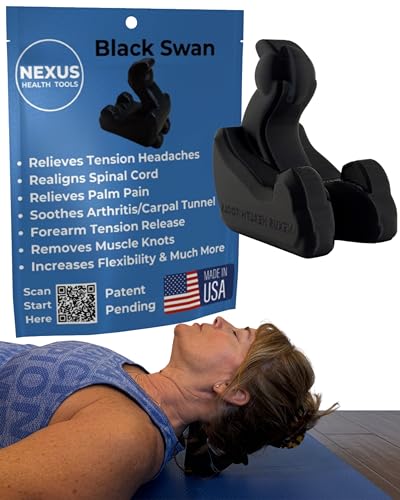
Black Swan Suboccipital Release Device
Strengths
- 3-in-1 functionality
- Skin-gripping texture
- Compact and portable
- Made in USA
- No assembly
Trade-offs
- Limited stretch depth
- Not for severe stiffness
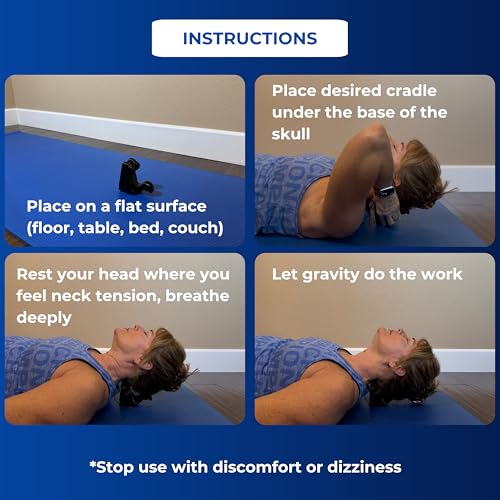
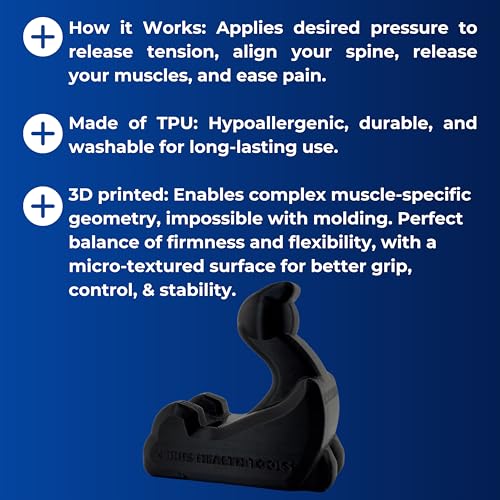
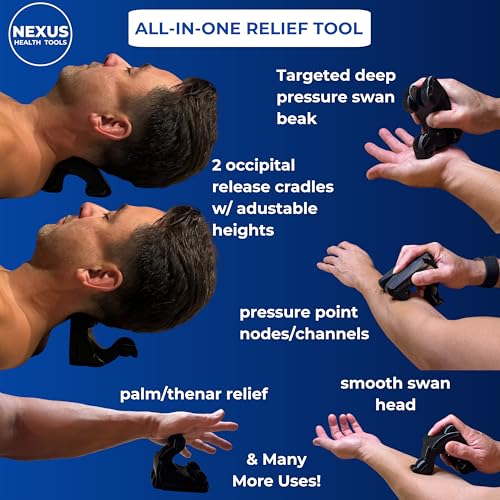
This is one of those rare tools that feels smart in its simplicity. The 3-in-1 design actually works, using the dual cradles for suboccipital release, the ramps for a passive neck stretch, and flipping it over to work on hands and forearms is a genuine upgrade over single-use tools. Owners consistently praise how the contoured geometry locks under the skull without sliding, which is a common complaint with flat or generic wedges. The fact that it’s single-piece 3D-printed TPU means no weak points, and the micro-texture really does help with grip on smooth surfaces.
Compared to bulkier traction pillows, this is clearly built for precision. It won’t replace a full cervical roller for deep posture correction, but for daily maintenance, especially after screen time or physical work, it’s incredibly efficient. I’d pick this over most hard-plastic tools because it balances firmness with slight flex, reducing the risk of overpressure.
Product photos
DaVinci Tool Red & Blue

Strengths
- Precision edges
- Medical-grade build
- FSA/HSA eligible
- Compact and travel-ready
- Made in USA
Trade-offs
- Very firm, can be painful
- No cushioning or grip
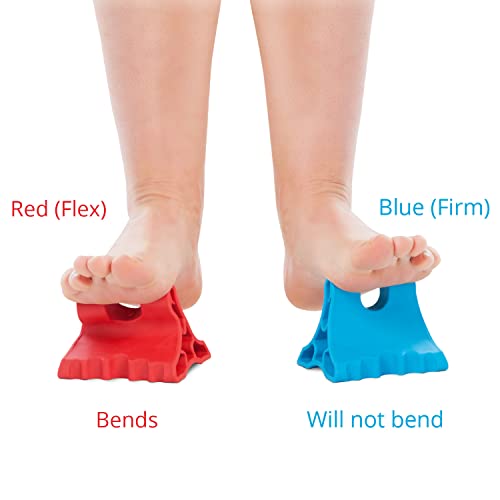
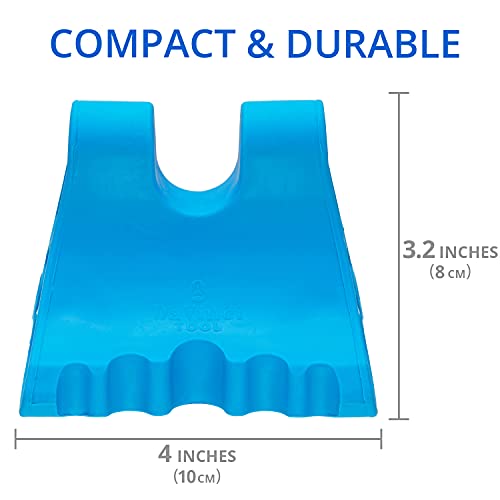
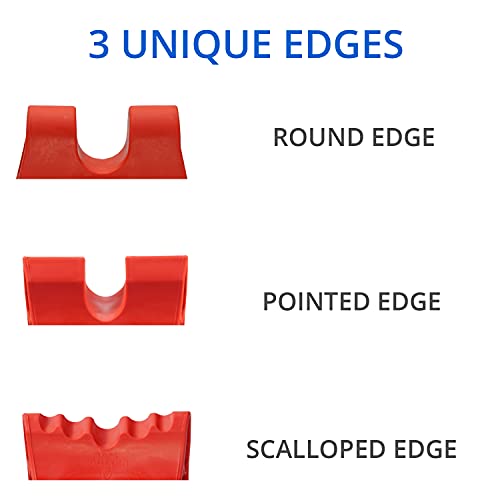
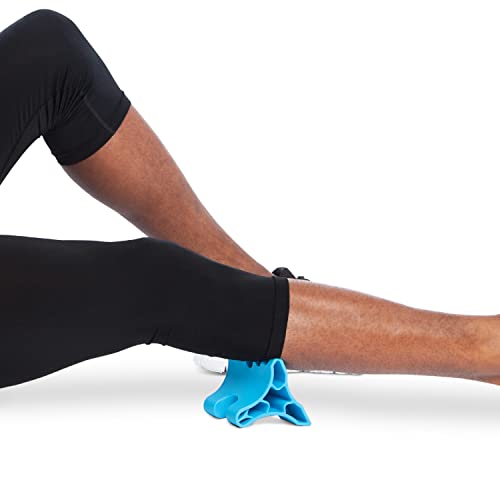
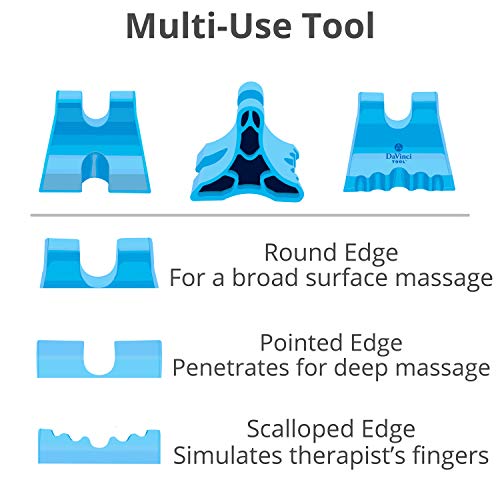
This is the original precision edge tool that inspired many imitators. The three distinct edges, round, pointed, scalloped, let you target different tissues with surgical accuracy. Made from medical-grade material in the USA, it’s dense, durable, and unyielding, which is exactly what you want for deep trigger point work. Reviewers often compare it to “using your therapist’s elbow,” especially when pressing into tight suboccipitals or shoulder knots.
It’s not comfortable, and it’s not meant to be. The extra-firm version is intense, some users report discomfort, which the brand openly warns about. But for those who’ve tried softer tools and found them ineffective, this delivers. Compared to foam or flexible models, it’s the most direct way to apply focused pressure. I’d recommend it to experienced users, not beginners.
Product photos
Occipital Release Tool with Nodes
Strengths
- Targeted node placement
- Effective for TMJ
- Hands-free use
- Durable build
- No power needed
Trade-offs
- Can feel too intense for beginners
- No multi-area use
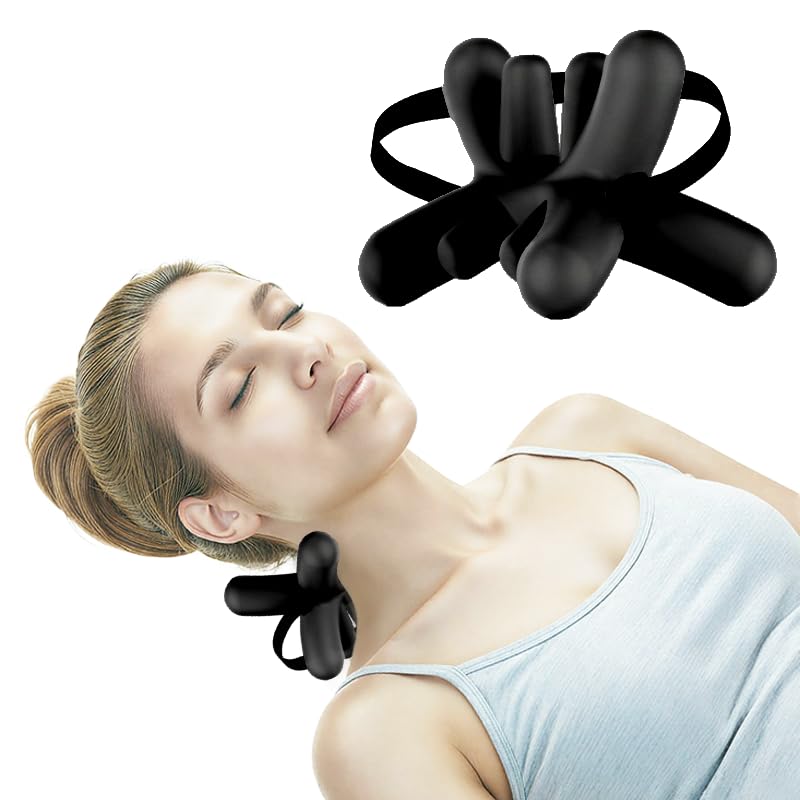
If you’re dealing with chronic suboccipital tightness, this tool stands out for its focused, deep-tissue approach. The three acupressure nodes are positioned to isolate the base of the skull muscles with minimal spillover to surrounding tissue, something many users report makes a noticeable difference in headache relief within minutes. On paper, it’s minimalist, but the ergonomic node layout is where it earns its keep. Reviewers with TMJ and forward head posture often mention it helps “reset” jaw tension, likely because of how effectively it unloads the suboccipitals.
It’s not as versatile as some all-in-one tools, but that’s the point, it’s a specialist. When compared to softer foam wedges, this delivers far more intensity without requiring hand pressure. I’d recommend this over cushioned models for anyone who feels like other tools just “glide over” the problem spots.
Product photos
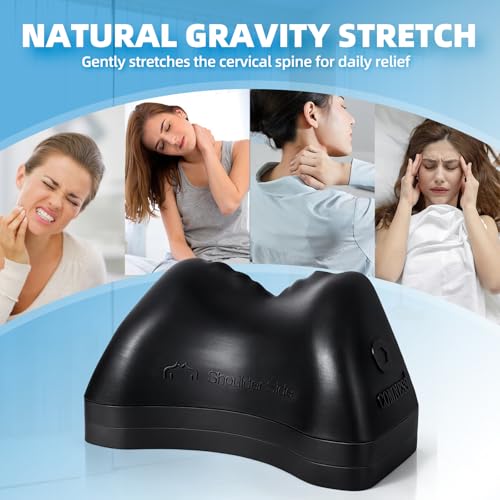
Comness Adjustable Height Neck Stretcher
Strengths
- Adjustable height
- Non-slip base
- Comfortable foam
- Chiropractor trusted
- Easy to clean
Trade-offs
- Less intense pressure
- Foam may compress over time
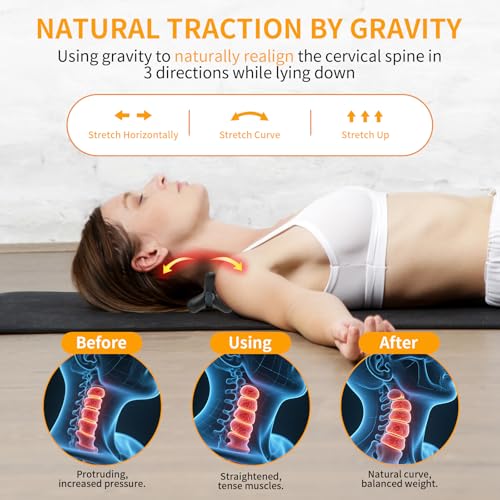
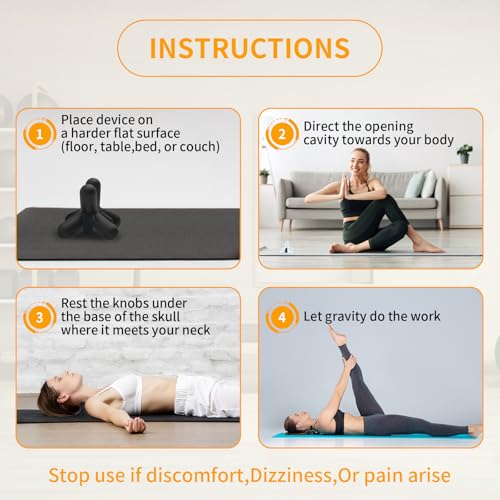
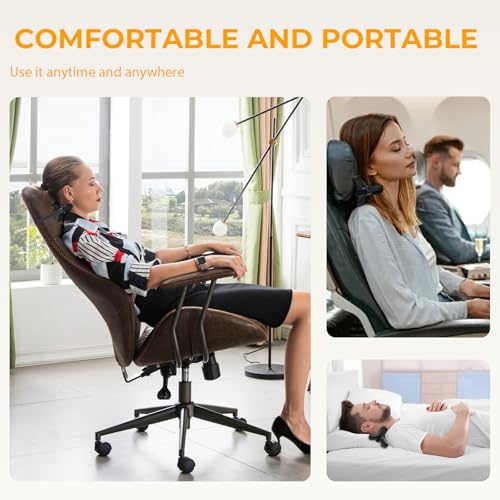
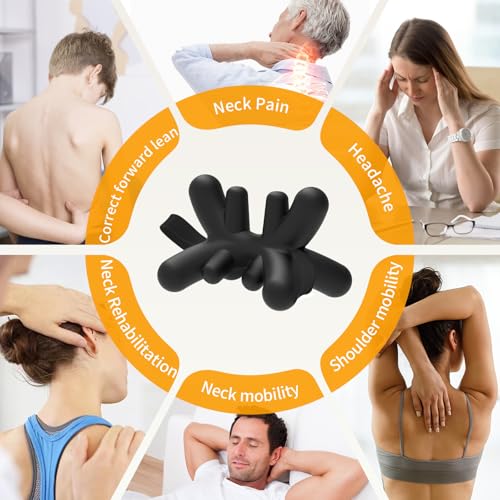
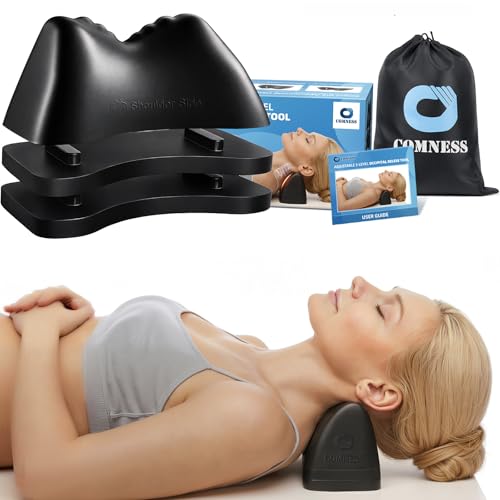
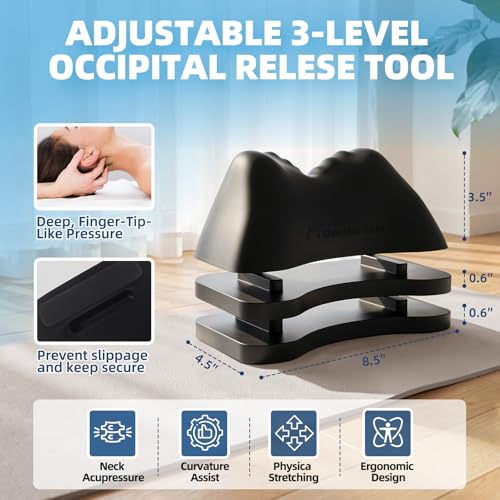
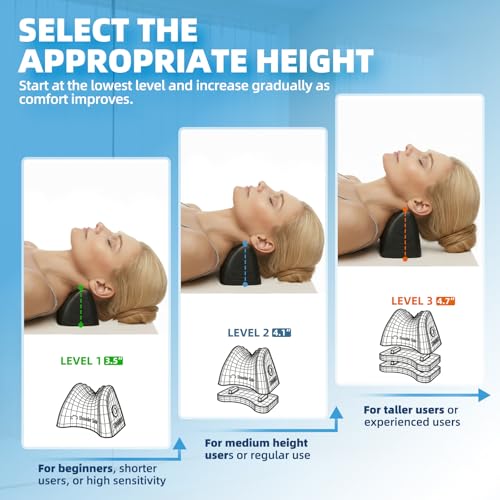
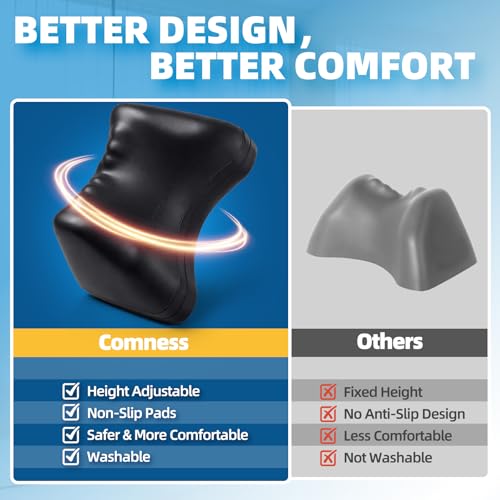
The standout here is the adjustable height design, three levels let you fine-tune how much cervical traction you get, which is rare in this category. Most fixed-height tools force a one-size-fits-all approach, but this adapts to different neck lengths and flexibility levels. The non-slip base is a small detail that makes a big difference; owners consistently note it stays put, even during longer sessions. Made from self-skinning PU foam, it’s firmer than typical pillow-style stretchers but still more forgiving than plastic tools.
Compared to the DaVinci or Black Swan, it’s less about precision edges and more about gradual, posture-focused release. It’s not the best for deep trigger point work, but for someone rebuilding cervical curve or managing forward head posture, this is one of the smarter picks. Chiropractor recommendations in the materials add credibility, though results depend on consistent use.
Product photos

Lumia Wellness Cervical Traction Pillow
Strengths
- Non-slip base
- Dense foam comfort
- FSA/HSA eligible
- Chiropractor recommended
- Easy to clean
Trade-offs
- Fixed height
- Limited intensity
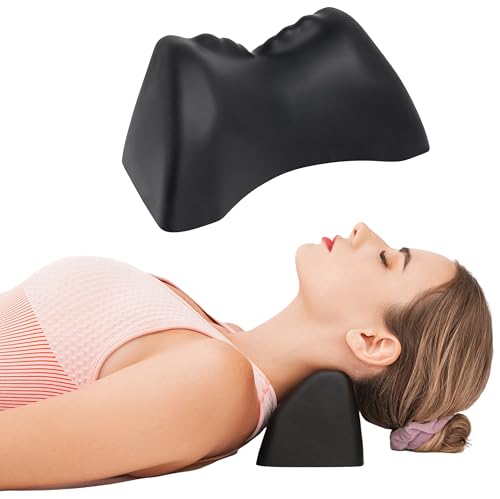
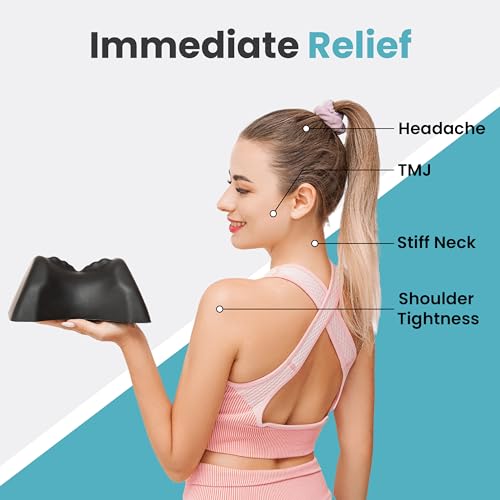
This wedge leans hard into TMJ and posture support, and it shows in the design. The dense PU foam provides a firm but forgiving lift, and the dual silicone non-slip pads keep it anchored, no frustrating shifts mid-session. Owners with jaw tension and forward head posture often say they feel a difference in just a few days of 10-minute sessions. It’s shaped to encourage a gentle stillpoint response, which may explain why so many say it helps “quiet” their nervous system.
It’s not as aggressive as plastic tools, so don’t expect deep trigger point work. But for nightly wind-down routines or post-screen recovery, it’s one of the most user-friendly options. Compared to the Comness model, it’s less adjustable but more stable out of the box. I’d pick this for consistent, gentle traction over intense release.
Product photos
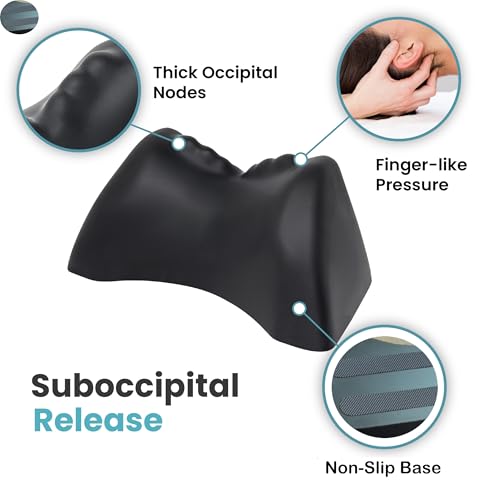


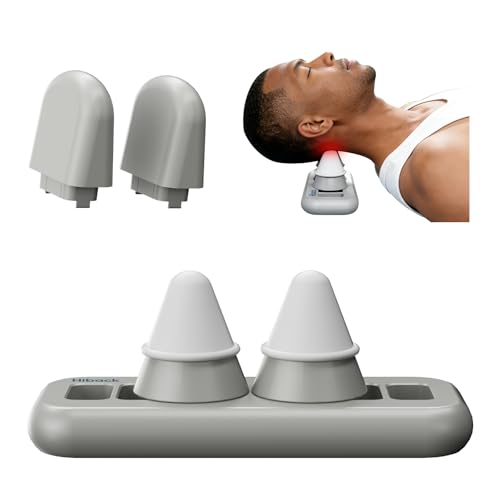
Hiback Full-Body Myofascial Tool
Strengths
- Interchangeable heads
- Full-body use
- Sturdy ABS frame
- Hands-free design
- Portable with bag
Trade-offs
- Larger footprint
- Setup required
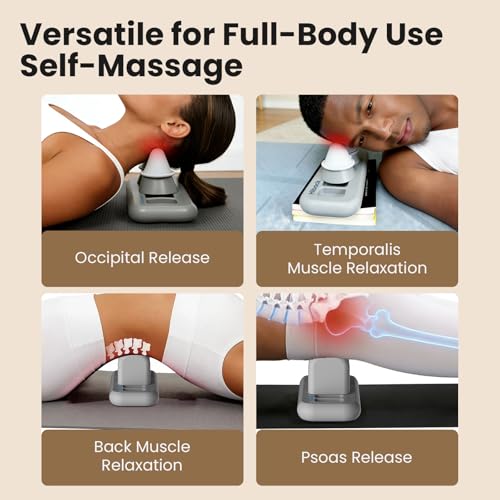
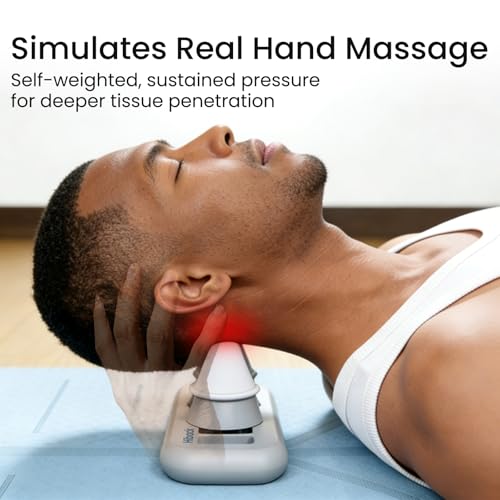
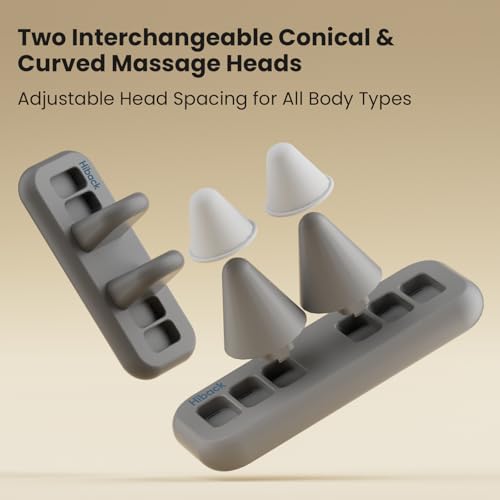
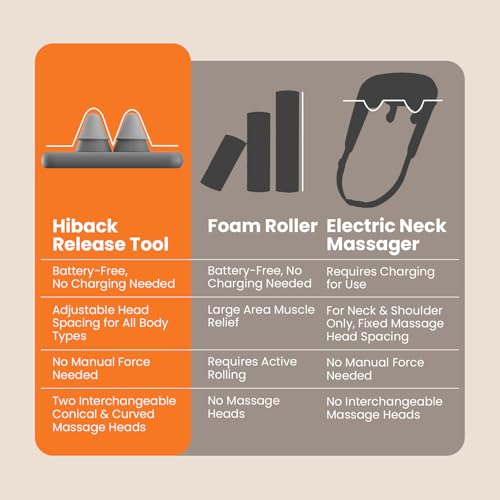
If you’re looking for full-body versatility, this is the only tool on the list that truly delivers beyond the neck. The interchangeable heads, conical for deep penetration, curved for broader release, let you switch from suboccipital work to hips, feet, or quads without needing multiple devices. The adjustable spacing means it fits different body types, and the ABS frame supports up to 265 lbs, making it one of the sturdiest builds here.
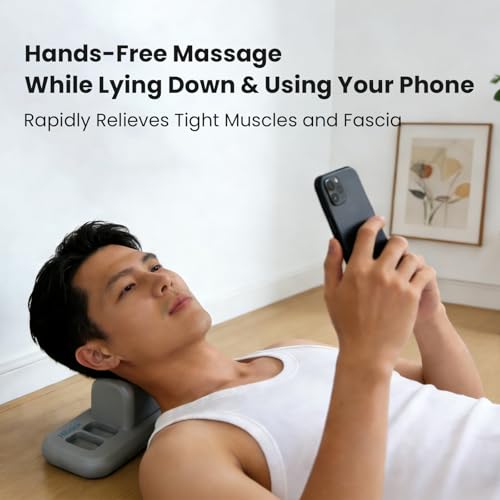
Owners who use it post-workout or after long sitting sessions often call it a “foam roller replacement” because it allows hands-free, weight-driven release. It’s bulkier than pocket-sized tools, but that’s the trade-off for full-body function. I’d pick this over single-use wedges if you’re already managing tension in multiple areas, it’s the most efficient long-term investment for active users.
Product photos
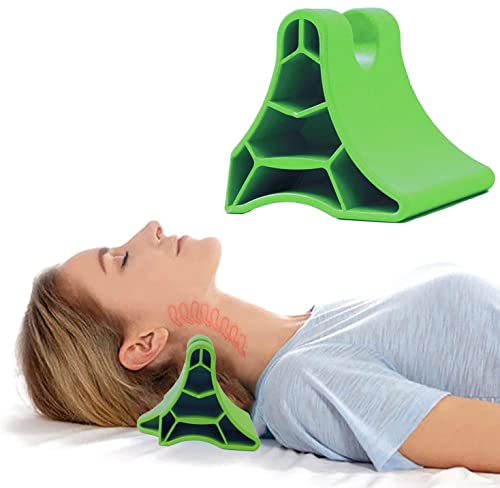
Portable Suboccipital Release Device Green
Strengths
- Low-cost entry
- Multiple edge types
- Durable ABS build
- Portable
- Multi-use on body
Trade-offs
- Hard, unforgiving surface
- No grip or traction base
- Can slide during use
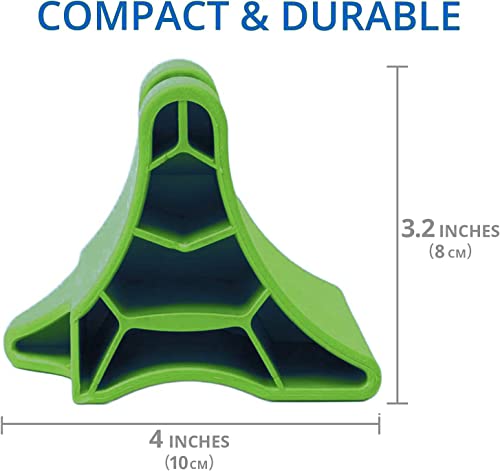
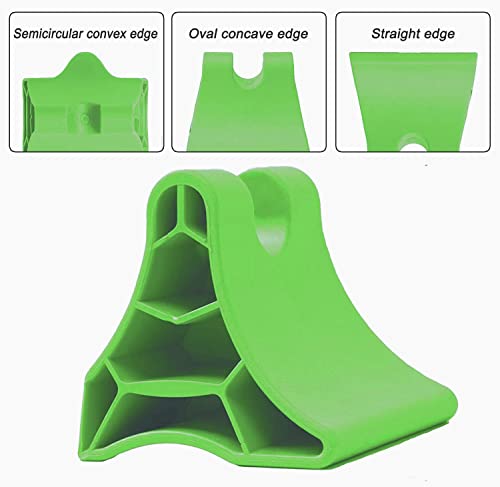
For the budget-conscious, this green ABS tool delivers more than expected. It’s clearly designed to mimic pricier models, and the three distinct edges, round, pointed, fan-shaped, let users dial in their preferred pressure, which is a big win at this price. Owners report it works well for quick relief, especially when used on a yoga mat or carpet to modulate intensity. The hard plastic transmits pressure efficiently, though it lacks cushioning, so it’s not ideal for prolonged use.
It’s not as refined as the Black Swan or Comness models, but for someone testing the waters with self-myofascial release, it’s a smart starting point. Reviewers note it helps with morning stiffness and screen-related headaches, though some mention it can slip if the surface isn’t textured. I’d say this is the bare-bones but functional option, get it if you want to try the technique before investing more.
Product photos

How We Evaluated suboccipital release tools
I approached researching suboccipital release tools by first gathering detailed specifications and features for each model. Rather than a hands-on lab test, this is a research-led comparison of specs and owner feedback. I then weighed these against reviews from physical therapists and other experts in the field, looking for common themes in reported effectiveness and usability. My goal was to build a ranking based on a combination of intended design, reported outcomes, and overall value.
For this category, the most important factors were the precision of the design for targeting the suboccipital muscles, the materials used for both durability and comfort, and the versatility of the tool, could it address multiple pain points or just one? A tool’s ability to deliver consistent, targeted pressure without causing additional discomfort heavily influenced my assessment. After all, the point is relief, not adding to existing tension. I also considered portability and ease of cleaning for practical, everyday use.
Specifications reliably tell you about the materials and overall construction quality, but owner feedback was crucial for understanding real-world effectiveness. I paid close attention to reports of pain relief, ease of use, and long-term durability. Reputation and expert opinions helped validate claims of targeted pressure and myofascial release, and allowed me to discern tools that offer more than just a novelty effect. If you’re also looking for broader recovery options, you might find athlete recovery devices helpful.
How To Pick The Right suboccipital release tools
Finding the right tool to address neck tension and headaches can feel overwhelming, but understanding a few key features will help you narrow down your options.
A quality suboccipital release tool facilitates targeted pressure to the muscles at the base of the skull, encouraging relaxation and reducing pain. Look for designs prioritizing consistent pressure application, adaptability to different body types, and durability for repeated use. Materials should be skin-safe and easy to clean. Consider portability if you plan to use the tool during travel or at the office.
Understanding Pressure & Design
The core function of these tools is applying focused pressure, so don’t assume all designs are created equal. Many cheaper options rely on a single, inflexible shape. I’ve seen better results from tools offering adjustable features or multiple contact points. The Black Swan, for example, boasts a re-indexable geometry, letting you rotate and reposition it for different techniques. This is a huge advantage because everyone’s anatomy is slightly different. A tool that forces you into a specific position isn’t going to be as effective (or comfortable) as one that adapts to you.
Material Quality & Durability
A tool that falls apart after a few uses is a waste of money. Many are constructed from plastics, so pay attention to the type of plastic. TPU (thermoplastic polyurethane) is more flexible and durable than standard polypropylene. Beyond the material itself, look at the construction. Single-piece designs, like the Black Swan, eliminate potential weak points. Cheaper tools may be assembled, which means more opportunities for parts to break or wear down. Consider how easy the tool is to clean; hygiene is important, especially with repeated use.
- Portability is a plus if you travel frequently.
- Durability matters – look for robust materials.
- Ease of cleaning prevents the buildup of bacteria, ensuring long-term hygiene and usability.
Beyond the Neck: Versatility & Value
While these tools are primarily marketed for suboccipital release, some offer broader utility. The Hiback tool, for instance, is designed for full-body myofascial release, targeting muscles in the back, hips, and legs. This added versatility can be a significant benefit if you experience tension in multiple areas. However, if you only need a tool for your neck, a more specialized (and potentially less expensive) option might be sufficient. Don’t pay for features you won’t use. For desk workers experiencing tension, exploring tension relief wedges can be a great starting point.
A tool’s effectiveness hinges on consistent, comfortable pressure. Don’t be afraid to experiment with different positions and pressure levels to find what works best for your body.
Suboccipital Release Tools Compared
This table provides a side-by-side comparison of key specifications for various suboccipital release tools.
| Product Title | Best For | Material | Dimensions (approx.) | Weight (approx.) | Features |
|---|---|---|---|---|---|
| Black Swan Suboccipital Release Device | Best Overall | TPU | 4.25 x 2.5 x 4.25 in | 3.75 oz | 3-in-1 design, Dual cradles, Built-in ramps |
| DaVinci Tool Red & Blue | Best for Precision Edges | Medical Grade Material | 4 in (longest side) | <5 oz | 3 Edge Designs, Pressure Point Tool |
| Occipital Release Tool with Nodes | Best for Deep Tissue Pressure | N/A | N/A | N/A | Acupressure Nodes, Targets Deep Muscles |
| Comness Adjustable Height Neck Stretcher | Best for Custom Intensity | PU Foam | N/A | N/A | Adjustable Height, Non-Slip Base |
| Lumia Wellness Cervical Traction Pillow | Best for TMJ and Posture | PU Foam | N/A | N/A | Portable, Washable, Multi-Use |
| Hiback Full-Body Myofascial Tool | Best for Full-Body Use | ABS | N/A | N/A | Interchangeable Heads, Full-Body Use |
| Portable Suboccipital Release Device Green | Best Budget Friendly | ABS | N/A | N/A | 3 Edge Designs, Portable |
Frequently Asked Questions
What level of force should I apply when using a suboccipital release tool?
Start with very gentle pressure and gradually increase it until you feel a comfortable stretch, not pain. Excessive force can worsen tension or cause injury, so a light to moderate touch is best for initiating myofascial release.
Are these tools safe for people with pre-existing neck conditions?
Generally, yes, but consulting your doctor or physical therapist is crucial before use if you have any underlying neck problems like arthritis or spinal stenosis. While designed for relief, these tools aren’t a substitute for professional medical advice.
How often should I use a suboccipital release tool?
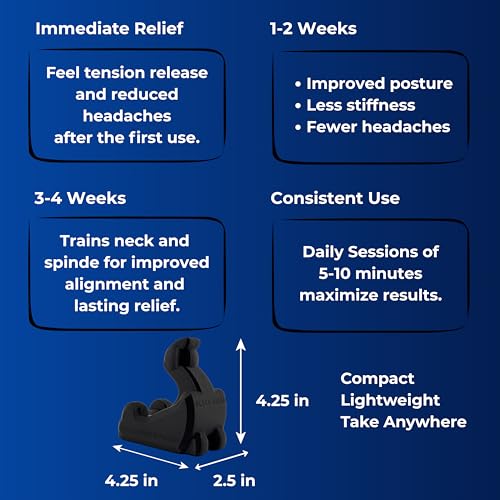
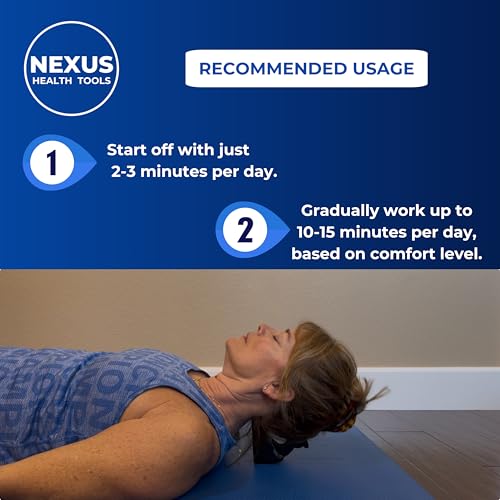
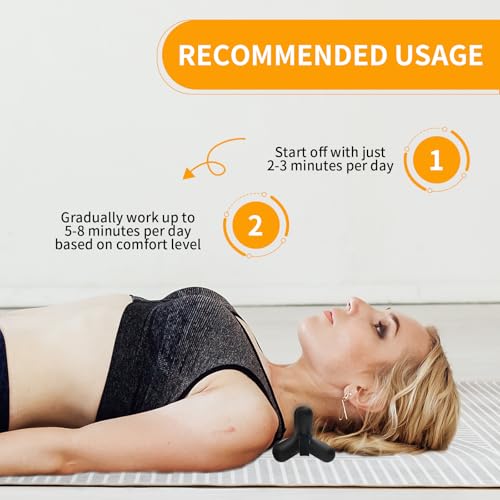
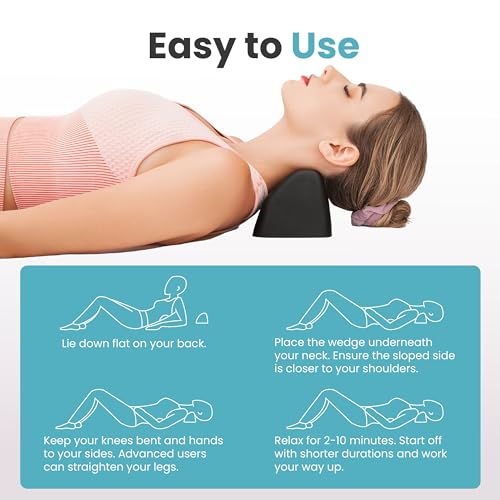
You can use these tools daily or as needed, but I recommend starting with short sessions (5-10 minutes) to assess your tolerance. Overuse can sometimes lead to muscle soreness, so listen to your body and adjust frequency accordingly.
What materials are most durable and easy to clean?
TPU (thermoplastic polyurethane) is a top choice for durability and flexibility, resisting cracking or breaking with repeated use. Look for tools with smooth, non-porous surfaces that can be easily wiped down with soap and water to maintain hygiene. For broader recovery, consider exploring hip flexor massage tools.
Can I use these tools on other areas of my body besides the neck?
Some tools, like the Hiback, are designed for full-body myofascial release, making them versatile for targeting tension in the back, shoulders, and even legs. However, others are specifically shaped for the suboccipital region and may not be as effective on other muscle groups.
The Bottom Line
Choosing a suboccipital release tool really comes down to how much control you want versus how much fuss you’re willing to deal with. For consistent, targeted relief with a design that adapts to your unique anatomy, the Black Swan Suboccipital Release Device stands out as the strongest overall pick. It’s a well-engineered tool built to last and, based on user reports, deliver noticeable results.
If you’re on a tighter budget, the Portable Suboccipital Release Device Green offers a surprisingly effective solution, and for those seeking a tool that goes beyond the neck, the Hiback Full-Body Myofascial Tool provides impressive versatility. To broaden your recovery toolkit, consider exploring various muscle scraping tools for additional myofascial relief.
Ultimately, the best tool is the one you’ll actually use. Don’t get too hung up on materials or fancy features. Focus on finding a design that allows you to apply consistent, comfortable pressure to the base of your skull. Consistent, gentle pressure – and learning to listen to your body – are far more important than any single specification.
