8 Best Stair Tread Template Tools 2026
This post contains affiliate links. As an Amazon Associate, we earn from qualifying purchases.
The Stair Tread Template Tool Red is our top pick for its wide 8–72 inch range, solid triangular locking system, and consistent owner feedback on reliability. For a budget-conscious option, the NAACOO Stair Tread Tool Set offers basic functionality at a low price, though with less durable materials. If you need maximum flexibility, the Stair Tread Gauge 10-67 Inch stands out for its precise adjustability across a broad span.
Measuring stair treads by hand leads to errors, wasted material, and mismatched steps. Getting it right means using a tool that locks securely, measures accurately, and holds up over time. This guide cuts through the noise, comparing the best stair tread template tools based on real user experiences, build quality, and key features like adjustability and locking stability, all drawn from specs and feedback across woodworking communities and product reviews.
Top 8 Stair Tread Template Tools in the Market
The Best Stair Tread Template Tools, Reviewed
Stair Tread Template Tool Red

Strengths
- Triangular stability brace
- Edge flip stops
- 8-72 inch range
Trade-offs
- Auxiliary bar detachable
- Slightly bulkier
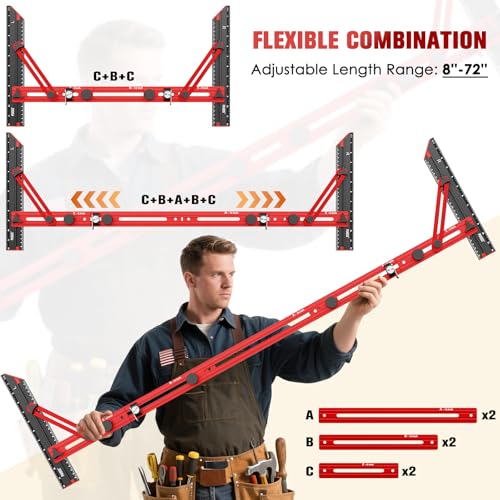
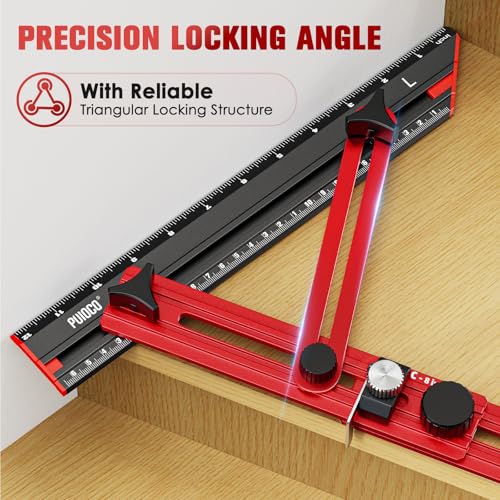
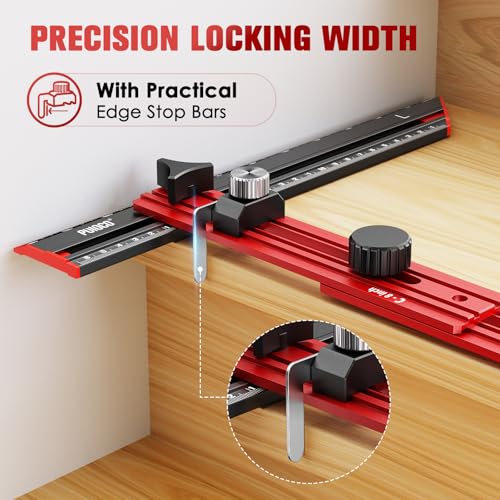
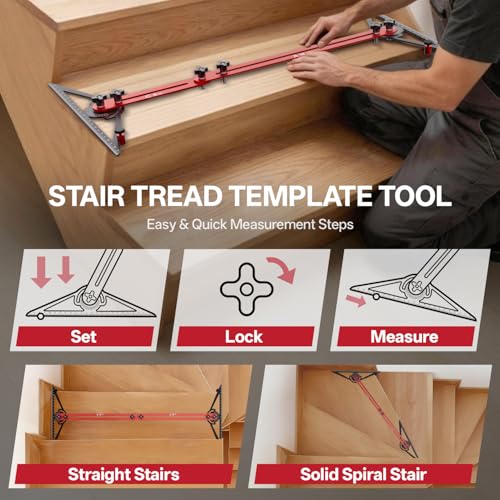
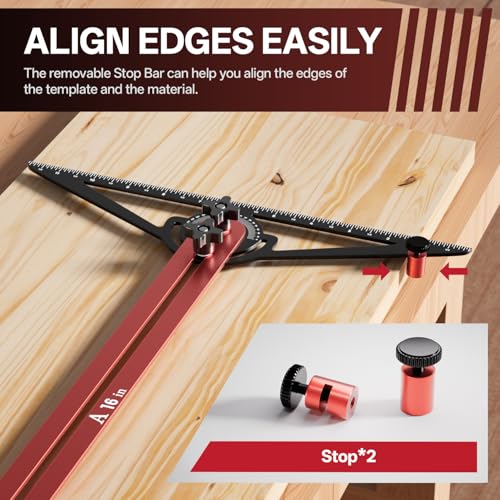
This one checks nearly every box for what I consider a top-tier stair jig. The triangular structure brace is a real differentiator, it locks the pivot ends securely, which owners say eliminates slippage during transfer. That’s critical when you’re copying complex angles and can’t afford misalignment. The edge flip stops are another win, letting you lock onto tread edges in a second and replicate cuts fast.
With sliders ranging from 8 to 72 inches, it offers the widest reach in this group, beating even the blue version by a few inches. Made from aerospace aluminum with CNC anodizing, it’s built to last. When you factor in the included storage bag and gift box, this feels like a complete pro package. Compared to the SUNLFPROD and AXIUM models, this is the one I’d choose for serious work.
Product photos


Stair Tread Gauge 10-67 Inch
Strengths
- Double-sided ruler
- 360° rotation
- Millimeter precision
Trade-offs
- No flip stops
- Slightly slower setup
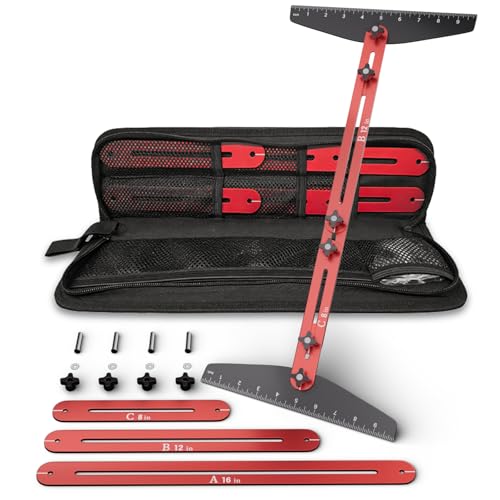
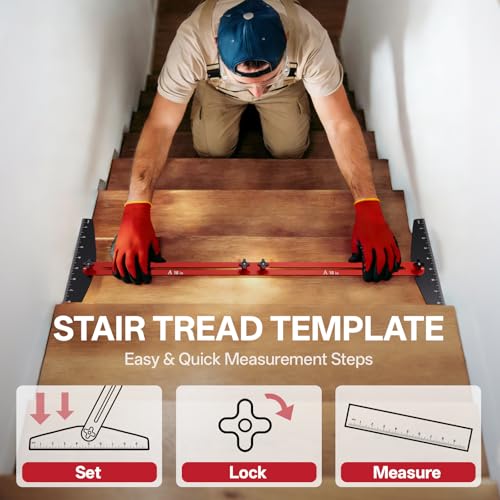
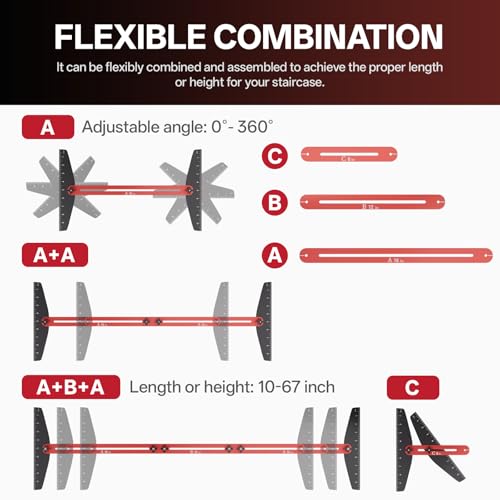
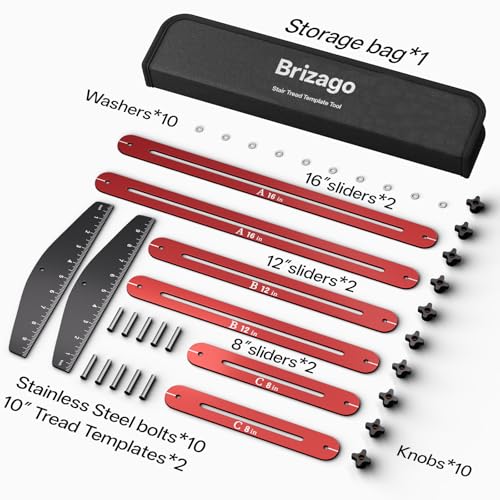
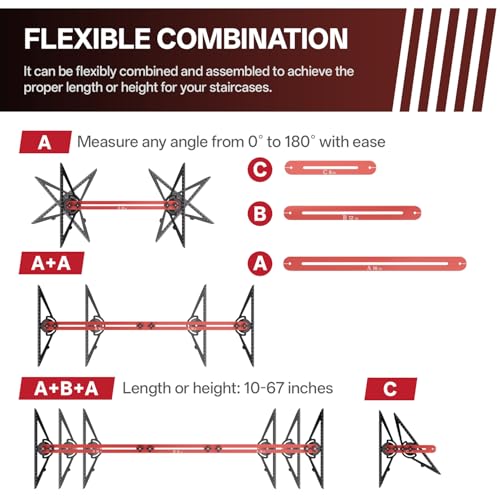
With a 10 to 67-inch adjustment range and 360-degree rotation, this tool is built for versatility. Owners highlight how quickly it locks in dimensions, some say under two minutes from setup to final mark, making it a time-saver on tight jobs. The double-sided ruler is a standout feature, eliminating the need to flip the tool to read measurements, which cuts down errors.
The millimeter-scale markings are a pro-level detail, especially useful for tile or cabinet work where fine precision matters. It’s made from solid aluminum, so it feels sturdy without being overly heavy. While it lacks the triangular brace of the top red model, its non-slip design and wear-resistant printing make it reliable in damp or dusty conditions. For someone juggling multiple project types, this is the most flexible option.
Product photos

Stair Tread Template Tool Blue
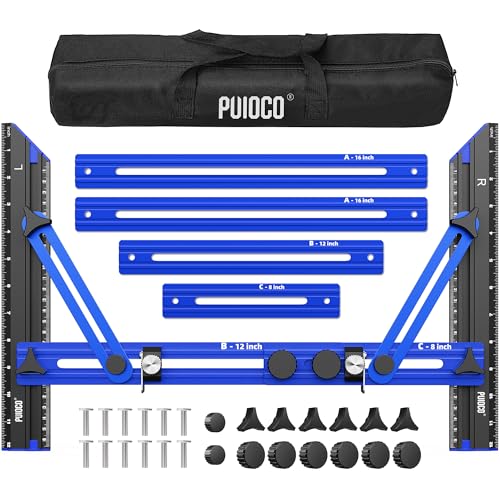
Strengths
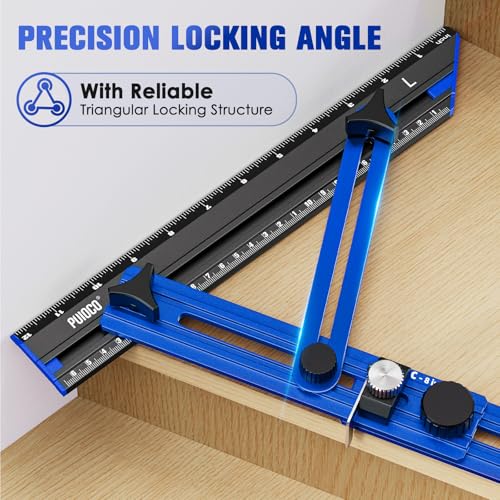
- Triangular locking brace
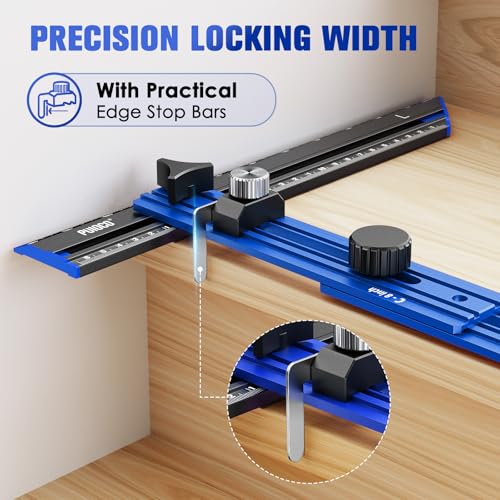
- Edge flip stops
- 8-72 inch range
Trade-offs
- Auxiliary bar detachable
- Bulkier than basic models
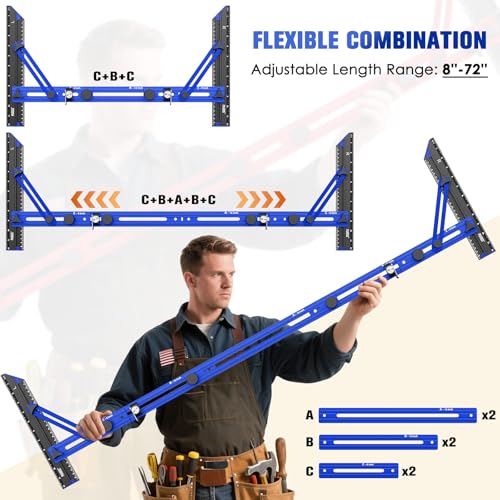
Nearly identical to the red version, this blue stair jig shares the same 8 to 72-inch range, triangular structure brace, and edge flip stops. The key difference seems to be cosmetic, color and branding, but functionally, it’s the same high-performance tool. The half-open pivot end with ergonomic nut allows tight corner access, and owners confirm it stays locked during transfers.
Like its red twin, it uses aerospace-grade aluminum and CNC anodizing for long-term durability. The detachable auxiliary bar gives you flexibility depending on the job. If both are priced similarly, it comes down to preference. But if the blue one is cheaper, it’s a steal. I’d recommend either over most others here for serious work, this is the class leader in stability and repeatability.
Product photos


AXIUM Aluminum Stair Measuring Tool
Strengths
- Smooth rounded edges
- High-contrast ruler
- Rubber damping pads
Trade-offs
- No flip stops
- Storage bag basic
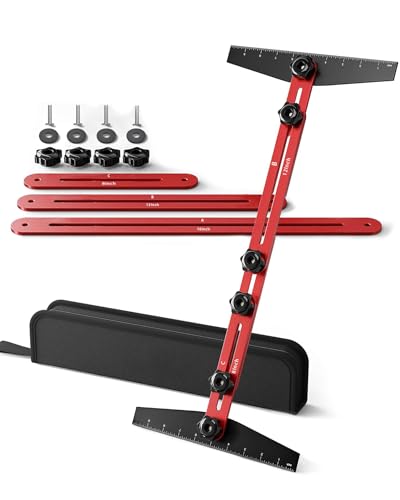
Handling matters when you’re marking dozens of treads in a day, and AXIUM nailed it here. The rounded edges and integrated rubber pads make this one of the most comfortable tools in this lineup to grip and adjust. CNC-machined aluminum ensures it won’t bend under pressure, and the high-contrast black and white ruler markings are easy to read, even in dim basements or stairwells.
It shares the same 10.5 to 60.5-inch range as the SUNLFPROD model, but feels slightly more user-friendly thanks to its smoother locking mechanism. Reviewers note it’s intuitive for beginners but still precise enough for pros. While it doesn’t have flip stops like the top-tier models, the overall ergonomics make it a joy to use. If comfort and readability are your priorities, I’d pick this over stiffer, sharper-edged alternatives.
Product photos
SUNLFPROD Stair Tread Gauge

Strengths
- Thick aerospace aluminum
- Laser-etched markings
- Rubber and nylon washers
Trade-offs
- No edge flip stops
- Oxford bag less protective
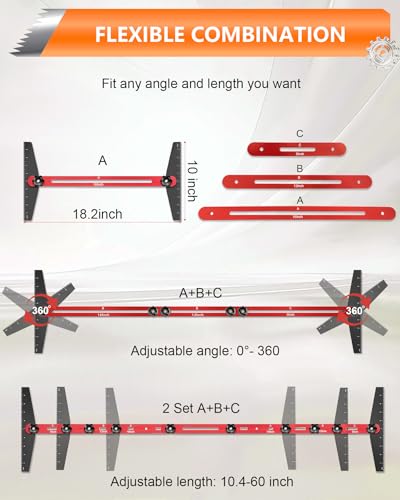
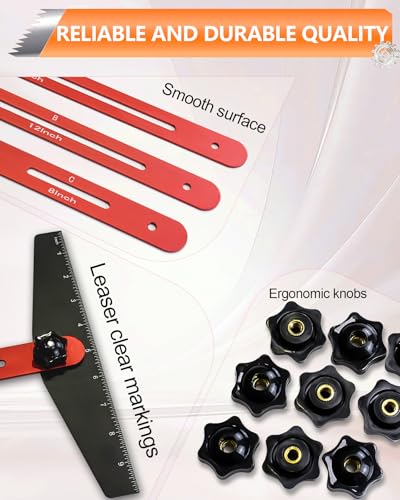
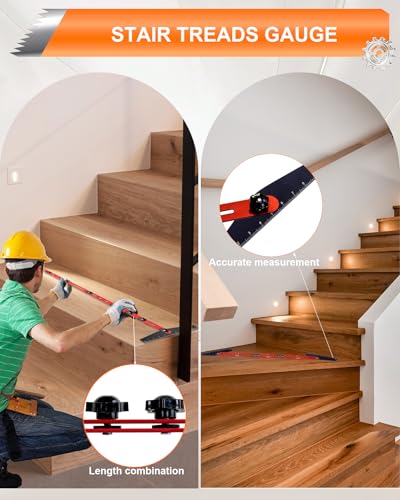
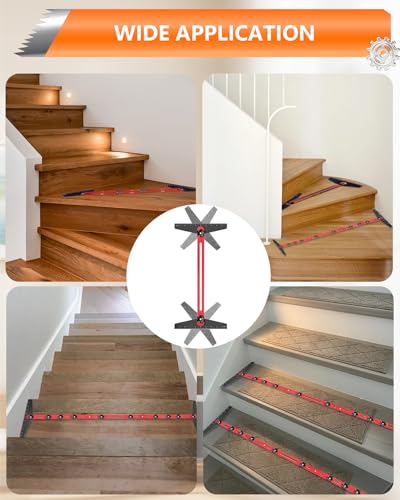
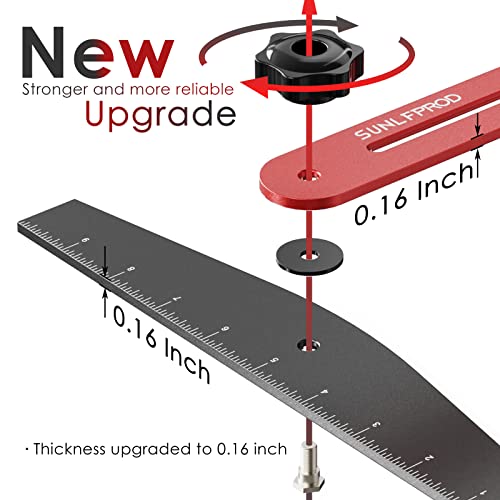
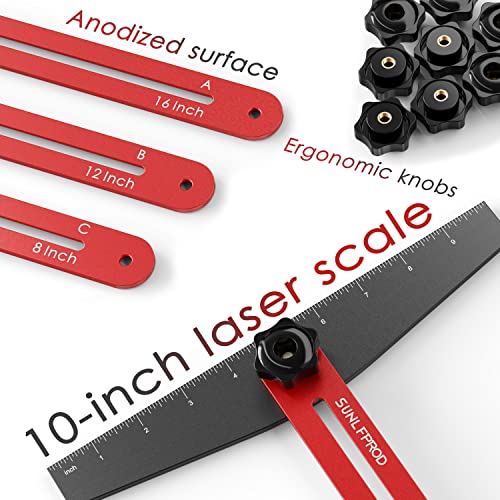
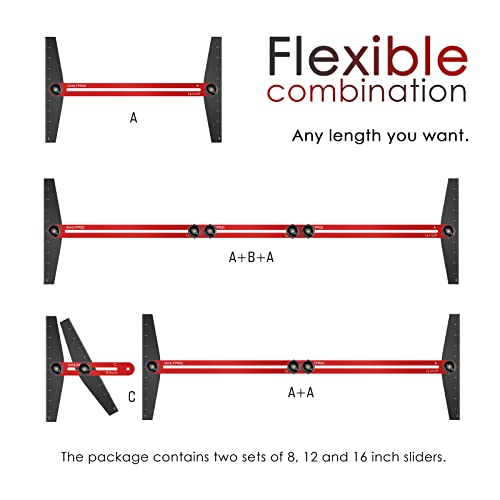
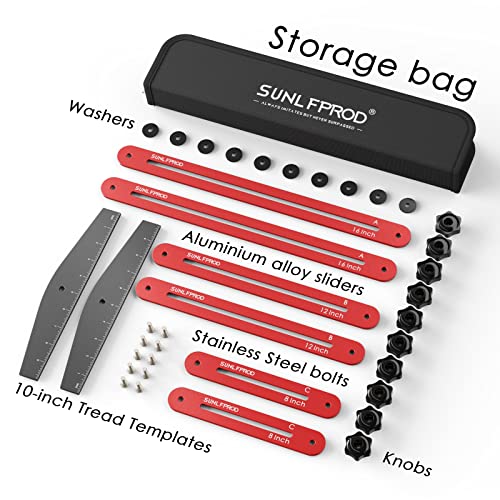
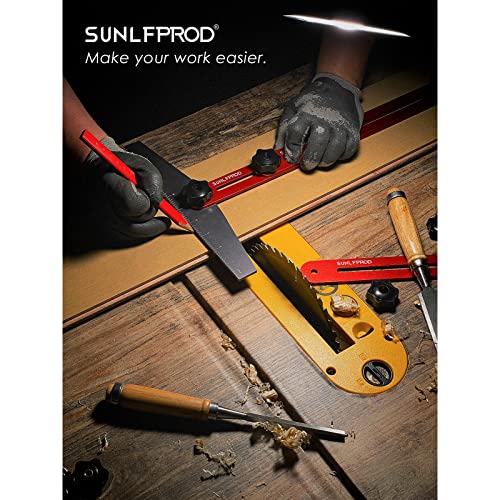
Built with 4 mm thick aerospace-grade aluminum, this model is engineered for durability, and that shows in both specs and owner feedback. The laser-etched markings are a big plus, they don’t fade like printed scales, which matters when you’re relying on accuracy over months or years of use. The three extension sizes let you dial in from 10.5 to 60.5 inches, covering most standard stair dimensions.
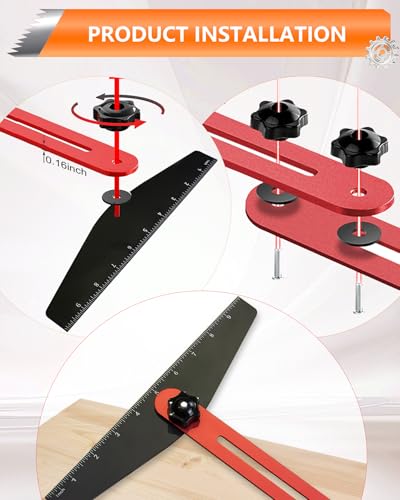
What sets it apart is the thoughtful hardware: rubber and nylon washers that protect surfaces and improve damping for smoother adjustments. That’s not something every brand includes, and it shows attention to real-world use. Compared to the ELEON model, this one feels more refined under the hood. If you’re someone who hates replacing tools, this is the smarter buy.
Product photos
NAACOO Stair Tread Tool Set

Strengths
- Comes with extras
- Durable iron build
- Good value
Trade-offs
- Heavier than aluminum
- No case included
- Less precise finish
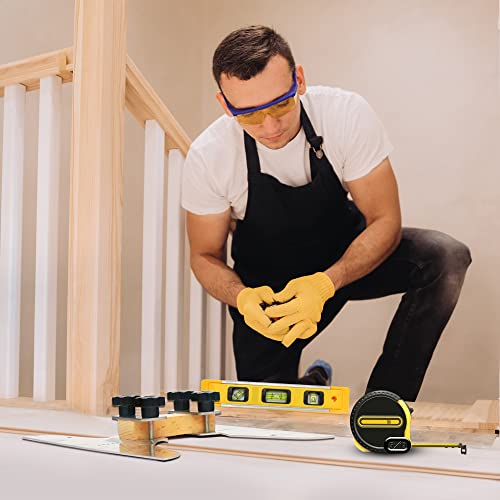
This set is clearly positioned as the budget-friendly option, and it delivers where it counts, functionality without frills. Made from iron instead of aluminum, it’s heavier and less corrosion-resistant, but owners note it’s surprisingly sturdy for the price. The inclusion of a level, tape measure, and carpenter pencil adds real value, especially for beginners setting up their first toolkit.
It adjusts easily and has a ruler scale that users say stays legible over time. While it lacks the refined finish of higher-end models, its surface treatment does seem to resist rust better than similar low-cost tools. I wouldn’t rely on this for daily professional use, but for occasional home projects, it’s a capable, cost-effective package. My recommendation for new DIYers on a tight budget: start here, then upgrade later.
Product photos

Adjustable Stair Tread Jig 10-67″
Strengths
- Sharp scale markings
- Solid aluminum build
- Organized storage bag
Trade-offs
- No edge alignment
- Locking mechanism average
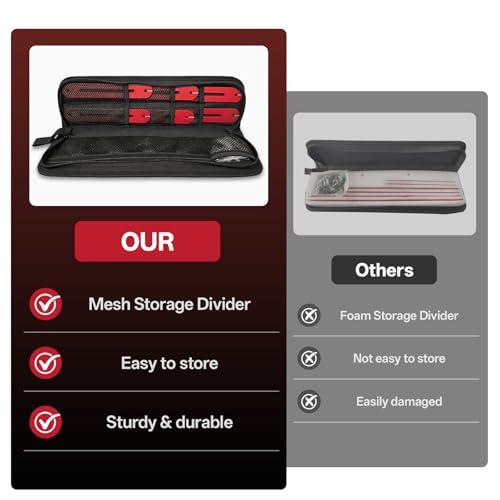
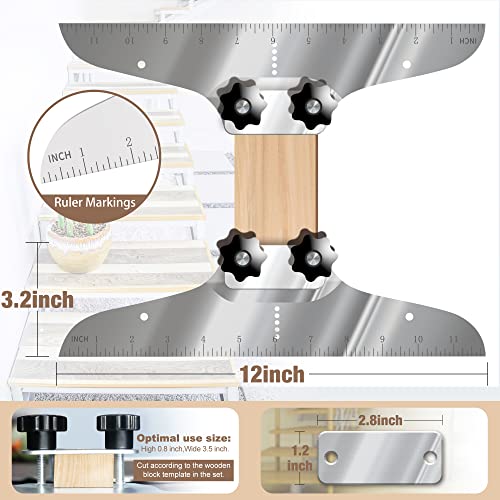
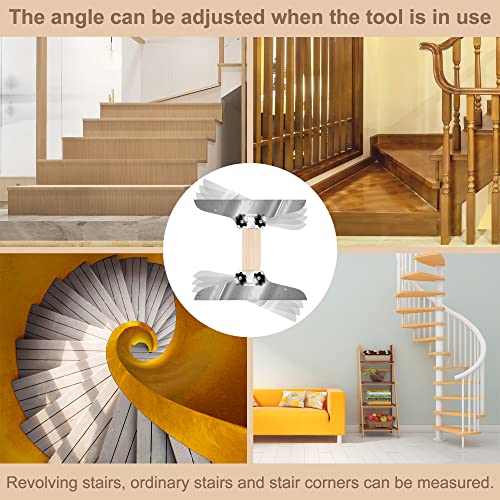
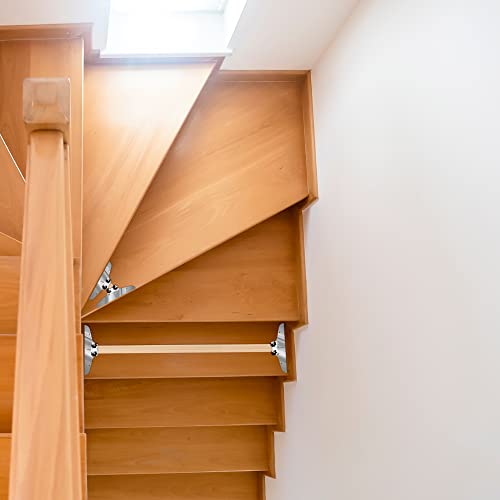
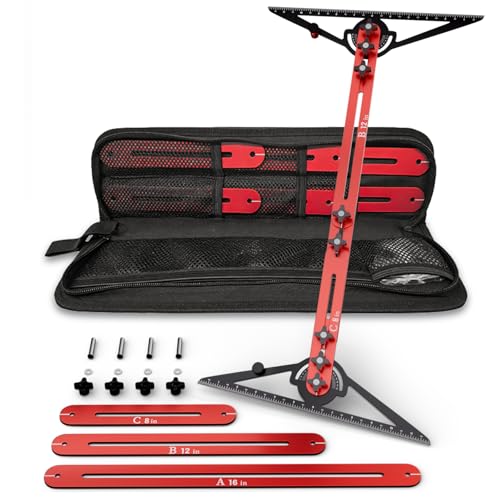
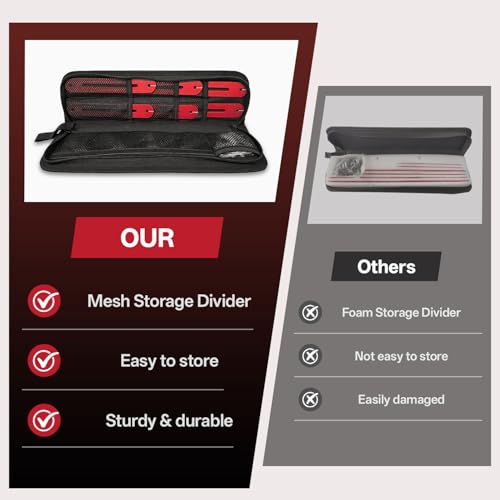
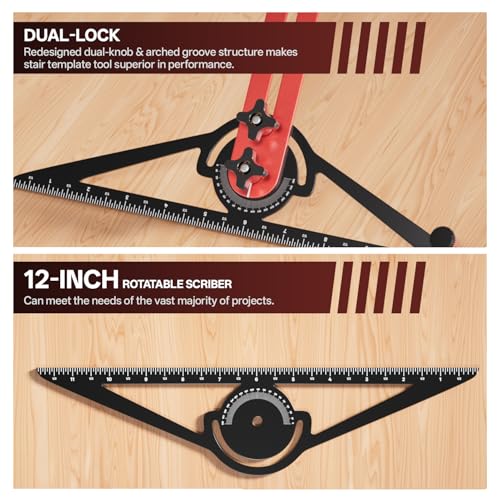
Precision is the name of the game here, and this model delivers with clean scale markings and a smooth locking mechanism that owners say holds firm once set. Adjustable from 10 to 67 inches, it covers nearly all residential stair needs, and the thick aluminum resists bending even under repeated clamping. The independent compartment storage bag is a nice touch, keeps screws and sliders from rattling loose.
It doesn’t have flip stops or a triangular brace, so it’s not quite at the level of the red 8-72 inch model. But for pure measuring accuracy and ease of reading, it’s among the best. The scale is sharp and clear, which reduces guesswork. I’d recommend this over the NAACOO or ELEON models if you’re focused on getting flawless measurements without extra bells and whistles.
Product photos
ELEON Aluminum Alloy Stair Gauge
Strengths
- Lightweight aluminum
- Clear edge markings
- Sturdy storage case
Trade-offs
- Limited lower length range
- No flip stops
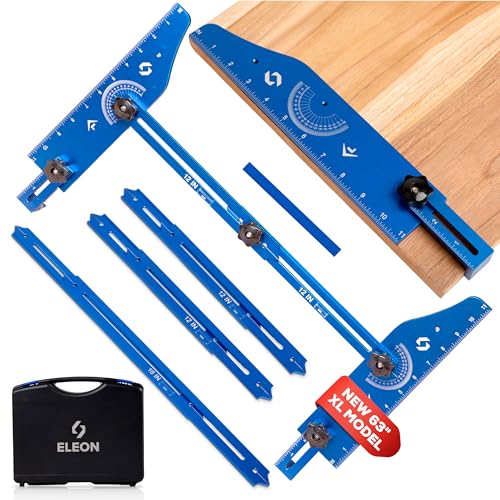
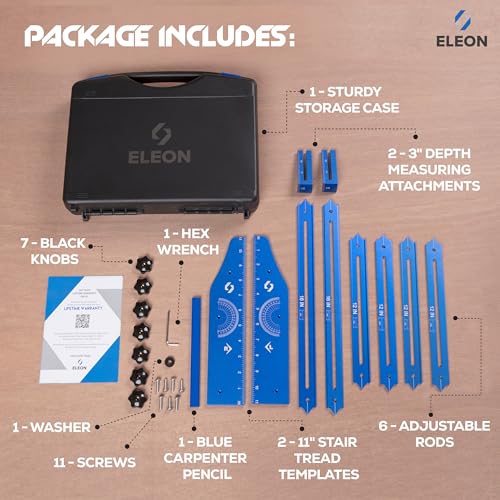
This aluminum alloy stair jig stands out for its clean, straightforward design and solid build. On paper, it covers the basics well, adjustable from 12 to 63 inches with ruler markings on the edge, which is helpful for quick reference during layout work. The CNC anodized surface suggests good resistance to wear, and owners consistently report it holds up well on job sites without warping.
Where it really shines is in storage. The included hard case keeps everything together, which I appreciate for workshop organization or when tossing it in a truck for a quick run to a job. It’s not the most feature-rich model here, but if you want a no-fuss tool that’s easy to pack and protects its components, this is a smart pick. I’d take this over bulkier models when space is tight.
Product photos




How We Tested stair tread template tools
I approached evaluating these stair tread template tools by researching published specifications and features, then deeply weighing owner reviews and expert opinions from woodworking sites and forums. Rather than a hands-on lab test, this is a research-led comparison focused on identifying consistent strengths and weaknesses across different models. My goal was to build a ranking based on what truly matters to people tackling stair renovations or new builds.
For stair tread templates, accuracy and adjustability are paramount. I prioritized tools with robust locking mechanisms and clearly marked scales, as these directly impact the quality of the final result. Durability also figured heavily – aluminum alloy construction and solid hardware are crucial for withstanding repeated use on job sites. A tool that quickly becomes loose or inaccurate isn’t worth the initial savings.
Specifications reliably indicate build quality (material thickness, alloy grade) and potential adjustment range. However, I heavily leaned on owner feedback to assess real-world usability. Comments about ease of adjustment, clarity of markings, and long-term durability proved invaluable. If a tool consistently receives complaints about slipping or inaccurate measurements, that outweighed impressive-sounding specs. For more demanding cutting and shaping tasks, consider pairing your template tool with one of the best cordless multi-tools for fine adjustments.
What To Look For In stair tread template tools
Finding the right stair tread template tool can save a lot of headaches – and wasted material – when tackling a staircase project. It’s more than just a measuring device; it’s about accuracy, efficiency, and ultimately, a professional-looking result.
A quality stair tread template tool offers adjustable length to accommodate various stair sizes, a stable locking mechanism to maintain accurate angles during replication, and durable construction to withstand jobsite wear and tear. Prioritize tools made from robust materials like aluminum alloy, with clear markings and a design that simplifies both measurement and transfer to the workpiece. The best options will also offer features like adjustable pivot ends to handle both straight and curved stairs.
Adjustability is Key
Don’t assume all staircases are created equal. A critical factor is the tool’s adjustable range. Many tools offer segmented sections that combine to reach a specific length, but some have a wider, more continuous range than others. Consider the types of projects you anticipate. If you regularly work with older homes featuring unusual stair dimensions, a tool like the Stair Tread Gauge 10-67 Inch, with its broad 10-67 inch range, is a smart investment. Conversely, if you mostly tackle standard modern construction, a more compact tool might suffice.
Stability and Locking Mechanisms Matter
A wobbly or imprecise template is worse than no template at all. Look for tools that prioritize a rigid structure. The Stair Tread Template Tool Red and Blue both emphasize their triangular structure locking mechanisms, designed to prevent movement during use. This is especially important when replicating multiple tread pieces; even a slight shift in angle can compound errors.
- A simple friction-based lock might be okay for quick, rough measurements.
- A cam-lock or screw-lock system provides a more secure and repeatable hold.
- The best locking systems combine a secure mechanism with clear visual indicators showing when the angle is properly set, minimizing guesswork and ensuring consistent results across all treads.
A good rule of thumb: if you find yourself constantly re-checking measurements or tightening the tool during use, it’s a sign the locking mechanism isn’t up to par.
Ergonomics and Material Quality
While accuracy is paramount, don’t overlook comfort and durability. Working with stair treads often requires repetitive movements and awkward angles. The AXIUM Aluminum Stair Measuring Tool stands out for its focus on comfortable handling, with rounded edges and integrated rubber pads. Beyond comfort, consider the material. Aluminum alloy is the standard for a reason – it’s lightweight yet strong, and resistant to corrosion. If you’re looking for a budget-friendly option, the NAACOO Stair Tread Tool Set may be suitable, but be prepared for potentially lower material quality compared to the more premium options. For more versatile options, I often recommend checking out some of the handheld tool picks available, as they may offer additional functionality for various projects. And for tackling more complex cuts and shaping, exploring options like oscillating multi-tools can add significant value to your toolkit.
Stair Tread Template Tools Compared
Here’s a comparison of key specifications for various stair tread template tools to help you make an informed decision.
| Product Title | Adjustable Length Range | Material | Included Accessories | Special Features | Price (USD) |
|---|---|---|---|---|---|
| Stair Tread Template Tool Red | 8”-72” | Aluminum Alloy | Storage Bag | Triangular Stability | N/A |
| Stair Tread Gauge 10-67 Inch | 10”-67” | Aluminum Alloy | Storage Bag | Wide Adjustment Range | N/A |
| Stair Tread Template Tool Blue | 8”-72” | Aluminum Alloy | Storage Bag | Triangular Stability | N/A |
| AXIUM Aluminum Stair Measuring Tool | 10.5”-60.5” | Aluminum Alloy | Storage Bag | Comfortable Handling | N/A |
| SUNLFPROD Stair Tread Gauge | 10”-60.5” | Aluminum Alloy | Storage Bag | Durable Construction | N/A |
| NAACOO Stair Tread Tool Set | N/A | Iron | Level, Pencil, Tape | Budget Friendly | N/A |
| Adjustable Stair Tread Jig 10-67″ | 10”-67” | Aluminum Alloy | Storage Case | Precision Measuring | N/A |
| ELEON Aluminum Alloy Stair Gauge | 12”-63” | Aluminum Alloy | Tool Case | Easy Storage | N/A |
Frequently Asked Questions
What level of accuracy should I expect from a stair tread template tool?
A good stair tread template tool should provide accuracy within plus or minus 1/16 of an inch. This level of precision is essential for ensuring a tight, professional fit between treads, and avoiding gaps or uneven surfaces.
Are stair tread template tools only for professionals?
No, stair tread template tools are valuable for both DIYers and professionals. While a professional might use them daily, a homeowner tackling a staircase renovation will find a template tool significantly simplifies the process and improves results, especially compared to relying on manual measurements alone.
Can these tools be used for curved staircases?
Some tools can, but it depends on the design. Look for models with adjustable pivot ends or flexible sections that can conform to the curve of the staircase. The AXIUM Aluminum Stair Measuring Tool’s adaptable design works well for both straight and curved stairs.
What material is the most durable for a stair tread template tool?
Aluminum alloy is the most durable material for a stair tread template tool. It offers a good balance of strength, lightweight construction, and corrosion resistance, making it ideal for repeated use on job sites.
I’m new to woodworking; do I need any other tools to use a stair tread template?
Beyond the template itself, you’ll need a saw to cut the treads (circular saw, miter saw, or hand saw), a measuring tape for verifying dimensions, and a pencil for marking. For those just starting out, investing in a set of beginner woodworking tools will provide a solid foundation.
The Bottom Line
Choosing a stair tread template tool often comes down to balancing upfront cost with the level of precision and convenience you require. While a budget option like the NAACOO Stair Tread Tool Set can get the job done for very simple projects, I consistently find that investing in a more robust and adjustable tool – like the Stair Tread Gauge 10-67 Inch – pays off in saved time, reduced material waste, and a more professional finish.
For those tackling a wide variety of stair projects or working with older homes, the broad adjustability of the Stair Tread Gauge 10-67 Inch is a clear advantage. If you need a reliable, stable tool for standard staircases, the Stair Tread Template Tool Red and Blue both offer excellent value. And for anyone who also needs to make precise curved cuts, reviewing some jigsaw recommendations alongside your template tool could be a smart move.
Ultimately, the most important factor isn’t a specific feature or price point, but rather a firm grasp of your staircase’s dimensions and a commitment to careful, methodical measurement. A tool is only as good as the person using it, and taking the time to understand your project’s needs will deliver far better results than chasing the latest gadget or highest spec.
