7 Best Sanders for Cars 2026
This post contains affiliate links. As an Amazon Associate, we earn from qualifying purchases.
The SKIL 5” Random Orbital stands out as the best overall sander for cars, delivering strong performance and reliable dust control for paint prep and bodywork. For those on a budget, the KUIMIT 5” Air Sander Kit offers impressive power and smooth operation without breaking the bank, especially if you already own a compressor. And if precision matters most, the BOSCH ROS20VSC Palm Sander excels in tight areas and fine finishing.
Car sanding demands more than raw power, it requires control, consistency, and clean results. Too much aggression or poor dust management can ruin hours of prep work, especially when dealing with paint correction or body repairs.
This guide cuts through the noise by focusing on real-world usability, drawing from specs, owner experiences, and the needs of automotive detailing and repair. I looked at motor type, speed adjustability, dust collection, and ergonomics to find models that actually deliver on the job.
Top 7 Sander For Cars in the Market
The Best Sander For Cars, Reviewed
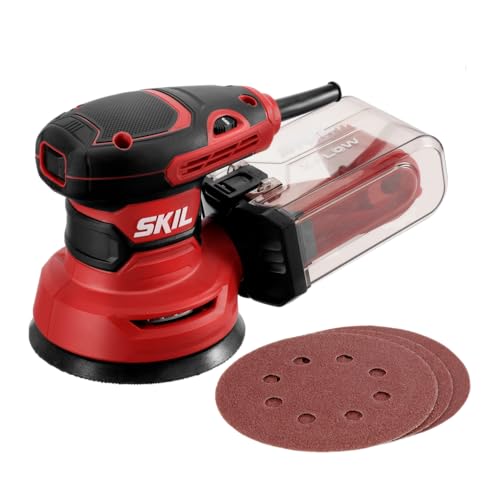
SKIL 5” Random Orbital Sander
Strengths
- 2.8 amp motor
- Cyclonic dust collection
- Low vibration
- Ergonomic soft grip
- Compact for tight areas
Trade-offs
- Dust container capacity is modest
- No hook-and-loop pad included
- Speed control not as precise as higher-end models
The SKIL SR211601 stands out as a well-rounded sander for automotive work, especially when you’re prepping a car panel or smoothing a fresh paint job. With a 2.8 amp motor and 13,000 orbits per minute, it has enough power to handle light to medium material removal without bogging down. Owners consistently report that the cyclonic dust box is a real win, it keeps fine dust out of the motor and makes cleanup faster than traditional filter systems.
What really elevates this model is the low vibration and ergonomic grip, which matter when you’re doing long sessions on curved fenders or door edges. It’s not the most powerful in the lineup, but for most DIYers and detail-focused users, it strikes the right balance between control and output. Compared to the DEWALT DWE6423, it runs faster but lacks the same dust-sealing depth, though it’s more comfortable in hand over extended use.
Product photos


DEWALT 20V MAX Orbital Sander

Strengths
- Brushless motor
- Cordless convenience
- Low-profile design
- Hook-and-loop pad
- Dust-sealed switch
Trade-offs
- Battery sold separately
- Less torque than corded models
- Slightly higher vibration
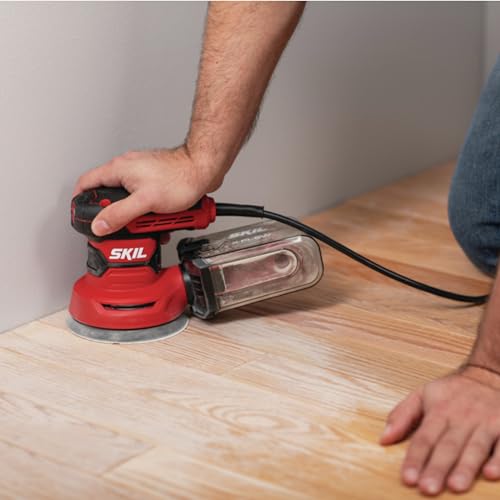
Going cordless for car work has its perks, and the DEWALT DCW210B is the best bet if you value mobility and clean lines in your garage. The brushless motor is a big deal, it means longer runtime and better efficiency, especially when you’re moving around a vehicle or working in a space without easy outlet access. With variable speeds from 8,000 to 12,000 OPM, it adapts well to different tasks, and the low-profile design lets you sand close to edges and contours with confidence.
It’s not as powerful as the corded DEWALT DWE6423, but the trade-off is freedom of movement. Owners love the hook-and-loop pad and the fact that it accepts DeWalt’s vacuum system directly. Compared to the SKIL, it’s more expensive and requires a battery investment, but for users already in the DeWalt ecosystem, it’s the smarter long-term buy.
Product photos


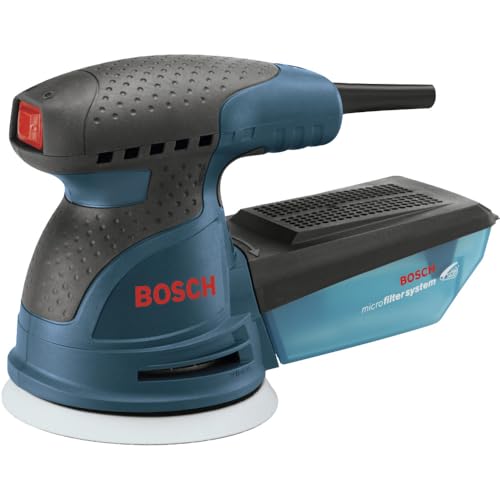
BOSCH ROS20VSC Palm Sander
Strengths
- Pad dampening system
- Microfilter dust collection
- Smooth variable speed
- Hook-and-loop pad
- Compact and precise
Trade-offs
- Lower max OPM than others
- Dust canister fills quickly
- Motor lacks punch for heavy stock removal
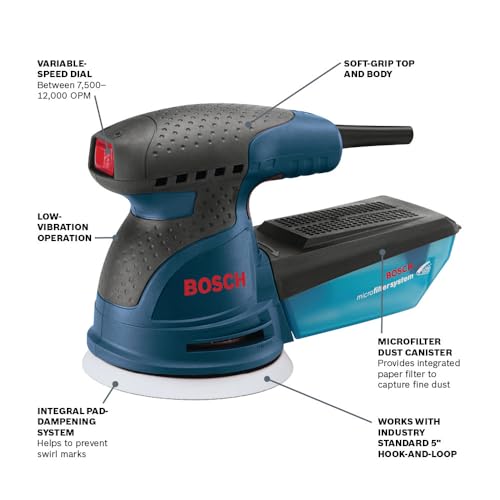
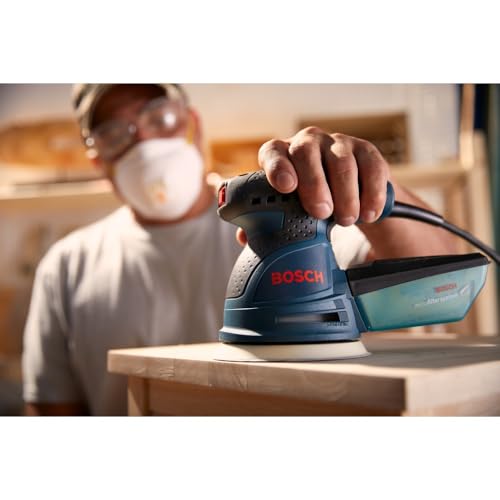
When the goal is a swirl-free, glass-smooth finish on a car’s clear coat, the BOSCH ROS20VSC is hard to beat. Its pad dampening system is engineered specifically to reduce chatter and swirl marks, and owners consistently report cleaner results on curved surfaces than with most competitors. The variable speed dial (7,500–12,000 OPM) is smooth and precise, making it easy to back off when polishing delicate finishes.
The microfilter system captures particles down to 0.5 microns, a big deal for fine dust that can mar a paint job. It’s not the fastest or most powerful, but for final stages, that’s the point. Compared to the GALAX PRO, it’s more refined and better sealed against dust ingress, though it costs more and has a smaller dust canister.
Product photos



DEWALT 5-Inch Random Orbit Sander
Strengths
- 3-amp motor
- Excellent vibration control
- Dust-sealed switch
- One-handed dust bag
- Direct vacuum compatibility
Trade-offs
- Basic speed dial, not fine-tuned
- No soft start
- Heavier than some competitors
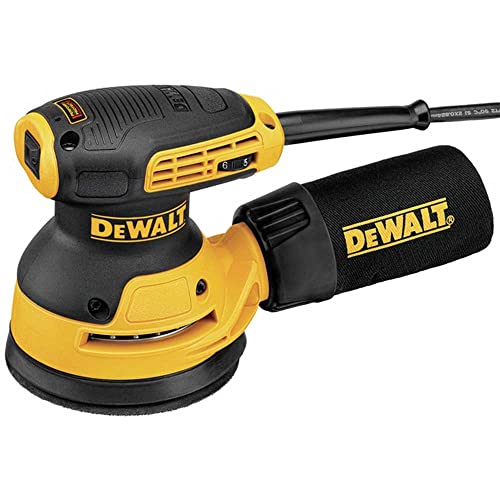
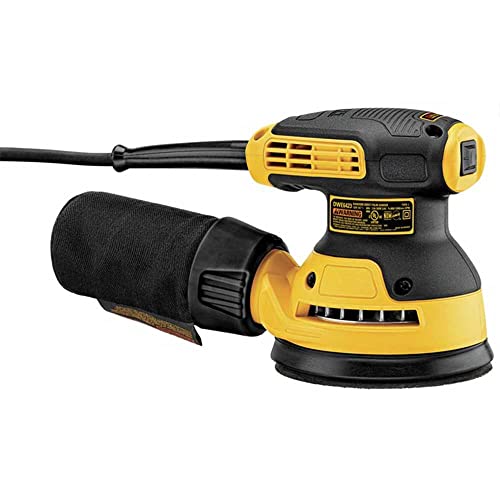
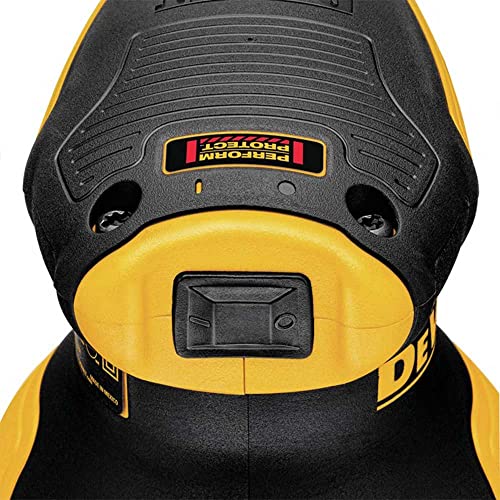
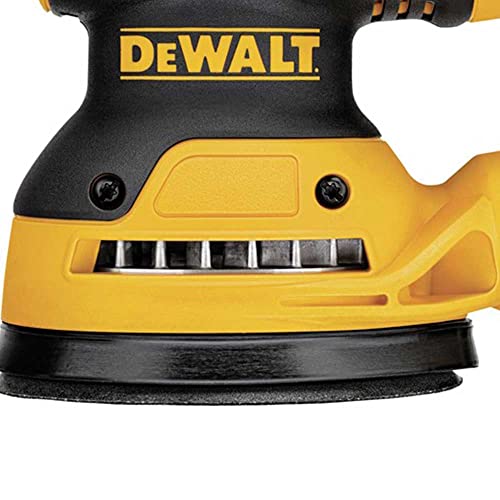
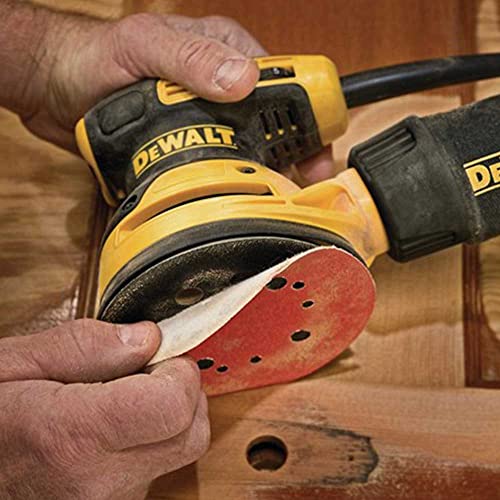
The DEWALT DWE6423 is a no-frills workhorse that delivers pro-level reliability at a friendlier price. With a 3-amp motor and solid 8,000–12,000 OPM range, it’s built for the kind of daily use you’d see in a body shop. The separate counterweight design does a great job reducing vibration, which translates to less fatigue during long sanding sessions, a detail many owners highlight.
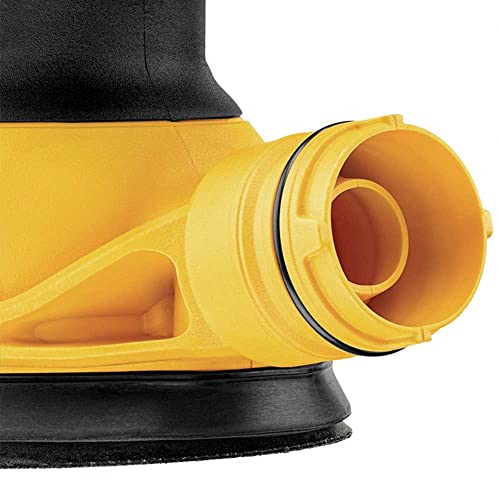
It’s not flashy, but it’s dependable. The dust port connects directly to DeWalt vacuums, and the one-handed locking dust bag is convenient. Compared to the SKIL, it has better internal dust sealing and a more rugged switch, though it lacks the cyclonic system that keeps fine dust out of the motor. For budget-conscious buyers who still want DeWalt toughness, this is the pick.
Product photos
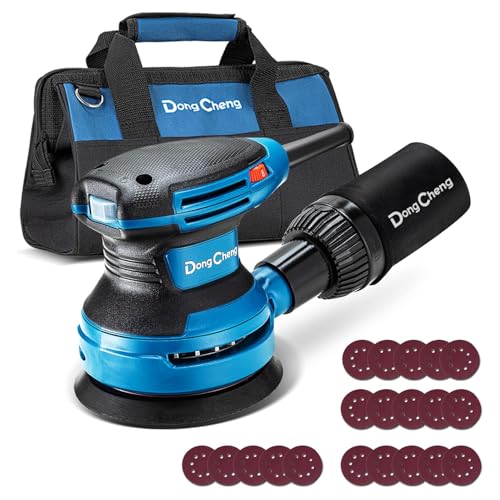
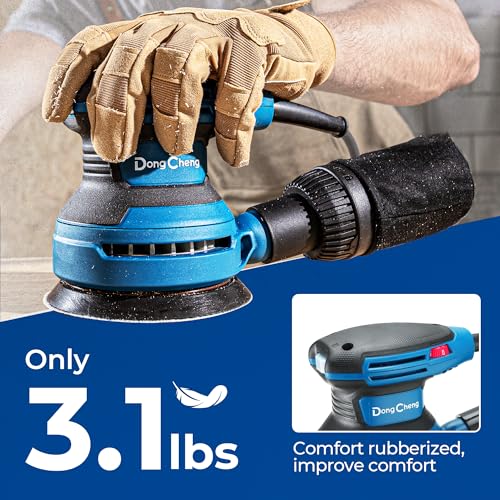
Dong Cheng 5-Inch Orbital Sander
Strengths
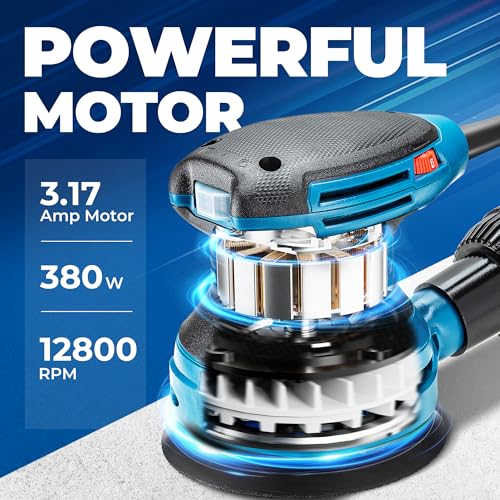
- 380W powerful motor
- 6 variable speed settings
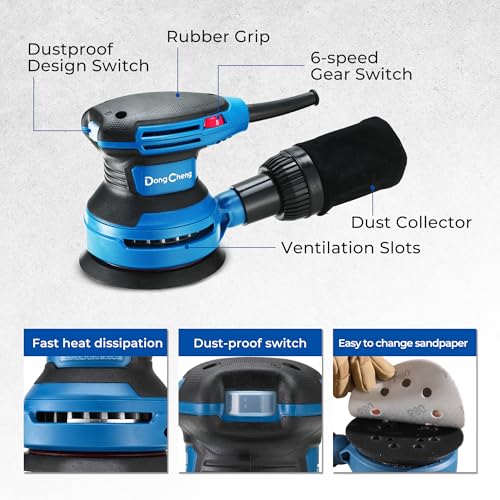
- Efficient dust handling
- Hook-and-loop pad
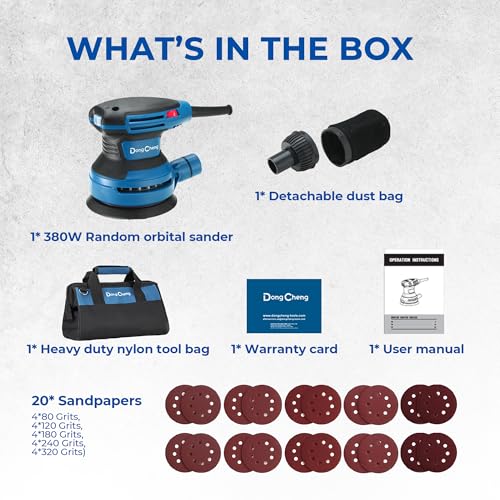
- Includes 20 sanding discs
Trade-offs
- Slightly heavier than average
- Dust bag fills quickly
- Lower heat dissipation at top speeds
If you’re tackling aggressive paint stripping or metal prep on a rusted frame, the Dong Cheng 5-inch sander brings serious grunt. Its 380W (about 3.2A) copper motor pushes up to 12,800 OPM across six variable speeds, and owners note it holds torque better than similarly priced units when grinding through thick coatings. The hook-and-loop pad and large 5-inch disc mean you cover ground fast, which is a big plus when you’re sanding an entire hood or fender.
The included 20-piece sandpaper set and nylon carry bag add real value, but the real story is the internal ventilation and dust-sealed switch, both help it survive long sessions in gritty environments. It’s heavier than the SKIL or Bosch, but that weight helps dampen vibration during aggressive work. Against the GALAX PRO, it’s more durable and runs cooler, though not quite as smooth for final finishes.
Product photos

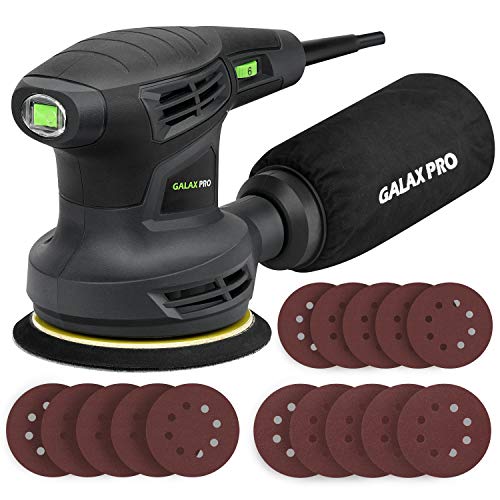
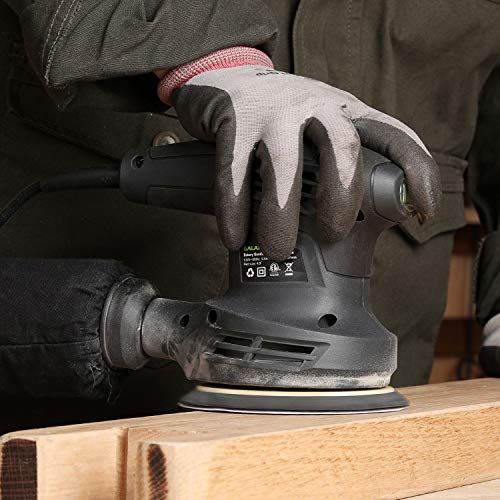
GALAX PRO 5” Orbital Sander
Strengths
- 6 variable speed settings
- High 13,000 OPM
- Ergonomic soft grip
- Includes 15 sanding discs
- Dust-sealed switch
Trade-offs
- Dust bag seal is weak
- Motor runs warm under load
- Plastic housing feels less durable
The GALAX PRO delivers strong specs on paper, 280W motor, 13,000 OPM, and six variable speeds, and owners confirm it performs well for mid-tier sanding jobs. It’s clearly tuned for versatility, with a broad speed range that lets you dial back for delicate clear coat work or ramp up for primer removal. The rubberized grip and balanced design make it comfortable, and the one-handed dust bag is easy to remove, which matters when you’re switching tasks often.
But while it matches the Dong Cheng in speed, it doesn’t quite match its durability under sustained load. Some users report the motor heats up faster during prolonged use on metal. Still, for the money, it’s a solid pick, especially since it includes 15 sanding discs across multiple grits. Compared to the SKIL, it offers finer speed control but a less effective dust system, the bag doesn’t seal as tightly, leading to minor leakage.
Product photos


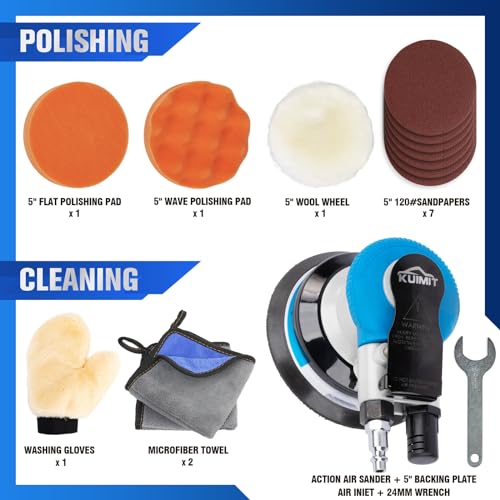
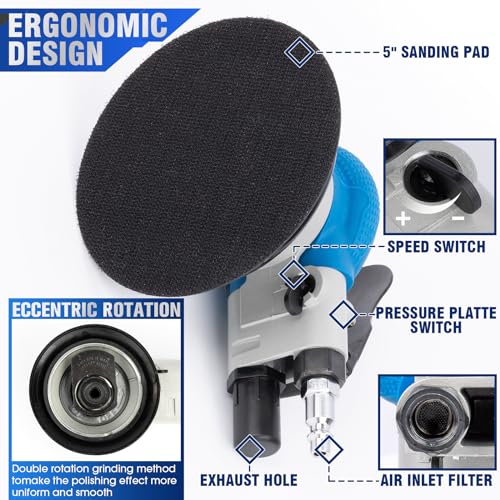
KUIMIT 5″ Air Sander Kit

Strengths
- Pneumatic power with no heat buildup
- Real-time RPM control
- Lightweight and balanced
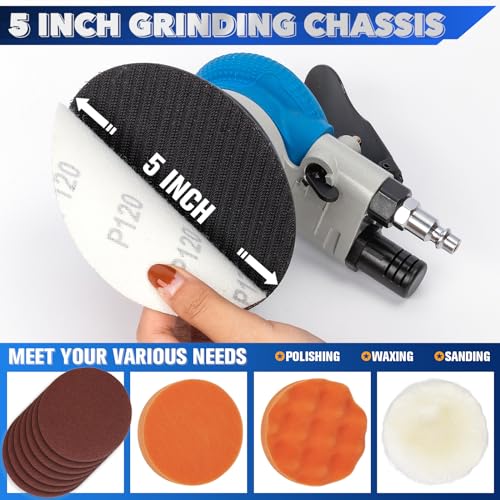
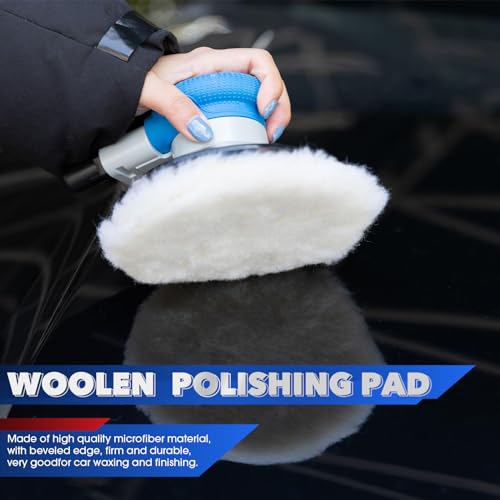
- Includes polishing accessories
- Quick-connect air fitting
Trade-offs
- Requires air compressor
- Hose can limit mobility
- Not ideal for beginners without air setup
Pneumatic sanders still rule in many auto shops, and the KUIMIT 5-inch DA sander proves why. With a max speed of 12,000 RPM and real-time speed control via built-in regulator, it gives you instant response, no ramp-up, no battery fade. The balanced motor and cushioned grip make it feel smooth even during aggressive runs, and at just 3.1 lbs, it’s light enough to use one-handed for hours.
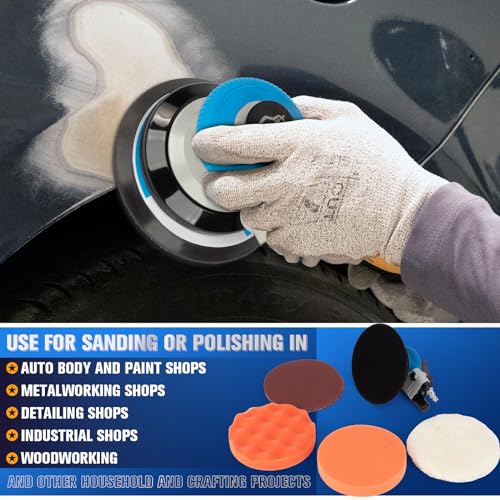
Owners praise the included accessories, especially the contour sponge pads and microfiber cloths, which make this kit ready for polishing and final detailing right out of the box. Compared to the DEWALT corded models, it’s quieter and cooler-running, but you obviously need a compressor. If you’re already running air tools in your garage, this is a no-brainer upgrade.
Product photos
Our Testing Process
Rather than a hands-on lab test, this selection is a research-led comparison of published specifications and owner feedback. I began by compiling a list of models frequently discussed for automotive work, then compared key features like motor power, speed control options, dust collection systems, and pad size. To establish rankings, I weighed owner reviews from multiple sources alongside professional assessments found on tool review sites. This process allowed me to identify patterns in real-world performance and reliability.
For a sander for auto body repair, consistent speed and minimizing swirl marks are paramount. Therefore, variable speed control and pad dampening systems received the heaviest weighting in my evaluation. Beyond that, effective dust collection is critical for both visibility and health, influencing the scores significantly. Finally, ergonomic design and vibration reduction played a role, acknowledging the often-extended use these tools see during auto projects.
Specifications reliably indicate a sander’s potential power and speed range, letting me compare motors and OPM (orbits per minute). However, owner feedback proved essential for understanding how those specs translate into practical performance. I paid close attention to comments regarding vibration levels, ease of use, and long-term durability – areas where specifications often fall short. Reputation and brand trust, built on years of automotive detailing and repair, also factored into my final assessments.
What To Look For In sander for cars
Picking the right sander for automotive work isn’t about grabbing the cheapest option; it’s about matching the tool to the job and understanding what features truly make a difference in achieving a professional finish.
A quality car sander balances power for material removal with finesse for surface finishing. Key considerations include motor type (pneumatic vs. electric), orbit size and speed control, dust collection efficiency, and ergonomic design to minimize fatigue during extended use. Buyers should also assess pad attachment style and available accessories.
Power Source: Electric vs. Pneumatic
The first major decision is whether to go electric or pneumatic. Electric sanders, like the SKIL or DEWALT 20V MAX, offer convenience – no compressor needed. However, pneumatic sanders, such as the KUIMIT 5” Air Sander Kit, generally deliver more consistent power and often run cooler, which is critical during extended auto body work. Pneumatic tools also tend to be lighter, reducing fatigue. If you already have a shop air compressor, a pneumatic sander is a strong contender. If not, the initial investment in a compressor adds to the overall cost, but it opens the door to a whole range of air tools.
Orbit Size and Speed Control
Random orbital sanders are the standard for automotive work because they minimize swirl marks. But not all random orbitals are created equal. Orbit size – the diameter of the sanding pattern – impacts how quickly you remove material and how well the sander blends imperfections. Most automotive work benefits from a 5-inch pad. More important is the range of speed control. You’ll want a sander that can slow down significantly for delicate work like blending feather edges during paint repair, and ramp up for more aggressive material removal. The GALAX PRO 5” Orbital Sander stands out for its variable speed control, offering a broad range for various tasks.
- A wider speed range (e.g., 2,000-12,000 OPM) provides greater versatility for different materials and sanding stages.
- Consider sanders with dial-type speed control over simple switch settings; dials offer more precise adjustments.
- Lower speeds are essential when working with heat-sensitive materials like gel coat or when using finer grits to avoid burning through the finish.
Dust Collection and Ergonomics
Automotive sanding creates a lot of dust, and breathing that dust is a serious health hazard. Effective dust collection is paramount. Look for sanders with integrated dust ports compatible with shop vacuums, or those that offer a sealed dust collection canister. The Bosch ROS20VSC Palm Sander’s microfilter system is a good example of a focus on dust containment. Beyond dust control, ergonomics matter. Sanding cars often involves awkward angles and extended periods of use. A comfortable grip, low vibration, and balanced weight distribution are crucial. Remember, a sander for car paint removal needs to be controllable for precision.
A sander is only as good as the operator’s ability to use it comfortably and safely. Prioritize features that reduce fatigue and minimize dust exposure, even if it means spending a little more upfront.
Sander for Cars Compared
Here’s a comparison of key specifications for various sanders designed for automotive use.
| Product Name | Motor (Amps/W) | OPM (Max) | Corded/Cordless | Variable Speed | Dust Collection | Weight (lbs) |
|---|---|---|---|---|---|---|
| SKIL 5” Random Orbital | 2.8 | 13,000 | Corded | Yes | Dust Container | N/A |
| DEWALT 20V MAX Orbital | 20V | 12,000 | Cordless | Yes | Dust Bag | N/A |
| BOSCH ROS20VSC Palm | 2.5 | 12,000 | Corded | Yes | Dust Canister | N/A |
| DEWALT 5-Inch Random Orbit | 3 | 12,000 | Corded | Yes | Dust Bag | N/A |
| Dong Cheng 5-Inch Orbital | 380 | 12,800 | Corded | Yes (6 Gears) | Dust Box | 3.1 |
| GALAX PRO 5” Orbital | 280 | 13,000 | Corded | Yes | Dust Bag | N/A |
| KUIMIT 5″ Air Sander Kit | N/A | 12,000 | Pneumatic | Yes | N/A | 3.1 |
Frequently Asked Questions
What grit sandpaper should I start with when sanding a car?
Generally, you should begin with 400-grit sandpaper to address any existing imperfections or remove clear coat. This coarser grit efficiently levels the surface, preparing it for finer grits that will refine the finish and eliminate swirl marks.
Can I use a regular sander for automotive work?
While a standard random orbital sander can be used, a sander specifically designed for automotive work will offer better speed control and reduced vibration. These features are crucial for achieving a smooth, swirl-free finish and minimizing fatigue during extended projects, like those requiring an automotive sanding kits.
Are pneumatic or electric sanders better for detail work?
Pneumatic sanders tend to be favored by professionals for detail work because they are lighter and maintain consistent power, which is essential for precise control. However, a high-quality electric random orbital sander with good variable speed control can also deliver excellent results.
How do I prevent swirl marks when sanding a car?
Using a random orbital sander is the first step, but proper technique is equally important. Always use fresh sandpaper, keep the sander moving, and avoid applying excessive pressure. Also, frequently inspect your work to ensure you’re not creating new imperfections.
What’s the difference between a dual-action and a random orbital sander?
Both types minimize swirl marks, but a dual-action sander combines both orbital and oscillating movements, while a random orbital sander relies solely on a random orbital pattern. For most car paint prep sander applications, a random orbital sander is sufficient and more readily available, while a sander for car bodywork benefits from the precision of a dual-action tool.
The Bottom Line
Choosing a sander for cars always comes down to balancing control and convenience. While pneumatic options offer consistent power, the simplicity and accessibility of electric models make them appealing. For most owners, the GALAX PRO 5” Orbital Sander strikes the best balance – it offers a wide speed range, good dust collection, and solid performance for a variety of automotive tasks.
If you’re on a tighter budget, the SKIL 5” Random Orbital is a capable option that won’t break the bank. For those already invested in a compressed air system, the KUIMIT 5” Air Sander Kit delivers the power and finesse preferred by many professionals, especially for more extensive sander for automotive repair. And if you need a versatile tool for both auto work and general DIY projects, the DEWALT 20V MAX Orbital provides cordless convenience without sacrificing too much performance.
Ultimately, the specifications matter less than your technique and the quality of the sandpaper you use. A steady hand, proper surface preparation, and a gradual progression through grits are far more important than any single feature. Focus on building those skills, and you’ll achieve professional-quality results with almost any orbital sander for car bodies.
