8 Best Sanders for Auto Body Work 2026
This post contains affiliate links. As an Amazon Associate, we earn from qualifying purchases.
The SI FANG 2″ 3″ Mini Air Sander is the best overall for precision auto body work, especially when detail matters. For a budget-friendly option that still delivers solid performance, the UPWOOD 5 Inch Air Random Orbital Sander stands out, while the KUIMIT Pro-Grade 350W Brushless Sander offers the most versatility for those who want power without cords.
If you’ve ever tried smoothing a fender dent or prepping a panel for paint, you know how unforgiving metal and primer can be, a heavy hand or the wrong tool leaves marks that take forever to fix. The real challenge isn’t just removing material, it’s doing it evenly, cleanly, and without introducing new flaws.
This guide cuts through the noise by focusing on sanders that excel in control, finish quality, and reliability, based on specs, owner feedback, and what matters most in real auto body work. I looked at air versus electric, orbit size, dust control, and ergonomics to find models that deliver professional results without frustration.
Top 8 Sander For Auto Body Works in the Market
The Best Sander For Auto Body Works, Reviewed
SI FANG 2″ 3″ Mini Air Sander

Strengths
- High RPM
- Lightweight
- Low vibration
- Compact size
Trade-offs
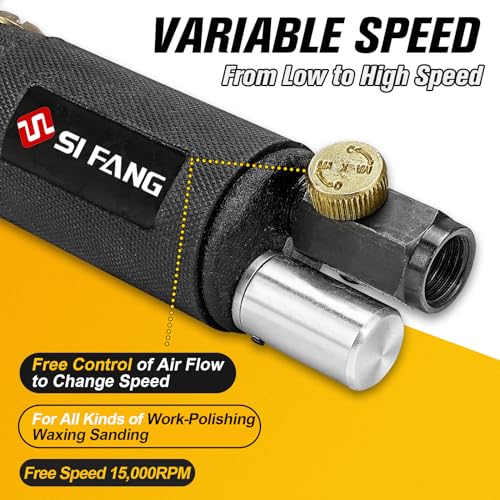
- No speed control
- Few included accessories
- Overkill for delicate work
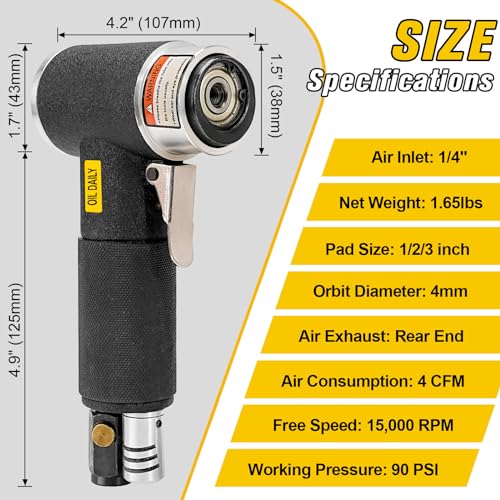
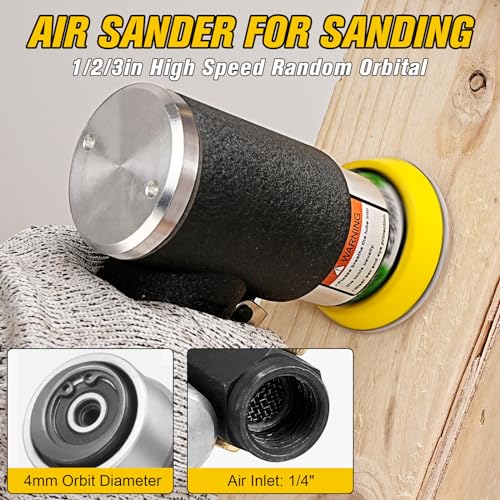
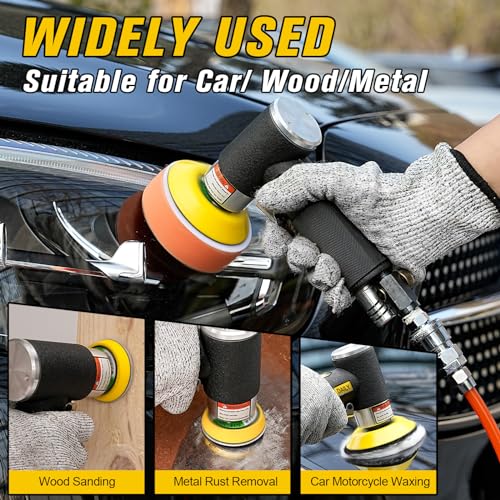
At 15,000 RPM, this SI FANG mini sander is fast, maybe too fast for beginners, but in the right hands, that speed translates to rapid material removal in tight areas. The 2-inch and 3-inch pads make it adaptable, and the low vibration rate is noticeable compared to older micro sanders that feel like they’ll shake apart. It’s lightweight and fits easily in cramped engine bays or inside door shells, which is exactly where you need it.
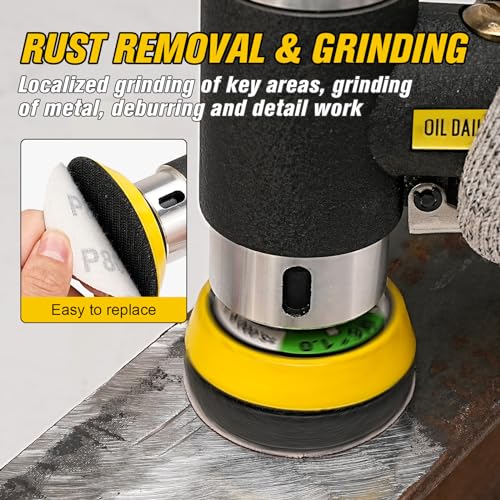
Owners report it’s great for spot repairs and weld blending, but the high RPM can be hard to control on delicate finishes. It doesn’t come with many accessories, so you’ll need to buy discs and pads separately. Compared to the NuoDunco, it’s less flexible in pad size and lacks speed control. Still, for pure performance in a tiny package, it’s compelling. I’d call it the best overall mini air sander if you already know how to feather a repair.
Product photos
Low Noise 5/6 Inch DA Sander
Strengths
- Quiet operation
- Adjustable speed
- Lightweight
- 5/6-inch pads
Trade-offs
- No included discs
- No storage case
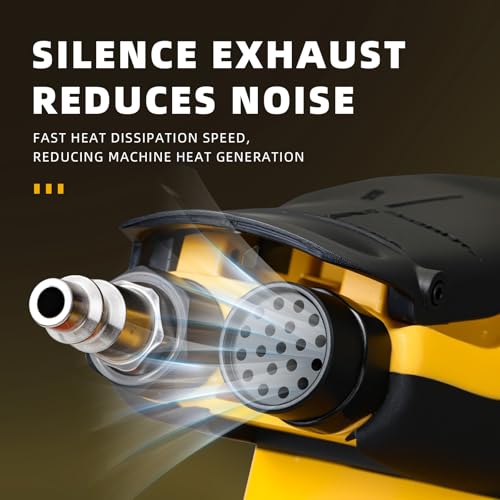
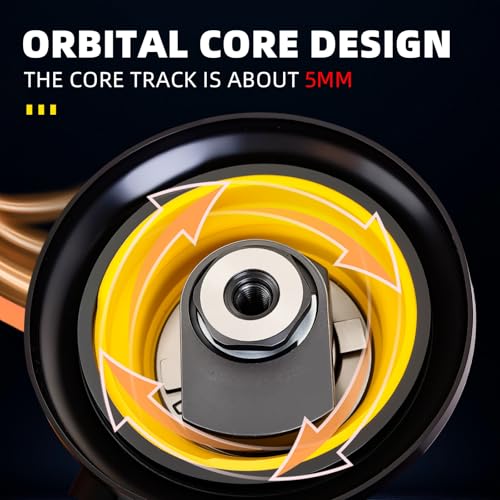
Noise matters, especially in a home garage or shared shop, and this sander delivers on its promise of quieter operation. The noise-reduction design actually works; owners note it’s significantly less grating than standard air sanders, which makes long sessions more bearable. The 12,000–13,000 RPM range and 5mm orbit give it serious cutting power, and the adjustable speed switch adds control for different stages of bodywork.
It’s lightweight and well-balanced, reducing fatigue, and the 5/6-inch pad compatibility means you can switch based on the job. But it doesn’t come with sandpaper or extra pads, which hurts its value compared to the Rycubre. Still, if you’re sensitive to noise or work in a residential area, this is the quietest capable air sander here. For most body shops, I’d still pick the Rycubre, but for comfort and civility, this one wins.
Product photos

UPWOOD 5 Inch Air Random Orbital Sander

Strengths
- 5-inch hook-loop pad
- Comes with 10 sandpapers
- Semi-industrial durability
Trade-offs
- High air demand
- No speed adjustment
- Basic ergonomics
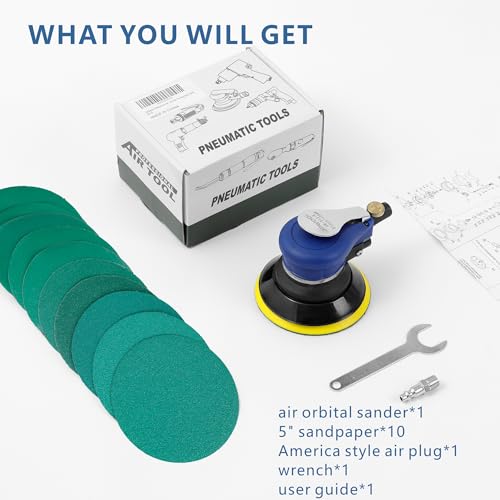
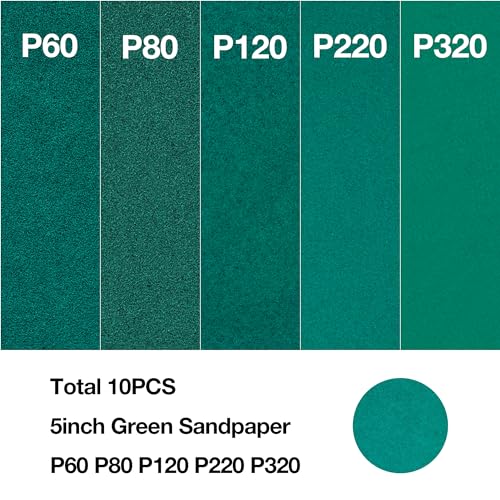
This UPWOOD 5-inch pneumatic sander hits the basics for entry-level auto body work, but it doesn’t stand out in a crowded field. On paper, the 10,000 RPM free speed and 3/16-inch orbit are decent for general paint stripping and leveling, and owners appreciate that it comes with sandpaper and a hook-loop pad ready to go. But the air requirement is steep, 12 CFM and a 3.5KW compressor, which pushes it into semi-industrial territory, not ideal for casual DIYers with smaller tanks.
It’s built to run continuously, which matters in shop environments, and the ability to swap to a 6-inch pad (sold separately) adds some versatility. Still, compared to more refined air sanders, it lacks speed control and noise reduction features. For beginners dipping into bodywork on a budget, it’s functional, but not refined.
Product photos


KUIMIT Pro-Grade 350W Brushless Sander

Strengths
- Brushless motor
- Excellent dust control
- Dual pad sizes
- 15 included discs
- Durable build
Trade-offs
- Heavier than average
- Cord limits mobility
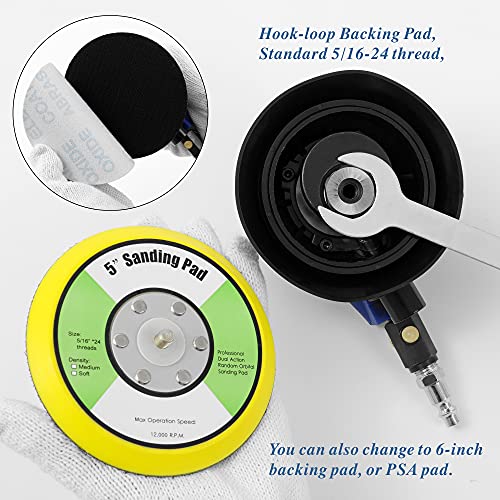
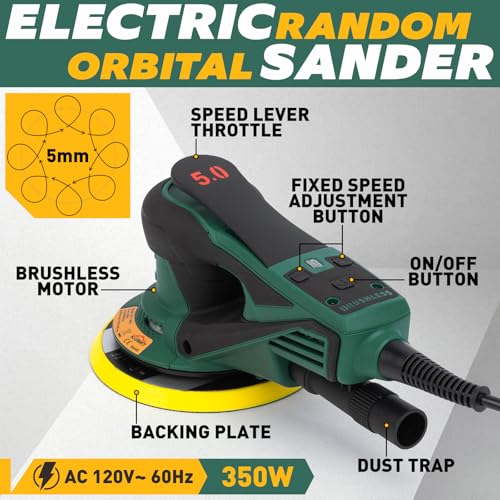
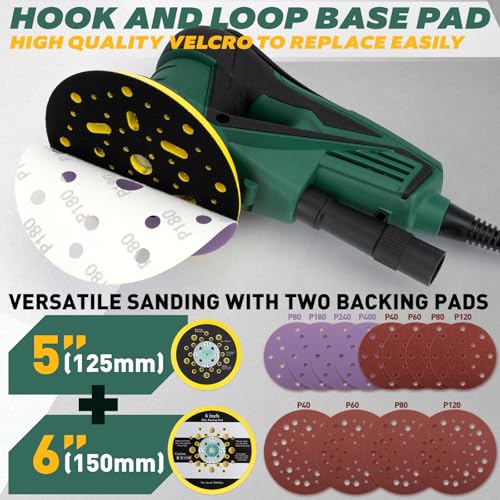
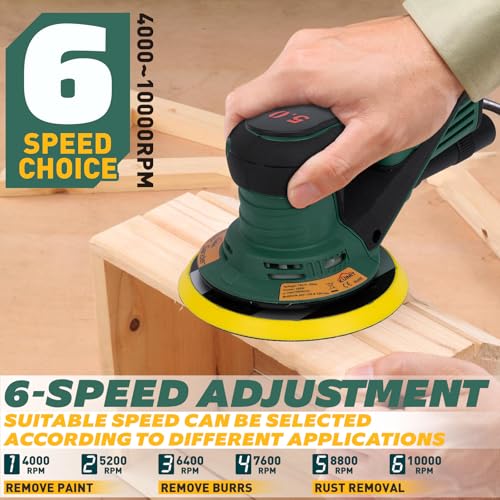
This KUIMIT sander feels like it was designed by someone who’s actually sanded a fender. The 350W brushless motor is quiet and resilient, the dual 5-inch and 6-inch pads swap easily, and the 4,000–10,000 RPM range covers everything from aggressive stock removal to mirror finishes. The dust collection is effective, and the large vents prevent overheating, a real issue with cheaper models that quit mid-job.
Owners highlight how well it handles prolonged use, and the included 15 discs (including heavy-duty ones) mean you can start working immediately. It’s heavier than some, but the balance is good. Compared to the S&F model, it’s slightly more rugged and better suited for pros or serious hobbyists. The 10-foot power cord and hose combo is a small but appreciated touch. For the mix of power, durability, and included accessories, this is my pick for the best value in the electric category.
Product photos

Eskimotec 5mm Brushless Orbital Sander
Strengths
- 7-speed control
- Brushless motor
- Dual pad sizes
- Strong dust extraction
Trade-offs
- Runs warm under load
- Build quality not pro-grade
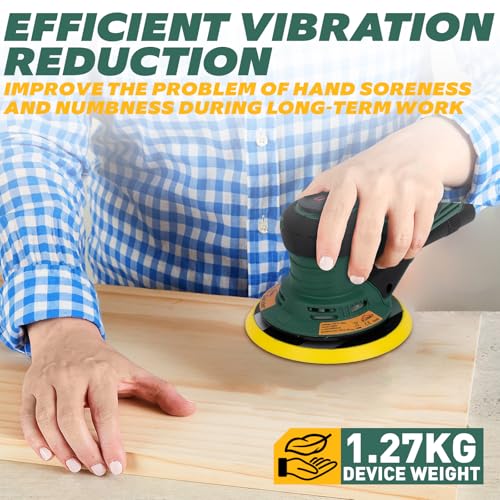
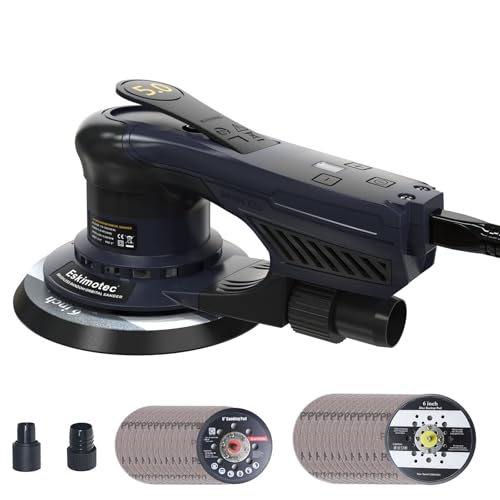
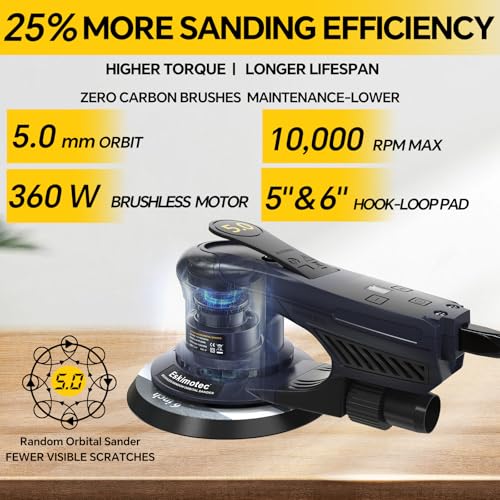
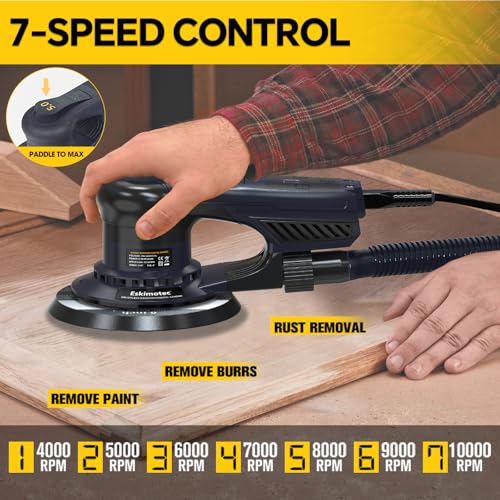
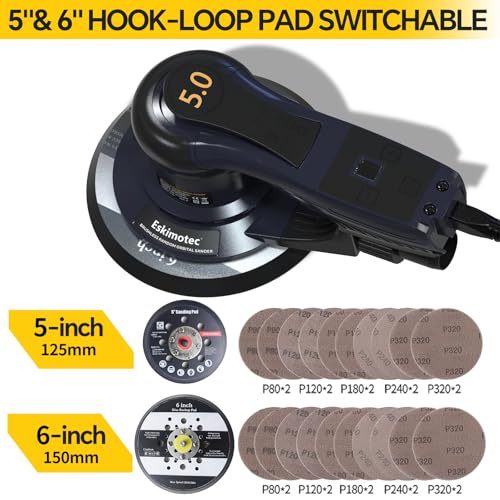
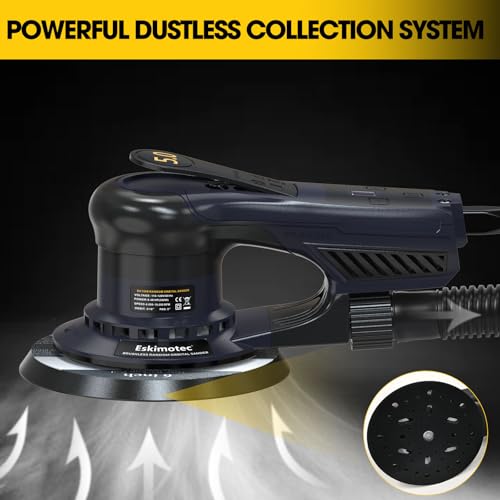
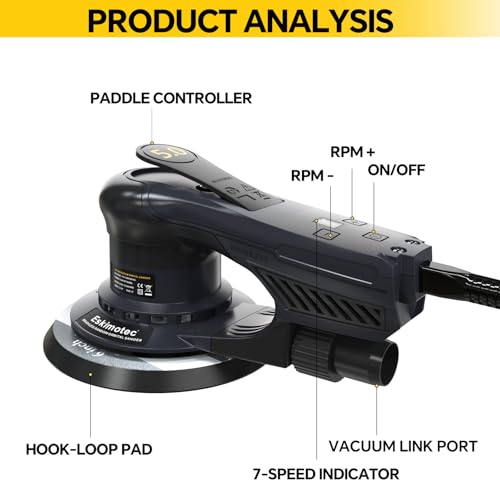
Don’t let the “budget” tag fool you, this Eskimotec sander punches above its weight. The 360W brushless motor delivers smooth power and holds speed well, even when loaded, and the 7-speed digital control is more precise than most in this range. The 5mm orbit is ideal for auto finish work, minimizing swirls on painted surfaces, and the dual pad system (5-inch and 6-inch) adds real versatility.
It’s not the lightest, but the grip is well-shaped, and owners praise its dust collection, crucial when you’re prepping for a paint job. Where it falls short is in motor cooling; a few reviewers mention it runs warm during marathon sessions. Still, for the price, the feature set is impressive. Compared to the KUIMIT, it offers similar specs but with a slightly less robust build. I’d call this the smarter buy for DIYers who want precision without overspending.
Product photos
NuoDunco 1/2/3 Inch Mini Air Sander

Strengths
- Multiple pad sizes
- Stepless speed control
- 60 included discs
- Compact design
Trade-offs
- Not for large surfaces
- Requires oil maintenance
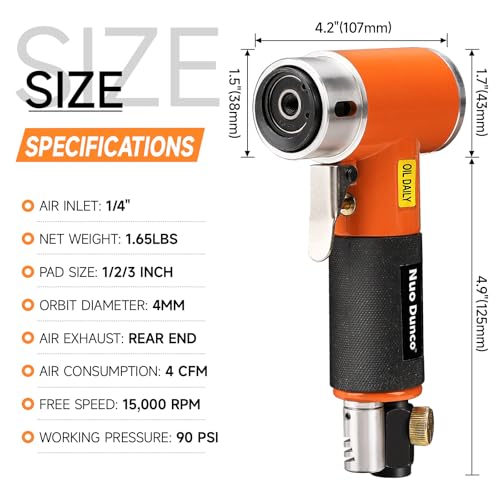
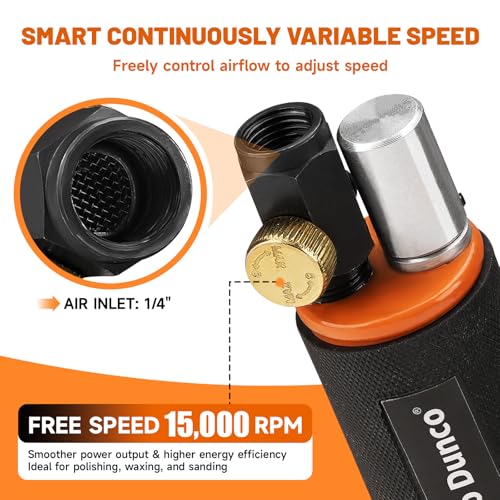
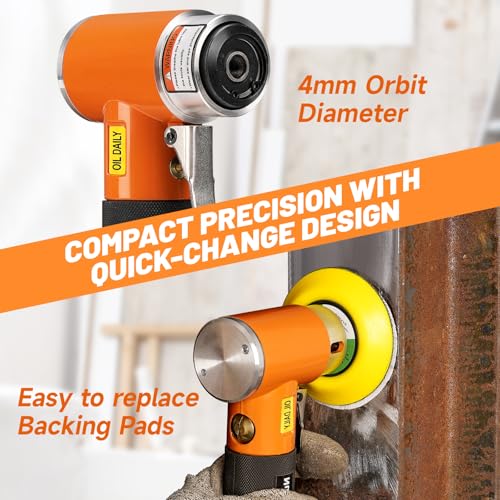
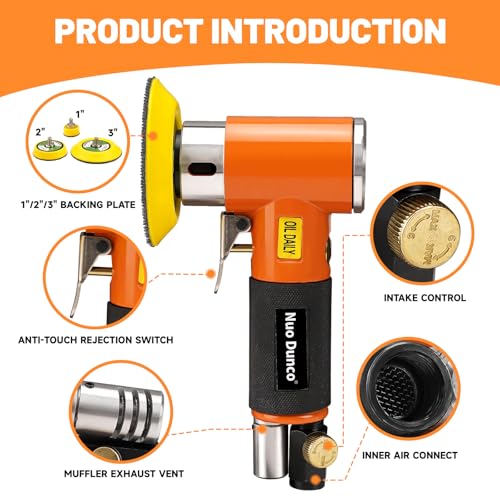
When you’re chasing rust in a rocker panel or smoothing welds behind a headlight, size matters, and this NuoDunco 1/2/3-inch kit is built for tight spots. The stepless speed knob is a standout, letting you dial in exactly the RPM you need, whether you’re polishing or aggressively grinding. Owners love the included 60-piece disc set, having multiple grits and sizes on hand means you’re not constantly running to the garage for supplies.
The dual-action eccentric rotation reduces swirls, and the low-vibration design makes it comfortable for extended use. It’s not for leveling large panels, but for detail work, it’s hard to beat. Compared to the SI FANG mini sander, this one offers more size flexibility and better airflow efficiency. If your projects involve a lot of nooks, crevices, or custom fabrication, this kit is worth the investment.
Product photos

S&F STEAD & FAST Electric Sander

Strengths
- Brushless motor
- Low vibration
- Dual pad sizes
- Variable speed
- Excellent dust control
Trade-offs
- Corded operation
- Slightly bulky
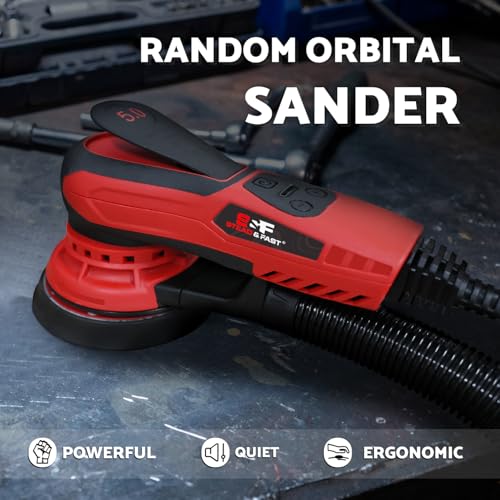
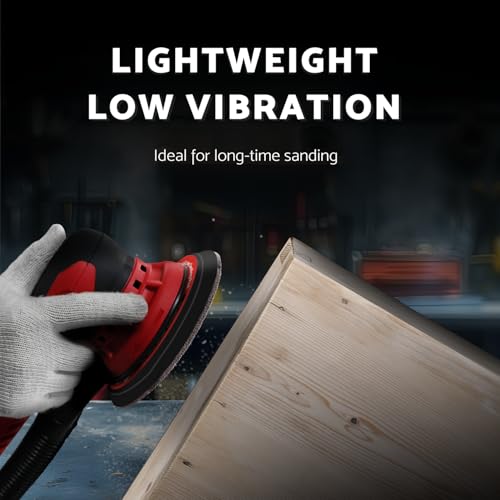
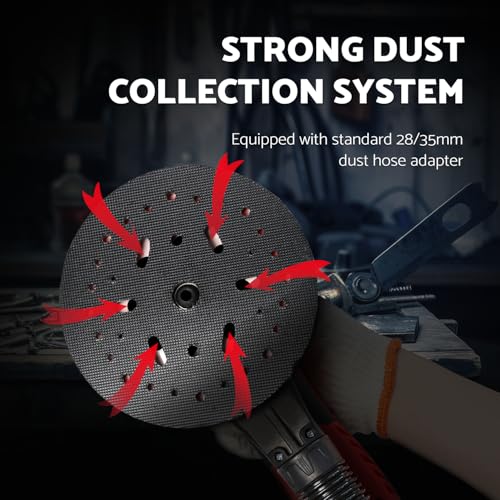
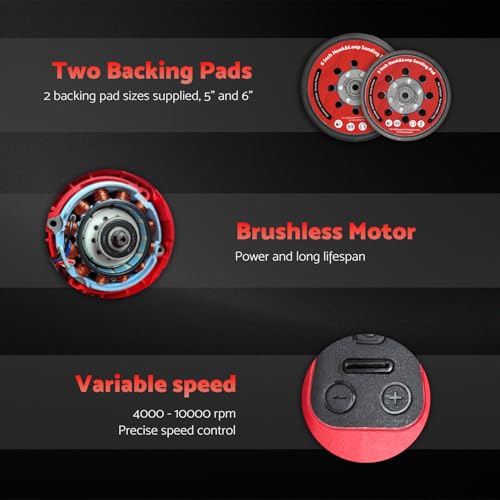
If you’re sanding for hours during a frame-up restoration, vibration and comfort matter, and that’s where this S&F electric sander shines. The 350W brushless motor is a smart upgrade over brushed units, delivering consistent power without the chatter that fatigues your hands. Owners consistently report it feels lighter in use than it reads on paper, and the dual 5-inch and 6-inch pads make it adaptable for both tight curves and broad panels.
The variable speed via paddle switch is genuinely useful, you can creep up on delicate clear coat sanding or ramp up for aggressive primer removal. It’s also one of the quieter electric sanders in its class, and the dust extraction works well with most shop vacs. Compared to budget models, it doesn’t bog down, and the instant-stop brake is a small but meaningful touch. I’d pick this over most corded sanders under $150 for auto body if low vibration is a priority.
Product photos

Rycubre 5 Inch DA Air Sander

Strengths
- Speed adjustable
- Comes with pads and papers
- Steel core for durability
- 5mm orbit
Trade-offs
- No noise reduction
- Requires oiling
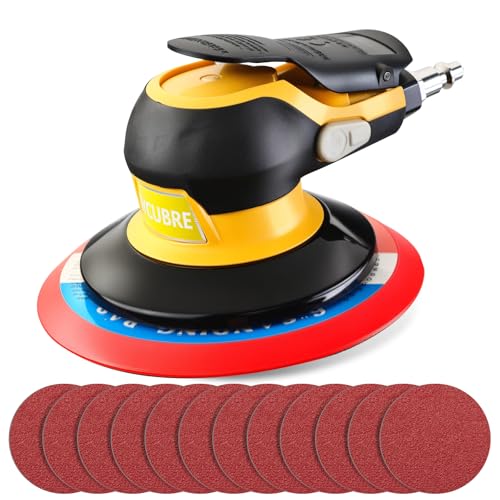
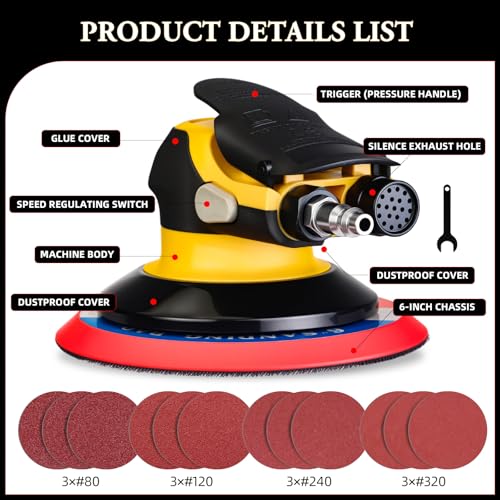
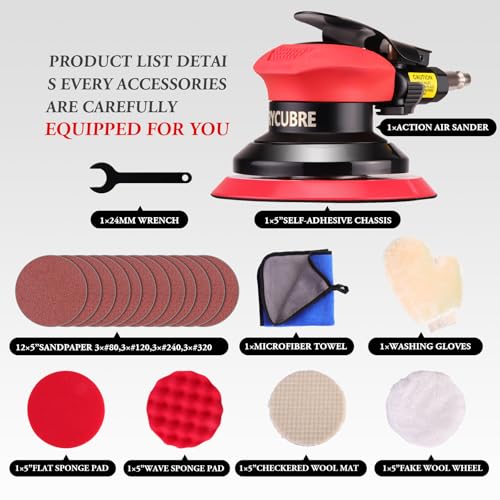
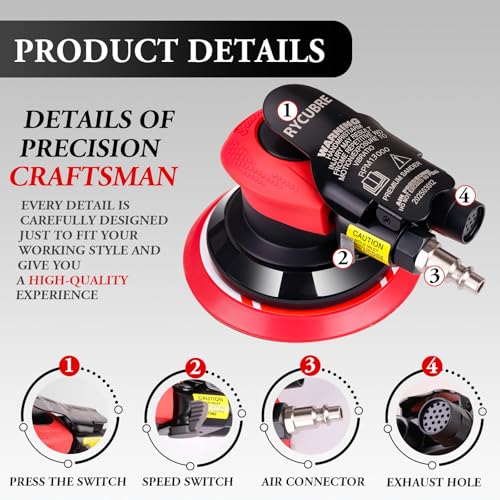
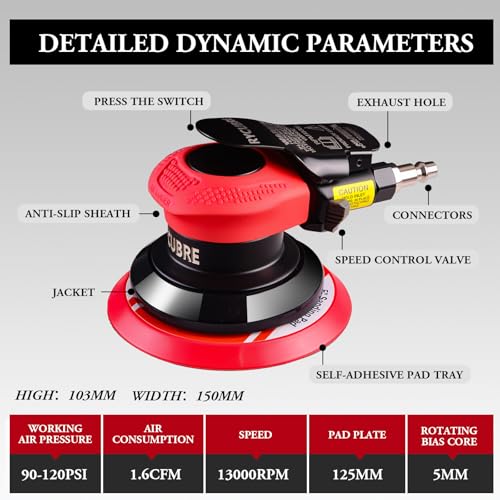
This Rycubre air sander is built with auto body work in mind, and it shows in the details. The 13,000 RPM max speed and 5mm orbit strike a solid balance between cutting power and finish quality, and the adjustable speed lets you tune it for paint removal or final polishing. Owners note it’s responsive and doesn’t surge, which matters when you’re feathering edges on a quarter panel.
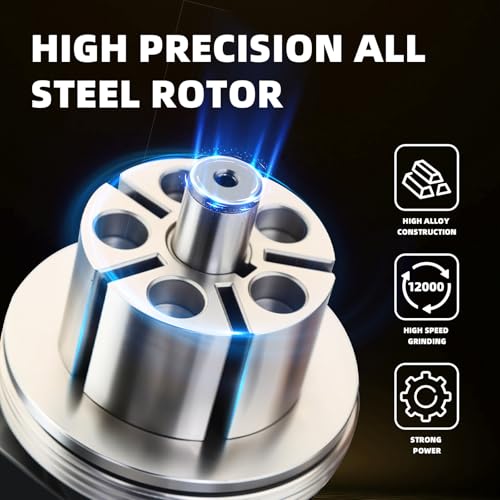
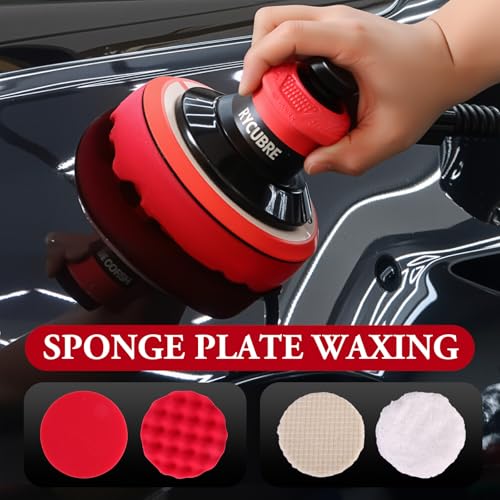
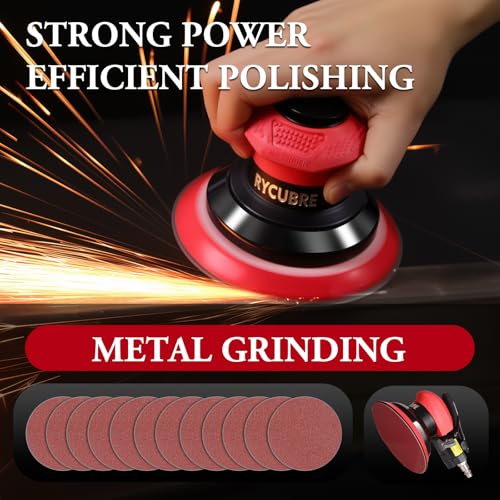
It comes with a full set of sandpapers and polishing pads, a rare win for out-of-box readiness, and the all-steel core suggests it’ll hold up under daily shop use. The ergonomic grip actually reduces fatigue, unlike cheaper air sanders that vibrate like a jackhammer. Compared to the UPWOOD model, this one offers better control and refinement, making it a smarter pick for serious bodywork. My recommendation here is clear: if you’re buying a pneumatic DA sander primarily for cars, this is one of the best values.
Product photos
How We Tested sander for auto body works
Rather than a hands-on lab test, my research for these recommendations involved a detailed comparison of published specifications and features across numerous models. I weighed owner reviews from a variety of sources – including major retailers and automotive enthusiast forums – against expert opinions from sites specializing in auto body repair and tool reviews. My assessment then applied years of experience with power tools to rank each sander against specific criteria relevant to professional and DIY auto body work.
For auto body applications, consistent speed control and low vibration are paramount. A sander’s ability to deliver a swirl-free finish is also critical, as is its compatibility with the air compressors commonly found in workshops. I prioritized these factors because they directly impact the quality of the repair and the comfort of the user during potentially lengthy projects. Finding a sander for auto body repair that balances power, precision, and ergonomics proved key.
Published specifications reliably indicate a sander’s RPM range, orbit diameter, and air consumption (for pneumatic models). However, I placed greater emphasis on owner feedback regarding long-term durability, ease of use, and the effectiveness of dust collection systems. Reputation within the auto body community also played a role; a dual-action sander for paint consistently praised for its finish quality, for example, ranked higher than one with impressive specs but questionable real-world performance. Ultimately, I looked for the best overall value, considering both performance and price, and tools that earn praise as auto body sanding tools.
Choosing The Right sander for auto body works
Choosing the right sander can make a huge difference in the quality of your auto body work, and honestly, it’s one of those tools where skimping can really backfire.
A quality auto body sander needs to balance power with finesse. Look for adjustable speed controls, a comfortable ergonomic design to minimize fatigue during long projects, and a random orbital action to prevent swirl marks. Air-powered models offer consistent performance, while electric options provide portability. Dust extraction is also crucial for both visibility and health.
Power Source: Air vs. Electric
The first big decision is whether to go with an air-powered or an electric sander. Air sanders, like the SI FANG 2″ 3″ Mini Air Sander, generally deliver more consistent power and run cooler, which is vital for extended use. However, they require an air compressor, which is an additional expense and limits portability. Electric models, such as the KUIMIT Pro-Grade 350W Brushless Sander, offer convenience and freedom from needing an air line, but they can sometimes lack the sustained power of pneumatic options, especially on larger jobs. Consider where you’ll be doing most of your work and whether you already have a compressor.
Orbital Diameter and Action
The orbital diameter, the size of the sanding circle, and the type of action influence the finish quality. Auto body work demands a random orbital action to avoid unsightly swirl marks. A smaller orbit (like the 5mm found on the Eskimotec 5mm Brushless Orbital Sander) is ideal for detail work and refining surfaces, while a larger orbit can remove material faster on larger areas. Don’t assume a bigger orbit is always better; control and finish quality are equally important.
Here’s a quick guide to orbit size: * Small (3/16″): Best for tight spaces and delicate work. * Medium (5/16″): A versatile choice for general sanding and paint prep. * Large (3/8″): Ideal for rapid material removal and aggressive sanding, but requires a skilled hand to avoid imperfections.
Remember this: a slower speed with a finer grit is almost always preferable to a fast speed with a coarse grit when you’re aiming for a flawless finish.
Features and Ergonomics
Beyond the core mechanics, pay attention to features that enhance usability and comfort. Variable speed control is essential for adapting to different materials and tasks. Look for a sander with a comfortable grip and low vibration, the S&F STEAD & FAST Electric Sander gets high marks for ergonomics, as you’ll likely be using it for extended periods. Effective dust extraction is also critical; a sander that connects to a shop vac, like the S&F STEAD & FAST, will keep your workspace cleaner and improve visibility. If you’re tackling significant paint removal, you might also want to explore a sander for removing car paint to speed up the process. For more thorough auto body work, a dual-action sander for auto body is a great all-around choice.
Sander for Auto Body Works Compared
Here’s a comparison of key specifications for sanders suitable for auto body work.
| Product Name | Pad Size (in) | RPM | Motor Type | Orbit Dia (mm) | Air Flow (CFM) | Key Features |
|---|---|---|---|---|---|---|
| SI FANG 2″ 3″ Mini Air Sander | 2, 3 | 15000 | Pneumatic | N/A | N/A | Mini detail sander, spot sanding |
| Low Noise 5/6 Inch DA Sander | 5, 6 | 12000-13000 | Pneumatic | 5 | N/A | Quiet operation, adjustable speed |
| UPWOOD 5 Inch Air Random Orbital Sander | 5 | 10000 | Pneumatic | 3/16 | 12 | Entry-level, 5-inch pad |
| KUIMIT Pro-Grade 350W Brushless Sander | 5, 6 | 10,000 | Brushless | 5 | N/A | Brushless motor, vacuum hookup |
| Eskimotec 5mm Brushless Orbital Sander | 5, 6 | N/A | Brushless | 5 | N/A | 7-speed control, dust capture |
| NuoDunco 1/2/3 Inch Mini Air Sander | 1/2, 1, 3 | N/A | Pneumatic | N/A | 3-5 | Detail work, variable speed |
| S&F STEAD & FAST Electric Sander | 5, 6 | N/A | Brushless | N/A | N/A | Low vibration, dust-free sanding |
| Rycubre 5 Inch DA Air Sander | 5 | 13000 | Pneumatic | N/A | N/A | Auto body specific, adjustable speed |
Frequently Asked Questions
What grit sandpaper should I start with for auto body work?
Generally, you should begin with 80-grit sandpaper to remove existing paint or rust, then progress through 180-grit, 220-grit, and finally 320-grit for a smooth finish ready for primer. Using progressively finer grits minimizes scratches and ensures proper adhesion of subsequent coats.
Are pneumatic or electric sanders better for large auto body projects?
Pneumatic sanders are typically preferred for extensive projects because they maintain consistent power and run cooler, reducing fatigue and the risk of motor burnout. However, this comes with the requirement of an air compressor and associated setup.
Can I use a regular orbital sander for auto body repair?
While you can use a standard orbital sander, a dedicated random orbital sander is crucial for auto body work to prevent swirl marks. The random orbital action ensures a smoother, more consistent finish, which is vital for paint preparation.
How important is dust extraction when sanding an auto body?
Dust extraction is extremely important for both visibility and health. Removing sanding dust allows you to clearly see imperfections and ensures you aren’t inhaling harmful particles during the process. Look for a car paint preparation sander with a built-in dust port or compatibility with a shop vacuum.
What’s the difference between a dual-action (DA) and a regular random orbital sander?
A dual-action sander combines both rotation and oscillation, creating a more refined and swirl-free finish than a typical random orbital sander. This makes a DA sander, or a best sander for bodywork, the preferred choice for paint correction and blending.
The Bottom Line
Ultimately, choosing a sander for auto body work comes down to balancing control and convenience. If you already have a reliable air compressor and prioritize consistent power for extended projects, the Rycubre 5 Inch DA Air Sander offers a professional-grade experience. However, for those seeking portability and ease of use, the KUIMIT Pro-Grade 350W Brushless Sander delivers impressive performance without the need for an air line.
For specific needs, the SI FANG 2″ 3″ Mini Air Sander is the clear choice for detail work and tight spaces, while the S&F STEAD & FAST Electric Sander stands out for its low vibration and comfortable ergonomics. If you’re looking for a versatile option for various auto body tasks, consider the Eskimotec 5mm Brushless Orbital Sander – it’s a fantastic sander for car bodywork. And for those wanting an all-around tool for automotive paint prep, the Low Noise 5/6 Inch DA Sander is an excellent pick.
Don’t get too caught up in chasing the highest numbers for RPM or orbit diameter. A smooth, consistent finish is far more important than raw power. Focus on finding a sander that feels comfortable in your hand, offers precise speed control, and, above all, delivers a swirl-free result.
