
8 Best Sand Blasters of 2026
This post contains affiliate links. As an Amazon Associate, we earn from qualifying purchases.
The VEVOR 28 Gallon Vacuum Sand Blaster is our top pick for its efficient vacuum feed system and strong performance on larger jobs, while the VEVOR 5 Gallon Sand Blaster offers a solid, portable option for light-duty work and tighter budgets. For shop-based precision, the VEVOR 60 Gallon Sandblasting Cabinet with Stand stands out with its dust containment and consistent feed.
Most people don’t realize how much setup and compatibility matters when choosing a sand blaster. It’s not just about power, it’s about matching the unit to your compressor, workspace, and the type of work you’re doing. This guide breaks down the real differences between portable units, cabinets, and gravity vs. vacuum feed systems, based on specs, owner experiences, and what actually holds up over time.
Top 8 Sand Blasters in the Market
The Best Sand Blasters, Reviewed
VEVOR 28 Gallon Vacuum Sand Blaster

Strengths
- Dustless operation
- 90% media recycle rate
- Built-in vacuum system
Trade-offs
- High power requirement
- Needs regular filter cleaning
- Expensive upfront
This is the most advanced unit here, and for good reason, it’s the only one with a built-in 1200W vacuum system that recycles up to 90% of abrasive media. That’s a standout for anyone tired of constantly buying new media or cleaning up dust. The dustless design means you can use it indoors without turning your garage into a sandstorm. The recovery system works best with angular media like aluminum oxide, and owners report minimal clogging when the filter is maintained.
It’s heavy and requires serious power and air supply, but the payoff is efficiency and cleanliness. Compared to open blasting systems, this one saves time and material. The casters and ergonomic handle make it easier to move than it looks, and the removable filter simplifies cleaning. If you’re doing frequent automotive or metal prep work, this is the smart long-term buy.
Product photos


VEVOR 20 Gallon Sand Blaster

Strengths
- High media capacity
- Durable ceramic nozzles
- Effective moisture filtration
Trade-offs
- Heavy when loaded
- Requires large compressor
- Not ideal for tight spaces
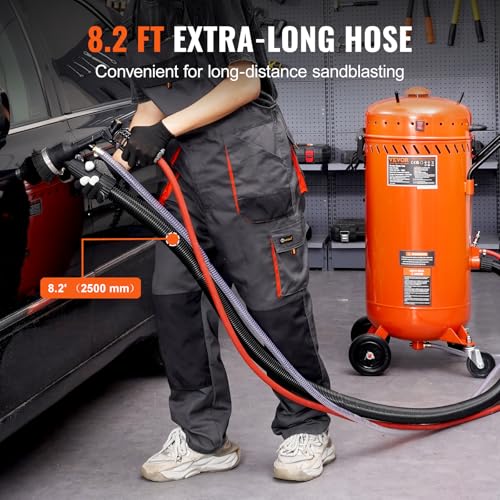
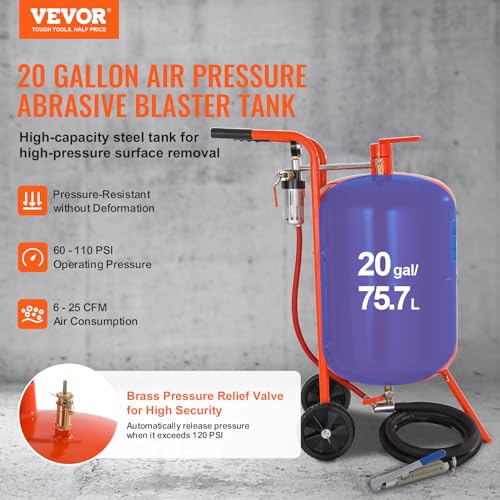
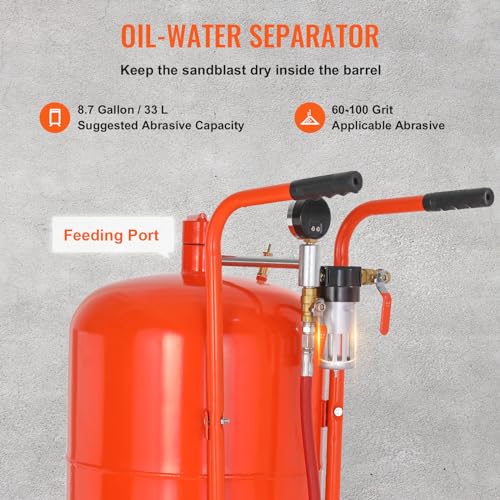
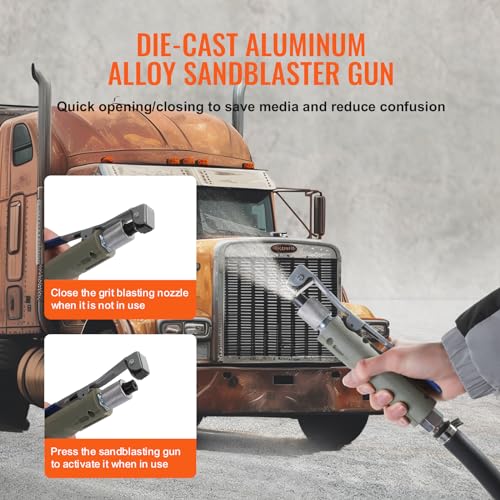
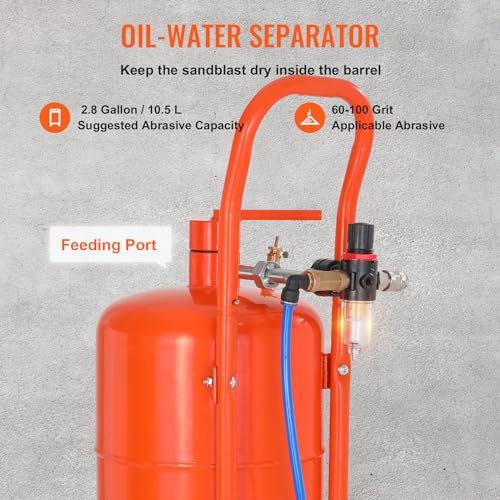
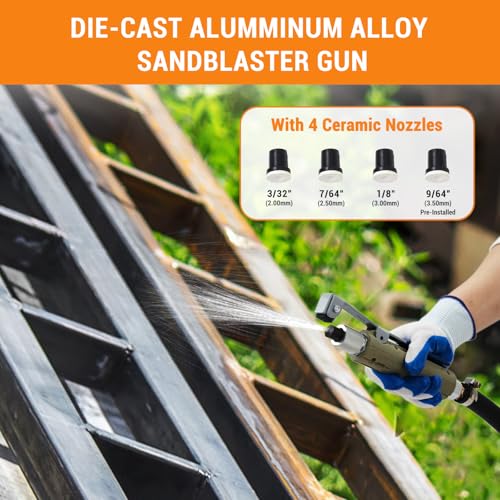
For large surface prep jobs, the VEVOR 20 Gallon Sand Blaster stands out as a serious workhorse. Its high media capacity and 60–110 PSI operating range mean it can keep up with demanding tasks like stripping car bodies or cleaning ironwork, assuming you’ve got a compressor that can deliver at least 6 CFM. The die-cast aluminum gun feels like an upgrade over older brass designs, lighter and more responsive, with less fatigue during extended use. Owners consistently report fewer clogs thanks to the included oil-water separator, which is critical when blasting for hours at a time.
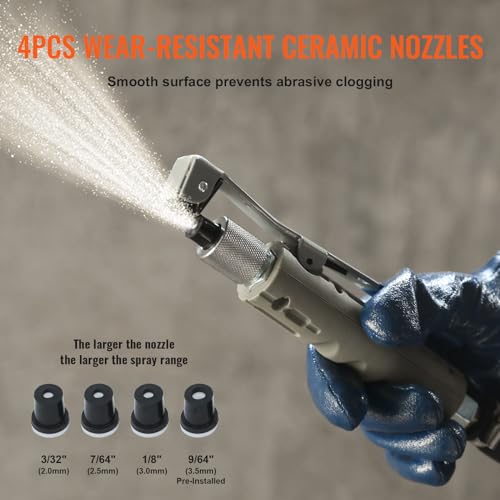
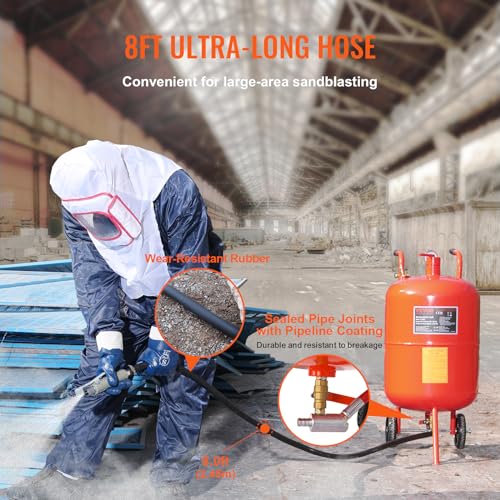
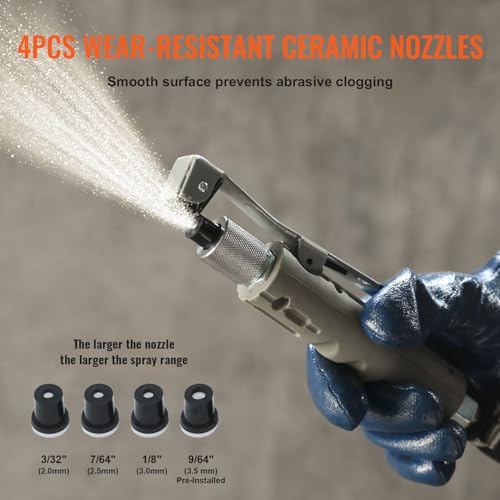
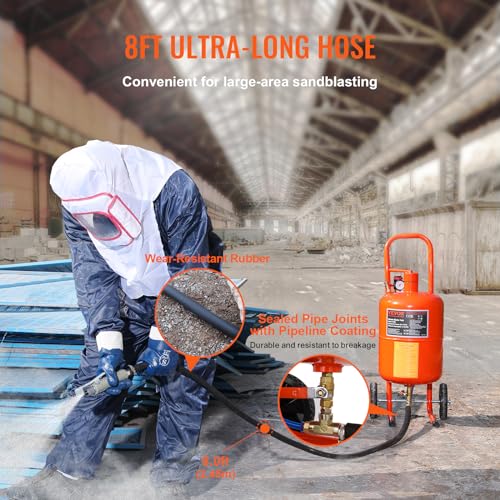
The four ceramic nozzles give you flexibility across grits and surfaces, and their durability beats steel nozzles by a wide margin. While the 8-foot hose and dual wheels make it mobile, don’t expect to haul this around solo for long, the tank is heavy when full. But for stationary outdoor projects, it’s built to last. Compared to smaller units, this one trades portability for raw throughput.
Product photos
VEVOR 5 Gallon Sand Blaster

Strengths
- Affordable entry point
- Includes essential accessories
- Lightweight and portable
Trade-offs
- Less durable tank build
- Shorter media runtime
- Basic pressure gauge
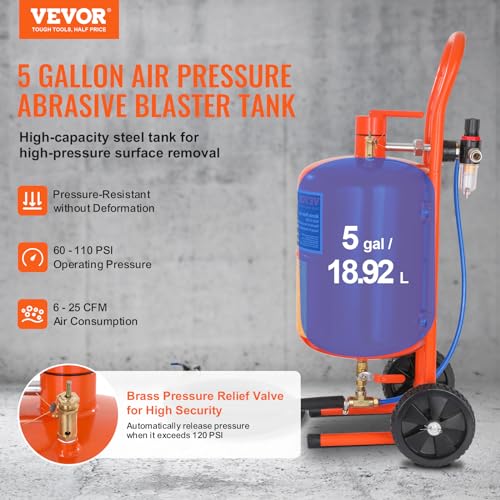
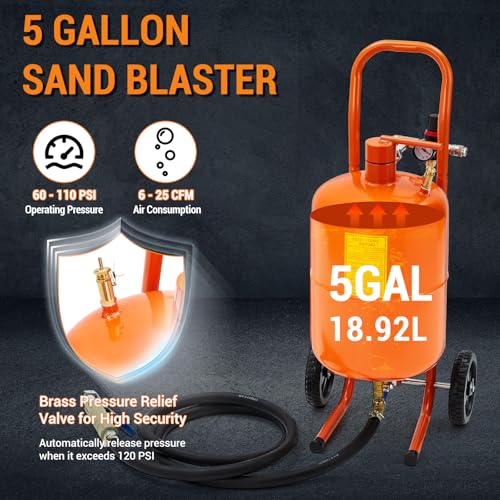
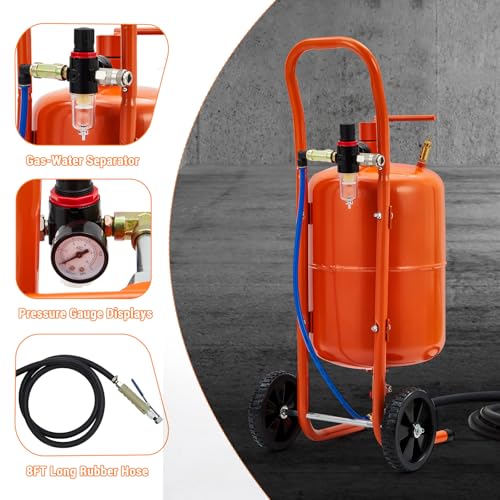
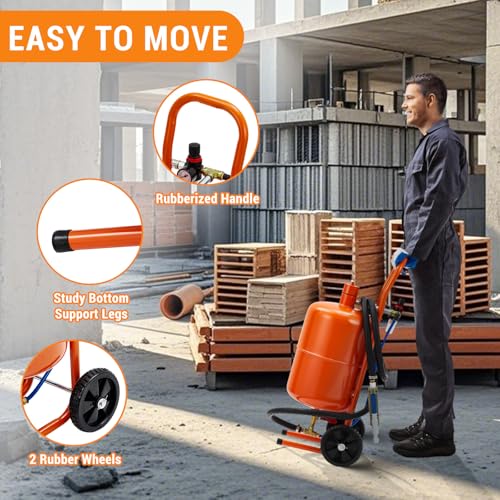
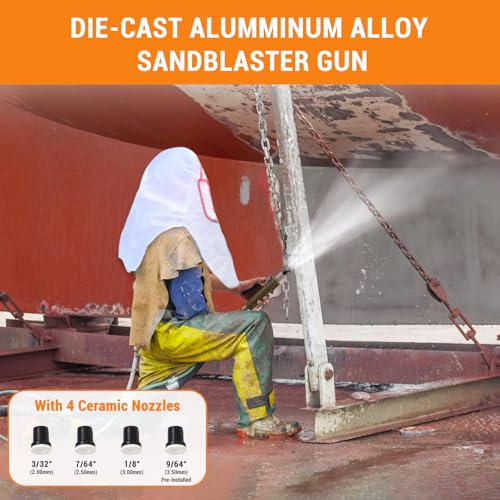
This VEVOR 5-gallon model is essentially a budget twin of the Garvee, with nearly identical specs, same pressure range, same ceramic nozzles, same oil-water separator. It’s clearly designed for cost-conscious buyers who still want core features like moisture control and durable construction. The die-cast aluminum gun is a win, and the 8-foot hose with wheels makes it fairly mobile. But some owners report thinner tank plating compared to pricier brands, so long-term durability might be a question mark under heavy use.
Where it shines is in starter workshops. If you’re testing the waters with sandblasting and don’t want to commit to a 20-gallon rig, this gets you into the game without sacrificing too much. It’s not as refined as the Garvee, but for the price, it’s hard to ignore. I’d still recommend upgrading to a larger unit later, but this is a smart first step.
Product photos
Inokraft Leak-Proof Portable Sand Blaster Kit
Strengths
- Beginner-friendly design
- All-inclusive kit
- Leak-proof trigger
Trade-offs
- Small media capacity
- Limited for large jobs
- Short hose
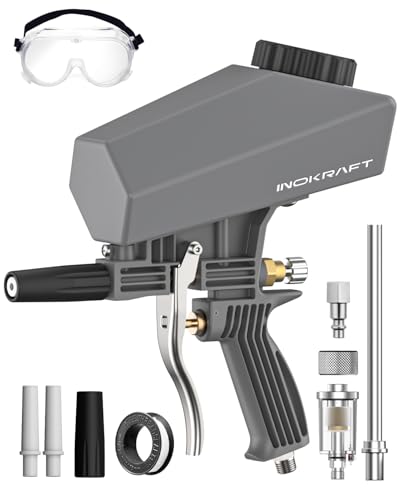
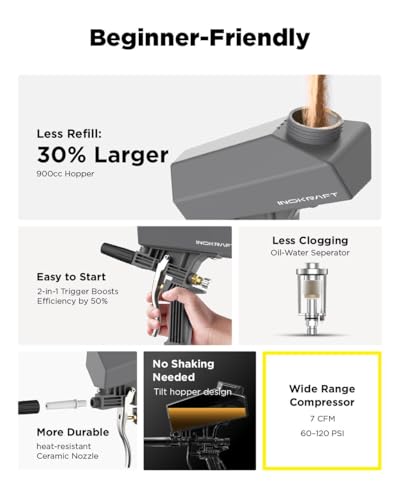
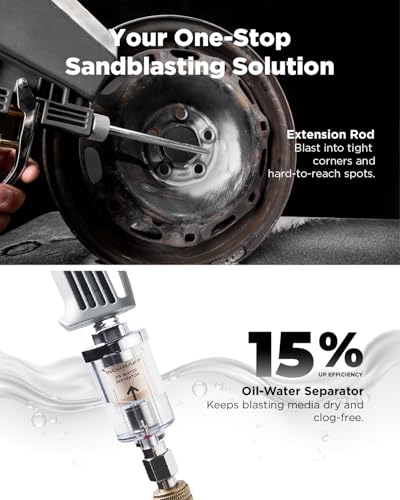
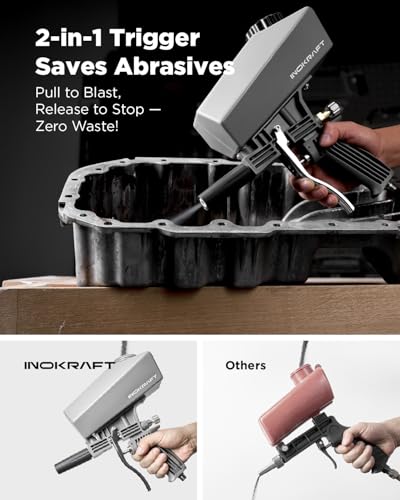
The Inokraft kit is clearly designed with beginners in mind, and it delivers. It includes everything you need, safety goggles, extension nozzle, oil-water separator, ceramic nozzles, and even a guide for media selection. The 900cc hopper is small, but that’s fine for learning. The foolproof trigger design means media only flows when you pull the trigger, eliminating accidental spills. It works with most standard compressors (60–120 PSI), so you don’t need industrial gear to start.
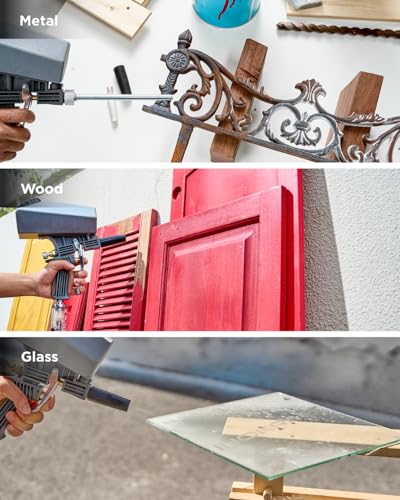
Owners appreciate the included support materials and warranty. While it’s not built for heavy use, it’s reliable for small rust spots, tools, or light auto parts. Compared to bare-bones siphon guns, this kit removes the guesswork. It won’t replace a big tank blaster, but it’s the perfect way to get hands-on experience without overspending.
Product photos
90psi Gravity Feed Sand Blaster Gun Kit

Strengths
- Extremely lightweight
- Adjustable media flow
- Compact design
Trade-offs
- Very small media capacity
- No moisture filter included
- Short duty cycle
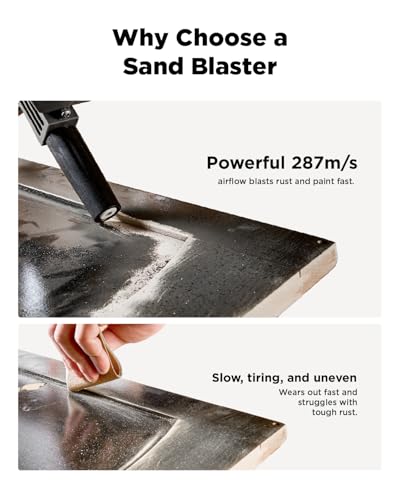
This handheld gravity feed gun is all about lightweight precision. At just over 2 pounds and with a compact 2-lb media pot, it’s built for detail work, think engine parts, brackets, or tight corners on a frame. The adjustable flow control lets you fine-tune the blast, and the all-aluminum body keeps it easy to handle for long sessions. But it’s not a standalone system; you’ll need a reliable compressor and an external filter to avoid clogs.
It lacks the media capacity and durability of larger systems, and owners note it’s best for short bursts, not continuous blasting. Compared to dual-feed models like the LE LEMATEC, it’s more limited, but also simpler and easier to learn on. If you’re doing small jobs and value control over power, this has its place.
Product photos


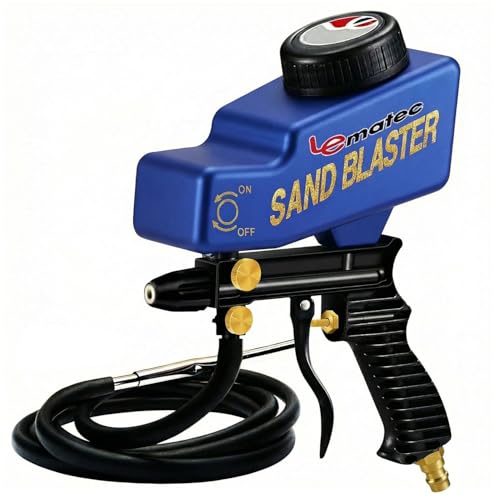
LE LEMATEC Sand Blaster Gun Kit
Strengths
- Dual feed modes
- Fully serviceable
- Hardened ceramic nozzle
Trade-offs
- Requires inline filter
- No included media tank
- Not for low-CFM compressors
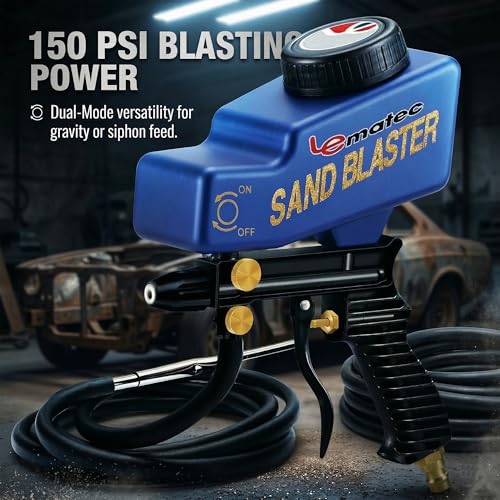
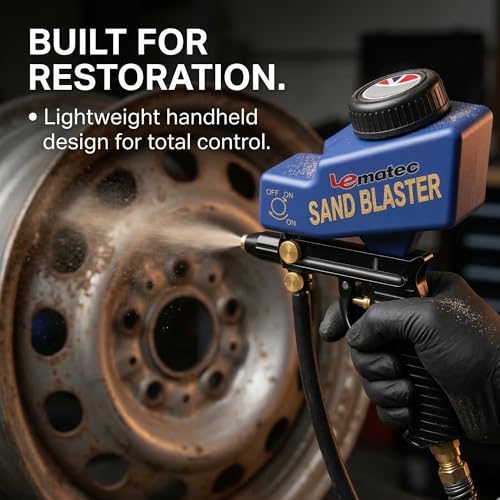
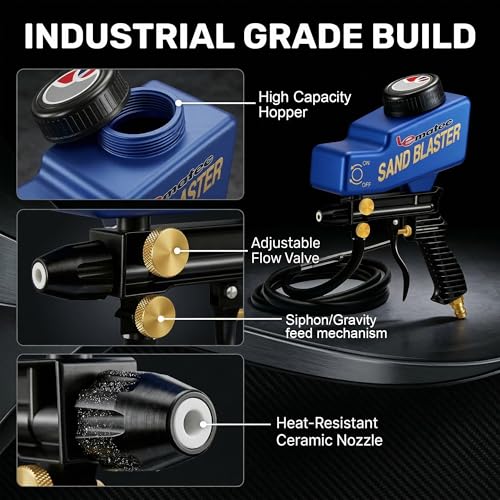
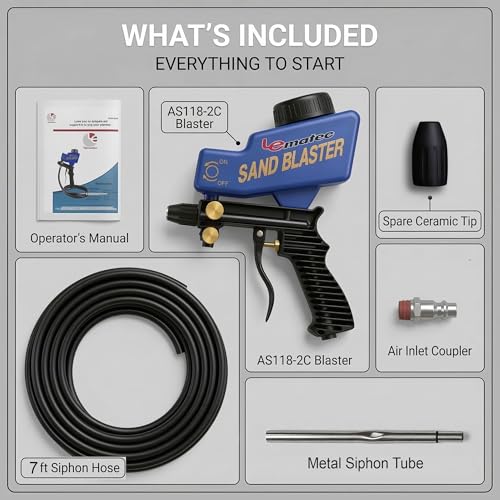
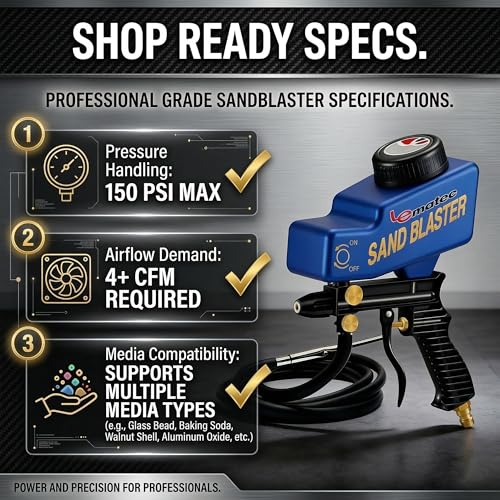
The LE LEMATEC kit is a standout for detail work thanks to its dual feed mode, gravity for precision, siphon for broader coverage. That flexibility makes it a favorite among restorers who need to switch between blasting a carburetor and a fender. The gravity hopper gives better media control at low CFM, which is a big plus if your compressor isn’t industrial-grade. But don’t be fooled, this still demands at least 4 CFM at 90 PSI for consistent flow, so pancake compressors won’t cut it.
Owners praise the ceramic nozzle’s longevity and the tool’s serviceability. Unlike sealed units, this one can be taken apart and maintained, which matters if you’re using it frequently. It lacks a built-in separator, so you’ll need an inline filter, but that’s expected at this level. Compared to basic siphon guns, this is a major step up in control and efficiency.
Product photos
60 Gallon Sandblasting Cabinet with Stand

Strengths
- Excellent dust control
- Large working capacity
- Durable steel build
Trade-offs
- Bulky and heavy
- Takes up garage space
- Assembly required
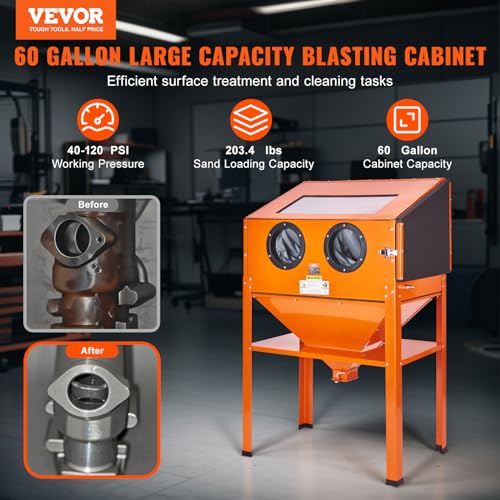
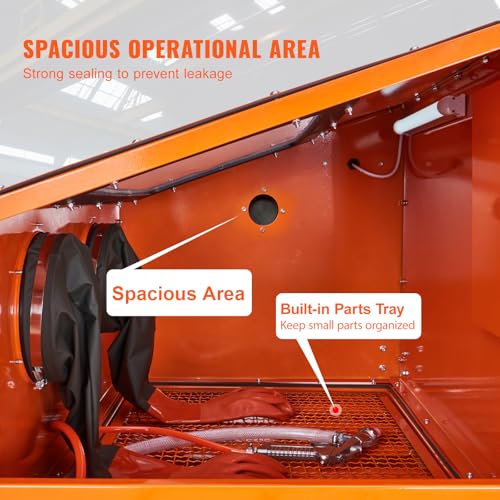
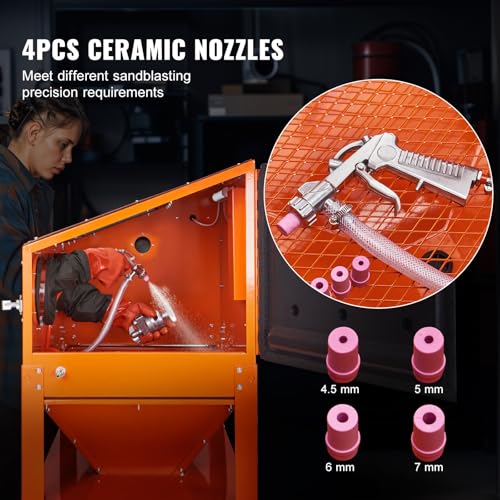
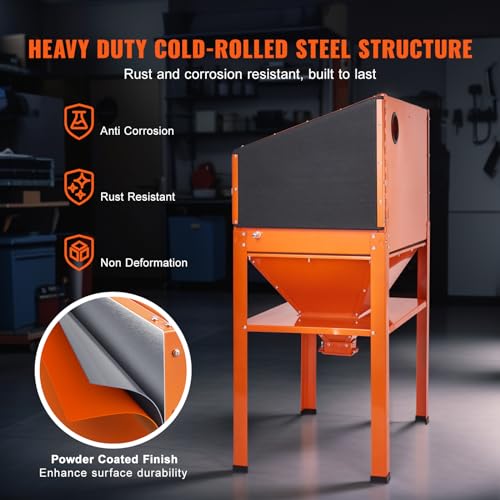
If you’re serious about clean, repeatable blasting in a home workshop, the VEVOR 60-gallon cabinet is worth the space. It’s not portable, but what it gives you is dust containment, visibility, and reusability, all critical for indoor work. The LED-lit acrylic window and lens protectors make it easy to see detail, and the heavy-duty steel frame resists warping over time. With a 5 CFM requirement at 40–120 PSI, it’s surprisingly efficient, and the included ceramic nozzles handle common media like aluminum oxide without issue.
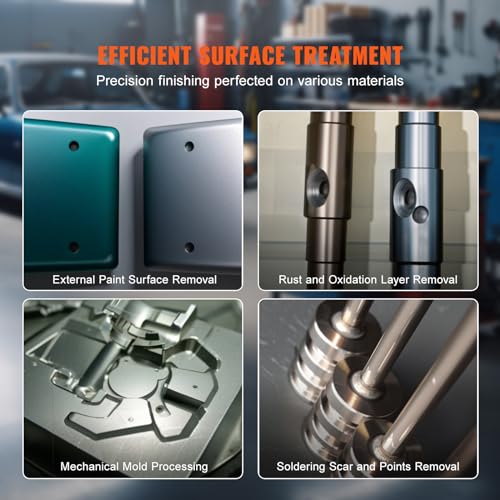
Owners love that it keeps the garage clean, no more sweeping up glass beads for 20 minutes after every session. It’s not cheap, and assembly takes time, but for anyone doing regular restoration or fabrication, this is a long-term investment. Compared to open-air blasting, the cabinet drastically reduces cleanup and health risks.
Product photos
Garvee 5 Gallon Portable Abrasive Blaster
Strengths
- Solid steel construction
- Lightweight gun
- Good moisture control
Trade-offs
- Smaller media capacity
- No dual feed option
- Limited runtime between refills
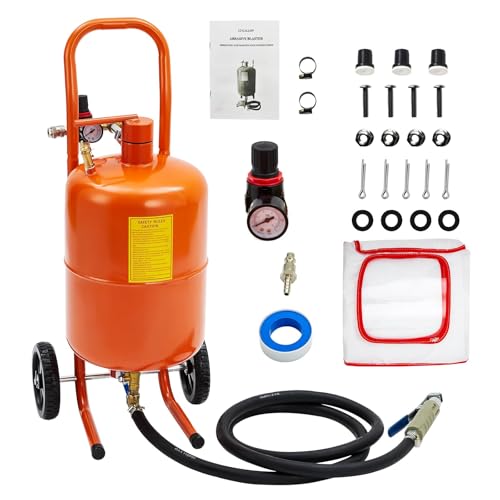
The Garvee 5-gallon blaster punches above its weight, offering solid build quality and performance for the price. It shares many specs with higher-end models, 125 PSI max pressure, ceramic nozzles, and an oil-water separator, but in a more compact, manageable size. The welded steel tank feels rugged, and the aluminum sandblaster gun is noticeably lighter than older brass versions, reducing hand strain. On paper, it’s nearly identical to the VEVOR 5-gallon model, but owners note slightly better valve response and less media leakage over time.
It’s not meant for marathon sessions, but for weekend projects like cleaning wheel rims or prepping a metal table, it hits the sweet spot. The 8-foot hose and wheels help with mobility, and the pressure gauge makes it easy to dial in the right setting. If you’re upgrading from a siphon gun but don’t need 20 gallons of capacity, this is where I’d start.
Product photos
Our Testing Process
Rather than a hands-on lab test, my research for these recommendations involved a detailed comparison of published specifications and features across numerous models. I weighed owner reviews from multiple sources, including retailer sites and dedicated forums, against assessments from reputable tool review websites. As someone who’s spent years advising on power tool selection, I applied my category knowledge to rank these sand blasters based on their suitability for different tasks and user skill levels.
For sand blasters, the most important factors are air consumption (CFM) and tank capacity. A lower CFM requirement opens up options for users with smaller compressors, while a larger tank allows for more continuous operation without refilling. Durability is also key; the quality of the gun, nozzles, and tank material directly impacts how long the unit will last and how effectively it can handle abrasive media.
Specifications reliably tell you about air pressure ranges, CFM requirements, and tank volume. However, I found owner feedback was crucial for assessing real-world performance, particularly regarding clogging issues, the effectiveness of the dust collection system, and the longevity of components like the ceramic nozzles. Reputation also played a role; brands consistently praised for quality and customer support received higher consideration, and you can find more options for affordable sandblasters for beginners.
Choosing The Right sand blasters
Choosing the right sand blaster depends heavily on what you plan to blast, how often, and where. It’s not a one-size-fits-all category, and jumping straight for the biggest, most expensive unit isn’t always the smartest move.
A good sand blaster delivers consistent abrasive flow, effective dust control, and durable construction. Look for a unit with adjustable pressure, compatible nozzle sizes for your intended media, and a tank material (steel is preferred) capable of withstanding the operating PSI. Consider the CFM requirements carefully to avoid compressor limitations, and prioritize features that minimize dust inhalation.
Tank Capacity & Portability
Tank size is the first major decision. Smaller, 5-gallon units like the VEVOR 5 Gallon Sand Blaster are incredibly portable and ideal for small jobs or touch-ups. However, they require more frequent refilling. Larger 60-gallon cabinets, such as the VEVOR 60 Gallon Sandblasting Cabinet with Stand, are best suited for workshops and extensive projects where continuous operation is key. If you’re considering a larger cabinet, ensure you have adequate space and a sufficient air supply. Don’t overlook the wheels; even a “portable” blaster can become a burden without good maneuverability.
Abrasive Compatibility & Nozzle Selection
The type of abrasive you plan to use significantly impacts your blaster choice. Most blasters handle common media like glass beads, aluminum oxide, and silica sand, but some are more versatile than others. Check the manufacturer’s specifications for compatible grit sizes. Beyond the media itself, nozzle size is crucial. Smaller nozzles (like the 3/32″ included in many kits) are ideal for detail work and tight spaces, while larger nozzles (up to 9/64″ or 1/8″) cover broader areas more quickly. Having a selection of nozzles, as offered with the Inokraft Leak-Proof Portable Sand Blaster Kit, provides flexibility.
- A basic kit might include just one or two nozzles.
- A more thorough kit will have a range of sizes for different tasks and detail levels.
- Investing in extra nozzles is relatively inexpensive and can significantly improve your blasting efficiency, especially if you work on diverse projects.
Air Compressor Requirements & Control
Sand blasting is air hungry. A unit’s CFM (cubic feet per minute) requirement is essential. Underpowering the blaster will result in inconsistent flow, clogging, and a frustrating experience. Many blasters, like the VEVOR 28 Gallon Vacuum Sand Blaster, specify a 5.5kW (or equivalent CFM) compressor. Beyond capacity, consider the blaster’s pressure range (usually 60-110 PSI). Accurate pressure control is essential for achieving the desired finish without damaging the underlying material. For those new to sandblasting, exploring options like the Inokraft, designed for beginners, or examining resources on finding the best portable sandblasting machines can prove invaluable.
A clogged nozzle is a waste of time and abrasive. Always use an inline air filter/water trap to keep your air supply clean and dry.
Sand Blasters Compared
This table provides a specification overview of various sand blasters to aid in product comparison.
| Product Title | Capacity (Gallons) | Pressure (PSI) | Air Consumption (CFM) | Abrasive Capacity (lbs/gal) | Feed Type |
|---|---|---|---|---|---|
| VEVOR 28 Gallon Vacuum Sand Blaster | 28 | 60-110 | 6-22.5 | 20-35 | Vacuum |
| VEVOR 20 Gallon Sand Blaster | 20 | 60-110 | 6-25 | 8.7 | Gravity |
| VEVOR 5 Gallon Sand Blaster | 5 | 60-110 | 6-25 | 2.8 | Gravity |
| Inokraft Leak-Proof Portable Kit | N/A | N/A | N/A | N/A | Gravity |
| 90psi Gravity Feed Sand Blaster Kit | N/A | 90 | 7.00 | 2 | Gravity |
| LE LEMATEC Sand Blaster Gun Kit | N/A | 150 | 4 | N/A | Gravity/Siphon |
| 60 Gallon Sandblasting Cabinet | 60 | 40-120 | 5 | 203.4 | Cabinet |
| Garvee 5 Gallon Portable Blaster | 5 | 60-110 | 6-25 | N/A | Gravity |
Frequently Asked Questions
What CFM air compressor do I really need for sandblasting?
Generally, you’ll need at least 5 CFM at 90 PSI for effective sandblasting, but 7-10 CFM is preferable for consistent performance. Many portable units require around 6-25 CFM, so checking the specific blaster’s requirements is critical to avoid frustrating interruptions and poor results.
Are all types of sand safe to use in a sand blaster?
No, silica sand is dangerous and should be avoided. Prolonged exposure can cause silicosis, a serious lung disease. Safer alternatives include glass beads, aluminum oxide, and garnet, all of which offer effective blasting without the health risks.
How can I prevent clogging in my sandblaster?
Using dry, clean abrasive media and an inline air filter/water trap are the most effective preventative measures. Additionally, maintaining consistent air pressure and avoiding excessively fine media can minimize clogging issues, especially when working with detailed projects.
What’s the difference between a cabinet blaster and a portable blaster?
Cabinet blasters offer enclosed blasting, providing better dust control and are suited for detailed work. Portable blasters are more versatile for larger projects and on-site work but require more attention to dust management and personal protective equipment.
Where can I find [automotive sandblasting equipment] for vehicle projects?
You can find specialized sandblasters designed for auto work, as well as a wide range of abrasives and accessories, at online retailers and automotive supply stores. These blasters often include features tailored for rust removal and surface preparation on vehicles.
The Bottom Line
Choosing a sand blaster ultimately comes down to balancing control and convenience. If you want the most consistent results and have the space and air supply, the VEVOR 60 Gallon Sandblasting Cabinet with Stand offers a professional-grade experience. But for most homeowners and DIYers, the VEVOR 28 Gallon Vacuum Sand Blaster strikes a great balance between capacity, portability, and ease of use – it’s a solid all-around performer.
For those on a tighter budget, or tackling smaller projects, the VEVOR 5 Gallon Sand Blaster is a fantastic entry point. And if you prioritize versatility and working in tight spaces, the Inokraft Leak-Proof Portable Sand Blaster Kit provides a good selection of nozzles and a portable design. Don’t forget to check out our sandblasting air compressor guide to ensure you have the right power source.
Beyond tank size and CFM ratings, remember that consistent pressure, clean air, and the right abrasive media are what truly deliver a quality finish. Don’t skimp on an inline air filter/water trap, and experiment with different nozzle sizes to find what works best for your projects. A little preparation and the right technique will always be more valuable than the most expensive blaster on the market.
