
8 Best Ryoba Saws of 2026
This post contains affiliate links. As an Amazon Associate, we earn from qualifying purchases.
The Suizan 9.5″ Ryoba is the best overall choice for most woodworkers, combining reliable Japanese steel, a balanced dual-edge design, and proven performance across a range of tasks. If you’re on a budget, the Ruitool 6″ Double Edge Saw delivers solid cutting ability at a fraction of the price. For those who want long-term value, the Jorgensen 7″ Pro Ryoba Saw stands out with its replaceable blade system.
Most people shopping for a ryoba saw want precision without sacrificing versatility, but it’s easy to end up with a tool that feels flimsy or dulls too quickly. After reviewing specs and owner feedback across top models, I focused on what actually matters: steel quality, TPI range, and build consistency.
This guide breaks down the top options based on real-world performance, blade longevity, and user comfort, so you can pick the right saw for your projects without overpaying for features you don’t need.
Top 8 Ryoba Saws in the Market
The Best Ryoba Saws, Reviewed
Suizan 9.5″ Ryoba Pull Saw

Strengths
- Balanced size
- Sharp Japanese steel
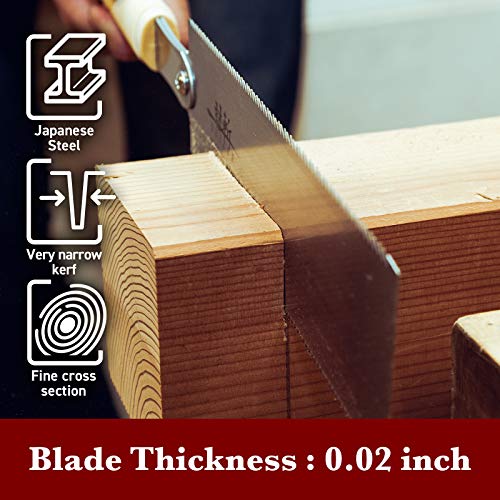
- Thin kerf
- Dual TPI for versatility
- Made in Japan
Trade-offs
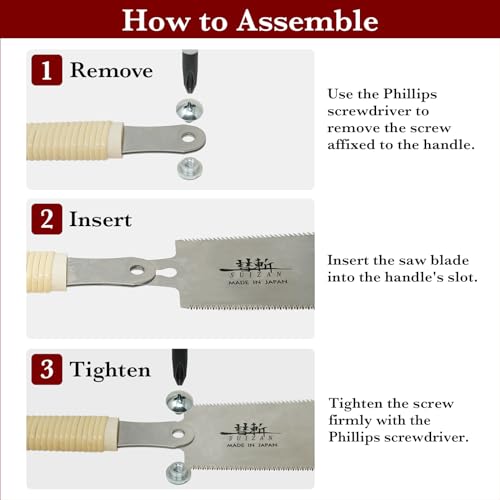
- Requires assembly
- Handle fit issues reported
- Slight learning curve
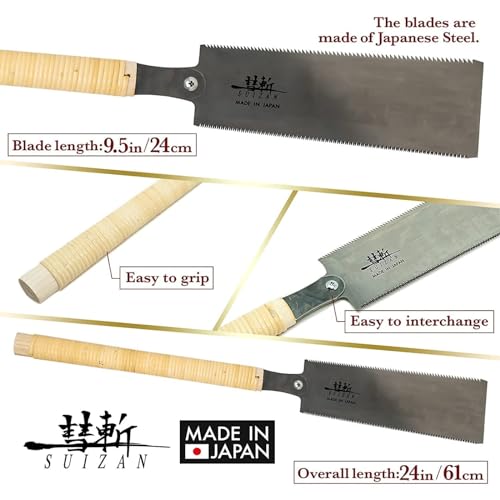
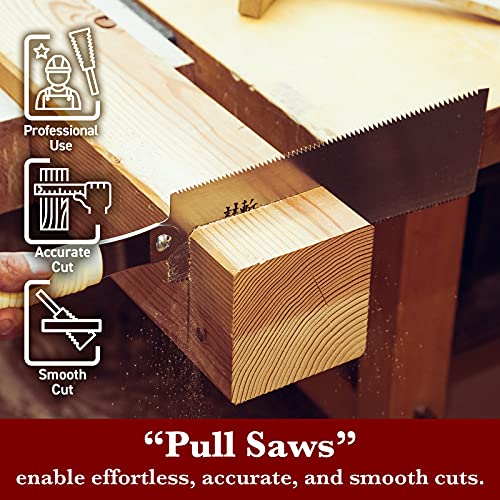
The 9.5″ SUIZAN Ryoba strikes a near-perfect balance between cutting speed and control, which is why so many owners call it the best overall choice in this lineup. At 9.5 inches, it’s long enough for efficient rip and crosscuts but still nimble in the hand. The dual TPI setup, 9 for ripping, 15 for crosscutting, gives it serious versatility across soft and hardwoods.
I like that it’s made in Japan with quality steel, and the thin kerf means less wasted material. But the ‘assembly required’ part throws a wrinkle in, some buyers report the handle installation is finicky, and it’s not something you’d expect at this price point. Still, once built, it performs like a premium tool. Compared to the 7″ and 8″ SUIZAN models, this one gives you more stroke length without sacrificing manageability.
Product photos

Temple Tool Co. 9.5″ Ryoba
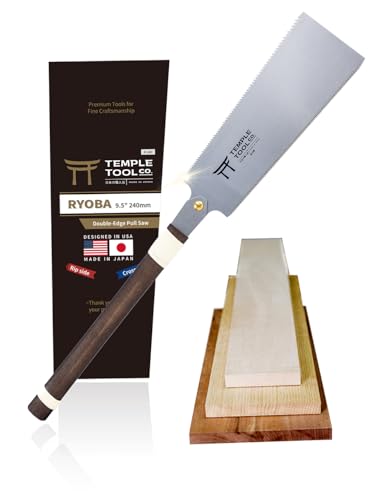
Strengths
- Premium wingnut handle
- Brass fittings
- Excellent balance
- Clean cuts
- Made in Japan
Trade-offs
- Higher price
- Limited availability
- Not replaceable blade
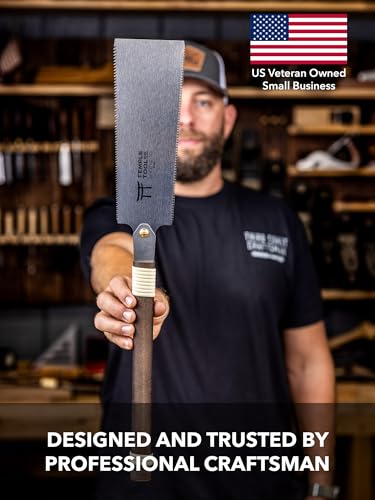
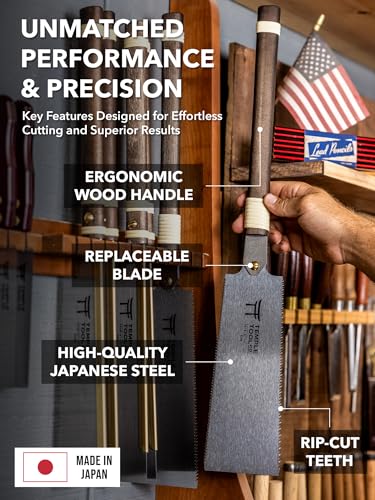
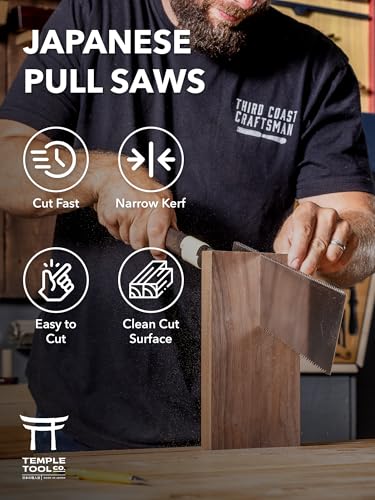
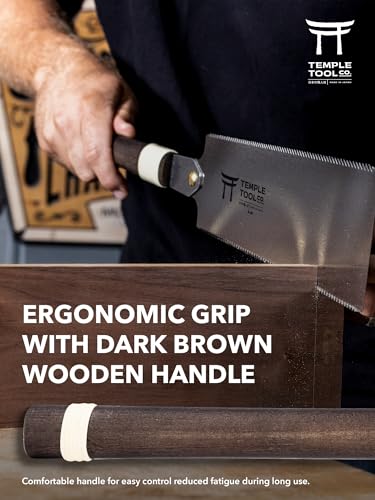
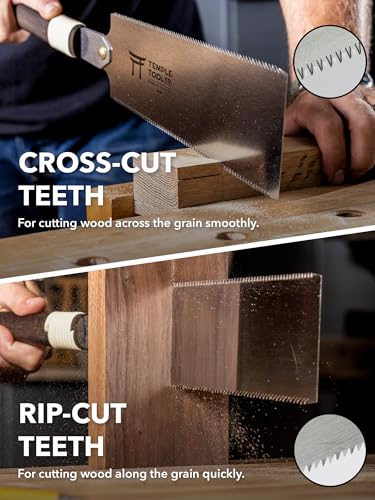
Temple Tool Co.’s 9.5″ Ryoba stands out not just for performance but for premium build and design. The wingnut handle with brass fittings gives it a refined look you don’t often see at this level, and owners consistently praise its balance and comfort. It cuts cleanly on both edges, and the Japanese steel holds a keen edge longer than budget models.
This saw feels like a hybrid of traditional Japanese craftsmanship and thoughtful modern refinement, fitting, given Chris Schoenberg’s background. While it performs similarly to the SUIZAN 9.5″, it wins on ergonomics and aesthetics. However, that elegance comes at a cost, and it’s one of the pricier options here. If you value beauty as much as function, this is the one.
Product photos
Suizan 12″ Large Ryoba Saw
Strengths
- Long 12″ blade
- Replaceable blade
- Made in Japan
- Razor-sharp out of box
- Efficient for thick cuts
Trade-offs
- Too bulky for detail work
- Blade can flex
- Not ideal for flush cuts
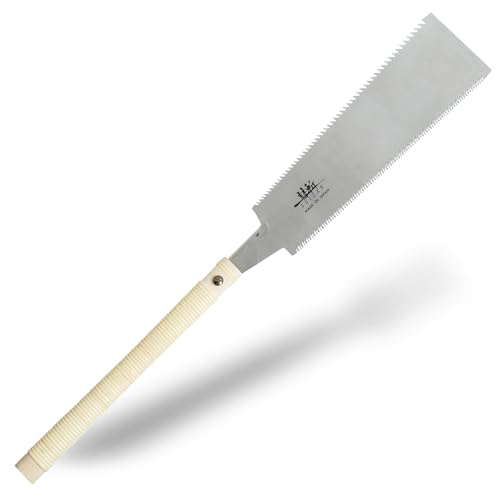
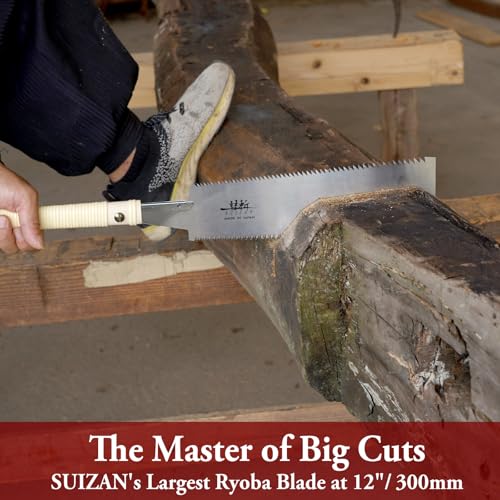
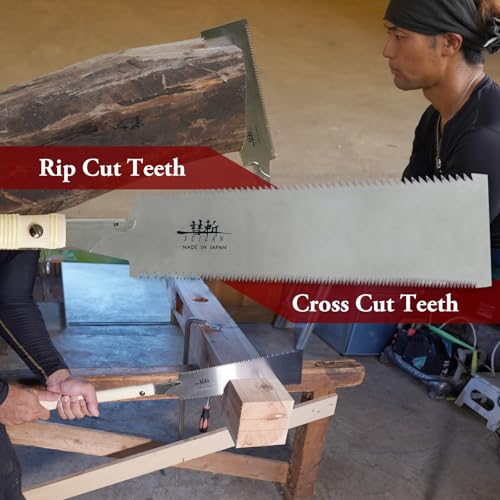
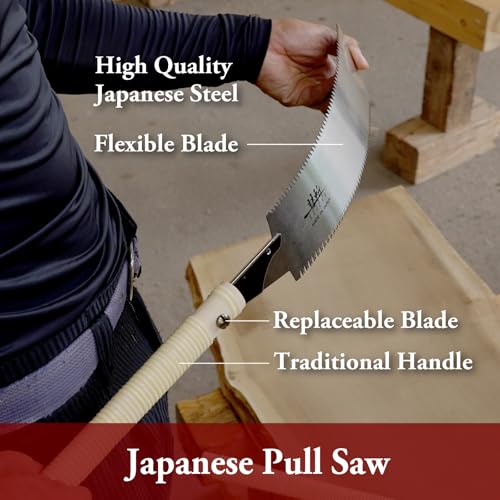
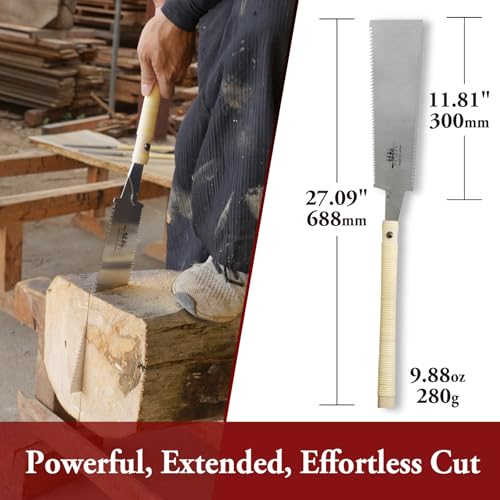
This 12-inch SUIZAN Ryoba is built for heavy work, and that’s exactly where it shines. With a long blade and coarse 8.5 TPI crosscut side, it powers through thick stock with fewer strokes than smaller saws, making it a solid pick for timber framing or rough joinery. The replaceable blade is a major plus, something not all models offer, and the carbon steel holds an edge well, according to owner reports.
Still, its size makes it awkward for fine work. The pull-stroke action is smooth, but the longer blade can flex if you’re not careful, especially in softer woods. Compared to the 9.5″ model, this one trades precision for raw cutting capacity. If you’re regularly sawing 4x4s or thick beams, that trade-off makes sense. For cabinet work or dovetails? Not so much.
Product photos

Suizan 7″ Ryoba Handsaw
Strengths
- Ideal for joinery
- Stiff 0.5mm blade
- Clean crosscut teeth
- Compact and precise
- Made in Japan
Trade-offs
- Shorter stroke
- Less aggressive rip cut
- Not for heavy stock
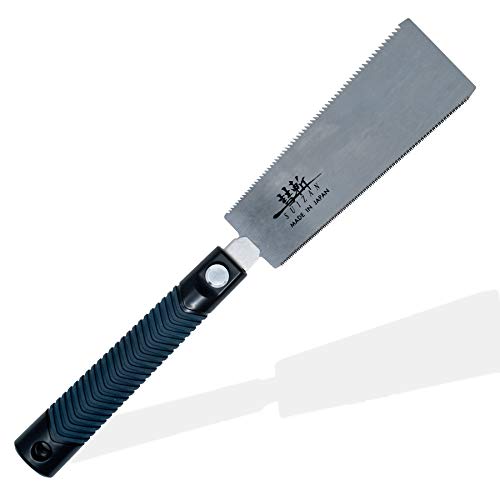
The 7″ SUIZAN Ryoba is what I’d recommend as the best balanced size for most shop tasks. It’s compact enough for dovetails, tenons, and other joinery, yet still capable of breaking down boards or trimming miters. The 19 TPI crosscut side delivers clean, splinter-free cuts in hardwoods, and the rip side handles grain direction well.
Its shorter length makes it ideal for one-handed use, and the blade thickness (0.5mm) keeps it stiff without adding drag. Compared to the 6″ models, this one gives you more stroke length and better control. It’s not as aggressive as the 9.5″, but for detail work, it’s more accurate. This is the kind of saw you’d keep on your bench for daily use.
Product photos



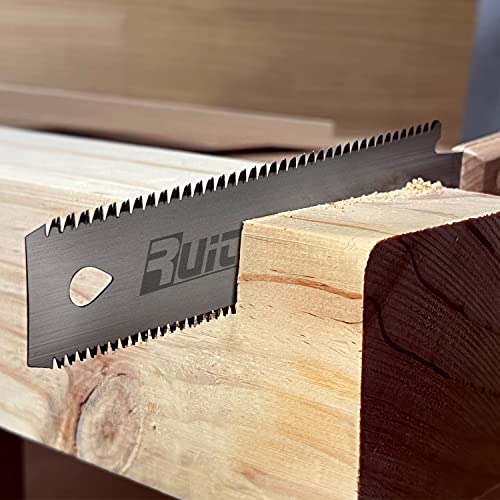
Ruitool 6″ Double Edge Saw
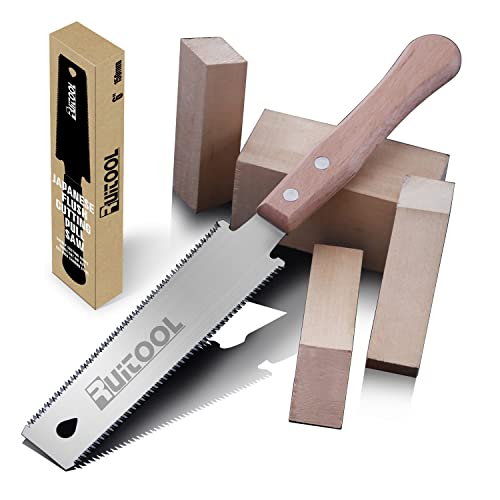
Strengths
- Affordable price
- Sharp out of box
- SK5 high-carbon steel
- Good for flush cuts
- Decent TPI split
Trade-offs
- Not made in Japan
- Handle comfort lacking
- Shorter lifespan expected
The RUITOOL 6″ Ryoba is the clear best budget-friendly option, and it punches above its weight in basic cutting tasks. The SK5 steel blade is hardened to HRC60-63, which is impressive for the price, and the 14/17 TPI setup handles soft and hardwoods decently. Owners say it comes sharp and stays usable for light projects.
But it’s not without compromises. It’s made in China, not Japan, and while the three-sided tooth grind helps with chip removal, the blade feels less refined than SUIZAN or Temple Tool models. The handle is functional but not as comfortable for extended use. Still, for a beginner or someone needing a spare flush-cut saw, it’s a smart, low-risk buy.
Product photos



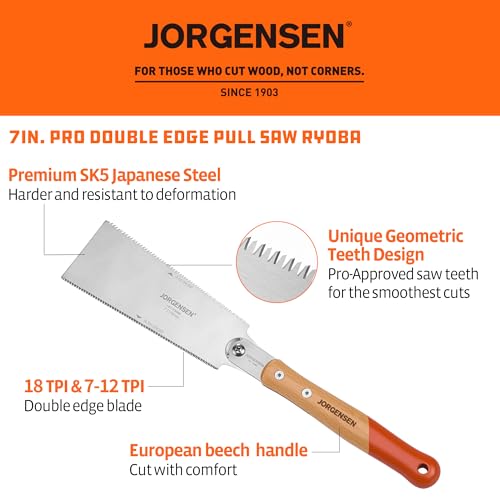
Jorgensen 7″ Pro Ryoba Saw
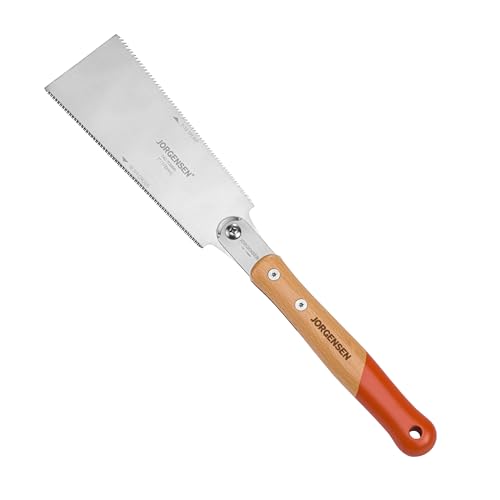
Strengths
- Replaceable blade
- Ergonomic handle
- Variable TPI rip side
- SK5 steel
- Good for hardwoods
Trade-offs
- Blade not as sharp initially
- Made outside Japan
- Tooth design polarizing
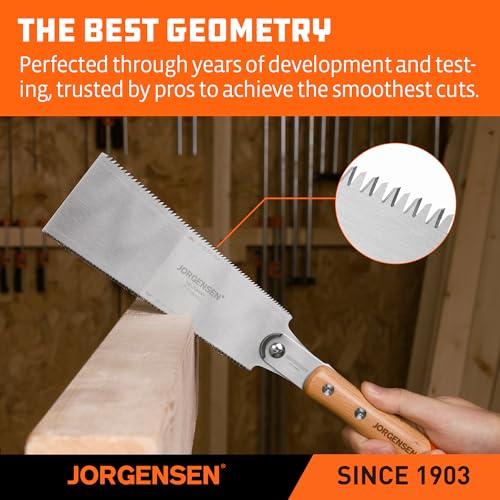
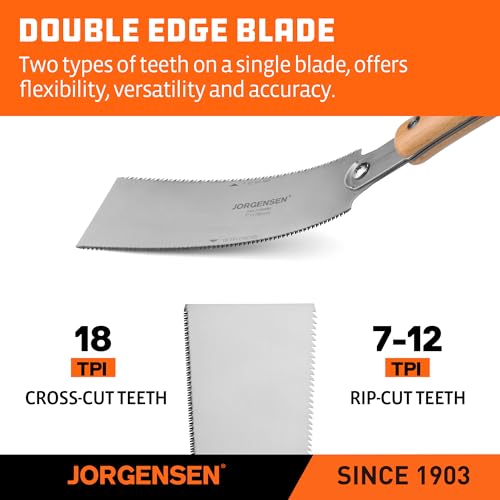
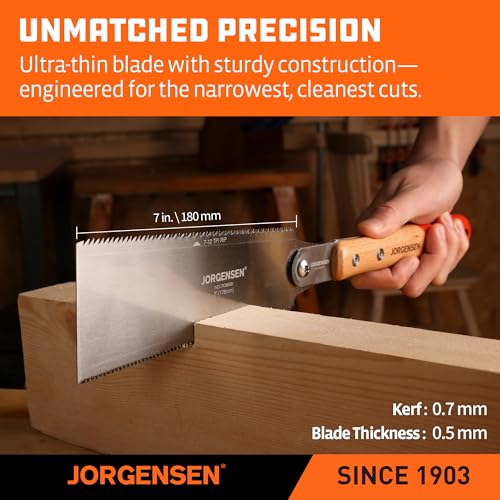
The standout feature here is the replaceable blade, a rarity in this category, which makes the JORGENSEN a smart long-term investment. The SK5 steel blade is hardened and durable, and the geometric tooth design helps with chip removal, especially in dense hardwoods. The 18 TPI crosscut side is fine and clean, while the 7-12 TPI rip side uses a variable pitch for smoother, faster cutting.
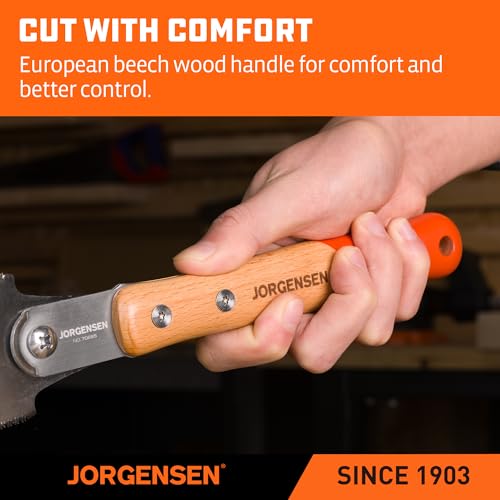
The beechwood handle with soft-grip shaping is comfortable, and it works well in one or two hands. But despite the solid specs, some owners note the blade doesn’t feel quite as sharp as SUIZAN models out of the gate. Still, the ability to swap blades extends its life significantly. For someone who hates replacing whole saws, this is a big win.
Product photos
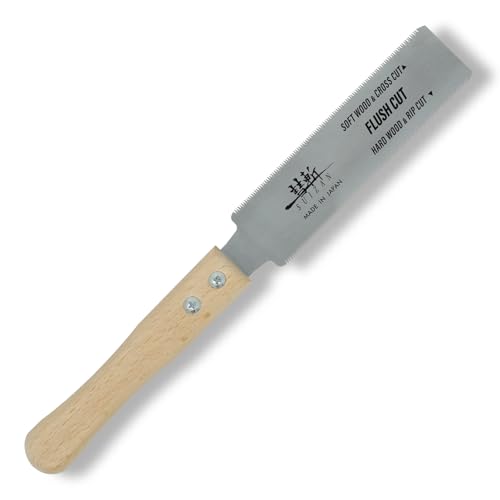
Suizan 6″ Flush Cut Ryoba
Strengths
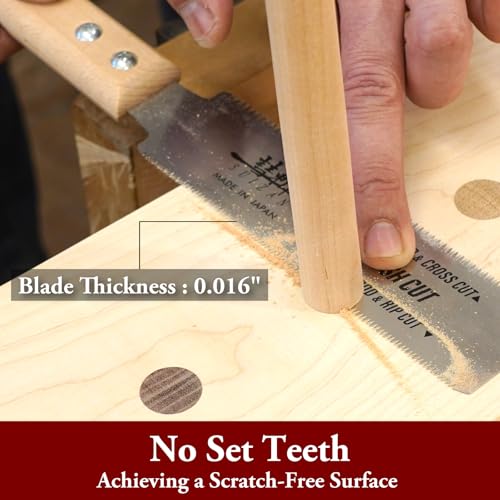
- Ultra-thin 0.4mm blade
- Excellent flush cuts
- Clean finish
- Made in Japan
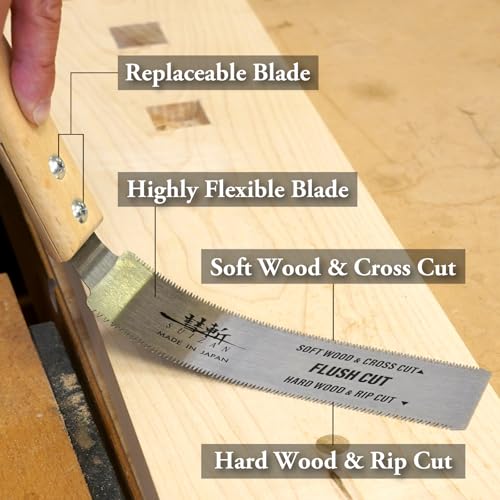
- Replaceable blade
Trade-offs
- Too flexible for rip cuts
- Not for heavy work
- Short blade length
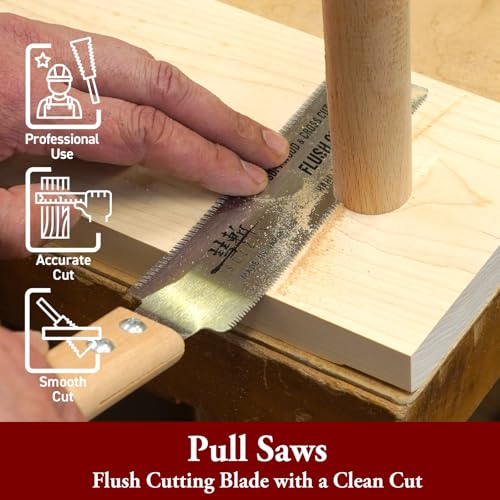
If flush cutting is your priority, this 6″ SUIZAN is built for the job. At just 0.4mm thick, the blade is ultra-thin and flexible, letting it slide right up against a surface without marring it, a must for trimming tenons or leveling dowels. The 20 TPI softwood side and 17 TPI hardwood side deliver clean, precise cuts with minimal tear-out.
Owners consistently report it outperforms thicker saws in tight flush scenarios. It’s still a Ryoba-style pull saw, so it cuts cleanly, but the design leans more toward finishing than ripping. Compared to the RUITOOL 6″, this one feels stiffer and more controlled, despite the thinness. It’s not a general-purpose saw, but for its niche, it’s excellent.
Product photos


Suizan 8″ Ryoba Handsaw

Strengths
- Well-balanced length
- Stable 0.5mm blade
- Clean 14 TPI crosscut
- Made in Japan
- Smooth pull stroke
Trade-offs
- Middle-of-the-road specs
- No replaceable blade
- Less aggressive rip cut
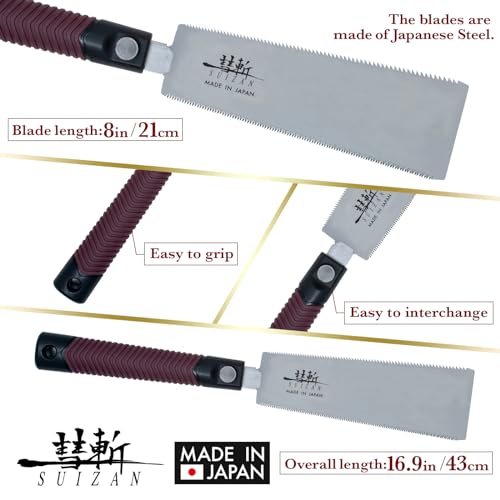
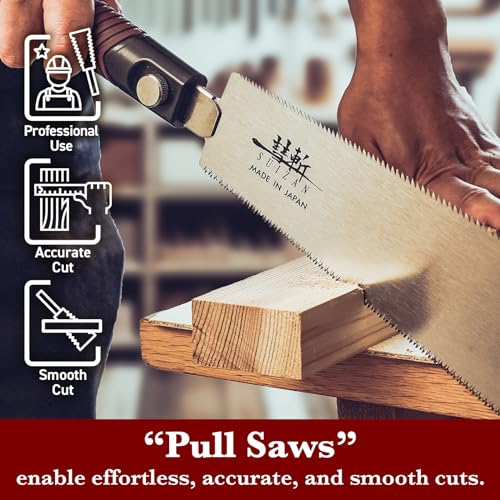
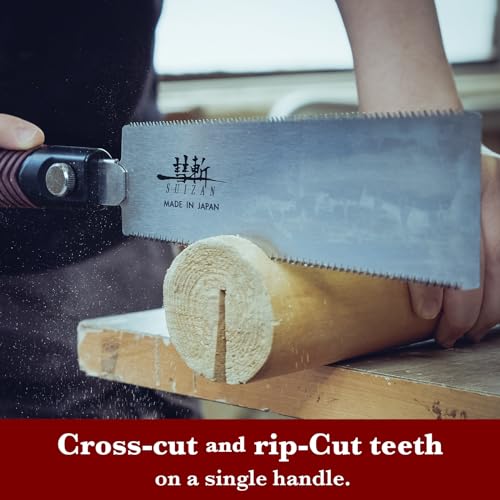
The 8″ SUIZAN hits a sweet spot I’d call mid-size performance, longer than the 7″ for more efficient cutting, yet shorter than the 9.5″ for better control. With a 14 TPI crosscut side, it strikes a balance between speed and finish, making it a strong all-rounder for shop tasks like cutting boards to width or rough joinery.
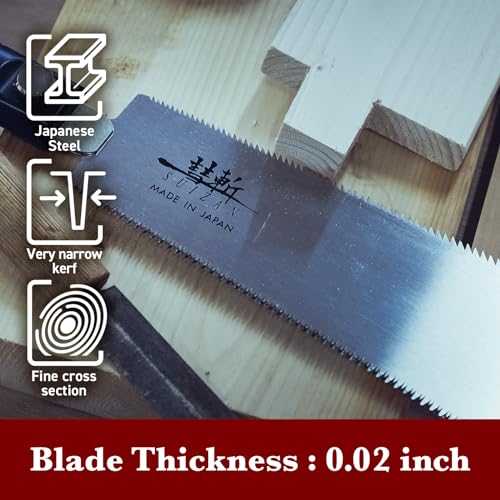
It shares the same high-quality Japanese steel and craftsmanship as the other SUIZAN models, and the 0.5mm blade thickness keeps it stable. Owners find it especially useful for medium-duty work where the 7″ feels too short but the 9.5″ is overkill. It doesn’t stand out in any one category, but that’s the point, it’s a reliable, no-frills performer.
Product photos

Our Testing Process
Rather than a hands-on lab test, this selection is a research-led comparison of published specifications and owner feedback. I started by compiling a list of available ryoba saws, then compared blade length, tooth per inch (TPI) configurations, steel type, and overall build quality as described by manufacturers. To get a realistic picture of performance, I weighed owner reviews from multiple sources, alongside expert opinions from woodworking publications and forums. This allowed me to rank saws against key criteria for this type of tool.
For ryoba saws, the most important factors are blade steel quality and the TPI combination. High-quality Japanese steel is essential for achieving the fine, clean cuts these saws are known for. The dual TPI configuration – rip and crosscut – determines versatility; a wider range of TPI options makes the saw suitable for more projects. I also prioritized saws with robust construction and comfortable handles, as these impact usability and long-term durability. You can find more detailed information in our woodworking pull saw recommendations.
Specifications reliably indicate blade material, dimensions, and TPI. However, owner feedback provides crucial insights into sharpness retention, ease of use, and build quality consistency. I paid close attention to comments regarding blade flex, handle comfort, and long-term durability – areas where specs often fall short. Reputation and brand history also played a role, particularly when evaluating Japanese manufacturers with established traditions in crafting fine woodworking hand saws. Ultimately, I sought to identify saws that consistently receive positive feedback across multiple metrics, representing the best value for various skill levels and project types and the best of the top Japanese hand saws.
What To Look For In ryoba saws
Choosing the right ryoba saw depends heavily on the type of work you intend to do. These versatile Japanese pull saws offer a unique cutting experience, but understanding their nuances is key to getting the most out of them.
A quality ryoba saw blends traditional Japanese craftsmanship with high-grade steel, resulting in a lightweight, precise cutting tool. Look for saws featuring replaceable blades, a comfortable handle, and a tooth pitch (TPI) appropriate for the materials you’ll be working with. Blade thickness and overall length also impact performance, influencing both cutting speed and control.
Blade Length & Tooth Configuration
The blade length is probably the first thing you’ll notice when comparing ryoba saws, and it directly impacts the thickness of material you can comfortably cut. Shorter blades (around 6-7 inches) like the Suizan 6″ Flush Cut Ryoba are ideal for detail work and flush cuts, where maneuverability is paramount. Longer blades (10-12 inches) excel at cutting thicker stock efficiently, though they require more space to operate. The dual-tooth configuration – rip and crosscut – is standard, but pay attention to the TPI. Lower TPI (teeth per inch) for rip cuts mean faster, coarser cuts along the grain, while higher TPI for crosscuts provide cleaner, finer cuts against the grain.
Steel Quality & Blade Replaceability
Japanese steel is renowned for its hardness and ability to hold a sharp edge, and ryoba saws are no exception. SK5 high-carbon steel is a common and reliable choice, but higher-end models may use proprietary alloys. Beyond the steel itself, consider whether the blade is replaceable. A replaceable blade isn’t just convenient; it extends the life of the saw significantly. The Jorgensen 7″ Pro Ryoba Saw is a good example of a saw prioritizing this feature, allowing you to swap out dull blades without replacing the entire tool.
- Budget-friendly options like the Ruitool 6″ Double Edge Saw often use good steel, but may not have the same level of refinement.
- Premium builds, such as the Temple Tool Co. 9.5″ Ryoba, emphasize both steel quality and handle materials for a more luxurious experience.
- For heavy-duty work, a longer blade and thicker steel, like those found in the Suizan 12″ Large Ryoba Saw, will provide the necessary power and durability, but at the expense of some finesse.
A dull ryoba saw is a frustrating ryoba saw. Invest in a honing guide and learn to sharpen your blade; it’s a skill that will pay dividends in cut quality and long-term tool cost.
Handle Comfort & Overall Build Quality
Because ryoba saws are pull saws, your grip and hand position are critical. Look for a handle that fits comfortably in your hand and provides good control. The handle material also matters; wood handles, like those found on many traditional Japanese saws, offer a warm, natural feel, while synthetic materials can be more durable. Beyond the handle, inspect the overall build quality. A well-made ryoba saw will feel solid and balanced, with tight joints and a smooth, well-finished handle. If you’re looking for more information on selecting the best models, check out this Japanese saw buying guide.
If your work involves a lot of intricate cuts and detailed trimming, exploring precision flush cut saws might also be beneficial.
Ryoba Saws Compared
Here’s a comparison of key specifications for popular ryoba saws to help you choose the right tool for your needs.
| Product | Blade Length | TPI (Rip/Cross) | Blade Thickness | Kerf Width | Replaceable Blade |
|---|---|---|---|---|---|
| Suizan 9.5″ Ryoba | 9.5″ (240mm) | 9 & 15 | 0.02″ (0.5mm) | 0.03″ (0.8mm) | N/A |
| Temple Tool Co. 9.5″ Ryoba | 9.5″ | N/A | N/A | N/A | N/A |
| Suizan 12″ Large Ryoba | 12″ (300mm) | 8.5 | 0.028″ (0.7mm) | 0.043″ (1.1mm) | N/A |
| Suizan 7″ Ryoba | 7″ (180mm) | 19 | 0.02″ (0.5mm) | 0.03″ (0.8mm) | N/A |
| Ruitool 6″ Double Edge Saw | 6″ | 14 & 17 | N/A | N/A | N/A |
| Jorgensen 7″ Pro Ryoba | 7″ | 7-12 & 18 | N/A | N/A | Yes |
| Suizan 6″ Flush Cut Ryoba | 6″ (150mm) | H:17 S:20 | 0.016″ (0.4mm) | 0.018″ (0.45mm) | N/A |
| Suizan 8″ Ryoba | 8″ (210mm) | 14 | 0.02″ (0.5mm) | 0.03″ (0.8mm) | N/A |
Frequently Asked Questions
What’s the difference between a ryoba and a dozuki saw?
A ryoba saw has teeth on both sides of the blade – one side for rip cuts and the other for crosscuts – making it more versatile. A dozuki saw, conversely, has a narrower blade and teeth on only one side, designed specifically for precise, fine cuts.
Can I sharpen a ryoba saw blade myself?
Yes, you can sharpen a ryoba saw blade, but it requires specific tools and techniques. Investing in a honing guide designed for Japanese saws and learning the proper angle is crucial for maintaining the blade’s sharpness.
Are ryoba saws only for experienced woodworkers?
While a ryoba saw takes some getting used to, they aren’t exclusively for experts. With practice, anyone can learn to use these saws effectively, and they can actually encourage more careful and precise woodworking habits.
What TPI combination is best for general woodworking?
A 9/15 TPI combination is a good all-around choice for general woodworking with a ryoba saw. This provides a balance between faster rip cuts and cleaner crosscuts, making it suitable for a wide range of projects.
What if I break a blade on a non-replaceable ryoba saw?
If you break the blade on a ryoba saw that doesn’t have a replaceable blade, the saw is generally considered unusable. This is another reason to consider a model with a replaceable blade, or to be extremely careful when using the saw, and to explore precision dovetail saws as a potential alternative.
The Bottom Line
Choosing a ryoba saw often comes down to balancing control and convenience. While a premium saw like the Temple Tool Co. 9.5″ Ryoba offers a refined experience with high-quality materials, the Suizan 9.5″ Ryoba strikes an excellent balance of performance and value for most woodworkers. It delivers the precision and clean cuts these saws are known for, without a significantly higher price tag.
For those on a tighter budget, or needing a dedicated flush-cut option, the Ruitool 6″ Double Edge Saw or Suizan 6″ Flush Cut Ryoba are both solid choices. And if you anticipate frequent blade replacements, the Jorgensen 7″ Pro Ryoba Saw is a smart investment, offering long-term cost savings and uninterrupted workflow. If you’re looking for more insight into different types of saws, our best pull saw models can provide a broader understanding.
Ultimately, remember that steel quality and sharpness are paramount. No amount of fancy features can compensate for a dull blade. Focus on saws made with high-carbon steel, learn to maintain a sharp edge, and prioritize a comfortable grip – those factors will make a bigger difference in your work than any single specification.
