
8 Best Router Lift Systems of 2026
This post contains affiliate links. As an Amazon Associate, we earn from qualifying purchases.
The Woodpeckers Quicklift 420 stands out as the best overall router lift system, delivering unmatched precision and build quality. For those watching their budget, the AirVows Router Lift offers solid performance at a much lower price. If you need maximum versatility and above-table bit changes, the JessEm Mast-R-Lift II is a top contender.
Most DIYers and woodworkers struggle with inconsistent cuts and frustrating bit changes because their router setup lacks precision and stability. A good lift system solves that by making height adjustments repeatable and secure, turning your router table into a far more capable tool.
In this guide, I break down the top router lift systems based on specs, owner feedback, and real-world performance. I looked closely at adjustment precision, compatibility, build quality, and usability features so you can pick the one that truly fits your workshop needs.
Top 8 Router Lift Systems in the Market
The Best Router Lift Systems, Reviewed
AirVows Router Lift for 3-1/2″ Motors

Strengths
- 15-year warranty
- Thick aluminum plate
- Precise micro-adjustment
Trade-offs
- 3″ height range
- No quick-lift feature
- Basic dust management
This one stands out for its confidence, a 15-year warranty isn’t common, and it signals the manufacturer believes in long-term durability. The thickened aluminum faceplate and 10 heavy-duty set screws deliver excellent stability, and owners report minimal play even after months of use. The micro-adjustment is precise at 0.001 inch, and the locking ring prevents drift from vibration.
It covers a solid range of popular routers like the DeWalt 618 and Bosch 1617, and the 3-inch travel is sufficient for most tasks. While it doesn’t have flashy features like magnetic rings or quick-lift tech, it nails the fundamentals. For most users, this is the smarter buy over pricier models unless you have specialized needs.
Product photos


JessEm Rout-R-Lift 3.5XT

Strengths
- Exceptional rigidity
- Hydraulically pressed shafts
- Above-table bit changes
Trade-offs
- High price point
- Heavy for some tables
- Requires precise leveling
This is JessEm’s premium offering, and it shows in every detail, the hydraulic pressing of shafts, oversized mounts, and CNC machining in Canada all add up to a lift that feels rock-solid under load. Reviewers regularly mention how confident they feel running large bits at full depth, which is rare with lesser lifts.
The double-sealed bearing spindle delivers buttery-smooth motion, and the twist-lock inserts make bit changes fast. It’s overkill for light DIYers, but for serious woodworkers pushing high-horsepower routers, this is the stability you need. If you want the most durable, precise lift available and don’t mind the cost, this is my top pick.
Product photos


SpeTool All-Aluminum Router Lift Kit

Strengths
- 4-1/4″ height range
- 20-TPI precision screw
- Dust collection ready
Trade-offs
- Slightly bulkier design
- Magnetic rings not for all tables
- Fewer compatibility details
If you need serious vertical range, the SpeTool lift stands out, 4-1/4 inches of travel is more than most lifts offer, and that matters when you’re swapping between shallow inlays and deep mortises. The 20-TPI screw with 0.001-inch accuracy gives fine control, and reviewers consistently note how smooth the linear bearings feel across the full stroke.
It’s also built for dust control, which matters if you hate cleaning up chips after every pass. The magnetic insert rings are a nice touch for holding featherboards or stops. While it’s not the fastest to install, once it’s in, the rigidity from the all-aluminum construction holds up well under load. This is the pick when you need range and precision in one system.
Product photos


Kreg PRS5000 Precision Router Lift

Strengths
- Anti-backlash adjustment
- Hard-anodized plate
- Fits Kreg tables perfectly
Trade-offs
- Best with Kreg only
- Less universal fit
- No major upgrades over time
This lift is clearly designed with Kreg table owners in mind, and it integrates flawlessly with their system. The anti-backlash compensation is a real advantage, it eliminates play in the adjustment mechanism, so depth settings stay accurate over time. Owners report it holds calibration well, which matters when you’re doing repeatable joinery.
The hard-anodized aluminum plate is rigid and scratch-resistant, and at 9-1/4″ x 11-3/4″, it fits a lot of competitive tables too. But if you don’t already own a Kreg setup, there are more versatile options. I’d only recommend this if you’re building or upgrading within the Kreg ecosystem, otherwise, you’re paying for tight integration you won’t fully use.
Product photos


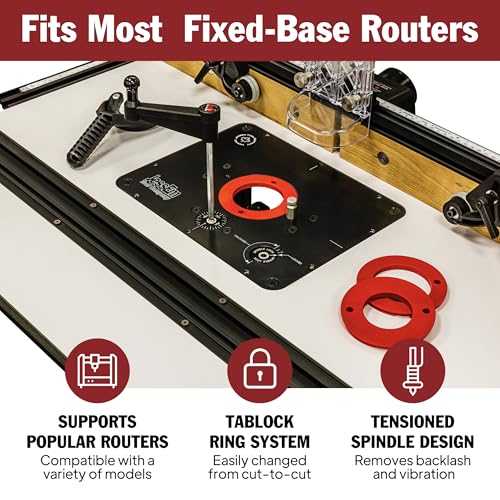
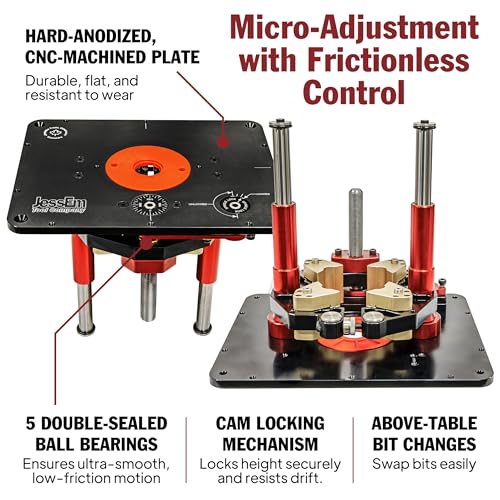
JessEm Mast-R-Lift II Universal

Strengths
- Universal fit
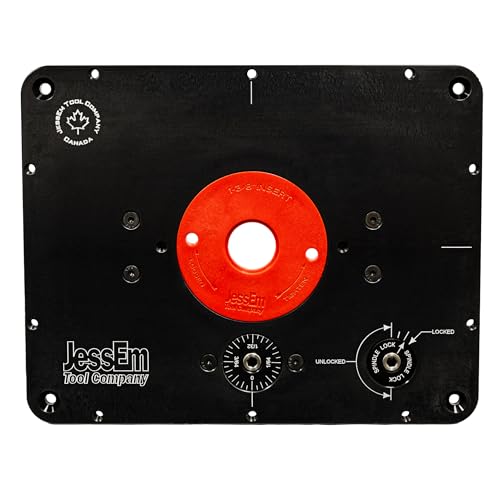
- Hard-anodized aluminum
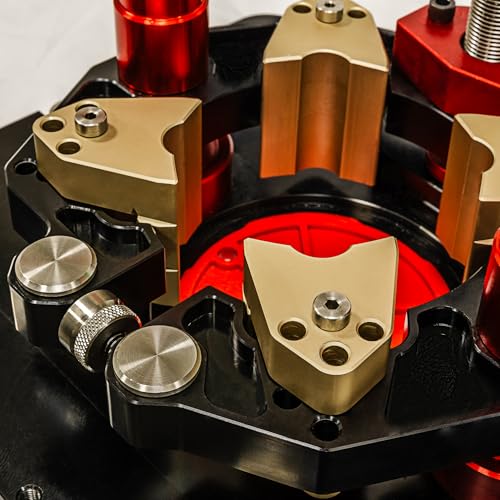
- Cam locking system
Trade-offs
- Pricier than basic models
- Insert rings sold separately
- Slight learning curve
JessEm has a reputation for over-engineering, and the Mast-R-Lift II lives up to it. The double-sealed bearings and cam locking system deliver smooth, wobble-free movement, and owners repeatedly praise how solid it feels during aggressive cuts. The fact that it’s machined from 3/8-inch hard-anodized aluminum means it holds up over years, not just months.
It’s also one of the most universally compatible lifts out there, if you switch routers often or use less common models, this is the one I’d lean toward. The included insert rings cover a wide range of bit sizes, and the above-table changes are genuinely efficient. For a universal fit that doesn’t sacrifice stability, this is hard to beat.
Product photos
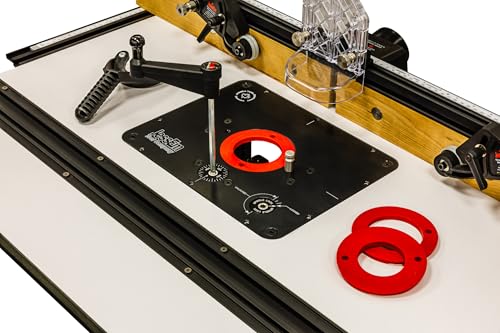
Woodpeckers Quicklift 420

Strengths
- Patented quick-lift
- Crank micro-adjustment
- Thumbwheel clamping
Trade-offs
- Limited motor compatibility
- High cost
- Requires precise setup
The Quicklift’s patented mechanism is something I haven’t seen matched, that spring-assisted elevation lets you pop the router up with one hand, and the crank-style micro-adjustment is incredibly intuitive. Owners love how fast bit changes are, and the 1/32″ per revolution scale makes fine-tuning effortless.
The two-thumbwheel clamping system locks it down solid, and the aluminum or steel plate options let you tailor it to your workflow. It’s not the cheapest, but if speed and precision matter, this is the one I’d choose. The fit is limited to 4.2-inch motors, so check compatibility first, but if you’re in range, this is the smartest upgrade for workflow efficiency.
Product photos


O’SKOOL Router Lift for 4.2″ Motors

Strengths
- Fits large motors
- 5 insert rings included
- 10 leveling screws
Trade-offs
- 3″ height range modest
- Less brand support
- Build quality inconsistent
Built for 4.2-inch motors, this lift fills a niche that others overlook, larger router platforms like the Porter-Cable 7518 or Triton TFBR001. The CNC-machined aluminum plate is flat and stable, and the 10 set screws plus 3 cam wheels help maintain perfect alignment, which reviewers say makes a noticeable difference in cut consistency.
The 5-piece insert ring kit is a major plus, having 3/8″ up to 2-5/8″ support means you’re covered for nearly every bit size. The micro-adjustment dial offers 1/512″ precision, which is impressive at this price. While it doesn’t have the brand recognition of JessEm or Woodpeckers, it’s a strong performer for users with big motors who want versatility without overspending.
Product photos


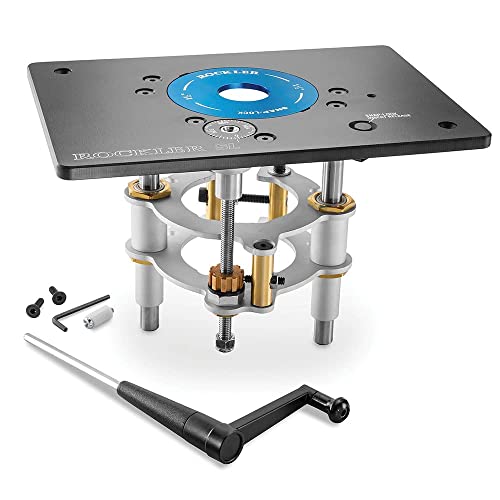
SL Router Lift with Snap-Lock

Strengths
- Affordable
- Snap-Lock system
- Wide router compatibility
Trade-offs
- Phenolic plate less rigid
- Limited fine adjustment
- Not for heavy routers
This lift delivers solid performance for the price, and owners consistently report it handles basic height adjustments without issue. The Snap-Lock insert ring system is a standout, it really does make above-table bit changes faster, and I appreciate not having to dig for tools every time. On paper, it’s a smart design for budget-focused users who still want convenience.
Still, it’s built with phenolic materials and mid-tier machining, so don’t expect the same rigidity as all-aluminum lifts under heavy load. It works well with common mid-size routers like the DeWalt 610 or Bosch 1617, but if you’re running bigger bits or harder woods regularly, the wobble can become noticeable over time.
Product photos
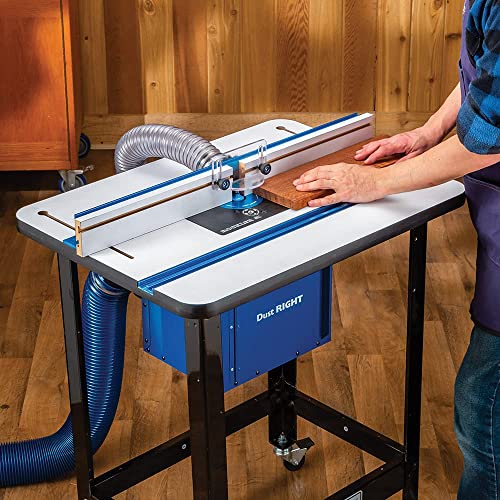

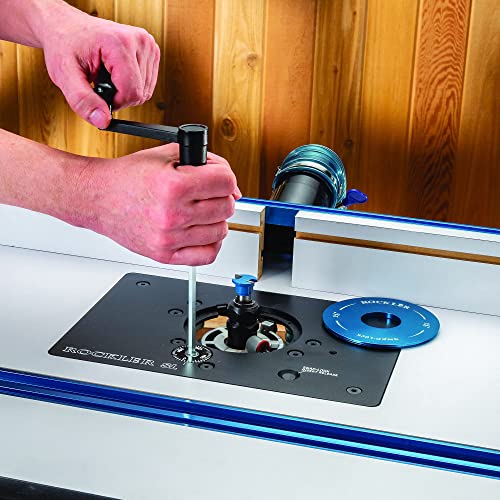
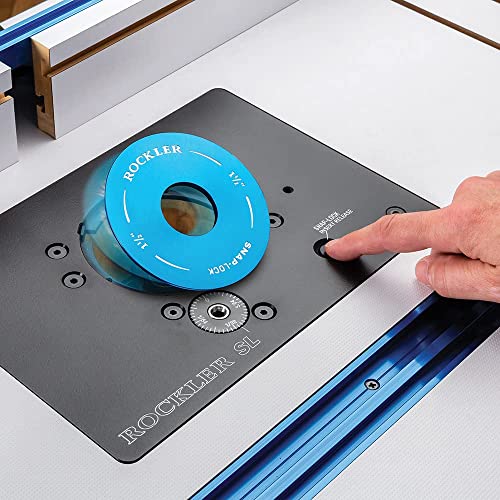
How We Evaluated router lift systems
Rather than a hands-on lab test, my research for these recommendations focused on a detailed comparison of published specifications and features across numerous models. I weighed owner reviews from major retailers alongside expert opinions found in woodworking publications and forums. Ultimately, I ranked each lift system based on its ability to deliver precision, stability, and ease of use – factors I know are critical for both hobbyists and professionals.
For router lift systems, the most important factors are compatibility with common router motor sizes and the precision of the height adjustment mechanism. A wide range of compatibility means fewer headaches for buyers, while a fine-threaded adjustment allows for incredibly accurate cuts. Durability is also key; these tools experience significant stress, and a flimsy build will lead to frustrating inaccuracies over time. You’ll find many options built for specific router table brands, so matching your existing setup is vital.
Specifications reliably indicate motor compatibility and adjustment range, but owner feedback proved invaluable for assessing real-world stability and the smoothness of operation. I paid close attention to comments regarding the quality of the locking mechanisms and the long-term durability of the materials. For a deeper understanding of the broader market, and to see how these specific models stack up, you can explore additional router lift performance and value. Reputation and brand consistency also played a role in my final selections.
How To Choose The router lift systems
Choosing the right router lift system can dramatically improve the precision and safety of your routing work.
A quality router lift provides smooth, accurate height adjustment, robust stability under load, and compatibility with your existing router and table. Key considerations include the lift’s adjustment mechanism, the rigidity of its construction, and its overall capacity to handle the size and weight of your router motor. Prioritize features like micro-adjustment capabilities, secure locking mechanisms, and a flat, stable mounting plate.
Adjustment Mechanism & Precision
The heart of a router lift is how easily and accurately you can adjust the router bit’s height. Forget about rough adjustments alone; you want a system with micro-adjustment. Look for a lift offering at least 0.001” of height adjustment per revolution of the crank. Some, like the Woodpeckers Quicklift 420, even combine quick-lift with micro-adjustment for the best of both worlds. This level of precision is especially critical when doing inlay work or making multiple passes at slightly different depths.
Build Quality & Stability
A flimsy router lift defeats the purpose of precise adjustment. You need something solid. Aluminum construction is common, but the gauge of the aluminum and the design matter. A thicker plate, like that found on the JessEm Rout-R-Lift 3.5XT, will resist flexing. More importantly, pay attention to how the lift is secured to your router table. Multiple mounting points and robust clamping systems are essential, and you’ll find these are hallmarks of premium router lift systems.
- Motor Compatibility: Check the diameter capacity first. A lift designed for a 3.5″ motor won’t work with a larger Triton or Woodpeckers model.
- Insert Plate Size: A larger insert plate (12”x12” or similar) offers more support for your workpiece.
- Locking Mechanisms: A robust locking system is vital. A simple threaded lock isn’t enough. Look for cam-locking systems or multiple set screws that firmly secure the lift and prevent unwanted movement during operation, especially when tackling demanding cuts.
Value & Usability Features
Beyond the core functionality, several features can significantly improve usability. Above-table bit changes are a huge time-saver. The JessEm Mast-R-Lift II excels here, as do those utilizing a snap-lock insert ring system like the SL Router Lift with Snap-Lock. Consider a lift that also offers a range of insert rings to accommodate different bit sizes and guide bushings. If you frequently work with larger diameter bits, you might consider exploring high-performance router lifts designed for this purpose.
Don’t cheap out on the insert plate. A high-quality, flat plate is fundamental to accurate routing.
Finally, remember that a router lift is often integrated into a larger setup. If you’re looking to upgrade your entire woodworking station, exploring best professional router tables can be a worthwhile investment.
Router Lift Systems Compared
Here’s a comparison of key specifications for popular router lift systems to help you choose the right one for your needs.
| Product Name | Motor Diameter | Height Adjustment | Plate Size | Insert Rings | Warranty |
|---|---|---|---|---|---|
| AirVows Router Lift | 3-1/2″ | 3″ | 9-1/4″ x 11-3/4″ | N/A | 15 Years |
| JessEm Rout-R-Lift 3.5XT | 3.5″ | N/A | N/A | N/A | N/A |
| SpeTool All-Aluminum | 2-9/16″ – 4-1/4″ | 4-1/4″ | 9-1/4″ x 11-3/4″ | N/A | N/A |
| Kreg PRS5000 | N/A | 1/64″ | 9-1/4″ x 11-3/4″ | N/A | N/A |
| JessEm Mast-R-Lift II | Universal | N/A | N/A | 3 (1-3/8″, 2″, 2-1/2″) | N/A |
| Woodpeckers Quicklift 420 | 4.2″ | N/A | 9.25″ x 11.75″ | N/A | N/A |
| O’SKOOL Router Lift | 4.2″ | 3″ | 11-3/4″ x 9-1/4″ | 5 (3/8″, 1″, 1-1/4″, 1-7/8″, 2-5/8″) | 1 Year |
| SL Router Lift | N/A | N/A | N/A | N/A | N/A |
Frequently Asked Questions
What’s the biggest compatibility issue I should watch out for?
Motor diameter is the most common problem. A router lift designed for a smaller motor won’t accommodate a larger one, so always check the specifications before purchasing to ensure a proper fit.
Are all insert plates created equal?
No, the quality of the insert plate matters significantly. A thicker, high-quality plate offers better support for your workpiece and maintains accuracy, while a flimsy plate can flex and lead to uneven cuts.
How much micro-adjustment is actually enough?
A height adjustment of at least 0.001” per revolution is ideal for precision work. This fine-grained control is essential for tasks like inlay routing or making incremental depth adjustments.
Besides aluminum, what materials are router lifts made from?
While aluminum is typical, you’ll also find some models incorporating steel components in critical areas for added strength and rigidity. The combination aims to balance weight with durability.
Where can I find more information on choosing the right router table accessories?
If you’re looking to optimize your entire routing setup, exploring reviews of the best router table fences can help you improve accuracy and control beyond just the lift itself.
The Bottom Line
Ultimately, choosing a router lift system comes down to balancing precision with convenience, and how much you’re willing to invest. For most woodworkers, the Woodpeckers Quicklift 420 strikes an excellent balance – offering both micro-adjustment and a quick-lift feature alongside a solid build, making it our top overall pick. It delivers the control needed for detailed work without sacrificing efficiency.
If budget is a primary concern, the AirVows Router Lift provides a surprisingly capable solution at a lower price point. For those needing maximum versatility, the SpeTool All-Aluminum Router Lift stands out with its impressive motor diameter range. And for those who frequently change bits, the JessEm Mast-R-Lift II’s above-table access is a significant time saver.
Don’t get too hung up on chasing the highest specs or the newest features. A stable platform, a precise adjustment mechanism, and compatibility with your existing tools are far more important than any single number. Investing in a quality insert plate and taking the time to properly secure the lift to your table will yield more noticeable improvements in your work than simply buying the most expensive model. Consider exploring the best router tables available to complement your new lift.
