7 Best Rotary Effect Pedals of 2026
This post contains affiliate links. As an Amazon Associate, we earn from qualifying purchases.
The Strymon Lex Rotary V2 stands out as the best overall rotary effect pedal, delivering an incredibly rich and authentic Leslie speaker simulation with deep control. For players on a budget, the Donner Mod Square Ⅱ offers solid rotary tones and a wide range of modulation effects at a fraction of the price. If you want something that blends vintage feel with modern flexibility, the Keeley Rotary Simulator is a strong contender.
Guitarists chasing that lush, three-dimensional swirl of a vintage rotary speaker often end up sifting through pedals that sound flat or overly digital. The right one should feel alive, with smooth transitions and depth that enhances your tone instead of burying it.
This guide cuts through the noise by focusing on what actually matters: simulation quality, hands-on control, and real-world usability. I compared specs, studied owner feedback, and evaluated each pedal based on how well it delivers that classic rotating speaker experience, whether you’re after vintage accuracy or modern versatility.
Top 7 Rotary Effect Pedals in the Market
The Best Rotary Effect Pedals, Reviewed
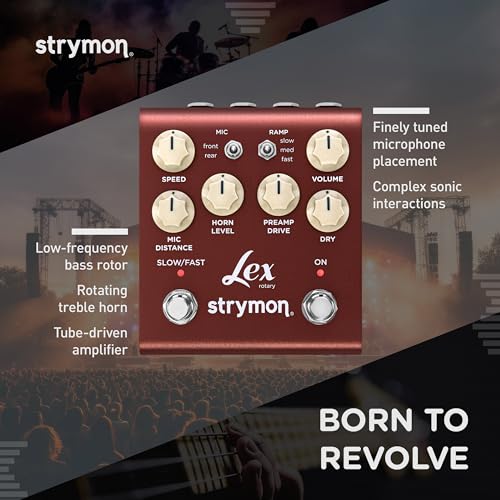
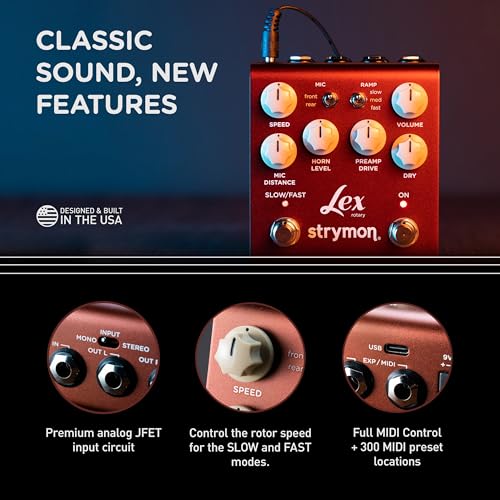
Strymon Lex Rotary Simulator V2
Strengths
- Deep parameter control
- Realistic mic modeling
- Smooth ramp transitions
- Stereo I/O
Trade-offs
- Large footprint
- No expression pedal included
- Higher price tier
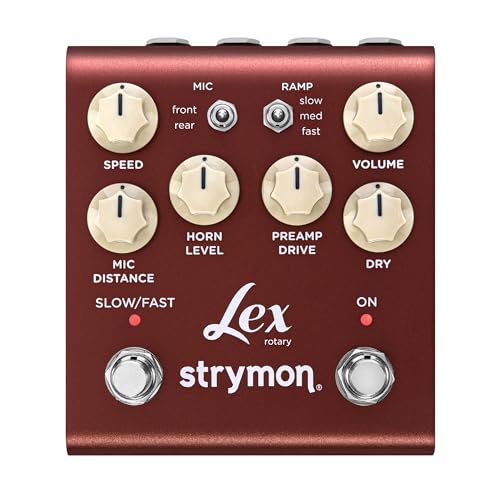
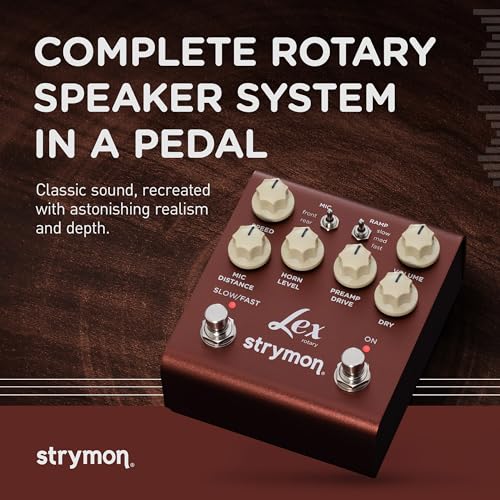
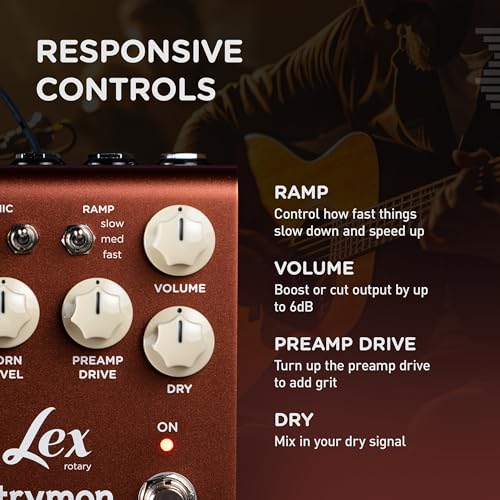
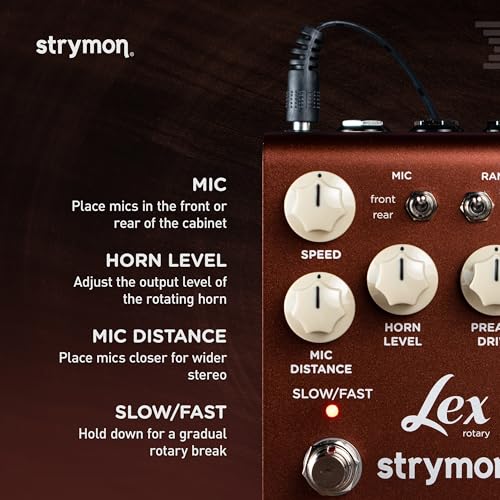
The Strymon Lex remains the gold standard for rotary speaker simulation, and the V2 refines an already stellar design. With six dedicated knobs, you can sculpt every aspect of the effect, from horn and rotor speed to acceleration time and mic distance. The mic position switch alone adds a level of realism most pedals don’t even attempt. It’s not just a modulation effect, it’s a full Leslie cabinet in a box.
Owners consistently report that it feels alive, with smooth ramping and a three-dimensional swirl that tracks your playing dynamics. While it’s expensive, every dollar shows in the build, sound, and flexibility. Compared to the Keeley or BOSS options, it’s in a different league. If you play keys or guitar and need studio-quality rotary tones for recording or live work, this is the one to beat.
Product photos
BOSS RT-2 Compact Rotary Ensemble
Strengths
- Authentic rotary modes
- Rotor speed display
- Drive saturation control
Trade-offs
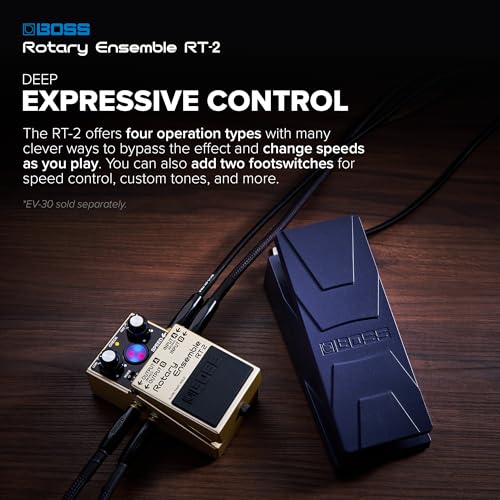
- No external expression control
- No presets
- Limited stereo flexibility
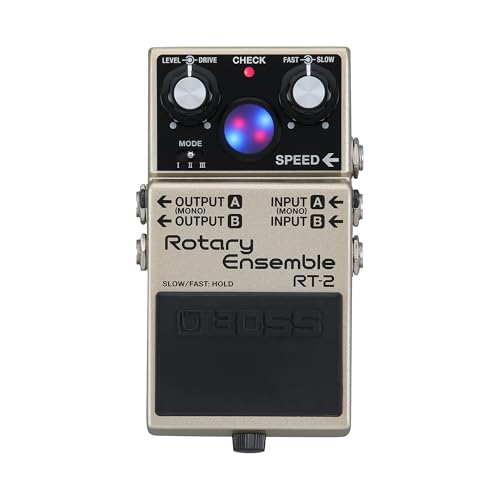
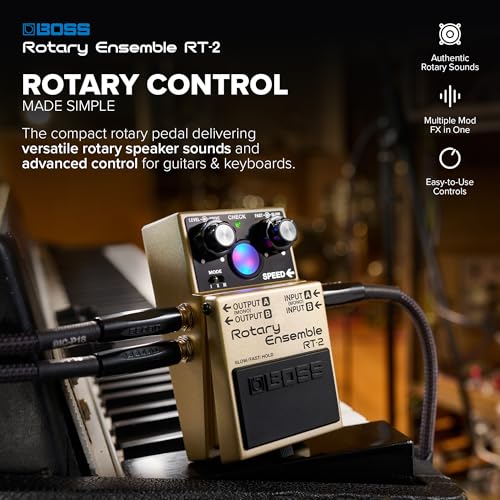
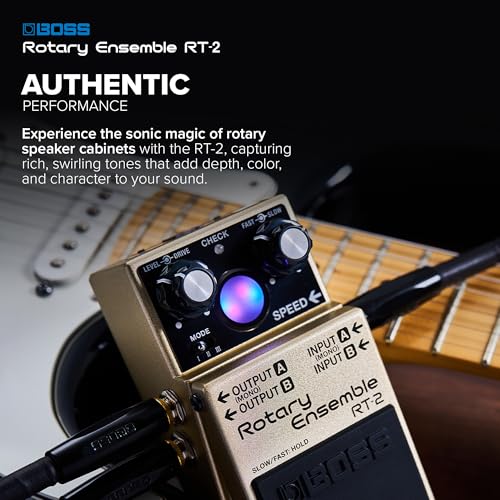
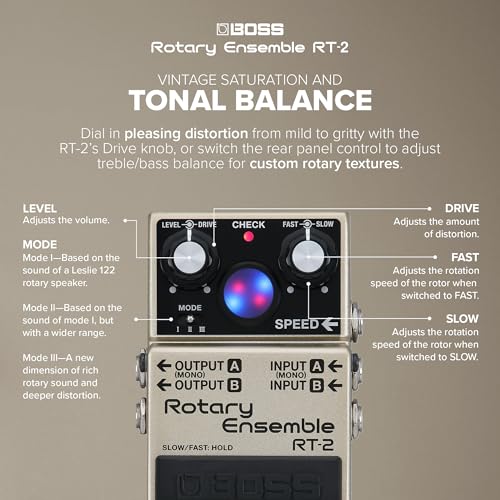
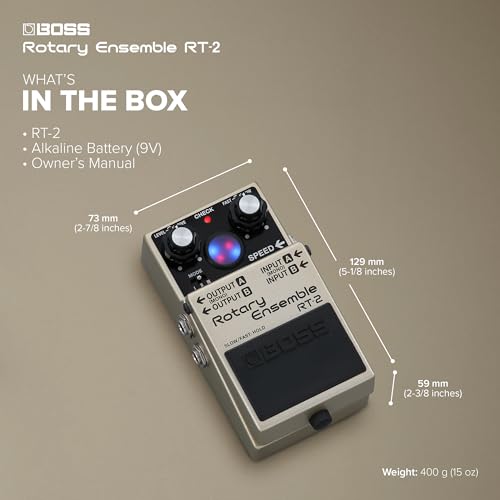
BOSS has always excelled at distilling complex effects into reliable, stage-ready formats, and the RT-2 is no exception. It delivers the core experience of a rotating speaker with a simplified interface and a few smart twists. The three modes give you options beyond vintage emulation, there’s a modified tone with wider stereo spread that works well for ambient textures. The drive knob adds just enough tube-like grit to sell the illusion.
The visual feedback from the rotor lights is a nice touch, and reviewers consistently note how intuitive it is to dial in a convincing swirl. It’s not as deep as the Strymon Lex, but it’s far more accessible and fits standard pedalboards. For guitarists and keyboard players who want authentic rotary sounds without the bulk or price tag, this is a logical upgrade from basic chorus or vibrato pedals.
Product photos
JHS 3Series Rotary Chorus

Strengths
- Simple, effective layout
- Warm analog character
- Room switch adds depth
Trade-offs
- No tap tempo
- Mono input/output
- No preset options
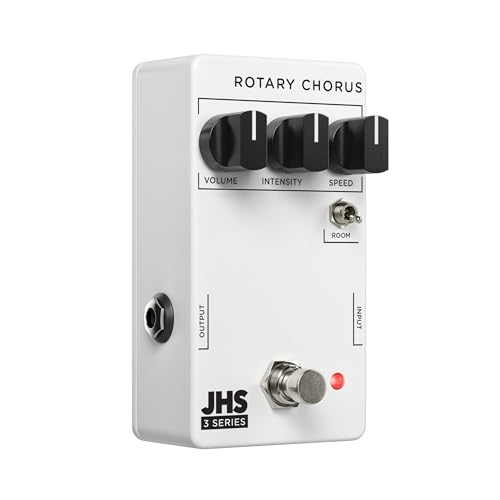
JHS keeps it refreshingly simple here. The 3Series Rotary Chorus is a no-frills tribute to the classic analog rotary pedals of the ’70s, and it nails the vibe. With just Speed, Intensity, and a Room switch, it’s easy to dial in that lush, swirling motion that works so well for indie, rock, and surf tones. The Room switch subtly alters the spatial character, which adds more versatility than the minimal layout suggests.
It doesn’t offer modern luxuries like tap tempo or stereo outs, but that’s not the point. This is a pedal for guitarists who want a straightforward, musical effect that enhances their tone without stealing the spotlight. Compared to the BOSS RT-2, it’s less versatile but more focused, like a single-color paintbrush versus a full palette. If you love classic chorus and want it on tap without clutter, this is a smart pick.
Product photos
Klowra Sprout Modulation Pedal

Strengths
- Tap tempo with subdivisions
- Ramp control
- Analog dry-through
- Stereo I/O
Trade-offs
- No preset saving
- Steep learning curve
- Power draw on higher side
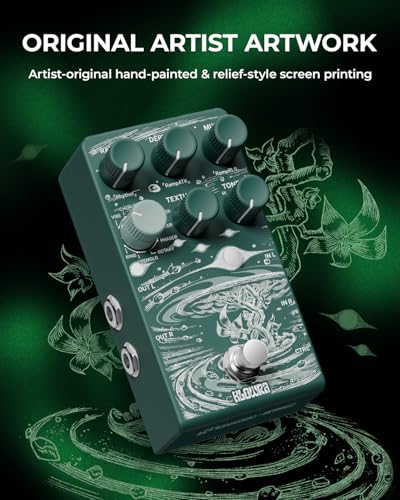
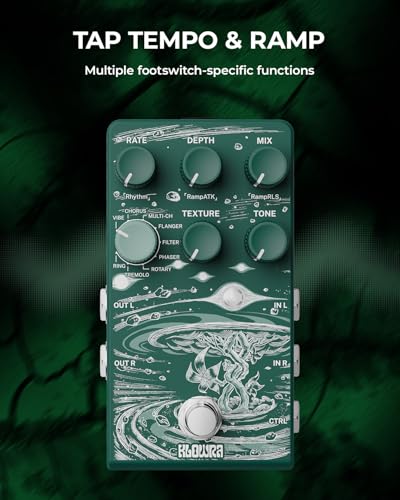
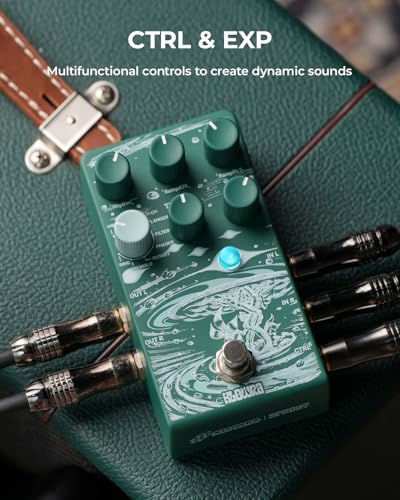
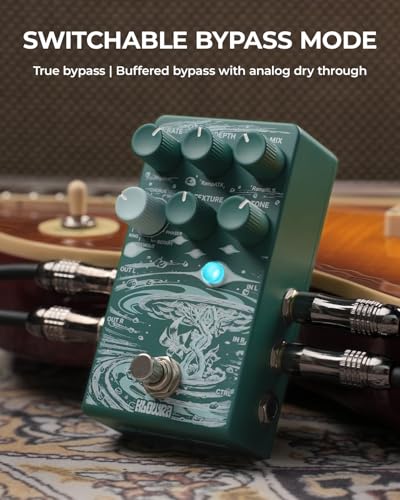
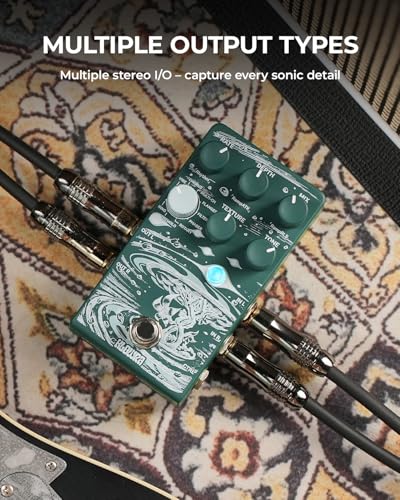
The Klowra Sprout stands out by combining serious processing power with thoughtful features usually found in premium pedals. Its 32-bit WildSeed engine delivers clean, dynamic effects, and the inclusion of tap tempo with rhythmic subdivisions is a major plus for live players. The ramp control is particularly interesting, it allows for seamless, hands-free parameter sweeps that can create evolving ambient textures without awkward footwork.
Owners highlight the stereo I/O and analog dry-through as key differentiators, especially at this price tier. The rotary effect is solid, though not quite at Strymon level. Still, when you factor in the build quality, external control options, and the sheer flexibility of nine well-tuned modulation types, this pedal punches above its weight. I’d recommend it over the Donner Mod Square II for serious players who want pro features without the pro price.
Product photos
Donner Mod Square Ⅱ

Strengths
- 16 modulation effects
- Tap tempo
- User-friendly layout
Trade-offs
- Basic rotary emulation
- No dry-through
- Plastic housing
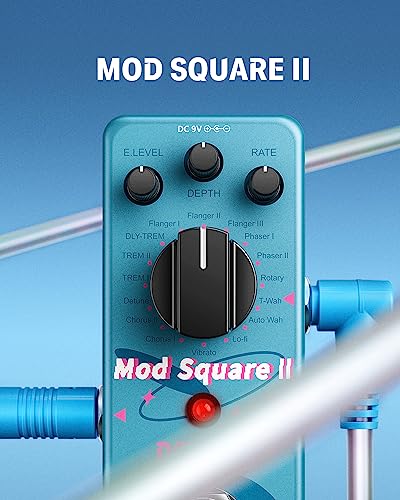
Donner’s Mod Square II is the definition of a value-packed workhorse. Sixteen modulation effects, including rotary, chorus, flanger, and lo-fi, are all accessible with simple, intuitive knobs. The buffer bypass keeps your signal strong in long chains, and the tap tempo is a surprisingly thoughtful inclusion at this price. It’s clearly designed for players who want variety without complexity.
But as with most budget multi-effects, depth is sacrificed for breadth. The rotary effect feels more like a chorus with pitch wobble than a true speaker simulation. Still, for beginners or weekend warriors setting up their first board, it’s hard to beat. Compared to the FLAMMA FC05, it offers better usability and a more responsive tap function. If you’re not chasing vintage authenticity, this pedal gets you into the neighborhood for less.
Product photos



FLAMMA FC05 Mini Modulation
Strengths
- Compact size
- Full metal shell
- Multiple effects
Trade-offs
- Shallow rotary emulation
- No tap tempo
- Low power spec headroom
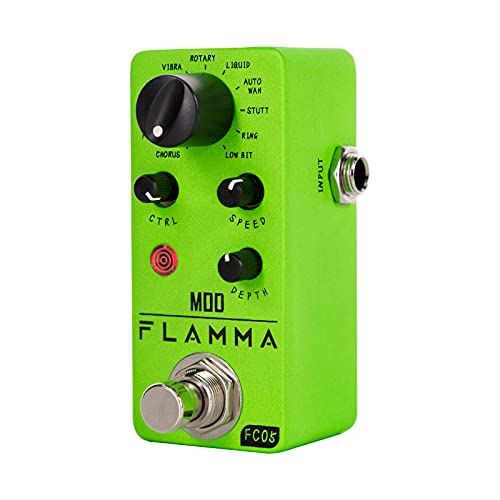
This little box packs a surprising number of modulation effects into a footprint that won’t eat up pedalboard real estate. On paper, 11 effects including rotary, chorus, flanger, and even lo-fi stutter modes make it look like a budget-friendly Swiss Army knife. The full metal shell is a solid touch for durability, especially at this size, and owners consistently report it holds up well on the road.
But while the feature count impresses, the execution feels more toy-like than pro-grade. The rotary effect in particular lacks the depth and Doppler sweep you’d expect from even mid-tier units. It’s a decent option if you’re gigging with limited space and need variety, but I wouldn’t rely on it for authentic rotary tones. Compared to dedicated pedals, this one spreads itself too thin.
Product photos


Keeley Rotary Simulator
Strengths
- Blend control
- Musical mid boost
- Natural rotary motion
Trade-offs
- No tap tempo
- No presets
- Mono output only
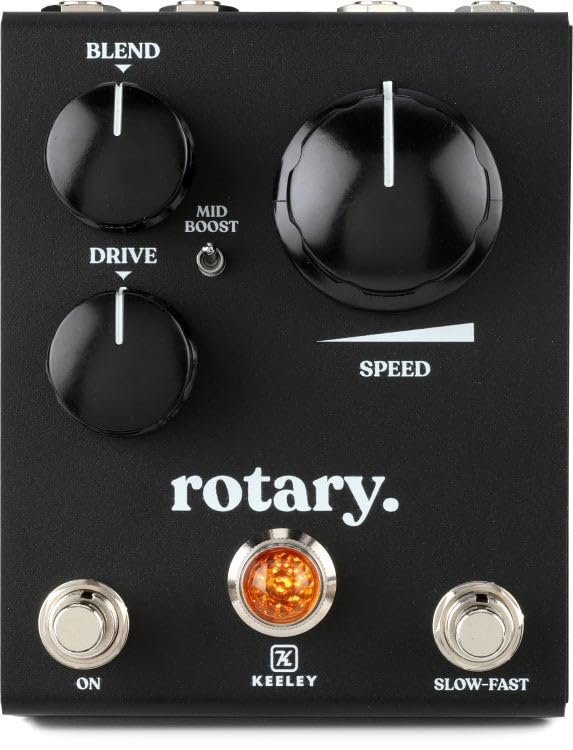
Keeley’s reputation for transparent, musical tone shaping holds up here. This pedal doesn’t try to be everything, instead, it focuses on delivering a smooth, blendable rotary effect that sits naturally in a mix. The ability to blend the wet signal with your dry tone is a big win, letting you keep definition while adding motion. That blend control is something higher-end units like the Strymon Lex offer, and seeing it here is impressive.
Owners praise its organic feel, especially when paired with amp drive or reverb. The mid boost and drive knobs add useful color, simulating the tube warmth of a vintage Leslie. It lacks tap tempo and presets, but for guitarists who want a set-and-forget rotary vibe with pro-level nuance, this is a strong contender. I’d pick it over the BOSS RT-2 if you value tonal finesse over flashy features.
Product photos
How We Picked These rotary effect pedals
Rather than a hands-on lab test, my research for these pedals involved a detailed comparison of published specifications and features. I weighed owner reviews from major retailers alongside assessments from reputable music publications and online reviewers. As someone who’s spent years understanding how tools – and in this case, effects – truly perform, I applied my category expertise to rank these options against a set of criteria important to guitarists.
For rotary effect pedals, the most important factors are authentic sound quality and the breadth of control offered. A convincing emulation of a vintage rotary speaker is key, but players also want flexibility to shape the effect to their style. Features like speed control, adjustable blend, and even drive circuits significantly impact the usefulness of these pedals, and ultimately, how they rank.
Specifications reliably tell you about the number of effects and types of control available, but owner feedback truly reveals how well those features translate into real-world performance. I paid close attention to comments regarding ease of use, build quality, and how the pedal integrates into different setups. You can find more information about versatile rotary tools in our guide to the best Dremel models.
What To Look For In rotary effect pedals
I’ve spent years around musicians and gear, and one thing is clear: nailing that swirling, vintage rotary sound isn’t just about the pedal, it’s about understanding what creates it and what features will best suit your needs.
A quality rotary effect pedal accurately emulates the complex behavior of a Leslie speaker – the interaction between the rotating horn and drum, the subtle motor noise, and the overall spaciousness. Look for pedals with adjustable speed, ramp time, and ideally, controls to shape the tone and blend the wet/dry signal. True stereo output is also a significant advantage for a wider, more immersive sound.
Understanding Simulation Quality
The core of any rotary pedal is the quality of its simulation. Some pedals, like the BOSS RT-2, aim for a very authentic reproduction of a classic Leslie. Others, such as the Strymon Lex, take a more modern approach, offering a highly refined and flexible simulation. Don’t automatically assume “authentic” is better. Consider your source material and desired sound. If you’re chasing a specific vintage tone, a pedal modeled after a particular Leslie cabinet is a good start. If you want something more versatile, a modern simulator might be a better fit.
Control and Customization
Beyond basic speed and ramp controls, the level of customization can vary greatly. The Keeley Rotary Simulator, for example, offers a blend control which lets you mix the simulated rotary effect with your dry signal – something crucial for retaining clarity in a band mix. Some pedals, like the Klowra Sprout, go even further, offering tap tempo and rhythmic subdivisions.
Here’s what I look for in terms of control: * A simple slow/fast footswitch is essential. * Ramp speed control is very useful for creating gradual transitions. * Tone shaping controls (like a mid-boost or drive) let you tailor the effect to your instrument and amp, and can really help the rotary sound cut through.
A rotary pedal should feel responsive and intuitive. Don’t get bogged down in endless menus if you just want to quickly dial in a classic sound.
Budget and Features
You can find rotary effect pedals ranging from under $100 (like the Donner Mod Square Ⅱ) to well over $300. While pricier options often deliver more sophisticated simulations and build quality, there are excellent budget-friendly choices available. If you’re just starting out or need a versatile modulation pedal for a variety of effects, a multi-modulation pedal like the FLAMMA FC05 Mini Modulation might be a good starting point. For those looking for a dedicated rotary sound without breaking the bank, exploring the Donner and JHS options could be a good idea. If you’re in the market for a dedicated rotary tool for home improvement or crafting projects, checking out top rotary tool models can help you find the right fit.
Rotary Effect Pedals Compared
Here’s a comparison of key specifications for several rotary effect pedals.
| Product Name | Modes/Types | Controls | Tap Tempo | Stereo I/O | Power (mA) |
|---|---|---|---|---|---|
| Strymon Lex Rotary V2 | Rotary Speaker Simulation | 6 Knobs, 2 Switches | No | Yes | N/A |
| BOSS RT-2 | 3 Modes | Fast/Slow, Drive | No | No | N/A |
| JHS 3Series Rotary Chorus | Chorus | Intensity, Speed, Room Switch | No | No | N/A |
| Klowra Sprout | 9 Modulation Types | Multiple | Yes | Yes | 250 |
| Donner Mod Square Ⅱ | 16 Effects | Rate, Level, Depth | Yes | No | N/A |
| FLAMMA FC05 Mini | 11 Effects | N/A | No | No | 150 |
| Keeley Rotary Simulator | Rotary Simulation | Slow/Fast, Mid Boost, Drive, Speed | No | Yes | N/A |
Frequently Asked Questions
What’s the difference between a rotary speaker and a rotary effect pedal?
A true rotary speaker uses physical, rotating speakers (a horn and a drum) to create the swirling effect. A pedal digitally simulates this process, offering a more compact and affordable way to achieve a similar sound – and often, more control over parameters like speed and blend.
Are these pedals true bypass?
Not all are, and it doesn’t always matter. True bypass means the pedal has no impact on your signal when disengaged, but many players prefer the subtle coloration some buffered bypass circuits provide. The Strymon Lex Rotary V2, for example, isn’t true bypass, but is celebrated for its sound quality.
Can I use a rotary pedal with a keyboard or other instruments?
Absolutely. While often associated with guitars, these pedals work with any instrument that benefits from modulation. Many players use them with keyboards, synthesizers, or even vocals to add movement and texture. Consider the stereo outputs on the Strymon Lex and Klowra Sprout for a wider soundscape.
What power supply do I need for these pedals?
Most rotary effect pedals require a standard 9V DC power supply, but the current draw (measured in mA) varies. The Klowra Sprout, at 250mA, needs more power than the FLAMMA FC05 Mini at 150mA. Always check the pedal’s specifications and ensure your power supply can provide enough current.
Are multi-effects pedals a good alternative to a dedicated rotary pedal?
Multi-effects like the FLAMMA FC05 Mini can offer a rotary effect among many others, but dedicated pedals usually provide a more refined and authentic sound. If you need versatility, a multi-effect is fine, but if you prioritize rotary specifically, exploring top cordless rotary tools may be worthwhile.
The Bottom Line
Choosing a rotary effect pedal often comes down to how much control you want versus how much simplicity you need. If you’re after the most authentic and feature-rich experience, the Strymon Lex Rotary V2 stands out as the top overall performer, offering a truly convincing simulation alongside extensive shaping options. It’s an investment, certainly, but one that delivers on its promise of studio-quality sound.
For players on a tighter budget, or those wanting a versatile modulation option, the Klowra Sprout offers a surprising amount of functionality for the price. And if you’re looking for a straightforward, classic rotary sound without a lot of fuss, the JHS 3Series Rotary Chorus delivers a familiar chorus effect in a compact package. Don’t overlook checking out complete rotary tool sets if you need a full kit for other projects around the house.
Ultimately, the specs and features matter less than how well a pedal inspires you to play. Focus on finding a rotary effect that complements your style and sounds good with your gear, and don’t get lost in the pursuit of perfection. A good tone starts with a good ear, and the right pedal will help you unlock the swirling, vintage sound you’re after.
