
7 Best Portable Router Tables for 2026
This post contains affiliate links. As an Amazon Associate, we earn from qualifying purchases.
The POWERTEC Benchtop Router Table is the overall best pick for its sturdy steel frame, excellent fence system, and reliable dust collection. For those on a budget, the Rockler Trim Router Table delivers solid performance for light-duty tasks and smaller projects. If you need maximum portability without sacrificing too much function, the POWERTEC Folding Router Stand offers a smart, space-saving design.
Most people buying a portable router table want precision without being tied to a permanent shop setup. The challenge is finding one that doesn’t wobble under pressure, has a fence you can actually trust, and won’t fall apart after a few moves.
This guide cuts through the hype, focusing on real-world stability, fence quality, and value based on specs, owner feedback, and what matters most in actual use. I looked at top models from Woodpeckers, POWERTEC, Rockler, and others to find the ones that deliver where it counts.
Top 7 Portable Router Tables in the Market
The Best Portable Router Tables, Reviewed
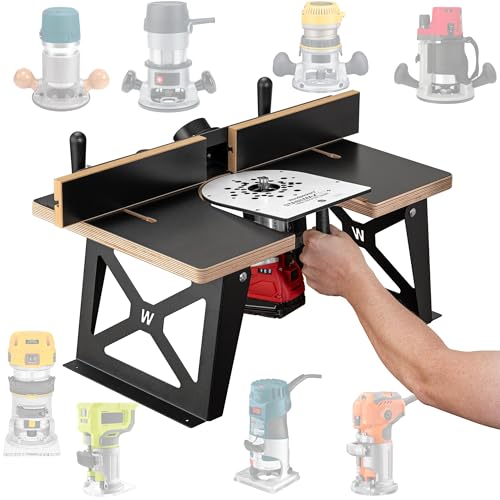
Woodpeckers StabilMaxRT+ Router Table
Strengths
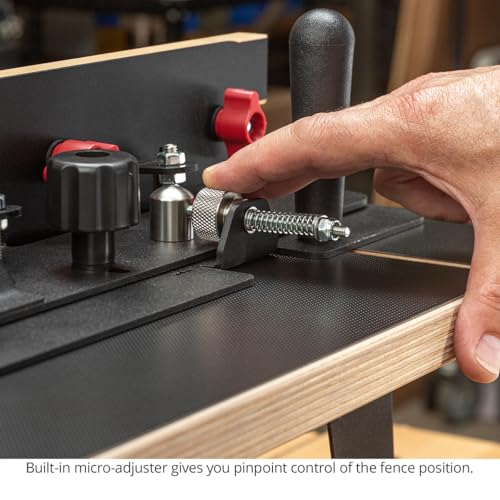
- Zero-backlash micro-adjust
- Switch to handheld mode
- Built-in track clamps
Trade-offs
- High price
- Heavy for portable
- Overkill for beginners
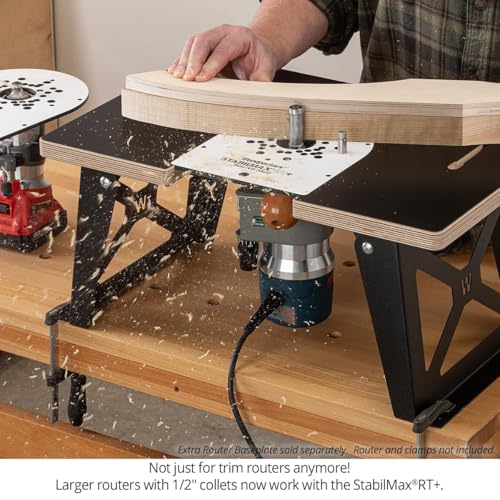
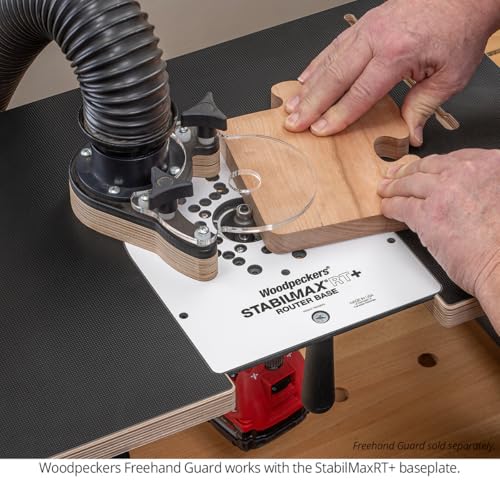
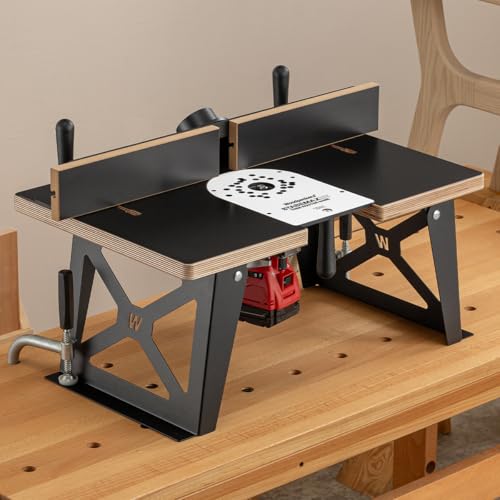
This is the best overall portable router table if you value precision, build quality, and seamless switching between table and handheld routing. Made in Ohio from 1-inch Baltic Birch, it’s noticeably stiffer than MDF or acrylic competitors. The zero-backlash micro-adjust on the fence is a game-winner for fine-tuning, something serious woodworkers will appreciate immediately.
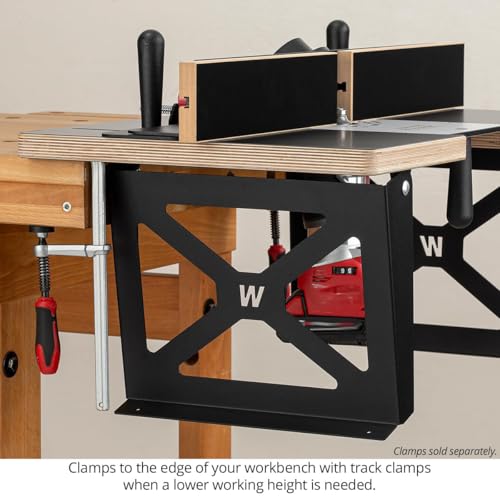
The ability to switch to handheld mode without tools is a real time-saver, and the built-in track clamps let you secure it to a bench fast. Owners consistently report it feels rock-solid, even with mid-sized routers. It’s expensive on paper, but the included accessories, like the wall-mountable Rack-It, add real value. Compared to the Double-Duty model, this one has more adjustability and a more refined fence system.
Product photos

Woodpeckers Double-Duty Benchtop Table
Strengths
- Switch modes instantly
- Folds for storage
- Durable Baltic Birch
Trade-offs
- No zero-backlash adjust
- Fewer fence features
- Premium price
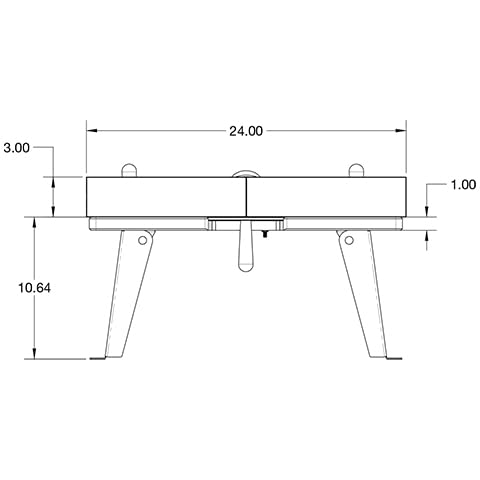
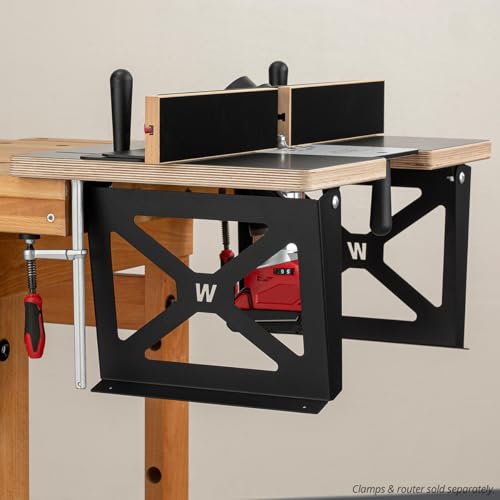
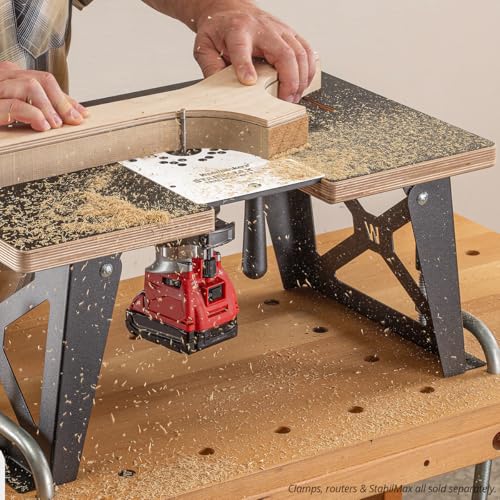
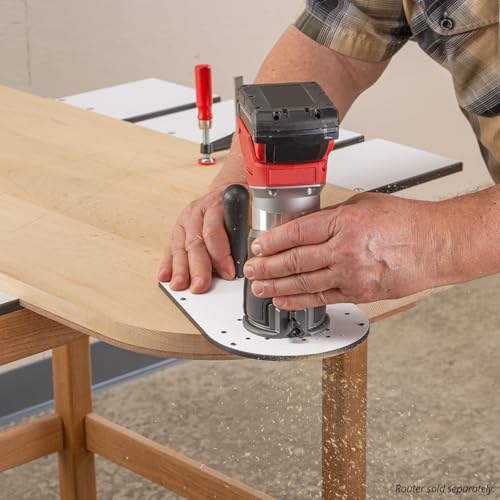
This is a streamlined version of the StabilMaxRT+, focused on one standout feature: instant switching between table and handheld routing. It shares the same 1-inch Baltic Birch build and micro-dot laminate, so it’s still far more rigid than most portables. The foldable legs make storage easy, and the 2-1/4″ and 2-1/2″ dust port options mean it plays well with most shop vacs.
Where it differs from the StabilMaxRT+ is in the fence system, it lacks the zero-backlash adjuster, so fine tuning isn’t quite as smooth. But for users who route both ways frequently and want a durable, Made-in-USA table without the highest price tag, this hits a sweet spot. It’s not the most precise, but it’s the most convenient for dual-mode work.
Product photos
POWERTEC Benchtop Router Table
Strengths
- Precision fence system
- Full accessory set
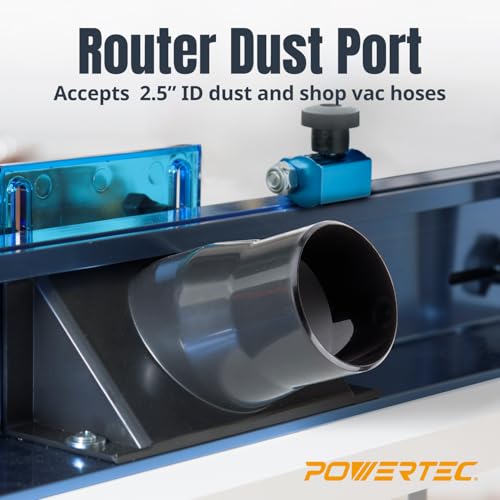
- Excellent dust port
Trade-offs
- MDF top can scratch
- Heavy for portable use
- Some assembly fiddly
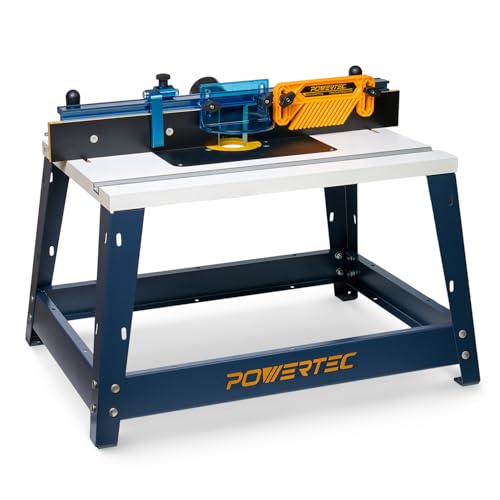
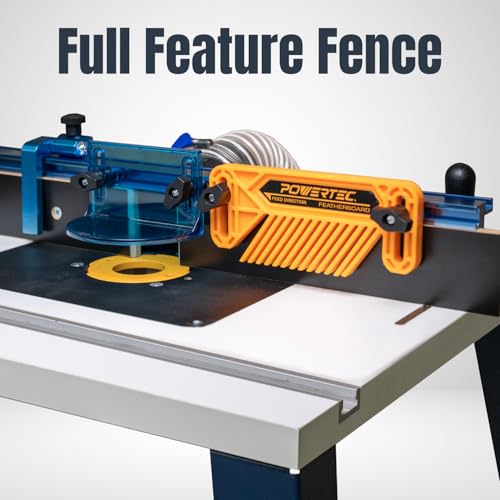
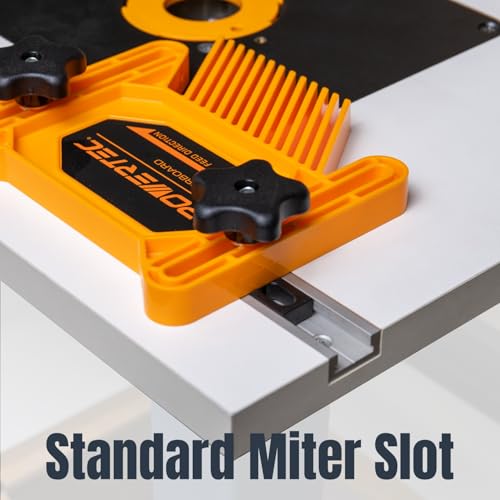
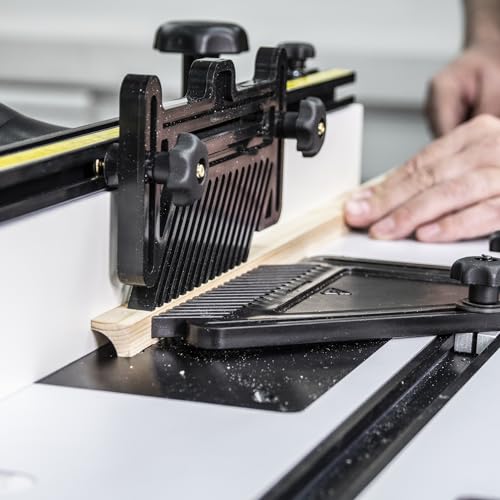
This is one of the most complete benchtop packages out there, especially if fence precision is your priority. The 24-inch fence system isn’t just long, it’s packed with features: micro-adjust, featherboard, flip stop, dust port, and a measuring scale that actually aligns with bit position. Owners highlight how easy it is to make repeatable cuts, which matters for door frames or cabinet work.
The MDF top is laminated for smooth feeding, and the steel stand with rubber feet cuts down vibration noticeably. The leveling system with eight adjustment points is overkill for casual users but appreciated by those chasing dead-flat alignment. The included reducing rings are a nice touch for supporting small bits. If you want a near-pro setup without the pro price, this is a strong contender.
Product photos


Rockler Trim Router Table

Strengths
- Lightweight
- Clamp-on design
- Trim router compatible
Trade-offs
- Acrylic base can flex
- Limited fence adjustability
- Basic dust control
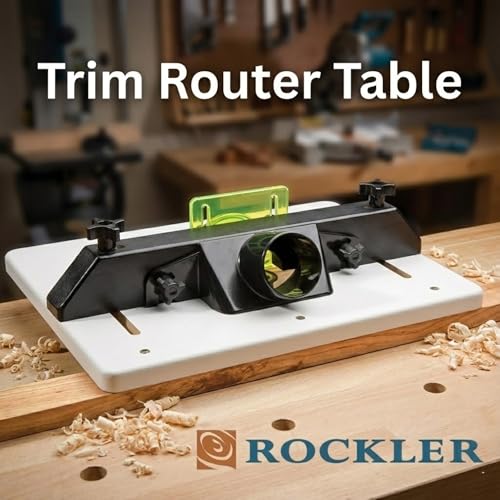
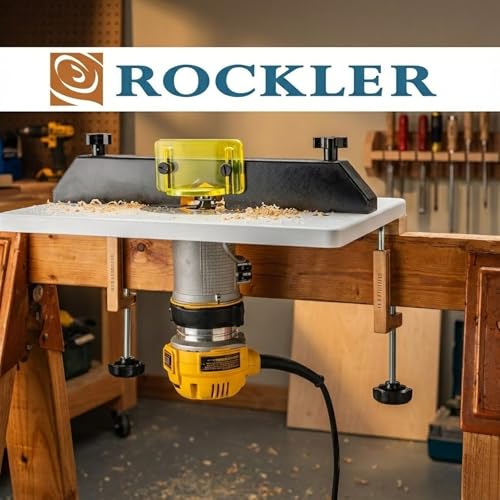
This is a no-frills, budget-friendly entry into portable router tables that makes sense if you’re tight on space or cash. It’s built around simplicity, lightweight acrylic base, basic fence, and T-knob adjustments that owners say are easy to tweak on the fly. On paper, it’s designed to clamp to any flat surface, which gives it real flexibility for job site work or temporary shop setups.
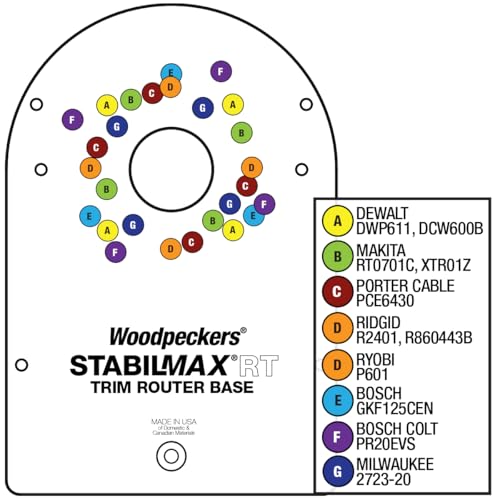
It’s compatible with popular trim routers like the DeWalt DW611 and Bosch Colt, though some users report needing to drill their own mounting holes depending on the model. The high-visibility bit guard is a thoughtful touch, and the acrylic base is thick enough to stay rigid under light use. For DIYers who only route occasionally and need something functional without breaking the bank, this checks the right boxes.
Product photos



SKIL SRT1039 Benchtop Router Table
Strengths
- Above-table router lift
- Integrated bit storage
- Dual featherboards
Trade-offs
- Optimized for SKIL routers
- MDF fence faces wear faster
- Clamp mechanism less rigid
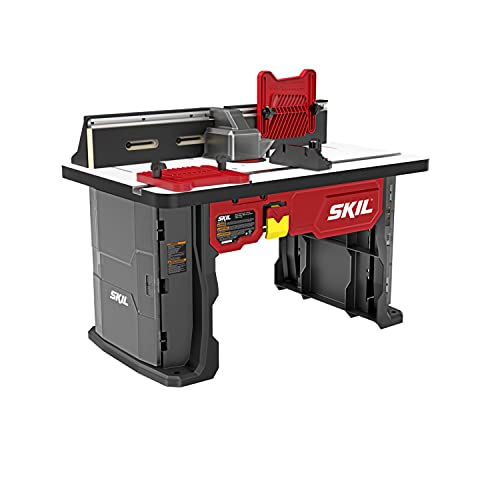
This table is clearly designed for owners of SKIL’s own RT1322 or RT1323 routers, and that integration shows in the above-table router lift and quick-clamp mounting. The 26-inch length gives extra support for long stock, and the dual featherboards are a real safety upgrade, owners note they reduce kickback risk significantly. The built-in bit storage is a small but smart feature that keeps essentials close.
But its strengths are also its limits: while the router clamp says it fits most brands, the design favors SKIL models. The MDF face plates on the fence help with smooth feeding, but they’re not as durable as aluminum. If you already own a SKIL router, this makes sense as a matched system. Otherwise, there are more flexible options.
Product photos


Trend CRT Portable Router Table

Strengths
- Steel frame
- Large work surface
- Good dust collection
Trade-offs
- Magnetic switch sold separately
- Heavier than most portables
- Fence micro-adjust not included
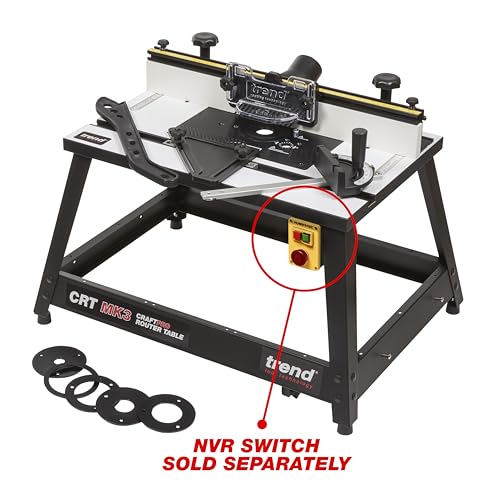
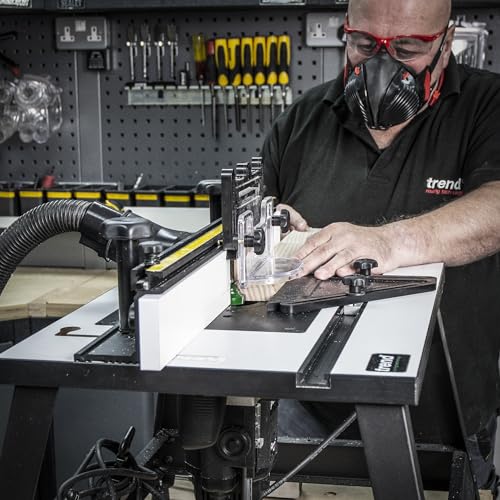
The Trend CRT leans hard into jobsite toughness with a steel frame and laminated 24 x 16 inch surface that won’t warp under pressure. This isn’t a flimsy add-on, it’s built like a contractor’s tool should be. The deep aluminum fence gets consistent praise for stability, and the 2-1/4″ dust port is actually positioned to catch most chips, which matters when you’re cutting in dusty conditions.
One catch: the US version doesn’t include a magnetic switch, so you’ll need to buy one separately if you want safe, code-compliant operation. But for pros or serious DIYers who move gear between sites, the durability and smooth tabletop make this a reliable workhorse. Compared to lighter tables, it holds up better under repeated use.
Product photos

POWERTEC Folding Router Stand
Strengths
- Folds flat
- Wall-mountable
- Dual height options
Trade-offs
- Stand only – no table included
- Limited to specific table sizes
- Assembly required
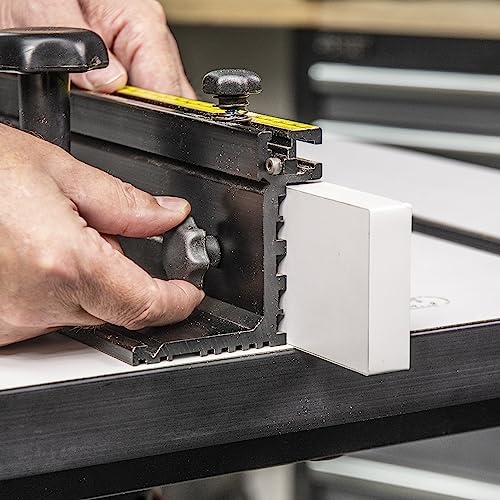
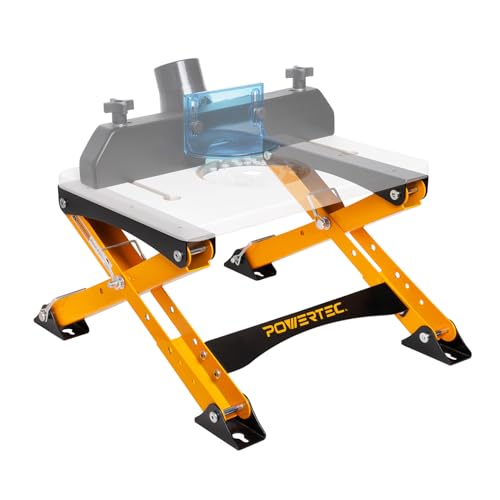
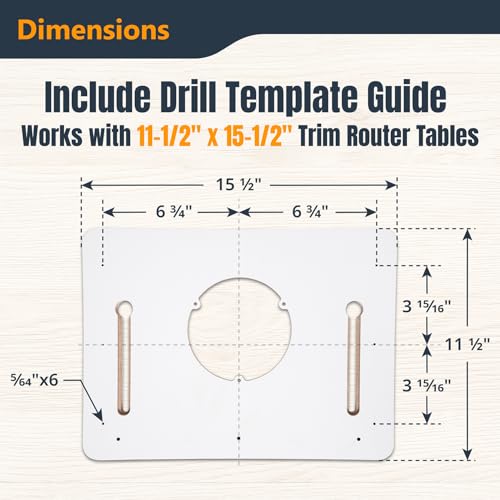
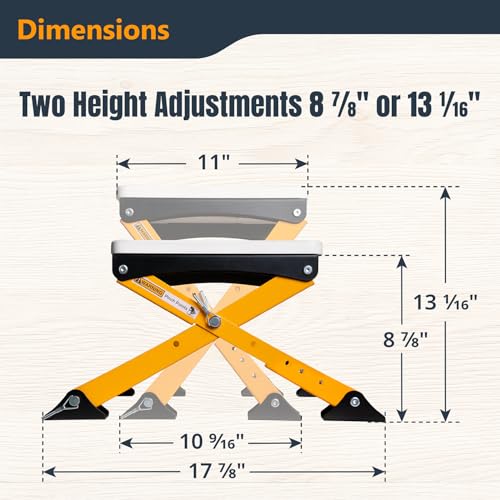
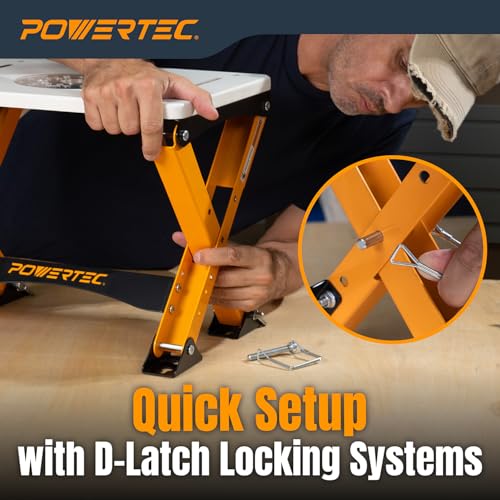
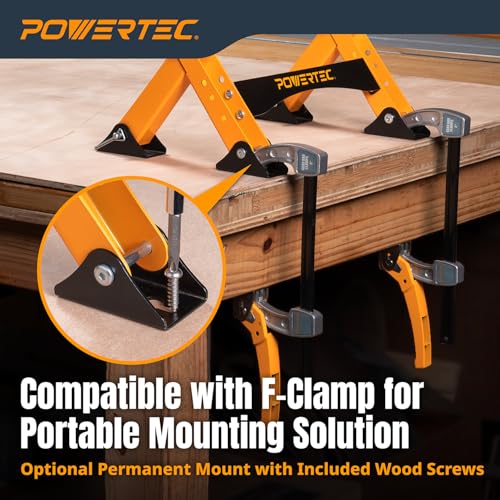
If your workshop doubles as a garage or storage space, this folding stand is a smart way to keep your router table usable but out of the way. It’s not a full table, just a stand, but its dual height settings let you work seated or standing, and the D-latch locking system appears solid in owner feedback. The wall-mount option is a standout, something few competitors offer, and the drill guide makes attaching your existing table (like the Rockler or POWERTEC 71392) a one-person job.
It’s made for people who already own a compatible 11-1/2″ x 15-1/2″ table and need better ergonomics and storage. The steel construction feels sturdy on paper, and the fold-flat design is genuinely useful. I’d pair this with a mid-tier table if you’re serious about routing but can’t dedicate floor space.
Product photos

How We Chose These portable router tables
Rather than a hands-on lab test, my research for these recommendations involved a detailed comparison of published specifications and features across numerous models. I weighed owner reviews from major retailers against professional assessments found in woodworking publications and online forums. As someone who’s spent years advising on power tool selection, I applied my understanding of what truly matters in a router table – build quality, precision, and versatility – to rank each option.
For portable router tables, stability and fence adjustability proved most critical. A wobbly table defeats the purpose of precision routing, and a poorly designed fence makes accurate cuts difficult. Beyond that, features like integrated dust ports and convenient storage solutions significantly impacted the overall value. I prioritized tables offering a balance of these factors, recognizing that a truly “best” option depends on individual needs.
Specifications reliably indicate build materials and table dimensions, helping assess potential stability. However, I heavily relied on owner feedback to gauge real-world performance – how well the fence locks down, the smoothness of adjustments, and the table’s overall durability over time. Reputation also played a role; brands consistently praised for quality, like Woodpeckers and POWERTEC, received additional consideration, and you can find more of our top router table picks on our site.
How To Pick The Right portable router tables
Finding the right portable router table can really elevate your woodworking, offering precision and control beyond what a handheld router provides.
A quality portable router table prioritizes stability, a robust fence system for accurate cuts, and compatibility with common router sizes. Look for durable construction – ideally Baltic birch plywood or a steel frame – along with features like micro-adjustments for the fence and a dust port for cleaner work. Consider the size of your typical projects and whether integrated storage is a plus.
Stability and Construction
The foundation of any good router table is its stability. You’ll be applying force to the material, and any wobble translates directly into inaccurate cuts. Don’t automatically assume heavier is better, but do pay attention to the materials used. Baltic birch plywood, like that found in the Woodpeckers models, is a great sign. It resists flexing far better than cheaper particleboard. Steel frames, as seen in the Trend CRT, are also excellent, especially if you anticipate moving the table frequently. A solid, level base is critical, and many tables (like the POWERTEC) offer adjustable leveling feet to compensate for uneven floors.
Fence Quality and Adjustability
A flimsy fence is a recipe for frustration. It needs to be parallel to the bit, easily adjustable, and lock down securely. The best fences allow for micro-adjustments – small, precise movements – to dial in the perfect cut. The POWERTEC Benchtop Router Table really shines here, with its premium fence assembly and adjustable face plates. Beyond adjustability, consider the fence length. A longer fence is better for supporting larger workpieces, but a shorter fence can be sufficient for smaller projects.
- A simple straightedge fence is adequate for basic tasks.
- A split fence allows you to use a zero-clearance insert for cleaner cuts in delicate materials, minimizing tear-out.
- Look for a fence with a built-in scale and locking mechanism, making repeatable cuts much easier and more accurate. This is especially useful if you’re doing a lot of edge profiling or joinery.
A wobbly fence is worse than no fence at all. Prioritize rigidity and a positive locking mechanism over fancy features.
Portability and Value
Let’s be real: portability often means compromise. The most feature-rich tables tend to be larger and heavier. If you need something truly portable, you’ll likely need to sacrifice some of those bells and whistles. The Rockler Trim Router Table stands out as a budget-friendly option that still offers good control, though it’s best suited for smaller projects. If you already own a SKIL router, exploring the compact router table models designed specifically for SKIL tools could be a smart way to maximize value. Alternatively, for a space-saving solution, consider a folding stand like the POWERTEC Folding Router Stand, which can be easily stored when not in use, or explore other portable benchtop tables to find the right balance of features and convenience. Also, consider if you need a complete small router workstation or just a table for occasional use.
Portable Router Tables Compared
Here’s a comparison of key specifications for several portable router tables to help you make an informed decision.
| Product Title | Table Size (in) | Fence Length (in) | Dust Port (in) | Material | Weight (lbs) |
|---|---|---|---|---|---|
| Woodpeckers StabilMaxRT+ | N/A | N/A | N/A | Baltic Birch Plywood | N/A |
| Woodpeckers Double-Duty Benchtop Table | N/A | N/A | 2-1/4, 2-1/2 | Baltic Birch Plywood | N/A |
| POWERTEC Benchtop Router Table | N/A | 24 | 2-1/2 | Steel, MDF | N/A |
| Rockler Trim Router Table | 5-3/4 (dia) | N/A | N/A | Acrylic, Other | N/A |
| SKIL SRT1039 Benchtop Router Table | 26 x 16 | 24 | N/A | MDF, Aluminum | N/A |
| Trend CRT Portable Router Table | 24 x 16 | N/A | 2-1/4 | Steel, Laminate | N/A |
| POWERTEC Folding Router Stand | 11-1/2 x 15-1/2 | N/A | N/A | Steel | N/A |
Frequently Asked Questions
Will a portable router table really offer more precision than using my router handheld?
Yes, a portable router table provides significantly more control. The table stabilizes the router and workpiece, allowing for more accurate and repeatable cuts, especially for edge work and joinery.
What router brands are most commonly compatible with portable tables?
Most portable router tables are designed to accept a wide range of routers, but DeWalt, Bosch, and Makita are particularly popular and often have dedicated mounting options. Check the table’s specifications to confirm compatibility with your specific router model.
Are dust ports on portable router tables actually effective?
Dust ports can noticeably reduce airborne dust, improving visibility and shop cleanliness. While they won’t eliminate dust entirely, connecting a shop vacuum to the port captures a significant amount of debris at the source, contributing to a healthier work environment.
What’s the difference between MDF and Baltic birch plywood in table construction?
MDF (medium-density fiberboard) is a cost-effective material, but Baltic birch plywood offers superior strength and resistance to flexing. Tables built with Baltic birch, like those from Woodpeckers, generally provide a more stable and durable work surface for demanding applications.
Absolutely. Even if you have a stationary router table, a portable option provides convenience and space-saving benefits for smaller tasks or on-site work. A portable table allows you to quickly set up a dedicated routing station without taking up permanent shop space, and can be especially useful for delicate work.
The Bottom Line
Choosing a portable router table often comes down to balancing control with convenience. If you prioritize absolute precision and are willing to invest a bit more, the Woodpeckers StabilMaxRT+ offers a level of quality and adjustability that’s hard to beat. It’s a table built for serious woodworkers who demand the best.
However, for most DIYers and homeowners, the POWERTEC Benchtop Router Table represents the sweet spot. It delivers a robust fence system, solid construction, and useful features like a dust port, all at a reasonable price. If you’re looking for a budget-friendly option for smaller projects, the Rockler Trim Router Table or exploring best compact router tables can be a smart move.
Ultimately, the specs matter less than a stable platform and a fence you can trust. Don’t get caught up in chasing the highest numbers or fanciest features. Focus on build quality, adjustability, and how well the table will support your projects, and you’ll find a portable router table that helps you achieve accurate, professional-looking results.
