
9 Best Oscillating Tower Fans of 2026
This post contains affiliate links. As an Amazon Associate, we earn from qualifying purchases.
The DREO Tower Fan 28 ft/s stands out as the best overall oscillating tower fan thanks to its strong airflow and quiet operation, while the LEVOIT Tower Fan 36 inch is a solid budget-friendly pick that still delivers reliable performance. For those who want voice control and app connectivity, the DREO Tower Fan WiFi Voice Control offers the most versatility without sacrificing core cooling power.
Most people buying an oscillating tower fan want effective cooling without the noise and bulk of a traditional box fan. The real challenge is sorting through exaggerated claims and finding a model that moves enough air, stays quiet, and won’t fail after one season.
This guide cuts through the clutter by ranking fans based on verified specs, owner feedback, and key features like motor type, noise levels, and usability. We focused on models that deliver balanced performance, strong airflow, wide oscillation, and quiet operation, so you can make a confident choice for your home.
Top 9 Oscillating Tower Fans in the Market
The Best Oscillating Tower Fans, Reviewed
DREO Tower Fan 2026 Upgraded DC Motor

Strengths
- 20dB ultra quiet
- 8 speeds, 4 modes
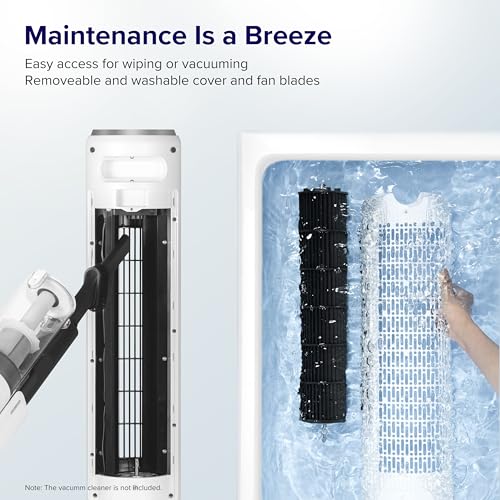
- Easy to clean
Trade-offs
- No WiFi or app
- No display dimming
- Remote not storable
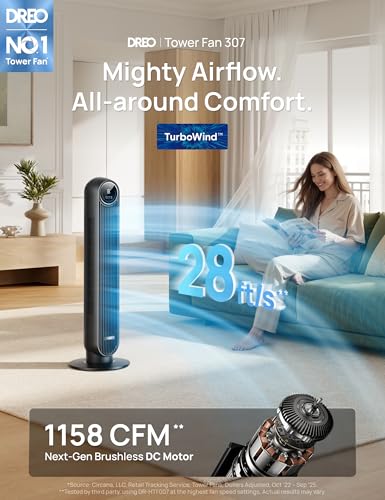
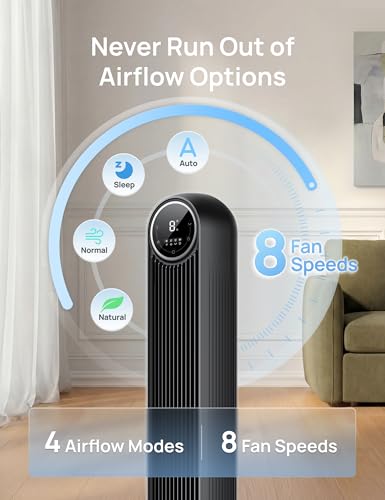
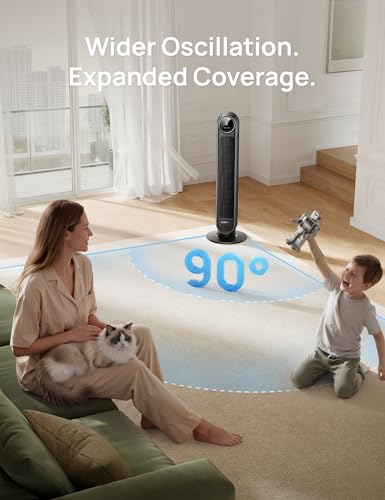
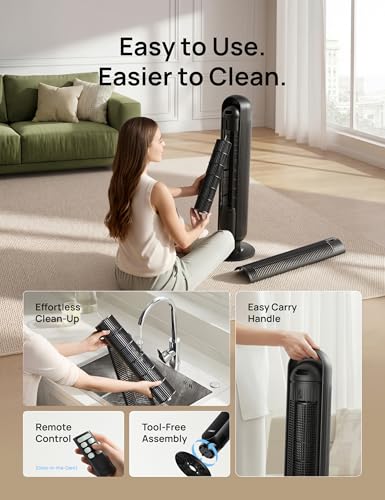
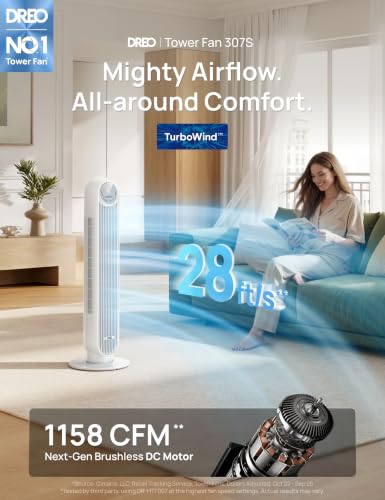
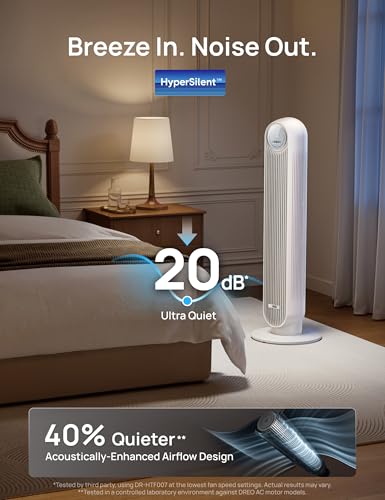
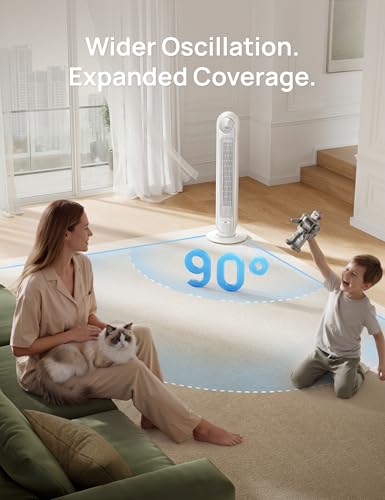
This DREO model earns “Best Overall” by balancing power, quietness, and usability better than any other. It hits 28ft/s airflow with the same ultra-quiet 20dB operation seen in their top models, and the 90° oscillation ensures full-room coverage. The 8 speeds and 4 modes, including Auto, give excellent flexibility, and the remote is thoughtfully designed with easy access.
Owners consistently report strong performance, easy cleaning thanks to the removable grille, and long-term reliability. It doesn’t have WiFi, but it doesn’t need it. Compared to the smart DREO model, this one skips the app but keeps the core performance and quietness. For most people, this is the best mix of what matters: power, silence, safety, and simplicity.
Product photos
DREO Tower Fan 28 ft/s 9 Speeds
Strengths
- Highest airflow output
- 9 speed settings
- Fully darkens display
Trade-offs
- No smart controls
- Bulky footprint
- No app integration
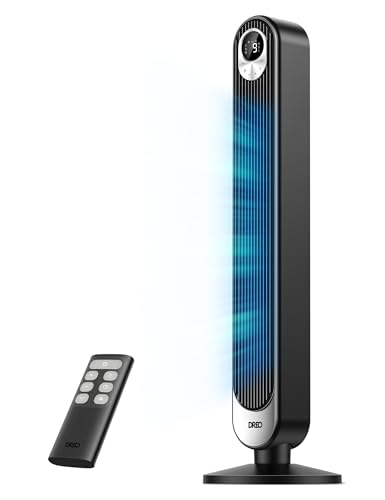
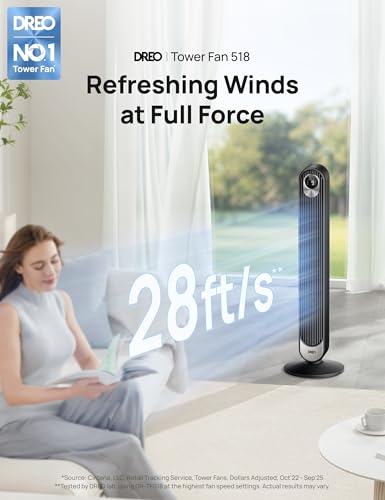
If raw performance is your priority, this DREO fan is the one to beat. With a 1580RPM DC motor, 1473 CFM airflow, and 28 ft/s speed, it moves air faster and farther than most in this group. The 36-foot reach means it can handle large rooms or open layouts with ease. Owners praise its Turbo mode for instantly cooling hot spaces, and the 20dB quiet operation makes it usable at night.
The 9 speeds and 12-hour timer give maximum flexibility, and the removable grille makes cleaning simple. It’s also one of the few with a fully dimming LED that goes completely dark, great for undisturbed sleep. While it lacks WiFi, it doesn’t need it to dominate in power and usability. For those who want the strongest breeze without noise, this is the top performer.
Product photos
DREO Tower Fan WiFi Voice Control
Strengths
- WiFi and voice control
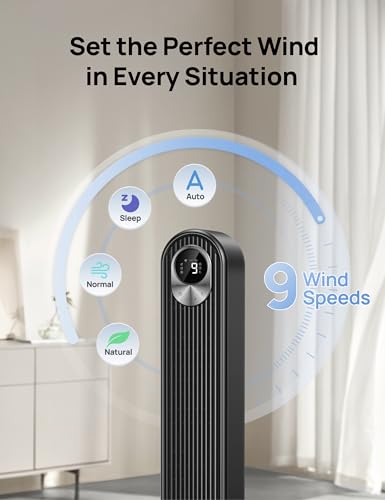
- Auto temperature adjustment
- Ultra quiet at 20dB
Trade-offs
- Slight firmware inconsistencies
- Overkill for basic needs
- App setup required
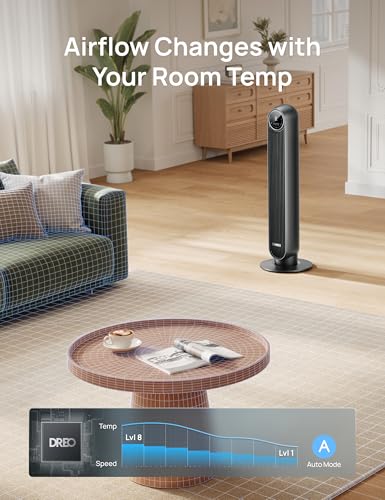
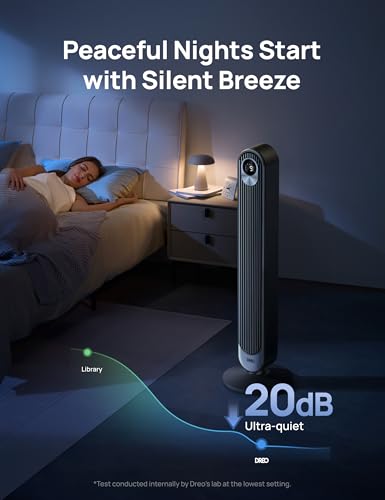
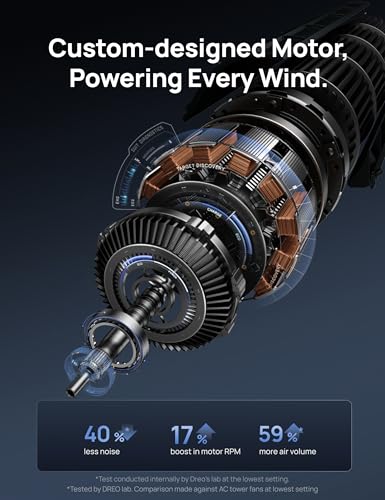
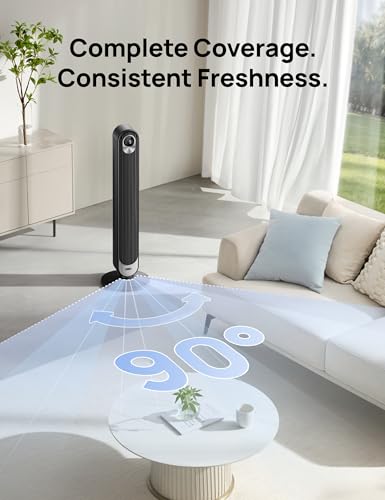
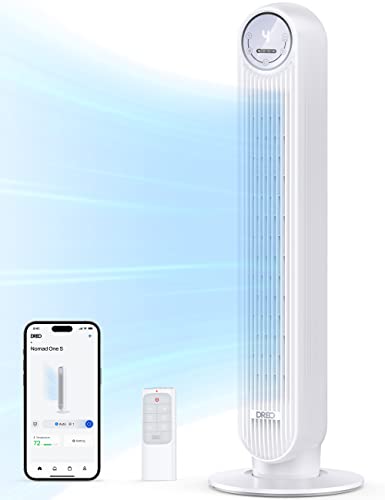
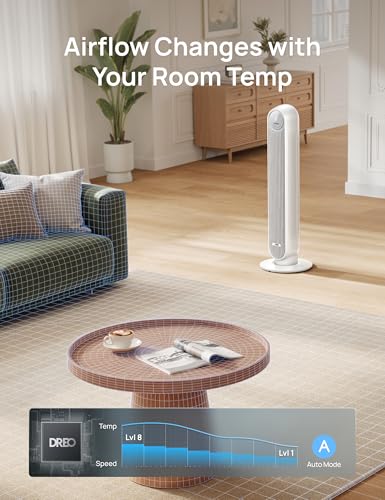
DREO has packed a lot of high-end features into this model, making it the clear winner if you want smart integration. With a brushless DC motor and TurboWind tech, it pushes air up to 28 ft/s and adjusts automatically based on room temperature in Auto Mode. Owners love that it works with voice assistants and the DREO app, something most tower fans still treat as an afterthought. The 20dB noise level is genuinely quiet, and the 8-speed range gives fine control over airflow.
It’s not perfect, some early units had firmware quirks, and DREO had to clarify that a small batch shipped with older internals. But overall, feedback shows this fan delivers on its promises. It’s more complex than most, so if you just want to plug in and go, this might feel like overkill. But for tech-savvy users, it’s a standout.
Product photos
LEVOIT Tower Fan 36 inch
Strengths
- Temperature-sensing Auto Mode
- 12-hour timer
- Sleep-optimized design
Trade-offs
- Lower max airflow
- No WiFi
- Only 5 speeds
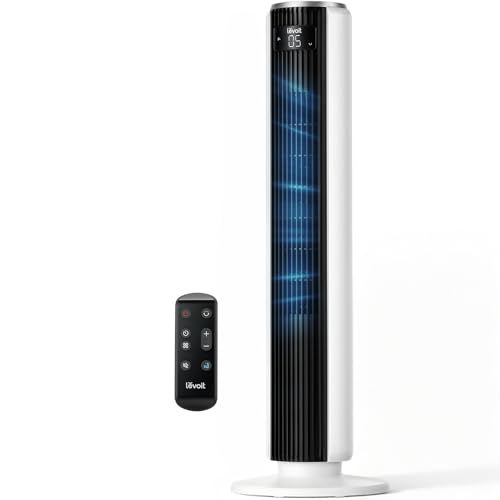
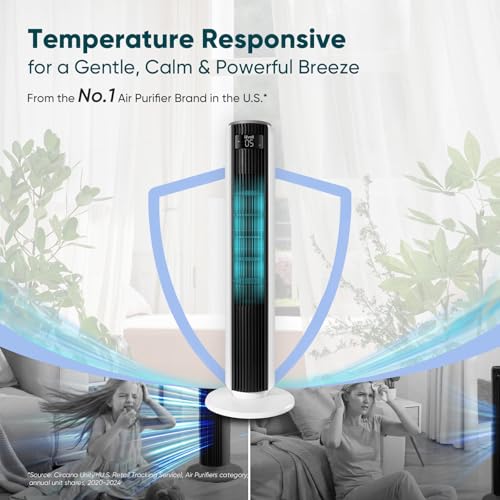
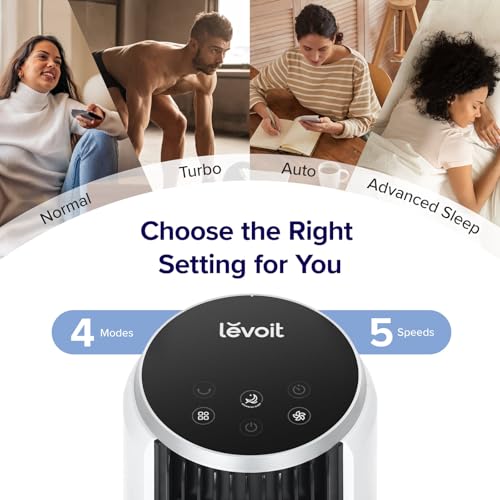
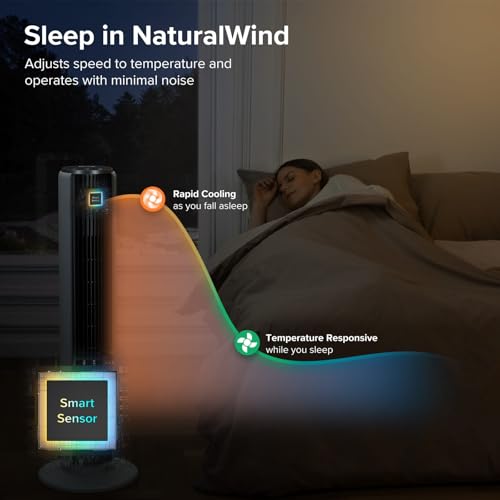
LEVOIT’s focus here is clear: deliver the best possible sleep experience. The 28dB operation is genuinely quiet, and the 12-hour timer is perfect for all-night use. What sets it apart is the temperature sensor, Auto Mode adjusts fan speed based on room heat, so you don’t wake up too cold or too warm. Owners say this feature works well and makes a real difference in comfort.
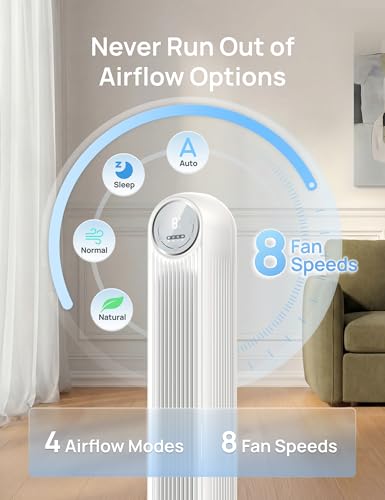
The 5 speeds and 4 modes, including Advanced Sleep, give good customization. The 25ft/s airflow is solid, though not the strongest. It’s also 36 inches tall, so it fits well in bedrooms without dominating the space. Compared to the DREO models, it trades raw power for smarter sleep logic. If your main goal is restful, uninterrupted cooling, this is the one.
Product photos
DREO Tower Fan 26ft/s 4 Speeds

Strengths
- Balanced speed and quiet
- Good airflow reach
- Includes remote
Trade-offs
- No app or smart features
- Timer maxes at 8 hours
- No Child or Auto mode
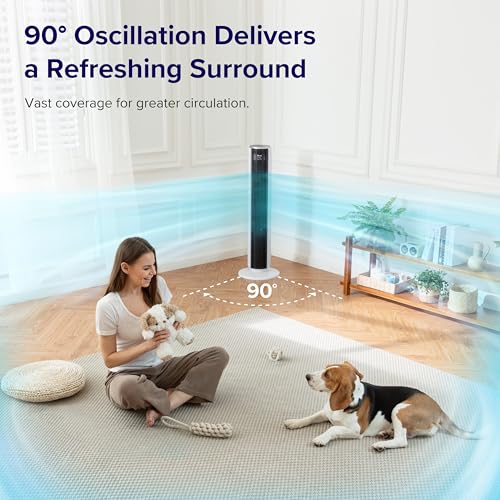
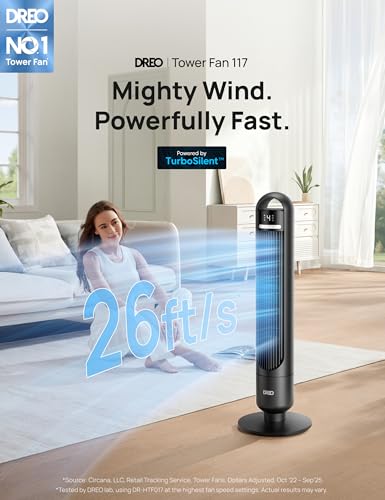
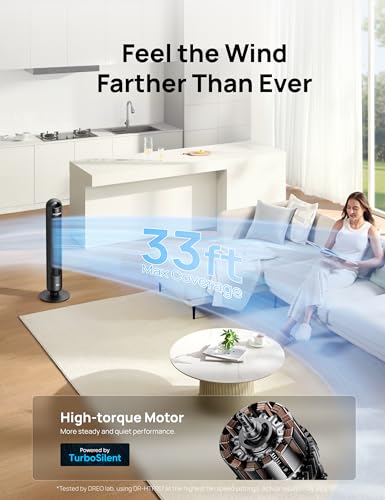
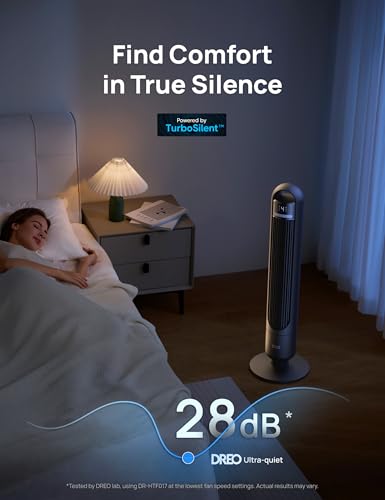
This DREO model hits a sweet spot between price and performance, which is why it earns the “Best Value” label. It delivers 26ft/s airflow and covers up to 33 feet, enough to cool a medium to large bedroom effectively. The 28dB operation is quiet enough for sleep, and the 8-hour timer is useful without being excessive. With 4 speeds and 3 modes, it offers more flexibility than budget models like the Pelonis, but without the complexity of smart fans.
Owners say it’s reliable, easy to use, and built well for the price. It doesn’t have a remote compartment or app control, but it includes a remote and responsive touch panel. Compared to other DREO models, this one strips back the extras but keeps what matters. If you want a solid, middle-ground fan that doesn’t sacrifice performance, this is a smart pick.
Product photos


Honeywell QuietSet Tower Fan HYF260

Strengths
- 5 speed options
- Dimmable display
- Trusted brand
Trade-offs
- Dated design
- No bladeless safety
- No smart features
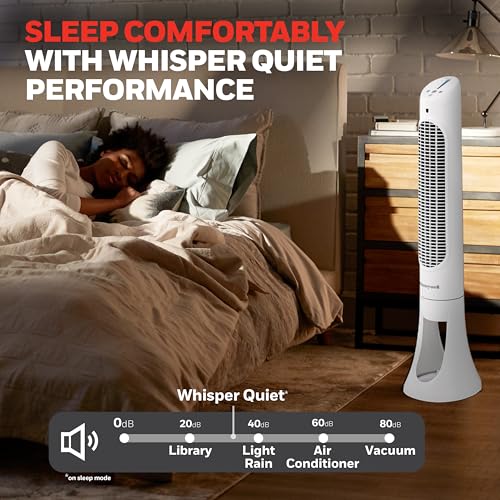
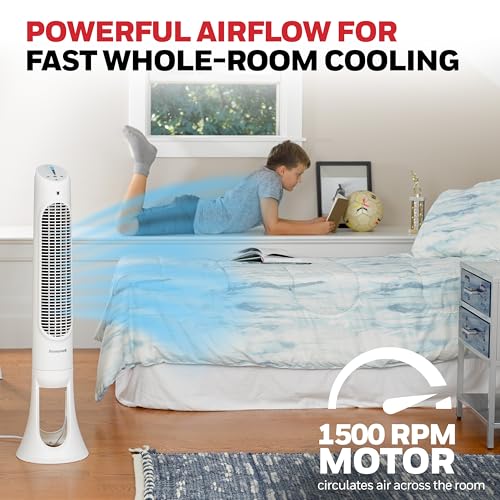
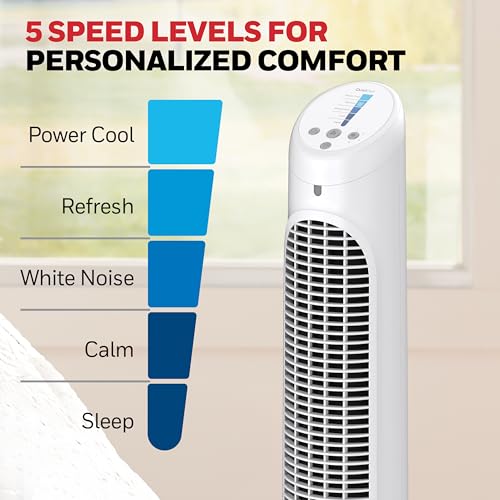
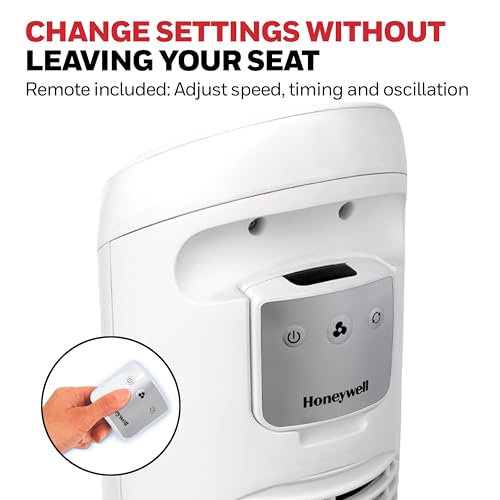
Honeywell has long been a trusted name in home airflow, and this model proves why. With 5 speed settings and panel dimming, down to completely off, it’s clearly built with sleepers in mind. The airflow isn’t the strongest here (no CFM or ft/s listed), but owners consistently say it circulates air well across entire rooms, especially when paired with AC. The real win is the balance between power and low noise, making it a favorite for bedrooms.
It’s not as slim or modern as some newer models, and it lacks a remote storage slot or app connectivity. But for those who prioritize simplicity, reliability, and quiet operation, this is a classic that still holds up. Compared to flashier fans, it feels like the sensible older sibling, less exciting, but always dependable.
Product photos

hykolity 40” Tower Fan
Strengths
- Tall, modern design
- Child Mode included
- Easy remote storage
Trade-offs
- Only 3 speed settings
- No smart controls
- No app or voice support
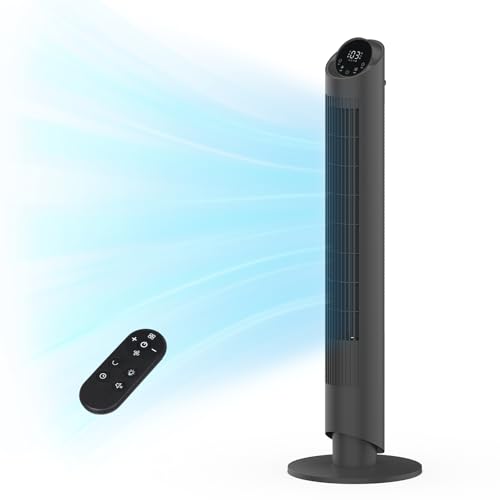
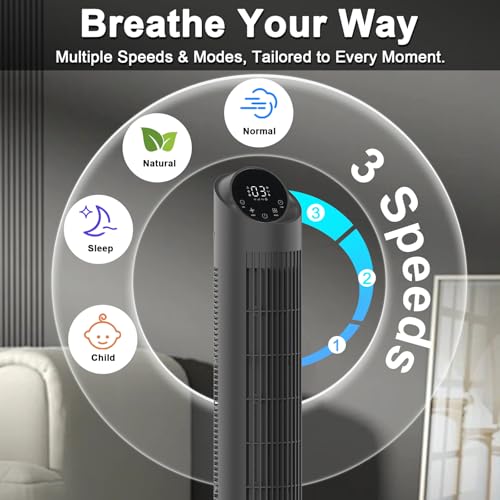
At 40 inches, this hykolity fan stands out physically, and visually. Its tall, sleek profile gives it a modern look that blends well in living rooms or open-concept spaces. The 26ft/s airflow is strong for its class, and the 28dB noise rating means it won’t disrupt sleep or quiet work. Owners appreciate the Child Mode, which limits speed and disables certain functions, adding a thoughtful touch for families.
The design isn’t just about looks. The hidden remote storage and rear grille removal make it easy to live with day to day. But it lacks the smart features of higher-end DREO models and only offers 3 speeds, which feels limiting. Still, if you want a stylish, no-nonsense fan with solid performance and family-friendly extras, this one stands tall, literally.
Product photos
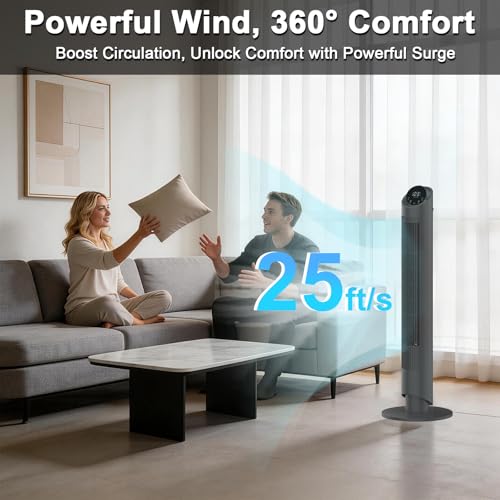
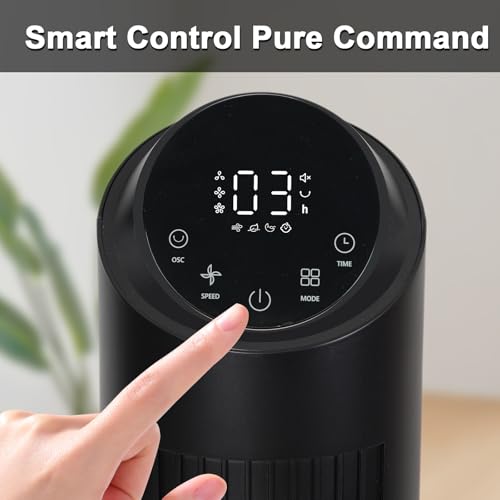
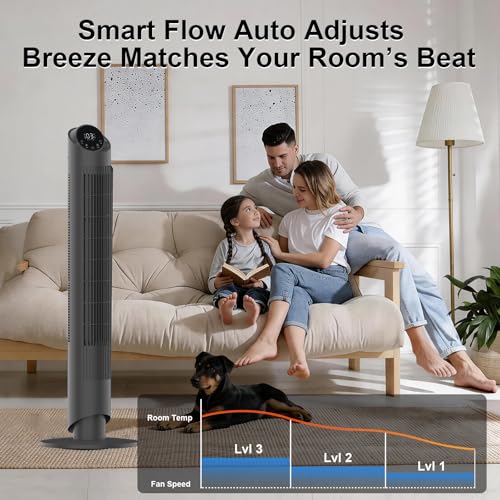
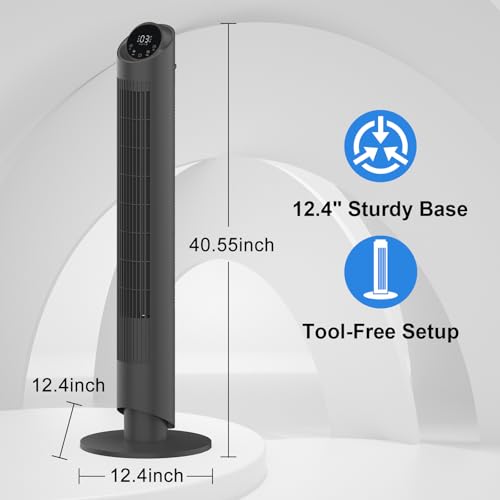
Comfort Zone 32-Inch Bladeless Fan
Strengths
- Bladeless design
- Finger-safe grille
- ETL certified
Trade-offs
- Only 3 speeds
- No remote
- Basic controls
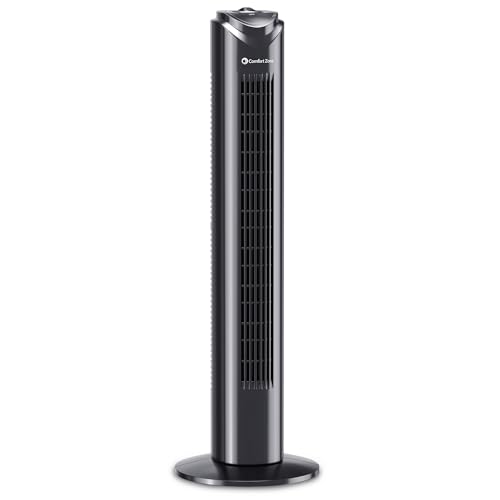
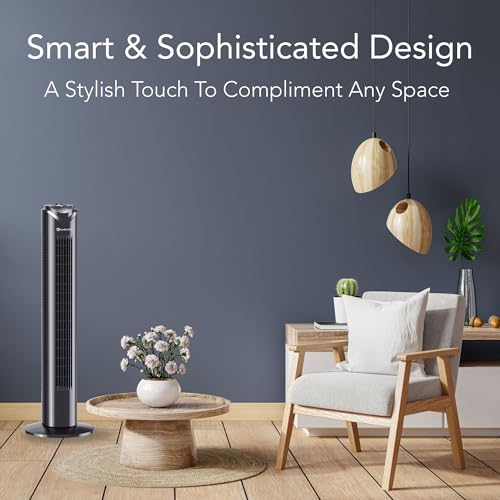
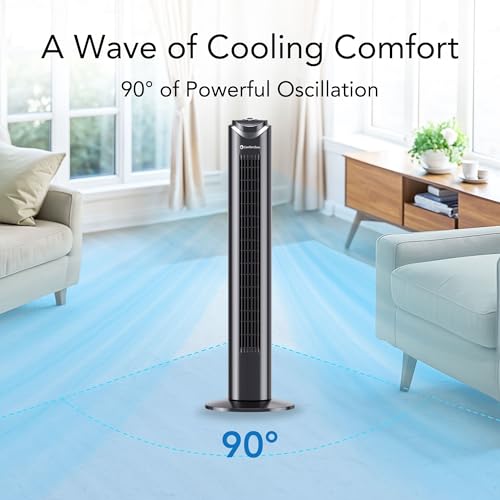
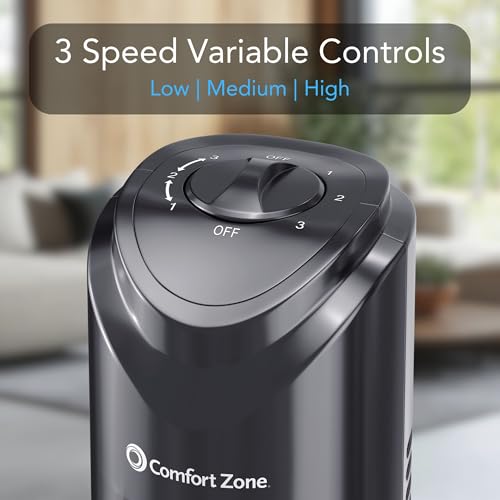
Safety is the headline here, and Comfort Zone nails it. The bladeless design and enhanced exterior grille make it one of the safest options for homes with kids or pets. The 90° oscillation and 3-speed knob control keep things simple, no touch panels, no apps, just reliable airflow. Owners say it’s sturdy, quiet, and ETL-certified with real safety features, not just marketing claims.
It’s not the most powerful or quietest fan on the list, but it’s built for peace of mind. The knob interface is easy for all ages, and the carry handle makes it easy to reposition. Compared to DREO or LEVOIT models, it lacks modern features, but that’s by design. If safety is essential, this fan stands apart.
Product photos
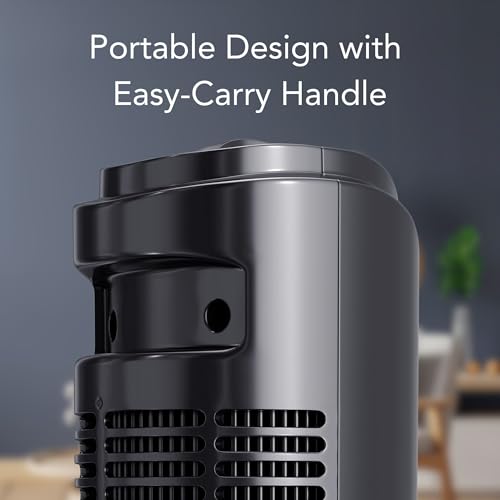
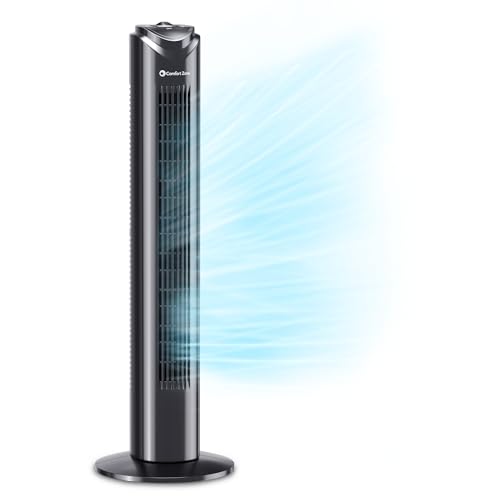
PELONIS 30 Inch Tower Fan

Strengths
- Affordable
- Lightweight
- Easy to move
Trade-offs
- Noisier than DC fans
- Basic speed options
- No remote
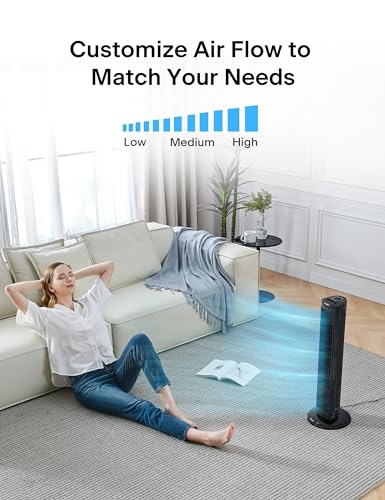
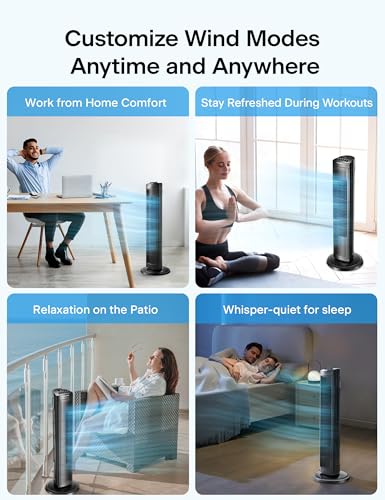
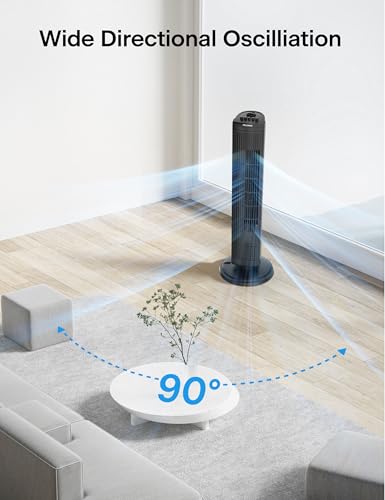
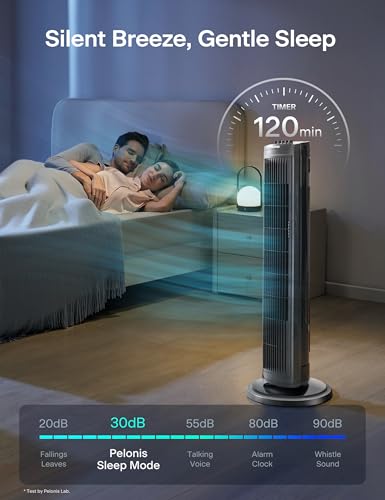
This Pelonis fan is a no-frills, dependable performer for anyone on a tight budget. At just under 30 inches tall and weighing only 7 pounds, it’s one of the lightest and most portable options here. Owners consistently report it does exactly what it promises, deliver steady airflow across small to medium rooms, without fuss. The 3-speed settings and 90° oscillation are basic but effective, and the 120-minute timer is practical for short-term cooling, like during a nap or while you fall asleep.
It won’t wow you with power or silence, but it’s not meant to. The motor is on the noisier side compared to DC models, and you won’t find smart features or ultra-low decibel ratings. Still, for dorm rooms, home offices, or as a backup fan, this is the kind of tool that gets the job done without draining your wallet.
Product photos
Our Testing Process
Rather than a hands-on lab test, this is a research-led comparison of specifications and owner feedback across a range of oscillating tower fans. I focused on published specifications – airflow (CFM and ft/s), noise levels (dB), oscillation range, and available modes – and then weighed those against what owners are saying about real-world performance and reliability. I also considered expert reviews from sites specializing in home comfort products to get a broader perspective. The goal was to rank models based on their potential to deliver effective cooling with reasonable noise, and a good feature set for the price.
For this category, airflow and noise levels were the most critical factors. A fan’s ability to move air efficiently, measured in CFM and feet per second, directly impacts its cooling power. Equally important is noise; a loud fan defeats its purpose, especially in bedrooms or home offices. Beyond those, the breadth of features – like oscillation range, multiple speed settings, and smart controls – served as tiebreakers. We also looked at build quality and safety features, considering factors like ETL certification and grill design.
Specifications reliably indicate a fan’s potential cooling power and noise output, but owner feedback provides valuable context. Many users comment on whether the fan lives up to its advertised airflow, or whether the “quiet” mode is truly silent. Reputation and brand trust also played a role; models from established brands with positive track records generally scored higher. If you’re particularly sensitive to noise, you might also consider exploring our guide to the ultra-quiet tower fans for even more specialized options.
How To Choose The oscillating tower fans
Choosing the right oscillating tower fan involves more than just picking a model with a sleek design.
A quality tower fan prioritizes airflow (measured in CFM – cubic feet per minute) and effective oscillation for even cooling. Look for models with multiple speed settings, quiet operation (under 50dB is preferable, especially for bedrooms), and safety features like tip-over protection and secure grill designs. DC motor fans generally offer better performance and energy efficiency compared to traditional AC motors.
Motor Type and Airflow
The motor is the heart of any tower fan, and DC motors are increasingly the standard for good reason. While older AC motor fans are cheaper upfront, a DC motor offers more precise speed control, quieter operation, and better energy efficiency. Don’t get hung up on maximum CFM numbers alone; consider how effectively that air is distributed. A fan with a high CFM but poor oscillation won’t cool a room evenly. If you’re concerned about running costs, explore energy-efficient tower fans to minimize your electricity bill.
Noise Level and Sleep Settings
Tower fans are often chosen for bedrooms, so noise is a critical factor. Manufacturers often advertise decibel (dB) ratings, but these can be misleading. Generally, anything under 40dB is considered very quiet, 40-50dB is acceptable for daytime use, and above 50dB might be disruptive for sleep. Look for models with dedicated “Sleep Mode” or “Quiet Mode” settings that prioritize silent operation.
Here’s what to consider regarding sleep modes: * A simple speed reduction. * Dimming or disabling the display panel. * A gradual decrease in fan speed over time, mimicking natural wind patterns.
A good rule of thumb: if you’re sensitive to noise, prioritize a fan with a dB rating below 45dB and actively seek out owner reviews commenting on its quietness.
Smart Features and Usability
While not essential, smart features can add convenience. Models with WiFi connectivity allow control via smartphone apps or voice assistants (like Alexa or Google Assistant). These can be handy for controlling the fan remotely or setting schedules. However, don’t overpay for features you won’t use. Beyond smart features, consider the simplicity of the controls. Do you prefer a physical remote, a touch panel, or a combination of both? If you desire a convenient experience, explore tower fans with remote control for ease of use.
Oscillating Tower Fans Compared
Here is a comparison of key specifications for several oscillating tower fans.
| Product Name | Air Speed (ft/s) | Airflow (CFM) | Oscillation | Noise Level (dB) | Modes |
|---|---|---|---|---|---|
| DREO Tower Fan 2026 | 28 | N/A | 90° | 20 | 4 |
| DREO Tower Fan 28 ft/s | 28 | 1473 | 90° | 20 | 4 |
| DREO Tower Fan WiFi Voice Control | 28 | N/A | 90° | 20 | 4 |
| LEVOIT Tower Fan 36 inch | 25 | 1044 | 90° | 28 | 4 |
| DREO Tower Fan 26ft/s 4 Speeds | 26 | N/A | 90° | 28 | 3 |
| Honeywell QuietSet Tower Fan HYF260 | N/A | N/A | N/A | N/A | N/A |
| hykolity 40” Tower Fan | 26 | N/A | 90° | 28 | 4 |
| Comfort Zone 32-Inch Bladeless Fan | N/A | N/A | 90° | N/A | N/A |
| PELONIS 30 Inch Tower Fan | N/A | N/A | 90° | N/A | N/A |
Frequently Asked Questions
What CFM rating do I really need in a tower fan?
A CFM of 800 to 1500 is generally sufficient for most bedrooms and medium-sized living rooms. However, larger spaces or rooms with high ceilings may require a fan with a higher CFM to circulate air effectively.
Are tower fans generally energy efficient?
Yes, tower fans are typically more energy-efficient than traditional box fans or air conditioners. DC motor models are even more efficient, potentially saving you money on your electricity bill compared to older AC motor designs.
How important is the oscillation range?
A wider oscillation range (beyond 90 degrees) is beneficial for distributing air more evenly across a larger area. Many models offer 90-degree oscillation, but some extend to 120 degrees or more, which is preferable for broader cooling.
Can I use a tower fan safely in a room with children or pets?
Yes, but always prioritize safety. Look for models with a stable base to prevent tipping, and a grill design with narrow openings to prevent accidental contact with the blades. Many fans include a tip-over safety shutoff feature.
What are the advantages of a smart tower fan?
Smart tower fans offer convenient control via smartphone apps or voice assistants, enabling remote operation and scheduling. If you’re looking for a little extra convenience, consider office-friendly tower fans for easy use during work.
The Bottom Line
Choosing a tower fan often comes down to balancing convenience with performance. While features like smart controls are nice to have, the most effective cooling comes from models focused on high airflow and quiet operation – and in that regard, the DREO Tower Fan 28 ft/s stands out as the strongest all-around pick. It delivers a strong 1473 CFM while maintaining a remarkably low noise level.
If you’re on a tighter budget, the DREO Tower Fan 2026 offers excellent value, while for those wanting smart home integration, the DREO Tower Fan WiFi Voice Control provides a convenient experience alongside solid cooling performance. And if you’re specifically looking for a cooling fan optimized for bedrooms, I recommend checking out the best tower fans for bedrooms – they’re designed for quiet, comfortable operation.
Ultimately, don’t get bogged down in chasing the highest CFM number or the latest smart features. Focus on a fan with a DC motor, a reasonable noise rating (under 50dB), and a design that allows for broad oscillation. A well-built fan with these fundamentals will provide years of reliable cooling, regardless of the price tag.
