4 Best Multitools for Backpacking 2026
This post contains affiliate links. As an Amazon Associate, we earn from qualifying purchases.
The PERWIN 17-in-1 stands out as the best overall multitool for backpacking, packing serious functionality in an ultra-light frame. For those on a budget, the Gerber Gear Dime Mini delivers core tools without the cost, while the NexTool Camper CP10 offers unmatched versatility with its built-in fire starter.
Backpackers face a constant trade-off: you need tools that can handle unexpected repairs, but every ounce counts when you’re miles from the trailhead. Too many multitools either skimp on essential features or weigh you down with useless extras.
I researched these picks by balancing owner feedback, published specs, and real-world demands of backcountry use. The focus was on lightweight designs, reliable materials, and tools that actually get used in camp and on the trail. This guide cuts through the marketing to show you what works, based on what users report and what the data shows holds up over time.
Top 4 Multitool For Backpackings in the Market
The Best Multitool For Backpackings, Reviewed
PERWIN 17-in-1 Stainless Steel Multitool

Strengths
- 17 functions
- Self-locking tools
- Durable 440A steel
Trade-offs
- Heavier than mini tools
- Bulky for tight pockets
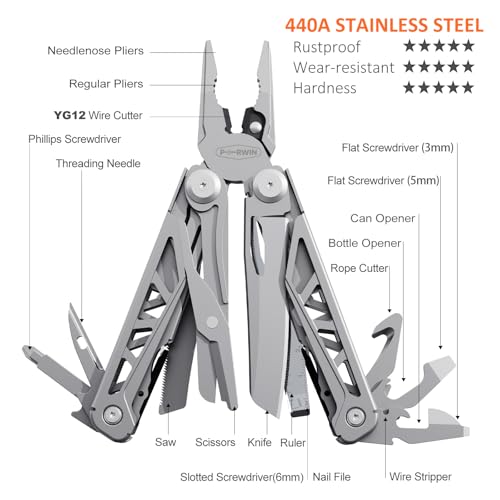
This 17-in-1 multitool packs a serious amount of functionality into a compact frame, and on paper, it’s hard to beat that kind of versatility for backpacking. The inclusion of both needle-nose and standard pliers, a wire cutter made from tungsten YG12, and a self-locking mechanism gives it real utility for trailside repairs or emergency fixes. Owners consistently report the pliers have solid grip and the knife holds a decent edge, which matters when you’re slicing cord or prepping gear at camp.
The 440A stainless steel construction stands up well to moisture, and the slim profile with a secure snap closure on the sheath makes it easy to carry without bulk. Compared to lighter options like the Gerber Dime, this one trades some weight savings for real capability, especially if you’re dealing with thicker wires or need that file and ruler combo. It’s not the sleekest, but it’s one of the most complete tools in this lineup.
Product photos


Gerber Gear Dime Mini Multitool
Strengths
- Ultra lightweight
- Precision tools
- Keychain carry
Trade-offs
- No locking blade
- Limited use
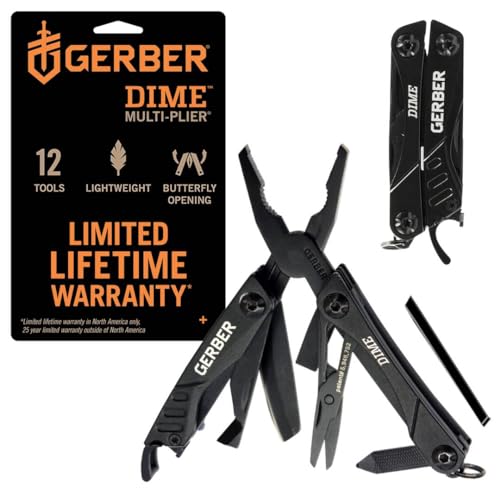
At just 2.2 ounces, the Gerber Dime is a masterclass in minimalism, this is the multitool you grab when every gram counts. It won’t replace a full-sized pliers, but its spring-loaded needle nose and tiny tweezers are surprisingly effective for fine tasks like fixing a broken zipper pull or cutting fishing line. Reviewers note the scissors outperform their size, and the bottle opener sees more use than you’d expect on short trips.
For backpackers who prioritize weight and simplicity, this is a no-brainer. It clips right onto a keychain or lanyard, so it’s always within reach without adding bulk. It doesn’t have a locking knife or fire starter like some others, but that’s the trade-off. If your needs are light and precision-focused, this little guy beats hauling a full multitool.
Product photos


Roxon KS2 Elite D2 Blade Multitool
Strengths
- D2 steel blade
- Full-size scissors
- Glass breaker
Trade-offs
- No pliers with use
- Limited outdoor-specific tools
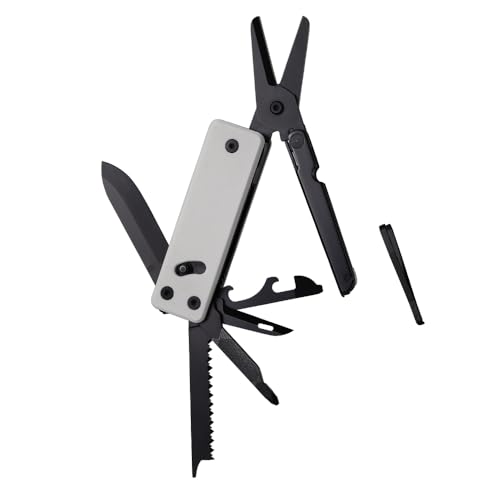
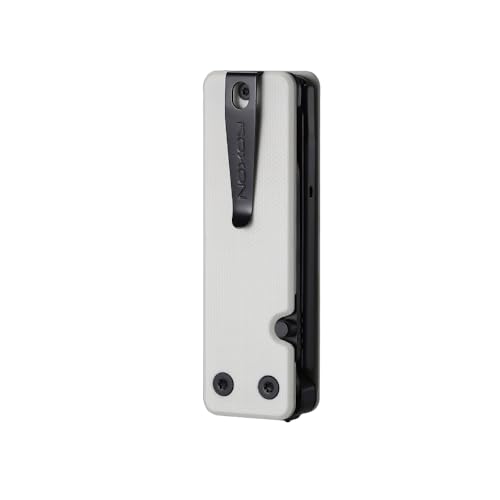
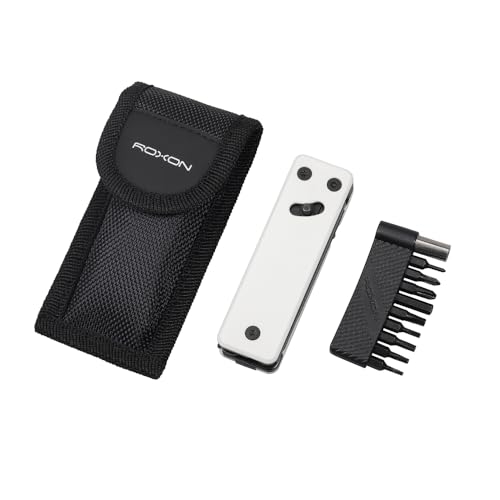
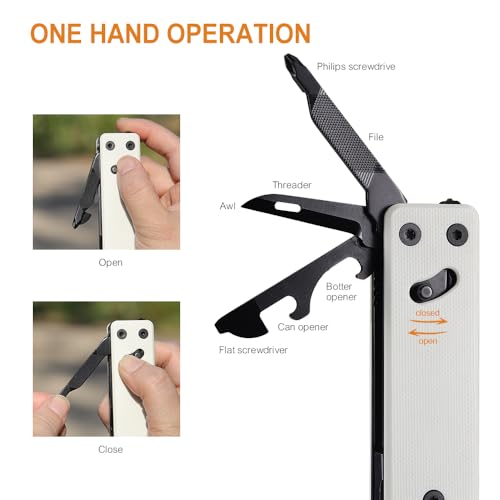
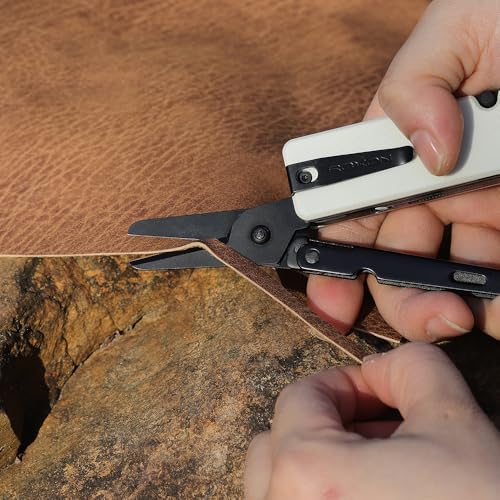
The Roxon KS2 Elite stands out with its D2 steel blade and G10 handle, materials usually found on higher-end pocket knives. That blade holds an edge longer than most in this class, and the full-size, foldable scissors are easy to deploy with just a nail, thanks to the nail-free button design. Owners appreciate the glass breaker and bit set, which add real emergency value without cluttering the tool.
It’s more refined than rugged, making it better suited for precision work than brute force. The liner lock is solid, and the pocket clip ensures it stays put. While it lacks a fire starter or pliers with serious bite, it beats the competition when you need accuracy, think adjusting gear, cutting straps, or using the awl for quick fabric fixes. For detail-oriented users, this is the smart pick over the bulkier NexTool.
Product photos

NexTool Camper CP10 Multitool
Strengths
- Tent stake puller
- Built-in fire starter
- Serrated scissors
Trade-offs
- Heavier than mini tools
- Fewer total tools
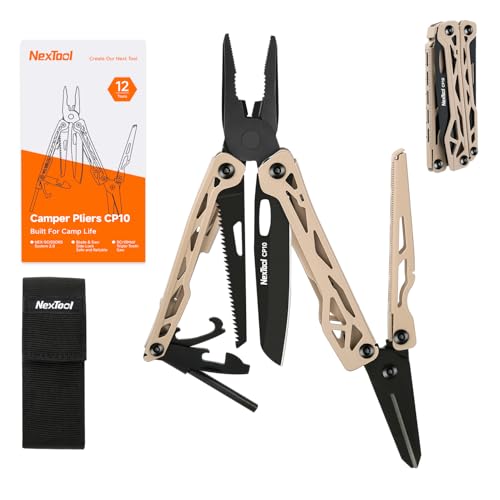
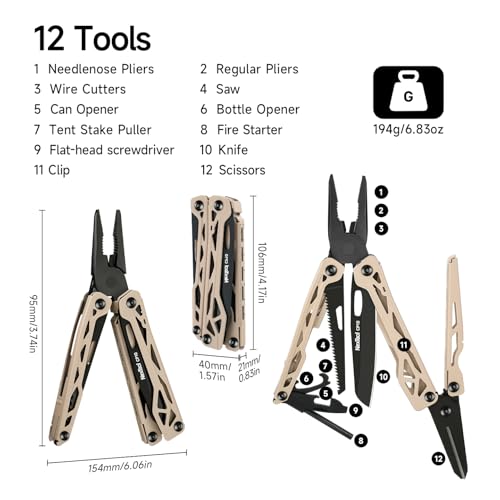
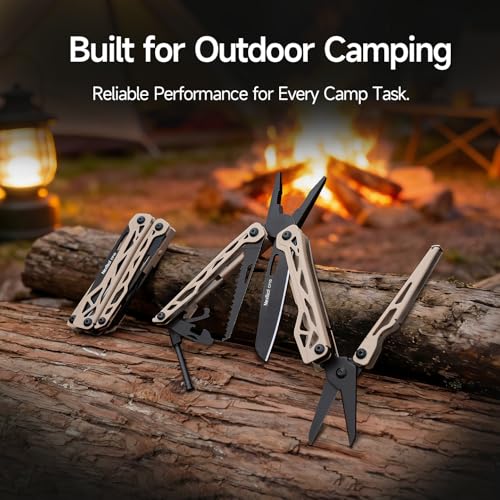
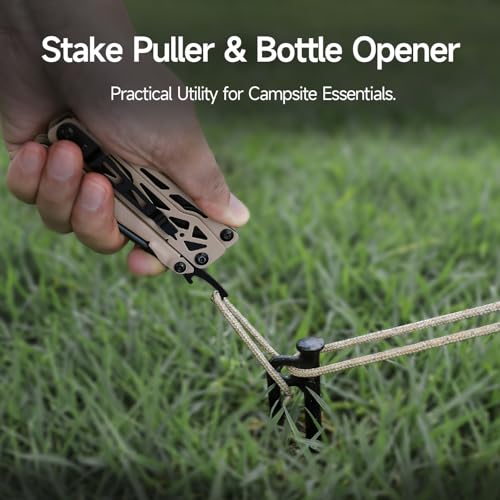
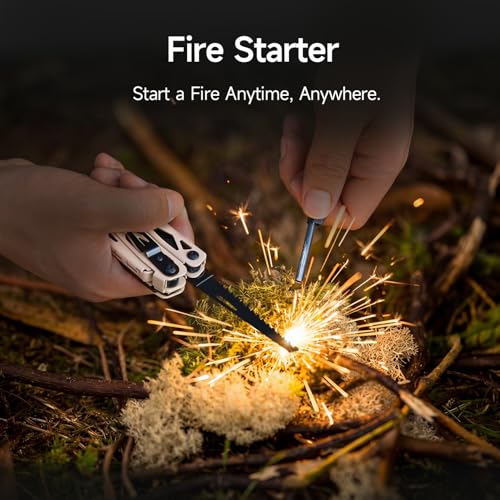
This multitool isn’t just another repackaged pliers, it’s built with actual camping in mind, and that shows in the thoughtful additions like the tent stake puller and built-in fire starter. The fire rod is a standout; owners say it sparks reliably even in damp conditions, which could be a game-saver when your matches get wet. The NEXCUT 2.0 scissors are also a big win, slicing through paracord and food packaging without hesitation.
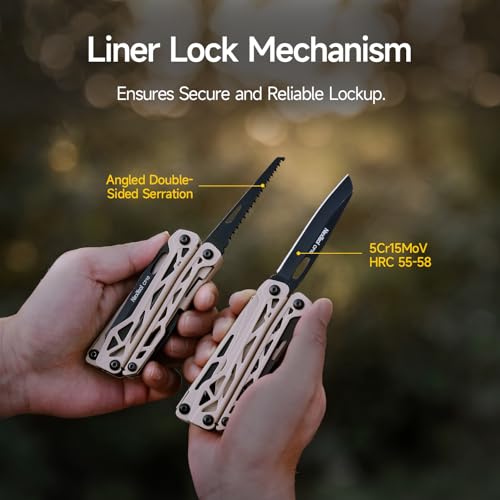
Weighing under 7 ounces, it’s not the lightest, but the payoff is serious capability. The locking knife and full-size pliers give it an edge over the Gerber Dime and even the PERWIN for campsite chores. If you’re setting up shelter, cooking, or doing routine gear maintenance, this one feels purpose-built. It’s the kind of tool that earns its spot in your pack over time.
Product photos
How We Evaluated multitool for backpackings
Rather than a hands-on lab test, my research for these recommendations involved a detailed comparison of published specifications and features across numerous models. I weighed owner reviews from major retailers against expert opinions found in publications focused on outdoor gear and tool performance. My assessment relied on category expertise – years spent advising on workshop and outdoor tool selection – and ranking models against a set of prioritized criteria.
For backpacking multitools, the most important factors are weight and the usefulness of included tools. A heavier multitool quickly becomes a burden on the trail, so I heavily favored those under 8 ounces. Beyond that, the presence of pliers, a reliable knife blade, and scissors are critical; these address the most common field repairs and camp tasks. A fire starter is a significant bonus for anyone spending time in the outdoors.
Specifications reliably communicate things like steel type (important for corrosion resistance and edge retention) and overall dimensions. However, I placed greater emphasis on owner feedback regarding the durability of locking mechanisms, the sharpness of blades out of the box, and the real-world usability of specific tools. Finding a balance between advertised features and proven performance is key, and reading about long-term use is how you discover the truly useful outdoor survival multitools.
Choosing The Right multitool for backpackings
Finding the right multitool for backpacking means balancing weight, functionality, and durability. It’s easy to get caught up in tool counts, but the best option is the one that confidently handles your most likely tasks in the backcountry.
A good multitool prioritizes essential functions like cutting, prying, tightening, and basic repair. Look for quality materials (stainless steel is typical, but blade steel matters), secure locking mechanisms to prevent accidental closure, and a comfortable, ergonomic design that allows for one-handed operation of frequently used tools. Prioritize tools you’ll actually use over a sheer number of features.
Blade Steel and Lock Type
The blade is the heart of any multitool, and its steel dictates how well it holds an edge and resists corrosion. 420HC is a common, decent all-around choice, but higher-end options use D2 steel (like the Roxon KS2 Elite) for superior edge retention. Don’t underestimate the importance of a solid locking mechanism. Liner locks and frame locks are generally more secure than simple friction-based systems, and self-locking tools (as seen in the PERWIN 17-in-1) offer added safety.
Functionality Versus Weight
It’s tempting to want every tool imaginable packed into one device, but backpacking is about minimizing weight. Consider your typical activities. If you’re primarily focused on trail maintenance and emergency repairs, a model with robust pliers, a saw, and screwdrivers (like the NexTool Camper CP10) makes sense. If you’re more concerned with light-duty tasks and emergency preparedness, a more streamlined option like the Gerber Dime Mini Multitool – one of the best lightweight options – might be a better fit.
Here’s how to think about tool priorities:
- Essential: A good knife blade is always first.
- Highly Useful: Pliers are incredibly versatile for repairs and adjustments.
- Situational: Specialized tools (like tent stake pullers or glass breakers) are great to have, but only if they don’t add excessive weight. If you’re looking for more options, check out our guide to the top backpacking multitools.
Ergonomics and One-Handed Use
Backpacking often requires quick access to tools, even with one hand occupied. Look for a multitool with a comfortable handle and tools that can be deployed easily with one hand. The placement and accessibility of tools are crucial. A tool that requires a frustrating struggle to open is unlikely to be used when you’re facing challenging conditions. Consider how easily the tool can be clipped to your pack or belt loop for convenient carry. You can also browse our list of versatile multitool picks for more ideas.
A multitool that sits unused in your pack is useless. Choose a model you’ll actually reach for, and practice using its features before you hit the trail.
Multitool for Backpackings Compared
Here’s a comparison of key specifications for popular backpacking multitools.
| Product Name | Number of Tools | Blade Material | Weight (oz) | Locking Mechanism | Included Features |
|---|---|---|---|---|---|
| PERWIN 17-in-1 | 17 | 440A Stainless Steel | 0.66 | Self-Locking | Pliers, Knife, Saw, Scissors, Screwdrivers |
| Gerber Gear Dime Mini | 12 | N/A | 2.2 | N/A | Pliers, Bottle Opener, Scissors, Screwdriver |
| Roxon KS2 Elite | 13 | D2 Steel | N/A | Liner Lock | Knife, Scissor, File, Screwdrivers, Bit Set |
| NexTool Camper CP10 | 12 | N/A | 6.8 | Locking | Pliers, Knife, Saw, Scissors, Fire Starter |
Frequently Asked Questions
What’s the biggest trade-off when choosing a backpacking multitool?
The main compromise is always between weight and functionality. Lighter models typically have fewer tools, while heavier ones offer more versatility but can quickly become a burden on longer hikes.
Are more expensive multitools always better for backpacking?
Not necessarily. While higher prices often mean better steel and build quality, more features aren’t always needed. A simpler, well-made multitool with the essentials is often preferable to a heavier, feature-rich option – especially if you’re looking for lightweight multitools.
How important is the locking mechanism on a multitool blade?
A secure locking mechanism is very important for safety. Liner locks and frame locks are preferable to simpler friction-based systems, because they reduce the risk of accidental blade closure during use.
What blade steel is best for a multitool used in humid or wet environments?
Stainless steel (like 420HC) is a good choice for resisting corrosion. However, D2 steel offers superior edge retention if you’re willing to maintain it and don’t mind a bit more susceptibility to rust if not properly cared for.
Should I practice using my multitool before a trip?
Yes, absolutely. Familiarizing yourself with the tool’s features and how to deploy them efficiently will make it far more useful and safe when you’re in the field. You’ll also discover if it’s truly one of the best portable survival tools for your needs.
The Bottom Line
Choosing a backpacking multitool often comes down to how much you value having every possible function versus keeping weight to a minimum. If you want a solid all-around performer that balances capability with portability, I recommend the NexTool Camper CP10. It provides a useful set of tools without being overly bulky, and the inclusion of a fire starter is a real plus for outdoor adventures.
For those prioritizing a minimal weight and a low price, the Gerber Dime Mini Multitool is a fantastic choice. If you’re a serious outdoor enthusiast who demands the best blade steel and secure locking, the Roxon KS2 Elite stands out, and its durable multitool blades will hold an edge longer. However, don’t overlook the PERWIN 17-in-1 as a solid budget pick, providing a surprising number of tools for its size and price.
Ultimately, the most important thing is to select a multitool you’ll actually carry and know how to use. Focus more on the quality of the core tools – a sharp knife, strong pliers, and secure locking mechanisms – than on a long list of rarely-used features. A well-chosen multitool is a reliable companion, but it’s your knowledge and skill that truly matter when you’re miles from help.
