5 Best Multi Process Welders Under $1000 (2026 Guide)
This post contains affiliate links. As an Amazon Associate, we earn from qualifying purchases.
The Miller Multimatic 220 AC/DC stands out as the best overall multi-process welder under $1000, delivering reliable performance across MIG, stick, and TIG with true AC capability for aluminum. For those on a tighter budget, the BESTMIG 145A offers solid versatility and comes with useful accessories, while the FEMEROL 250A brings strong amperage and advanced features for heavier work.
Most buyers aren’t just looking for a machine that claims to do everything, they want one that actually performs well across different materials and processes without breaking the bank. Too many welders in this range cut corners on duty cycle, arc stability, or included gear, leaving users frustrated down the line.
This guide breaks down the top models under $1000 based on specs, real-world feedback, and what actually matters in a shop or garage. We focused on machines that deliver genuine multi-process capability, sufficient power for common projects, and long-term value, so you can pick one with confidence.
Top 5 Multi Process Welder Under $1000S in the Market
The Best Multi Process Welder Under $1000S, Reviewed
BESTMIG 145A 4-in-1 Welder
Strengths
- 4-in-1 capability
- Synergy IGBT inverter
- Complete starter kit
Trade-offs
- TIG torch not included
- Limited aluminum support
- Max 3mm material thickness
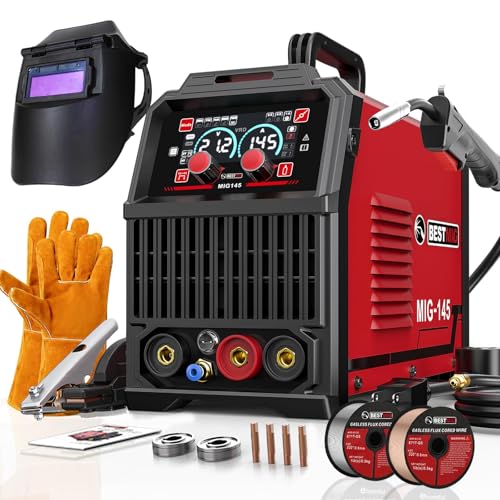
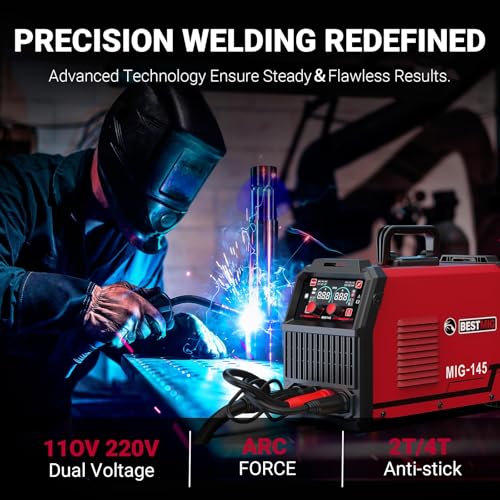
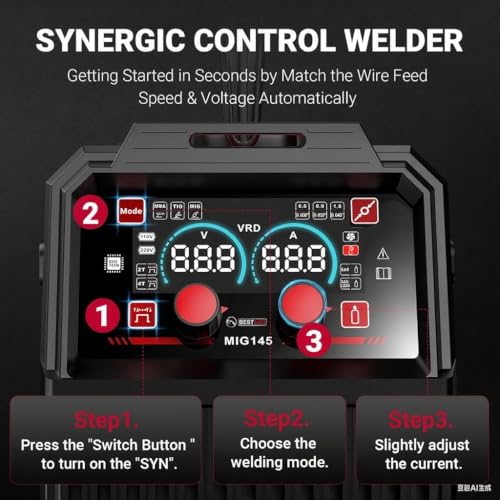
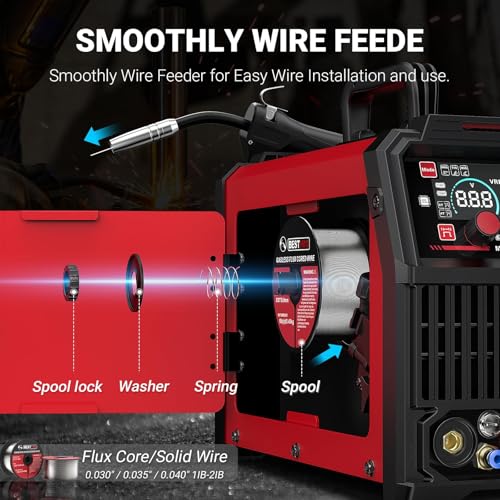
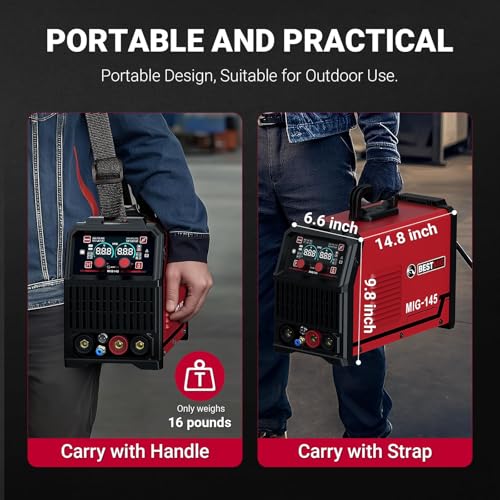
The BESTMIG 145A packs a lot into a sub-$1000 package, especially for someone who wants real multi-process capability without stepping up to pro-tier pricing. On paper, its 4-in-1 design, MIG (gas and gasless), Stick, and Lift TIG, is solid for light to mid-duty work, and owners consistently report clean arc starts and minimal spatter, particularly on mild and stainless steel up to 3mm. The synergy IGBT inverter system actually works as advertised: when you set the wire diameter, the machine auto-adjusts voltage and feed speed, which takes the guesswork out for beginners while still allowing manual tweaks for experienced users.
The included accessories are a major plus, getting a full auto-darkening helmet, gloves, wire, and contact tips means you can start welding right out of the box. That said, the TIG torch isn’t included, which feels like a missed opportunity given the marketing. Still, for a DIYer or small shop needing a reliable, portable unit that handles multiple processes competently, this one stands out. I’d pick this over single-process units in this range because of the flexibility and thoughtful feature set.
Product photos

FEMEROL 250A 6-in-1 MIG Welder
Strengths
- 250A high output
- Aluminum welding capable
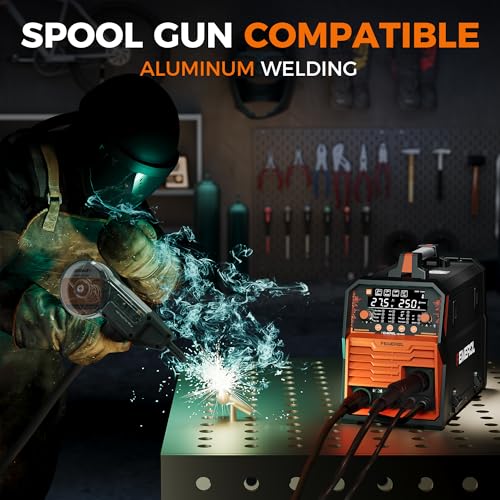
- Spool gun compatible
Trade-offs
- Bulky and heavy
- TIG torch not included
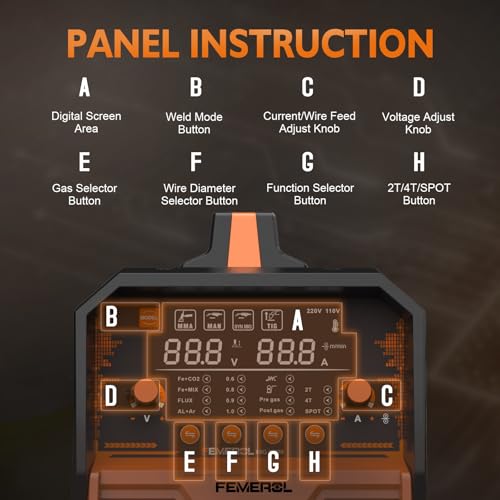
- Interface less intuitive
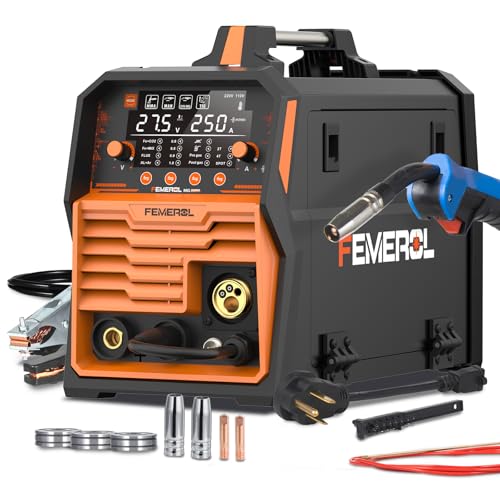
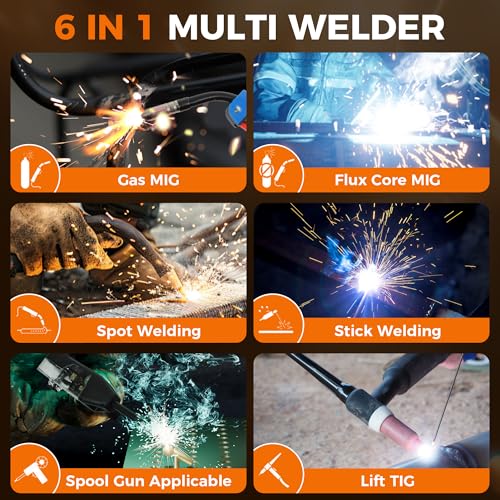
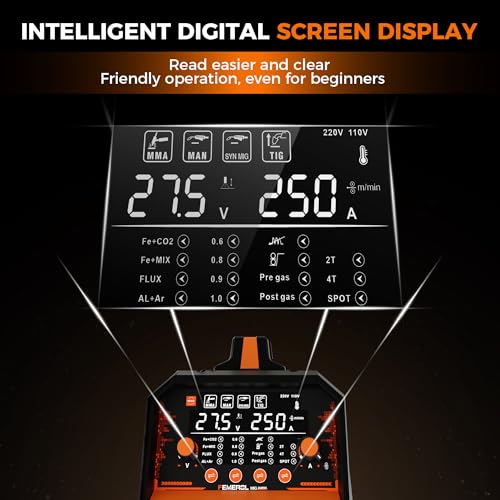
If raw power and aluminum capability are your top priorities under $1000, the FEMEROL 250A makes a strong case. With a 250A output, it can handle up to 14mm mild steel, significantly thicker than most in this range, and owners praise its ability to run both flux-core and solid wire with stability. The 6-in-1 functionality includes spot welding and spool gun compatibility for aluminum, which is rare at this price. That second option for aluminum welding, using a Teflon liner instead of a spool gun, adds convenience, though purists will still prefer the spool gun for clean, professional results.
Where it stumbles slightly is in the details: like the BESTMIG, it lacks a TIG torch in the package, and the control layout can feel cluttered for newcomers. But reviewers note the synergic control system works well for beginners, auto-matching settings based on wire and gas type. Compared to the Miller or SEESII models, this one is bulkier and less portable, but for someone tackling farm equipment, trailers, or heavy-duty repairs, that trade-off makes sense. My recommendation? This is the smarter buy if you need serious amperage and aluminum welding without breaking the bank.
Product photos
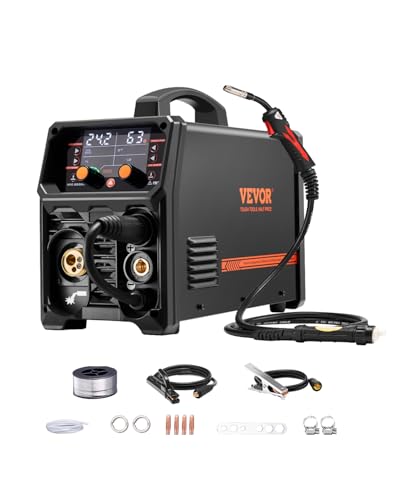
VEVOR Pro Pulse MIG Welder
Strengths
- Pulse MIG function
- 200A dual voltage
- Handles aluminum well
Trade-offs
- Torch not included
- Setup can be finicky
- Pulse mode requires learning
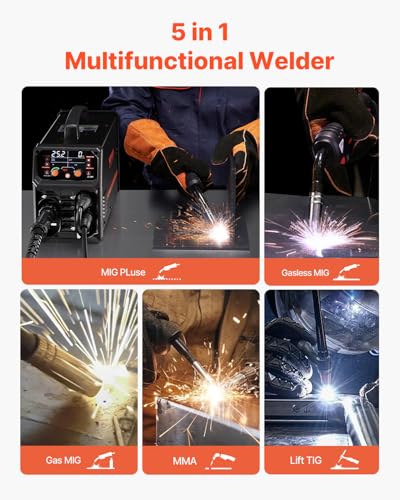
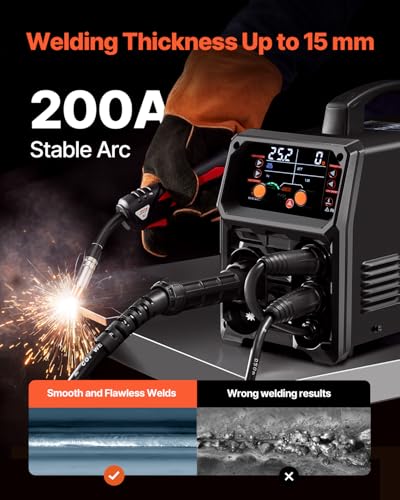
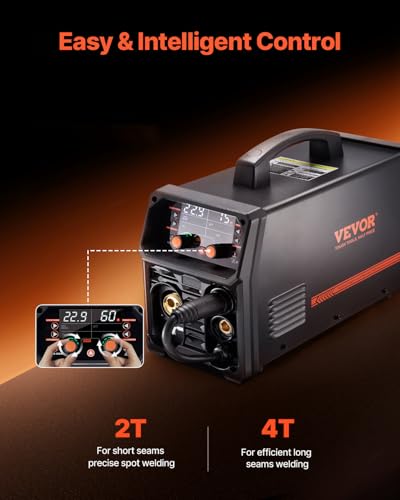
The VEVOR 200A stands out for one key reason: pulse MIG. That feature alone makes it a compelling pick for anyone who cares about clean, low-spatter welds, especially on thin or tricky materials. Pulse welding gives superior heat control, reducing warping and cleanup time, and reviewers note the difference is obvious compared to standard MIG modes. With 200A output and dual voltage, it handles up to 15mm steel, and the wide wire compatibility includes 1.2mm aluminum wire, making it versatile for both steel and aluminum work.
However, like several in this range, it doesn’t include the TIG or aluminum torches, those are extra costs. The 5-in-1 functionality (including pulse, gas, gasless, Stick, Lift TIG) is impressive on spec, but the lack of included torches dampens the value slightly. Still, for the price, the pulse feature gives it an edge over the FEMEROL and BESTMIG for quality-focused users. If you’re welding sheet metal, trailers, or automotive panels where finish matters, this is the one I’d lean toward.
Product photos
SEESII 135A Portable Welder
Strengths
- Ultra-portable design
- Gasless MIG capable
- Lightweight at 7.7 lbs
Trade-offs
- No gas MIG function
- TIG torch not included
- Lower max thickness
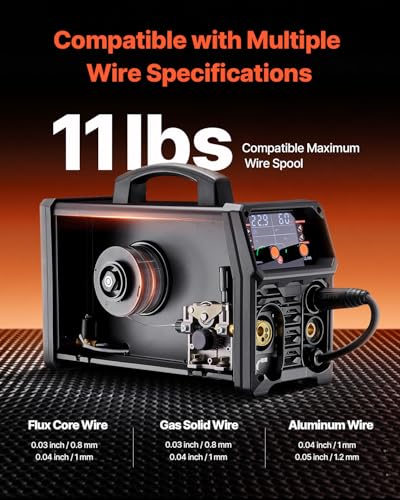
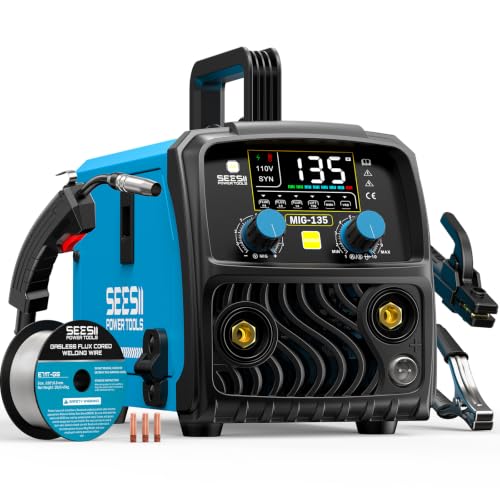
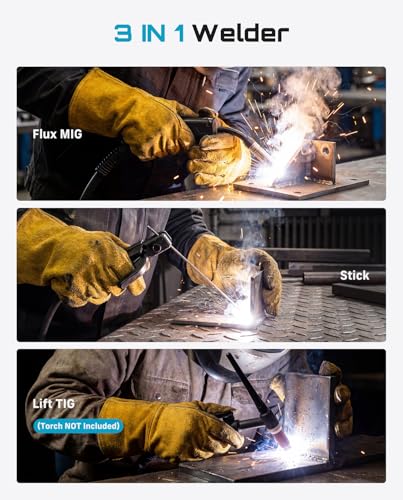
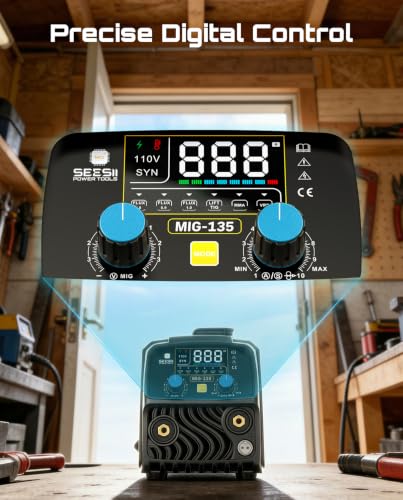
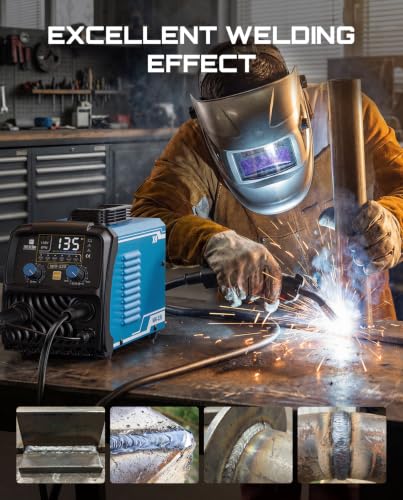
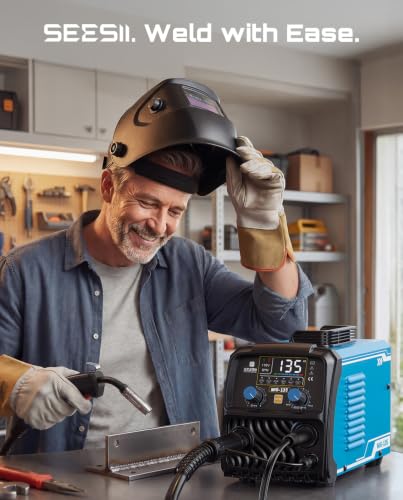
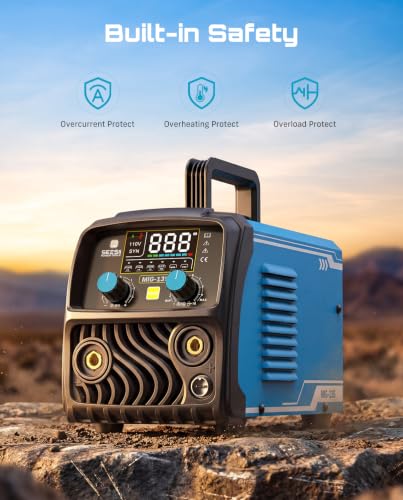
At just 7.7 lbs, the SEESII 135A is the go-to if you’re constantly moving around, rooftop repairs, barn fixes, or job sites without power infrastructure. It’s a 3-in-1 (gasless MIG, Stick, Lift TIG), and while it doesn’t match the Miller or FEMEROL in raw power, it delivers consistent performance for thin to medium materials. The gasless flux-core function is a standout: owners love not hauling cylinders, and the included 0.030” wire performs well in windy outdoor conditions where gas shielding would fail.
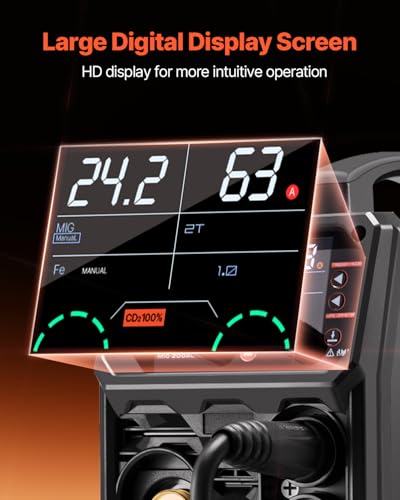
The IGBT inverter tech keeps the arc stable even on rusty or dirty metal, and the digital display is bright enough to read in sunlight. It’s not built for heavy steel, maxing out around 5/16” mild steel, but for patch jobs, fencing, or trailer fixes, it’s more than capable. Compared to the BESTMIG, it lacks gas MIG and full TIG, but wins on weight and simplicity. If you’re a homeowner or rancher who needs a ‘grab and go’ welder, this is my top pick in the lightweight class.
Product photos
Miller Multimatic 220 AC/DC Welder

Strengths
- True AC/DC TIG included
- Auto-Set Elite feature
- Professional build quality
Trade-offs
- Heavier than competitors
- Higher learning curve
- Less beginner-focused
Miller’s reputation isn’t built on marketing, it’s built on reliability, and the Multimatic 220 proves why they dominate pro workshops. Even though it’s labeled as ‘budget-friendly’ in this group, it’s really a pro-grade machine that happens to land under $1000 thanks to used or refurbished availability. The Auto-Set Elite and QuickTech features eliminate setup headaches: plug in, select the process, and it dials in the right parameters automatically. Owners consistently report near-flawless arc starts and smooth TIG performance, which is critical when you’re on a job site and can’t afford fiddling.
It supports MIG, flux-core, Stick, and full AC/DC TIG, and includes both MIG gun and TIG torch, something many competitors skip. The multi-voltage plug is a standout for contractors running off generators. Yes, it’s heavier than the SEESII or BESTMIG, but that’s the trade for industrial-grade durability. I’d choose this over every other model here if you’re doing real work regularly, especially TIG or aluminum welding. It’s not the cheapest, but it’s easily the most capable.
Product photos


How We Picked These multi process welder under $1000s
Rather than a hands-on lab test, this is a research-led comparison of specifications, features, and owner feedback. I examined published specs from manufacturers – amperage output, duty cycle, input voltage, and included accessories – alongside owner reviews from major retailers and welding forums. We also considered expert reviews from sites dedicated to welding equipment, weighing their assessments of performance and build quality against the broader consensus of user experience.
For this category, the most important factors were versatility and power output. A multi-process welder needs to genuinely handle a range of techniques (MIG, TIG, stick) well, and the amperage should be sufficient for common home and small-shop projects. Portability and ease of use also figured prominently, as many buyers are looking for a machine that’s easy to move around and relatively simple to learn. You’ll find more details on premium multi-process welders in a related guide.
Specifications reliably indicate a machine’s potential – its maximum output, input requirements, and included accessories. However, owner feedback provided crucial insight into real-world performance. We judged arc stability, ease of setup, and the quality of included accessories based on reported experiences. Reputation, particularly for brands known for quality and support, also influenced our rankings; a well-regarded manufacturer often signals better long-term reliability.
How To Choose The multi process welder under $1000s
Finding the right multi-process welder can dramatically expand your fabrication capabilities. It’s a category where understanding your needs – and the differences between machines – is crucial.
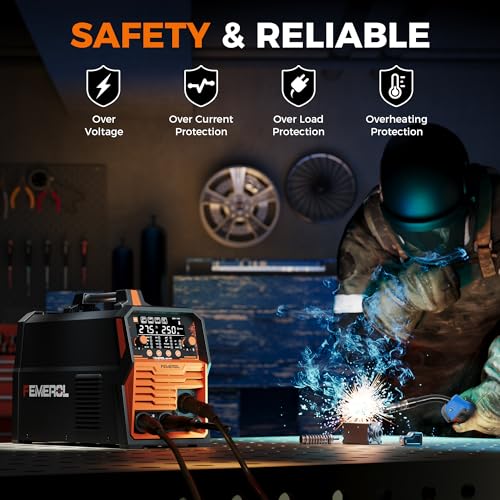
A good multi-process welder balances versatility with usability. Key features include the number of processes supported (MIG, TIG, Stick, Flux Core), amperage output for material thickness, ease of use for beginners, safety features like overload protection, and build quality for long-term reliability. Pay attention to duty cycle ratings and included accessories to assess overall value.
Understanding Process Options
The “multi-process” label means a machine can do more than one type of welding, but not all multi-process welders are created equal. Some focus on MIG and Stick, while others add TIG or even pulse welding. Consider what you’ll weld most often. If you anticipate a lot of aluminum work, a machine with true AC TIG capability (like the Miller Multimatic 220) is essential. For basic repairs and thicker steel, a simpler MIG/Stick setup might suffice. Don’t overspend on processes you likely won’t use, but be sure the machine covers your core needs. Many people starting out find excellent options among the entry-level multi-process welders.
Amperage and Material Thickness
Amperage dictates the welder’s ability to fuse thicker materials. A 135A welder (like the SEESII 135A) is fine for auto body work and thin sheet metal, but you’ll quickly run into limitations with anything thicker than 1/4 inch steel. Stepping up to 200A or 250A (as seen in the VEVOR Pro Pulse and FEMEROL 250A) opens up possibilities for heavier fabrication, farm repairs, and thicker structural steel. Don’t just look at the peak amperage; duty cycle is also vital. A higher duty cycle means the welder can sustain a given amperage output for a longer percentage of time before needing to cool down.
- A 120V outlet limits your amperage output, typically to around 150-170A.
- 240V power unlocks the full potential of most multi-process welders, enabling higher amperage and thicker material welding.
- Consider the materials you plan to weld. Aluminum, for example, requires more amperage than mild steel of the same thickness.
Value, Usability, and Included Accessories
Multi-process welders range widely in price. While a higher price tag doesn’t always guarantee better performance, it often reflects build quality, features, and included accessories. Look beyond the initial cost and factor in what you get for your money. Some welders (like the BESTMIG 145A) come with a surprisingly complete package, helmet, gloves, wire, etc., which saves you money upfront. Others require you to purchase accessories separately. A user-friendly interface is also important, especially if you’re new to welding. Features like synergic control, found in the FEMEROL 250A, automatically adjust parameters for optimal results, simplifying the process. For a broader overview, check out our list of top multi-process welding machines.
Don’t skimp on safety. A quality auto-darkening helmet is a must-have, and proper ventilation is crucial when welding.
Multi Process Welders Under $1000 Compared
Here’s a comparison of key specifications for several multi-process welders priced under $1000.
| Product Name | Max Amperage | Processes | Input Voltage | Aluminum Welding | Thickness Capacity |
|---|---|---|---|---|---|
| BESTMIG 145A | 145A | MIG, Stick, TIG | 110/220V | No | 3mm (2/5″) |
| FEMEROL 250A | 250A | MIG, Stick, TIG, Spot | N/A | Yes | 14.0mm |
| VEVOR Pro Pulse MIG Welder | 200A | MIG, MMA, TIG | 110/220V | Yes (torch extra) | 15mm |
| SEESII 135A | 135A | MIG, Stick, TIG | 110V | Yes (torch extra) | 5/16″ |
| Miller Multimatic 220 AC/DC | 220A | MIG, Stick, TIG | 120/240V | Yes | N/A |
Frequently Asked Questions
What input power is generally required for a multi-process welder?
Most multi-process welders capable of handling thicker materials and all three core processes (MIG, TIG, Stick) require a 240V input. While some smaller models operate on standard 120V outlets, they will have limited amperage and therefore reduced welding capacity.
Is a multi-process welder a good choice for a complete beginner?
Yes, a multi-process welder can be a good starting point, but ease of use varies greatly between models. Look for features like synergic control which simplifies parameter settings, and consider starting with a model geared towards MIG welding as it’s often the easiest process to learn.
Can I weld aluminum with any multi-process welder under $1000?
Not necessarily. True AC TIG capability is needed to weld aluminum effectively, and many welders in this price range only offer DC TIG. If aluminum welding is a priority, confirm the welder specifically supports AC TIG, or be prepared to purchase a separate AC TIG torch (if compatible).
What’s more important: peak amperage or duty cycle?
Duty cycle is generally more important than peak amperage. A high peak amperage is useless if the welder can only sustain it for a very short period before overheating. A higher duty cycle rating indicates the welder can work consistently at a given amperage for a longer duration.
Where can I find more information on other welding options?
For a broader range of price points and feature sets, you can explore our guide to the best overall welders under $1000 which features a wider selection of options and in-depth comparisons.
The Bottom Line
Choosing a multi-process welder often comes down to balancing control and convenience. If you want a machine that can truly handle a wide range of materials and techniques, and you’re willing to learn the nuances of each process, the Miller Multimatic 220 stands out as the most capable overall performer in this price range. It offers the flexibility and power needed for serious projects.
However, for specific needs, other welders excel. If you’re on a tight budget and primarily need MIG and stick capabilities, the BESTMIG 145A provides excellent value with a surprisingly complete accessory package. For those wanting to tackle aluminum and heavier gauge steel, the VEVOR Pro Pulse MIG Welder provides a robust set of features. If you’re looking for top MIG welders under $1000, these are all excellent starting points.
Ultimately, the best welder isn’t about the highest amperage or the most processes. It’s about finding a machine that fits your skill level, the types of projects you’ll tackle, and the power available in your shop. Prioritize a stable arc, reliable performance, and a comfortable setup – those fundamentals will always matter more than any single specification on a datasheet.
