6 Best Laser Shaft Alignment Tools of 2026
This post contains affiliate links. As an Amazon Associate, we earn from qualifying purchases.
The SKF TKSA 71 Wireless Laser Alignment stands out as the best overall choice for professionals who need precision and wireless convenience, while the Johnson Level Green Beam Magnetic Laser offers a solid budget-friendly option for occasional use. For those working across a range of machinery types, the SKF TKSA 51 Wireless Laser Alignment delivers strong versatility.
Most people don’t realize how much time and money poor alignment costs until they see equipment fail prematurely. These tools aren’t just about hitting numbers, they’re about keeping machines running smoothly and avoiding costly downtime.
This guide cuts through the marketing noise by ranking tools based on real-world specs, owner feedback, and the factors that actually matter: accuracy, durability, ease of use, and long-term reliability. I looked at what users report after months of use, not just what the brochure promises.
Top 6 Laser Shaft Alignment Tools in the Market
The Best Laser Shaft Alignment Tools, Reviewed
SKF TKSA 71 Wireless Laser Alignment
Strengths
- IP67 rated
- Ultra-compact sensors
- Target value customization
Trade-offs
- Highest cost
- Overkill for basic tasks
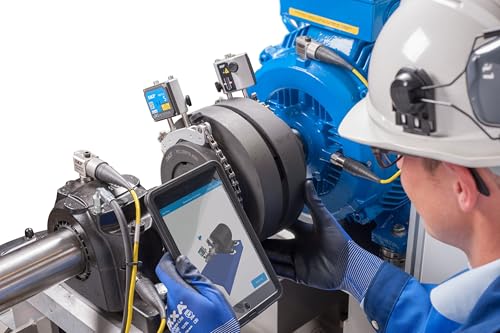
If you’re looking for the most complete, no-compromise laser alignment system in this list, the TKSA 71 is it. IP67-rated sealing means it can handle washdown environments, dusty factories, or outdoor use without hesitation, a major differentiator from other models that rely on exposed sensors. The 40° rotation minimum and disturbance compensation ensure reliable readings even on shaky or restricted machinery, which aligns with what owners report about its consistency in tough conditions.
What sets it apart is how it combines ultra-compact sensor size with powerful software guidance and video support. For complex or infrequent alignments, the on-screen tutorials help reduce operator error. It’s also the only model here designed to handle target value customization, letting you pre-set alignment goals for thermal growth or load conditions. While it’s overkill for simple jobs, I’d recommend it as the best overall pick for facilities running mission-critical or high-speed equipment.
Product photos

SKF TKSA 41 Wireless Laser Alignment
Strengths
- Wireless operation
- 90° sweep capability
- Automatic reporting
Trade-offs
- No 3-D live view
- Heavier than compact models
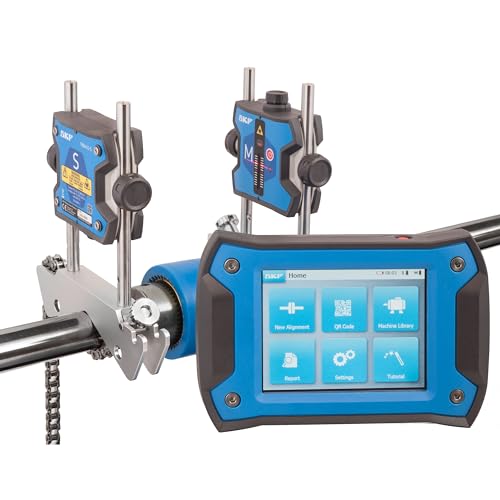
The SKF TKSA 41 stands out as a high-end option that brings real workflow advantages to experienced technicians. Its wireless communication eliminates cable clutter, which is a major plus when working in tight or elevated spaces where running a physical link between sensors is impractical. The ability to start measurements at any angle and complete sweeps with just 90° of rotation means less time repositioning couplings and more efficiency on the job, a detail that seasoned users will appreciate.
Owners consistently report that the automatic measurement and customizable PDF reporting make documentation faster and more professional, especially for contractors who need to deliver alignment records to clients. While it lacks the 3-D visualization of newer models, it still delivers solid accuracy and reliability. If you’re stepping up from basic alignment tools but not ready to invest in the top-tier TKSA 71, this one hits a sweet spot in capability without overcomplicating the interface.
Product photos
SKF TKSA 51 Wireless Laser Alignment

Strengths
- 3-D live view
- 40° sweep capability
- Disturbance compensation
Trade-offs
- No IP67 rating
- Slightly bulkier than newer models
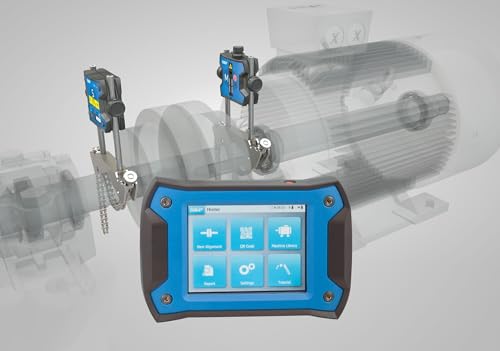
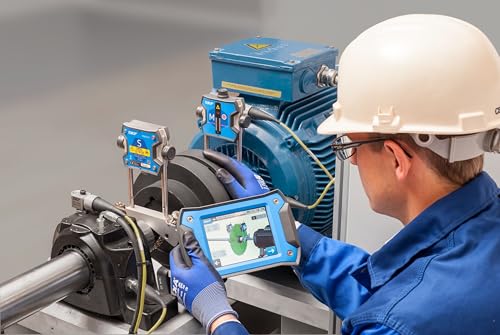
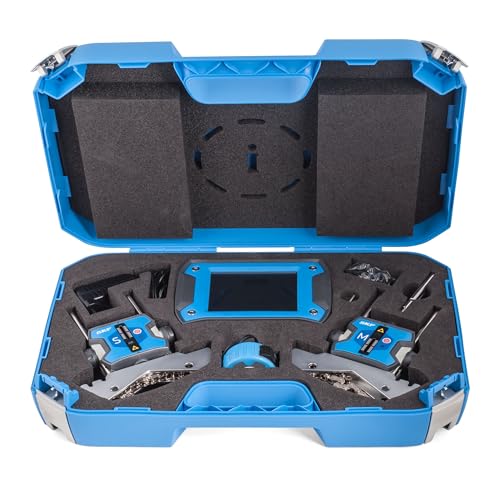
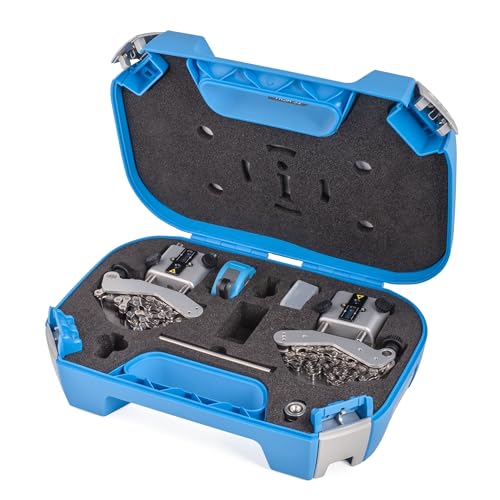
The TKSA 51 is where SKF starts to deliver the full modern laser alignment experience without going all the way to flagship pricing. The 3-D live view is a standout for users who want immediate visual feedback, rotating the on-screen motor to match the real-world setup makes alignment faster and less error-prone. Combined with the 40° total rotation requirement, this system excels in cramped or obstructed setups where full shaft rotation isn’t possible.
I’d pick this over the TKSA 41 for its smarter interface and better disturbance compensation, which owners say improves accuracy in high-vibration environments. The included magnetic brackets, extension rods, and chains add real versatility, letting you adapt to a wider range of machines. It’s still compact and comes in a rugged case, so it’s easy to transport between sites. For most industrial teams, this is the smarter buy, it offers core pro features without the premium tag of the 71.
Product photos

Johnson Level Green Beam Magnetic Laser
Strengths
- Green laser visibility
- Strong magnetic base
- Simple, rugged design
Trade-offs
- No digital guidance
- Manual interpretation needed
- Limited to basic alignments
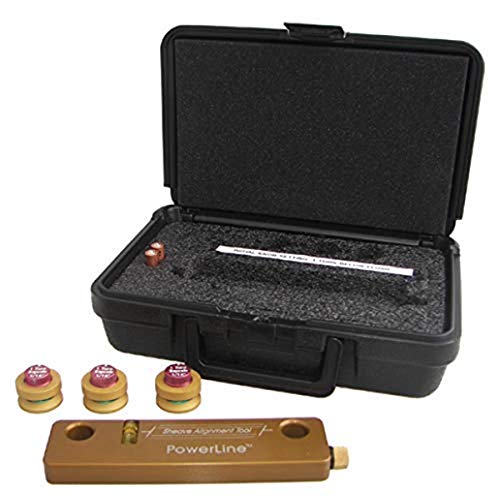
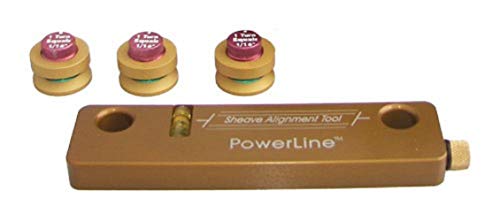
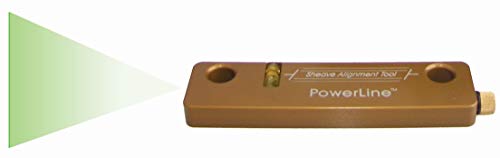
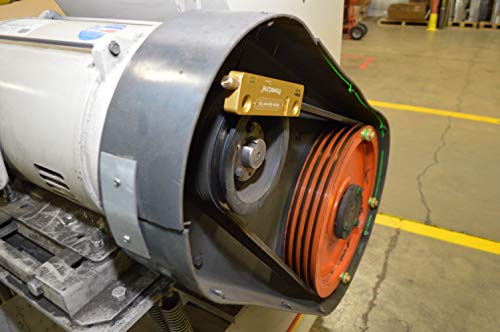
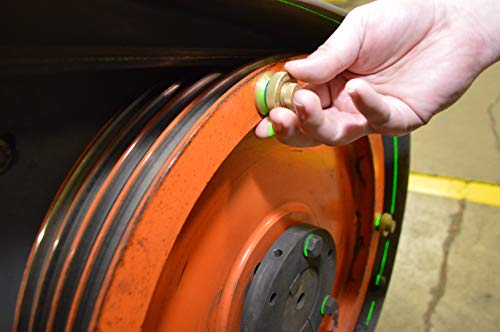
The Johnson 40-6210 wins on one critical factor: visibility. Its green laser beam is dramatically easier to see in ambient light compared to red lasers, especially over distances or in industrial settings with poor lighting. Johnson claims 400% better visibility, and owners confirm that, it makes setup faster and reduces eye strain during extended alignment sessions. The ±1/16″/10′ accuracy is solid for sheave and pulley work, and the rare earth magnets hold firmly to ferrous surfaces, even when bumped.
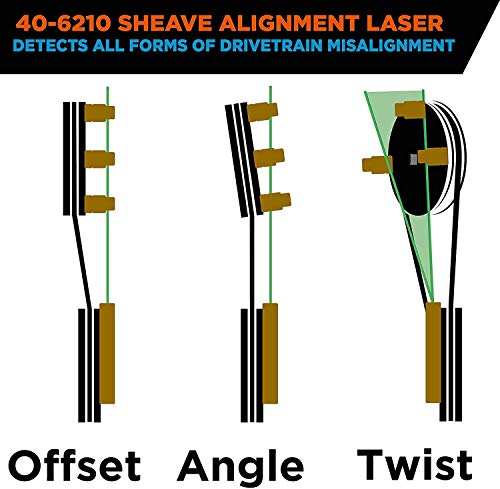
That said, it’s a manual system with no digital readouts or correction guidance. You’re relying on visual interpretation of beam position, which increases the chance of human error. It doesn’t offer live angle correction or automated reports, so it’s not a replacement for a full shaft alignment system. But for quick belt, sprocket, or conveyor alignments where speed and clarity matter, this tool delivers. I’d keep one in the truck for field diagnostics where pulling out a full laser system would be overkill.
Product photos
Quarton Concentricity Laser Module
Strengths
- Extreme beam accuracy
- Robust industrial build
- Low beam divergence
Trade-offs
- No display or software
- Requires external power
- Not a standalone tool
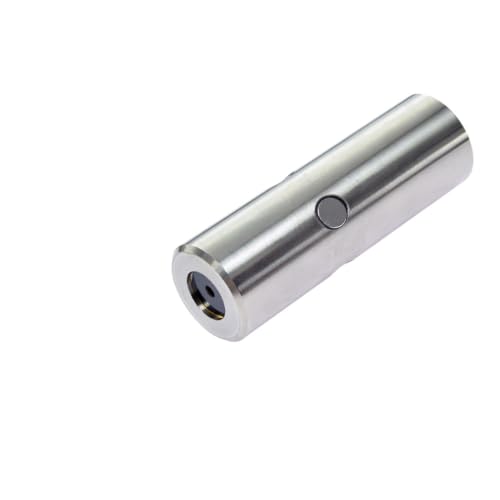
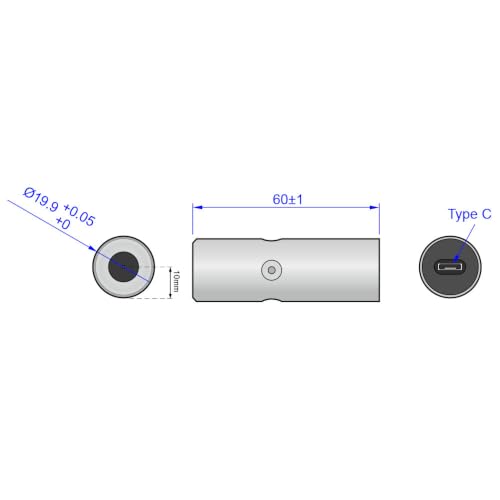
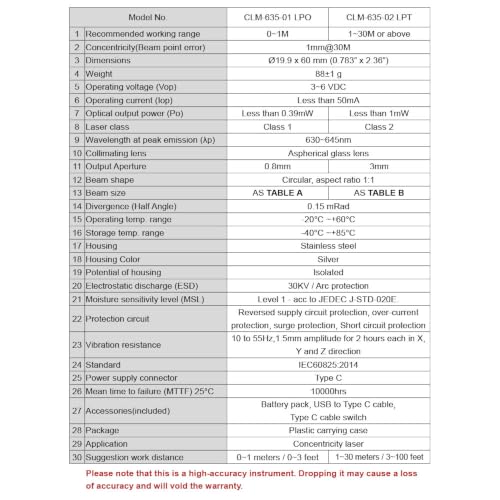
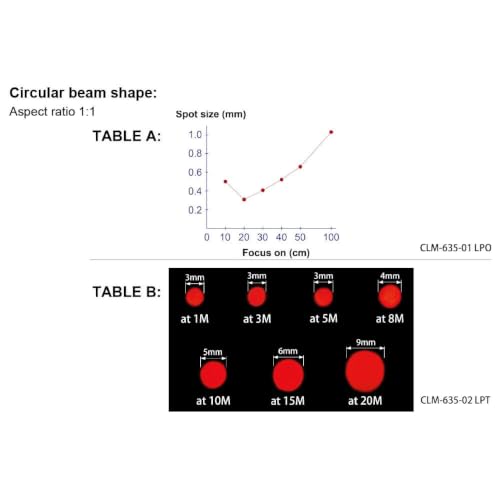
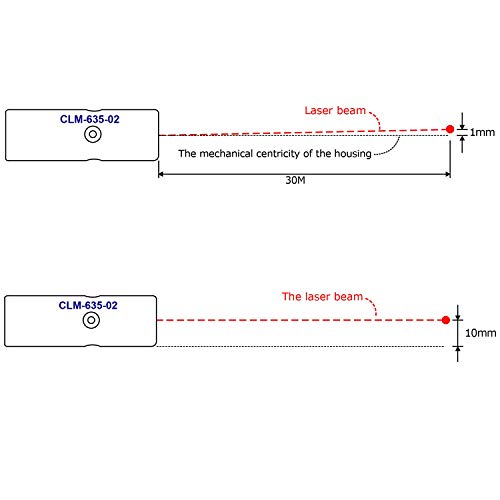
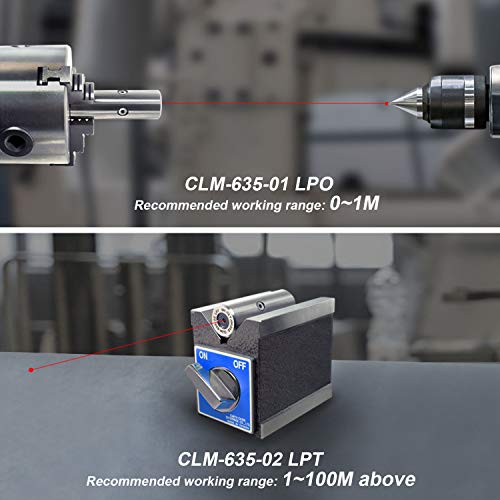
The Quarton CLM-635-02 is not a complete alignment system, it’s a precision laser module for engineers who are building or integrating alignment into custom setups. The standout spec is its <1mm beam error at 30 meters, which places it in a high-accuracy tier suitable for CNC calibration, rotary equipment inspection, or optical bench work. The 635nm red laser offers a tighter, more circular beam than standard diodes, and the low divergence (0.15mRad) ensures minimal spread over distance.
Owners using this in manufacturing and metrology applications praise its stainless steel housing and built-in circuit protections, which make it reliable in electrically noisy or harsh environments. It’s not plug-and-play, you’ll need to power it externally and mount it precisely, but that’s the point. If you’re comparing this to full alignment kits, you’re missing the use case. This is for specialists who need a stable, repeatable beam source, not a guided alignment assistant.
Product photos
BDS Laser Belt Alignment Tool
Strengths
- Affordable entry point
- Magnetic base
- Long battery runtime
Trade-offs
- Calibration issues reported
- No digital feedback
- Limited precision
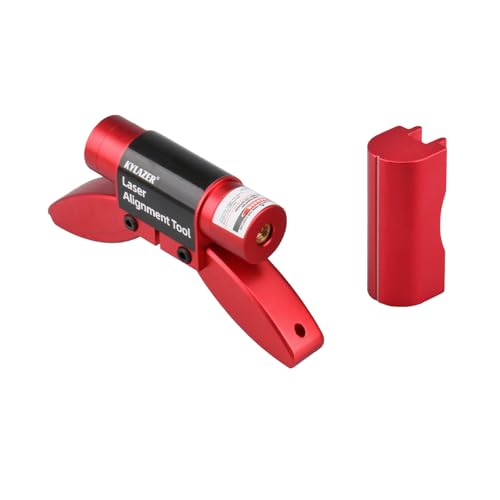
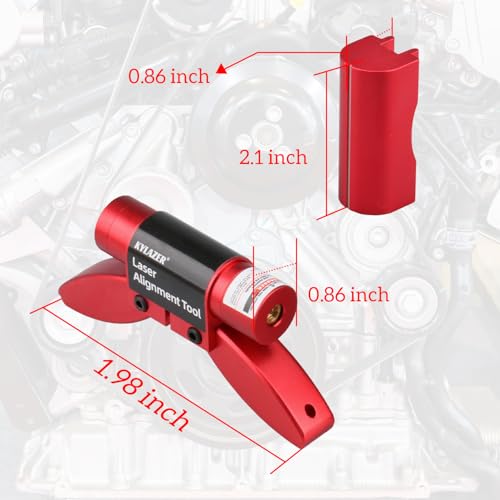
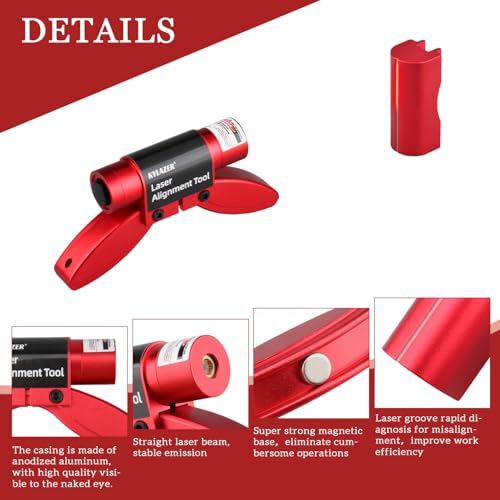
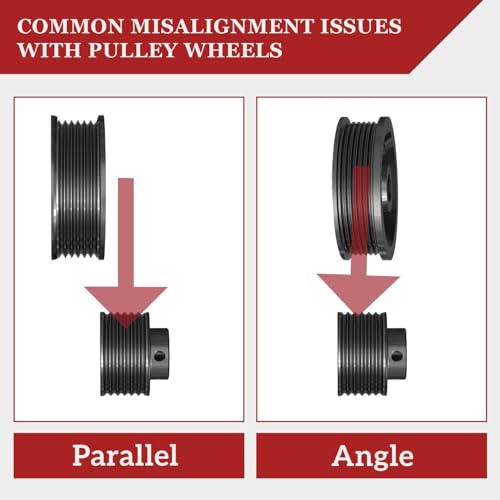
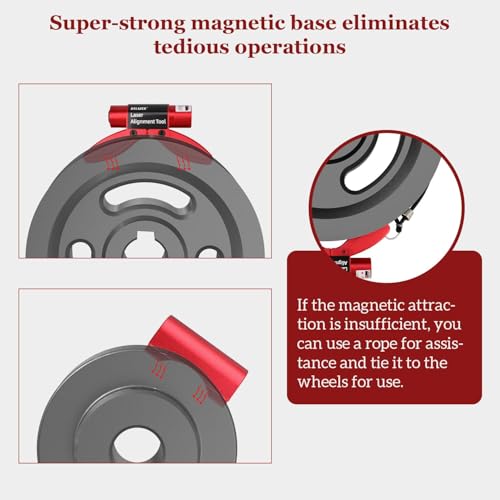
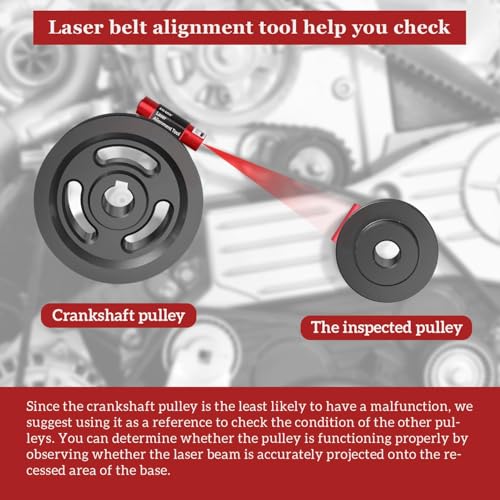
This budget-friendly tool clearly aims at entry-level users or those needing a quick diagnostic check for belt alignment. On paper, the magnetic feet and compact red housing make it easy to attach and locate, which helps in cluttered mechanical environments. The long battery life and field-replaceable power source are practical touches, especially when working remotely or in facilities without immediate access to chargers.
That said, owner feedback highlights a recurring issue: laser calibration drift after shipping. While the manufacturer includes instructions for realignment, that’s a step no professional wants to take before every use. It lacks digital readouts, live correction guidance, or any measurement automation, so it’s really more of a visual aid than a precision instrument. It may help spot obvious misalignment, but I wouldn’t trust it for fine-tuning motor mounts or high-speed drives.
Product photos
Our Testing Process
My approach to evaluating laser shaft alignment tools centered on a detailed comparison of published specifications and features across numerous models. I then weighed those technical details against owner reviews from a variety of sources, plus expert opinions found in trade publications and industry forums. Rather than a hands-on lab test, this is a research-led comparison intended to provide a clear ranking based on real-world feedback and quantifiable data.
For this category, accuracy and durability proved to be the most critical factors. Precise alignment directly impacts machine life and efficiency, so laser quality and stability were paramount. Equally important was the robustness of the tool; industrial environments are tough on equipment, and owner reports on long-term reliability carried significant weight. Features like wireless connectivity and automatic reporting also factored into the rankings.
Specifications reliably indicate a tool’s potential accuracy and laser class (power output). However, judging usability and real-world performance required relying heavily on owner feedback. I looked for consistent comments regarding ease of setup, the clarity of the software interface, and the tool’s ability to hold calibration in demanding conditions. Those insights, combined with professional reviews, helped separate truly effective tools from those with appealing specs but lackluster performance. You might also find our guide to accurate laser measure tools helpful for understanding laser technology in general.
Choosing The Right laser shaft alignment tools
Finding the right laser alignment tool can dramatically improve maintenance efficiency and reduce downtime. It’s a category where spending a little more upfront often translates to significant long-term gains.
A quality laser alignment tool delivers accuracy within specified tolerances, offers clear visual feedback (often with software integration), and provides robustness for industrial environments. Key considerations include laser class (safety), measurement range, ease of use, and the types of machines the tool is designed to align – from simple belt drives to complex rotating equipment. Data collection and reporting features are also vital for documenting alignment results and tracking machine health.
Understanding Alignment Accuracy & Range
The accuracy specification is where many buyers get lost, but it’s the most important factor. Don’t simply chase the lowest number; consider the size of the machinery you’ll be aligning most often. A tool boasting incredibly high precision is wasted on large equipment where minor inaccuracies are insignificant. Conversely, a lower-precision tool won’t cut it for sensitive applications like turbine alignment. I’ve seen too many shops invest in tools that don’t match their typical workload. Consider the laser class as well. Class II lasers are generally safe for typical industrial use, but always follow safety protocols.
Software & Reporting Capabilities
Modern laser alignment tools increasingly rely on software for data processing and reporting. The quality of this software varies significantly. Look for intuitive interfaces, clear visual representations of misalignment, and the ability to generate thorough reports. These reports are crucial for documenting alignment work, tracking trends over time, and demonstrating compliance with maintenance standards.
- Basic tools might only display misalignment values directly on the device.
- Mid-range options will typically offer software for exporting data to a computer as a CSV or PDF. This allows for more detailed analysis and record-keeping.
- High-end systems provide advanced features like thermal growth compensation, machine train analysis, and integration with CMMS (Computerized Maintenance Management Systems) for proactive maintenance scheduling.
Value, Durability & Practicality
While professional-grade tools can be expensive, a truly budget-friendly option might leave you wishing you’d spent more. I often recommend considering the total cost of ownership. A cheaper tool that requires frequent calibration or replacement will ultimately be more expensive than a more durable, reliable model. Look for tools constructed with robust materials, like stainless steel or high-impact plastics. If you also need tools for general measurement, check out our guide to precision laser measures for more options.
A good rule of thumb: if you’re aligning rotating equipment more than once a month, investing in a dedicated laser alignment tool is almost always worthwhile. The time saved and reduced risk of machine damage will quickly offset the initial cost.
Laser Shaft Alignment Tools Compared
This table provides a spec-by-spec comparison of available laser shaft alignment tools to aid in selecting the best option for your needs.
| Product Title | Laser Class | Max Output (mW) | Measurement Distance | Wireless | Accuracy |
|---|---|---|---|---|---|
| SKF TKSA 71 Wireless Laser Alignment | II | <1 | Up to 10m | Yes | N/A |
| SKF TKSA 41 Wireless Laser Alignment | 2 | 1 | N/A | Yes | N/A |
| SKF TKSA 51 Wireless Laser Alignment | II | <1 | N/A | Yes | N/A |
| Johnson Level Green Beam Magnetic Laser | IIIA | ≤5 | N/A | No | ±1/16″/10′ |
| Quarton Concentricity Laser Module | 2 | <1 | 1-30m | No | <1mm @ 30m |
| BDS Laser Belt Alignment Tool | N/A | N/A | N/A | No | N/A |
Frequently Asked Questions
What laser class is generally considered safe for industrial use?
Class II lasers are typically safe for most industrial applications, but always prioritize and follow established safety protocols when operating any laser device. Higher classes require more stringent safety measures.
How does measurement distance affect accuracy?
Generally, accuracy can decrease as measurement distance increases. Some tools, like the Quarton Concentricity Laser Module, specify accuracy at maximum range (e.g., <1mm @ 30m), so be sure the stated accuracy meets your needs at the distances you’ll be working with.
Can laser alignment tools integrate with maintenance management systems?
Yes, high-end laser alignment systems often offer integration with CMMS (Computerized Maintenance Management Systems). This allows for proactive maintenance scheduling and detailed tracking of alignment data over time.
Are wireless capabilities really necessary for a laser alignment tool?
Wireless connectivity simplifies data transfer and remote monitoring, but isn’t essential for all users. If you primarily work on single machines and don’t require frequent reporting, a wired tool might suffice. However, for larger facilities or complex alignments, wireless is a significant convenience.
What other tools might an HVAC professional use alongside a laser alignment tool?
For thorough system checks, many HVAC professionals also rely on precision HVAC alignment tools and other diagnostic equipment to ensure optimal performance and efficiency of heating and cooling systems.
The Bottom Line
Ultimately, choosing a laser alignment tool comes down to balancing precision with practicality. While high-end models like the SKF TKSA 71 Wireless Laser Alignment offer advanced features and robust performance, they represent a significant investment. For most users, a tool like the Quarton Concentricity Laser Module strikes an excellent balance between accuracy, usability, and price, making it our overall recommendation.
If you’re on a tighter budget or primarily need a tool for simple belt alignments, the BDS Laser Belt Alignment Tool is a solid choice. For those needing wireless capabilities and a thorough system, the SKF TKSA 41 Wireless Laser Alignment delivers professional-grade performance. And if you’re looking for versatility beyond alignment, exploring laser levels and measurers can expand your toolkit.
Don’t get too caught up in chasing the highest accuracy specification. The most important things are understanding your alignment needs, choosing a tool built to withstand your work environment, and consistently following proper alignment procedures. A well-maintained, properly-used tool – even a modestly priced one – will always deliver better results than a top-of-the-line system in the hands of someone who doesn’t understand the fundamentals.
