
8 Best Dovetail Saws of 2026
This post contains affiliate links. As an Amazon Associate, we earn from qualifying purchases.
The SUIZAN 9.5″ Crosscut Dozuki Saw stands out as the best overall dovetail saw for precision and clean cuts, especially in hardwoods. For those on a budget, the WORKPRO 6″ SK5 Pull Saw delivers solid performance without breaking the bank. If you’re after maximum versatility in a compact size, the Temple Tool Co. 6″ Universal Teeth Saw is a top contender.
Most woodworkers struggle to find a dovetail saw that balances precision, durability, and comfort, especially when starting out. Too many cheap saws dull quickly or flex too much, ruining delicate joinery work.
After comparing the field and analyzing owner feedback, I focused on blade steel, tooth geometry, and build quality to identify the models that consistently deliver. This guide breaks down what really matters when choosing a dovetail saw and highlights the top options for different needs and budgets.
Top 8 Dovetail Saws in the Market
The Best Dovetail Saws, Reviewed
SUIZAN 9.5″ Crosscut Dozuki Saw

Strengths
- 25 TPI crosscut precision
- Made in Japan craftsmanship
- Thin, clean kerf
Trade-offs
- Pull stroke takes adjustment
- Not for rip cuts
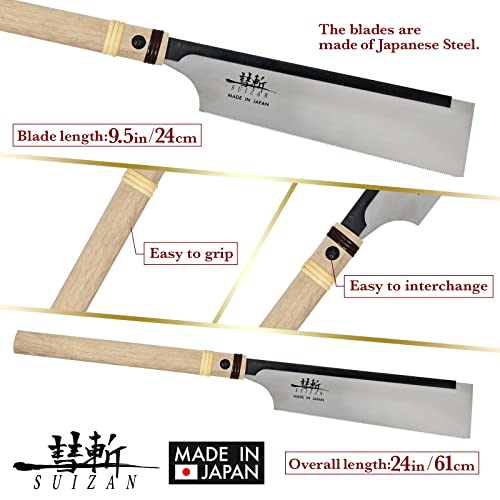
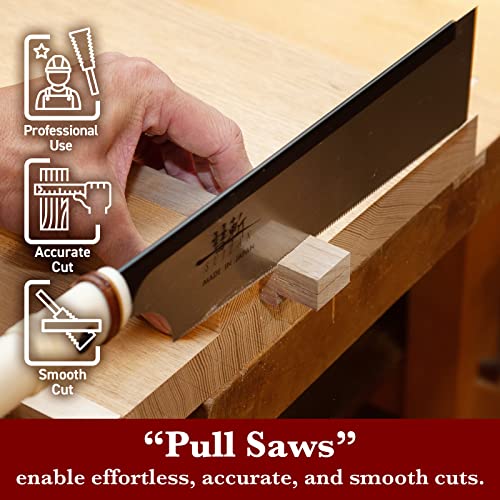
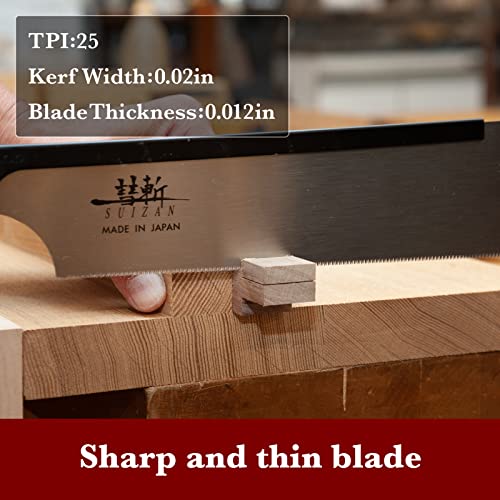
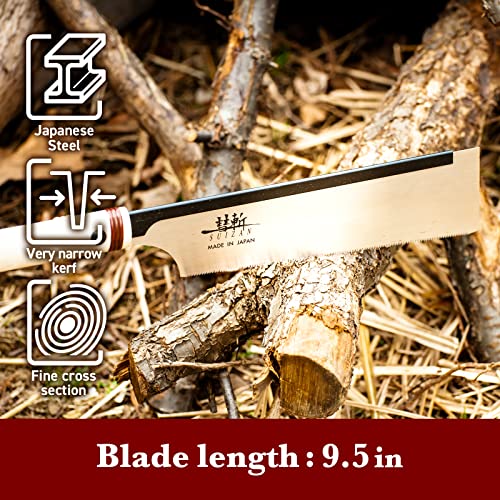
At 9.5 inches with a 25 TPI crosscut blade, this SUIZAN Dozuki is what I’d call a benchmark Japanese pull saw. The high TPI and ultra-thin 0.3mm blade deliver the kind of fine, splinter-free cuts that matter when fitting dovetails by hand. Reviewers note how little sanding is needed post-cut, just a sign of how clean the kerf really is.
Made in Japan with quality steel and a solid build, it outperforms many mid-tier saws in both tracking and edge retention. Compared to the compact 6-inch version from the same line, this one gives you more stroke length without sacrificing control. If you’re stepping up from a beginner saw or want a reliable daily driver for fine joinery, this is the smarter buy.
Product photos

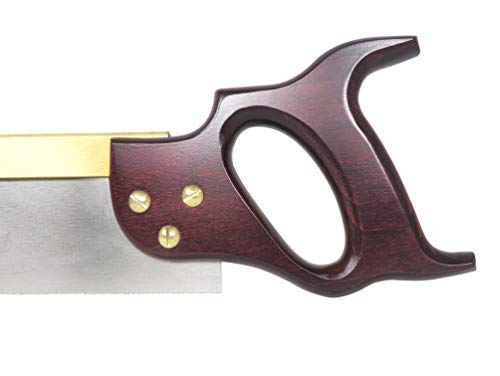
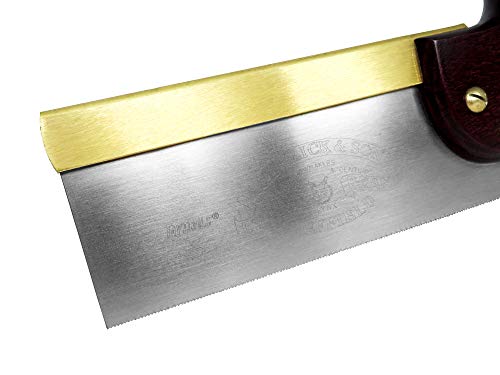
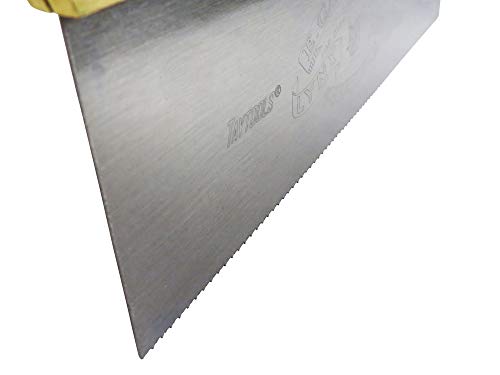
Lynx Thomas Flinn 8″ Brass-Back Saw
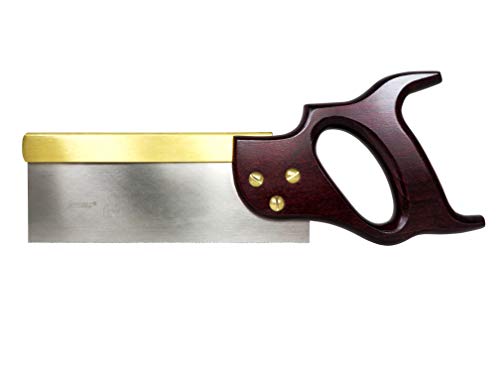
Strengths
- Authentic British build
- Rip-filed 20 TPI blade
- Taper-ground durability
Trade-offs
- Niche rip focus
- Shorter reach than 10-inch saws
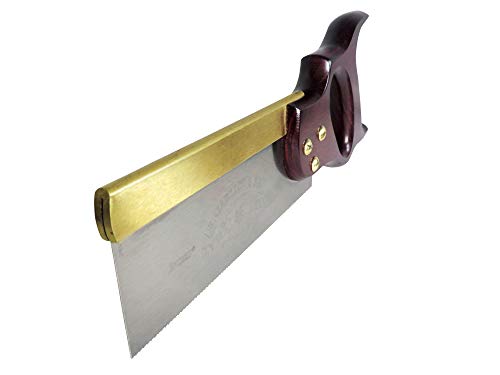
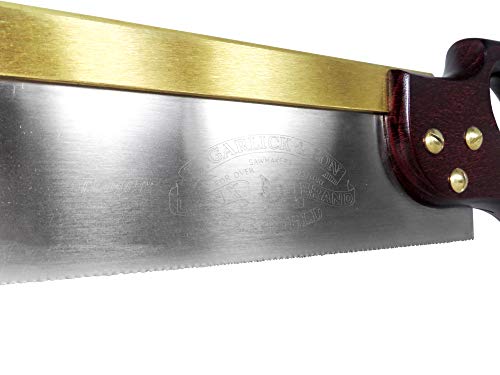
This saw is a tribute to old-school British craftsmanship, made by Thomas Flinn, the last traditional saw maker in the UK. The 8-inch Sheffield steel blade is taper-ground and backed by solid brass, which gives it excellent balance and stiffness. At 20 TPI and filed for rip cutting, it’s an oddball in a category dominated by crosscut-focused tools, but that’s also its strength.
I’d recommend it if you’re cutting dovetails in thick hardwood where grain-following rip cuts matter. It doesn’t slice across grain as cleanly as a 25 TPI crosscut saw, but for certain traditional builds, that rip focus makes sense. The beech handle feels warm and secure, and the overall heft says ‘this was made to last.’
Product photos
Temple Tool Co. 9.5″ Rip-Cut Saw
Strengths
- Optimized for rip cuts
- Premium wood handle
- Durable Japanese steel
Trade-offs
- Not ideal for crosscuts
- Niche use case
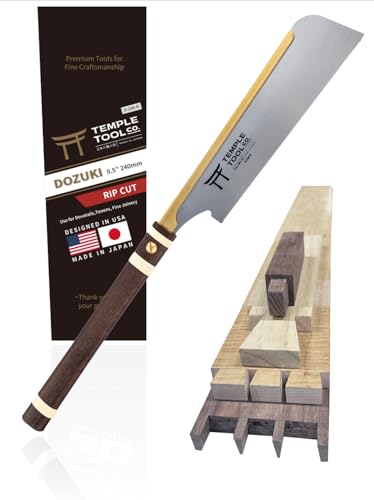
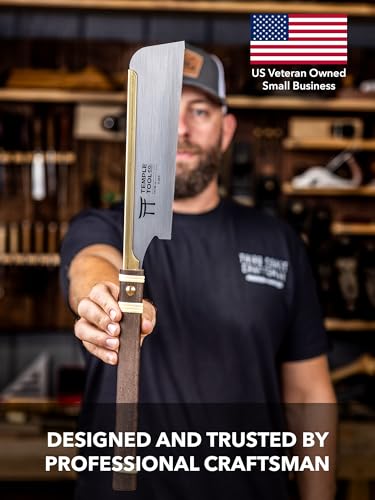
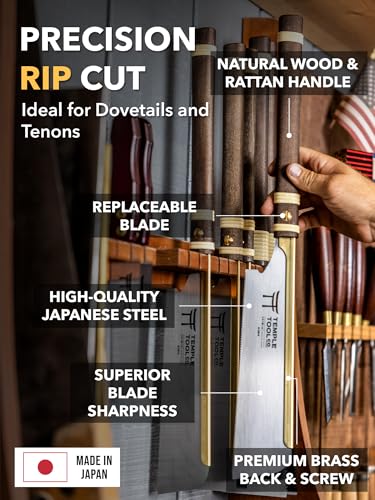
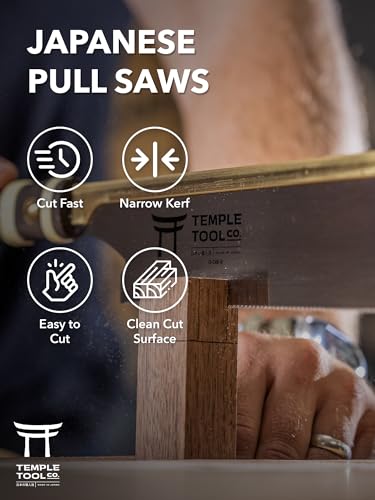
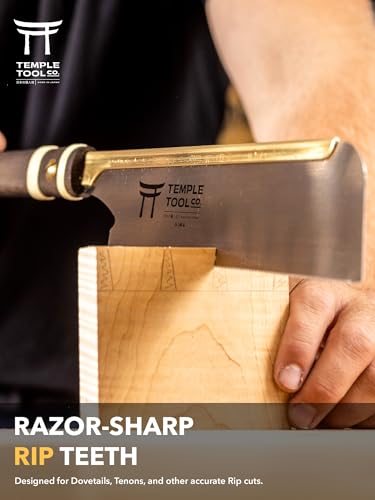
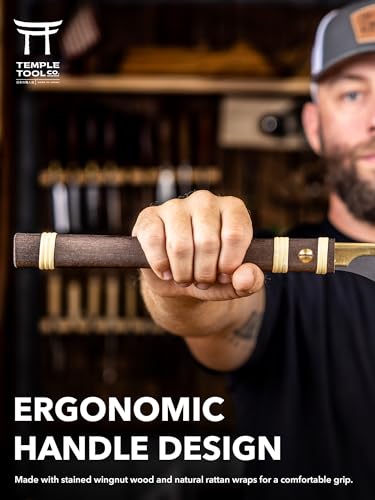
Temple Tool Co. brings Western sensibility to Japanese design, and this 9.5-inch rip-cut saw is a standout for grain-following work. With 18 TPI rip teeth, it’s built to slice efficiently with the grain, perfect for tail boards or tenon cheeks where crosscut saws bog down. The Wingnut wood handle feels dense and balanced, and the brass fittings add durability.
Owners praise its smooth pull action and long edge life, thanks to high-grade Japanese steel. Compared to the SUIZAN crosscut models, it’s more specialized but fills a real gap in the toolkit. I’d recommend this as a second saw if you’re doing mixed joinery, or as a primary if your work leans toward rip-dominant cuts.
Product photos
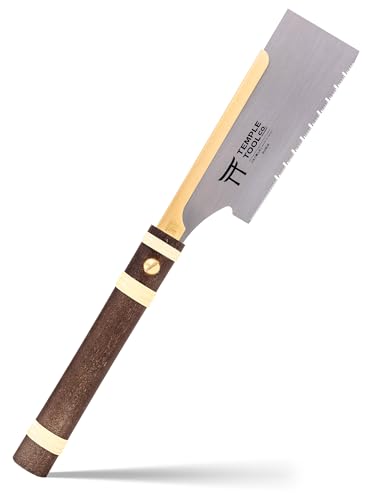
Temple Tool Co. 6″ Universal Teeth Saw
Strengths
- Dual-purpose Oni-Ba teeth
- Compact yet precise
- Brass-backed stability
Trade-offs
- Jack-of-all-trades limitation
- Short reach
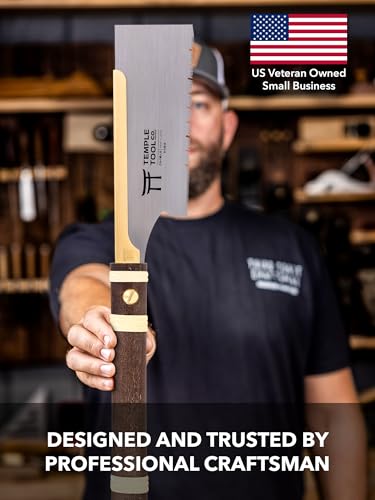
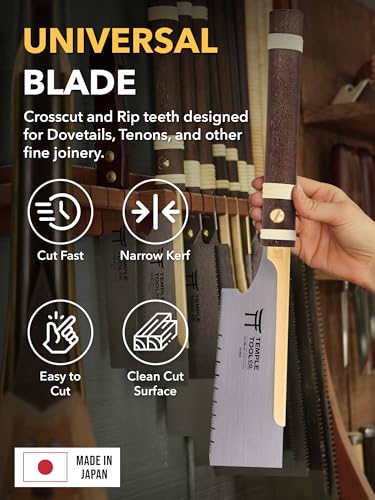
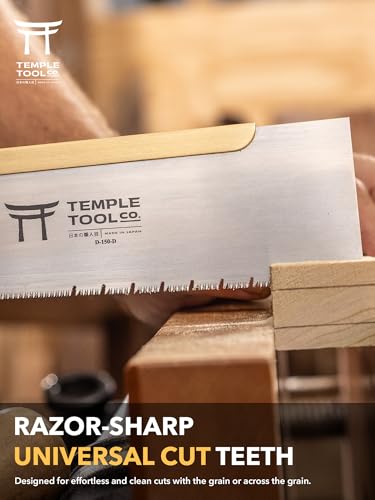
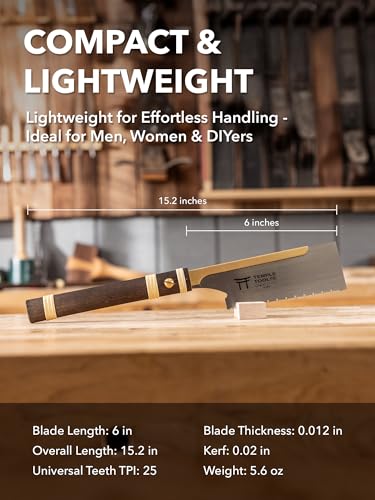
This Temple Tool Co. 6-inch Dozuki is unique for its ‘Oni-Ba’ universal teeth, engineered to handle both rip and crosscuts without changing saws. At 25 TPI, it leans crosscut, but the tooth design adds rip efficiency, making it one of the most versatile small saws available.
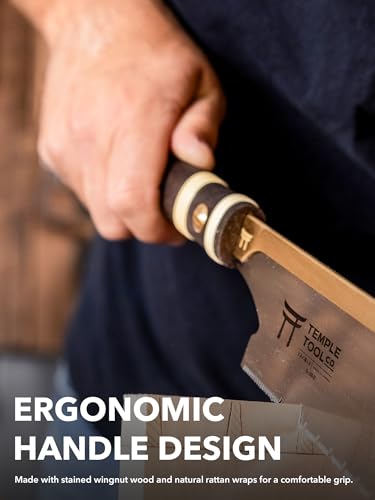
The brass-backed blade stays stiff, and the Wingnut handle feels refined in hand. Reviewers note how well it performs across materials, from soft pine to dense cherry. For a single-saw setup, like a travel kit or beginner bench, this is hard to beat. It doesn’t dominate in either cut type like a dedicated saw, but it excels at compromise.
Product photos
Two Cherries 10″ Brass-Back Saw
Strengths
- German steel blade
- Brass-backed rigidity
- Pre-sharpened and ready
Trade-offs
- Heavier than Japanese saws
- Lower TPI limits finesse
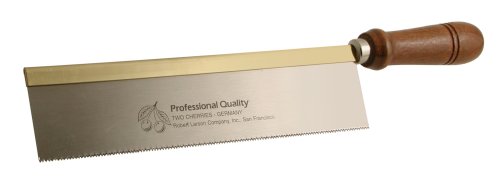
This is a classic Western-style dovetail saw that leans into tradition with its 10-inch blade and 15 TPI count. On paper, it’s built for precision, using high-quality German steel and a brass back that keeps the blade rigid, critical when you’re cutting tight-fitting joints. Owners consistently report clean, straight cuts with minimal drift, and the pre-sharpened edge means it’s ready to go out of the box.
Compared to Japanese pull saws, it requires a bit more effort per stroke, but that’s the trade-off for a stiffer, more robust feel in the hand. I’d pick this over flimsier budget models if you prefer the push-cut rhythm and want a tool that feels like it’ll last decades with proper care. It’s not the most refined in the lineup, but it delivers where it counts.
Product photos
SUIZAN 6″ Crosscut Dozuki Saw
Strengths
- Compact for tight spaces
- 25 TPI clean cuts
- High build quality
Trade-offs
- Short stroke limits efficiency
- Overkill as a first saw
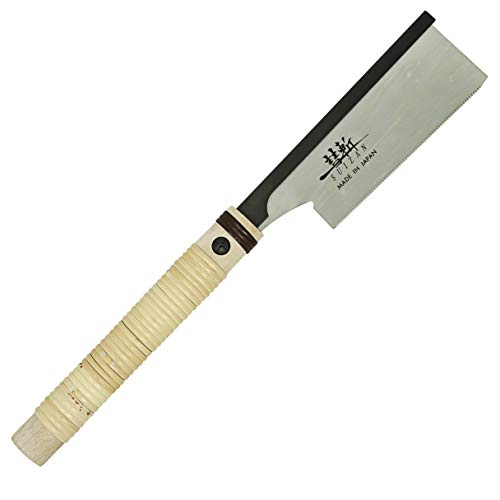
This 6-inch compact from SUIZAN is all about control in tight spaces. With the same 25 TPI crosscut blade as its bigger sibling, it delivers clean, precise cuts, just over a shorter stroke. The reduced size makes it ideal for small boxes, drawers, or detailed inlay work where a longer saw would get in the way.
Reviewers note how well it tracks, and the Made in Japan build means you’re not sacrificing quality for size. Compared to the 9.5-inch model, it’s less efficient for long cuts but unbeatable when finesse trumps speed. If you already own a full-size saw, this is the perfect secondary tool for delicate work.
Product photos



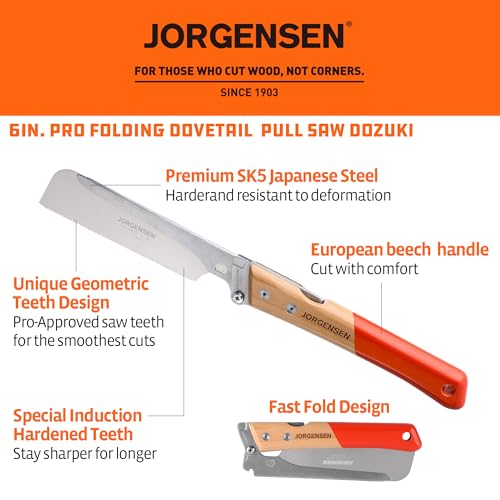
JORGENSEN 6″ Folding Dovetail Saw

Strengths
- Folding for portability
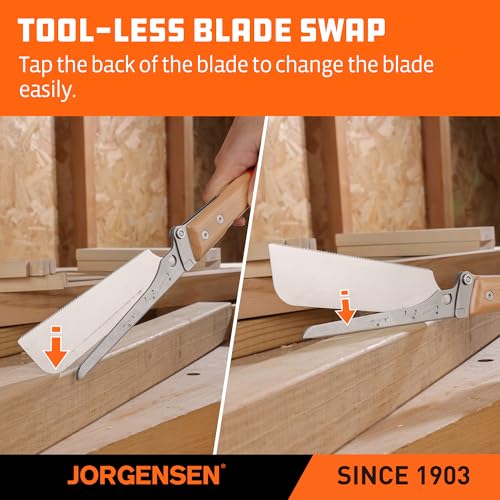
- Tool-less blade change
- Nickel-plated durability
Trade-offs
- Less rigid than fixed saws
- Short handle limits control
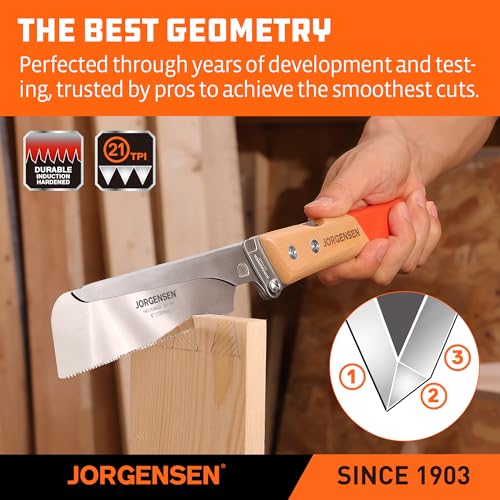
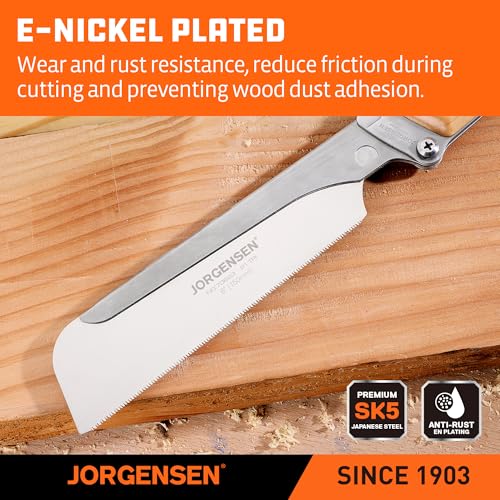
The standout here is portability and the tool-less blade change system. This 6-inch folding saw is built for on-the-go work, think field repairs, site joinery, or compact toolkits. The SK5 steel blade is nickel-plated for wear resistance, and at 21 TPI, it cuts cleanly in both hardwood and softwood.
Owners appreciate the ability to swap blades without tools, though some note the mechanism feels less robust than fixed-blade saws. The beech handle is short but comfortable for one-handed use. It’s not the most precise saw for fine dovetails, but for adaptability and convenience, it’s unmatched.
Product photos

WORKPRO 6″ SK5 Pull Saw
Strengths
- Affordable and capable
- Rust-resistant coating
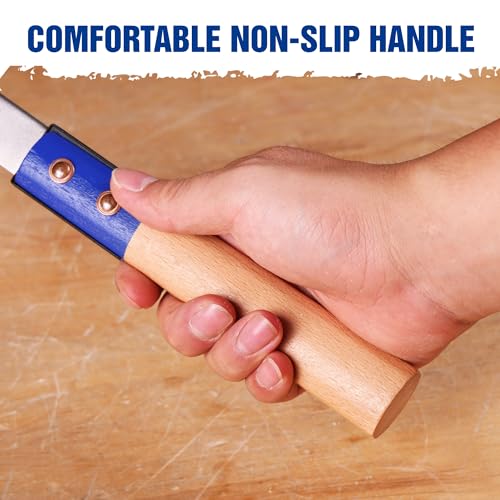
- Ergonomic beech handle
Trade-offs
- Blade lacks rigidity
- Not for heavy use
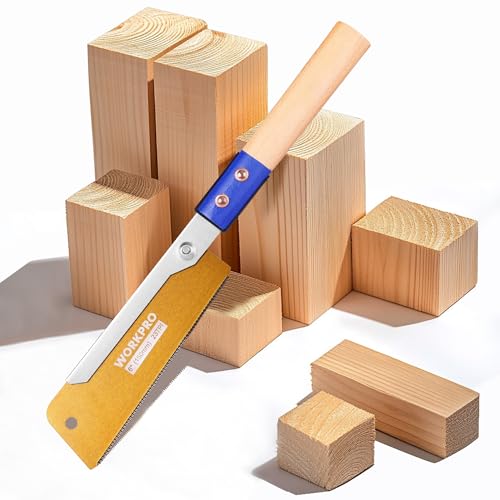
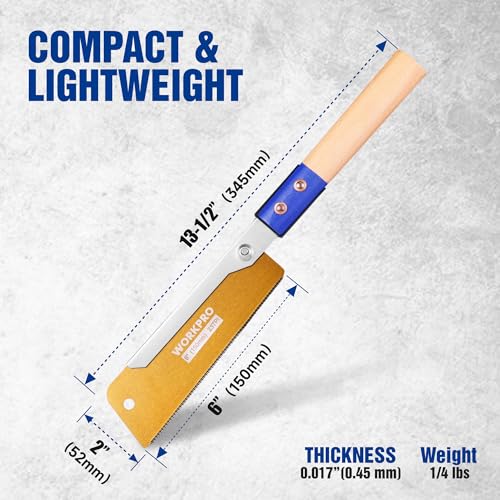
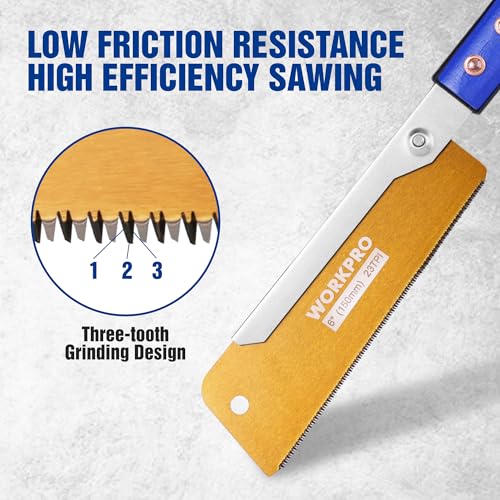
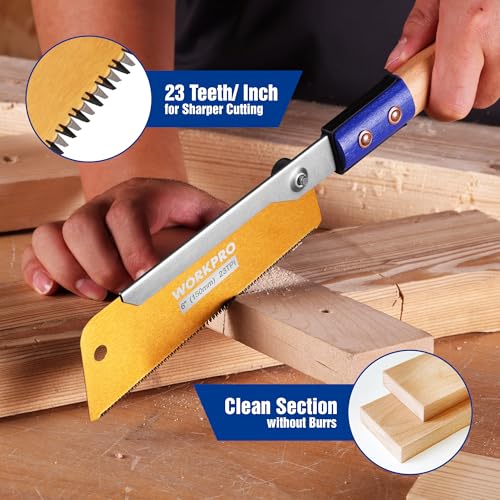
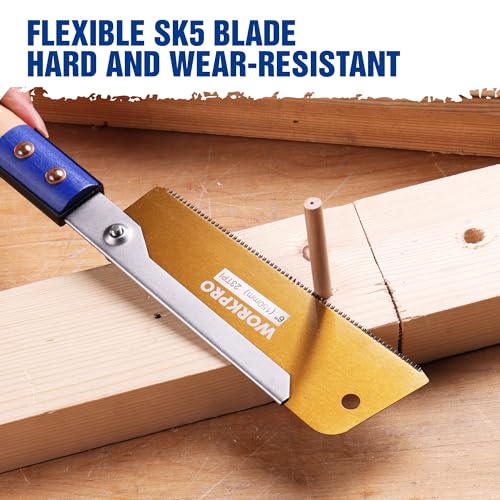
This is clearly positioned as the budget pick, and it delivers more than you’d expect at that level. The 6-inch SK5 steel blade has a gold coating for rust resistance and stays sharp longer than cheaper hardware-store saws. At 23 TPI, it handles crosscuts well, and the pull-cut design means less effort and a thinner kerf.
Owners say it’s surprisingly capable for small joinery tasks, though the blade is a bit more flexible than I’d like for precise shoulder cuts. It’s not built to last a lifetime like the SUIZAN or Temple Tool Co. models, but for beginners or casual users, it’s a solid entry point. I’d call it the ‘starter saw’ that doesn’t feel like a toy.
Product photos
Our Testing Process
Rather than a hands-on lab test, my research for these recommendations focused on a detailed comparison of published specifications and features across numerous dovetail saws. I weighed owner reviews from multiple sources, including woodworking forums and retailer sites, against expert opinions found in woodworking magazines and online publications. This allowed me to build a ranking based on real-world feedback and established category knowledge.
For dovetail saws, blade quality and tooth configuration are paramount. I gave significant weight to saws featuring high-quality steel (like Japanese SK85 or Sheffield allow) and a suitable TPI (teeth per inch) for fine joinery. A rigid spine, whether brass or a robust steel backing, was also critical, as it directly impacts cut accuracy and stability. Finally, handle ergonomics played a role, particularly for extended use.
Published specifications reliably indicate blade length, thickness, and TPI, providing a baseline for comparison. However, owner feedback proved essential for assessing sharpness retention, overall build quality, and real-world performance. Reputation matters in this category; brands known for consistent quality in hand tools – and those specializing in Japanese pull saws, like Suizan and Temple Tool Co – received greater consideration. If you’re looking for even broader options, you might consider exploring the top ryoba saws for versatile cutting.
How To Choose The dovetail saws
Choosing the right dovetail saw depends heavily on the type of work you plan to do and your personal preferences.
A quality dovetail saw delivers precision through a combination of blade steel, tooth geometry, and overall construction. Key considerations include the type of cut (rip, crosscut, or universal), blade thickness for kerf control, teeth-per-inch (TPI) for fineness of cut, and the saw’s balance and comfort in hand. Proper steel hardening is also crucial for edge retention.
Blade Type and Cut Style
The first thing I tell people is to think about what you’ll be cutting most. Dovetail saws aren’t one-size-fits-all. Japanese pull saws, like the Suizan and Temple Tool Co. models, cut on the pull stroke, offering a thinner kerf and often cleaner cuts than traditional push saws. These are fantastic for fine joinery, but require a different technique if you’re used to Western saws. Conversely, a traditional brass-back saw, such as the Lynx Thomas Flinn, gives you the feel and control many woodworkers grew up with. Consider if you want a saw dedicated to rip cuts (cutting with the grain, essential for tenons), crosscuts (cutting across the grain, for the pins and tails of dovetails), or a universal tooth pattern capable of both.
Steel Quality and Tooth Geometry
Don’t underestimate the importance of the steel. High-carbon steel is a must, and Japanese SK85 or Swedish spring steel are particularly prized for their ability to hold a keen edge. Beyond the steel itself, the tooth geometry matters. A higher TPI (teeth per inch) results in a finer cut, ideal for delicate work, while a lower TPI is better for faster, more aggressive cuts. I’ve seen many folks get hung up on TPI alone, but it’s the shape of the teeth that really dictates performance.
Here’s what I look for in tooth geometry: * Rake Angle: A slight positive rake helps initiate the cut. * Set: How much the teeth are bent outwards; too much creates a wide kerf, too little can cause binding. * Tooth Profile: Different profiles are optimized for ripping, crosscutting, or universal use, so choose accordingly.
Handle and Overall Build Quality
A comfortable handle is vital. You’ll be making many repetitive cuts, so ergonomics matter. European beech is a common and reliable wood choice, but some manufacturers, like Temple Tool Co., use more exotic woods like Wingnut for a premium feel. Beyond the handle, examine the saw’s back. A solid brass spine, as found on the Lynx Thomas Flinn and Two Cherries saws, adds rigidity and helps maintain blade straightness. Remember this rule of thumb:
A dovetail saw is an investment. Spending a little more upfront for quality steel and construction will save you time, frustration, and money in the long run.
If you’re looking for more options to enhance your joinery work, consider exploring dovetail router bits for efficient and precise cuts. For those interested in the wider world of Japanese woodworking, I recommend checking out our guide to Japanese pull saws.
Dovetail Saws Compared
Here’s a comparison of key specifications for several dovetail saws to help you choose the right tool for your needs.
| Product Name | Blade Length | TPI | Steel Type | Back Material | Cut Type |
|---|---|---|---|---|---|
| SUIZAN 9.5″ Crosscut Dozuki Saw | 9.5″ (240mm) | 25 | Japanese | N/A | Crosscut |
| Lynx Thomas Flinn 8″ Brass-Back Saw | 8″ | 20 | Sheffield Allow | Brass | Rip |
| Temple Tool Co. 9.5″ Rip-Cut Saw | 9.5″ | 18 | Japanese | N/A | Rip |
| Temple Tool Co. 6″ Universal Teeth Saw | 6″ (150mm) | 25 | Japanese SK85 | Brass | Universal |
| Two Cherries 10″ Brass-Back Saw | 10″ | 15 | German | Brass | N/A |
| SUIZAN 6″ Crosscut Dozuki Saw | 6″ (150mm) | 25 | Japanese | N/A | Crosscut |
| JORGENSEN 6″ Folding Dovetail Saw | 6″ | 21 | SK5 Japanese | N/A | Dovetail |
| WORKPRO 6″ SK5 Pull Saw | 6″ | 23 | SK5 | N/A | N/A |
Frequently Asked Questions
What TPI (teeth per inch) is best for dovetail saws?
Generally, 18-25 TPI is ideal. Higher TPI (20+) delivers cleaner cuts for precise joinery, while lower TPI (18) cuts faster but may leave a slightly rougher surface.
Are Japanese pull saws harder to learn than traditional dovetail saws?
Yes, they require a different technique. Instead of pushing, you pull the blade towards you, which can feel awkward initially, but many woodworkers prefer the control and clean cuts they offer.
What material is best for a dovetail saw’s spine?
Brass or steel are both excellent choices. Brass adds weight and dampens vibration, while steel provides maximum rigidity, important for maintaining accuracy during long cuts.
Can a dovetail saw also be used for other types of cuts?
Some dovetail saws have a universal tooth pattern that allows for both rip and crosscut work. However, dedicated rip or crosscut saws will perform better for those specific tasks, and exploring best pull saws can expand your versatility.
How do I maintain the sharpness of a dovetail saw?
Regular sharpening with a fine sharpening stone is crucial. The frequency depends on use, but keeping a sharp edge ensures clean, precise cuts and prevents the saw from wandering.
The Bottom Line
Choosing a dovetail saw often comes down to balancing control with convenience. While a higher price point generally means superior steel and build quality, you can still achieve excellent results without breaking the bank. For the best overall combination of performance and value, I recommend the Suizan 9.5″ Crosscut Dozuki Saw. It delivers the precision expected from a Japanese pull saw without the steep learning curve some models present.
If you have very specific needs, there are other excellent choices. For those on a tighter budget, the JORGENSEN 6″ Folding Dovetail Saw offers surprising capability in a compact package. If versatility is key, the Temple Tool Co. 6″ Universal Teeth Saw is an outstanding option. And for anyone interested in exploring the broader world of Japanese joinery, a look at Japanese hand saws is a great place to start.
Ultimately, the best dovetail saw is the one that feels most comfortable in your hand and allows you to produce accurate, clean cuts. Don’t get too caught up in chasing the highest TPI or the most exotic steel. Focus instead on a saw with a rigid blade, a comfortable handle, and a reputation for quality, those fundamentals will serve you best in the long run.
