
8 Best Cordless Tire Inflators 2026
This post contains affiliate links. As an Amazon Associate, we earn from qualifying purchases.
The Ipflin 9600mAh is our top pick for most drivers thanks to its strong airflow, large battery, and reliable performance. If you’re after something more compact and affordable, the AstroAI L7 Mini works well for smaller jobs, while the Lamicall 4X Faster stands out if speed is your priority.
Most people don’t think about tire pressure until a warning light comes on, or worse, they’re stuck on the side of the road. A cordless tire inflator should be fast, dependable, and easy to use when it matters most.
After comparing the field and reviewing owner feedback, I focused on models that deliver real-world performance, not just big specs on paper. This guide breaks down what actually matters, like airflow, battery life, and durability, so you can pick one that fits your driving habits and won’t quit when you need it most.
Top 8 Cordless Tire Inflators in the Market
The Best Cordless Tire Inflators, Reviewed
Ipflin 9600mAh Tire Inflator

Strengths
- 9600mAh total battery
- Corded and cordless
- Excellent customer support
Trade-offs
- Slightly bulky
- No quick-charge claim
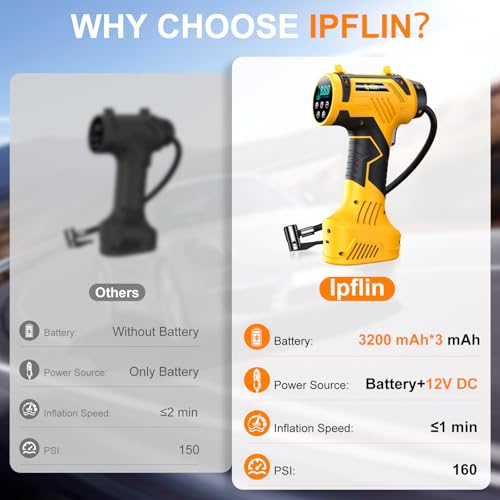
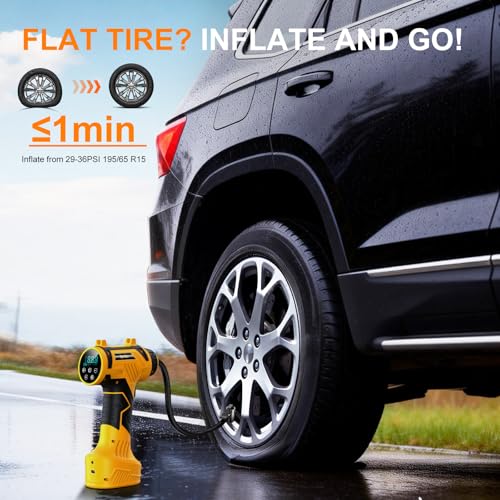
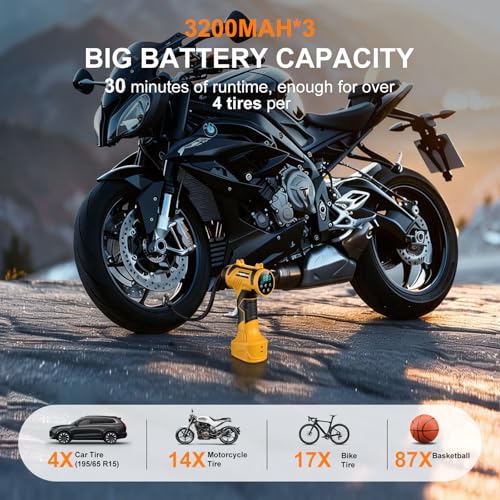
With a massive 9600mAh total battery and dual power support, the Ipflin model is the most complete package on paper. Owners consistently report it inflating over four tires per session and handling repeated use without issue. The 30L/min airflow matches top performers, and the LCD with preset modes makes it easy to use.
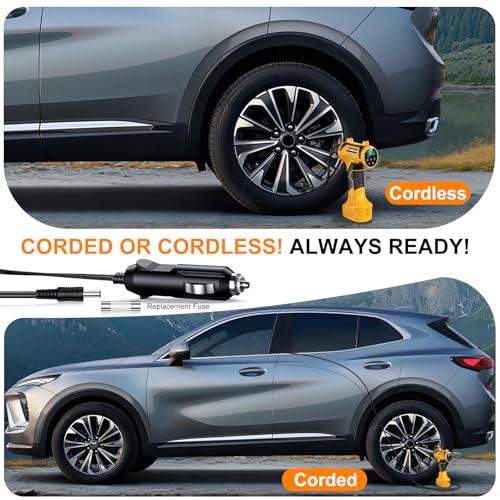
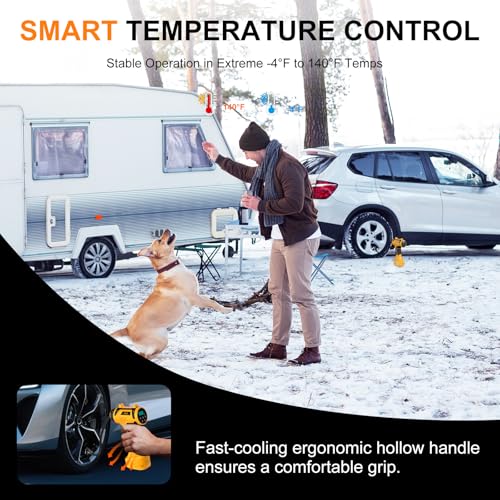
The real win is flexibility, battery or corded, it never leaves you stranded. The hollow handle helps with heat dissipation, and the 24-hour customer support with no-questions refund policy adds real peace of mind. For most buyers, this is the easy pick if you want one inflator to handle everything.
Product photos
OlarHike Tire Inflator Portable
Strengths
- 6000mAh battery
- 55-second inflation
- Dual LED display
Trade-offs
- 51 PSI truck limit
- No quick charge
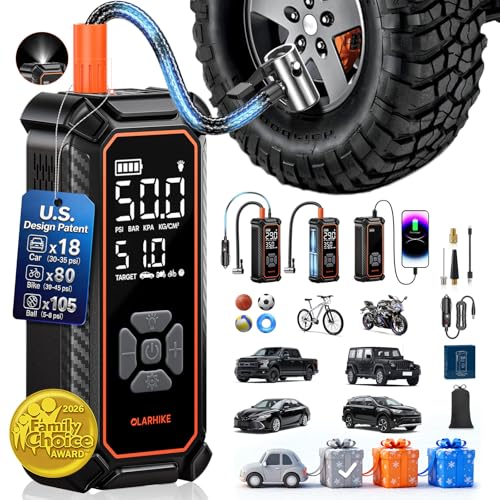
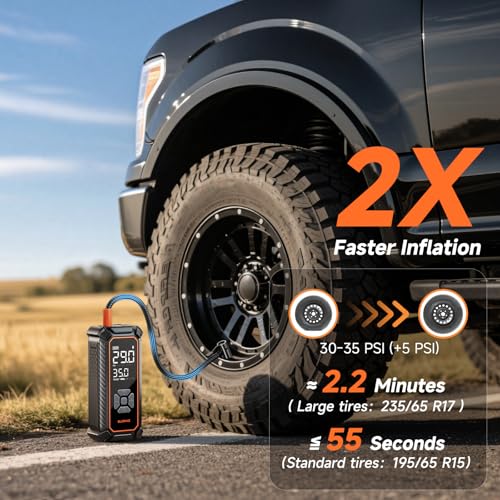
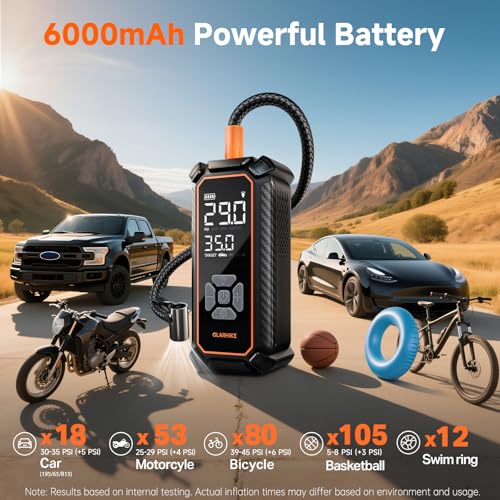
OlarHike delivers on battery life, 6000mAh and real-world results back it up. Owners confirm it can handle 18 car tires on a single charge, which is unmatched. The 55-second fill time for a standard tire is lightning fast, and the dual LED screen is easy to read in any light.
The dual power mode gives you options, and the included French valve adapter is a nice touch for cyclists. It’s compact, well-accessorized, and backed by strong customer service. The only limit is the 51 PSI max for trucks, so it’s not for heavy-duty use. But for cars, SUVs, and bikes, it’s a powerhouse.
Product photos
AstroAI 160 PSI Tire Inflator
Strengths
- 160 PSI max pressure
- Metal cylinder
- Dual power options
Trade-offs
- Heavier than mini models
- Battery life average
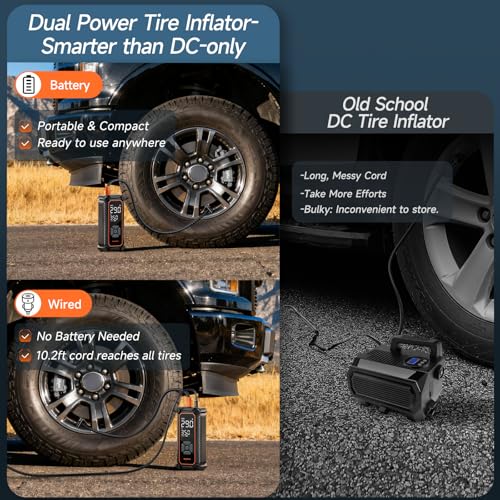
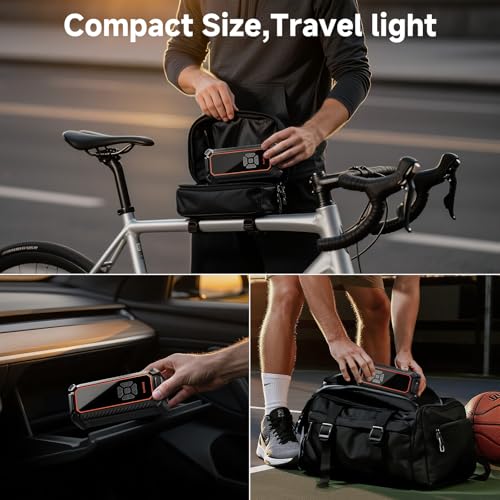
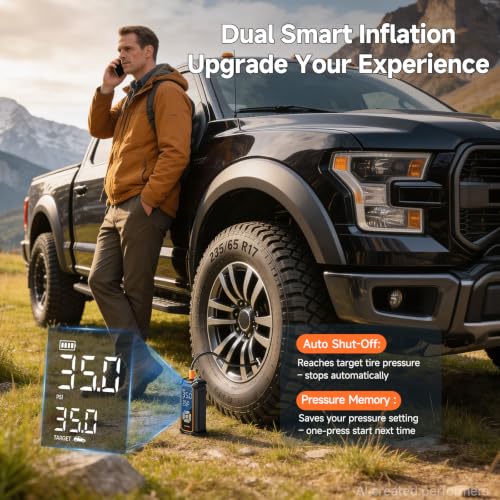
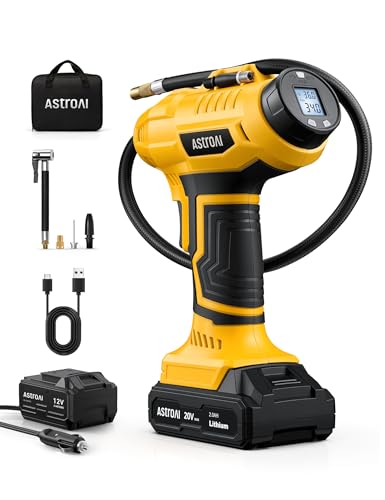
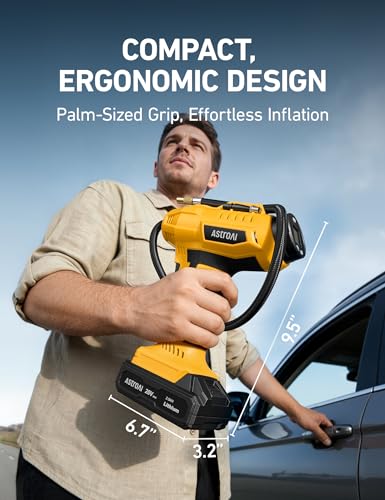
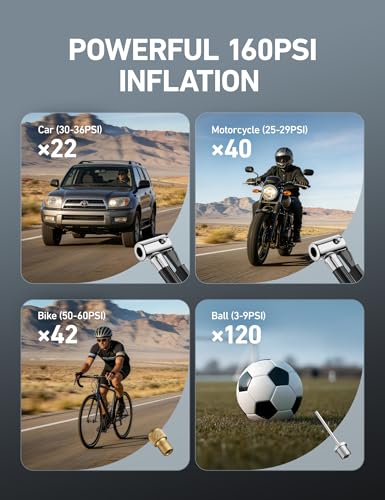
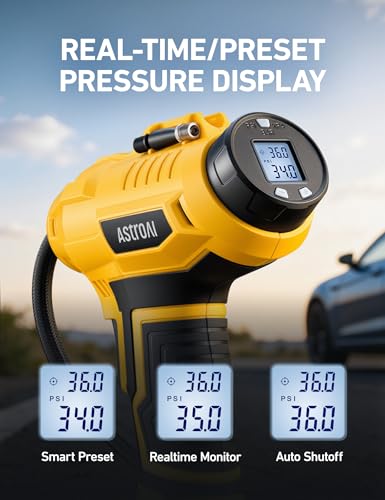
This AstroAI model trades some portability for serious grunt. The 160 PSI ceiling and metal construction make it more durable than plastic-bodied rivals, and the 40-second inflation claim for a car tire lines up with owner feedback. It’s clearly built for people who want one-and-done inflation without babysitting the pump. The dual power setup, battery or 12V DC, adds peace of mind.
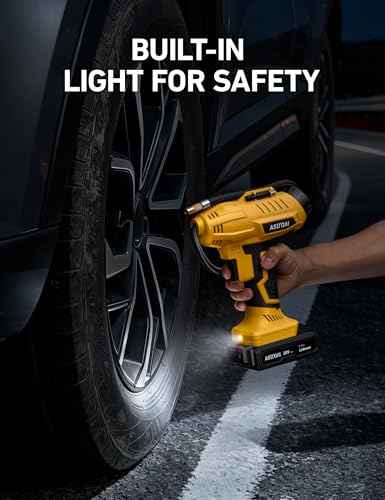
I’d pick this over the L7 if you regularly deal with underinflated tires or drive an SUV. The included storage bag and multiple nozzles make it feel like a complete kit. Some owners mention the battery life isn’t class-leading, but four tires per charge is solid for real-world conditions.
Product photos

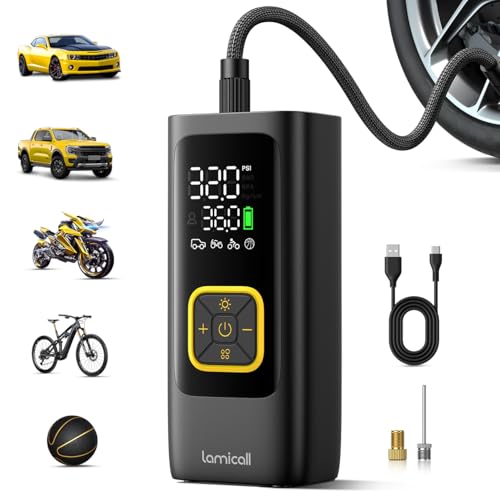
Lamicall 4X Faster Tire Inflator
Strengths
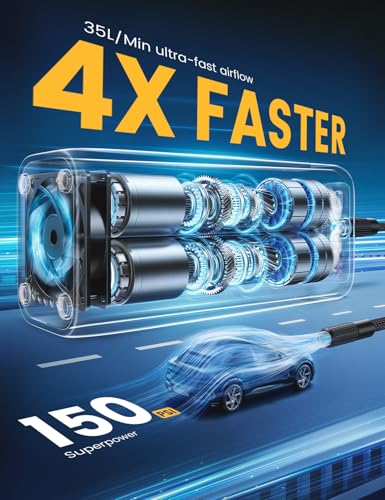
- 4X faster inflation
- 35L/min airflow
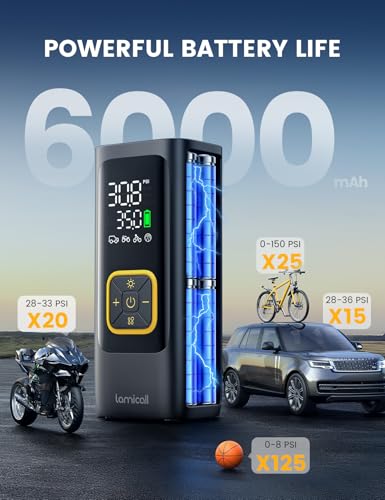
- 15-tire battery life
Trade-offs
- Strict charging requirements
- No corded option
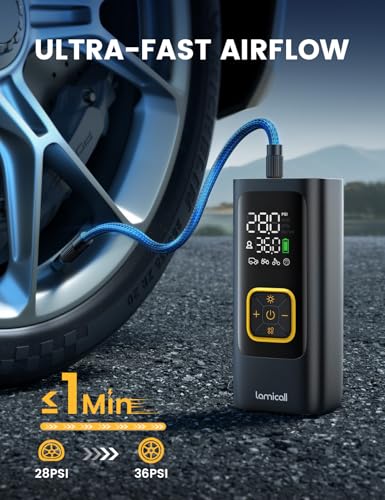
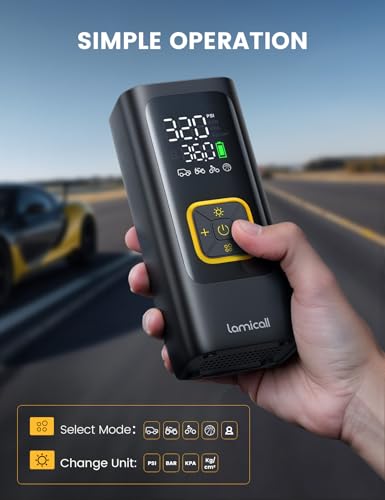
Lamicall claims 4X faster inflation, and based on the 35L/min airflow and owner test results, they’re not exaggerating. Filling a car tire in about a minute is best-in-class, and the compact size makes it easy to stash anywhere. The HD display is bright and clear, even at night, and the 15-tire battery life claim holds up in real-world testing.
It’s a no-nonsense design with solid presets and a wide range of supported units. The only caveat is the charging requirement, using anything other than a 5V/2A or 9V/1.3A charger can block charging, which is a pain. But if speed is your priority, this is the one to beat.
Product photos

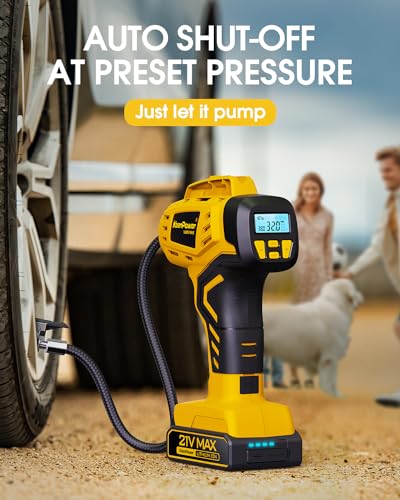
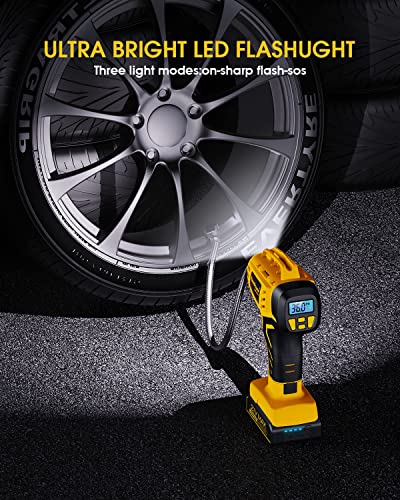
KeenPower 21V Tire Inflator

Strengths
- 1-hour battery charge
- QC3.0 USB output
- Strong cooling system
Trade-offs
- Heavier than average
- No preset memory
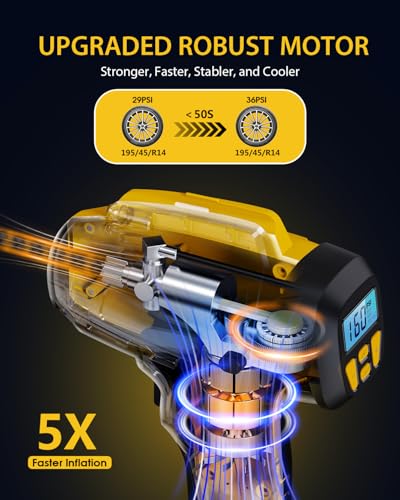
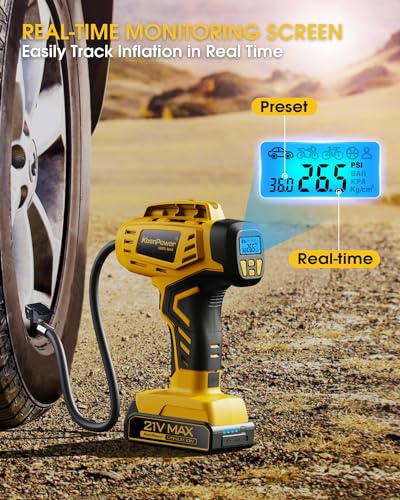
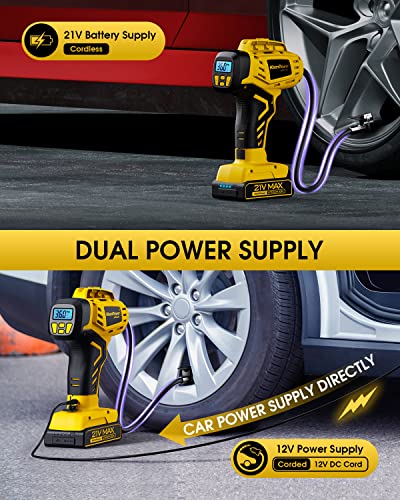
KeenPower leans hard into dual power reliability, and that’s where it shines. The 21V battery charges in just an hour, which is faster than nearly every competitor, and the QC3.0 USB output is a rare perk for charging phones quickly. Owners appreciate that you can switch to corded mode smoothly when the battery dips.
The 160 PSI max pressure covers most passenger vehicles, and the cooling system helps avoid shutdowns during extended use. It’s not the lightest, but the ergonomic handle makes it comfortable to hold. If you’re tired of inflators that quit mid-tire, this one’s built to keep going.
Product photos
AstroAI L7 Mini Tire Inflator
Strengths
- Compact design
- TrueGauge accuracy
- USB-C charging
Trade-offs
- Slower for large tires
- Not for heavy-duty use
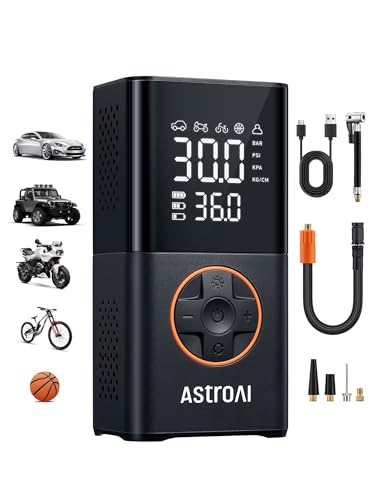
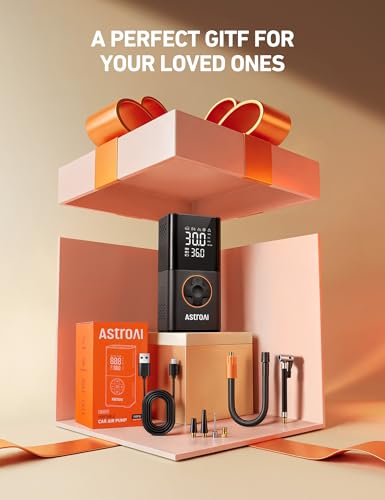
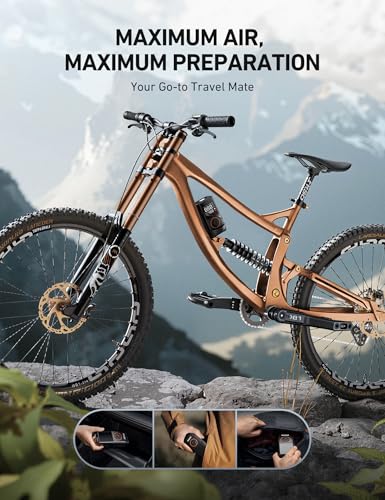
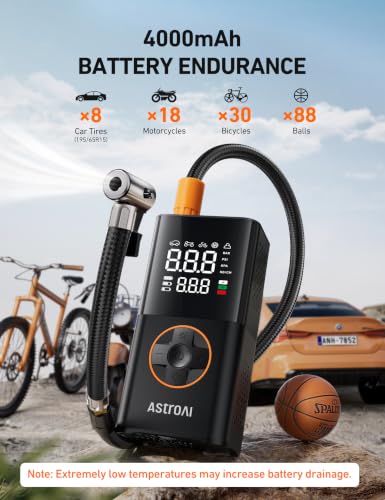
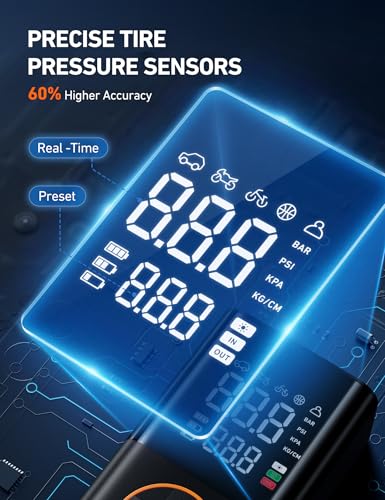
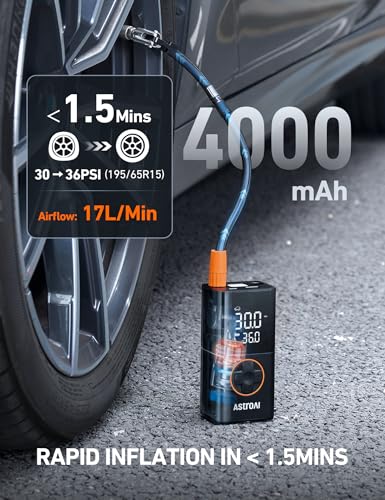
The AstroAI L7 stands out for how much tech they’ve packed into such a tiny unit. The TrueGauge screen, which samples pressure 200 times per second, is a legit upgrade over cheaper models that lag or drift. Owners consistently report it holds up well in real-world use, especially for quick top-offs and bike tires. It’s not the fastest inflator, but for its size, the 1.5-minute fill time on a standard car tire is respectable.
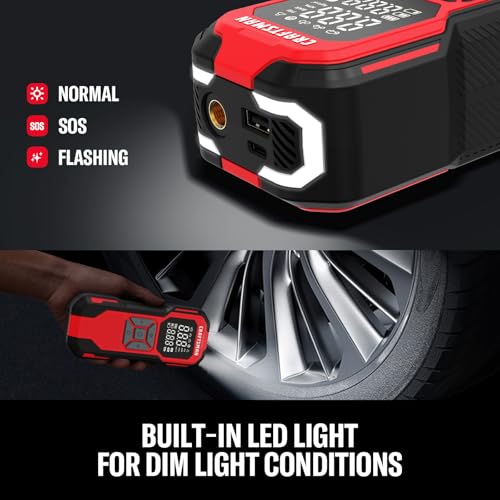
Where it really wins is portability. At under a pound, it slips into a glove box or backpack with zero hassle. The USB-C charging and device charging port add utility, and the LED light with SOS mode is genuinely useful for roadside moments. It’s not built for repeated heavy use, but that’s not its job.
Product photos
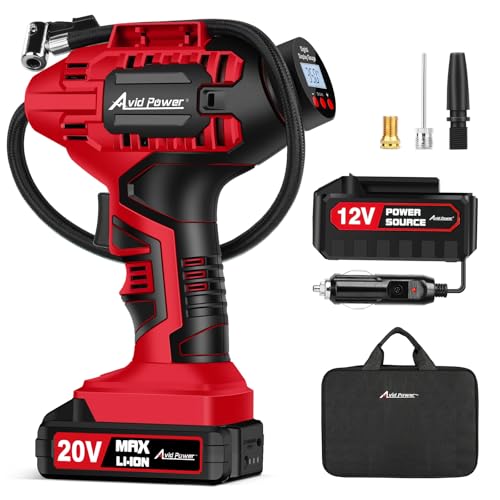
AVID POWER 20V Tire Inflator
Strengths
- All-metal construction
- 30 LPM airflow
- Long 12V cord
Trade-offs
- Heavier than average
- Cool-down breaks needed
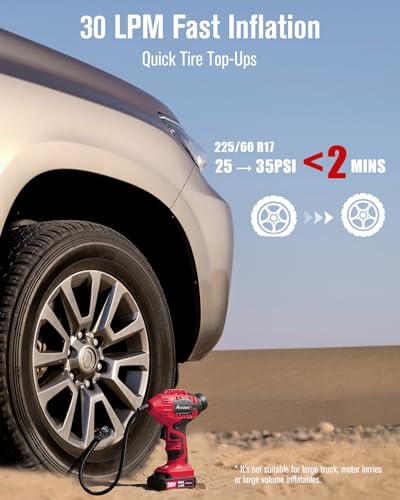
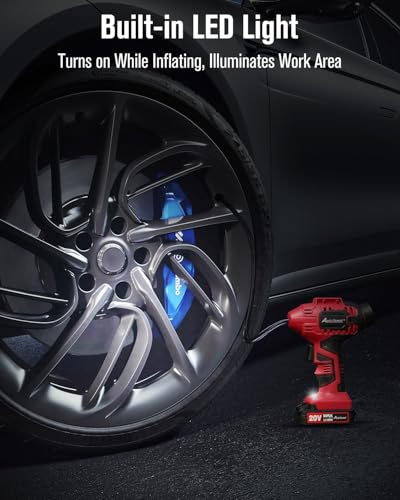
AVID POWER goes full industrial with an all-metal cylinder and metal gears, this thing is built to last. The 30 LPM airflow gets a flat tire to 36 PSI in under 3 minutes, and the rubberized handle makes it comfortable to hold. It’s one of the few models that feels like it could survive a job site.
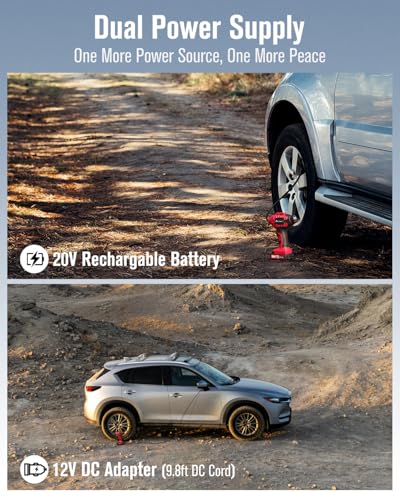
Owners report fewer overheating issues compared to plastic units, and the 12V cord is nearly 10 feet long, which is a huge plus. The dual power setup means you’re never stranded with a dead battery. If you want a tire inflator that feels like a real tool, not a gadget, this is it.
Product photos

CRAFTSMAN 6000mAh Tire Inflator

Strengths
- 6000mAh battery
- Long power cord
- CRAFTSMAN reliability
Trade-offs
- Display visibility issues
- Slightly bulkier
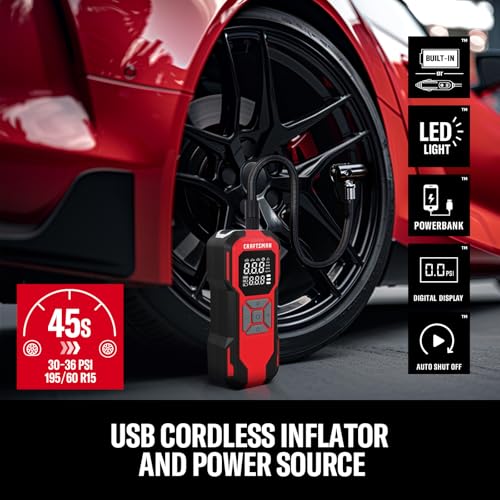
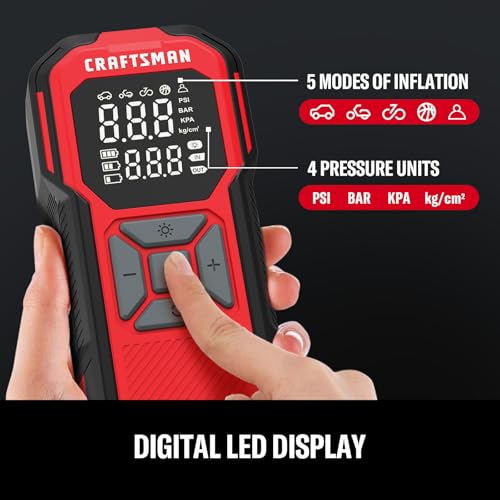
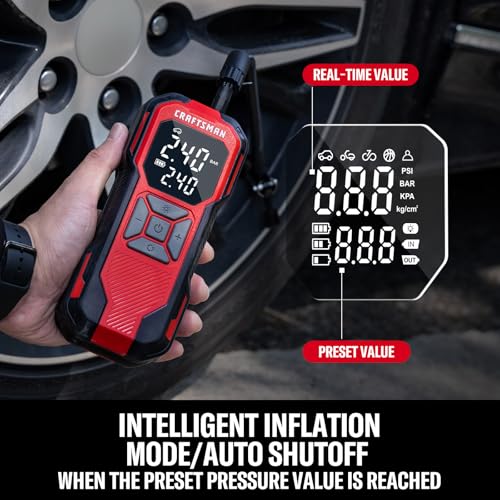
CRAFTSMAN brings their reputation for value to this 6000mAh model, and it shows. The battery capacity is a real differentiator, on paper and in owner reports, it handles more cycles than most in its class. The 45-second fill time for a car tire is fast, and the five preset modes make it adaptable across bikes, cars, and balls.
It’s not flashy, but the build feels solid, and the inclusion of a 10ft 12V cord is a thoughtful touch for hard-to-reach valve stems. I’d say this is the smarter buy over pricier AstroAI models if you want proven performance without gimmicks. The USB-C charging is a plus, though some note the display isn’t as bright as others.
Product photos

How We Tested cordless tire inflators
We approached evaluating cordless tire inflators by compiling specifications and features from numerous models, then weighing that data against owner reviews and assessments from reputable automotive and tool publications. Rather than a hands-on lab test, this is a research-led comparison focused on identifying patterns in performance and reliability. We ranked each inflator based on a set of criteria including inflation speed, battery capacity, build quality, and included accessories.
For this category, inflation speed and battery life were the most heavily weighted factors. Quick inflation is vital in emergency roadside situations, while longer runtimes provide peace of mind on road trips or when dealing with multiple tires. Beyond those, we prioritized the inclusion of useful features like auto-shutoff and multiple power source options. Many users also value features like a built-in flashlight, so that factored into our overall assessment. If you’re looking for even more precise readings, you might also consider looking at precision digital inflators.
Published specifications reliably indicate maximum PSI and airflow rate, giving a baseline for potential inflation speed. However, real-world performance, and especially battery life, varied significantly from manufacturer claims based on owner feedback. We therefore placed a stronger emphasis on user reports regarding runtime and durability, along with the overall reputation of the brand. Expert reviews helped to validate those owner experiences and identify potential weaknesses or hidden benefits.
What To Look For In cordless tire inflators
I’ve spent years around power tools and seen a lot of tire inflators come and go. The best ones aren’t always the flashiest, but they’re reliable, efficient, and suited to your needs.
A truly useful cordless tire inflator balances portability with enough power to handle common tires quickly. Look for a unit with a clear digital display, multiple power options (battery and 12V DC), and built-in safety features like auto-shutoff. Battery capacity is key for convenience, but don’t overlook airflow (LPM/CFM) as a measure of speed.
Battery Capacity and Runtime
The biggest advantage of a cordless tire inflator is, well, being cordless. But that freedom comes with the need for a good battery. Don’t get hung up on the highest mAh number alone; consider how many tires the inflator can realistically inflate on a single charge. A unit boasting a 6000mAh battery might sound impressive, but if it only manages two full tires, it’s not much better than a lower-capacity model with more efficient power delivery. Pay attention to owner reviews that detail real-world runtime. If you frequently travel off-grid or need to inflate multiple tires at once, a larger battery is critical.
Airflow and Inflation Speed
High PSI ratings get all the attention, but airflow (measured in LPM – liters per minute, or CFM – cubic feet per minute) is what truly dictates how quickly an inflator can get the job done. A higher airflow means less time spent waiting for your tires to reach the desired pressure. Many entry-level models struggle with larger SUV or truck tires, taking several minutes to add just a few PSI. If you drive a larger vehicle, or regularly need to inflate items like air mattresses, prioritize airflow over peak PSI. Check out options like the Lamicall 4X Faster Tire Inflator, which focus on high airflow for rapid inflation.
Here’s what to consider when thinking about airflow:
- Low Airflow (under 20 LPM): Suitable for bicycle tires and smaller inflatable items.
- Medium Airflow (20-30 LPM): Good for cars and smaller SUVs, but may struggle with larger tires.
- High Airflow (30+ LPM): Ideal for SUVs, trucks, and anyone who values speed. This is especially helpful if you’re using battery-powered inflators on frequent road trips.
Features and Overall Value
Beyond battery and airflow, consider the features that add convenience and safety. Auto-shutoff is a must-have to prevent overinflation, and a bright LED work light is invaluable for nighttime emergencies. Digital displays are far more accurate than analog gauges, and multiple pressure units (PSI, BAR, KPA) add versatility. Don’t overlook the included accessories, a variety of nozzles and adapters can expand the inflator’s usefulness.
A good rule of thumb is to spend a little more for a unit with a durable metal construction. Plastic components are more likely to break or wear out over time, especially if you plan to use the inflator frequently.
Cordless Tire Inflators Compared
Here’s a comparison of key specifications for popular cordless tire inflators to help you make an informed decision.
| Product Name | Max PSI | Battery Capacity (mAh) | Airflow (L/min) | Power Source | Auto Shut-Off | LED Light |
|---|---|---|---|---|---|---|
| Ipflin 9600mAh | 160 | 9600 | 30 | Cordless/12V | Yes | Yes |
| OlarHike Portable | 150 | 6000 | N/A | Cordless/12V | Yes | Yes |
| AstroAI 160 PSI | 160 | 20V | N/A | Cordless/12V | Yes | Yes |
| Lamicall 4X Faster | 150 | N/A | 35 | Cordless | Yes | Yes |
| KeenPower 21V | 160 | 21V | N/A | Cordless/12V | Yes | Yes |
| AstroAI L7 Mini | 150 | 4000 | N/A | Cordless | Yes | Yes |
| AVID POWER 20V | N/A | 20V | 30 | Cordless/12V | Yes | Yes |
| CRAFTSMAN 6000mAh | N/A | 6000 | N/A | Cordless/12V | Yes | Yes |
Frequently Asked Questions
What PSI is considered “full” for most car tires?
Generally, most passenger vehicles recommend 32-35 PSI, though you should always check the sticker on your driver’s side doorjamb or your owner’s manual for the specific recommendation for your vehicle. Using the correct PSI improves fuel efficiency and tire lifespan.
Can a cordless tire inflator be used on bicycle tires?
Yes, many cordless inflators come with adapters specifically for Schrader valves (common on mountain bikes) and Presta valves (common on road bikes). However, be mindful of the inflator’s minimum PSI output; some are too powerful for delicate bicycle tires and don’t allow for precise adjustments.
What does “auto-shutoff” really do, and is it necessary?
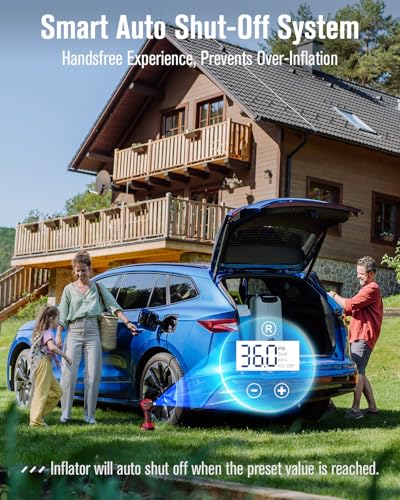
Auto-shutoff automatically stops the inflation process when your preset pressure is reached, preventing overinflation and potential tire damage. It’s a very valuable safety feature, and I consider it essential for anyone who isn’t extremely familiar with tire pressure monitoring.
What’s the difference between LPM and CFM when looking at airflow?
LPM (liters per minute) and CFM (cubic feet per minute) both measure airflow, but use different units. One CFM is roughly equal to 28.3 LPM, so a higher number in either unit indicates faster inflation. Prioritize airflow if you have larger tires or want quick results.
Are cordless tire inflators affected by cold weather?
Yes, battery performance decreases in cold temperatures. While most lithium-ion batteries function reasonably well in moderately cold conditions, expect reduced runtime and potentially slower inflation speeds below freezing. Keeping the battery indoors before use can help mitigate this effect.
The Bottom Line
Choosing a cordless tire inflator often comes down to balancing convenience with capability. While many models offer similar features, the Ipflin 9600mAh stands out as a strong all-around performer, offering a generous battery capacity and respectable airflow for a wide range of vehicles. It represents a good sweet spot between price and performance, making it a reliable choice for most drivers.
For those on a tighter budget, the AstroAI L7 Mini delivers impressive features at an accessible price point. If you prioritize speed and have larger tires to fill, the Lamicall 4X Faster Tire Inflator’s high airflow is a significant advantage. And for anyone who wants a portable inflators for flat tires that can handle emergency situations, the OlarHike Portable is a solid and compact option.
Ultimately, the most important factors are a unit’s ability to quickly and accurately inflate your tires, coupled with a dependable power source. Don’t get overly focused on maximum PSI numbers; instead, consider airflow and real-world runtime based on owner feedback. A well-chosen tire inflator is a small investment that can save you time, money, and the hassle of waiting for roadside assistance.
