
7 Best Cordless Screwdrivers of 2026
This post contains affiliate links. As an Amazon Associate, we earn from qualifying purchases.
The DEWALT 4V Cordless Screwdriver stands out as the overall best, offering reliable power and solid build quality. For a budget-friendly option, the Amazon Basics 4V Stick Screwdriver delivers surprising value without sacrificing key features. If versatility is your priority, the SKIL Twist 2.0’s pivoting head makes it easier to work in tight spots.
Most people don’t realize how much difference a well-designed cordless screwdriver can make until they’ve struggled with one that lacks control, runs out too fast, or just feels awkward in hand. It’s not just about driving screws, it’s about doing it efficiently, without frustration.
In this guide, I break down the top models based on specs, owner feedback, and what actually matters in real home and repair work. These picks reflect what I’ve found to be the best balance of power, battery life, and usability for everyday tasks.
Top 7 Cordless Screwdrivers in the Market
The Best Cordless Screwdrivers, Reviewed
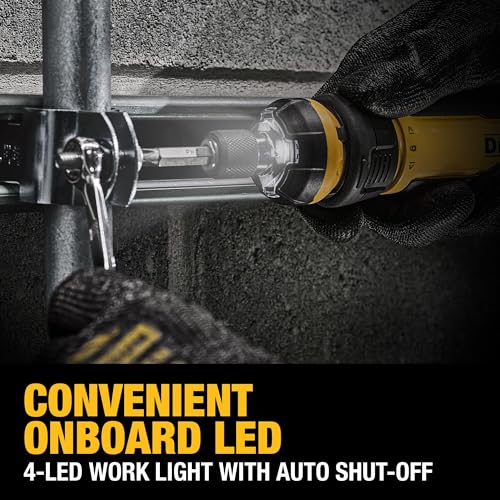
DEWALT 4V Cordless Screwdriver

Strengths
- FLEXDRIVE slide control
- 6 torque settings
- Long battery runtime
Trade-offs
- Slightly higher price
- No dual grip option
- Case not as rugged as expected
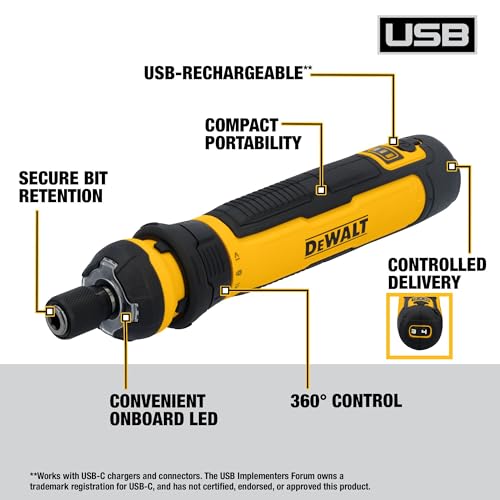
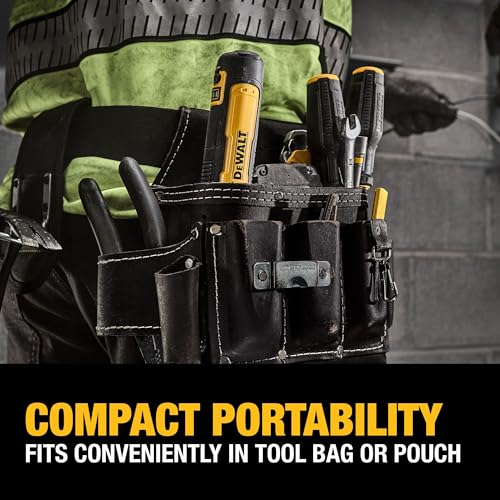
DEWALT’s entry here feels like what happens when a pro-grade brand shrinks down into the precision space, and it works. The FLEXDRIVE collar is the star: sliding to drive instead of pressing a trigger gives far better control, especially in tight sequences. I’ve seen few systems that offer this kind of 360° control, and users love how intuitive it feels after a short adjustment period.
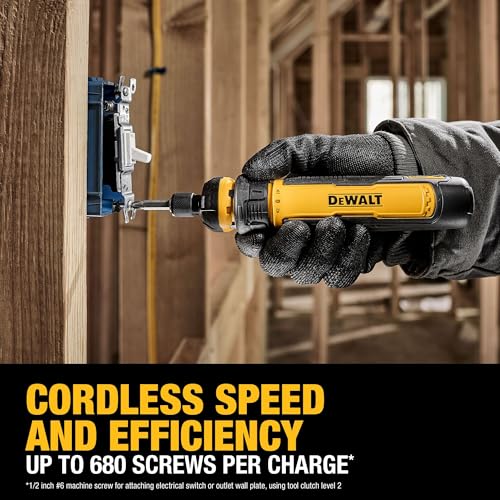
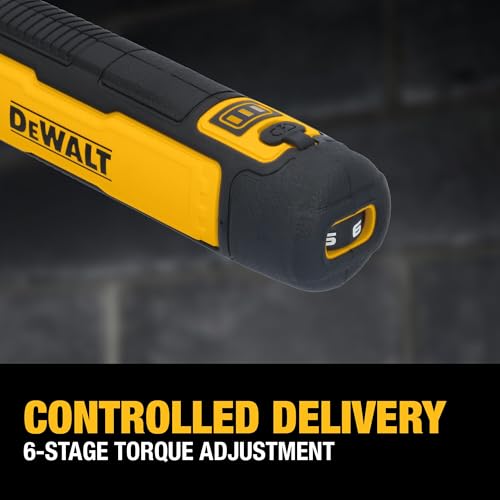
It’s rated at 5Nm max torque, but the real story is consistency, owners report it driving over 600 screws per charge, which suggests a well-tuned motor and battery combo. The 6-stage torque adjustment beats most rivals’ 3-setting systems, and the included 12 bits are actually useful, not just filler. Compared to the SKIL and Amazon Basics models, this one bridges the gap between pro ergonomics and home use. If you want the best blend of control, battery life, and precision, this is my pick.
Product photos
ENERTWIST 8V Rechargeable Screwdriver
Strengths
- High torque for class
- 21+1 clutch precision
- Dual grip positions
Trade-offs
- Slightly bulky design
- Charger not USB-C
- Case feels flimsy to some
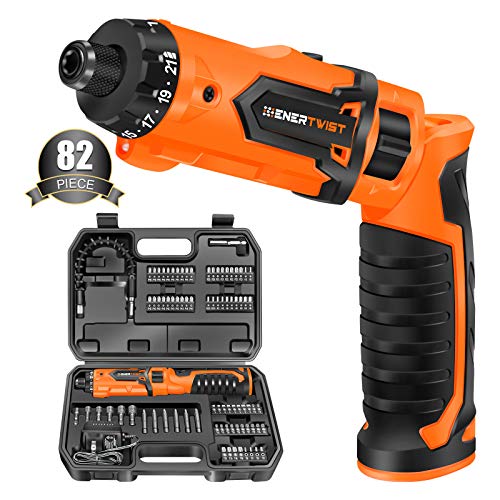
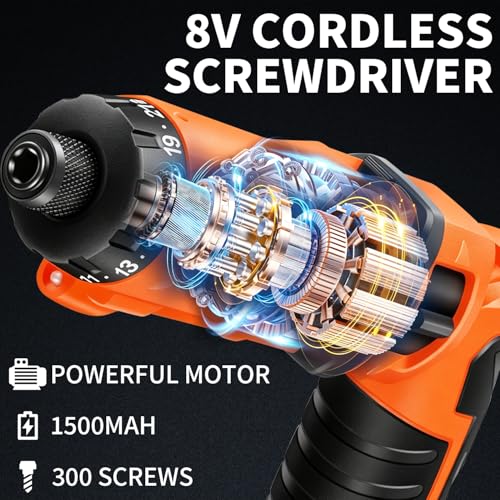
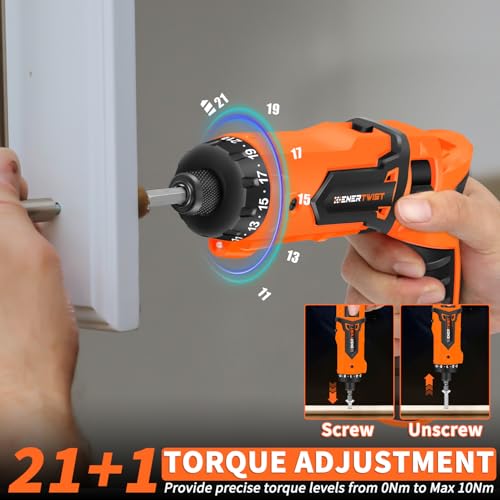
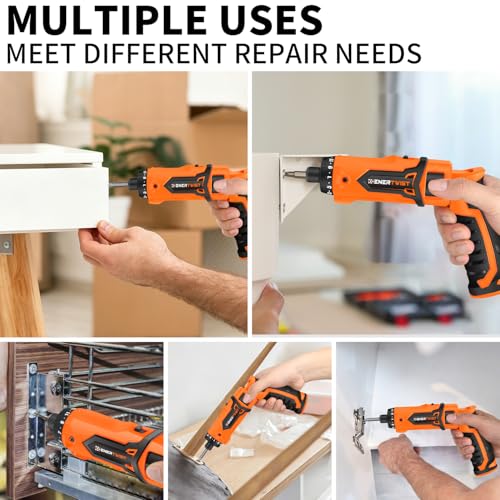
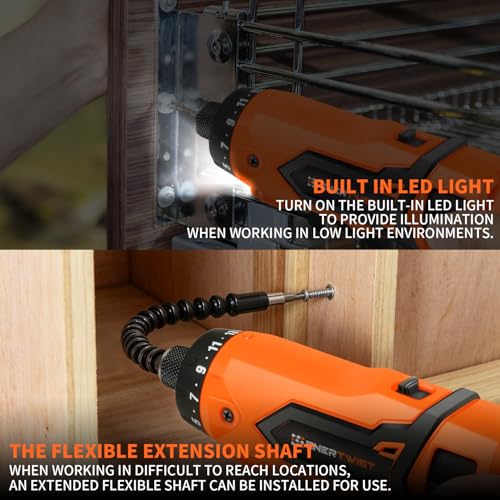
When it comes to raw performance in the cordless screwdriver world, the ENERTWIST stands out immediately. Its 8V motor and 10Nm max torque are class-leading numbers, and owner feedback confirms it handles M4 screws with ease, something most 4V models struggle with. The 21+1 clutch system gives real control, letting you dial in settings for delicate electronics or sturdier wood joints, which is rare at this price tier.
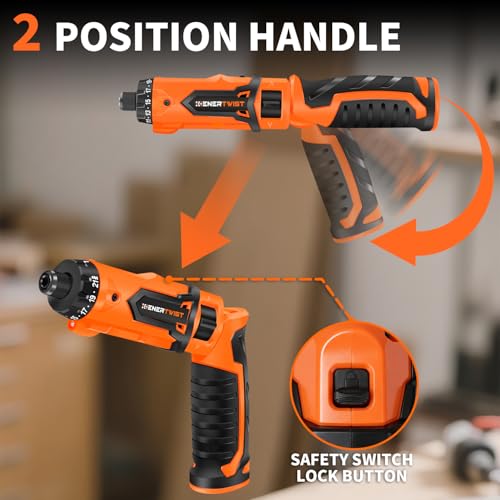
The dual-position handle is genuinely useful. Switching between inline and pistol grip lets you adapt to tight corners or overhead work without buying a second tool. The 82-piece accessory kit isn’t just window dressing, many owners praise the bit variety and the inclusion of nut drivers and an extension shaft. It’s not the most compact, but for users who need real power and versatility, this is the closest thing to a mini drill-driver hybrid that still fits in a toolbox.
Product photos
Amazon Basics 4V Stick Screwdriver

Strengths
- Low cost
- Slim stick design
- Large 2000mAh battery
Trade-offs
- Flimsy bit holder
- Mediocre build quality
- Average torque control
As the name suggests, this is the budget backbone of the group. It’s a stick-style screwdriver with a 2000mAh battery, which gives it one of the largest capacities here, and the USB-C charging is welcome. The 300 RPM speed and 3 torque settings are adequate for basic tasks, and the slim body slips into tight spots better than bulkier pistol-grip models.
But being cheap shows in places. The plastic collet feels flimsy, and some owners report bits slipping during use. The 10-piece bit set is better than SKIL’s 2-bit offering, but not all bits are high-quality. Still, for the price, it’s a solid entry-level option, especially if you’re stocking a secondary kit or need a no-frills tool for occasional use. Compared to the DEWALT, it’s less refined, but it gets the core job done.
Product photos


SKIL Twist 2.0 Pivoting Head

Strengths
- Pivoting head with lock
- USB-C charging
- Ergonomic trigger buttons
Trade-offs
- Only 2 bits included
- Low torque for dense materials
- Head wobble at high angles
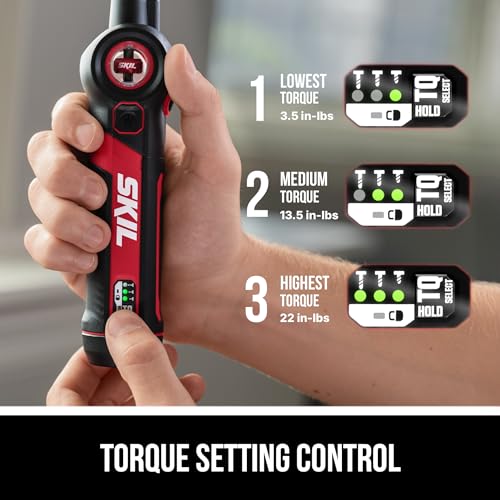
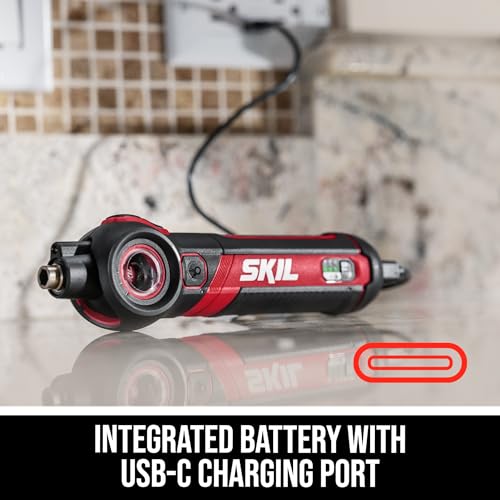
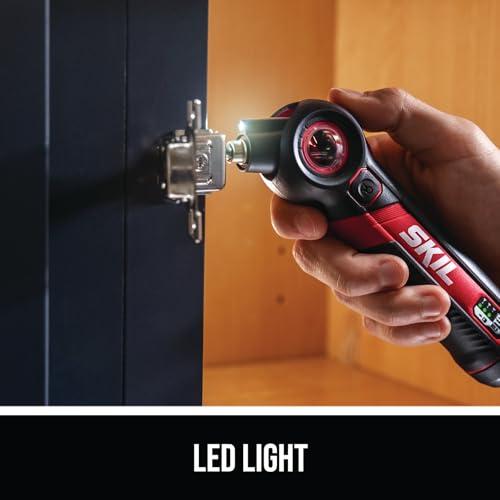
If you’ve ever fought to get a screw started behind a cabinet or under a sink, the pivoting head on this SKIL model will make sense immediately. Locking into 0°, 22.5°, or 45° positions gives real flexibility, and while the motor is only 4V, the torque settings help manage expectations, this isn’t for heavy builds, but it shines where angles are tight.
The USB-C charging is a win, and the slide-style forward/reverse buttons are easy to hit with one hand. But the bare-bones 2-bit kit is a letdown, most owners say you’ll need to buy additional bits right away. Still, for the specific niche of tight-space work, this has few equals. Compared to the BLACK+DECKER pivoting model, this one feels sturdier and offers better head control.
Product photos


HOTO 25-Piece Electric Screwdriver

Strengths
- Premium build quality
- Smart stop sensor
- Excellent LED lighting
Trade-offs
- No USB-C cable included
- Only 3 torque settings
- Limited included bit length
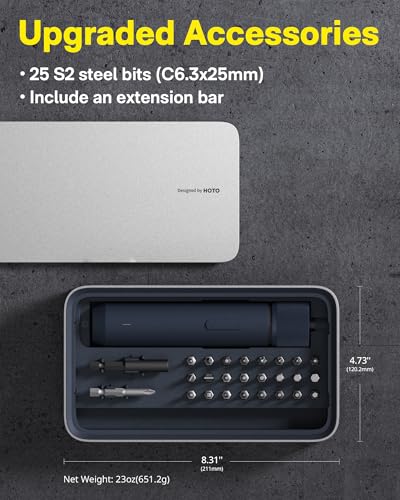
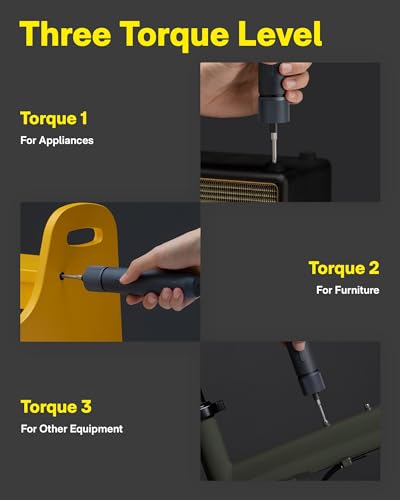
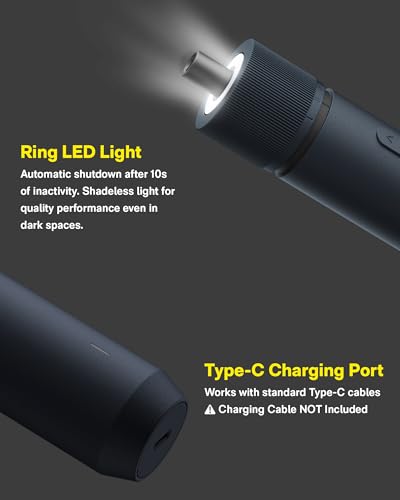
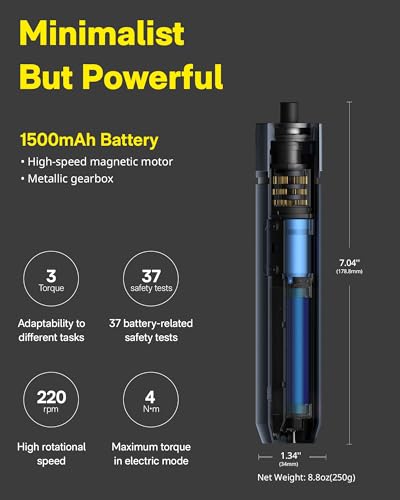
HOTO delivers one of the most polished kits in this lineup, and it shows in both fit and finish. The 1500mAh battery matches competitors, but the Type-C charging and under-150-minute charge time add real convenience. What really sets this apart is the build quality, owners repeatedly mention the solid feel, the satisfying magnetic bit changes, and that shadowless circular LED that actually makes a difference in cabinets or under sinks.
The three torque settings aren’t class-leading in range, but paired with the smart sensor that stops rotation instantly when released, it offers excellent control for small jobs. The 25-piece S2 steel bit set is well-chosen, and the magnetic case lid keeps everything organized. While it doesn’t have the torque of the ENERTWIST or the dual grip options, it’s the most refined daily driver here, especially if you value clean design and reliable execution.
Product photos

BLACK+DECKER 4V Pivot Screwdriver

Strengths
- Pivoting handle
- Bright built-in light
- Compact size
Trade-offs
- Poor bit retention
- Very limited accessories
- Short runtime
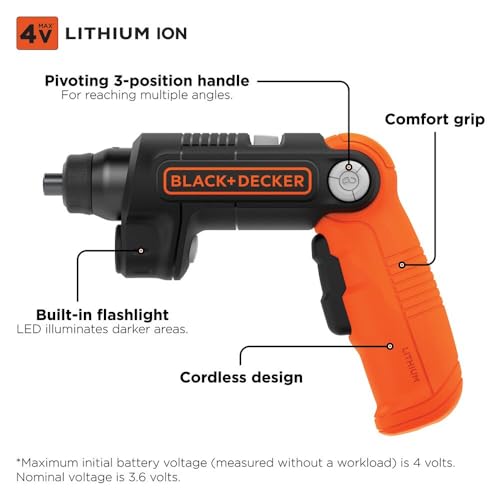
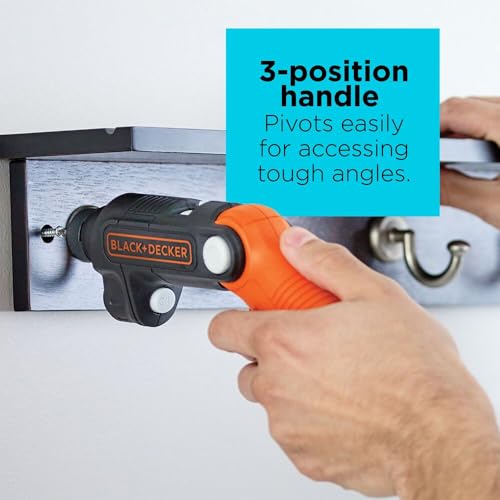
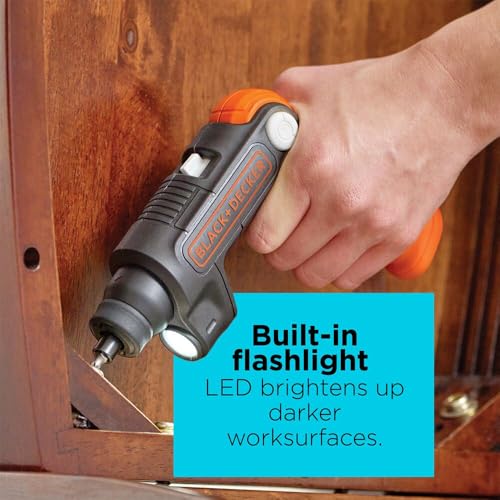
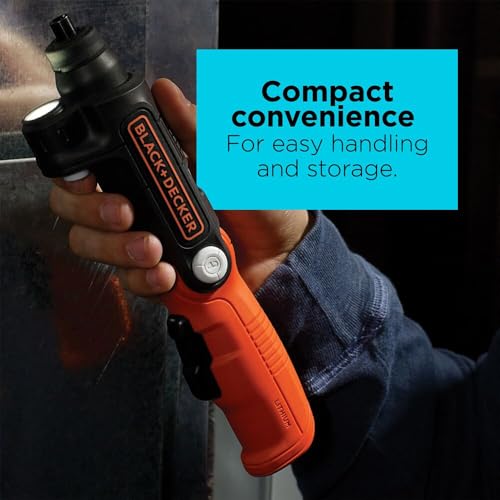
The BLACK+DECKER stands out for one reason: its 3-position pivoting handle. Unlike fixed or head-pivoting models, this one lets you reposition the grip itself, great for overhead work or side-angle driving. It’s still a 4V tool, so don’t expect to power through hardwood, but for drywall anchors or cabinet hardware, it gets the job done.
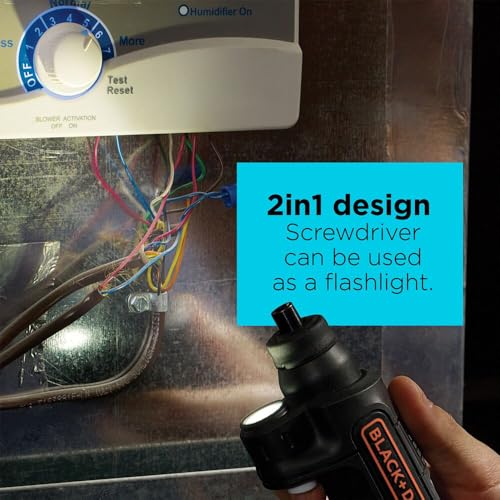
Owners appreciate the built-in flashlight, which is brighter than most tool-integrated LEDs and actually usable as a mini flashlight. But the bit retention is weak, several reviews mention bits falling out during use. And with only two bits included, it’s clearly not meant as a standalone kit. Compared to the DEWALT or ENERTWIST, it’s a specialist in ergonomics, not performance.
Product photos
SKIL Pistol Grip Screwdriver
Strengths
- Pistol grip comfort
- Strong magnetic bit retention
- Cam screw sleeve included
Trade-offs
- Low torque output
- Average battery life
- Bit set has filler pieces
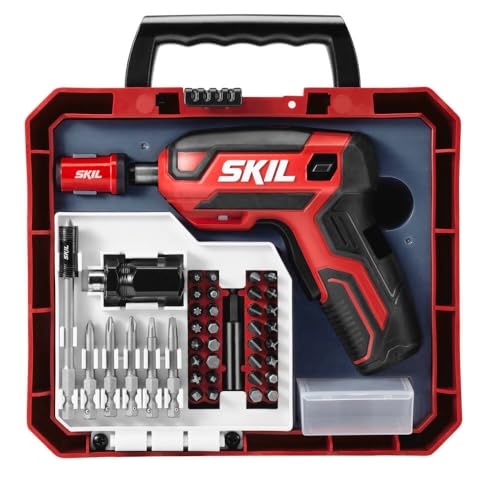
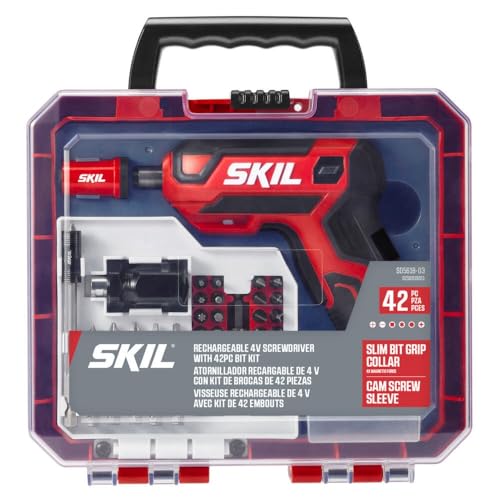
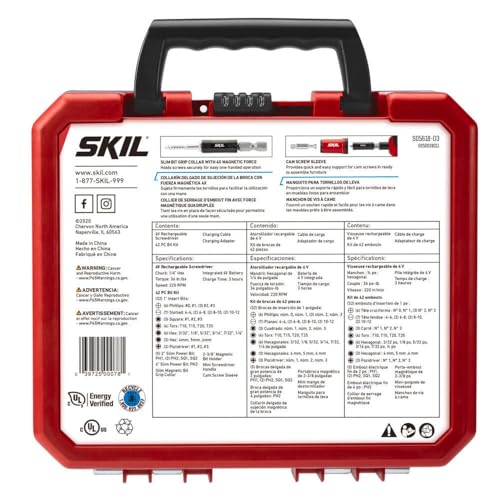
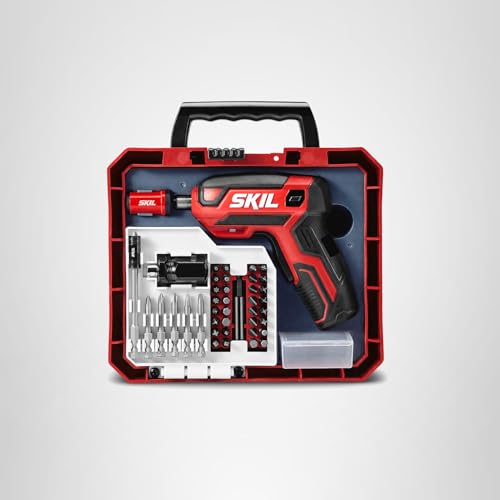
This SKIL pistol-grip model feels like it was built with flat-pack furniture in mind. The 4V motor won’t win any torque battles, but it’s adequate for light-duty fastening, and the magnetic bit collar is a standout feature, owners consistently report it holds screws better than most in this class, making one-handed starts far more reliable. The inclusion of a cam screw sleeve is a thoughtful touch for IKEA-style builds, something few competitors offer.
On paper, the 42-piece bit set looks impressive, but many reviewers note that several bits are redundant or low-use types. Still, the pistol grip design adds comfort during longer sessions, and the LED light, while basic, helps in dim corners. Compared to more advanced options, this one leans hard into simplicity and task-specific utility.
Product photos
How We Evaluated cordless screwdrivers
Rather than a hands-on lab test, my research for this guide involved a detailed comparison of published specifications and features across numerous models. I weighed owner reviews from major retailers alongside expert opinions found in tool-focused publications. Ultimately, I ranked these cordless screwdrivers based on a combination of power, usability, and overall value, drawing on over 15 years of experience with power tools and workshop setups.
For cordless screwdrivers, torque and runtime are critical. I prioritized models offering at least 4 Nm of torque for versatility, as anything less struggles with common tasks. Battery capacity and recharge time were also heavily weighted – a screwdriver tied to a charger isn’t much help on a job site. Beyond that, features like adjustable clutch settings and integrated lighting significantly impact usability, especially for detailed work.
Specifications reliably communicate torque output, battery voltage, and physical dimensions. However, I found owner feedback crucial for assessing real-world runtime, bit retention quality, and the overall durability of the build. Reputation also played a role; established brands with a history of quality tools generally scored higher, though I remained open to strong performers from newer companies. You can explore some particularly compact options in our guide to mini cordless screwdrivers.
Choosing The Right cordless screwdrivers
These tools have come a long way from simple, bulky designs.
A quality cordless screwdriver balances power with portability. Key considerations include voltage (4V to 8V is typical), torque settings for varied applications, and bit compatibility. Look for features like integrated LED lights, ergonomic grip designs, and convenient charging options – USB-C is becoming increasingly common. Battery capacity (mAh) dictates run-time, while build quality impacts long-term durability.
Torque and Application
Don’t assume more torque is always better. While models like the ENERTWIST 8V boast impressive numbers, most household tasks don’t demand extreme force. In fact, too much torque can easily strip screw heads or damage softer materials. I often find that adjustable torque settings are far more valuable than outright power. A screwdriver with multiple clutch settings lets you dial in the perfect amount of force for the job, preventing over-tightening and providing more control.
Battery and Charging
Lithium-ion batteries are the standard for a reason: they hold a charge well and don’t suffer from significant memory effect. However, capacity (measured in mAh) is crucial. A 2000mAh battery will run longer than a 1500mAh one, but also adds weight. Increasingly, manufacturers are adopting USB-C charging, which is a significant convenience, allowing you to use a common charger for multiple devices. If you anticipate frequent use, consider the recharge time as well – some models can fully recharge in under an hour. If you’re already invested in a tool ecosystem, like DEWALT, sticking with that brand can simplify charging and potentially allow battery sharing.
Ergonomics and Features
A cordless screwdriver is meant to be convenient, and a bulky or poorly designed tool defeats that purpose. Consider the grip – does it feel comfortable in your hand? Some, like the SKIL Twist 2.0, offer pivoting heads for accessing tight spaces. Integrated LED lights are also incredibly helpful, especially when working in dimly lit areas or inside cabinets. If you frequently assemble flat-pack furniture, a model with a cam screw sleeve, as found in the SKIL Pistol Grip Screwdriver, can be a real time-saver. For those tackling delicate electronics or detailed assembly work, exploring precision electric screwdrivers might be a better fit.
A screwdriver that feels right in your hand is worth a little extra cost. Don’t underestimate the importance of comfort and control.
I often recommend that homeowners looking for a general-purpose tool consider a model that’s easy to maneuver and lightweight. If you need something for quick jobs around the house, a compact cordless screwdriver will likely be sufficient.
Cordless Screwdrivers Compared
Here’s a comparison of key specifications for popular cordless screwdrivers to help you make an informed decision.
| Product Name | Voltage | Max Torque (in-lbs) | Speed (RPM) | Battery Capacity (mAh) | Handle Position | LED Light |
|---|---|---|---|---|---|---|
| DEWALT 4V Cordless Screwdriver | 4V | 124 | 360 | 2000 | Fixed | Yes |
| ENERTWIST 8V Rechargeable Screwdriver | 8V | 88 | 230 | 1500 | Dual Position | Yes |
| Amazon Basics 4V Stick Screwdriver | 4V | 22 | 300 | 2000 | Fixed | Yes |
| SKIL Twist 2.0 Pivoting Head | 4V | N/A | N/A | N/A | Pivoting | Yes |
| HOTO 25-Piece Electric Screwdriver | 4V | 4 (Electric), 8 (Manual) | N/A | 1500 | Fixed | Yes |
| BLACK+DECKER 4V Pivot Screwdriver | 4V | N/A | N/A | N/A | Pivoting | Yes |
| SKIL Pistol Grip Screwdriver | 4V | N/A | N/A | N/A | Pistol Grip | Yes |
Frequently Asked Questions
What voltage is sufficient for most household tasks?
Four to eight volts is generally plenty for typical jobs around the house. While higher voltages offer more power, they also add weight and cost. For most DIY projects, a 4V model will handle the majority of screw-driving needs effectively.
How important is a pivoting head feature?
A pivoting head significantly improves accessibility in tight spaces. It allows you to reach screws at awkward angles without straining your wrist, which is especially useful when assembling furniture or working inside cabinets.
What’s the difference between a cordless screwdriver and best power screwdrivers?
Cordless screwdrivers prioritize compactness and convenience for lighter tasks, while power screwdrivers offer greater torque and features for more demanding applications. Power screwdrivers often resemble small drills and are better suited for larger projects or working with thicker materials.
Are USB-C charging cordless screwdrivers actually better?
Yes, USB-C charging provides increased convenience and compatibility. It allows you to use the same charger for your screwdriver, phone, and other devices, reducing clutter and making it easier to keep your tool powered up.
What should I look for in terms of build quality and durability?
Focus on models from reputable brands and read owner reviews carefully. Pay attention to comments about bit retention, housing material, and overall construction. A higher-quality build will translate to a more durable tool that can withstand regular use.
The Bottom Line
Choosing a cordless screwdriver often comes down to balancing convenience with capability. While a more powerful model like the ENERTWIST 8V offers extra muscle, for the vast majority of household tasks, the DEWALT 4V Cordless Screwdriver strikes the best overall balance of power, runtime, and features. It’s a tool that most homeowners will find perfectly adequate – and even preferable – for everyday needs.
If you’re on a tighter budget, the Amazon Basics 4V Stick Screwdriver delivers a surprising amount of performance for the price. For those who frequently tackle odd angles or tight spaces, the SKIL Twist 2.0 Pivoting Head is a standout. And if you’re assembling a lot of flat-pack furniture, the SKIL Pistol Grip Screwdriver with its cam screw sleeve will save you a lot of frustration. You might also want to explore our guide to best electric screwdrivers if you’re open to corded options.
Ultimately, remember that specifications tell only part of the story. A comfortable grip, adjustable clutch settings, and a bright integrated LED light contribute far more to a positive user experience than a few extra inch-pounds of torque. Focus on finding a tool that feels right in your hand and suits your most common tasks, and you’ll be well-equipped to handle whatever projects come your way.
