
8 Best Cordless Oscillating Multi Tools of 2026
This post contains affiliate links. As an Amazon Associate, we earn from qualifying purchases.
The KIMO 20V Cordless Oscillating Tool stands out as the overall best pick, delivering strong performance, a brushless motor, and a full 26-piece kit. For those on a budget, the AVID POWER 20V offers solid features and included accessories at a lower price. If you’re already invested in a system, the DEWALT 20V MAX XR is a reliable, high-end option with excellent runtime and power.
Oscillating multi-tools are essential for precise cuts, sanding, and remodeling work, but choosing the wrong one can mean poor control, short battery life, or limited accessory options. As someone who’s worked with dozens of these tools over the years, I know how frustrating it is when a unit vibrates too much or can’t handle more than light tasks.
This guide cuts through the noise by focusing on real-world usability. I compared specs and owner feedback to highlight models that balance power, battery life, and versatility, so you can pick one that actually works for your projects.
Top 8 Cordless Oscillating Multi Tools in the Market
The Best Cordless Oscillating Multi Tools, Reviewed
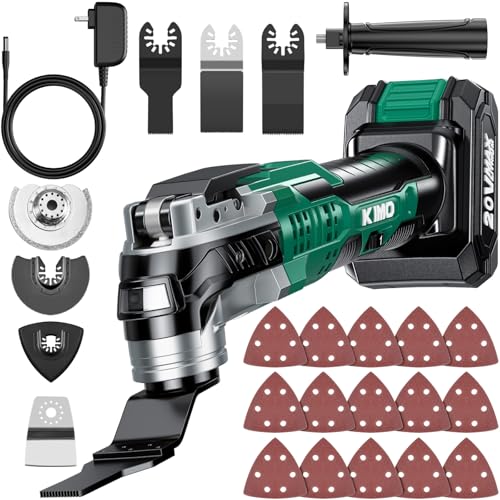
KIMO 20V Cordless Oscillating Tool
Strengths
- Brushless motor
- Dual-handle design
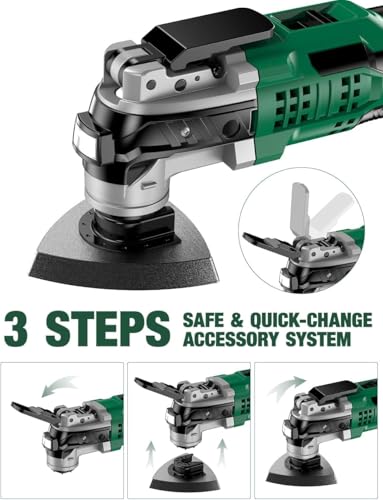
- 3-second blade change
Trade-offs
- Less brand support
- Heavier than average
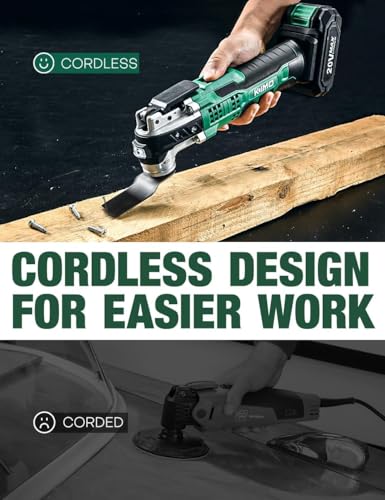
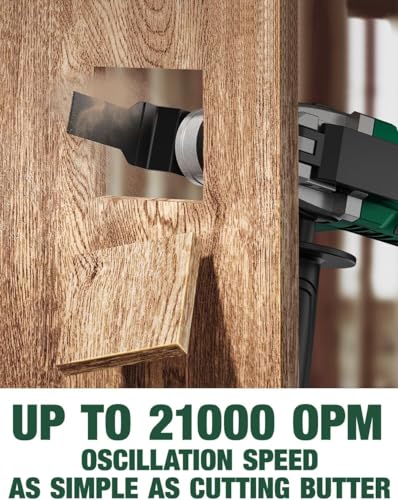
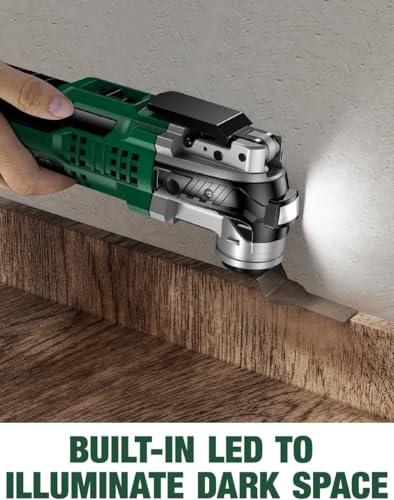
KIMO throws everything into this package, brushless motor, 21,000 OPM, dual-handle design, and a 3-second blade change system. On paper, it’s the most complete kit here, and owner feedback supports that: the dual-locking blade system actually prevents wobble, and the soft-grip handle makes long jobs less tiring. The 3° oscillation angle hits a sweet spot between power and control.
It’s not as brand-recognized as DEWALT or Ryobi, but the specs and included accessories (26 pieces) make this a standout. The 2.0Ah battery charges in an hour and has solid protection circuits. Compared to the DEWALT, it’s more feature-rich; compared to the WORKPRO, it’s better built. For most DIYers, this is the smarter buy.
Product photos
DEWALT 20V MAX XR Oscillating Tool

Strengths
- Brushless motor
- Dual-grip trigger
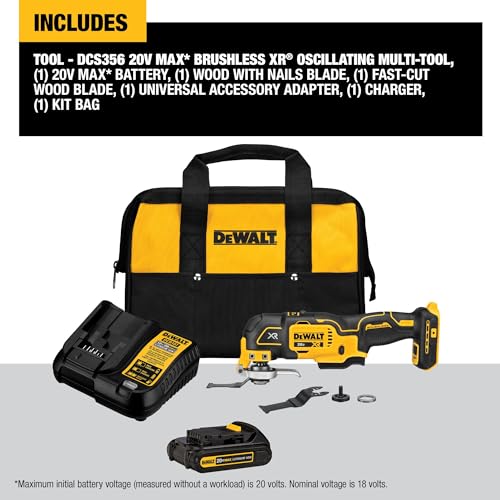
- Includes battery and charger
Trade-offs
- Heavier than compact models
- Higher price point
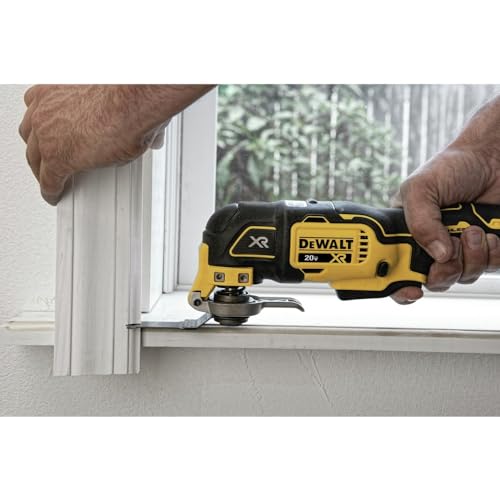
DEWALT’s DCS356C1 is what I’d grab if I were heading to a job site. The brushless motor delivers real efficiency, owners report noticeably longer runtimes compared to brushed models. The dual-grip trigger is a small thing, but it gives way more control than a standard button, especially when you’re making precision cuts near plumbing or wiring.
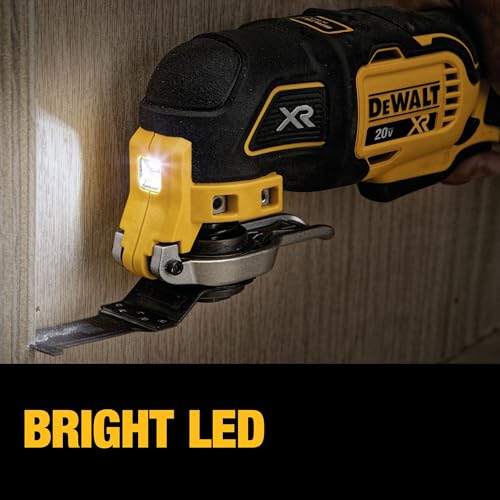
It comes with a battery and charger, has a bright LED, and the quick-change system is as fast as advertised. The universal adaptor means you’re not locked into DEWALT-only blades. Compared to the KIMO, it’s slightly less flashy but more proven in tough environments. For pros or serious DIYers, this is the benchmark.
Product photos


WORKPRO 20V Brushless Oscillating Tool

Strengths
- Brushless motor
- 3.6° oscillation angle
- Universal accessory fit
Trade-offs
- Basic included blades
- No second battery
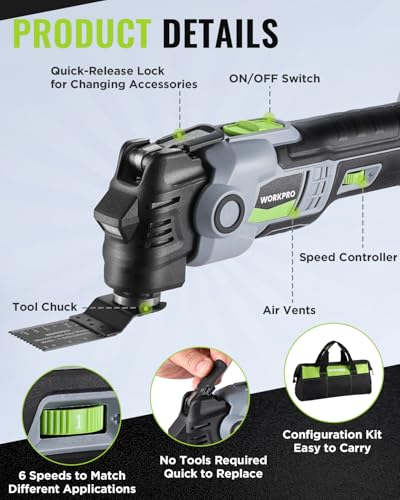
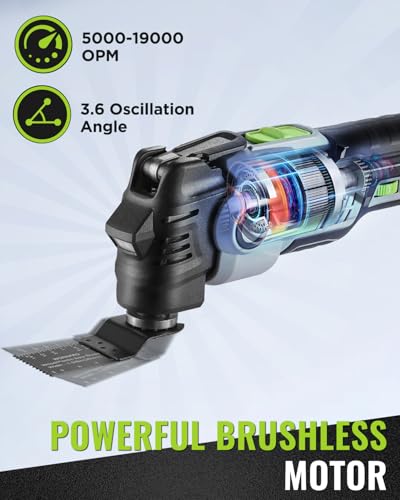
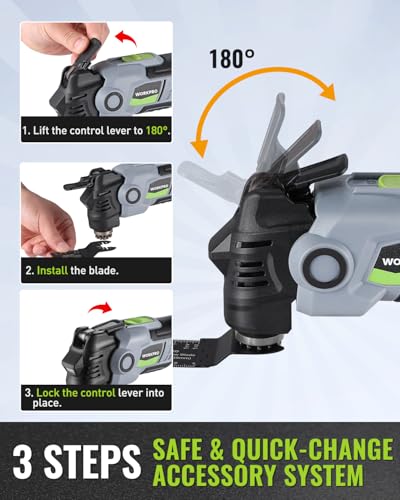
WORKPRO jumps into the brushless game with this 20V model, and that’s a big win for efficiency and motor life. The 3.6° oscillation angle delivers more aggressive cutting action, great for fast grout removal or slicing through caulked joints. Owners praise the universal fit system, saying it works flawlessly with aftermarket blades, which saves money long-term.
It’s missing a second battery, and the included accessories are functional but not premium. Still, the brushless motor gives it an edge over similarly priced tools that still use brushed tech. If you want more power for the dollar and don’t care about brand prestige, this is a smart under-the-radar choice. I’d take this over the AVID for heavier tasks.
Product photos

AVID POWER 20V Oscillating Multitool
Strengths
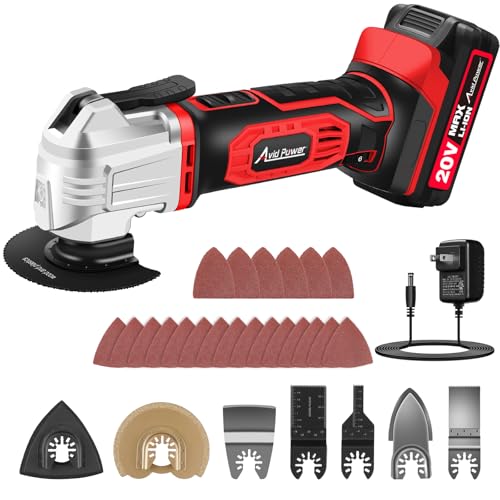
- 31-piece accessory kit
- Good speed range
- Affordable package
Trade-offs
- Slow battery charging
- Overheats under load
- Lower durability
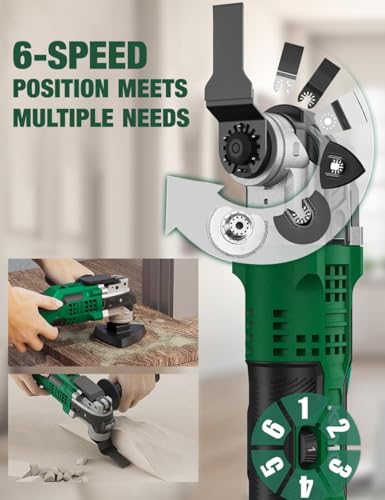
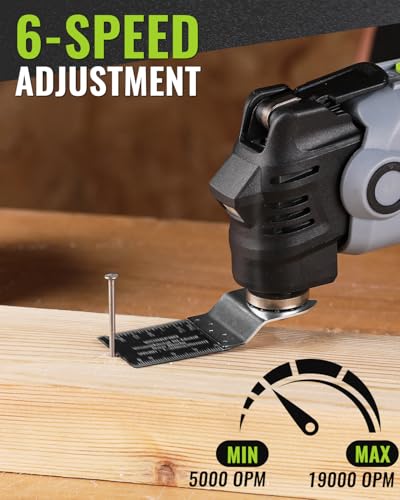
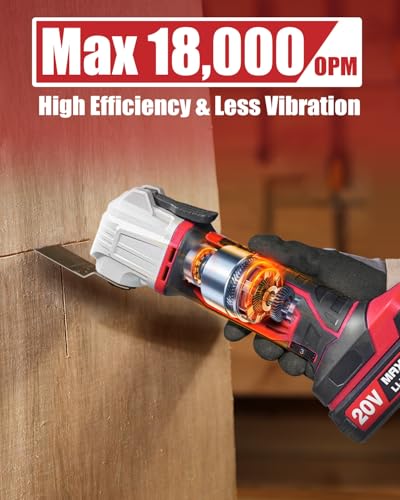
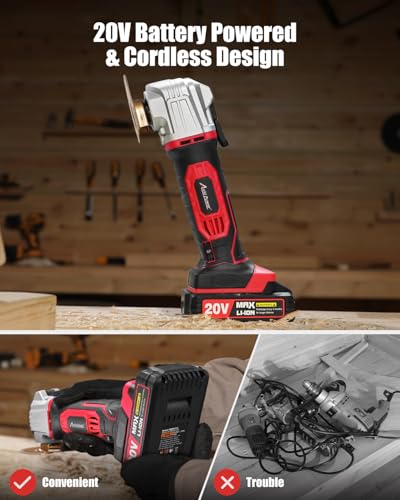
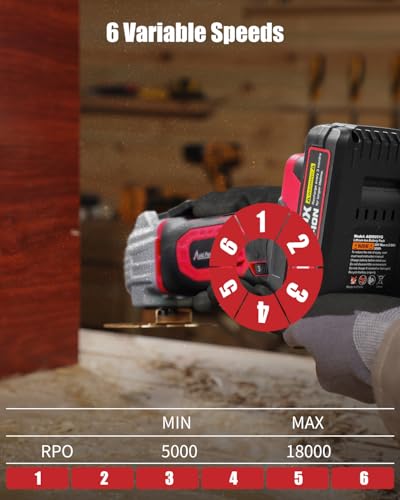
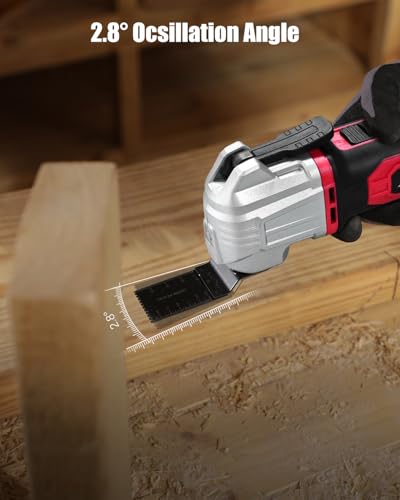
This AVID POWER kit is a steal if you’re after accessories and portability without breaking the bank. The 31-piece bundle includes more sanding sheets and blades than most competitors, which is great when you’re just starting out. The 2.8° oscillation angle gives decent control in tight spots, and the 6-speed dial lets you match the task, low for detail sanding, high for metal cuts.
But owners report the motor heats up quickly under load, and the 2.0Ah battery takes 4–5 hours to recharge, way slower than rivals. It’s fine for weekend warriors doing patch jobs, but I wouldn’t trust it for long sessions. Still, for the sheer volume of included gear, it’s hard to beat as a value pick.
Product photos
CRAFTSMAN V20 Oscillating Multi-Tool
Strengths
- Includes battery and charger
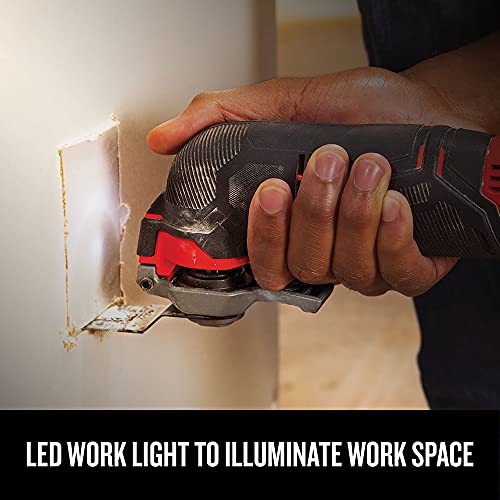
- LED work light
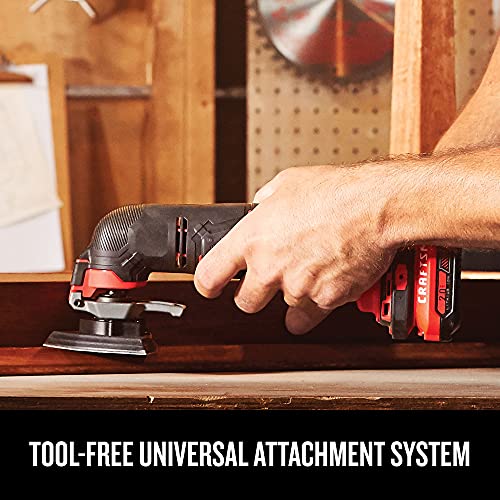
- Tool-free blade change
Trade-offs
- V20 ecosystem smaller
- No brushless motor
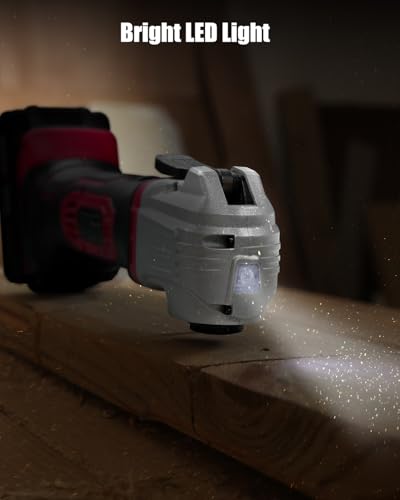
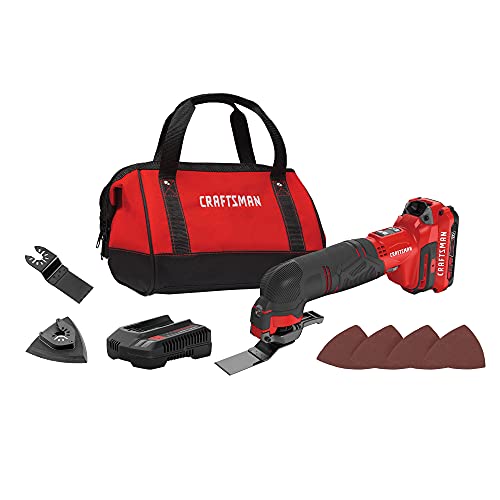
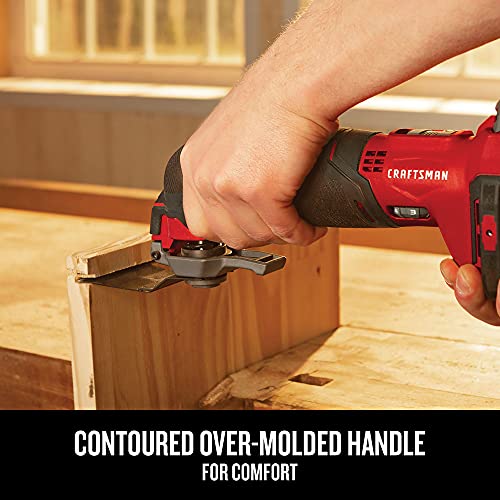
CRAFTSMAN’s V20 oscillating tool feels like a no-nonsense, garage-built workhorse. It includes a battery and charger, which is a big plus for someone starting their collection. The LED work light is actually bright enough to be useful in dim corners, something not all brands get right. Owners like the tool-free blade change system, though a few note it can feel a bit loose with thinner accessories.
The V20 platform is growing, but it’s not as widespread as DEWALT or Ryobi, so that’s a consideration. Still, if you value brand legacy and a solid mid-tier performer, this one holds its own. It won’t outpace the KIMO or DEWALT, but it’s dependable for the usual suspects: drywall cuts, baseboard trimming, and paint scraping.
Product photos


Ryobi ONE+ 18V Oscillating Tool

Strengths
- 18V ONE+ compatible
- Low vibration
- On-board storage
Trade-offs
- Tool-only package
- Average power for heavy jobs
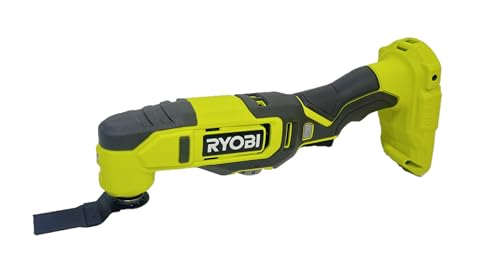
If you’re already invested in the Ryobi ONE+ ecosystem, this oscillating tool makes too much sense to ignore. It runs on the same 18V platform that powers everything from drills to lawn mowers, so you won’t need extra batteries or chargers. On paper, its 20,000 OPM max speed is solid, and owners consistently report smooth performance for light to medium tasks like trimming door jambs or sanding tight corners.
What really stands out is the low vibration claim, reviewers back this up, saying it feels noticeably smoother in hand than budget models. That matters when you’re doing grout removal or long sanding runs. It’s not the most powerful in the lineup, but for most homeowners, it’s more than enough. I’d pick this over pricier options if you’re already a Ryobi user.
Product photos


Worx WX696L Sonicrafter Multi-Tool
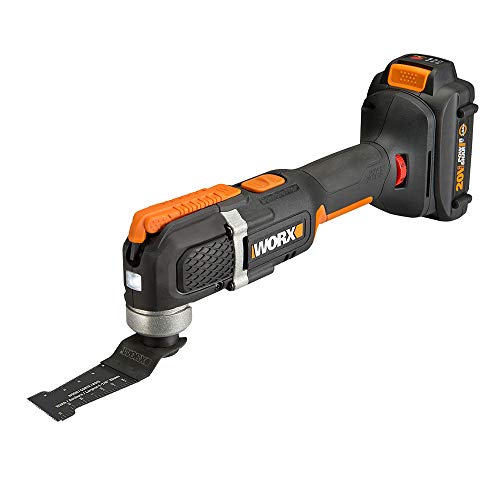
Strengths
- Extremely lightweight
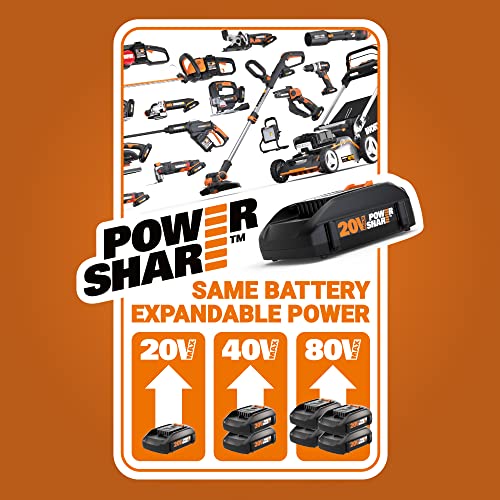
- Power Share compatible
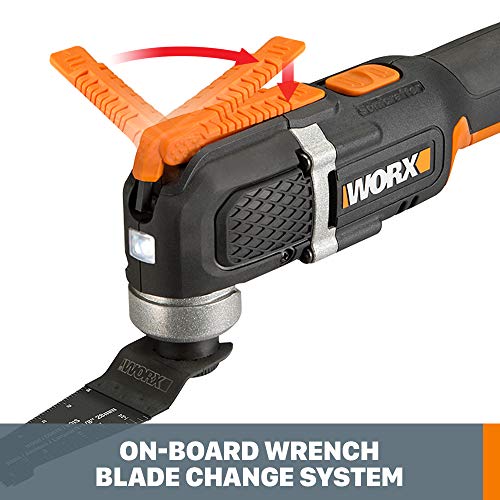
- Onboard wrench
Trade-offs
- Only 2 speed settings
- Lower torque
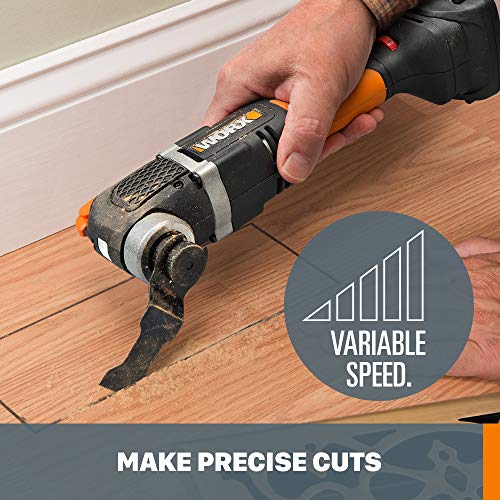
At just over 2 pounds, the Worx WX696L is one of the lightest in the group, and it shows in the comfort. If you’re doing overhead work or need to maneuver for long periods, this one wins on ergonomics. The 2-speed toggle (5,000 or 20,000 OPM) is simple but effective, and the onboard wrench means you’re never hunting for a tool during blade swaps.
Power Share compatibility is a big plus if you already own Worx tools. But owners note the two-speed range feels limited compared to 6-speed rivals. It’s not the most powerful, but for light sanding, grout removal, or quick cuts, the lightweight design reduces fatigue fast. I’d recommend this as a secondary tool for detail work.
Product photos

GALAX PRO 20V Oscillating Tool

Strengths
- Compact aluminum head
- Fast 45-minute charge
- Battery level indicator
Trade-offs
- Small battery capacity
- Less power for heavy tasks
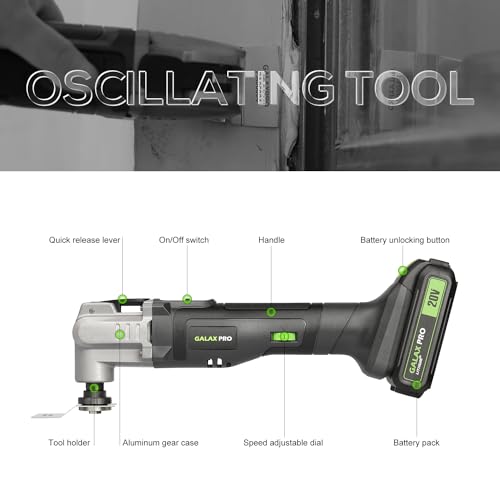
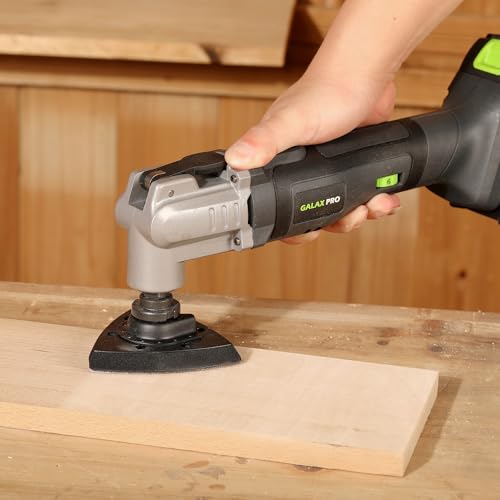
GALAX PRO went compact with this one, and it shows. The aluminum head is rigid and slim, letting you get into really tight spaces, think under cabinets or behind toilets. The 1.3Ah battery charges in just 45 minutes, which is a nice perk if you’re doing quick touch-ups. Owners like the real-time battery indicator, though the capacity is modest.
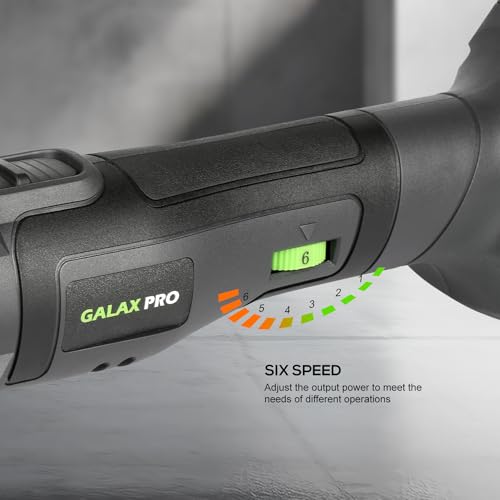
The 6-speed dial is useful, but the motor lacks the torque of higher-end models when cutting metal or thick wood. It’s best for detail work and light demolition. If you need a nimble second tool for tight spots, this one earns its place in the bag. Just don’t expect it to replace your main multitool.
Product photos


How We Chose These cordless oscillating multi tools
Rather than a hands-on lab test, my research for these recommendations focused on a detailed comparison of published specifications and features across numerous models. I then weighed owner reviews from major retailers alongside expert opinions from sites specializing in tool reviews. As someone who’s spent years around workshops and renovation projects, I applied my understanding of what makes a good oscillating tool – and what features truly matter in real-world use – to rank these options.
For cordless oscillating multi tools, runtime, power, and versatility were the biggest deciding factors. A powerful motor paired with a decent battery is critical for tackling a range of materials without bogging down. Versatility, achieved through variable speed settings and a wide range of compatible accessories, determines how many tasks one tool can handle. Ultimately, I prioritized tools that offered the best balance of these three elements for the intended use case.
Specifications reliably indicate motor power (voltage, amperage) and oscillation rate (OPM). However, I placed more weight on owner feedback regarding real-world performance, particularly battery life and build quality. Reputation also played a role; established brands with a history of durable tools were given consideration, as this often translates to better long-term reliability and support.
Choosing The Right cordless oscillating multi tools
I’ve spent years around these tools, and one thing is clear: they’re incredibly versatile. But with so many options, picking the right one takes some thought.
A good cordless oscillating multi-tool balances power with control. Look for a brushless motor for efficiency and runtime, a variable speed dial for material-specific performance, and a quick-change accessory system. Consider the battery voltage and amp-hour rating for sustained use, and prioritize models with features like LED work lights and vibration reduction for comfort and precision.
Motor Type and Power
The heart of any oscillating tool is its motor. Brushless motors are becoming standard and for good reason. They deliver significantly more power and longer runtimes compared to brushed motors, and they last longer too. Don’t get hung up on raw wattage though; a well-designed brushless motor in an 18V or 20V tool will often outperform a higher-voltage brushed model. Focus on the oscillations per minute (OPM) range. Most tasks are well-served by 10,000-20,000 OPM, but specialized work (like aggressive metal cutting) might benefit from higher speeds.
Accessory Compatibility and Change System
These tools are only as good as their accessories, and you’ll want flexibility. While some brands push their proprietary systems, look for tools that accept universal fit accessories. This opens up a much wider range of blades and attachments. Equally important, pay attention to how easily accessories change. Tool-free systems are a huge time saver, and a well-designed quick-change mechanism prevents frustrating fumbling.
- A basic tool-free system will use a lever or button.
- A more sophisticated system will incorporate a locking mechanism to prevent accidental blade release.
- Some kits include a thorough accessory set, which can be a great value, but make sure the included blades are actually useful for the projects you plan to tackle.
Ergonomics and Features
Oscillating tools vibrate, and prolonged use can be tiring. Look for models with vibration-dampening grips and auxiliary handles. An LED work light is also invaluable for illuminating tight spaces, and a variable speed dial is crucial for controlling the tool and preventing damage to materials.
A comfortable tool is a safe tool. Don’t underestimate the importance of a well-balanced design and features like rubberized grips to reduce fatigue.
Cordless Oscillating Multi Tools Compared
The following table provides a specification comparison of popular cordless oscillating multi tools to aid in your purchasing decision.
| Product Title | Voltage | Speed (OPM) | Brushless Motor | Oscillation Angle | Battery Included | Accessories |
|---|---|---|---|---|---|---|
| KIMO 20V Cordless Oscillating Tool | 20V | 5K-21K | Yes | 3° | Yes | 26-Piece Kit |
| DEWALT 20V MAX XR Oscillating Tool | 20V | N/A | Yes | N/A | N/A | N/A |
| WORKPRO 20V Brushless Oscillating Tool | 20V | Up to 19,000 | Yes | N/A | N/A | N/A |
| AVID POWER 20V Oscillating Multitool | 20V | 8K-18K | No | 2.8° | Yes | 16-Piece Kit |
| CRAFTSMAN V20 Oscillating Multi-Tool | 20V | N/A | No | N/A | N/A | N/A |
| Ryobi ONE+ 18V Oscillating Tool | 18V | Up to 20,000 | No | N/A | No | N/A |
| Worx WX696L Sonicrafter Multi-Tool | 20V | 5K-20K | No | N/A | N/A | N/A |
| GALAX PRO 20V Oscillating Tool | 20V | 5K-18K | No | N/A | Yes | 10-Piece Kit |
Frequently Asked Questions
What voltage is generally sufficient for most DIY tasks?
20V is typically enough for most homeowners and DIYers. While higher voltages offer more power, a quality 20V tool with a brushless motor will handle the majority of common cutting, sanding, and scraping tasks effectively.
Are universal fit accessories truly interchangeable between brands?
Yes, most tools accept universal fit accessories with the standard OIS (Oscillating Interface System). However, some brands may have slight variations, so it’s always wise to check online forums or owner reviews for confirmed compatibility before purchasing non-branded blades.
How important is a tool-free accessory change system?
It’s very important for saving time and frustration. A tool-free system lets you swap blades quickly and easily without needing wrenches or Allen keys, which is especially helpful during projects that require frequent accessory changes.
What oscillation angle should I look for?
A smaller oscillation angle (around 3 degrees) generally provides more precision and control. Larger angles deliver faster cuts but can be harder to manage, especially for detailed work or when using certain accessories.
Do brushless motors really extend runtime significantly?
Yes, brushless motors are more efficient than brushed motors, resulting in up to 50% longer runtime on a single battery charge. This is especially beneficial for larger projects or when working away from a power source.
The Bottom Line
Choosing a cordless oscillating multi-tool often comes down to balancing upfront cost with long-term performance and convenience. If you want a tool that will handle nearly anything you throw at it, the DEWALT 20V MAX XR Oscillating Tool stands out for its power and reputation for durability. It’s an investment, but one that should pay off with years of reliable service.
For those on a tighter budget, or needing a versatile starter tool, the KIMO 20V Cordless Oscillating Tool is a fantastic option. It includes a generous 26-piece accessory kit, and the brushless motor provides plenty of power for common tasks. Similarly, if you already use Ryobi ONE+ tools, their 18V Oscillating Tool is a logical addition to your collection, offering solid performance within an established battery ecosystem.
Ultimately, don’t get too caught up in chasing the highest OPM or the most advanced features. A comfortable grip, a quick-change accessory system, and a reliable motor are far more important than any single specification. Focus on finding a tool that feels good in your hand and is well-suited to the types of projects you will be tackling.
