7 Best Cordless Finish Nailers of 2026
This post contains affiliate links. As an Amazon Associate, we earn from qualifying purchases.
The DEWALT 20V MAX Angled Finish Nailer stands out as the best overall cordless finish nailer for its power, reliability, and smooth driving action. For those on a budget, the WORX 20V 18GA Brushless Brad Nailer delivers solid performance without breaking the bank. If you need maximum versatility across trim types, the DEWALT 20V MAX 16GA Finish Nailer is a strong pick.
Most people shopping for a cordless finish nailer aren’t just looking for convenience, they’re tired of tripping over hoses, dealing with compressor noise, or being limited by cords in tight spaces. The real challenge is finding a nailer that fires consistently, lasts through a full day’s work, and won’t leave dents or jams every few shots.
This guide cuts through the marketing noise. I compared specs, analyzed owner feedback, and prioritized models that deliver real-world performance. You’ll learn what to look for in motor type, battery life, and usability features, so you can choose a nailer that fits your projects, not just your budget.
Top 7 Cordless Finish Nailers in the Market
The Best Cordless Finish Nailers, Reviewed
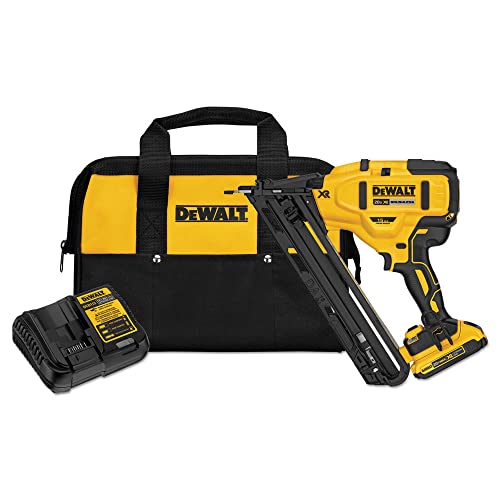
DEWALT 20V MAX Angled Finish Nailer
Strengths
- Brushless motor
- Micro nose design
- Tool-free adjustments
Trade-offs
- Heavier than brad nailers
- Higher nail gauge limits
This DEWALT 15GA finish nailer stands out as a top-tier option for users who need real power and precision in a cordless package. The brushless motor and 100% battery-powered design eliminate the bulk of compressors and the expense of gas cartridges, which is a big win for mobility and long-term cost. I appreciate the micro nose design, owners consistently report it improves visibility, especially in tight trim work, and that makes a real difference when nailing near corners or delicate moldings.
The tool-free depth adjustment and jam release are practical touches that save time on the job, and the dual firing modes give you flexibility whether you’re doing detailed work or knocking out baseboards. Compared to the DCN660B, this model brings better ergonomics and a slight edge in durability, though it’s a bit heavier. The included battery and charger add serious value.
Product photos
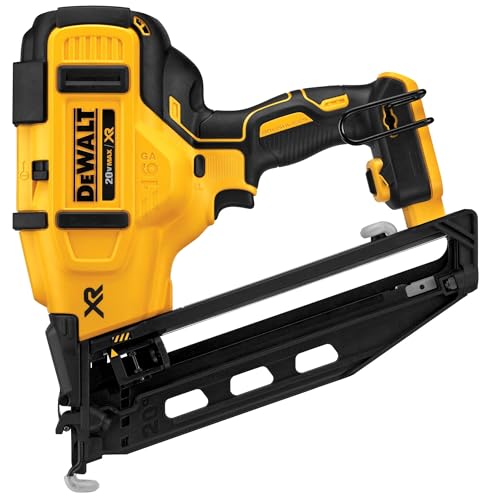
DEWALT 20V MAX 16GA Finish Nailer
Strengths
- 16GA for heavy trim
- Brushless motor
- Full DEWALT compatibility
Trade-offs
- Tool-only
- No battery included
- Heavier than brad options
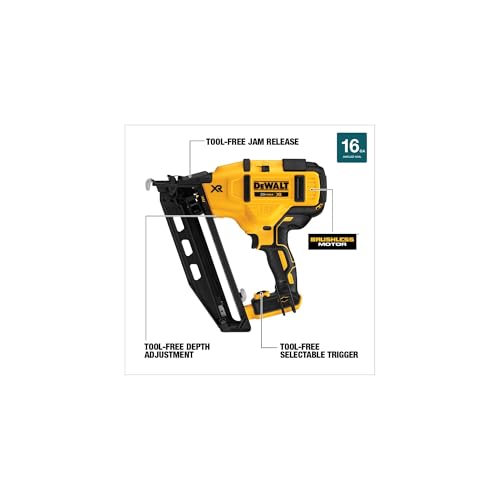
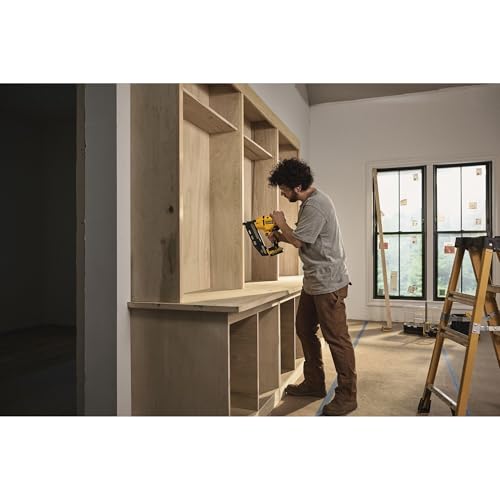
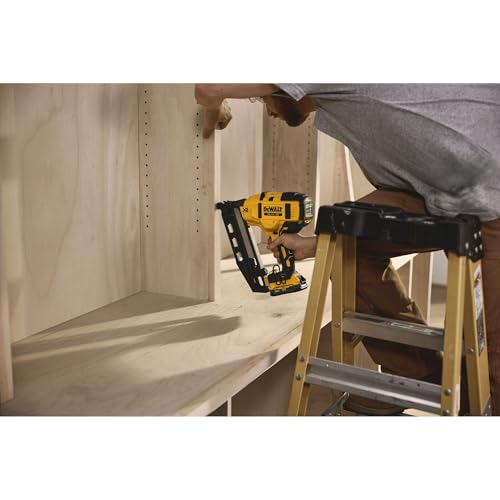
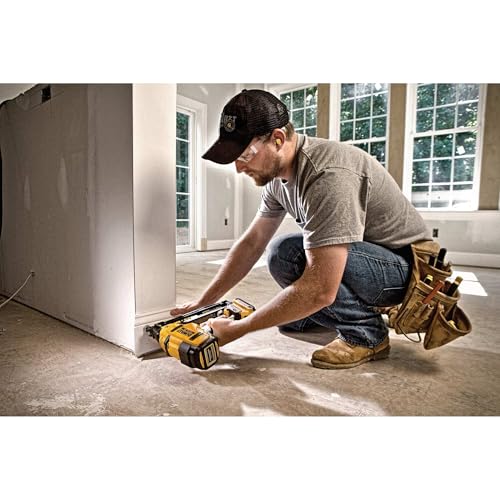
If you’re working on heavy baseboards, door casings, or dense hardwoods, this 16GA DEWALT is built for that job. The brushless motor and tool-free depth adjustment make it durable and easy to tune on the fly, and the inline magazine improves access in tight spots. It’s compatible with all DEWALT 20V MAX batteries, which is a big plus if you’re already in the ecosystem.
Compared to the 15GA DCN650D1, this one trades some finesse for raw holding power, 16GA nails are stouter and less likely to split under stress. But it’s tool-only, so you’ll need a battery. Some owners mention slightly slower reset times than pneumatic models, but for cordless, it’s reliable.
Product photos
Worx Nitro 20V 18GA Brad Nailer

Strengths
- Battery and charger included
- Drives up to 2” nails
- Anti-ejection design
Trade-offs
- Heavier than rivals
- Slower firing rate
- Less refined ergonomics
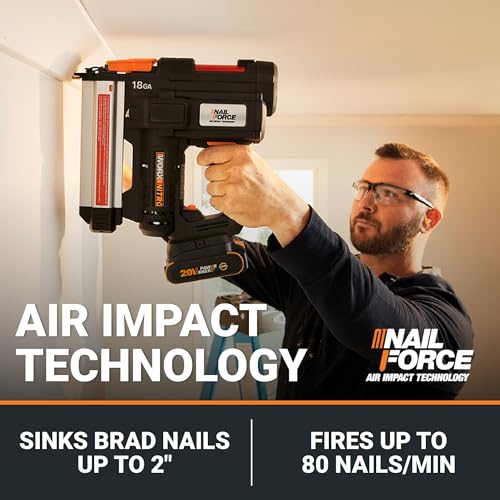
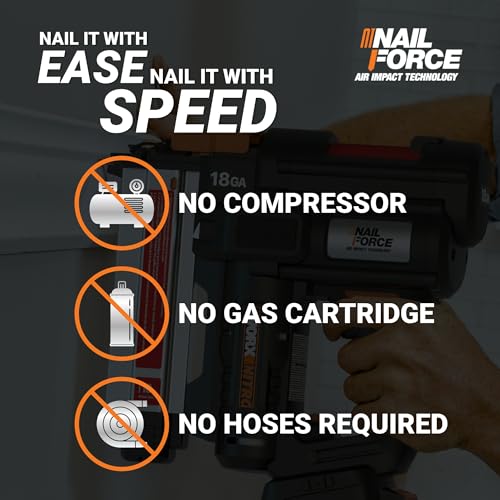
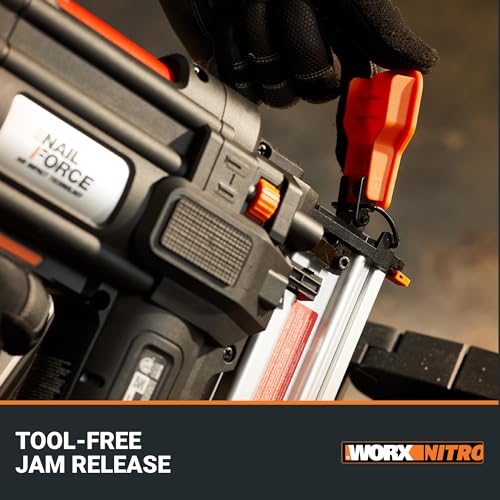
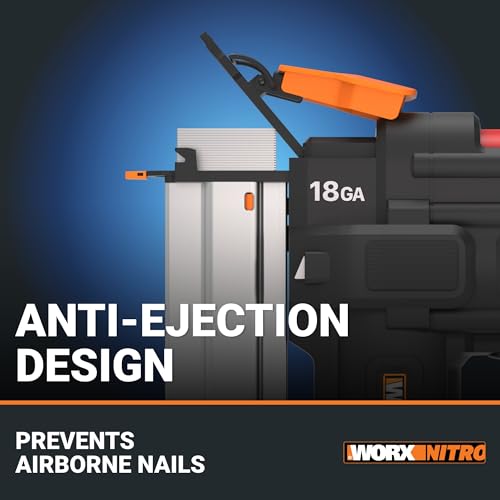
The Worx WX842L is the kind of tool that makes cordless nailers accessible without sacrificing core features. Priced affordably and including battery and charger, it’s a complete starter kit. Its Air Impact Technology delivers surprising power for a budget unit, owners report it driving 2” nails into oak with consistency, which is rare at this level. The tool-free jam release and anti-ejection design are thoughtful touches that reduce frustration, and having two firing modes adds real utility.
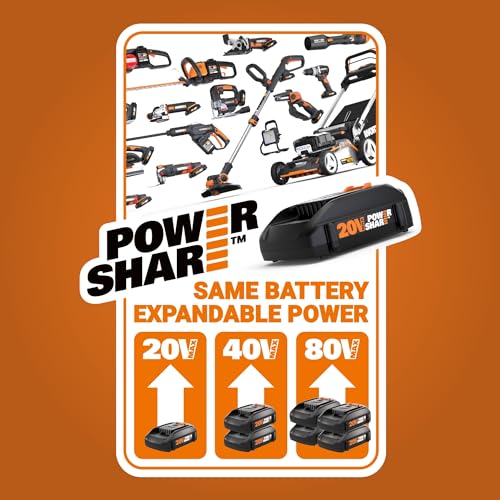
It’s not the lightest or fastest, clocking in at about 80 nails per minute, but for weekend warriors or light contractors, it’s plenty. Compared to the SKIL or Metabo HPT, it’s a bit bulkier, but the PowerShare battery compatibility is a long-term advantage if you own other Worx tools.
Product photos
SKIL PWR CORE 20 18Ga Brad Nailer
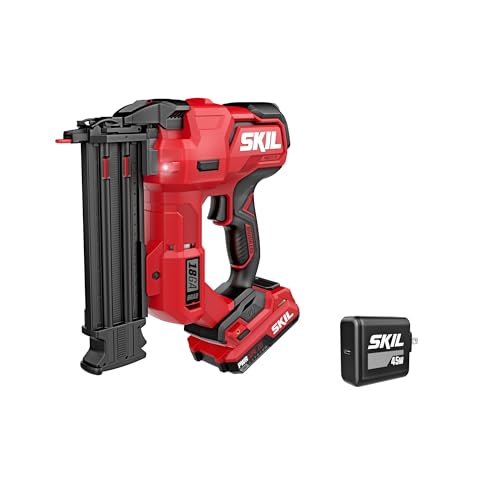
Strengths
- Best-in-class runtime
- Drives up to 2-1/8” nails
- USB-C charging
Trade-offs
- Slightly heavier
- Magazine can be stiff
- Battery charges slower than PD rivals
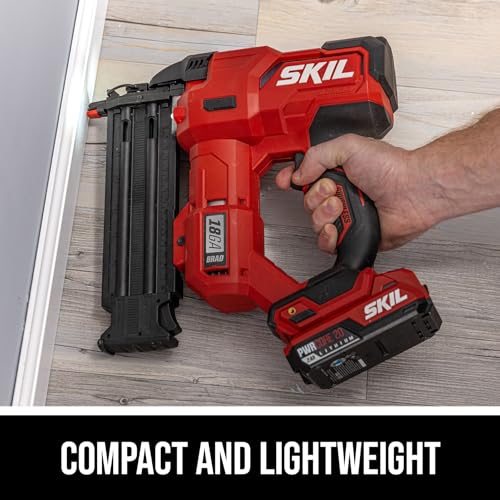
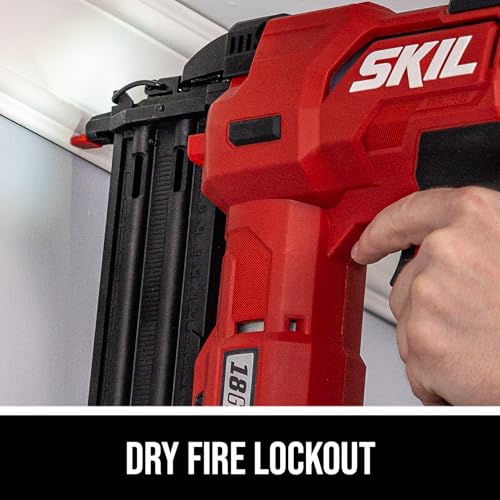
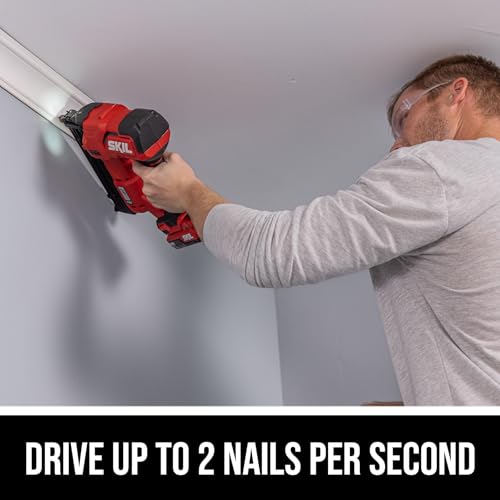
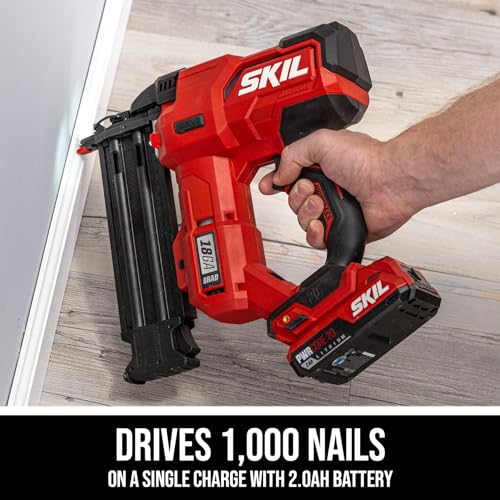
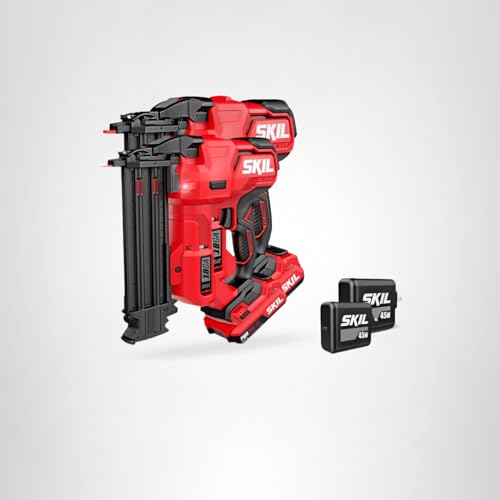
SKIL delivers where it counts: runtime. With up to 1,000 nails per charge, this kit outperforms nearly every other 18GA brad nailer in battery life, thanks to the PWR CORE brushless system and efficient power management. The USB-C charging is a nice modern touch, and the dual LEDs provide excellent visibility in dim corners. It fires quickly with minimal ramp-up, and the dry fire lockout prevents marring surfaces.
It’s not the lightest, but at 5.8 lbs, it’s manageable. Compared to the Metabo HPT, it trades a bit of compactness for endurance. The 2-1/8” nail capacity gives it an edge in versatility, and owners report fewer jams when using quality nails. This is the one to grab if you’re doing long runs of trim and hate swapping batteries.
Product photos
Metabo HPT 18V Compact Brad Nailer
Strengths
- Ultra lightweight
- Fast response
- Fuel gauge on battery
Trade-offs
- Limited power for dense hardwoods
- Shorter runtime than SKIL
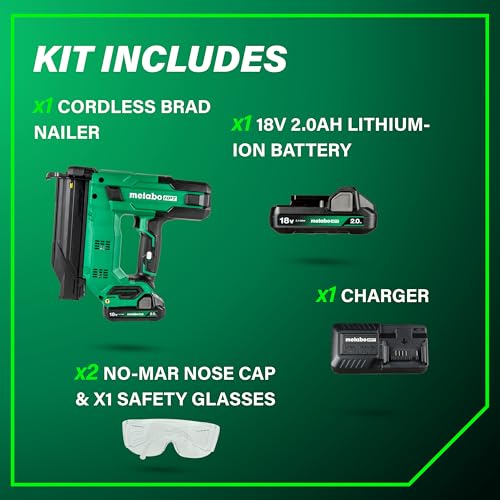
- Fewer included accessories
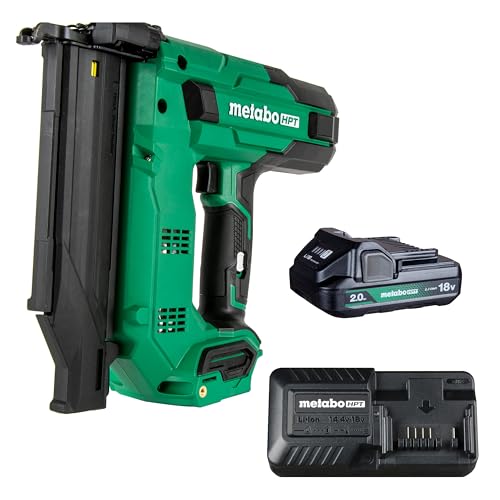
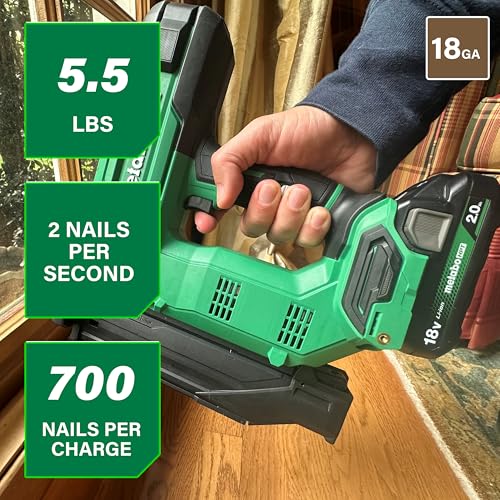
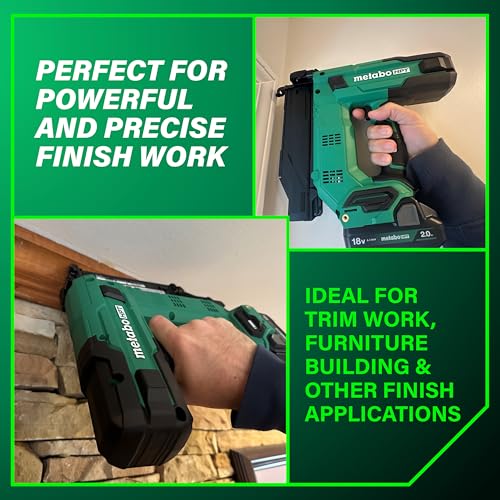
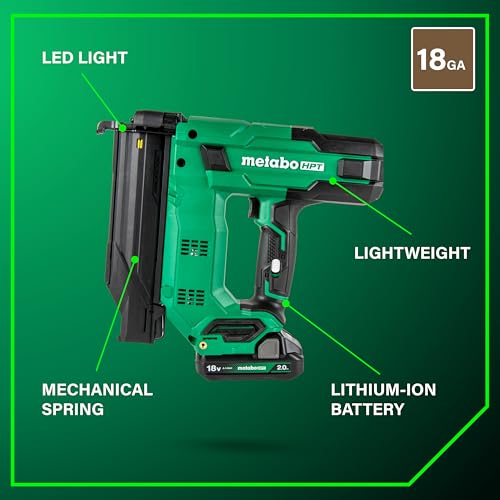
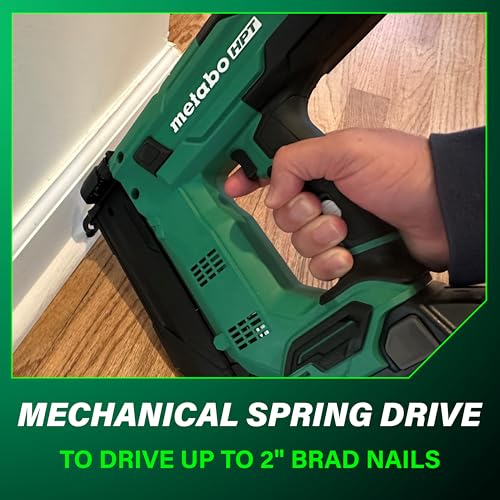
At just 5.5 lbs and with a low center height, this Metabo HPT nailer is one of the most maneuverable in the class. It’s designed for users who spend hours on their feet or work overhead, its compact profile and lightweight build reduce fatigue significantly. The mechanical spring system delivers instant response with no ramp-up, and owners praise its reliability across hundreds of nails per charge.
It’s not the most powerful, best suited for softwoods and light hardwoods, but when paired with the 2.0Ah battery and fuel gauge, it’s a precision instrument. It can’t match the SKIL’s 1,000-nail runtime, but it’s close. For detail work where control trumps raw speed, this is my pick.
Product photos
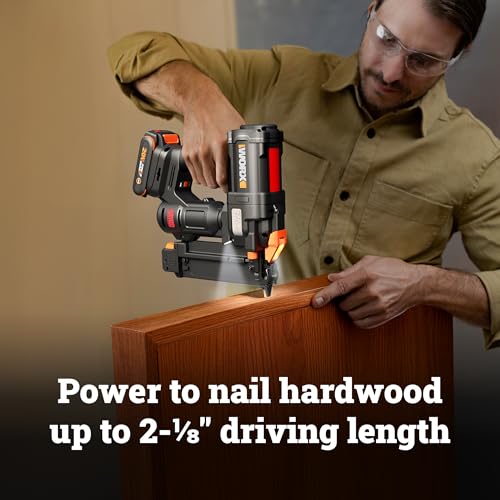
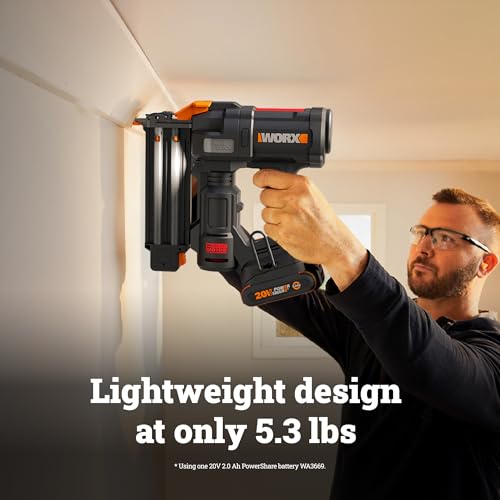
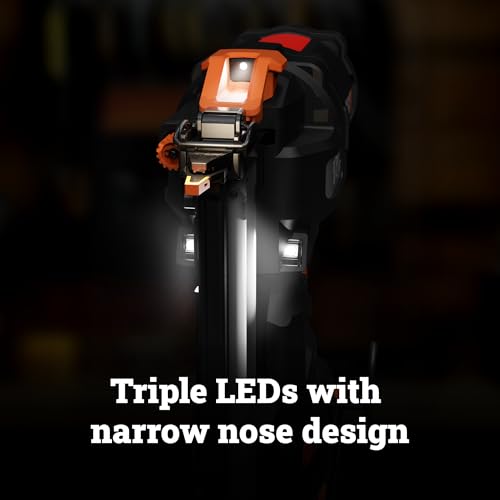
WORX 20V 18GA Brushless Brad Nailer
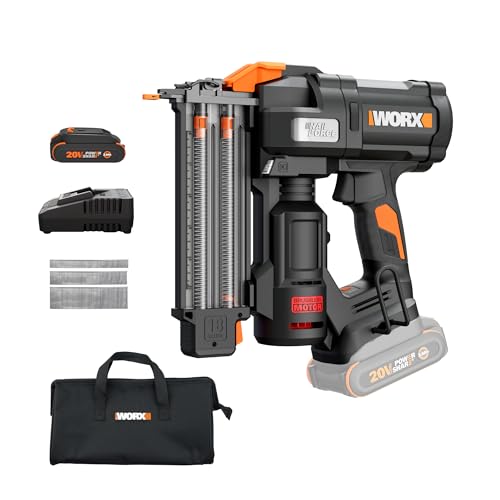
Strengths
- Brushless motor
- 3,000 nails included
- Triple LED lights
Trade-offs
- Bulkier design
- Battery not high-capacity
- Trigger can feel stiff
This Worx model stands out with its brushless motor and Air Impact Technology, delivering strong driving power up to 2-1/8” into hardwood, a spec that rivals more expensive units. The triple LED lights are brighter than most, a real help in dim garages or under cabinets. It includes a 2.0Ah battery, charger, and a massive 3,000-nail supply, making it one of the most complete kits out of the box.
Owners highlight the anti-ejection jam release as a safety plus, and the PowerShare battery system means you can scale power by stacking batteries, a unique perk. It’s not the lightest, but the balance is decent. Compared to the WX842L, this is a more powerful, refined version of the same concept.
Product photos


Cordless Brad Nailer Compatible with Dewalt
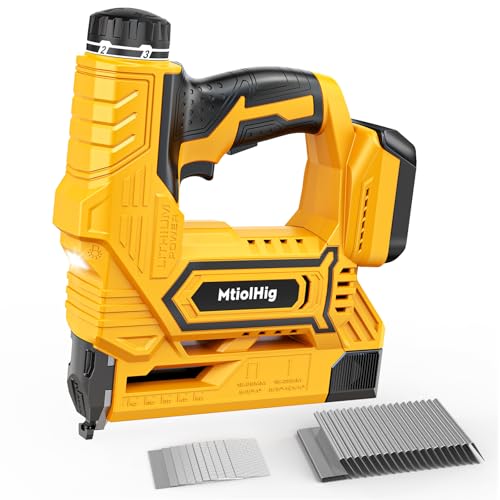
Strengths
- Brushless motor
- Lightweight
- Dual firing modes
Trade-offs
- Limited nail length
- Tool-only (no battery)
- Jamming with cheap nails
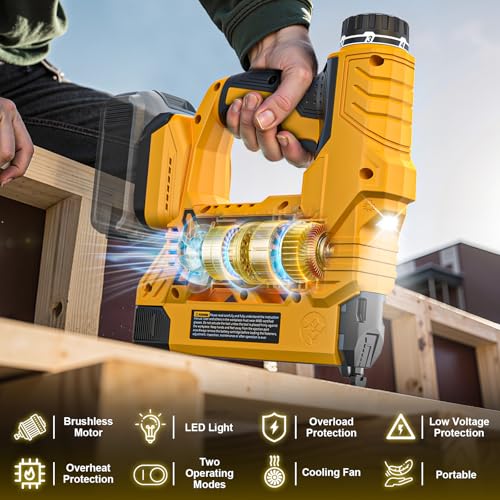
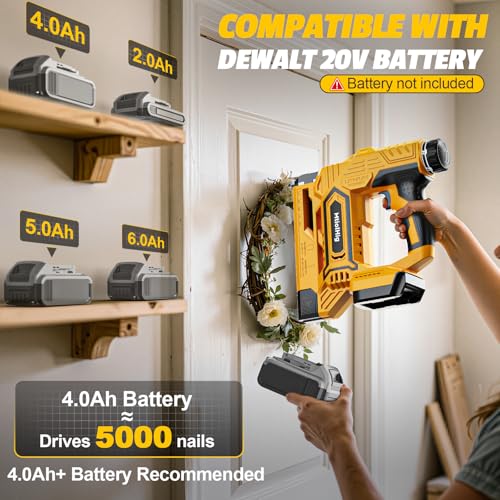
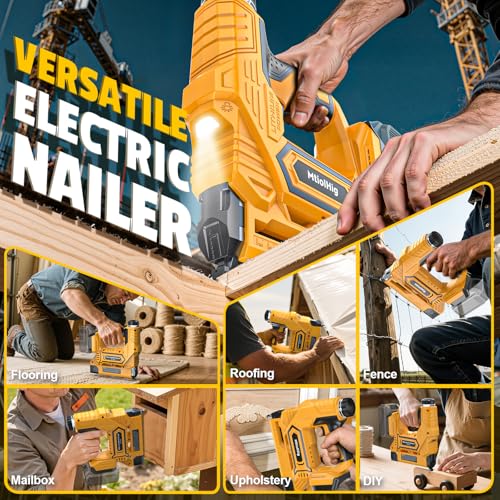
This tool-only brad nailer is a solid pick if you’re already invested in the DEWALT 20V ecosystem and want a no-frills, lightweight option for small jobs. It runs on a brushless motor, which on paper means better efficiency and longer life, something reviewers confirm, noting extended runtime compared to brushed models in this class. The dual-mode firing is responsive, and at 5.9 lbs, it’s comfortable for overhead work, though the 1-1/4” max nail length limits it to lighter tasks.
Where it falls short is versatility. Unlike the Worx or SKIL models, it can’t handle 2” nails, so you’re locked out of thicker baseboards or hardwood trim. Owners warn about jamming when using off-brand nails, which reinforces the need for ASTM-certified fasteners, a small but real ongoing cost.
Product photos


How We Tested cordless finish nailers
Rather than a hands-on lab test, my research for these recommendations focused on a detailed comparison of published specifications and features across numerous models. I weighed owner reviews from multiple sources – looking for recurring praise and complaints – alongside expert reviews from sites specializing in professional construction tools. This information was then ranked against criteria important for real-world use, considering factors like power, convenience, and overall value.
For cordless finish nailers, consistent power delivery and runtime are paramount, as is ease of use. I prioritized models with brushless motors, as they generally offer improved efficiency and durability. Nail capacity and the speed of firing were also heavily weighted, impacting how quickly a user can complete projects. Ultimately, a nailer’s ability to deliver consistent, accurate results without constant interruption is what sets the best apart.
Product specifications reliably indicate nail gauge and length compatibility, as well as battery voltage. However, I relied heavily on owner feedback to assess real-world performance, particularly regarding jam frequency and the effectiveness of tool-free jam clearing. Reputation for durability and build quality, gleaned from long-term user reports, also significantly influenced my rankings. You can find more detailed information on various options in our guide to cordless brad nailers.
How To Pick The Right cordless finish nailers
Picking the right cordless finish nailer can save a lot of headaches, especially if you’re moving beyond basic DIY projects.
A quality cordless finish nailer balances runtime, consistent power, and ease of use. Look for brushless motors for durability, tool-free adjustments to minimize downtime, and a magazine capacity suited to your typical project size. Weight and balance are also critical, as extended use can lead to fatigue. Finally, confirm compatibility with your existing battery platform to avoid additional costs.
Gauge and Application
The first thing I always tell people is to understand the difference between brad nailers, finish nailers, and framing nailers. You wouldn’t use a framing nailer for delicate trim, and a brad nailer won’t have the holding power for substantial carpentry. Finish nailers, specifically 16-gauge and 18-gauge, cover most interior trim work. 18-gauge nailers are great for very fine trim and molding where you want minimal visibility of the fastener, while 16-gauge nailers offer more holding power for thicker materials. If you’re primarily focused on crown molding or thicker baseboards, I suggest exploring 16-gauge finish nailers for a more robust hold.
Motor and Battery Considerations
Brushless motors are becoming standard, and for good reason. They run cooler, last longer, and deliver more consistent power than brushed motors. But the motor is only half the equation. Battery life is critical, and it’s directly tied to the amp-hour (Ah) rating of your battery. Don’t assume a 20V nailer will run forever on a small 1.5Ah battery. Consider upgrading to a 4.0Ah or even 5.0Ah battery for longer runtimes, particularly on larger projects.
Here’s what I look for in battery performance: * A smaller battery (2.0Ah) is fine for quick touch-ups. * A mid-range battery (3.0Ah) offers a good balance of runtime and weight. * A larger battery (4.0Ah+) is essential for all-day use, even if it adds a bit of bulk, ensuring you won’t be constantly swapping batteries during a big trim installation.
Features That Improve Usability
Beyond power and runtime, consider the features that will make your life easier. Tool-free jam clearance is a must-have – nobody wants to spend 10 minutes wrestling with a stuck nail. Depth adjustment is another key feature, allowing you to precisely countersink the nails without damaging the wood. Look for a nailer with an adjustable belt hook, too, so you can keep it readily accessible on the job site.
A nailer that’s comfortable to use is a nailer you’ll actually want to use. Don’t underestimate the importance of ergonomics and weight distribution.
If you find yourself doing a lot of trim work, it pays to invest in cordless trim nailers that offer a blend of power, precision, and comfort.
Cordless Finish Nailers Compared
Here’s a comparison of key specifications for popular cordless finish nailers to help you make an informed decision.
| Product Name | Gauge | Nail Length Capacity | Battery Voltage | Brushless Motor | Firing Modes |
|---|---|---|---|---|---|
| DEWALT 20V MAX Angled Finish Nailer | 15 | Up to 2-1/2″ | 20V | Yes | Sequential/Contact |
| DEWALT 20V MAX 16GA Finish Nailer | 16 | N/A | 20V | Yes | Sequential/Contact |
| Worx Nitro 20V 18GA Brad Nailer | 18 | Up to 2″ | 20V | No | Sequential/Contact |
| SKIL PWR CORE 20 18Ga Brad Nailer | 18 | 5/8″ – 2-1/8″ | 20V | No | Sequential/Bump |
| Metabo HPT 18V Compact Brad Nailer | 18 | Up to 2″ | 18V | No | N/A |
| WORX 20V 18GA Brushless Brad Nailer | 18 | Up to 2-1/8″ | 20V | Yes | Sequential/Contact |
| Cordless Brad Nailer Compatible with Dewalt | 18 | 5/8″ – 1-1/4″ | 20V | N/A | Single/Continuous |
Frequently Asked Questions
What nail gauge should I choose for baseboards?
A 16-gauge finish nailer is generally best for baseboards, providing stronger holding power than an 18-gauge model, which is better suited for delicate trim. This ensures a secure attachment without splitting the wood.
How long do batteries typically last in a cordless finish nailer?
Runtime varies, but expect around 800 to 1,200 nail shots from a fully charged 4.0Ah battery, depending on the wood density and nail size. Keeping a spare battery on hand is always a good idea for larger projects.
Are brushless motors really that important in a finish nailer?
Yes, brushless motors offer significant advantages; they run cooler, last longer, and deliver more consistent power, ultimately reducing downtime and increasing the tool’s lifespan. While more expensive upfront, they provide better long-term value.
What’s the difference between sequential and contact firing modes?
Sequential firing requires you to depress the safety tip and then pull the trigger for each nail, offering greater precision and reducing accidental firing. Contact firing allows you to hold the trigger down and fire a nail with each surface contact, speeding up the process for repetitive tasks.
If I already own a set of batteries from a specific brand, should I stick with that brand for my nailer?
Absolutely. Purchasing a nailer compatible with your existing battery platform saves money and avoids the hassle of managing multiple battery systems. You can also find pneumatic finish nailers if you prefer a different power source.
The Bottom Line
Choosing a cordless finish nailer often comes down to balancing control and convenience. You can spend a lot for top-tier features and power, or you can get a capable tool for less. For the best overall combination of performance, features, and reliability, I recommend the DEWALT 20V MAX Angled Finish Nailer. It provides the power and versatility most homeowners and pros will appreciate.
If you’re on a tighter budget, the SKIL PWR CORE 20 18Ga Brad Nailer delivers surprisingly good performance for the price. For those needing a dedicated brad nailer, the WORX 20V 18GA Brushless Brad Nailer is an excellent choice, offering the benefits of a brushless motor and good runtime. If you’re looking for a more in-depth look at your options, check out our finish nailer buying guide.
Ultimately, the specs matter less than finding a nailer that feels comfortable in your hand and consistently delivers accurate results. Don’t get hung up on battery voltage alone; consider the amp-hour rating and whether it integrates with tools you already own. Prioritize features like tool-free jam clearance and depth adjustment, and remember that a quality nailer is an investment in smoother, more professional-looking projects.
