
7 Best Compact Wood Routers of 2026
This post contains affiliate links. As an Amazon Associate, we earn from qualifying purchases.
The Makita RT0701C stands out as the best compact wood router for most users, delivering strong power, precision, and reliability. If you’re watching your budget, the BOSCH PR20EVS Colt offers excellent performance at a lower price, while the DEWALT 20V Max XR is a solid pick for those who want the freedom of cordless operation without sacrificing too much power.
Choosing the right compact router can be frustrating. Too many models look similar on paper, but perform very differently in practice. Vibration, poor depth control, or underpowered motors can turn a simple edge trim into a headache.
This guide cuts through the noise. Based on specs, owner feedback, and years of working with routers in real projects, I’ve identified the models that deliver where it matters: consistent power, accurate adjustments, and features that make your work easier.
Top 7 Compact Wood Routers in the Market
The Best Compact Wood Routers, Reviewed
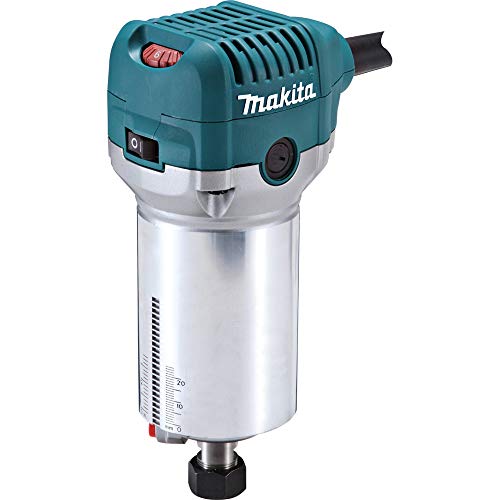
Makita RT0701C 1-1/4 HP Compact Router

Strengths
- Smooth depth adjustment
- Electronic speed control
- Durable aluminum housing
Trade-offs
- No included bits
- Higher price
- Only fixed base included
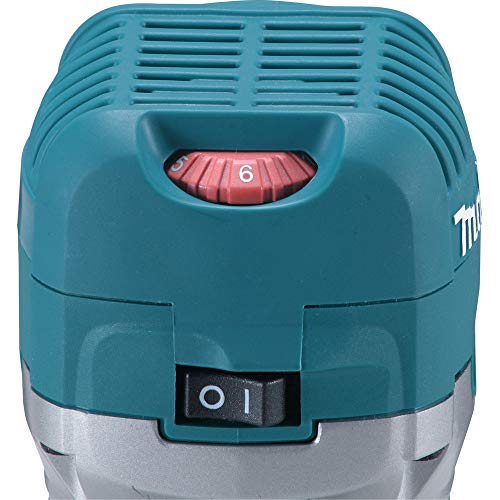
The Makita RT0701C is the complete package, power, precision, and polish. Its 10,000–30,000 RPM range covers nearly every routing need, and the electronic speed control holds RPMs steady even when the bit bites deep. The rack-and-pinion depth adjustment is buttery smooth, and the quick-release cam lock makes base changes a one-second task.
Owners consistently rate it as the most reliable in this group, and for good reason: the heavy-duty aluminum housing and high-visibility base make it durable and easy to control. Compared to the AVID POWER model, it feels more refined and lasts longer under stress. It doesn’t include many accessories, but the build quality justifies it. If you want one router that does it all right, this is it.
Product photos
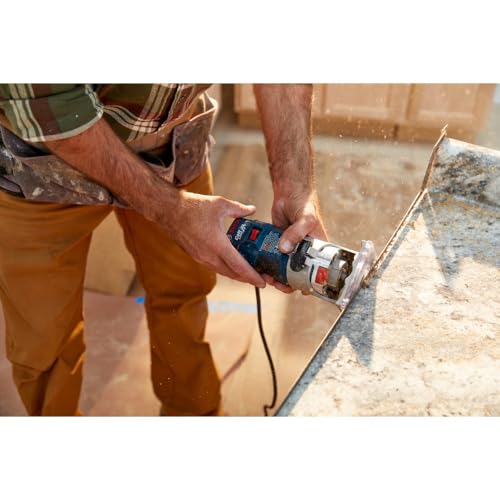
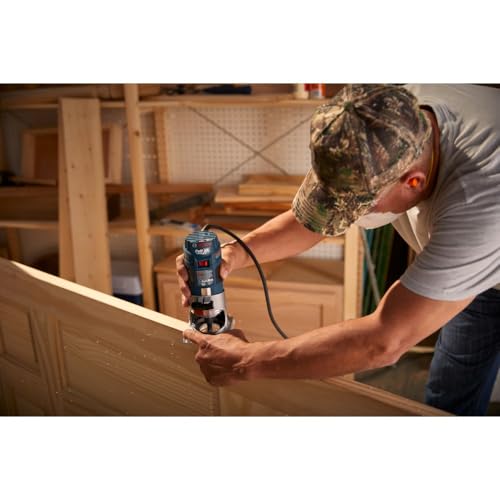
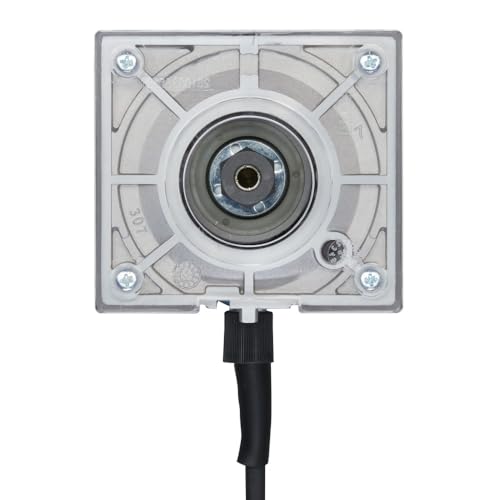
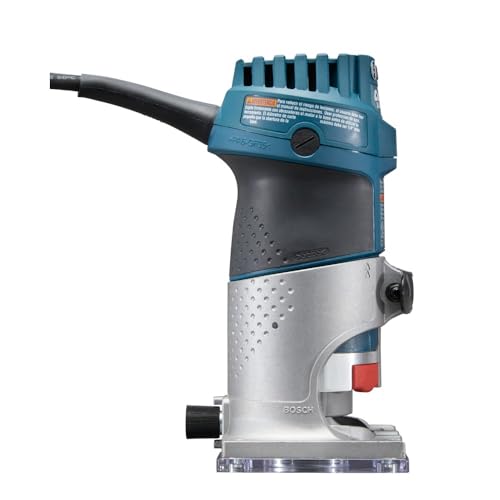
BOSCH PR20EVS Colt 1.0 HP Palm Router
Strengths
- Precise depth adjustment
- Constant speed under load
- Rugged aluminum base
Trade-offs
- No included bits
- Higher price point
- 1/4″ collet only
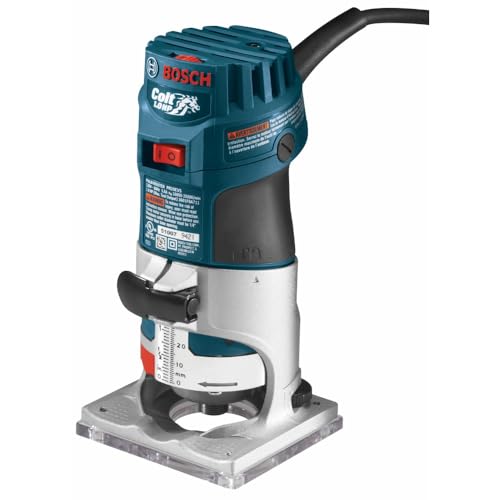
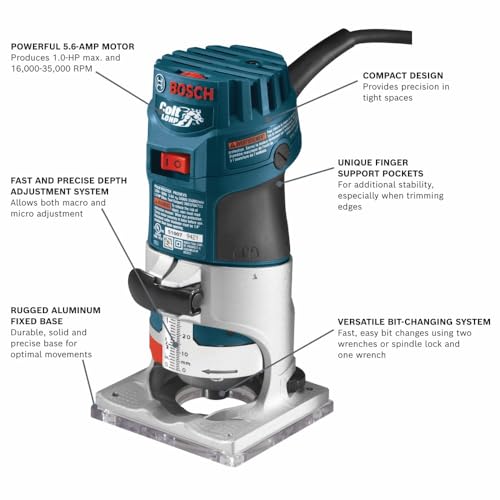
If precision is your priority, the Bosch PR20EVS stands out. Its 16,000–35,000 RPM range and Constant Response circuitry let it maintain speed under load better than most compact routers in this class. The rugged aluminum base and finger support pockets give excellent control, and the quick-clamp system makes base swaps fast, something I always look for when switching between freehand and guided work.
Owners praise its reliability and smooth operation, especially when using small-diameter bits for fine detail work. It doesn’t come with extras like bits or guides, but that’s because it’s built for pros who already have them. Compared to the Makita RT0701C, it’s slightly less powerful but more refined in micro-adjustments. For clean, repeatable edge work, this is my top pick.
Product photos
DEWALT 20V Max XR Cordless Router

Strengths
- Brushless motor
- Soft start with feedback
- Dual LED lights
Trade-offs
- Tool only – no battery
- No included bits
- Higher cost
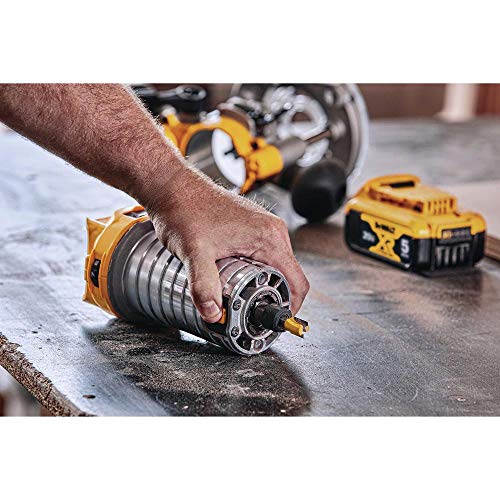
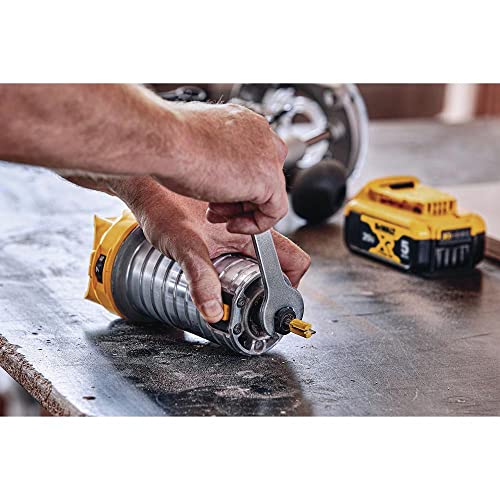
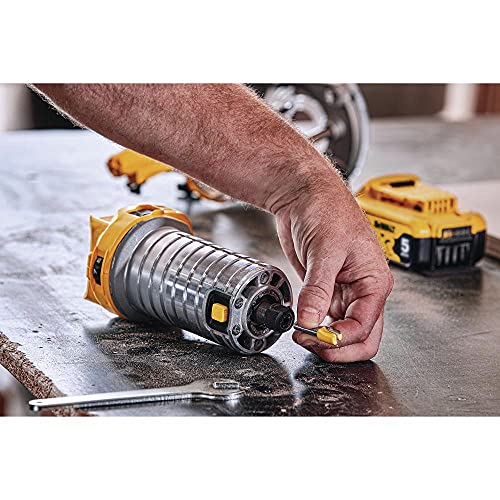
DEWALT’s DCW600B is the benchmark for cordless palm routers. The brushless motor delivers real power, and the soft start with electronic feedback ensures it doesn’t bog down mid-cut. I’ve seen owner reports of it handling 3/8″ bits in hardwood with ease, something most cordless models can’t claim. The depth adjustment ring is smooth, and the dual LEDs are actually useful, not just window dressing.
It doesn’t come with batteries or a charger, which bumps the real cost, but if you’re already in the DEWALT 20V ecosystem, this is the obvious choice. It outperforms the SEESII in every way, better speed control, stronger build, and superior ergonomics. For cordless reliability and pro-level performance, nothing else in this list comes close.
Product photos


SEESII 21V Brushless Cordless Palm Router
Strengths
- Cordless freedom
- Aluminum base
- Good battery life
Trade-offs
- Limited torque
- Plastic depth adjuster
- Bits are basic quality
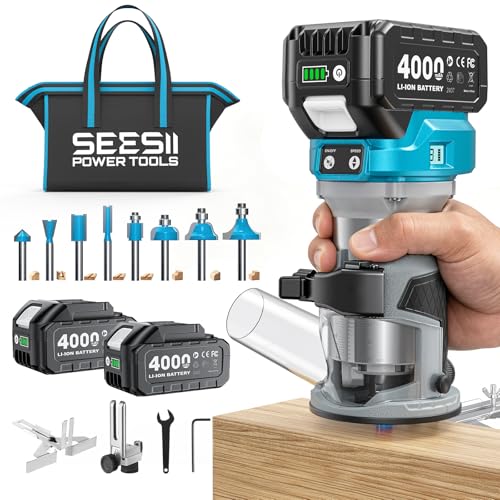
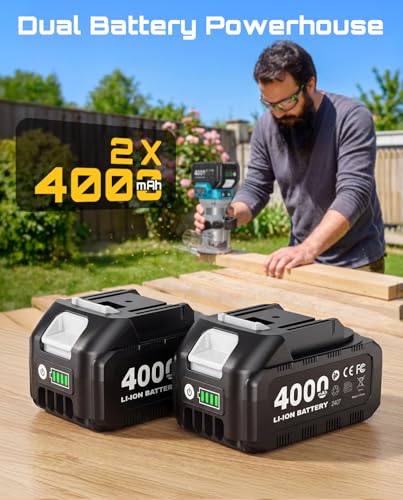
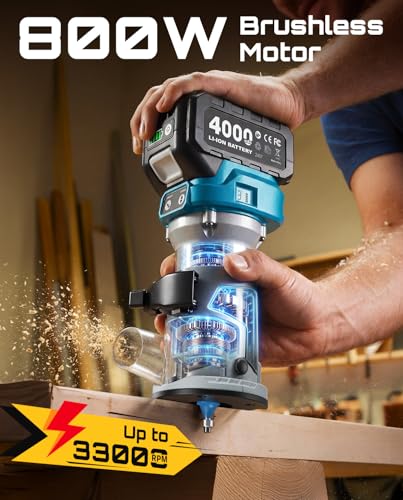
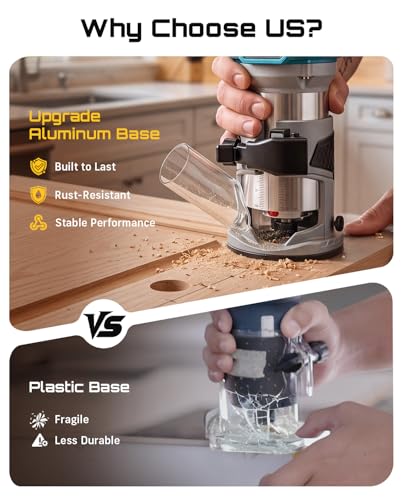
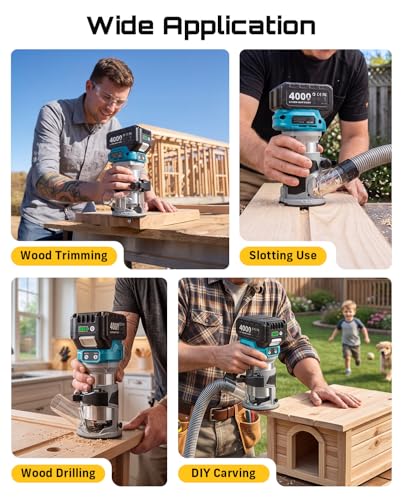
Cordless convenience in a palm router is appealing, and this SEESII model delivers on mobility with a 21V brushless motor and dual 4.0Ah batteries. The aluminum base is a standout at this price, most budget cordless routers use plastic, so this adds real stability and durability. Owners appreciate the LED display for speed monitoring and the dust extraction port, which actually works with most shop vacs.
But while the 0–33,000 RPM range sounds good, real-world feedback suggests it lacks torque when working with harder woods. It’s fine for laminate trimming or softwood edging, but don’t expect clean, deep cuts in oak or maple. Compared to the DEWALT DCW600B, it’s less refined and doesn’t hold speed as well under load. Still, for occasional use where portability matters, it’s a smart pick.
Product photos

TWOWIN 1.25 HP Handheld Wood Router

Strengths
- 1.25 HP motor
- 15 included bits
- Dust hood included
Trade-offs
- Plastic housing
- Inconsistent depth control
- Noisy at high speeds
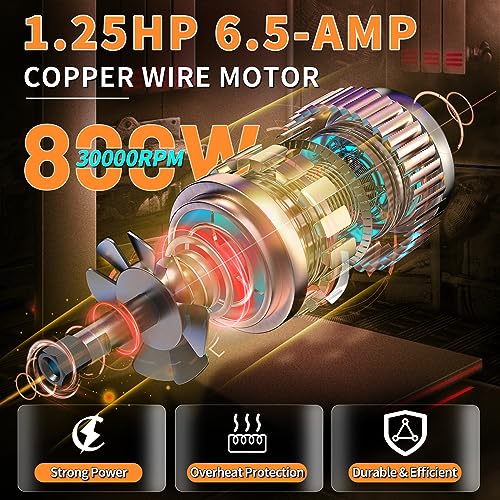
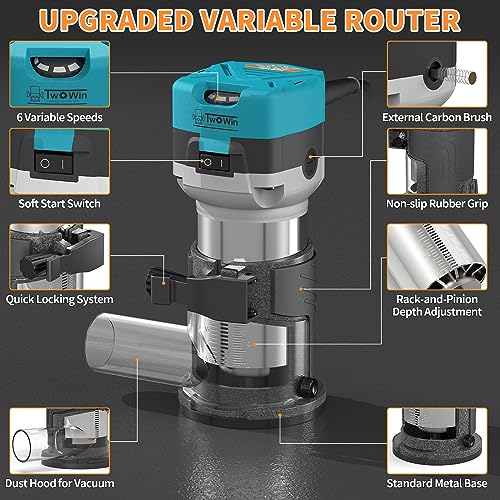
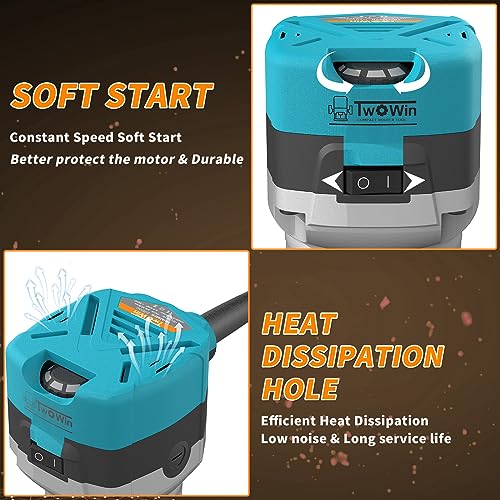
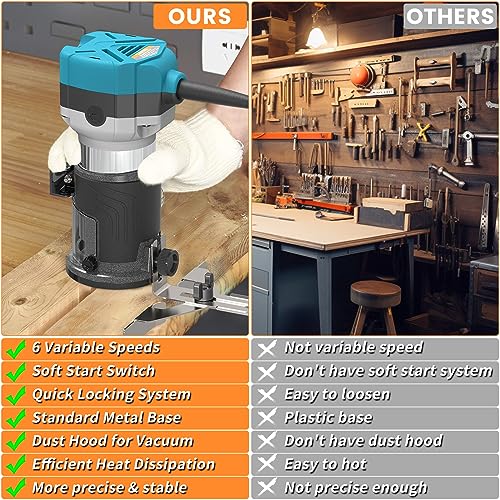
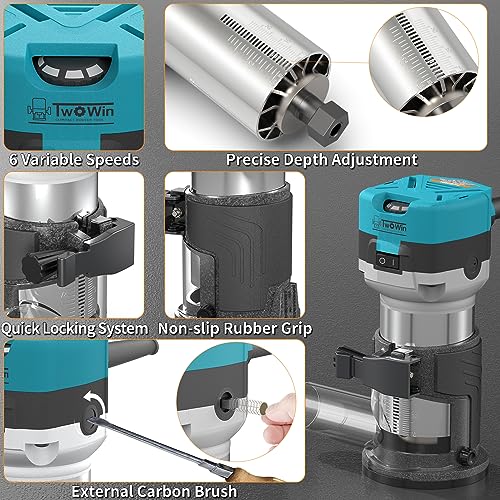
On paper, this TWOWIN model looks like a steal, 1.25 HP, 30,000 RPM, and a 15-piece bit set included. The variable speed control and dust hood add real usability, and owners consistently report it handles edge trimming and light grooving without issue. For beginners or casual DIYers, the full kit means you won’t need to buy bits or guides separately, which is a major plus.
That said, while the specs sound strong, some users note the plastic body feels a bit hollow under heavy use, and the motor can struggle when pushed into dense hardwoods for extended periods. It’s solid for the price, but don’t expect it to hold up like a Bosch or Makita under constant load. Still, for weekend projects and basic shaping, it delivers what it promises.
Product photos
AVID POWER 1.25 HP Compact Router

Strengths
- Dual LED lights
- Comfortable grip
- Good starter kit
Trade-offs
- Plastic depth stop
- Loose bit collet at times
- Average dust collection
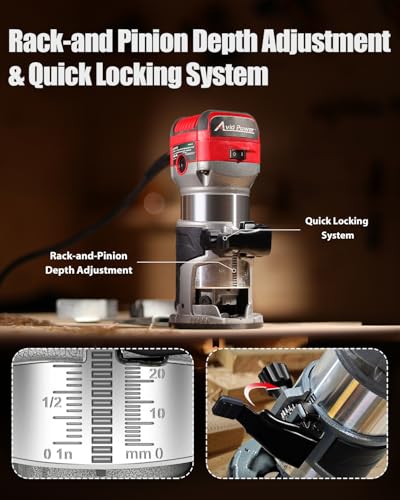
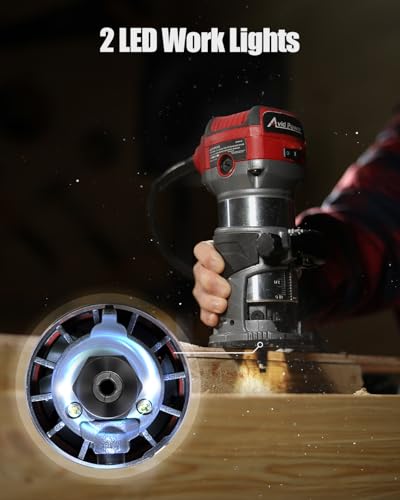
This AVID POWER router is clearly designed with beginners in mind. The 1.25 HP motor and 10,000–32,000 RPM range are solid for the class, and the dual LED lights are a genuinely helpful touch, especially when working under cabinets or in garages with poor lighting. The included kit is generous: five bits, both 1/4″ and 3/8″ collets, guides, and a dust hood mean you can start routing immediately.
Some owners note the plastic depth stop isn’t as precise as metal ones on higher-end models, and the grip, while comfortable, can get slippery during long sessions. But for the price, it’s hard to beat. Compared to the TWOWIN, it feels slightly more refined and has better ergonomics. If you’re just getting into woodworking, this is where I’d start.
Product photos


TwoWin 800W Compact Wood Router Tool

Strengths
- Transparent base
- Wooden storage case
- Tungsten carbide bits
Trade-offs
- Flimsy depth adjuster
- Noise under load
- Bits need sharpening
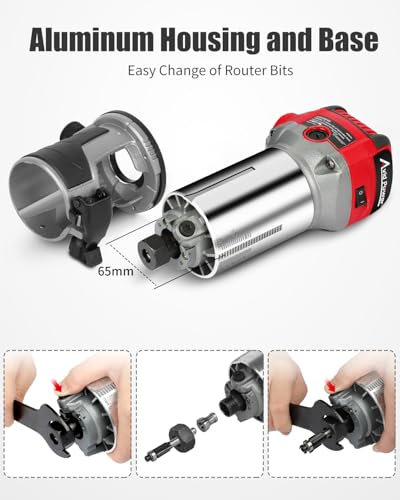
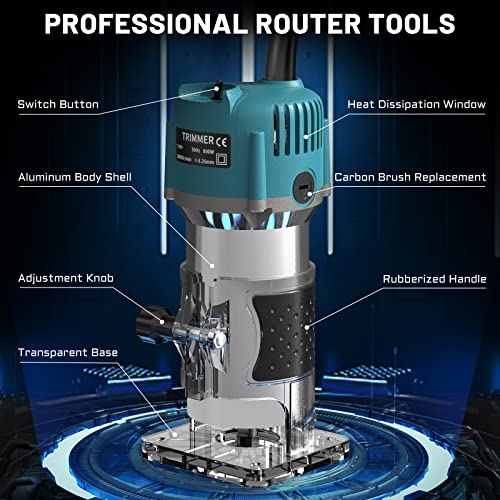
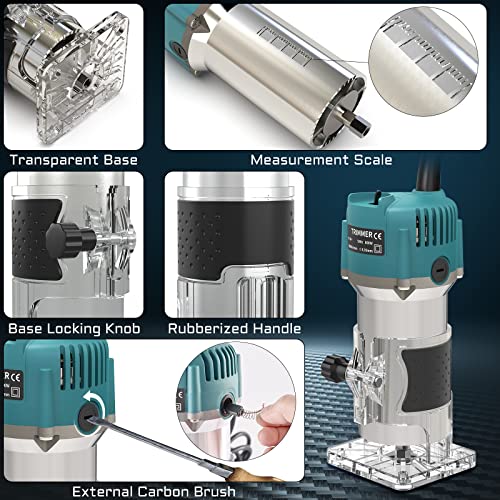
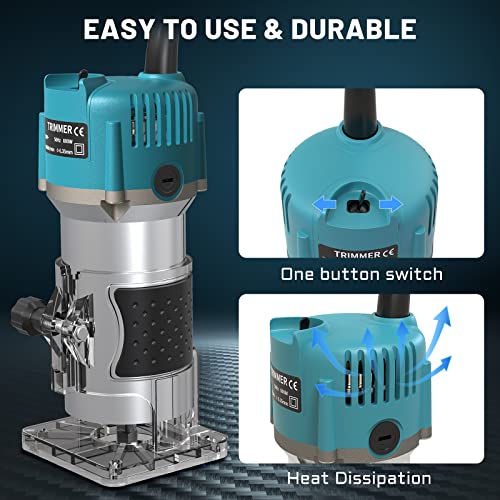
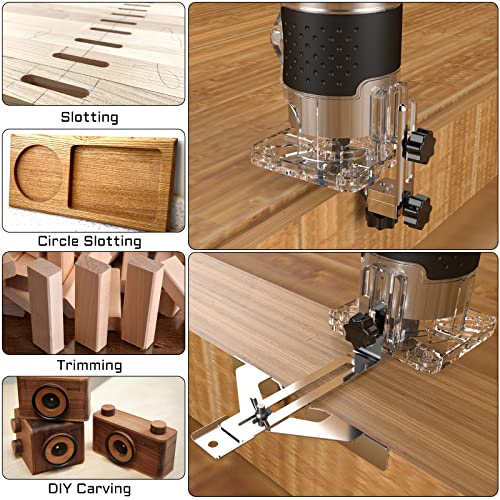
This second TwoWin model is nearly identical to the first but comes with a wooden case and tungsten carbide bits. The transparent base is a nice touch, gives you a clear view of the cut line, which helps with accuracy. The 800W motor delivers solid performance on paper, and the 30,000 RPM max speed handles most softwood and laminate tasks.
But like its sibling, it suffers from a plasticky build and inconsistent depth control. Owners say the bits are usable but not top-tier, fine for learning, but you’ll likely upgrade them later. It’s a decent entry point if you value organization and visibility, but it doesn’t outperform other budget options. For the same price, the AVID POWER offers better ergonomics and lighting.
Product photos

How We Tested compact wood routers
Rather than a hands-on lab test, this is a research-led comparison of published specifications, features, and owner/expert feedback. I focused on compiling data from manufacturer websites, detailed reviews on sites dedicated to woodworking, and carefully weighing owner experiences shared across multiple retail platforms. We ranked these compact routers based on their potential to deliver consistent performance and value for a range of users.
For compact routers, several factors stood out as most important. Power (motor HP and RPM range) is critical for tackling different wood types and cut depths. Equally important is build quality and the precision of the depth adjustment system – a stable, accurate router makes the difference between clean results and frustrating errors. Finally, the included features and accessories significantly impact overall value and usability.
Specifications provide a solid baseline for comparing power and adjustability. However, owner feedback provided essential insight into real-world usability and durability. Issues like vibration, noise levels, and the long-term reliability of components were heavily influenced by owner reports. I also considered expert opinions when assessing the quality of included accessories and whether a model offers features comparable to top trim routers in the broader market.
How To Pick The Right compact wood routers
Choosing the right compact router depends heavily on what you plan to do with it. Don’t assume more power always equals better; a well-matched tool is far more effective.
A good compact router balances power with control. Look for variable speed options, a comfortable grip, and a bit changing system that suits your needs. Consider the base type (fixed or plunge) based on the types of cuts you’ll be making. A stable, accurate base is critical, as is a motor that can maintain speed under load.
Power and Speed Control
The motor’s horsepower and RPM range are fundamental. While 1 HP is generally sufficient for most home DIY tasks, tackling hardwoods or larger projects will benefit from something closer to 1.25 HP. More importantly, look for variable speed control. Different materials and bit types perform best at different speeds – slowing down for harder woods prevents burning, while higher speeds are ideal for softer materials. Don’t automatically assume the highest RPM is best, though. Fine-tuning the speed is crucial for clean cuts and bit longevity.
Base Type and Adjustability
Fixed bases are great for edge work and repeatable cuts, offering stability. Plunge bases, on the other hand, allow you to start cuts in the middle of a workpiece, ideal for creating mortises or inlays. Consider how easily the depth can be adjusted. A smooth, rack-and-pinion system is far preferable to a fiddly, screw-based setup. I’ve seen too many projects slowed down by a poorly designed depth adjustment.
- A quick-release depth adjustment is a huge time-saver, allowing you to switch between different cut depths rapidly.
- Look for a base that accepts industry-standard template guides. This opens up a world of possibilities for creating perfectly shaped edges and curves.
- The material of the base matters. Aluminum bases offer superior rigidity and vibration damping compared to plastic, resulting in cleaner cuts and more control.
Value and Usability Features
Beyond the core mechanics, consider features that enhance usability. A soft-start motor reduces the initial jolt, giving you more control and preventing the router from “walking” during startup. Integrated dust collection, even a basic dust hood, is a welcome addition, keeping your workspace cleaner and improving visibility. If you’re considering a cordless model, pay close attention to battery voltage and amp-hour (Ah) rating. For serious work, I recommend at least 20V with a 4.0Ah or greater battery. Many people find that portable wood routers offer the best balance of power and portability.
Don’t skimp on accessories. A good kit with a variety of bits, collets, and guides will significantly expand the router’s versatility.
If you’re looking for a wider range of options, check out our guide to the compact router models currently available. For more involved projects, exploring small routers for detail work might be beneficial.
Compact Wood Routers Compared
Here’s a comparison of key specifications for several compact wood routers to help you make an informed decision.
| Product Name | HP | RPM Range | Corded/Cordless | Collet Size(s) | Variable Speed |
|---|---|---|---|---|---|
| Makita RT0701C | 1.25 | 10,000-30,000 | Corded | 1/4″ | Yes |
| BOSCH PR20EVS Colt | 1.0 | 16,000-35,000 | Corded | 1/4″ | Yes |
| DEWALT 20V Max XR | N/A | N/A | Cordless | N/A | Yes |
| SEESII 21V Brushless | N/A | 0-3300 | Cordless | 1/4″ | Yes (6 speeds) |
| TWOWIN 1.25 HP | 1.25 | 30000 | Corded | 6/6.35/8mm | Yes (6 speeds) |
| AVID POWER 1.25 HP | 1.25 | 10,000-32,000 | Corded | 1/4″, 3/8″ | Yes |
| TwoWin 800W | N/A | 30000 | Corded | N/A | N/A |
Frequently Asked Questions
What collet size should I prioritize?
A 1/4-inch collet is the most common and versatile size for compact routers, accommodating a wide range of bits for various tasks. However, if you anticipate working with larger bits frequently, look for a model that includes both 1/4-inch and 3/8-inch collets.
Are cordless compact routers powerful enough for hardwoods?
Cordless models have improved significantly, but generally, corded routers still deliver more consistent power for demanding tasks like routing hardwoods. Look for a cordless router with at least a 20V battery and a brushless motor for the best performance, and be prepared to work in shorter bursts.
How important is variable speed control?
Variable speed control is extremely valuable, allowing you to optimize the router for different materials and bit types. Slower speeds prevent burning when working with plastics or hardwoods, while higher speeds are suitable for softer woods and faster material removal.
What’s the difference between a fixed and a plunge base?
A fixed base provides stability for edge work and consistent depth cuts, while a plunge base allows you to lower the bit into the material from above, making it ideal for mortises and inlays. Some routers offer interchangeable bases for added versatility.
Where can I find more information on smaller, handheld routers?
If you’re interested in exceptionally portable options, our guide to handheld palm routers details lightweight wood routers perfect for trim work and small projects. These are even more compact than the models discussed here.
The Bottom Line
Choosing a compact router often comes down to balancing control with convenience. While power is a factor, the right router is one that feels comfortable in your hand and delivers consistent results for your projects. For overall performance and versatility, the Makita RT0701C stands out. It offers a strong motor, precise adjustability, and a reputation for reliability that’s hard to beat.
If you’re on a tighter budget, the SEESII 21V Brushless model provides a surprising amount of capability for a cordless option. Or, for those needing maximum flexibility, the TWOWIN 1.25 HP router, with its multiple collet sizes and speed settings, is a solid choice. Don’t overlook exploring compact cordless wood routers if you value freedom from cords.
Ultimately, the specs matter less than how well a router suits your needs and skill level. Focus on a stable base, smooth depth adjustment, and variable speed control. A well-built, properly used router – regardless of price – will always outperform a powerful one that’s difficult to control.
