
8 Best CO2 Inflators of 2026
This post contains affiliate links. As an Amazon Associate, we earn from qualifying purchases.
The Lezyne Control Drive is the best overall CO2 inflator for its durable aluminum build and precise threaded control, while the BriskMore 9-Pack offers the best value with reliable performance and included cartridges. For simple, fast inflation, the Ctrepower Push-Button is a strong pick.
Every cyclist knows the frustration of a flat tire miles from home. A bad inflator can turn a quick fix into a wasted cartridge or a half-inflated tire. I’ve seen too many riders stranded because their tool failed when it mattered most.
This guide cuts through the hype. Based on specs, owner feedback, and years of evaluating gear, I’ve ranked the top CO2 inflators that deliver real-world reliability, ease of use, and durability, so you can get back on the ride fast.
Top 8 Co2 Inflators in the Market
The Best Co2 Inflators, Reviewed
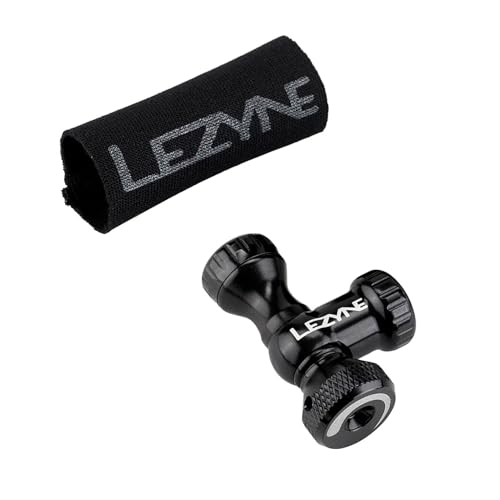
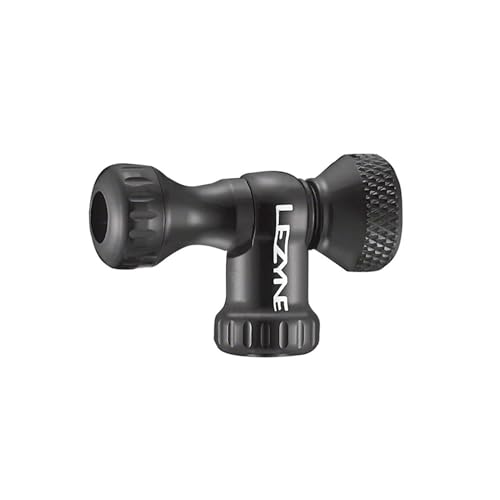
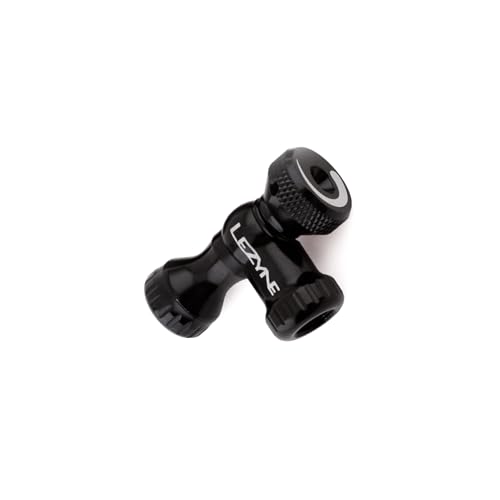
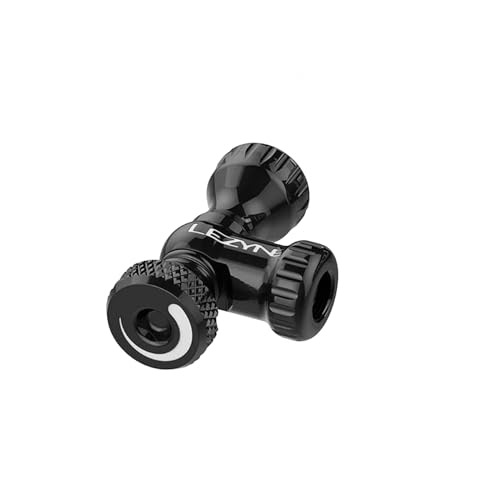
Lezyne Control Drive CO2 Inflator

Strengths
- Twist-control valve
- Neoprene protective sleeve
- Durable aluminum build
Trade-offs
- Cartridges not included
- Slightly bulkier than minimal models
This is the one I’d recommend to most riders as the best all-around choice. The CNC-machined aluminum body feels solid without adding bulk, and the twist-control valve gives you real, tactile control over inflation, critical for avoiding blowouts or wasting gas. Owners praise how consistently it seals on both Presta and Schrader valves, and the Twin Slip Chuck head is a proven design across Lezyne’s line.
What really sets it apart is the included neoprene sleeve. CO2 cartridges get dangerously cold during discharge, and this simple addition protects your fingers. It doesn’t come with cartridges, but that keeps the price flexible. Compared to the Portland Shiny Object, it’s slightly heavier but offers better ergonomics and included hand protection. For most riders, this is the smarter buy.
Product photos
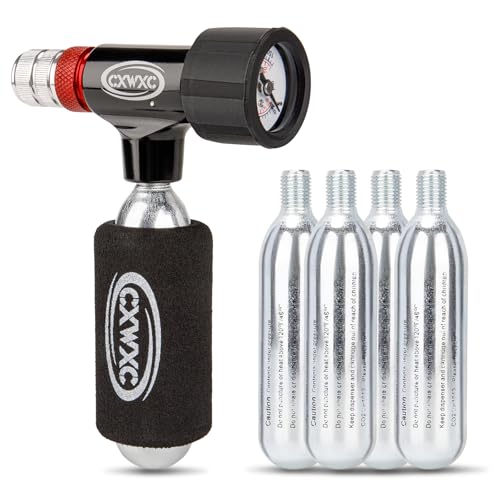
CXWXC CO2 Inflator with Pressure Gauge
Strengths
- Integrated pressure gauge
- Includes 5 cartridges
- Insulated sleeve included
Trade-offs
- Gauge may reduce long-term reliability
- Slightly heavier due to gauge
- Mixed feedback on gauge accuracy
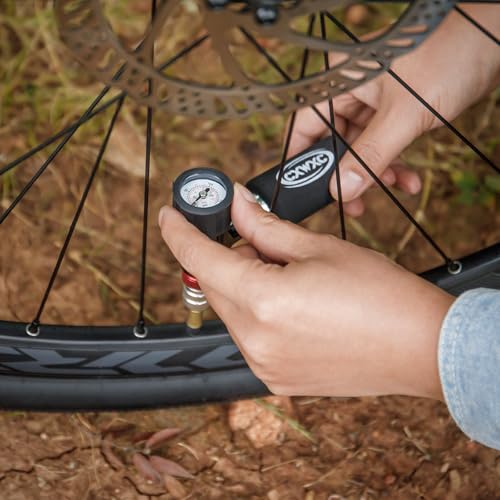
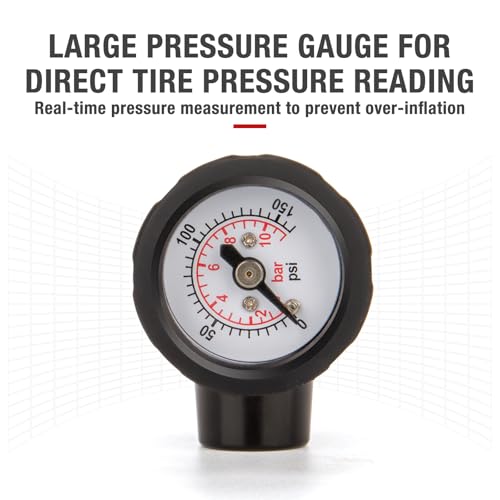
If you hate guessing your tire pressure mid-ride, this one stands out. The built-in 1.6-inch pressure gauge is the real selling point. On paper, it’s a solid upgrade for riders who want precision inflation and don’t trust the “feel” method. The gauge claims 160 PSI max accuracy, and while some owners note minor variances, most agree it’s close enough to prevent under- or over-inflation.
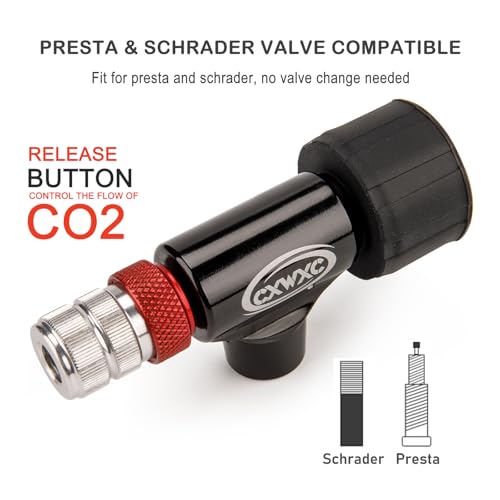
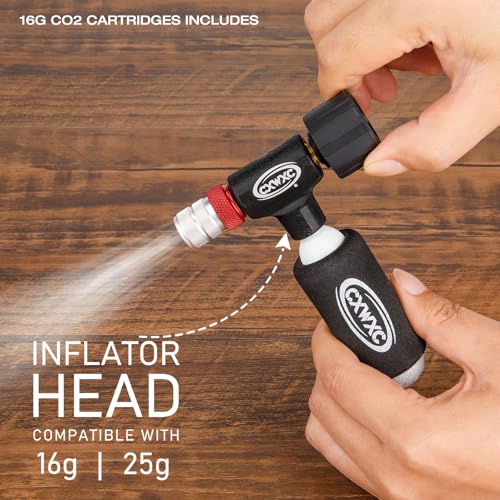
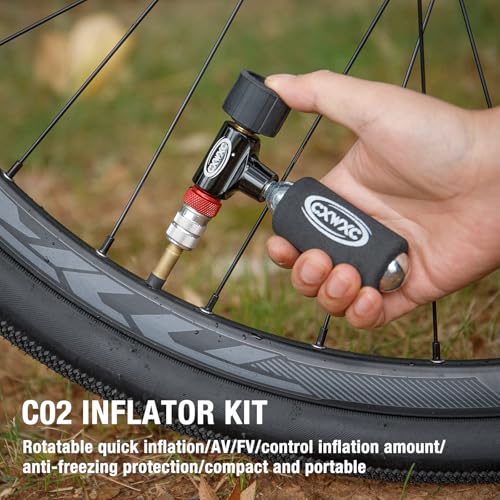
It includes five 16g cartridges and an insulating sleeve, which makes it a decent value. The inflator head is compatible with all standard threaded cartridges, and the push-button design is easy for one-handed use. But the gauge adds bulk, and if it fails, the whole unit becomes less useful. Still, for road riders or racers who need exact pressure, this is one of the few models that delivers it.
Product photos
BriskMore CO2 Inflator Kit with 9 Cartridges

Strengths
- Includes 9 CO2 cartridges
- Durable aluminum construction
- Insulated sleeve included
Trade-offs
- No pressure gauge
- Heavier due to extra cartridges
- Basic design, no fine-tune dial
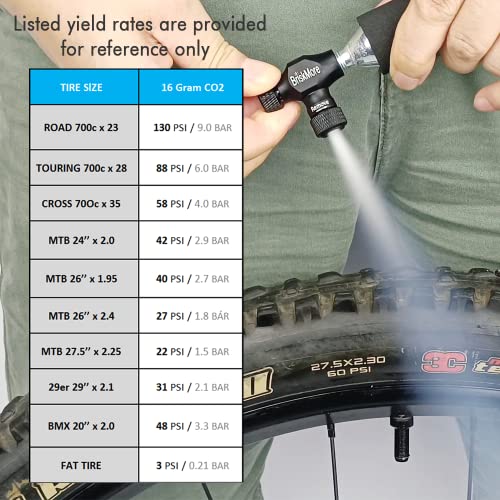
This is the best value if you ride often and go through CO2. Nine cartridges are included, more than most kits, and that alone makes it a strong contender for frequent riders. The inflator head is made from CNC-machined aluminum and alloy steel, and owners report solid performance with both Presta and Schrader valves. The threaded connection is reliable, and the included insulating sleeve is a thoughtful touch.
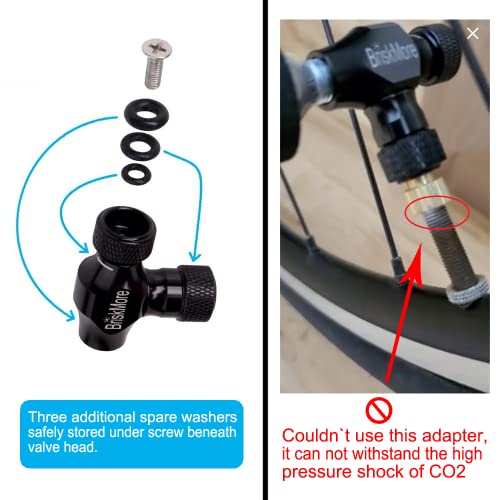
It’s not flashy, but it’s practical. The control valve allows for decent modulation, and the spare washers add longevity. Compared to the 5-cartridge BriskMore version, this one gives better long-term value. If you’re doing group rides or long tours, having extras matters. This kit covers you without breaking the bank.
Product photos
BriskMore CO2 Inflator Kit with 5 Cartridges

Strengths
- Affordable entry point
- Includes 5 cartridges
- Insulated sleeve included
Trade-offs
- No pressure gauge
- Basic control valve
- No fine inflation control
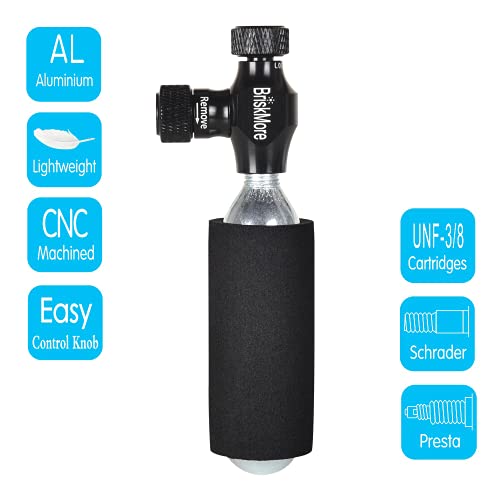
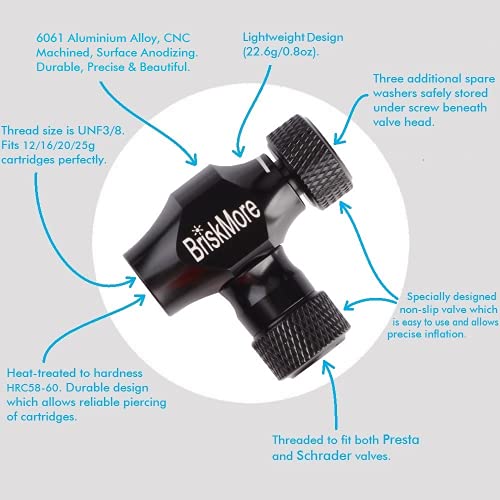
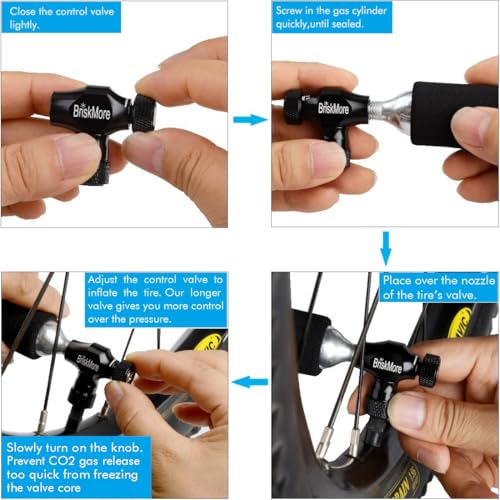
This is the smart budget pick, same solid build as the 9-cartridge version but with fewer extras. The inflator head is identical: CNC-machined, durable, and compatible with all standard threaded cartridges. It includes an insulating sleeve and five 16g CO2 cartridges, which is enough for most casual riders.
Owners appreciate the simplicity and reliability. It won’t win awards for innovation, but it gets the job done. Compared to the CXWXC or Lezyne models, it lacks advanced features like a gauge or twist control, but for beginners or occasional riders, that’s fine. You’re paying for function, not frills.
Product photos
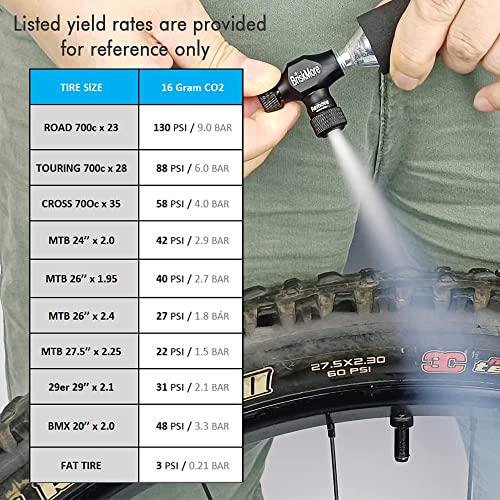
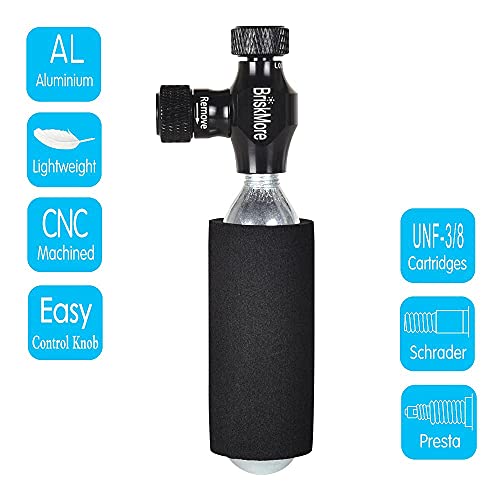
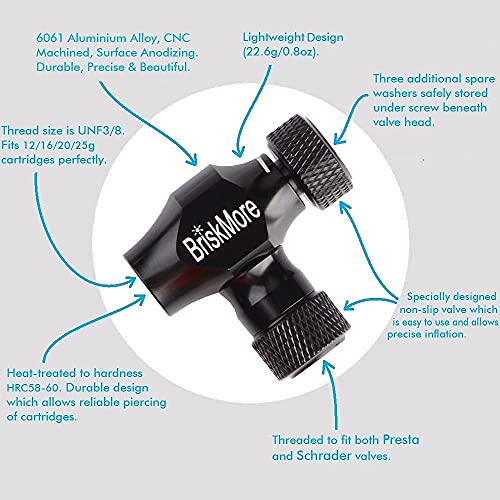
Genuine Innovations AirChuck Inflator

Strengths
- Extremely lightweight
- Push-to-inflate control
- Includes two cartridges
Trade-offs
- No insulating sleeve
- Less durable construction
- No pressure control dial
At just 16 grams, the AirChuck is the lightest option here, and that matters when you’re trimming every gram from your ride. It uses a simple push-to-inflate design that works reliably with both Presta and Schrader valves, and owners say it’s straightforward in the moment of panic on a trail. The push-to-inflate mechanism gives decent control, though not as precise as twist-valve models.
It includes both 16g and 20g cartridges, which is a nice touch, and supports up to 25g threaded ones, more flexibility than some competitors. But it lacks an insulating sleeve, and the plastic-like body, while light, doesn’t inspire long-term confidence like metal builds. For pure weight savings and simplicity, it’s hard to beat. But if you want something that feels more substantial, look elsewhere.
Product photos
Ctrepower Push-Button CO2 Inflator
Strengths
- Screw-on nozzle for secure fit
- One-hand push-button control
- Wide cartridge compatibility
Trade-offs
- No cartridges included
- No insulating sleeve
- Less common design, may take getting used to
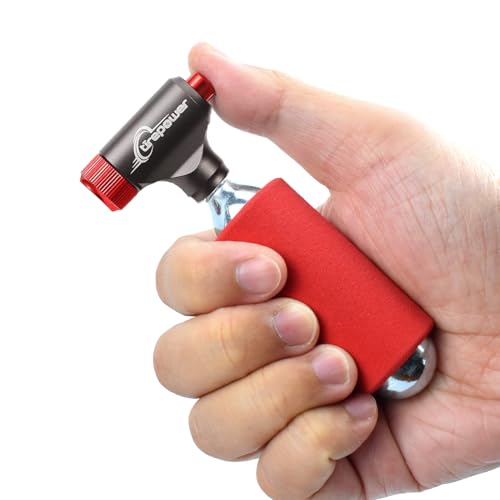
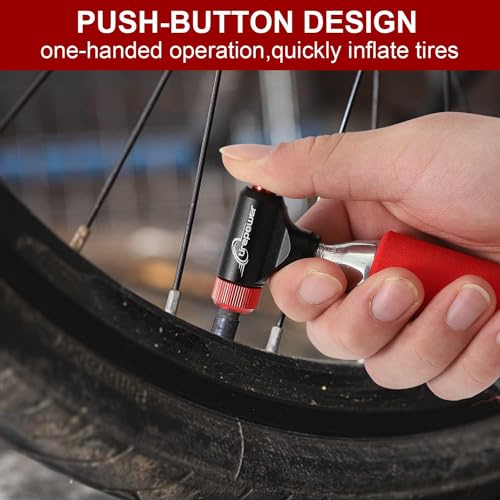
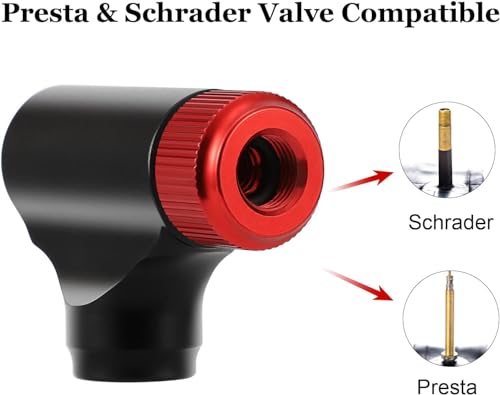
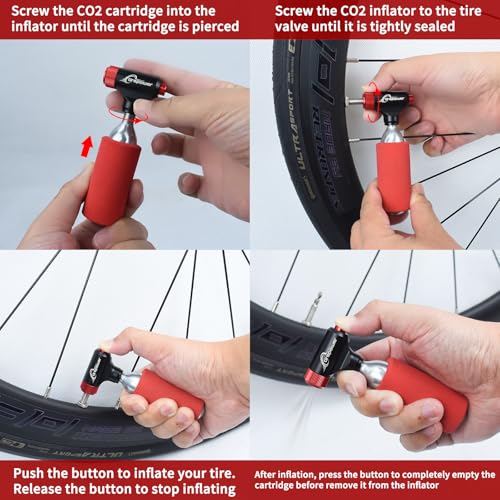
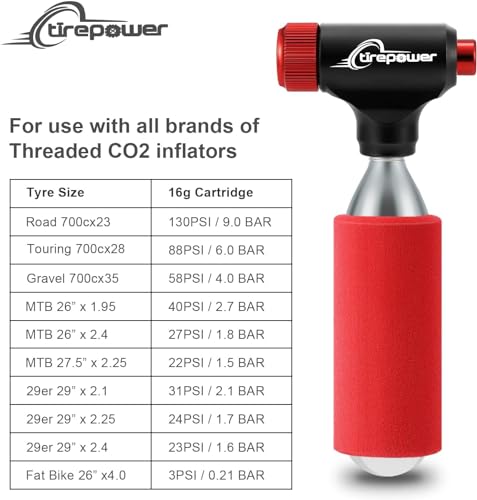
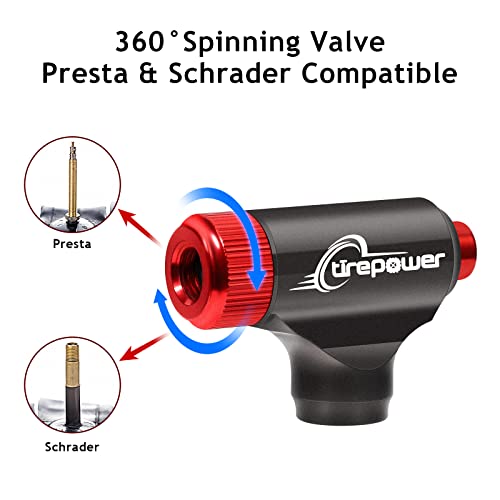
The screw-on nozzle design here is a win for secure connections. Unlike some clip-on or slip-fit heads, this one threads directly onto the valve, reducing the chance of sudden gas loss during inflation. The push-button release is responsive, and owners say it’s easier to use with one hand than twist-valve models. It’s also compatible with 12g to 25g cartridges, giving you flexibility depending on tire size.
The CNC aluminum alloy body feels durable, and it’s lightweight enough for trail use. But it doesn’t include cartridges or an insulating sleeve, which hurts its value compared to kit-based options. Still, if you already stock CO2 and want a reliable, ergonomic inflator, this design makes inflation feel more controlled and less frantic.
Product photos

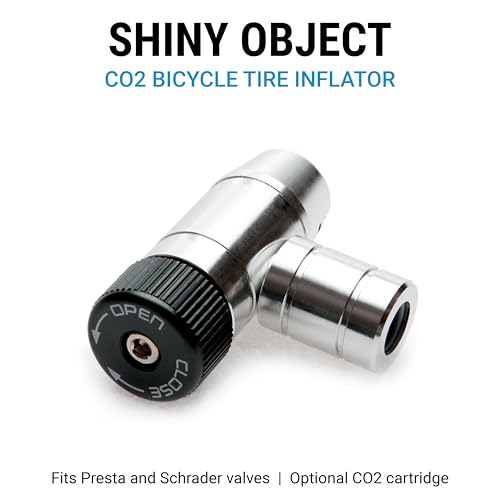
Portland Design Shiny Object Inflator

Strengths
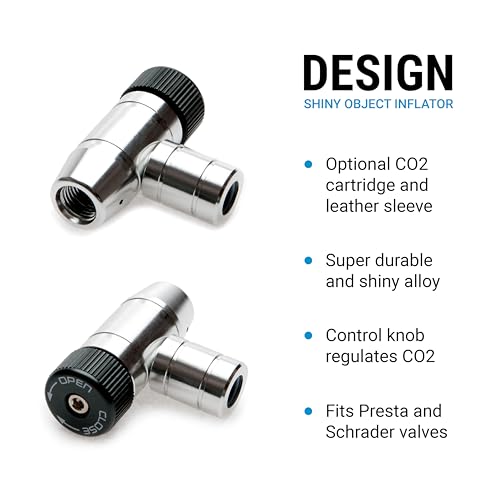
- Mirror-finish alloy build
- Precision control knob
- Ultra-lightweight
Trade-offs
- No insulating sleeve
- Cartridges sold separately
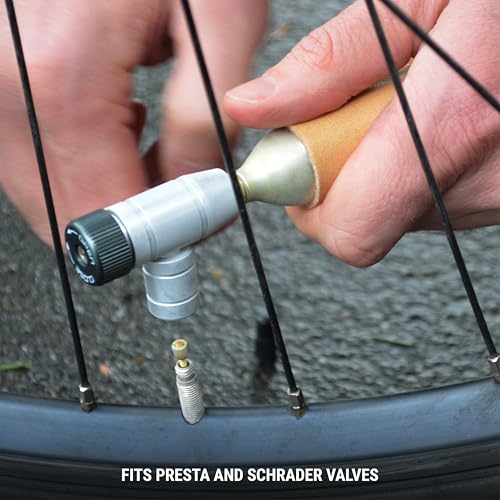
The Shiny Object lives up to its name, not just in looks but in how it performs. Its mirror-finish alloy body isn’t just for show. Owners consistently report it holds up well after repeated use, and the precision control knob gives you real authority over how much CO2 you release. That kind of fine-tuned control is rare in basic push-to-inflate models, and it makes a real difference when you’re trying to avoid blowing past your target PSI.
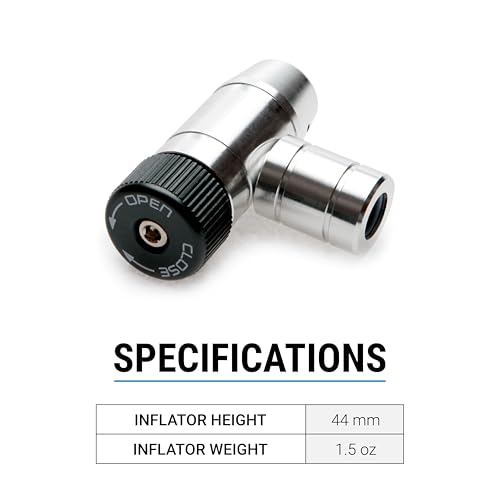
At only 40 grams, it’s among the lightest in its class, and the compact size slips easily into any saddlebag. While it doesn’t come with cartridges or an insulating sleeve, its build quality stands out. Compared to budget models, this one feels like a tool you’d actually want to keep long-term. I’d pick it over plasticky alternatives any day if you value durability and control over bundled extras.
Product photos
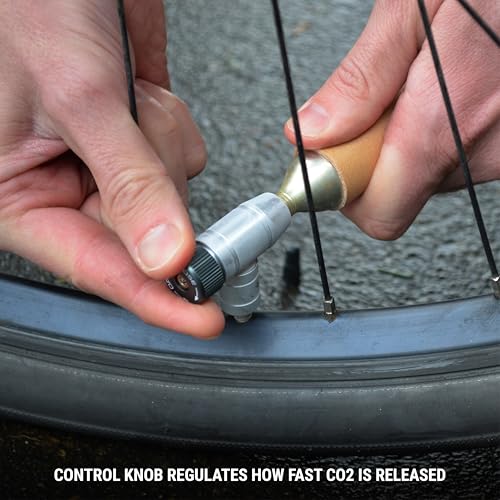
Ctrepower Gunmetal CO2 Inflator
Strengths
- Fast push-button release
- One-hand operation
- Durable aluminum body
Trade-offs
- No cartridges included
- No insulating sleeve
- Less secure than screw-on models
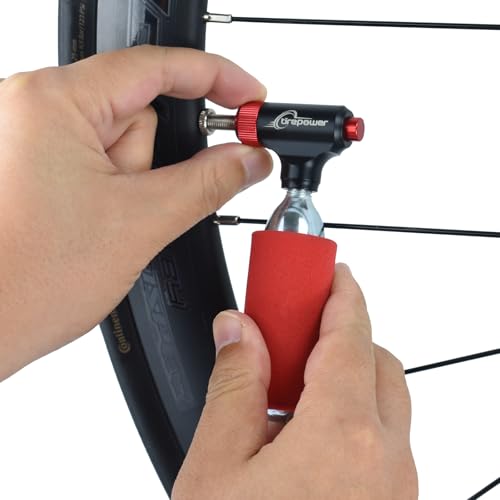
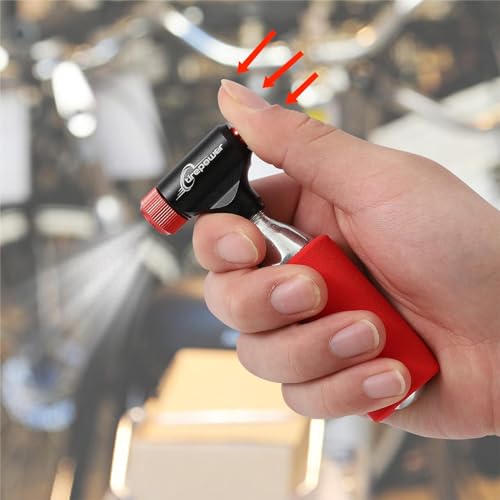
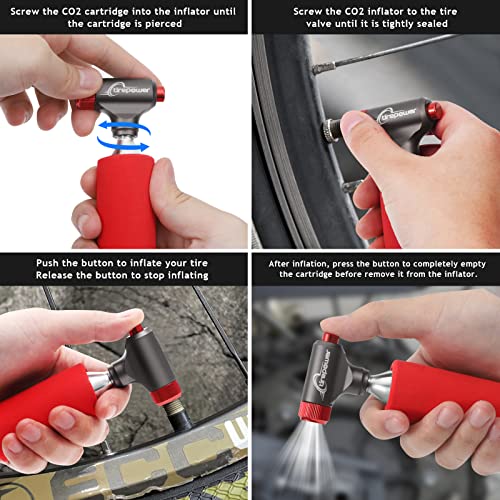
The push-button release here is fast and intuitive, press to inflate, release to stop. That kind of instant control is great when you’re in a hurry and don’t want to fumble with dials or levers. It’s compatible with 12g to 25g threaded cartridges, so it’s flexible, and the aluminum alloy body feels sturdy in hand.
Owners say it seals well on both Presta and Schrader valves, and the one-hand operation is a real advantage on the trail. But like other Ctrepower models, it doesn’t include cartridges or an insulating sleeve. If you already have those, this is a great quick-release option. Compared to the screw-on version, it’s simpler but less secure on rough terrain.
Product photos

How We Picked These co2 inflators
My research into CO2 inflators focused on a comparison of published specifications – particularly compatibility with valve types and cartridge sizes – alongside a careful review of owner feedback and expert opinions. Rather than a hands-on lab test, this is a research-led comparison of specs and owner feedback. I weighed information from cycling publications, retailer sites, and a large number of user reviews to build a ranking based on real-world performance reports.
For CO2 inflators, speed and reliability are paramount. I placed the most weight on a unit’s ability to quickly and consistently inflate tires without leaks, and on its compatibility with common cartridge types. Ease of use also factored heavily; a complicated inflator is less useful in a roadside repair situation. Durability, as reported by owners, was a key tie-breaker between otherwise similar models.
Specifications reliably detail valve compatibility (Presta and Schrader are essential) and cartridge size support. However, owner feedback was crucial for assessing real-world leak rates, the effectiveness of the control mechanisms, and long-term build quality. Reputation and consistent positive reviews were strong indicators of an inflator’s dependability, and helped to separate truly top CO2 inflators for bicycles from those with design flaws or manufacturing inconsistencies.
What To Look For In co2 inflators
Choosing the right CO2 inflator can make the difference between a quick trailside repair and a long walk home.
A good CO2 inflator balances speed, reliability, and ease of use. Key considerations include valve compatibility (Presta and Schrader), build material for durability, and the control mechanism for precise inflation. Cartridge threading (if applicable) and inclusion of a protective sleeve are also important factors for safe and efficient use.
Valve Compatibility & Cartridge Type
The first thing I look at is whether the inflator works with my bike’s valve type. Most modern road and mountain bikes use Presta valves, but older bikes or some cruisers may use Schrader. Many inflators handle both, which is ideal. Beyond that, determine which cartridge type you prefer. Threaded cartridges generally offer more controlled release and prevent wasted gas, whereas push-button models prioritize speed.
Build Quality & Durability
Don’t skimp on build quality. These little devices take a beating in a saddlebag or pack. Aluminum alloy bodies, like those found in the Lezyne Control Drive or Portland Design Shiny Object, are far more durable than plastic. Look for stainless steel internal components – they resist corrosion.
- A plastic body might save a few dollars upfront, but it’s likely to crack under pressure or with repeated use.
- CNC-machined aluminum offers a good balance of weight and strength, making it a smart choice for serious cyclists.
- Consider the valve head’s construction. A robust, well-sealed head prevents leaks and ensures a consistent inflation, which is why some riders prefer the quality of a dedicated set of portable bike CO2 inflators.
Control & Usability
How easy is it to actually use the inflator? Some have twist-controlled valves, allowing for fine-tuning of the airflow. Others use a push-button mechanism for rapid inflation. I generally recommend a controlled valve, especially for larger tires, as it prevents over-inflation and wasted CO2.
A good rule of thumb: always carry a few extra CO2 cartridges and a small pump as a backup. CO2 cartridges can fail, and they don’t hold a charge indefinitely.
I often advise clients to look closely at the ergonomics. A design that’s easy to grip and operate with gloves on, like the Ctrepower Push-Button CO2 Inflator, can be a lifesaver on a cold or wet ride. Also, check if the inflator comes with a neoprene sleeve. This protects your hands from frostbite when releasing the CO2, a surprisingly common issue. Ultimately, a reliable and efficient inflator like a quality set of CO2 bike tire pumps is a small investment that delivers big peace of mind.
CO2 Inflators Compared
Here’s a comparison of key specifications for various CO2 inflators to help you choose the right one.
| Product Name | Valve Type | Cartridge Size Compatibility | Pressure Gauge | Material | Included Cartridges |
|---|---|---|---|---|---|
| Lezyne Control Drive | Presta/Schrader | 16g Threaded | No | Aluminum | N/A |
| CXWXC CO2 Inflator | Presta/Schrader | 16g Threaded | Yes (160 PSI) | Aluminum | N/A |
| BriskMore (9 Cartridges) | Presta/Schrader | 12/16/20/25g Threaded | No | Aluminum Alloy | 9 x 16g |
| BriskMore (5 Cartridges) | Presta/Schrader | 12/16/20/25g Threaded | No | Aluminum Alloy | 5 x 16g |
| Genuine Innovations AirChuck | Presta/Schrader | 12/16/20/25g Threaded | No | N/A | 1 x 16g, 1 x 20g |
| Ctrepower Push-Button | Presta/Schrader | 12/16/18/25g Threaded | No | Aluminum Alloy | N/A |
| Portland Design Shiny Object | Presta/Schrader | 16g Threaded | No | Aluminum Alloy | N/A |
| Ctrepower Gunmetal | Presta/Schrader | 12/16/18/25g Threaded | No | Aluminum Alloy | N/A |
Frequently Asked Questions
What cartridge size should I choose?
16-gram cartridges are the most common and suitable for standard road and mountain bike tires. Larger 20-25 gram cartridges are useful if you frequently run tubeless tires or have tires with high volume, though they add a bit of weight and cost.
Can a CO2 inflator overinflate my tire?
Yes, it can. Push-button inflators deliver CO2 very quickly, increasing the risk of overinflation. I recommend an inflator with a controlled valve to regulate airflow and prevent damage to your tire or rim.
Threaded cartridges provide more control over the CO2 release, minimizing waste and allowing for finer inflation adjustments. Push-button cartridges are faster, but can easily overinflate a tire if you aren’t careful.
Will a CO2 inflator work with all bike tires?
Most inflators are designed for both Presta and Schrader valves, covering the vast majority of bicycle tires. However, some very old or specialized valve types may require an adapter, so check compatibility before purchasing.
How long do CO2 cartridges stay inflated?
CO2 cartridges don’t hold their charge indefinitely. Expect a slow loss of pressure over time, even when unopened. I suggest replacing cartridges every year or two to guarantee they’ll be fully functional when you need them.
The Bottom Line
Choosing a CO2 inflator often comes down to balancing speed and control. If you want a reliable, no-fuss option that consistently delivers quick inflation, the Lezyne Control Drive stands out as a top performer. It’s a well-built unit that owners consistently praise for its dependability.
For those needing a complete kit or maximum versatility, the BriskMore options (with 5 or 9 cartridges) are hard to beat. They cover a wide range of cartridge sizes and provide a good value. If you prioritize a built-in gauge for precise inflation, the CXWXC CO2 Inflator provides that feature alongside solid construction.
Ultimately, the best CO2 inflator isn’t about fancy features or a high price tag. It’s about having a dependable tool that works when you need it, along with a basic understanding of tire pressure and the importance of carrying a backup – perhaps one of the reliable tire inflation tools – and a few extra cartridges.
