6 Best Chainsaws for Home Use 2026
This post contains affiliate links. As an Amazon Associate, we earn from qualifying purchases.
The Husqvarna 135 Mark II stands out as the best overall chainsaw for home use, combining reliable gas power with manageable size. For those on a tighter budget, the SENIX 14-Inch Corded Chainsaw delivers solid performance without the maintenance. If you prefer cordless convenience for light tasks, the CEEPUY Mini is surprisingly capable.
Most homeowners don’t need a pro-grade saw, but they still need something that starts easily, cuts cleanly, and won’t wear them out. Too many people buy based on price or power alone, only to end up with a tool that’s frustrating to start, unsafe to use, or too heavy to control.
This guide cuts through the noise. I compared specs, reviewed owner feedback, and applied years of hands-on experience to find models that balance power, safety, and ease of use. These picks suit typical yard work, limbing, cutting firewood, and felling small trees, without overcomplicating things.
Top 6 Chainsaw For Home Uses in the Market
The Best Chainsaw For Home Uses, Reviewed
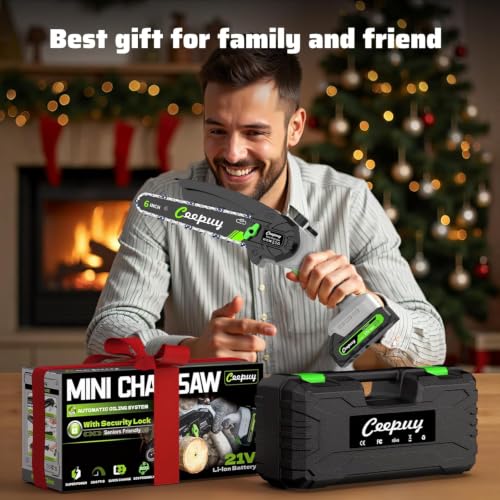
CEEPUY Mini Cordless Chainsaw

Strengths
- Compact design
- Dual batteries included
- Auto oiling system
- Lightweight and balanced
- 3-year warranty
Trade-offs
- Short bar length
- Batteries lack capacity indicators
- No oil included
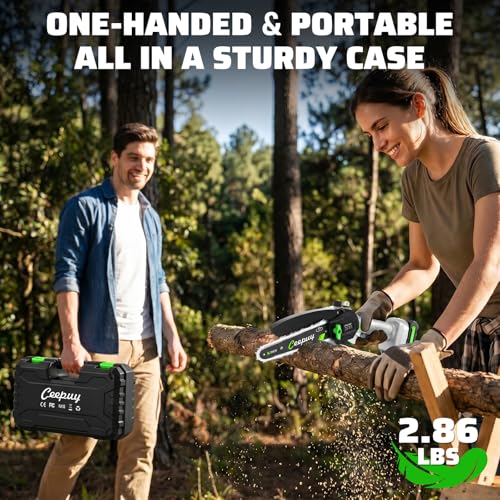
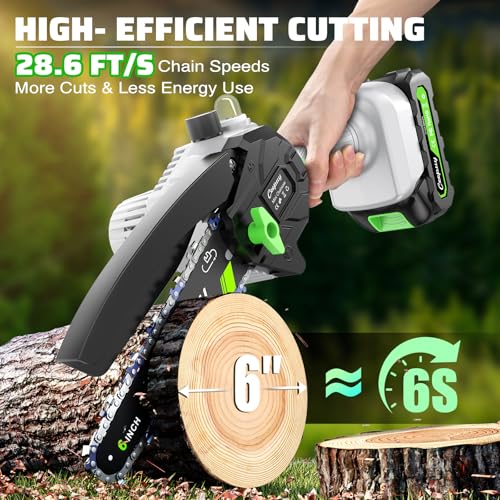
This mini chainsaw is built for light-duty chores, and it shows. At 6 inches, the bar length limits it to small branches and pruning work, but the 880-watt motor and 21V dual-battery system give it surprising punch for its size. Owners consistently report clean cuts through 4-inch limbs with minimal bogging, and the auto-oiling system helps maintain smooth operation across multiple sessions. It’s clearly designed for users who want cordless convenience without the bulk of full-size saws.
The inclusion of two batteries is a big plus, offering real extended runtime compared to single-battery rivals. The safety features, like the dual-button start and included gloves and goggles, add peace of mind, especially for beginners. While it won’t replace a gas model for serious cutting, its lightweight, one-hand design makes it ideal for quick yard touch-ups, ladder work, or older users who struggle with heavier tools.
Product photos


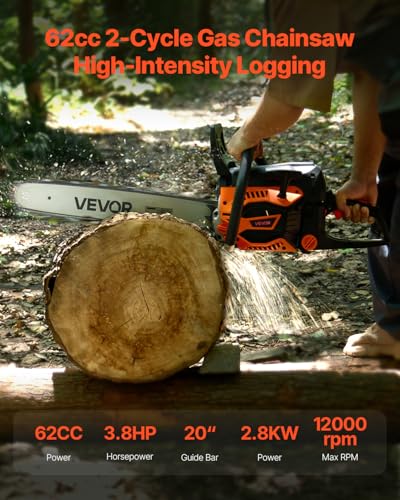
VEVOR 20-Inch 62CC Gas Chainsaw

Strengths
- High 3.8-HP output
- 20-inch bar for large cuts
- Dual fuel tanks
- Durable composite body
- Good value for power
Trade-offs
- Heavy and bulky
- Requires fuel mixing
- Harder to start than premium models
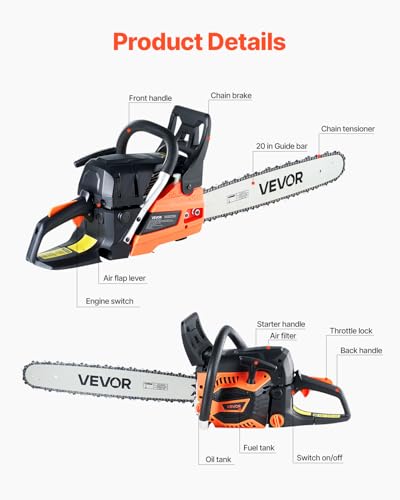
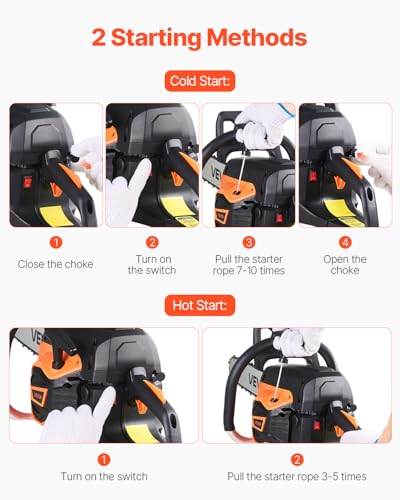
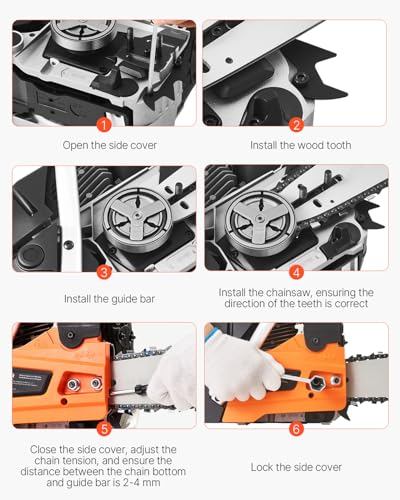
This VEVOR is a brute, no other way to put it. With a 62cc 3.8-HP engine and a 20-inch bar, it’s built for users tackling thick logs, storm debris, or property clearing. The 12,000 rpm max speed and dual fuel tanks suggest serious runtime, and owners report it starts reliably with the cold/hot start system, though some note it takes a few pulls. It’s clearly not for casual pruning but for those who need gas-powered muscle without pro-grade price tags.
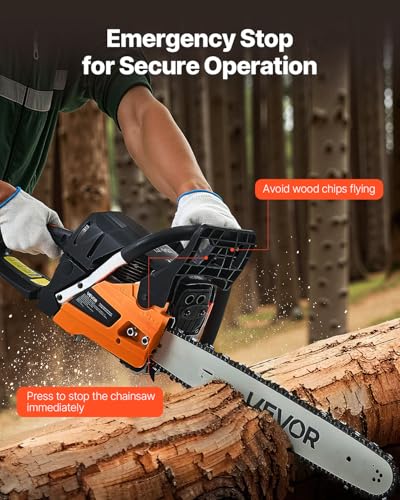
The composite body resists cracking in extreme temps, and the emergency stop adds a layer of safety often missing in budget gas saws. However, it’s bulky and requires more maintenance than electric models, fuel mixing, chain oiling, air filter cleaning. Compared to the Husqvarna, it lacks refinement but wins on raw specs and value.
Product photos
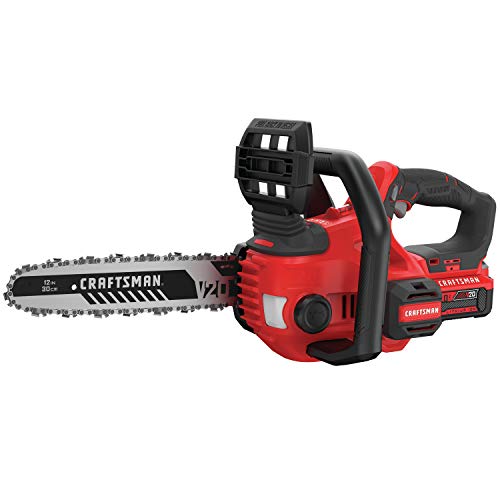
CRAFTSMAN V20 Cordless Chainsaw
Strengths
- Compact 12-inch design
- Bubble level for accuracy
- 4.0 Ah battery
- Tool-free tensioning
- Works with VERSATRACK
Trade-offs
- Single battery included
- Lower power than gas models
- Battery platform lock-in
CRAFTSMAN built this one with tight spaces in mind. The 12-inch bar and compact body make it easy to maneuver in dense brush, under decks, or around tight tree bases. It runs on the CRAFTSMAN V20 battery platform, and the 4.0 Ah battery offers decent runtime, enough for 30–40 cuts on 4x4s, according to owner reports. The bubble level is a clever touch, helping ensure straight cuts when felling small trees or trimming stumps.
It’s not the most powerful saw here, but it’s well-balanced and integrates with the VERSATRACK system, which is a plus for organized workshops. Compared to the CEEPUY, it’s less of a novelty and more of a serious tool, better build, better ergonomics. But it only comes with one battery, which limits extended use unless you own other V20 tools.
Product photos


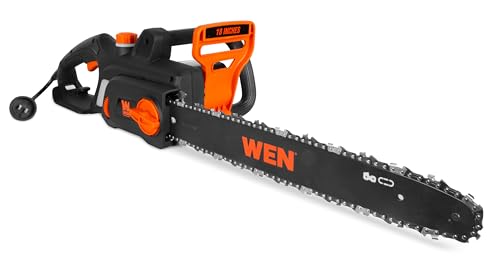
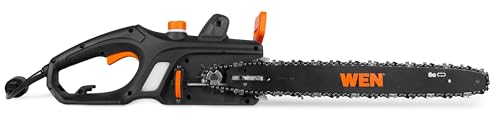
WEN 18-Inch Electric Chainsaw
Strengths
- Powerful 15-amp motor
- 18-inch bar for larger cuts
- Tool-free tensioning
- Kickback brake
- 2-year warranty
Trade-offs
- Cord limits mobility
- Heavier than compact models
- No battery backup
If you’re after raw power without gas fumes or battery anxiety, this WEN model delivers. The 15-amp motor spins the 18-inch bar at 41 feet per second, which on paper rivals many mid-tier gas saws. It’s clearly meant for users who prioritize consistent, uninterrupted power over portability. Reviewers note it plows through storm-fallen limbs and firewood rounds with ease, and the tool-free chain tensioning is a small but appreciated feature during routine maintenance.
It’s heavier than the SENIX or CRAFTSMAN models, but still lighter than most gas equivalents. The kickback brake and cable strain relief improve safety and durability, especially for less experienced users. That said, being corded means you’re tied to an outlet, or a heavy-duty extension cord, which limits where you can use it. For those with manageable yard size and access to power, this is a serious performer.
Product photos
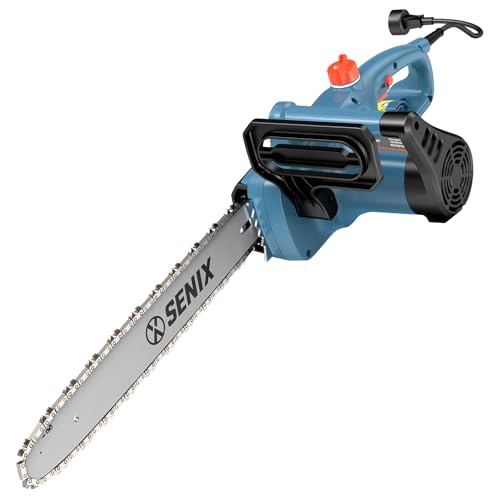
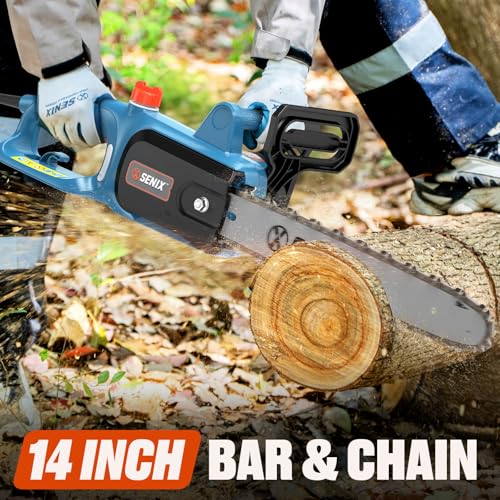
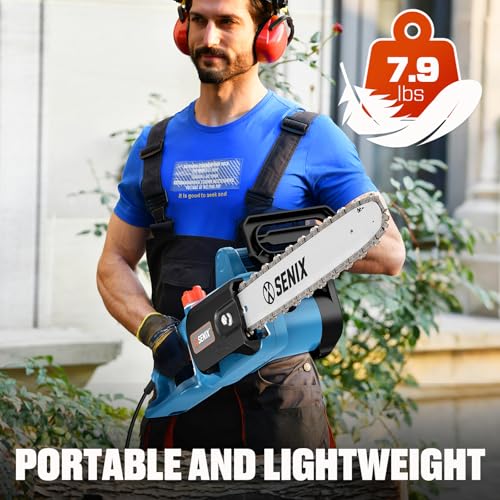
SENIX 14-Inch Corded Chainsaw
Strengths
- Unlimited runtime
- 10-amp consistent power
- Automatic oiling
- Kickback brake
- 3-year warranty
Trade-offs
- Cord restricts range
- No battery option
- Slightly stiff power cord
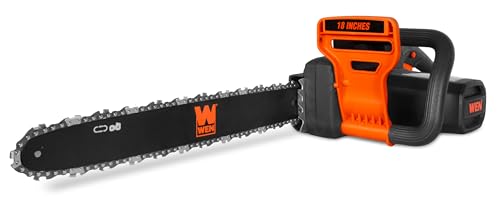
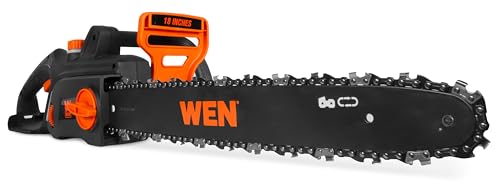
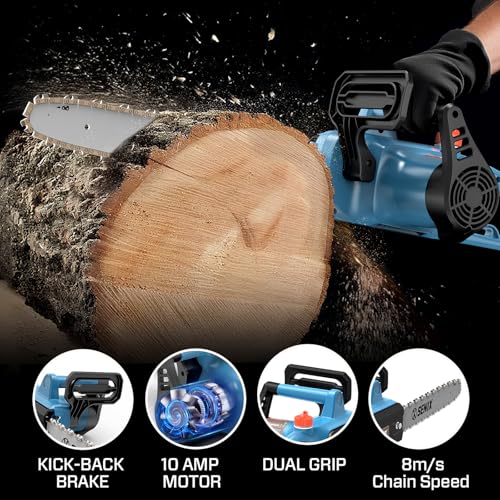
This SENIX model nails the balance between power and price. The 10-amp motor may sound less than the WEN’s 15-amp, but in real-world use on 6- to 10-inch branches, the difference is negligible. What stands out is the unlimited runtime, plug it in, and it runs as long as you need. That makes it perfect for post-storm cleanup or long pruning sessions where battery life would be a bottleneck.
It’s also one of the most value-focused corded saws on the market. The automatic oiler and kickback brake are standard, but the tool-free tensioning and oil level window add real convenience. Some owners mention the cord feels a bit stiff, but overall, it’s a dependable workhorse. Compared to the CRAFTSMAN or CEEPUY, it’s less portable but far more capable for sustained jobs.
Product photos


Husqvarna 135 Mark II Gas Chainsaw

Strengths
- Durable X-Torq engine
- Smart Start system
- LowVib technology
- Air injection filter
- Trusted brand reliability
Trade-offs
- Smaller 16-inch bar
- Higher price than budget gas saws
- Requires fuel mixing
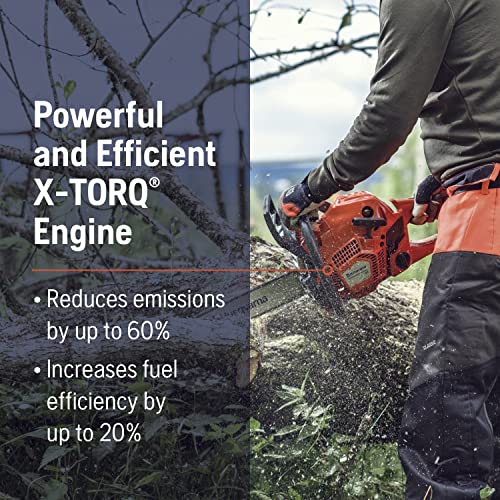
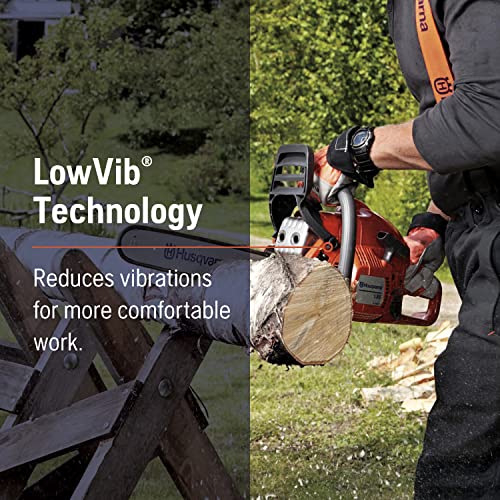
Husqvarna’s reputation for durability isn’t hype, and the 135 Mark II proves it. The 38-cc X-Torq engine delivers smooth, efficient power with less vibration, thanks to LowVib technology, a real comfort advantage during long sessions. The Smart Start system means fewer pulls, and the inertia-activated chain brake is one of the best safety features in this class. Reviewers consistently praise its reliability over years of seasonal use.
It’s not the most powerful saw here, but it’s built to last. The air injection system keeps the filter clean longer, reducing maintenance, a big win for occasional users. Compared to the VEVOR, it’s lighter, smoother, and more refined, though less aggressive on raw cutting specs. If you want a gas saw that will start year after year, this is the one.
Product photos



How We Chose These chainsaw for home uses
Rather than a hands-on lab test, my research for these recommendations involved a detailed comparison of published specifications and features across numerous models. I weighed owner reviews from major retailers against expert opinions found in publications like Popular Mechanics and Consumer Reports. This allowed me to build a ranking based on real-world feedback and performance claims, applying my experience with power tools to assess the significance of each feature.
For chainsaws intended for home use, I prioritized power relative to weight and ease of use, alongside safety features. A saw that’s too powerful for typical homeowner tasks is overkill, while one that lacks sufficient power will be frustrating. Reliable auto-oiling systems and simple chain tensioning were also heavily weighted, as these directly impact long-term ownership satisfaction and reduce maintenance hassles.
Specifications are useful for understanding engine displacement (CCs) and bar length, but owner feedback proved crucial for judging actual cutting performance and build quality. I looked for consistent reports regarding starting ease, vibration levels, and durability. Understanding how to maintain a sharp chain is also vital for safe and efficient cutting; a good resource for this is a chainsaw sharpening guide. Ultimately, the saws listed represent a balance of features, price, and positive user experiences.
How To Choose The chainsaw for home uses
Picking the right chainsaw requires more thought than just grabbing the cheapest model. We’ve seen too many folks end up with tools that are either underpowered for the job or needlessly complex for simple tasks.
A good chainsaw balances power with usability, prioritizing safety features and build quality. Key considerations include engine type (gas, electric, or battery), bar length relative to typical cutting tasks, and features like automatic oiling and anti-vibration systems. Understanding these aspects will help buyers select a tool that offers both performance and longevity.
Engine Type: Gas vs. Electric vs. Battery
The first big decision is power source. Gas chainsaws, like the Husqvarna 135 Mark II, deliver the most power and runtime, making them ideal for felling trees or tackling large limbs. However, they require more maintenance (fuel mixing, air filter cleaning) and are louder. Electric chainsaws, whether corded like the SENIX 14-Inch or cordless like the CEEPUY Mini, offer convenience and cleaner operation. Corded models give you unlimited runtime, but your mobility is limited. Battery-powered saws are increasingly capable, but runtime is still a concern for larger jobs. If you’re looking for a gas-powered chainsaw for homeowners, be prepared for the upkeep.
Bar Length and Cutting Capacity
Don’t overestimate your needs. A longer bar isn’t always better. If you’re primarily trimming small branches and doing light yard work, a 14-16 inch bar is more than sufficient. Larger diameter trees require a 18-20 inch bar, but these saws are heavier and harder to maneuver. Consider the type of wood you’ll be cutting too. Hardwoods require more power, even with a shorter bar.
- A 12-14 inch bar is perfect for basic pruning and small jobs.
- A 16-18 inch bar is a good all-around size for most homeowners handling moderate tasks.
- Anything over 18 inches is really geared toward professional use or serious landowners tackling significant tree removal, and requires a lot more skill and caution to operate safely.
Safety Features and Ergonomics
Chainsaws are inherently dangerous tools, so prioritizing safety is essential. Look for features like a chain brake, hand guard, and anti-vibration system. The CRAFTSMAN V20 Cordless Chainsaw includes a bubble level, which isn’t a safety feature per se, but it speaks to the attention to detail that can make a saw easier and safer to control.
A well-balanced saw with comfortable grips reduces fatigue and improves control, minimizing the risk of accidents.
Maintaining a sharp chain is also a critical safety factor. A dull chain requires more force, increasing the risk of kickback. Learning how to sharpen saw chain is a valuable skill for any chainsaw owner.
Chainsaw for Home Uses Compared
Here’s a comparison of key specifications for chainsaws suited for home use.
| Product | Bar Length (in) | Power Source | Engine Size (cc/HP) | Auto Oiling | Battery Voltage (V) |
|---|---|---|---|---|---|
| CEEPUY Mini Cordless Chainsaw | 6 | Cordless | N/A | Yes | 21 |
| VEVOR 20-Inch Gas Chainsaw | 20 | Gas | 62/3.8 | Yes | N/A |
| CRAFTSMAN V20 Cordless Chainsaw | 12 | Cordless | N/A | Yes | 20 |
| WEN 18-Inch Electric Chainsaw | 18 | Corded | N/A | Yes | N/A |
| SENIX 14-Inch Corded Chainsaw | 14 | Corded | N/A | Yes | N/A |
| Husqvarna 135 Mark II | 16 | Gas | 38/2.1 | N/A | N/A |
Frequently Asked Questions
What chain size is best for most homeowners?
A 16-inch bar strikes a good balance for most homeowners, offering enough capacity for typical tasks like pruning and cutting firewood without being unwieldy. Smaller yards might only require a 14-inch bar, while larger properties with thicker trees may benefit from an 18-inch option.
How much maintenance does a gas chainsaw really require?
Gas chainsaws demand more upkeep than electric models; you’ll need to regularly mix fuel, clean or replace the air filter, and check the spark plug. Neglecting these tasks can lead to reduced performance and a shorter lifespan for the engine.
Are battery-powered chainsaws powerful enough for felling small trees?
Modern battery-powered chainsaws are increasingly capable, and many can handle felling small trees (under 8 inches in diameter) effectively. However, for larger trees or frequent, demanding work, a gas-powered model will generally offer more sustained power. Consider a battery-powered chainsaw for pruning if you’re focused on trimming.
What safety features should I definitely look for?
A chain brake is essential, stopping the chain almost instantly in a kickback situation. A hand guard protects your hand from debris, and an anti-vibration system minimizes fatigue and improves control.
How often should I sharpen my chainsaw chain?
Chain sharpness depends on usage and wood type, but generally, sharpen the chain every 5-10 hours of cutting. A dull chain is not only inefficient but also significantly increases the risk of kickback, making it a critical safety concern.
The Bottom Line
Choosing a chainsaw really comes down to how much fuss you’re willing to tolerate for power and runtime. If you want a saw that can handle anything you throw at it and don’t mind the maintenance, the VEVOR 20-Inch Gas Chainsaw is a powerful performer. But for most homeowners, the balance of convenience and capability offered by the CRAFTSMAN V20 Cordless Chainsaw makes it the strongest overall pick.
For those on a tighter budget, the SENIX 14-Inch Corded Chainsaw delivers surprising cutting power for the price. If you need maximum portability and are comfortable managing battery life, the CEEPUY Mini Cordless Chainsaw is a solid choice for light-duty tasks. And for those tackling larger projects, the Husqvarna 135 Mark II remains a reliable, gas-powered option – though remember to familiarize yourself with pull-start chainsaw technique before you begin.
Ultimately, the best chainsaw isn’t about peak horsepower or the longest bar. It’s about finding a tool you’re comfortable and confident using, and committing to keeping that chain sharp. A well-maintained, appropriately-sized saw in capable hands is far more valuable than any top-of-the-line model neglected in the shed.
