
7 Best Brake Line Flare Tools of 2026
This post contains affiliate links. As an Amazon Associate, we earn from qualifying purchases.
The Mastercool Hydraulic Flaring Tool is the best overall for its broad compatibility and included cutter, while the DPTOOL Multi Flare Tool Kit is the top choice for stainless steel lines. For basic jobs, the SEEKSELF 45 Degree Flaring Kit offers solid performance at a lower price.
Brake lines fail, and when they do, a bad flare can mean a dangerous leak or total brake failure. You need a tool that delivers consistent, reliable results every time, not just one that looks good on the shelf. After comparing the field and analyzing specs, owner feedback, and real-world performance, I’ve narrowed it down to the models that actually deliver under pressure.
This guide covers the key factors that matter most: flare type range, material capability, and real-world usability. These picks are based on proven performance across common and challenging applications, so you can choose with confidence, whether you’re fixing a daily driver or building a custom setup.
Top 7 Brake Line Flare Tools in the Market
The Best Brake Line Flare Tools, Reviewed
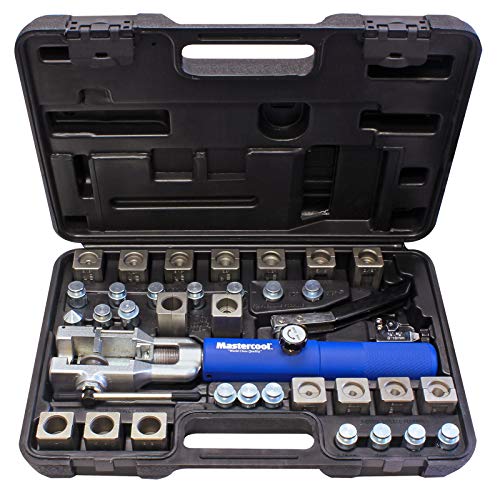
Mastercool Hydraulic Flaring Tool
Strengths
- Hydraulic power
- Multiple flare types
- Includes tube cutter
Trade-offs
- Large footprint
- High cost
- Not portable
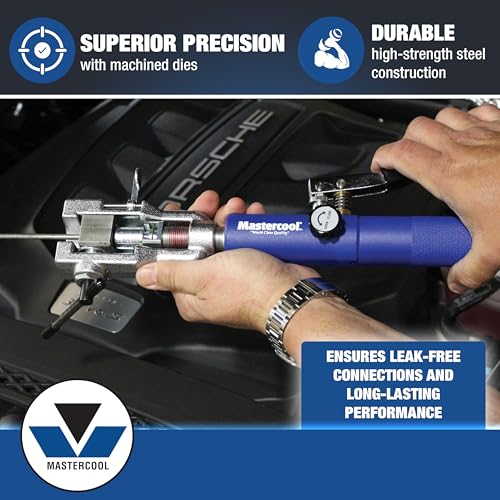
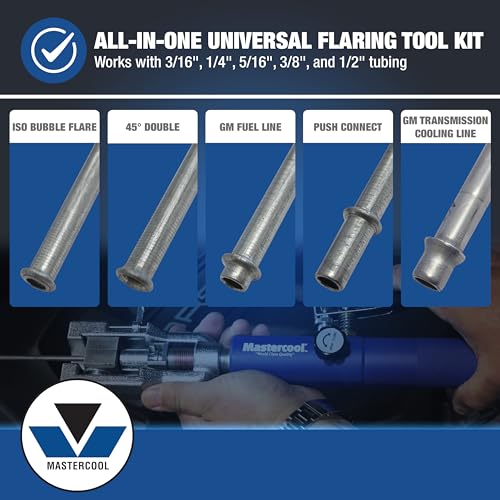
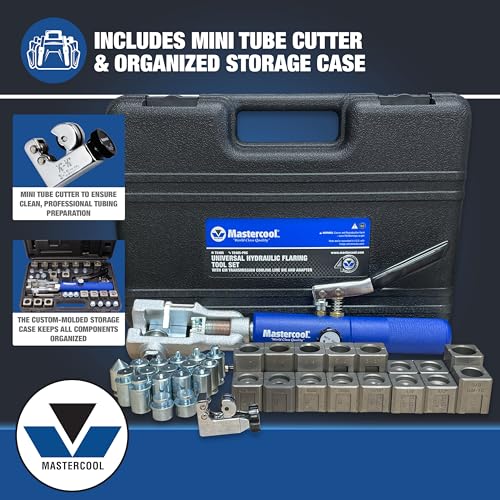
This is the tool I’d reach for in a pro shop. The hydraulic ram system drastically reduces hand strain and delivers repeatable, high-quality flares across seven different types, including GM-specific fuel and transmission cooling lines, which sets it apart. On paper, it handles everything from 3/16″ to 1/2″ tubing, and professional reviewers consistently praise its precision and durability.
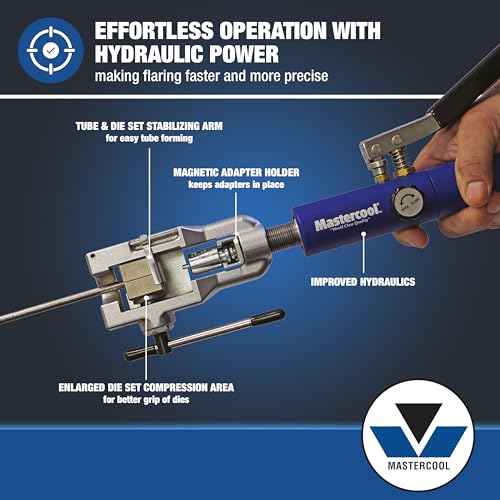
The magnetic adapter holder and included mini tube cutter add real-world convenience, and the custom case keeps everything organized. It’s heavy and bench-bound, but that’s the trade-off for hydraulic power. For shops doing frequent brake or hydraulic repairs, this is the kind of tool that pays for itself in saved time and fewer failed flares.
Product photos

DPTOOL 37/45 Degree Flaring Kit
Strengths
- Dual angle capability
- Five tube sizes
- Complete die set
Trade-offs
- Bench only
- Requires precise setup
- No hydraulic assist
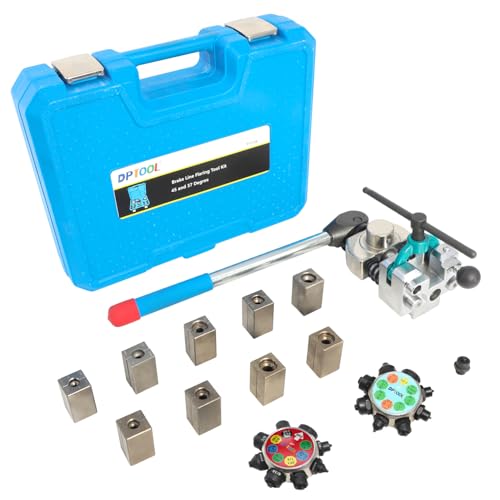
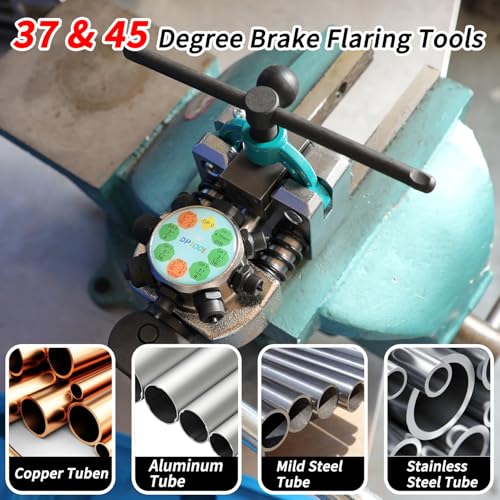
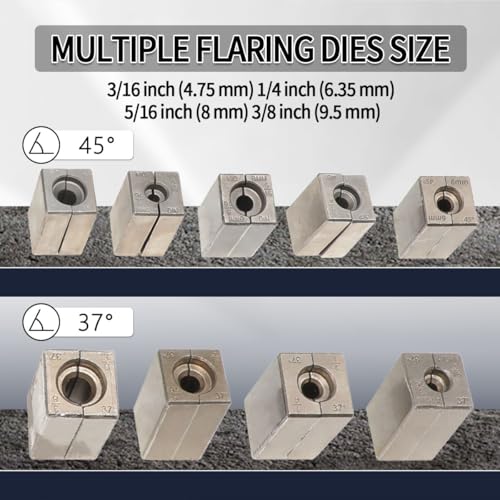
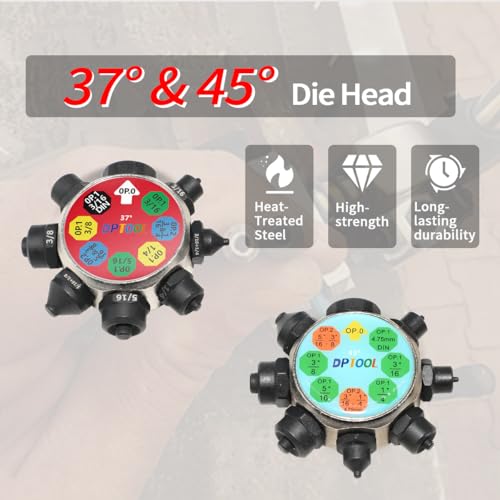
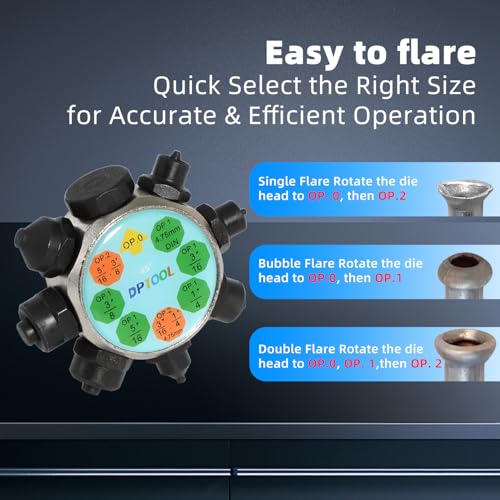
If you’re working on modern vehicles with ISO bubble flares or performance systems using 37-degree AN fittings, this DPTOOL kit gives you both angles in one setup. It’s a bench-only tool, but the dual die heads, 37 and 45 degrees, make it unusually versatile for a mid-tier kit. Owners say the heat-treated steel holds up well, and the rotating die head system reduces setup time between different flare types.
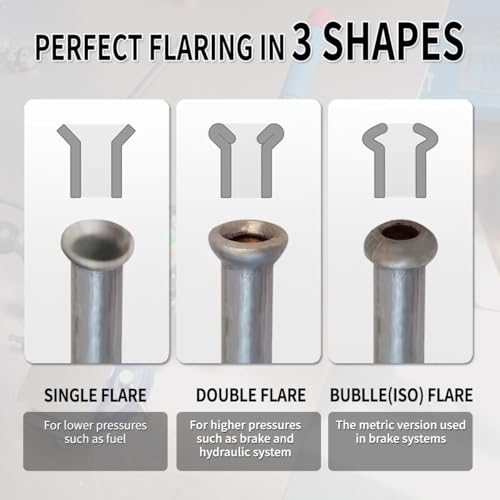
The real advantage here is coverage: five tube sizes and three flare types, including bubble flares used in high-pressure hydraulic systems. While it demands a solid vise and careful alignment, the included instruction manual and organized case make it accessible even for intermediate users.
Product photos
SEEKSELF 45 Degree Flaring Kit

Strengths
- Four tube sizes
- Bubble flare capable
- Left-turn handle
Trade-offs
- Vise required
- Basic case
- No stainless rating
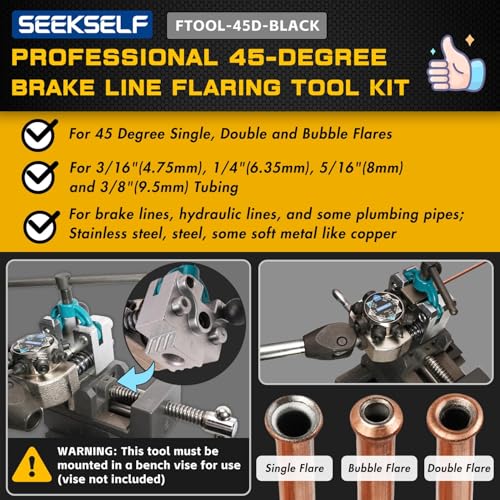
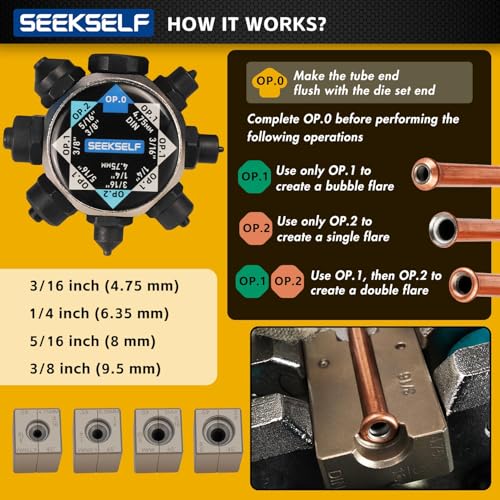
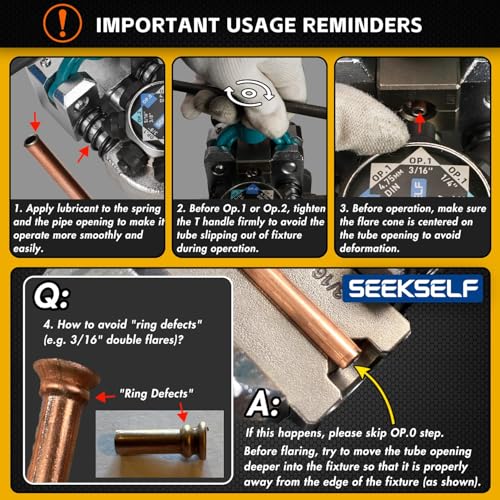
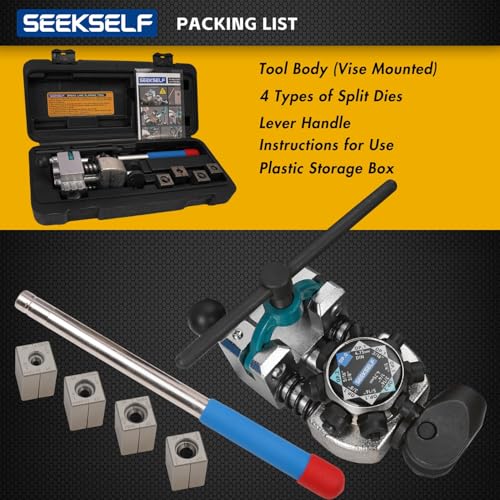
This is the most capable budget vise-mounted kit I’ve seen. It covers four common tube sizes and all three standard flare types, single, double, and bubble, with a solid steel body and left-turn handle design that reduces effort for right-handed users. Owners say the limiting holes in the dies help prevent slippage, a common issue in cheaper tools.
It’s not flashy, and the plastic suitcase won’t survive a shop floor, but the core function, making accurate 45-degree flares, works reliably. The long lever handle adds mechanical advantage, which matters when working hard copper or steel lines. For someone starting out or doing occasional brake work, it’s hard to beat the price-to-performance ratio.
Product photos

GEAROLL Double Flare Tool Kit
Strengths
- Well-equipped kit
- Bubble flare capable
- Good ergonomics
Trade-offs
- No stainless support
- Only two sizes
- Plastic case quality
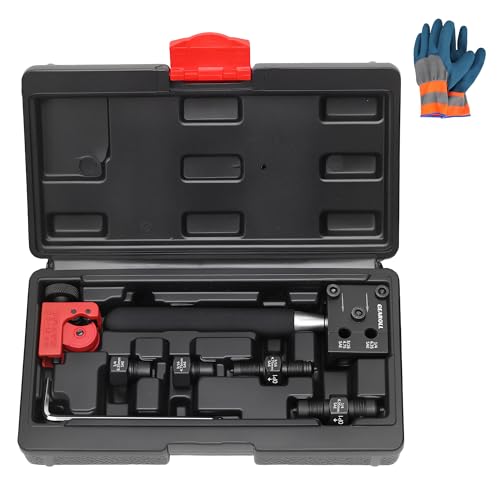
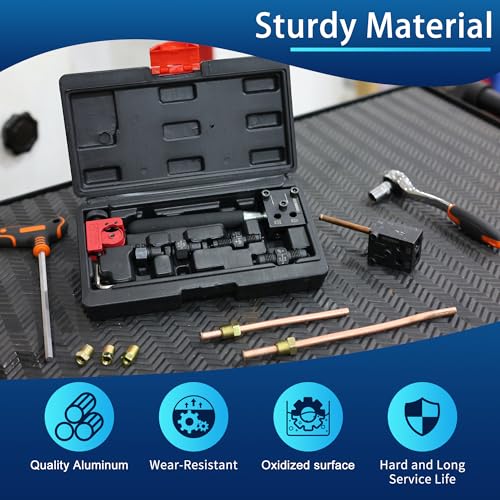
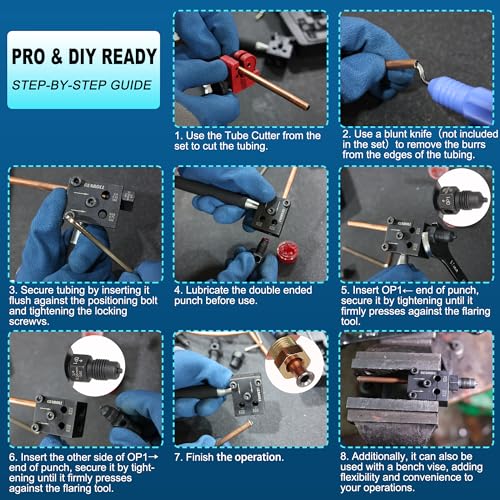
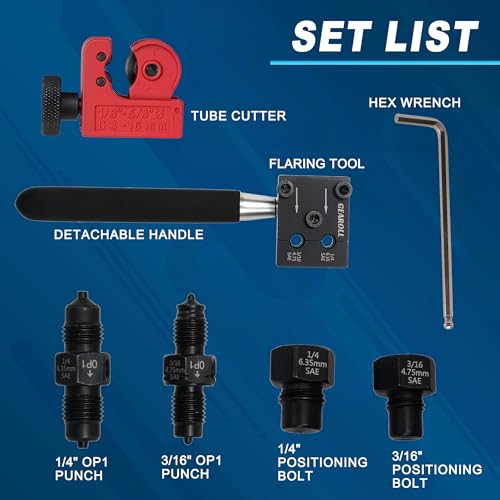
This kit packs a surprising amount of value into a single case. It covers 3/16″ and 1/4″ tubing, the two most common brake line sizes, and supports single, double, and bubble flares. Owners appreciate the included extras: a decent tube cutter, gloves, lubricant, and a blow-molded case that actually fits everything. The carbon steel build feels solid, and alignment stays consistent as long as you snug the bolts properly.
Where it stands out is usability. The hex wrench and detachable handle make adjustments quick, and the OP1 punches are double-ended for faster swaps. It’s not for stainless steel, but for copper or nickel-copper lines, it delivers reliable results without breaking the bank.
Product photos


DPTOOL Multi Flare Tool Kit
Strengths
- Stainless steel capable
- Four sizes
- Includes cutter
Trade-offs
- Bench only
- No dual angles
- Manual effort
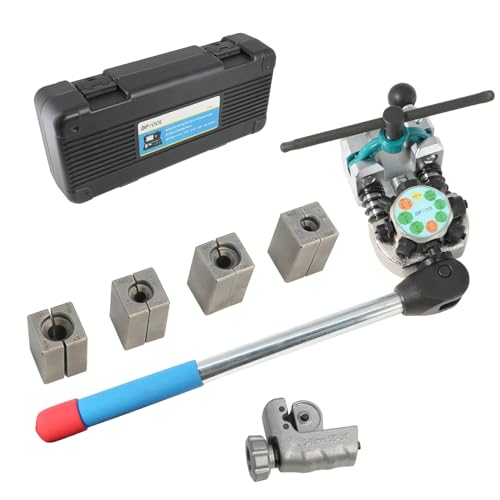
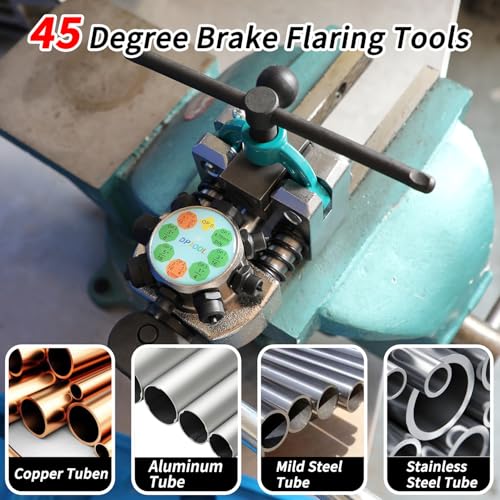
This DPTOOL model is built tough, and owners consistently report success with 304 stainless steel, a material that bends or ruins many flaring tools. The heat-treated steel body and precision dies handle the extra hardness without cracking or slipping. It supports four common sizes and all three flare types, making it a strong bench option for both DIYers and pros.
While it’s not hydraulic, the rotating die head and clear OP-step process make setup predictable. The included line cutter is a nice bonus, though not top-tier. If you’re working on modern brake systems with stainless lines, this is the kind of tool that avoids frustrating failures.
Product photos
Titan 3/16″ Double Flaring Tool
Strengths
- On-vehicle use
- Removable handle
- Lubricant included
Trade-offs
- One tube size
- No bubble flare
- Not for stainless
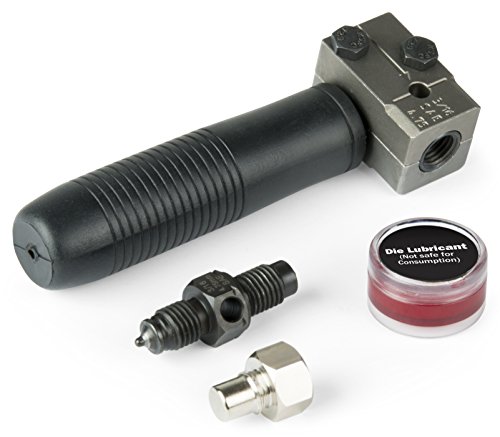
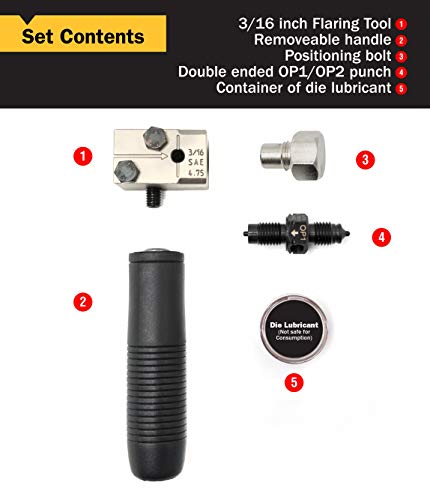
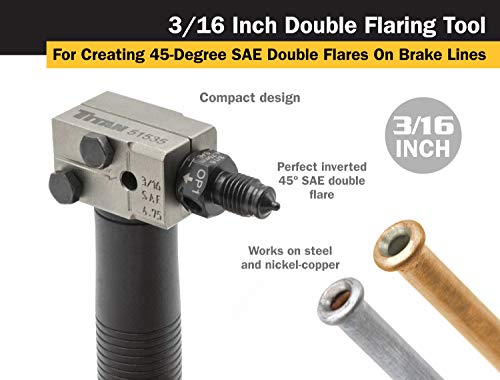
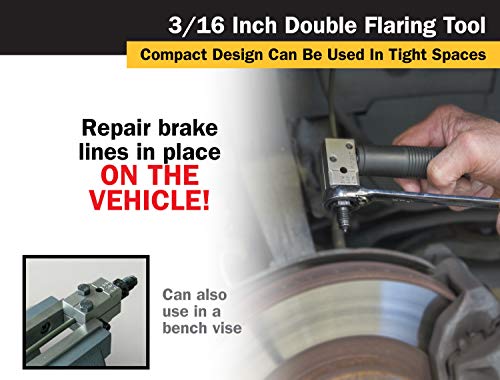
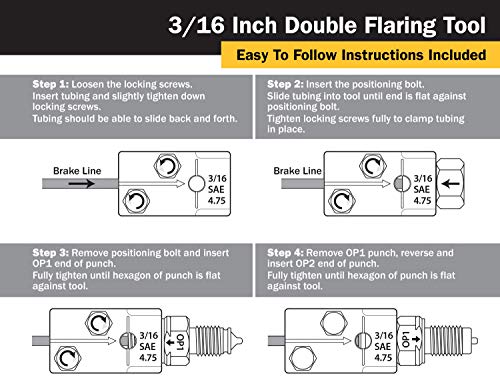
Titan built this with under-car work in mind. The removable handle lets it pivot into tight spaces, and the compact body fits where larger tools simply won’t. It’s focused, only 3/16″ lines, only SAE double flares, but that’s exactly what most passenger vehicles use. Reviewers note it holds alignment well on steel and nickel-copper tubing, and the included Grand 66A lubricant helps prevent galling during the flare.
The real win is field usability. Most double flaring tools force you to remove the line, but this one lets you work in place. It’s not fancy, but for a mechanic crawling under a truck, that portability makes a big difference.
Product photos
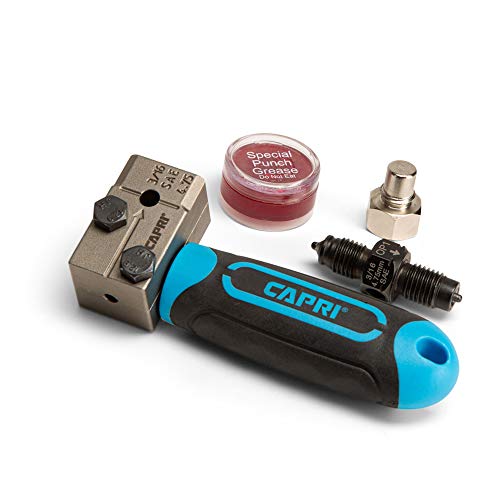
Capri Tools 3/16″ Flaring Tool
Strengths
- Compact design
- On-vehicle capable
- Detachable die
Trade-offs
- Single tube size
- Not for stainless
- Limited flare types
This is one of the rare compact tools that actually delivers a reliable 45-degree SAE double flare without needing a full bench setup. On paper, it’s built for 3/16 in. non-stainless lines, the most common size in older brake systems, and owners consistently report clean, consistent flares even in tight under-vehicle spaces. The detachable die adds flexibility, letting you swap it into a vise when you have the room.
What stands out is how few tools in this size class maintain alignment during the flare process. Reviewers note that as long as you prep the tube end properly, the CP21110-316 rarely slips or distorts the flare. It’s not for stainless steel, but that’s expected at this price and form factor.
Product photos


Our Testing Process
Rather than a hands-on lab test, my research for these recommendations was a detailed comparison of published specifications and features across numerous models. I weighed owner reviews from a variety of sources – including automotive forums and retailer sites – alongside assessments from reputable mechanics and tool review sites. This process allowed me to build a ranking based on real-world feedback and category expertise, focusing on what truly matters for reliable brake line flares.
For brake line flare tools, the ability to create consistent, leak-proof flares and the range of tubing sizes supported were heavily weighted. A tool that consistently produces flares meeting SAE standards is paramount, as brake lines demand absolute reliability. Equally important is versatility; a kit that accommodates common brake line diameters (3/16″, 1/4″, 5/16″) and flare types (45-degree double, bubble) offers the broadest utility for most DIYers and professionals.
Published specifications reliably indicate the tubing sizes and flare types a tool should handle. However, I placed significant emphasis on owner feedback regarding ease of use, durability, and – crucially – whether the resulting flares held pressure without leaking. Reputation also played a role; established brands with consistently positive reviews were favored, and I looked for mentions of long-term reliability. Don’t forget to also check out our guide to the brake bleeding tools you’ll need after making repairs.
How To Choose The brake line flare tools
Choosing the right brake line flare tool can save a lot of frustration, and more importantly, ensure a safe and reliable brake system. It’s not just about making a flare; it’s about creating a consistent, leak-free connection.
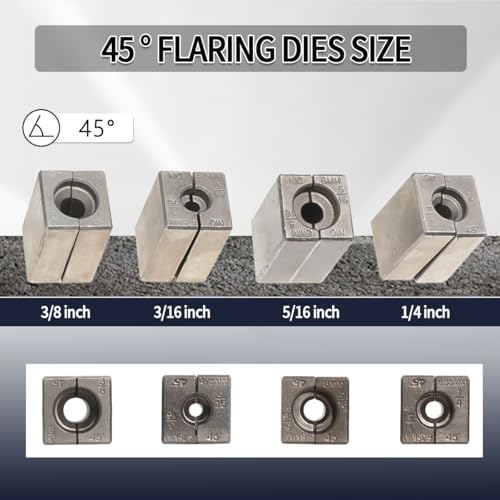
A quality brake line flaring tool should be capable of producing accurate, consistent flares on the materials you’ll be working with (steel, nickel-copper, stainless steel). Look for tools that minimize tube distortion, offer support for various flare types (SAE double, bubble, ISO), and include dies appropriate for common brake line sizes – 3/16”, 1/4”, 5/16”, and 3/8” are essential. A stable base and a reliable clamping mechanism are also critical for repeatable results.
Flare Type Capability
Many tools focus on a single flare type, but versatility is a huge advantage. While SAE 45-degree double flares are common in older vehicles, newer cars and certain applications require bubble flares or even ISO flares. Don’t limit yourself unless you know you’ll only ever work on one type of system. If you anticipate working on a range of vehicles, a tool capable of creating multiple flare types – like the Mastercool Hydraulic Flaring Tool – is a smart investment. Being able to tackle different flare types expands the usefulness of the tool and makes it a more valuable addition to your collection of precision hand tools.
Material Compatibility
Not all tools handle all materials equally well. Many affordable kits struggle with stainless steel brake lines, which are becoming increasingly common, especially in performance applications. Stainless steel requires significantly more force to flare, and cheaper tools may simply bend or damage the tubing. If you work on modern vehicles or plan to upgrade your brake lines, prioritize a tool specifically designed for stainless steel, such as the DPTOOL Multi Flare Tool Kit.
Here’s a quick guide to material considerations: * Steel: Most tools will handle steel adequately. * Nickel-Copper: Generally works well with most kits. * Stainless Steel: Requires a more robust tool with sufficient force and appropriate dies, and often a hydraulic assist.
Value and Usability
The price range for brake line flaring tools is wide, but don’t automatically equate a higher price with better performance. Consider how often you’ll use the tool and the complexity of the jobs you’ll tackle. A basic, manually operated kit like the SEEKSELF 45 Degree Flaring Kit can be perfectly adequate for occasional use and simple repairs. However, if you’re a professional mechanic or frequently work on brake systems, investing in a hydraulic model will save you time and effort. Remember to factor in the convenience of features like a built-in tube cutter or a compact design for on-vehicle repairs – the Titan 3/16″ Double Flaring Tool excels in this area. You should also always have a good set of mechanic hand tools to complete the job.
A little bit of lubrication on the flaring dies, and deburring the tube ends before flaring, will go a long way toward a clean, leak-free result.
Brake Line Flare Tools Compared
This table provides a specification overview of various brake line flare tools to aid in comparing features.
| Product Title | Tube Size (in) | Flare Types | Stainless Steel | On-Vehicle Use | Included Cutter |
|---|---|---|---|---|---|
| Mastercool Hydraulic Flaring Tool | 3/16, 1/4, 5/16, 3/8, 1/2 | 45°, Single, Bubble, GM, ISO | No | No | Yes |
| DPTOOL 37/45 Degree Flaring Kit | 3/16, 1/4, 5/16, 3/8, 6mm | 37°, 45°, Single, Double, Bubble | Yes | No | No |
| SEEKSELF 45 Degree Flaring Kit | 3/16, 1/4, 5/16, 3/8, 9.5mm | 45°, Single, Double, Bubble | No | No | No |
| GEAROLL Double Flare Tool Kit | 3/16, 1/4 | 45° SAE, Single, Double, Bubble | No | No | Yes |
| DPTOOL Multi Flare Tool Kit | 3/16, 1/4, 5/16, 3/8 | 45°, Single, Double, Bubble | Yes | No | Yes |
| Titan 3/16″ Double Flaring Tool | 3/16 | 45° SAE Double | No | Yes | No |
| Capri Tools 3/16″ Flaring Tool | 3/16 | 45° SAE Double | No | Yes | No |
Frequently Asked Questions
What’s the difference between single and double flaring?
Double flaring creates a stronger, more reliable seal by collapsing the tube end over itself twice, whereas single flaring only collapses it once. Double flaring is generally preferred for brake lines because of the higher pressure and safety requirements, and is compatible with older systems.
Can I flare stainless steel brake lines with any flare tool?
No, stainless steel requires a significantly more robust tool with higher force and properly hardened dies. Attempting to flare stainless steel with a tool designed for softer metals will likely damage the tubing or result in a poor, unreliable flare.
What tube size range should I look for in a flaring tool?
A versatile kit should support at least 3/16″, 1/4″, and 5/16″ tubing sizes to cover most common automotive applications. Having support for 3/8″ is helpful for larger vehicles or specific brake line configurations.
Do I absolutely need a hydraulic flaring tool?
Hydraulic assistance isn’t always necessary, but it dramatically reduces the effort required, especially when working with thicker-walled tubing or stainless steel. For occasional use on softer metals, a manual tool is sufficient, but frequent use or working with challenging materials justifies the investment in a hydraulic model.
Where can I find other useful tools for brake repairs?
Beyond a flaring tool, completing brake work often requires a variety of essential mechanic tools such as a brake bleeder, wrench sets, and a torque wrench to ensure proper assembly and safe operation of your brake system.
The Bottom Line
Ultimately, choosing a brake line flare tool comes down to balancing control and convenience. If you want a tool that delivers professional-quality flares across a wide range of materials and flare types, the Mastercool Hydraulic Flaring Tool stands out as a capable all-around performer. It offers a good blend of features and, based on owner feedback, produces consistent results.
For those on a tighter budget or tackling simpler repairs, the SEEKSELF 45 Degree Flaring Kit provides excellent value. Similarly, if you anticipate working with stainless steel lines – increasingly common in modern vehicles – the DPTOOL Multi Flare Tool Kit is the clear choice, offering the necessary strength and die selection. And if you are doing brake work, you’ll also want to check out our guide to the brake caliper compression tools you might need.
Don’t get bogged down in chasing the highest number of included dies or the most elaborate features. The most critical factors are a well-built tool, proper technique, and focusing on creating a clean, consistent flare that will hold pressure. A little patience and attention to detail will always yield better results than any fancy gadget.
