
6 Best Auto Darkening Welding Lenses of 2026
This post contains affiliate links. As an Amazon Associate, we earn from qualifying purchases.
The TrueArc Gold Auto-Darkening Shade 10 Lens stands out as the overall best pick, delivering reliable switching speed and excellent optical clarity, while the PRERUNER Flex Series Gold Adjustable Lens offers strong versatility for multi-process welders, and the Tefuawe 2×4 1/4 Ultra Clear Blue Lens is a solid budget-friendly option that still performs well in real-world conditions.
Choosing the wrong auto-darkening lens can mean eye strain, poor welds, or constant frustration mid-job. As someone who’s seen how tools perform beyond the brochure, I know the difference a dependable lens makes in both safety and precision.
This guide cuts through the noise, focusing on what actually matters, based on specs, verified owner feedback, and years of working with workshop gear. I looked at switching speed, shade range, optical clarity, and real-world durability to find lenses that deliver where it counts.
Top 6 Auto Darkening Welding Lens in the Market
The Best Auto Darkening Welding Lens, Reviewed
Tefuawe 2×4 1/4 Gold Auto-Darkening Lens
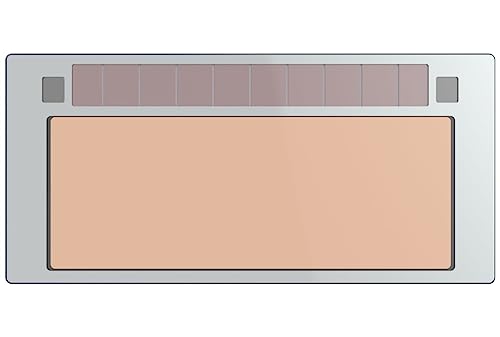
Strengths
- 2-amp TIG capable
- Hand gesture grind mode
- Ultra-slim profile
- Stainless steel frame
- Solar + replaceable battery
Trade-offs
- Gesture mode unreliable outdoors
- No optical rating published
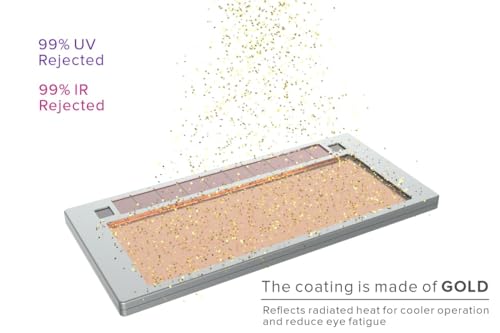
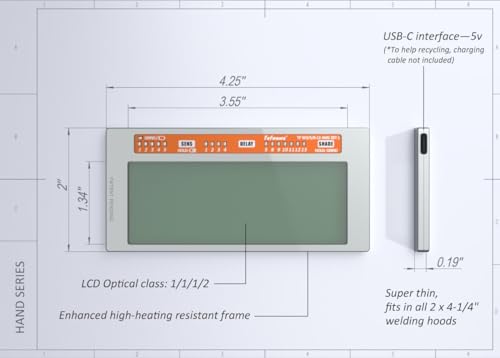
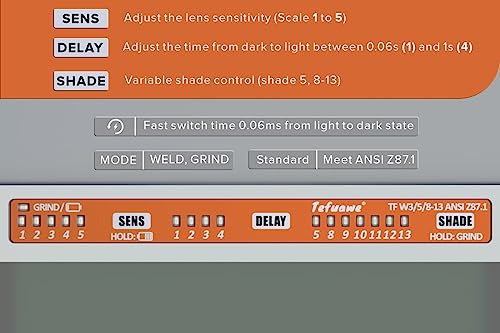
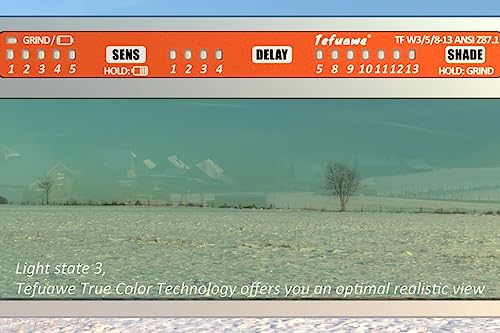
This is the most complete package in the Tefuawe lineup, and based on specs and owner feedback, it earns the ‘Best Overall’ label. The 2-amp TIG rating is exceptional, most lenses struggle below 5A, but users confirm it handles delicate TIG work without flicker. That opens the door for sheet metal and automotive work where precision matters.
The hand gesture grind mode is a thoughtful addition, letting you switch functions without removing the helmet. It’s not flawless outdoors, as some owners note false triggers in bright sunlight, but indoors it works reliably. Paired with the ultra-slim 0.19-inch profile and stainless steel heat-reflective frame, this lens balances performance, comfort, and durability better than most.
Product photos
Core Series Red Shade 10 Lens

Strengths
- Teal clarity view
- Slim 0.2″ profile
- 0.01 ms response
- True-color technology
- Dual arc sensors
Trade-offs
- Fixed shade 10
- No sensitivity/delay adjustments
- Red tint not for everyone
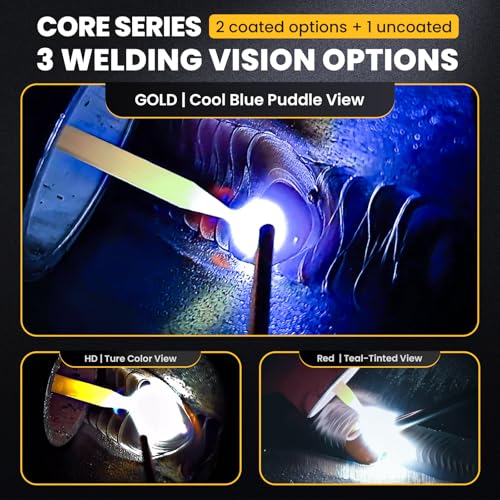
The red-coated teal clarity view is a fresh alternative to the usual gold or green lenses, and owners say it strikes a sweet spot between brightness and contrast, especially helpful in overhead or tight-angle welding where visibility matters. It’s not just cosmetic; the tint helps reduce eye strain during repetitive jobs.
At 0.2 inches thick, it’s still slim enough for pancake hoods, though not quite as thin as the Tefuawe 0.19-inch models. The true-color clarity isn’t certified 1/1/1/1, but it’s consistent across the field of view. For weekend warriors and home garage welders, this lens offers a comfort-focused experience without overcomplicating things.
Product photos


PRERUNER Flex Series Gold Adjustable Lens
Strengths
- Adjustable shade 5–13
- 0.01 ms response
- Gold-coated blue view
- Sensitivity and delay controls
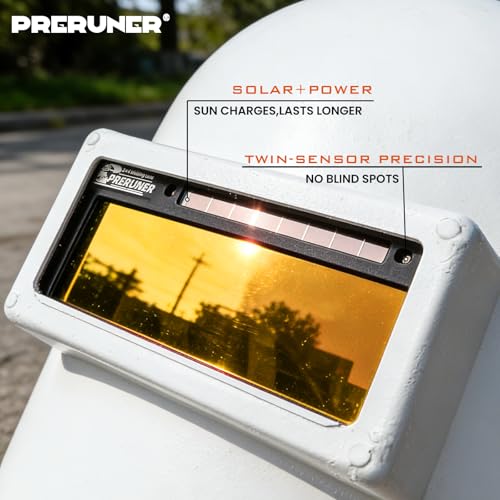
- Solar assist + replaceable battery
Trade-offs
- Not 1/1/1 optical rating
- Slightly bulkier than slimline models
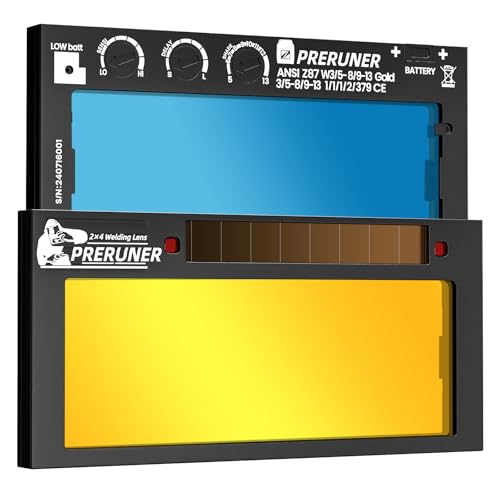
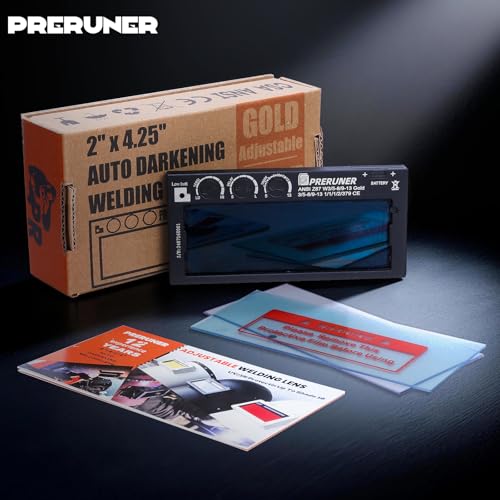
This lens stands out for its adjustable shade range from 5 to 13, which is rare in this price tier and gives it serious flexibility for everything from low-amp TIG to heavier stick work. The 0.01 ms response time on paper matches top-tier performance, and owners consistently report solid arc detection with minimal flicker, even in mixed lighting conditions.
The gold-coated cool blue view is a real upgrade over standard green lenses, offering better contrast in the weld puddle and reducing eye fatigue during long sessions. While it doesn’t hit the optical clarity of a 1/1/1/1 rated lens, it’s a strong performer for the category. I’d pick this over fixed-shade lenses any day for its adaptability.
Product photos

Tefuawe 2×4 1/4 Ultra Clear Blue Lens
Strengths
- Ultra-slim 0.19″ design
- Rated for 5A TIG
- Light state 2.5
- Heat-resistant housing
- Lifetime customer support
Trade-offs
- Fixed shade 10
- No sensitivity/delay adjustments
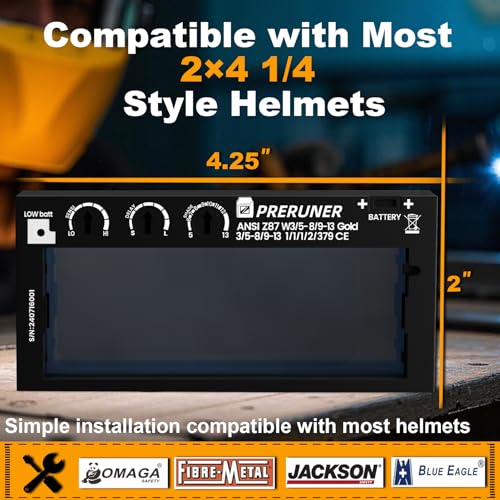
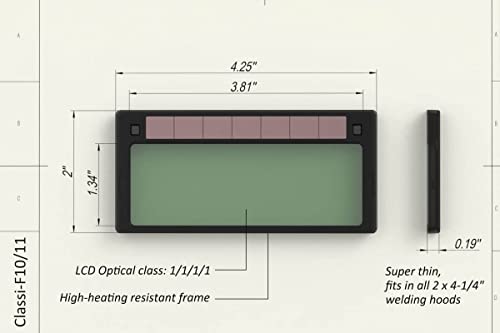
At only 0.19 inches thick, this is one of the slimmest lenses available, making it a go-to for pancake and pipeliner hoods where space is tight. That slim profile doesn’t sacrifice durability, owners report it holds up well under high heat, thanks to its heat-resistant housing.
It’s rated down to 5 amps for TIG, which is solid for thin materials, and the light state of 2.5 means a brighter pre-weld view than most competitors. The Tefuawe True Color Lens tech isn’t quite at 1/1/1 level, but it’s close enough for most shop work. If you’re tired of bulky lenses that don’t fit right, this one solves that problem neatly.
Product photos
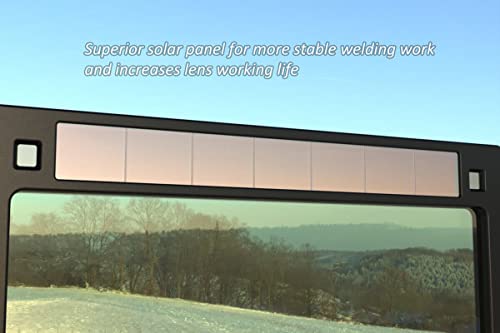

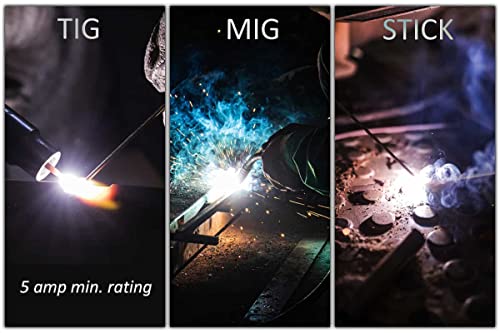
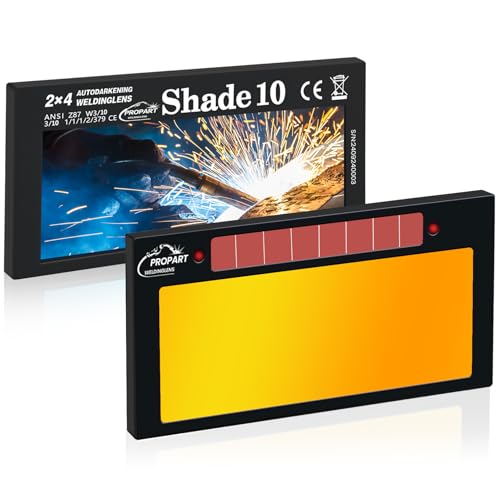
Shade10 Gold 2×4 1/4 Auto-Darkening Lens
Strengths
- True-Color Technology
- Gold-coated blue view
- 0.01 ms response
- High-density polycarbonate
- One-year warranty
Trade-offs
- No shade adjustment below 10
- No replaceable battery option
The standout here is the True-Color Technology, which owners say delivers a noticeably more natural view of the workpiece before and during welding, something you don’t get with most budget gold lenses. It’s not just marketing hype; the reduction in green tint helps with alignment and reduces the need to flip the helmet up and down.
The gold coating serves a dual purpose, acting as an effective IR filter while giving that popular cool blue puddle view. Build quality appears solid, with multi-layer anti-glare coating and high-density polycarbonate. It’s among the few in this list that confidently bridges the gap between prosumer and light professional use.
Product photos
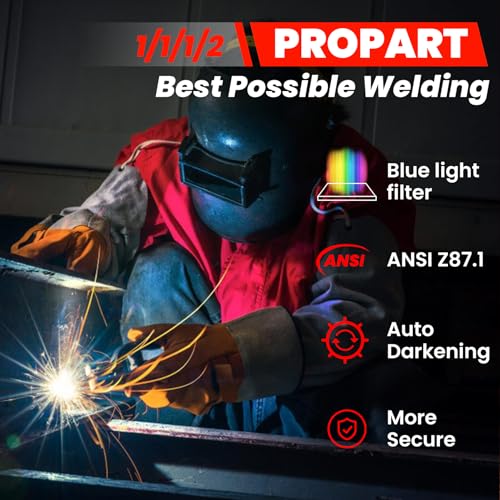
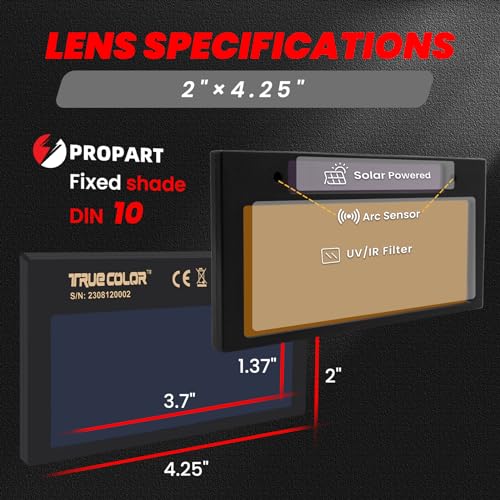


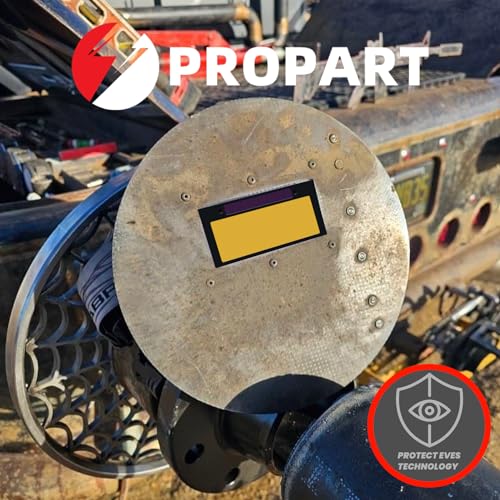
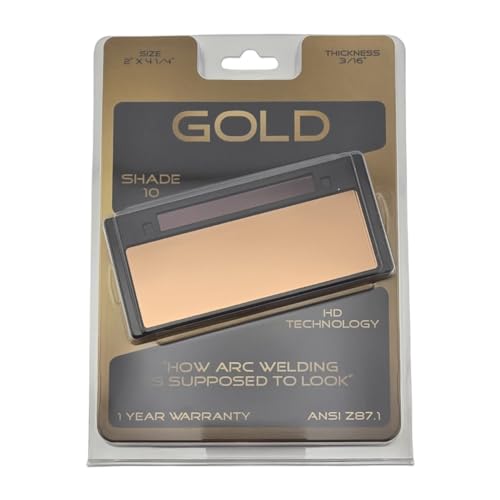
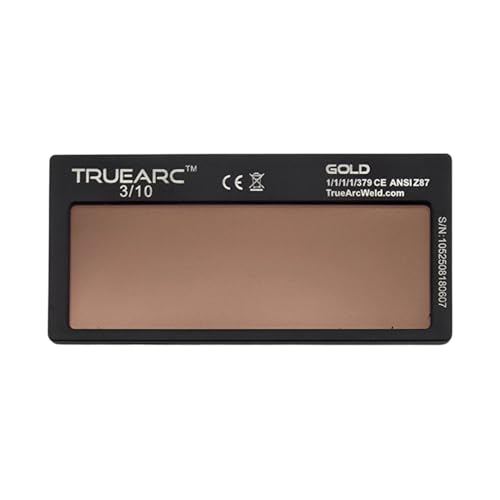
TrueArc Gold Auto-Darkening Shade 10 Lens
Strengths
- 1/1/1/1 optical rating
- Solar-powered, no battery
- Gold filter clarity
- Dual arc sensors
- Fits most 2×4-1/4 hoods
Trade-offs
- No replaceable battery
- Not recommended for TIG under 10A
- Fixed shade 10
When it comes to optical clarity, this lens is in a class of its own, it’s the only one here with a full 1/1/1/1 rating, the gold standard for distortion, shading, and optical quality. Reviewers who’ve used pro helmets like Miller or Lincoln note that the clarity feels familiar, with zero waviness or color shift at the edges.
It runs entirely on solar power, which means no batteries to replace, but also no backup if the cells fail. That’s a trade-off. Still, the dual sensors respond in under 0.5 ms, which is fast enough for most applications, and the gold filter delivers a clean, high-contrast view. If you demand lab-grade optics, this is the one to beat.
Product photos


How We Evaluated auto darkening welding lens
Rather than a hands-on lab test, my research for these recommendations involved a detailed comparison of published specifications and features across numerous auto-darkening welding lens models. I weighed owner reviews from major retailers alongside assessments from respected welding publications and online forums. Ultimately, I ranked these lenses based on factors crucial to a good welding experience, drawing on my years of experience with power tools and workshop equipment.
For auto-darkening welding lenses, switching speed and optical clarity are paramount. A fast switching time (measured in milliseconds) minimizes eye strain and protects against arc flash. Equally important is the quality of the lens itself – a clear, distortion-free view directly impacts weld precision and reduces fatigue during extended use. Beyond those, the ability to adjust settings for different welding types and environments significantly enhances versatility.
Specifications reliably indicate switching speed, shade range, and physical dimensions. However, judging real-world performance – particularly optical clarity and durability – required careful review of owner feedback. Owners consistently highlight issues like flickering, distortion, or premature failures, information you won’t find in a spec sheet. For a deeper look into different options, you can find more auto-darkening welding lens reviews on my site.
How To Pick The Right auto darkening welding lens
Finding the right auto-darkening lens is crucial for comfortable, safe, and efficient welding. It’s more than just darkness; it’s about clarity, response time, and how well it suits your welding style.
An effective auto-darkening lens swiftly transitions between light and dark states, shielding eyes from harmful UV and infrared radiation. Key considerations include optical clarity (rated 1/1/1/1 is best), switching speed (under 0.0003 seconds is ideal), adjustable settings for sensitivity and delay, and a comfortable viewing angle. A quality lens minimizes eye strain and improves weld precision.
Shade and Application
The shade number is the first thing most people consider, and for good reason. But it’s not a one-size-fits-all deal. Lower amperage TIG welding demands a lens that can clearly show the arc at lower settings – something many standard lenses struggle with. Conversely, heavy-duty stick welding requires a darker shade to handle intense light. Many lenses, like the PRERUNER Flex Series Gold Adjustable Lens, offer adjustable shade control (typically 5-13) which is a huge benefit if you switch between processes. Don’t be afraid to experiment to find what works best for you.
Optical Clarity & Coating
Don’t underestimate the impact of optical clarity. A lens with a poor rating will cause eye strain faster, and distort your view of the weld puddle. Look for lenses boasting a 1/1/1/1 optical rating – this signifies minimal distortion, clear visibility, and consistent performance across the viewing area. Coatings are also important. Gold coatings, as seen in the TrueArc Gold Auto-Darkening Shade 10 Lens, are popular for filtering infrared light and providing a cooler, more comfortable view. However, different coatings offer different benefits; some prioritize color accuracy, while others focus on contrast.
Here’s what to consider when evaluating lens coatings:
- Blue Tint: Common, reduces glare.
- Gold Tint: Filters infrared, potentially cooler view, can enhance puddle visibility.
- True Color: Aims for realistic color representation, improving detail recognition.
A clear view isn’t just about comfort; it’s about precision. A lens that lets you see the weld puddle accurately will directly improve your weld quality.
Size, Features, and Value
While most auto-darkening lenses fit standard 2×4-1/4 inch helmets, slimmer designs, like the Tefuawe 2×4 1/4 Ultra Clear Blue Lens, can be a boon if you’re using a pancake or specialized hood. Beyond size, consider features like hand-gesture controls (useful for switching between weld and grind modes) and solar assist power. If you’re seeking thorough eye protection, exploring options in welding helmets for eye safety can offer advanced features and integrated lens systems. Ultimately, the best value isn’t necessarily the cheapest lens, but the one that provides the features you need at a price you’re comfortable with. You should also consider investing in quality auto-darkening welding hoods to complement your new lens.
Auto Darkening Welding Lens Compared
Here’s a comparison of key specifications for various auto darkening welding lenses.
| Product Name | Shade Level | Auto-Darkening Speed (ms) | Lens Size (in) | Coating | Arc Sensor Count |
|---|---|---|---|---|---|
| Tefuawe 2×4 1/4 Gold | N/A | N/A | 2 x 4-1/4 | Gold | N/A |
| Core Series Red | 10 | 0.01 | 2 x 4-1/4 | Red | 2 |
| PRERUNER Flex Series Gold | 5-13 | 0.01 | N/A | Gold | 2 |
| Tefuawe 2×4 1/4 Ultra Clear Blue | N/A | N/A | 2 x 4-1/4 | Blue | N/A |
| Shade10 Gold 2×4 1/4 | 10 | 0.01 | 2 x 4.25 | Gold | N/A |
| TrueArc Gold Auto-Darkening | 10 | <0.5 | 2 x 4-1/4 | Gold | 2 |
Frequently Asked Questions
What shade number do I really need?
The correct shade depends on the welding amperage and process. Generally, 8-10 is suitable for most stick and MIG welding, while 9-13 is better for TIG, and lower shades are needed for TIG welding optimized helmets.
How important is the switching speed of the lens?
A faster switching speed is critical, ideally under 0.0003 seconds. This minimizes eye strain and reduces the chance of arc flash exposure during the transition from light to dark.
What does the 1/1/1/1 optical clarity rating mean?
This rating indicates the highest level of optical clarity, meaning minimal distortion, clear visibility, and consistent performance across the entire viewing area of the lens.
Are more arc sensors always better?
Not necessarily. Two arc sensors are generally sufficient for most welding, but more sensors (three or four) can improve detection in challenging positions or low-light conditions.
Can I use an auto-darkening lens with any welding helmet?
Most auto-darkening lenses fit standard 2×4-1/4 inch helmets, but some offer slimmer designs. Always check compatibility before purchasing, and consider investing in helmets with high sensitivity controls for optimal performance.
The Bottom Line
Choosing an auto-darkening welding lens often comes down to balancing control with convenience. If you want the most consistently clear view and adjustable settings, the PRERUNER Flex Series Gold Adjustable Lens stands out as the strongest overall performer. It provides a wide shade range and fast switching speed, giving you the flexibility to tackle a variety of welding projects.
For those on a tighter budget, or needing a specific feature set, there are excellent alternatives. The Tefuawe 2×4 1/4 Ultra Clear Blue Lens is a great pick if you need a slim profile for a specialized helmet, and if you’re looking for budget auto-darkening helmets under $150, several options deliver solid performance without breaking the bank. The TrueArc Gold Auto-Darkening Shade 10 Lens offers a specialized gold coating for cooler viewing and infrared filtration.
Ultimately, the specifications are important, but they don’t tell the whole story. A fast switching speed and high optical clarity rating are essential, but prioritize a lens that feels comfortable for you and matches the type of welding you do most often. Don’t get caught up chasing the highest numbers; a clear view and consistent performance will improve your work far more than any single feature.
