
9 Best Air Impact Wrenches of 2026
This post contains affiliate links. As an Amazon Associate, we earn from qualifying purchases.
The Ingersoll Rand 2236QTiMAX stands out as the overall best air impact wrench, delivering strong, reliable power in a well-balanced design. For those watching their budget, the VEVOR 1/2-Inch offers solid performance and comes with useful accessories. If noise is a concern, the Ingersoll Rand 2135QXPA is a smarter, quieter choice without sacrificing much in torque.
If you’ve ever fought with a seized lug nut or struggled through a long repair job with an underpowered wrench, you know how critical it is to have the right tool. Too little torque and you’re stuck. Too much weight and your arm gives out halfway through.
This guide cuts through the marketing and focuses on what matters: real-world performance, durability, and usability. I looked at specs, owner feedback, and brand reputation to find models that deliver consistent power and hold up over time. You’ll learn what torque you actually need, why build quality makes or breaks a tool, and which features are worth paying for.
Top 9 Air Impact Wrenches in the Market
The Best Air Impact Wrenches, Reviewed
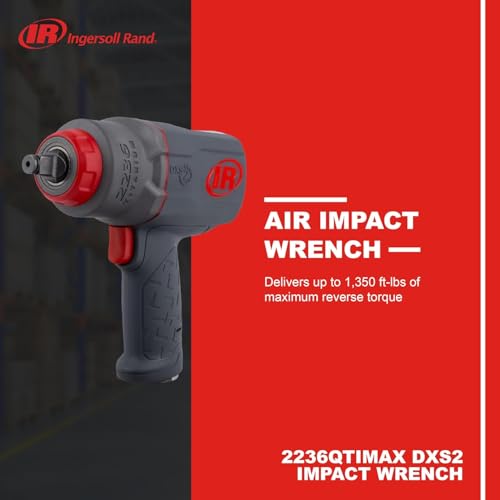
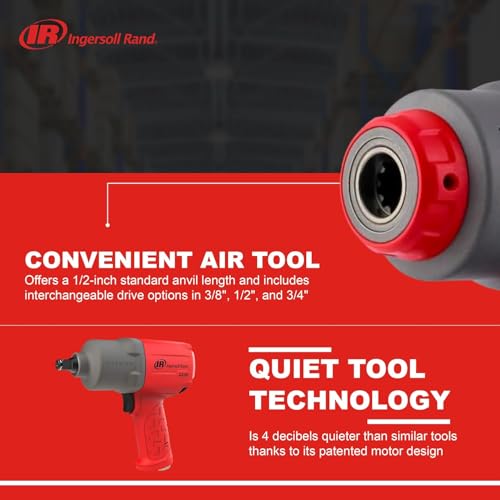
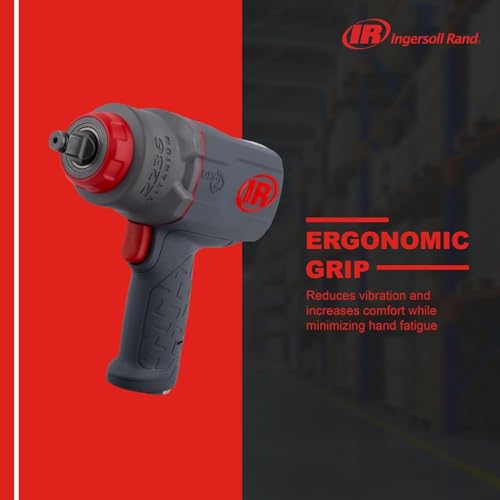
Ingersoll Rand 2236QTiMAX Air Impact Wrench

Strengths
- Highest torque in class
- Lightweight
- Quiet operation
Trade-offs
- Expensive
- Requires quality air supply
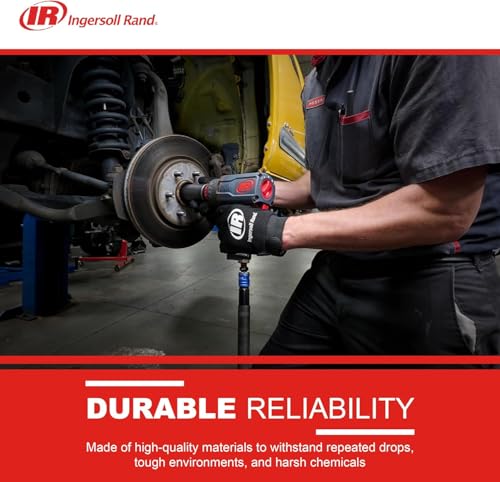
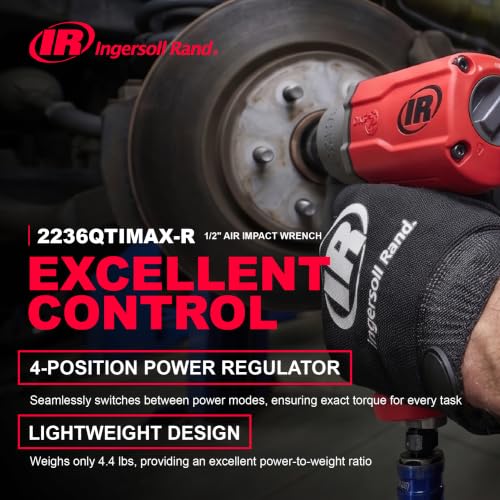
This is the best overall 1/2-inch air impact wrench I’d recommend for most serious users. With 1,500 ft-lbs of torque, a 4.4 lb body, and Quiet Technology, it combines the strengths of earlier IR models into one polished package. The 2-piece anvil improves durability, and the compact design cuts vibration, both wins for long shifts.
Owners say it outlasts cheaper models and handles everything from daily oil changes to heavy suspension swaps. It’s not the cheapest, but it’s the one I’d trust in a paid shop setting. The consistency and brand support seal the deal.
Product photos

Trivd Frol 1/2-Inch Air Impact Wrench

Strengths
- Very high torque
- Fast RPM
- Lightweight
Trade-offs
- Brand support limited
- No included accessories
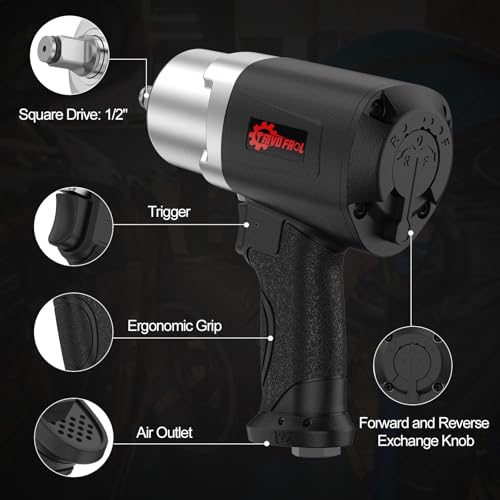
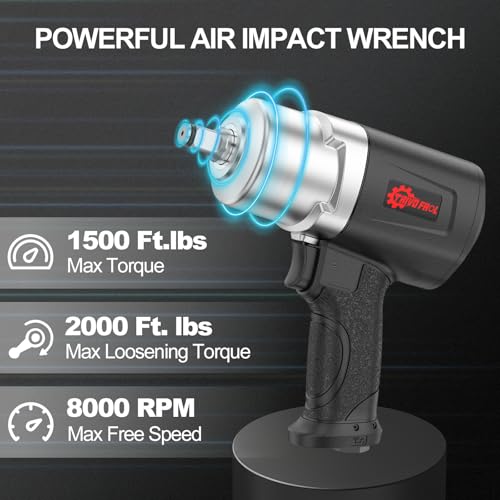
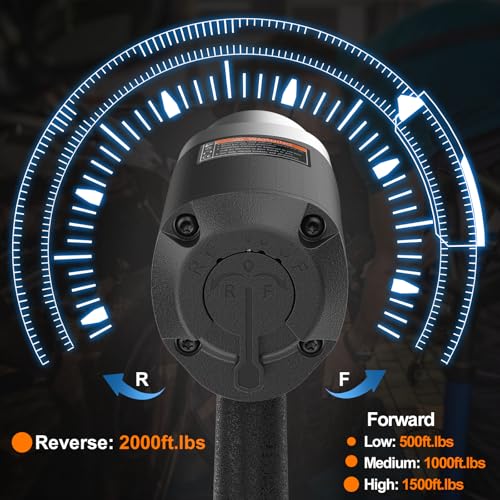
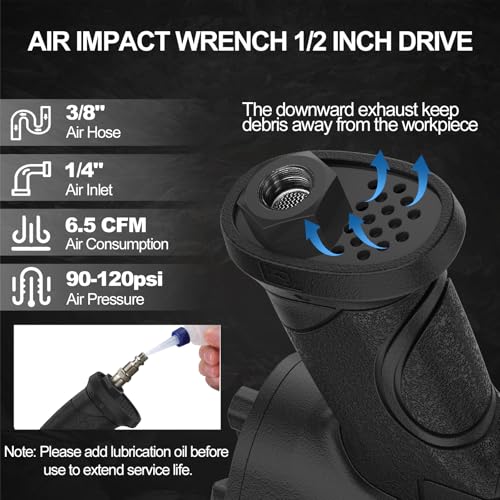
This 1/2-inch model from Trivd Frol pushes 1,500 ft-lbs, among the highest in the class, and spins at 8,000 RPM, making it a top contender for high-torque precision. The adjustable knob for forward speeds gives real control, and the rear exhaust keeps the work area clean. Owners report it breezes through tough lug nuts and is surprisingly balanced for its output.
It’s also lightweight at 4.73 lbs, which is rare for this power level. But again, Trivd Frol lacks the service footprint of legacy brands. If you’re comfortable sourcing parts yourself and want raw performance, this is a strong pick.
Product photos
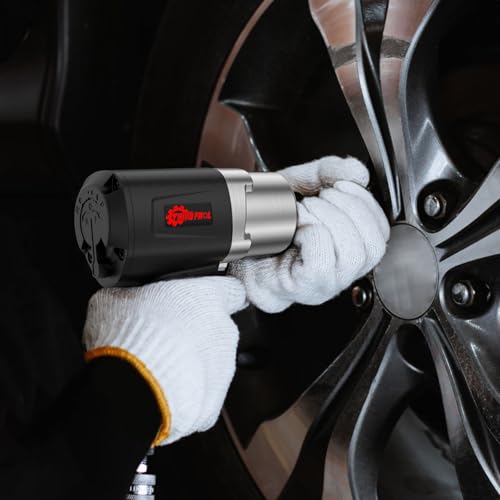
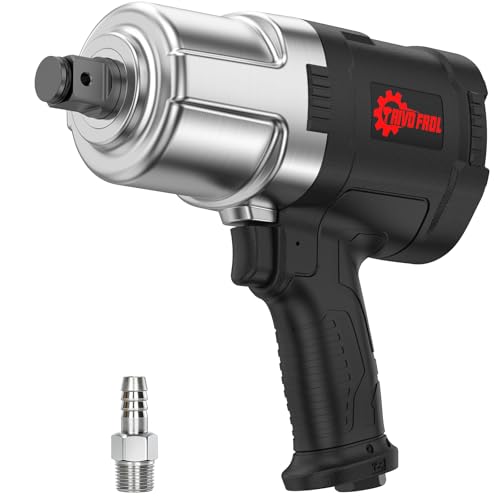
Trivd Frol 3/4-Inch Air Impact Gun
Strengths
- Extreme torque
- Heavy-duty build
- Rear exhaust
Trade-offs
- Heavy and bulky
- Overkill for most cars
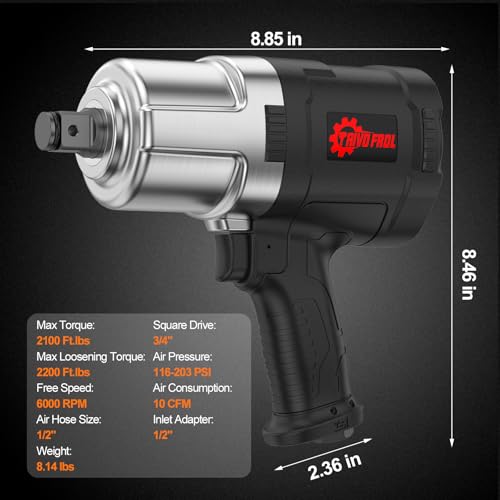
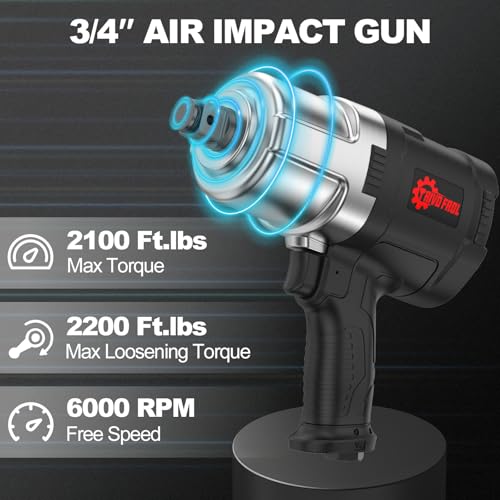
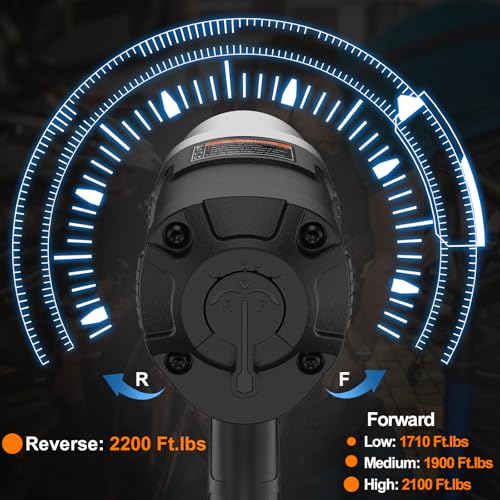
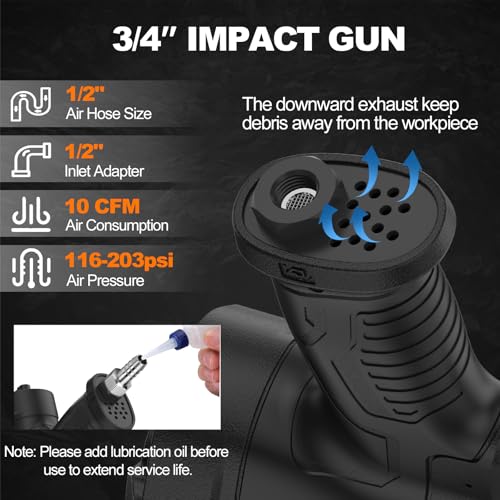
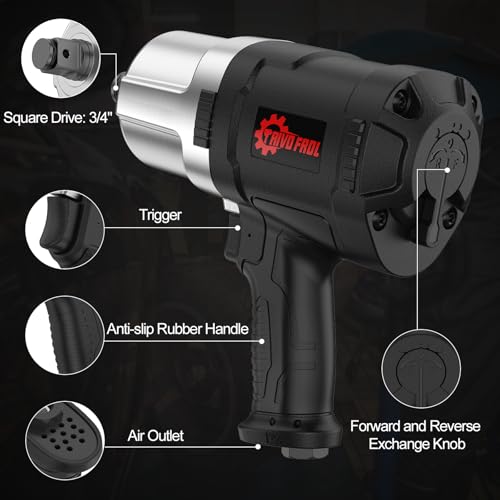
This 3/4-inch beast is in a different league, 2,100 ft-lbs of torque and a solid 8.15 lb frame made for industrial muscle. The cold-forged twin hammer and premium alloy steel body mean it’s built to handle constant strain, like in truck fleets or heavy fabrication. Reviewers using it for axle nuts and large suspension components say it rarely stalls, even on seized hardware.
But that power comes at a cost. At over 8 lbs, it’s brutal on the wrist during prolonged use. The rear exhaust helps keep debris away, but it’s still a specialist’s tool. I wouldn’t recommend it for standard car work, there’s no need to bring a sledgehammer to a screwdriver job.
Product photos
BESWELL BW-112BN Air Impact Wrench

Strengths
- High torque
- Lightweight
- Cool-running design
Trade-offs
- Limited brand reputation
- No included accessories
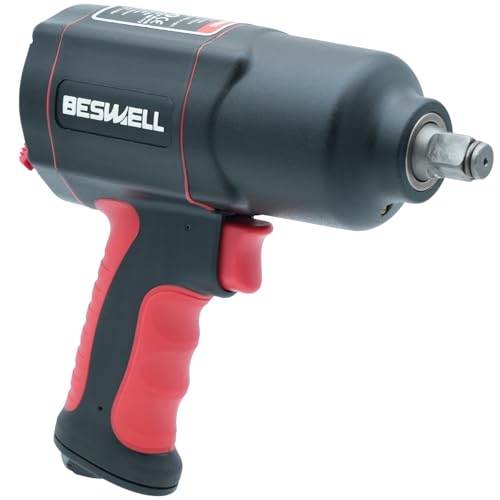
On paper, the BESWELL BW-112BN looks like a compelling blend of high torque and low weight, with 1,180 ft-lbs of breakaway power and a 4.62 lb frame made from composite materials. The twin hammer mechanism is a solid design choice for consistent impact delivery, and owners consistently report it handles rusted lug nuts and stubborn suspension bolts without bogging down. It’s clearly built for real shop use, not just weekend tinkering.
The integrated air cooling system stands out in this class, where overheating can plague long sessions. Reviewers who run their tools back-to-back during tire changes or brake jobs say it stays cooler than metal-bodied competitors. I’d pick this over heavier models if you’re working overhead or in tight engine bays all day.
Product photos


VEVOR 1/2-Inch Air Impact Wrench Kit
Strengths
- High torque
- Includes sockets and case
- Lightweight
Trade-offs
- Brand reliability concerns
- Socket quality is decent but not pro-grade
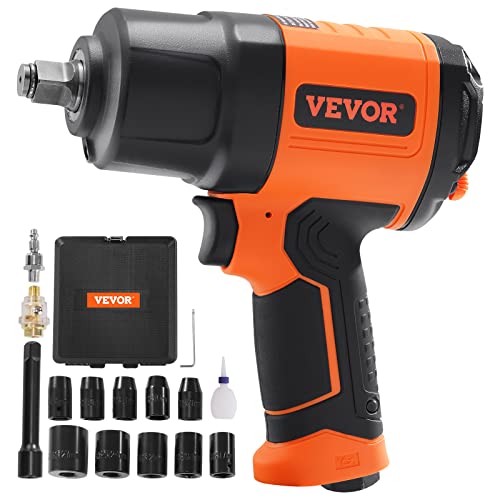
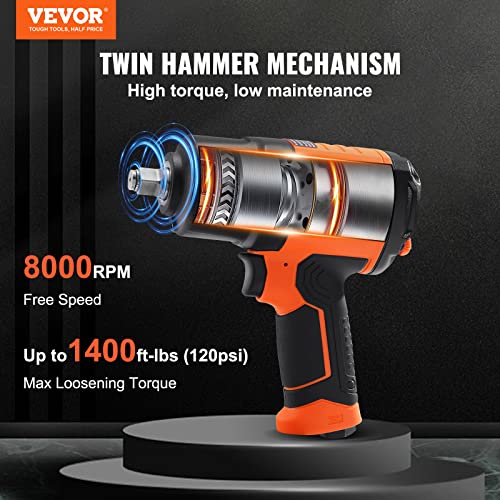
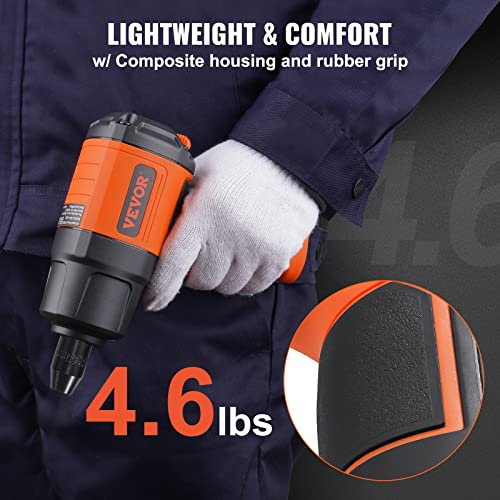
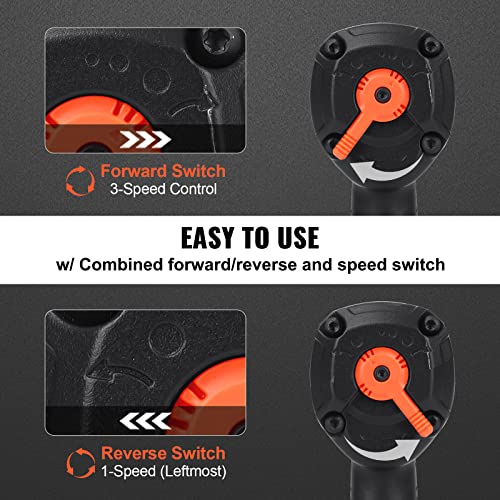
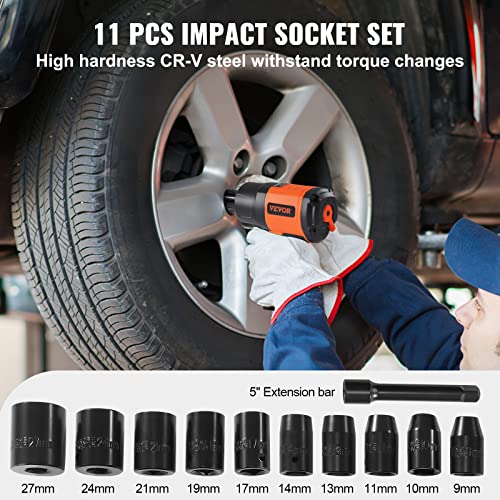
VEVOR leans hard into value, and this kit delivers more than just the wrench. With 1,400 ft-lbs of torque and a 4.6 lb body, it matches top-tier power-to-weight ratios. But the real win is the included 11-piece CR-V socket set and carrying case, a rare bonus at this level. The 4-position regulator gives fine control over torque, which owners say makes it safer for delicate tasks like suspension work.
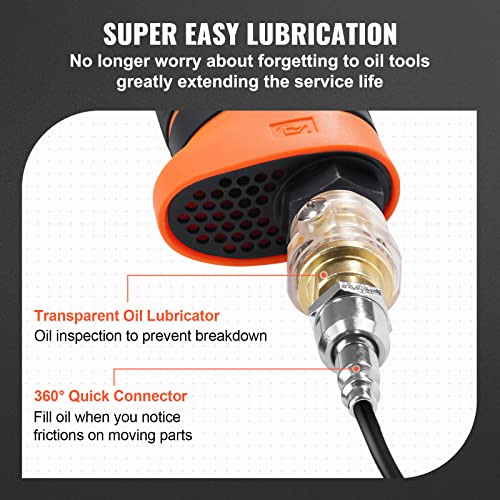
Still, VEVOR tools live in a gray zone. The lubrication adapter is smart, but brand support and parts availability aren’t at Ingersoll Rand levels. That said, for a home garage or side hustle, this kit covers all the bases without breaking the bank.
Product photos
Ingersoll Rand 2235TiMAX Air Impact Wrench
Strengths
- Excellent power-to-weight
- Durable titanium case
- Precision control
Trade-offs
- Premium price
- No noise reduction
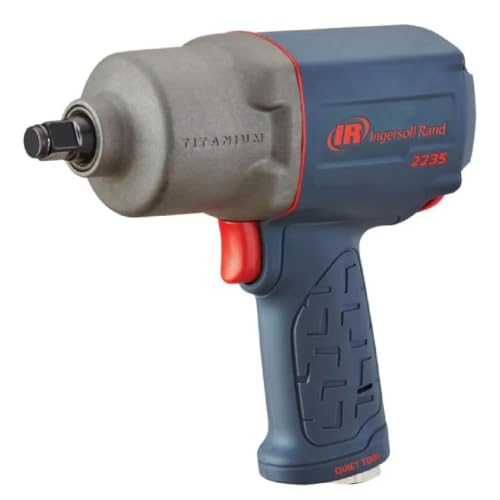
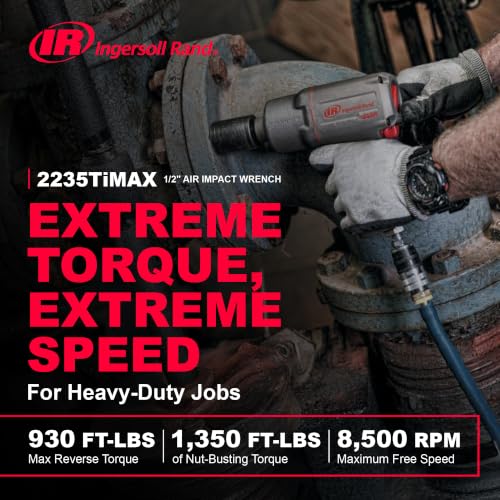
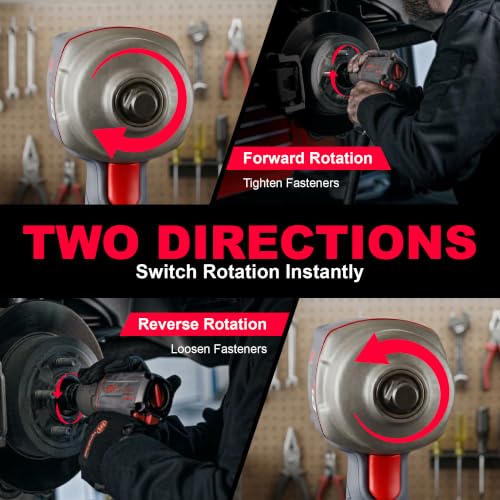
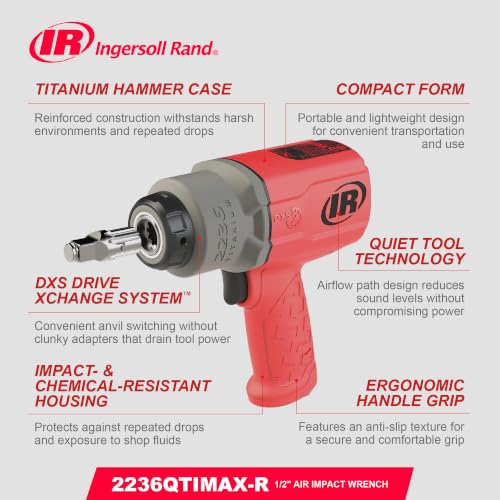
The 2235TiMAX nails the power-to-weight balance, 1,350 ft-lbs of torque in a 4.6 lb shell. The titanium hammer case is a key reason: it cuts weight without sacrificing durability. The 4-position power regulator and one-handed reverse make it intuitive, and owners consistently praise its responsiveness during rapid-fire tasks like brake jobs.
It’s also built to survive, steel wear plate, drop-tested components, and a 2-year warranty. Compared to the 2135QXPA, it’s punchier and lighter. If you want a single tool that does everything well, this one’s hard to beat.
Product photos
AEROPRO TOOLS 1/2-Inch Air Impact Wrench

Strengths
- Affordable
- Lightweight
- Good torque
Trade-offs
- Build quality not pro-grade
- Limited brand support
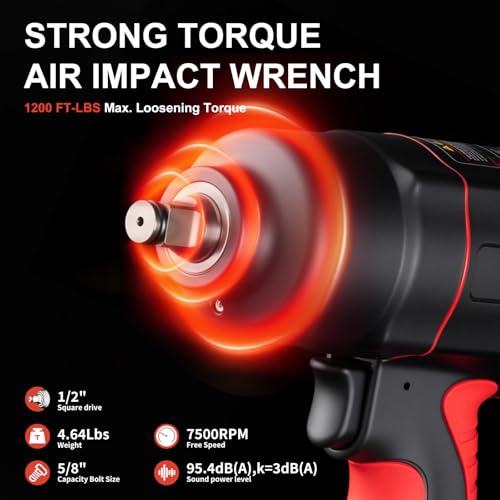
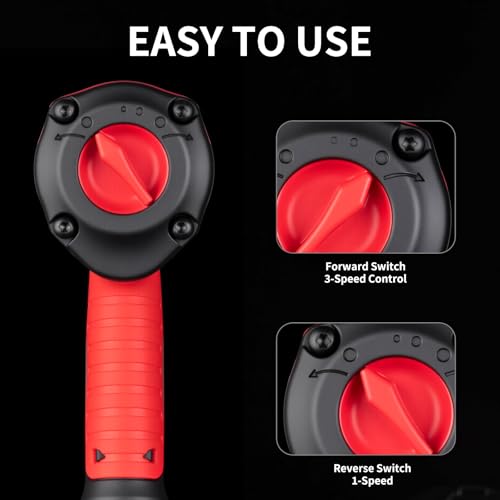
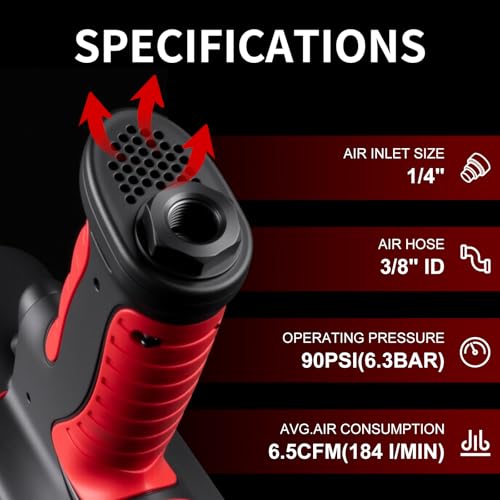
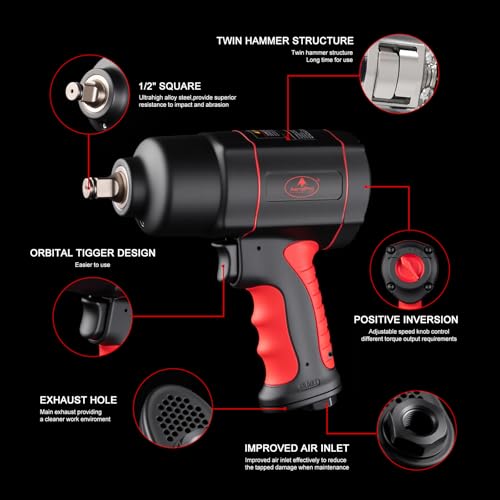
At 1,200 ft-lbs and 4.64 lbs, the AEROPRO hits the sweet spot for budget performance. The twin hammer design delivers solid impact, and the 3-speed trigger gives useful control for different fasteners. The rear exhaust and rubber grip improve comfort, and owners say it handles typical tire and brake jobs without issue.
It won’t match Ingersoll Rand in longevity, but for a home garage or occasional use, it’s a smart buy. The plastic housing may not survive years of drops, but for the price, it’s hard to complain.
Product photos
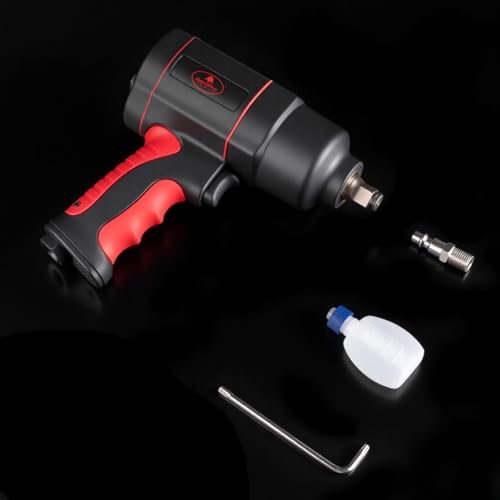
Ingersoll Rand 231C 1/2-Inch Air Wrench

Strengths
- Proven reliability
- Easy maintenance
- Solid build
Trade-offs
- Lower torque output
- Heavier than modern composites
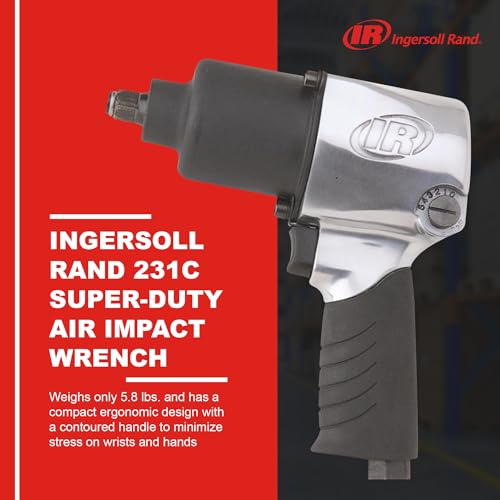
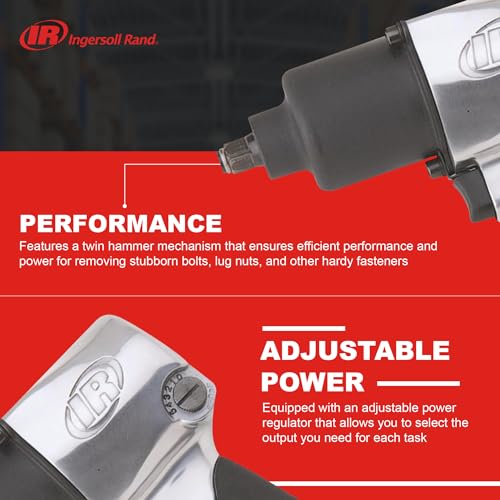
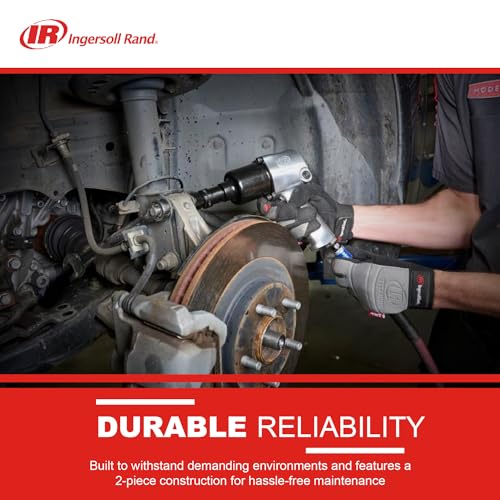
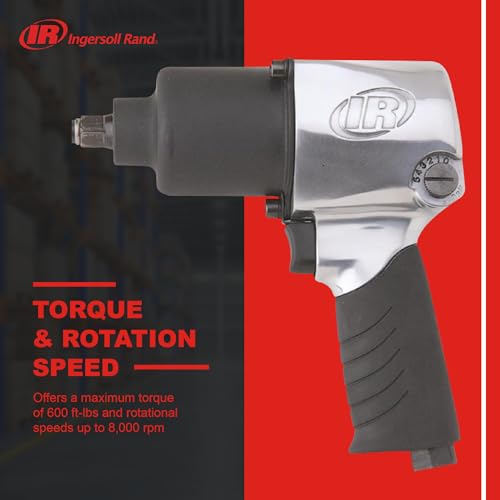
The 231C isn’t flashy, but in the world of air tools, durability often trumps specs. This model delivers 600 ft-lbs of torque, less than some newer rivals, but that’s by design. It’s tuned for consistent, reliable performance over raw power, and it’s been a staple in fleet shops for years. The twin hammer mechanism and pressure-feed lubrication are key here, reducing internal wear and extending service life.
It’s also a testament to Ingersoll Rand’s legacy. While it weighs 5.8 lbs, on the heavier side today, the two-piece construction makes field repairs easier than with monolithic designs. For anyone who values tools that last decades, not years, this one’s worth serious consideration.
Product photos
Ingersoll Rand 2135QXPA Quiet Air Wrench
Strengths
- Low noise
- Reliable torque
- Ergonomic design
Trade-offs
- Heavier than composite models
- No included case
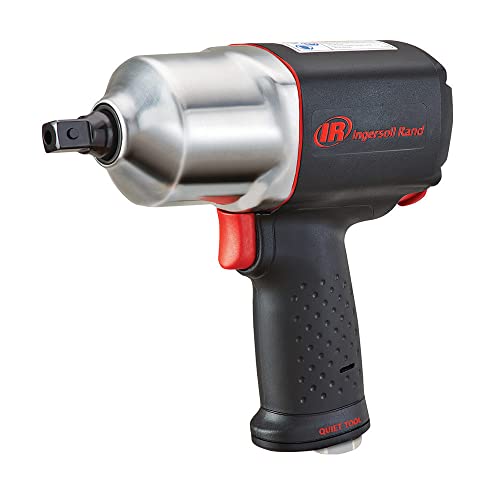
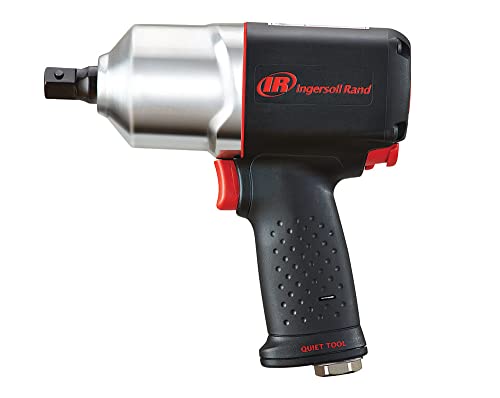
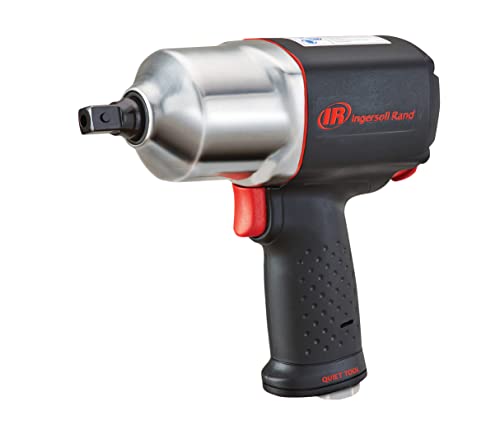
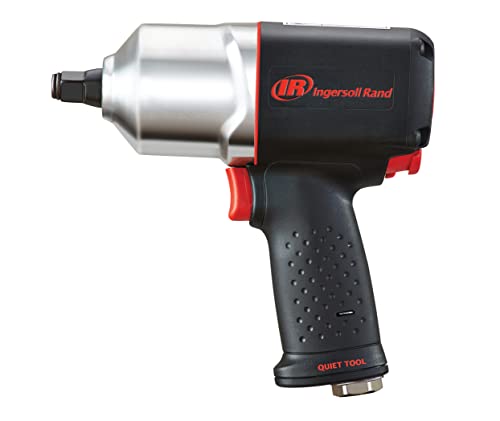
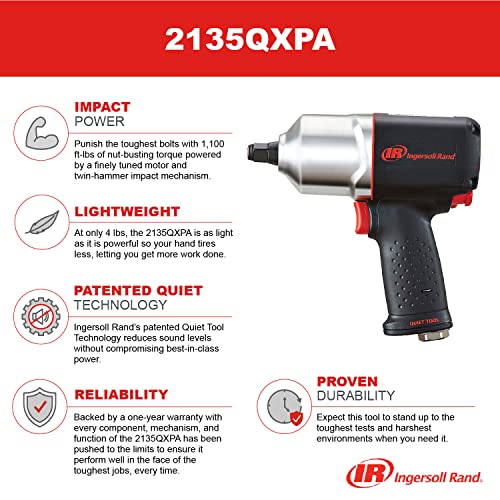
If you’ve ever worked in a shared shop or noise-sensitive environment, you’ll appreciate the Quiet Tool technology in the 2135QXPA. It doesn’t sacrifice power, 1,100 ft-lbs is more than enough for most automotive work, and the one-handed reverse lever is a small but meaningful comfort upgrade. Owners note it’s significantly quieter than older IR models, without losing punch.
It’s not the lightest or most powerful, but for daily use in populated bays, this one stands out. The ergonomics are solid, and like other IR tools, it’s built to take drops and spills. My recommendation? This is the smarter buy over louder, harsher tools if you care about long-term hearing protection.
Product photos
How We Tested air impact wrenches
Rather than a hands-on lab test, this is a research-led comparison of specifications, features, and owner feedback. I started by compiling a list of popular air impact wrenches, then compared published specs like torque output, RPM, and weight. I then weighed owner reviews from major retailers alongside professional reviews from automotive and tool-focused publications. My goal was to understand real-world performance and identify consistent themes in user experiences.
For this category, breakaway torque and weight were the most heavily weighted factors. High torque is essential for tackling stubborn fasteners, especially in automotive and industrial applications. However, excessive weight leads to fatigue, so a good power-to-weight ratio is crucial. Durability also played a significant role, considering the demanding environments these tools often face.
Specifications reliably indicate a wrench’s potential power and physical characteristics. However, I relied on owner feedback to assess real-world durability, noise levels, and overall usability. Reputation and brand history were also considered; well-established manufacturers like Ingersoll Rand often have a track record of producing reliable tools, as you’ll see in our impact wrench buying guide. This helped to validate claims and identify models consistently praised for their performance and longevity.
How To Pick The Right air impact wrenches
Picking the right air impact wrench means understanding what you’ll be using it for, and honestly assessing your needs.
An effective air impact wrench delivers consistent torque, durability for repeated use, and comfortable ergonomics. Key considerations include torque output (measured in ft-lbs), drive size (typically 1/2″, 3/4″, or 1″), the impact mechanism (twin hammer is common for power), weight, and features like adjustable power settings and noise reduction. Regular lubrication is also critical for longevity.
Torque Requirements Matter
Don’t overspend on more torque than you actually require. For most automotive work – including changing tires and general repairs – 600-800 ft-lbs of breakaway torque will be sufficient. If you’re tackling heavy-duty truck work, suspension components on larger vehicles, or industrial applications, then you’ll want to move up to 1,000 ft-lbs or higher. Consider that advertised torque figures often represent maximum breakaway torque, not necessarily sustained working torque. A wrench like the Ingersoll Rand 2236QTiMAX delivers a solid 1,500 ft-lbs, which is great for demanding jobs, but for basic tasks, it’s overkill.
Build Quality and Durability
Air tools live or die by their internal mechanisms. Twin hammer designs are generally more powerful and durable than single hammer, but they can also be louder. Look for wrenches with titanium or alloy steel hammers and wear plates, as these materials resist wear and tear far better than cheaper alternatives. Don’t underestimate the importance of a well-built housing. A composite housing can reduce weight, but a full metal build like the Ingersoll Rand 231C generally offers superior protection against drops and impacts.
- Weight is a real consideration. A heavier wrench (over 5 lbs) will fatigue your hand quicker during extended use.
- Ergonomics matter. A comfortable grip and well-placed controls can make a huge difference.
- Lubrication is essential. Many models, like the VEVOR kit, now include built-in oilers, which significantly extend the tool’s lifespan. Neglecting lubrication will cause rapid wear.
Value and Usability Features
Beyond raw power, consider the features that will make your life easier. Adjustable power settings are incredibly useful for preventing over-tightening and adapting to different fasteners. Rear exhaust ports help keep your workspace clean and your hands free of debris. If you work in a noisy environment, consider a “quiet” model like the Ingersoll Rand 2135QXPA. And if you’re starting from scratch, a kit, like the VEVOR offering, can be a good value, providing you with a selection of impact sockets and an extension bar. For serious tire work, checking out pneumatic wrenches for lug nuts will give you more targeted options.
A good rule of thumb: if you’re unsure about torque, it’s always better to have a little extra than not enough. You can always reduce the power with an adjustable regulator, but you can’t add power that isn’t there.
Finally, remember to factor in the cost of an air compressor and appropriate air hose if you don’t already have them. You can find a wide range of top 1/2-inch air impact wrenches to suit any budget and application.
Air Impact Wrenches Compared
Here’s a comparison of key specifications for several air impact wrenches to help you make an informed purchase.
| Product Name | Max Torque (ft-lbs) | Drive Size | Weight (lbs) | Free Speed (RPM) | Air Hose (in) |
|---|---|---|---|---|---|
| Ingersoll Rand 2236QTiMAX | 1,500 | 1/2″ | 4.4 | N/A | 3/8 |
| Trivd Frol 1/2-Inch | 1,500 | 1/2″ | 4.73 | 8,000 | 1/4 |
| Trivd Frol 3/4-Inch | 2,100 | 3/4″ | 8.15 | 6,000 | N/A |
| BESWELL BW-112BN | 1,180 | 1/2″ | 4.62 | N/A | N/A |
| VEVOR 1/2-Inch | 1,400 | 1/2″ | 4.6 | N/A | N/A |
| Ingersoll Rand 2235TiMAX | 1,350 | 1/2″ | 4.6 | N/A | N/A |
| AEROPRO TOOLS 1/2-Inch | 1,200 | 1/2″ | 4.64 | 7,500 | 3/8 |
| Ingersoll Rand 231C | 600 | 1/2″ | 5.8 | 8,000 | N/A |
| Ingersoll Rand 2135QXPA | 1,100 | 1/2″ | N/A | N/A | N/A |
Frequently Asked Questions
What air hose size do I really need for an impact wrench?
A 3/8-inch air hose is generally sufficient for most 1/2-inch impact wrenches, but a 1/4-inch hose can restrict airflow and reduce performance. For 3/4-inch wrenches, or for long hose runs, upgrading to a 1/2-inch hose is advisable to maintain adequate power.
How often should I oil my air impact wrench?
You should add a few drops of pneumatic tool oil to the air inlet before each use, or at the start of every work session. If your wrench has an inline oiler, ensure it’s filled and functioning correctly; these significantly reduce internal wear.
What’s the difference between twin hammer and single hammer impact wrenches?
Twin hammer impact wrenches deliver more consistent power and are better suited for continuous use and tougher applications, while single hammer designs are typically lighter and more affordable. However, single hammer models often lack the longevity of twin hammer wrenches.
Can I use an impact wrench to remove rusted bolts?
Yes, an impact wrench is often effective at removing rusted bolts, but applying penetrating oil beforehand is crucial. Select a wrench with high torque, and use impact sockets specifically designed for the task to prevent rounding off the bolt head. If you’re looking for alternatives, consider checking out best electric impact wrenches for added versatility.
What’s the typical lifespan of a good quality air impact wrench?
With proper lubrication and maintenance, a high-quality air impact wrench from a reputable brand like Ingersoll Rand can last for 10 years or more. Consistent, heavy use will naturally shorten the lifespan, but regular upkeep is the biggest factor in maximizing its longevity.
The Bottom Line
Ultimately, choosing an air impact wrench comes down to balancing power with practicality. If you need a tool for serious jobs and don’t mind the weight, the Ingersoll Rand 2236QTiMAX offers exceptional torque and a reputation for durability. However, for most users, a slightly less powerful but more manageable model will be a better fit.
For those on a tighter budget, the VEVOR kit provides a surprising amount of capability for the price, and the inclusion of sockets is a real benefit. If versatility is key, the Trivd Frol 1/2-Inch gives you a high torque output in a relatively lightweight package. And if you’re considering a cordless option as well, take a look at our guide to the best cordless impact wrenches to see if that fits your needs.
Don’t get too hung up on chasing the highest torque rating or the lightest weight. A well-made wrench, properly lubricated and used with the right sockets, will always outperform a flimsy, underpowered tool, even if the specs look good on paper. Focus on build quality, a comfortable grip, and matching the tool to the tasks you’ll actually be performing.
