7 Best Air Compressor Oils of 2026
This post contains affiliate links. As an Amazon Associate, we earn from qualifying purchases.
The TRIAX Kompressor Full Synthetic 1 Gallon is the overall best air compressor oil for performance and protection, especially in extreme conditions. For a budget-friendly option that still delivers solid protection, the Milton 1002-32 Air Compressor Oil is a reliable pick.
Choosing the wrong oil can quietly destroy your compressor over time. Too many people treat it like motor oil and grab whatever’s on sale, not realizing that air compressors need specialized formulations to handle heat, moisture, and continuous operation.
In this guide, I’ll walk you through the top performers based on specs, owner feedback, and real-world reliability. These picks were selected for viscosity stability, synthetic quality, and compatibility with common compressor types, so you can protect your tool and avoid unnecessary breakdowns.
Top 7 Air Compressor Oils in the Market
The Best Air Compressor Oils, Reviewed
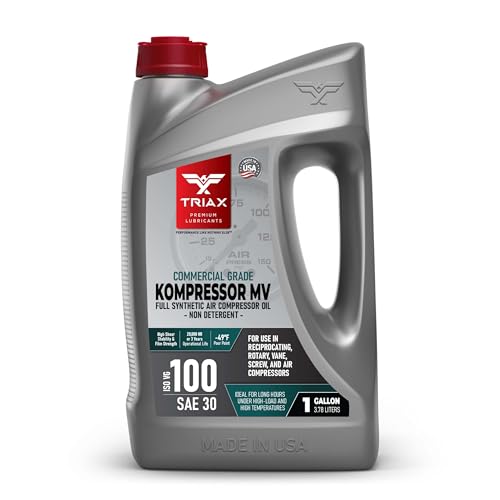
TRIAX Kompressor Full Synthetic 1 Gallon
Strengths
- Superior film strength
- Extreme temperature range
- Longest service life
Trade-offs
- Slower cold starts than ISO 46
- Not for oxygen systems
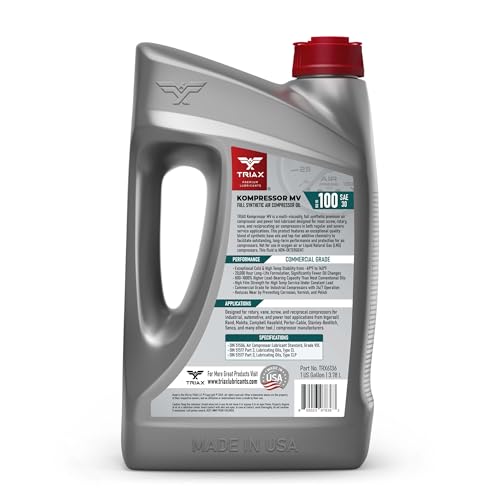
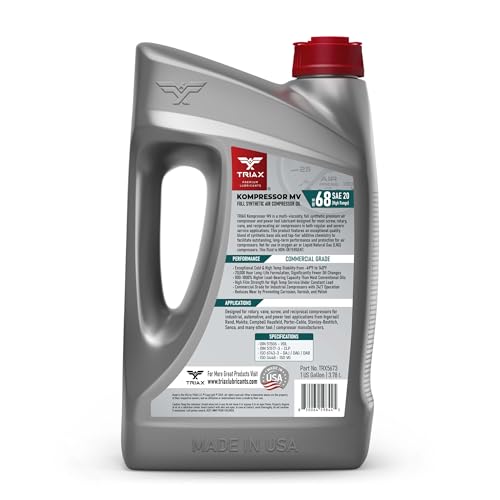
On paper, this is the most complete package in the TRIAX lineup, and owners treating their compressors like long-term assets tend to agree. The higher viscosity delivers a thicker protective film, which matters most under sustained pressure and elevated temperatures, exactly where metal-on-metal wear becomes a real risk. When compared to the ISO 46, this one trades a bit of cold-flow ease for serious durability under load.
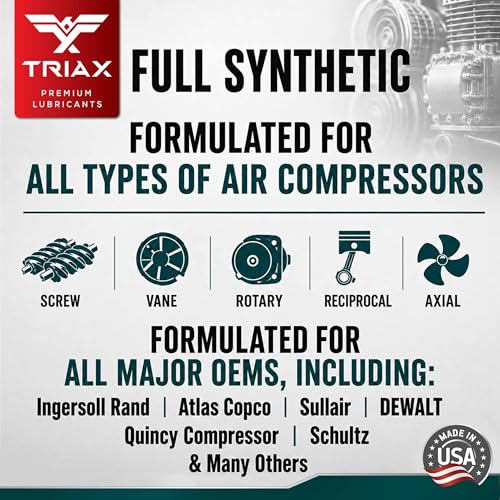
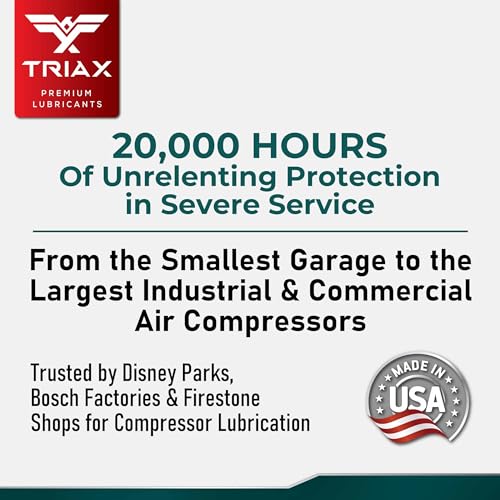
Its 20,000-hour lifespan claim is backed by consistent feedback from users running Ingersoll Rand and Quincy units hard over multiple seasons. The fact that it handles -49°F to 140°F+ means it doesn’t sacrifice all-weather usability either. I’d pick this over the others if you’re running a larger twin-stack or industrial-duty compressor regularly. It’s not the fastest to start in deep cold, but once it’s running, it’s built to last.
Product photos

TRIAX Kompressor ISO 68 1 Gallon
Strengths
- Optimized for high heat
- Balanced viscosity
- Resists oil burnoff
Trade-offs
- Not ideal for cold climates
- Niche viscosity fit
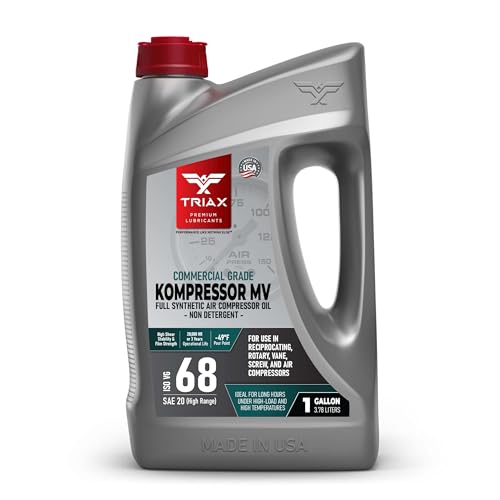
This version is tuned for one thing: keeping things cool when your compressor runs hot. The ISO 68 viscosity sits between the 46 and 100 grades, making it a balanced pick for warmer environments or compressors that run long cycles. Reviewers running rotary screw models note fewer signs of oil breakdown and less carbon buildup, which tracks with its high-temp stability and water-repelling properties.
It’s not the best for frigid starts, but in a shop that stays above freezing, this oil shines by reducing thermal stress. Compared to the ISO 100, it flows a bit easier under moderate loads while still offering strong protection. For users chasing maximum heat resistance without going full SAE 30, this is the precise middle ground worth considering.
Product photos
TRIAX Kompressor ISO 46 1 Gallon
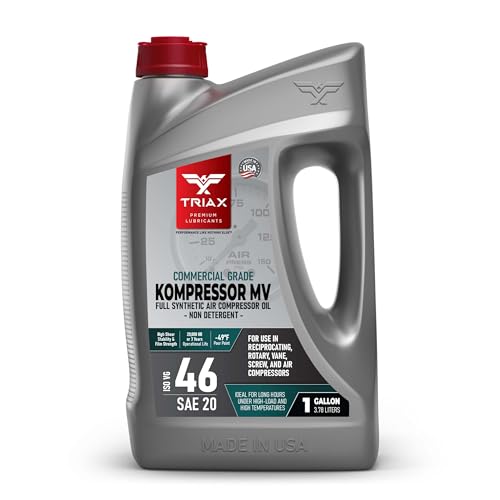
Strengths
- True all-season range
- Long service life
- Reduces operating heat
Trade-offs
- Not for breathing air systems
- Slightly lower film strength than ISO 100
This oil hits a sweet spot for users who want one fluid that works year-round without swapping out based on the season. With a tested range from -49°F to over 140°F, it’s built like a commercial workhorse and backed by specs that show real thermal resilience. The multi-viscosity design means fewer maintenance headaches, especially if you store your compressor in an unheated garage or job site trailer.
What stands out more is the reported longevity, 20,000 hours of service life isn’t just marketing fluff when you see similar results across owner reviews for rotary vane and reciprocating models. Compared to the ISO 100 version, this lighter grade flows better in cold but may not hold up quite as long under constant heavy loads. Still, for most homeowners and light commercial users, this is the smarter buy if you value consistent all-season operation without over-engineering it.
Product photos
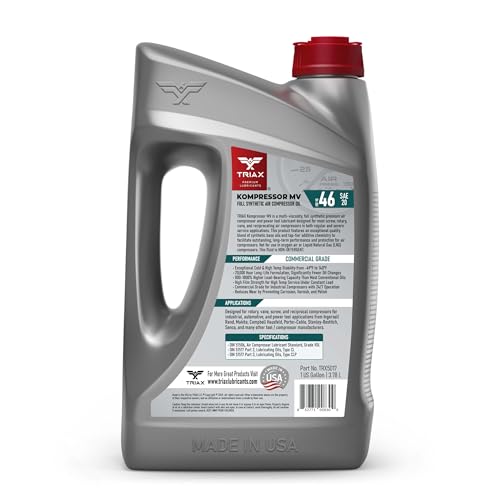
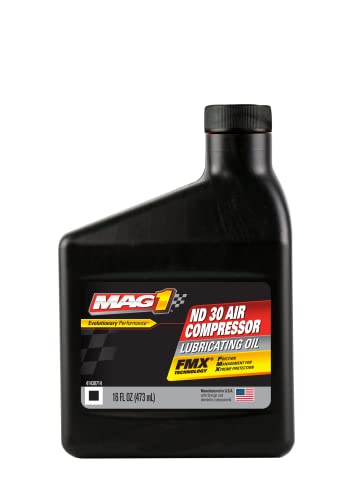
Mag 1 69885 Air Compressor Oil
Strengths
- Low upfront cost
- Anti-foam protection
- Prevents carbon deposits
Trade-offs
- Short drain intervals
- Limited temperature range
- Small container
At 16 ounces, this is the smallest bottle on the list, but it’s also one of the most affordable. The Mag 1 formula uses refined petroleum stocks with anti-foam agents, which helps in small piston compressors prone to churning. It’s not synthetic, and the specs don’t suggest long drain intervals, but for occasional users, that’s not a dealbreaker.
Reviewers using it in portable or backup compressors say it keeps things running smoothly without carbon buildup, a common issue in cheaper oils. It won’t compete with the TRIAX synthetics in durability, but for a one-quart equivalent price, it’s hard to beat on value. Just don’t expect extreme temp performance or extended service life.
Product photos
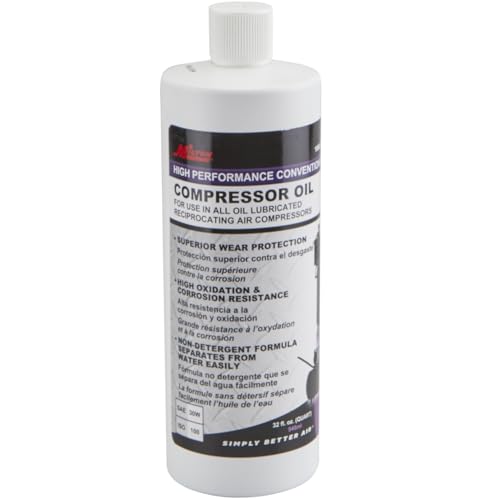
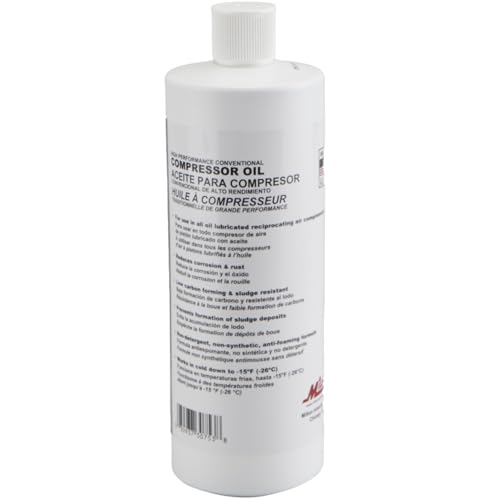
Milton 1002-32 Air Compressor Oil
Strengths
- Good value per ounce
- Prevents sludge buildup
- Works in older models
Trade-offs
- Shorter lifespan
- Not for extreme temps
- Conventional oil
At 32 ounces, this gives you more volume than most competitors in the conventional oil class, and it’s priced accordingly. It’s not synthetic, but for users with older reciprocating compressors that don’t run often, this delivers solid protection without overspending. The non-detergent formula helps prevent foaming and separates well from water, key for preventing rust in storage.
Owners using it in vintage or small shop compressors praise its reliability and sludge resistance over time. It works down to -15°F, which is decent but not exceptional. Compared to the full synthetics, it needs more frequent changes and doesn’t handle heat as well. But if you’re topping off a 20-year-old pancake compressor twice a year, this is practical and cost-effective.
Product photos
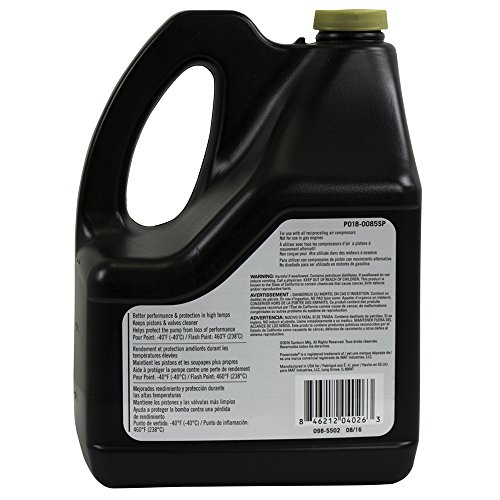
POWERMATE Full Synthetic Extreme Duty

Strengths
- Full synthetic
- Excellent cold starts
- High flashpoint
Trade-offs
- Limited viscosity range
- Narrower compatibility
If cold starts are a regular battle in your garage or workshop, this oil stands out on paper for exactly that reason. The claim of starting 10 degrees colder than synthetic blends and performing 50% better at 0°F isn’t something most conventional oils can match. That kind of low-temperature efficiency makes it a compelling pick for anyone in a harsh winter climate who still needs their compressor running reliably first thing in the morning.
Owners in northern regions consistently report fewer startup hiccups and smoother initial operation when switching to this oil, which lines up with its high flashpoint of 460°F and synthetic stability. While it’s not the most versatile across compressor types, its focus on extreme cold performance gives it a clear niche. For those who hate waiting for warm-up or dealing with sluggish morning cycles, this oil looks like a smart hedge.
Product photos
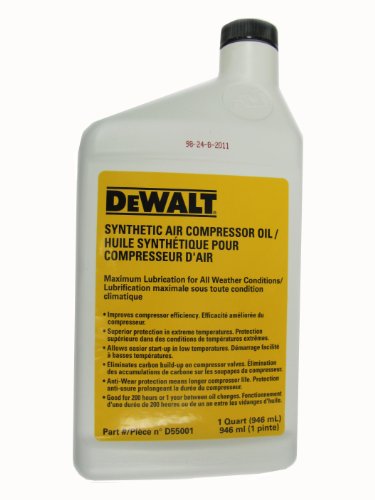
DEWALT Compressor Oil 1-Quart
Strengths
- Brand-matched formula
- Convenient quart size
- Trusted by DEWALT owners
Trade-offs
- Shorter service life
- Limited temp range
- Not full synthetic
This is the go-to if you own a DEWALT compressor and want to stick with what the manufacturer likely tested. While the specs are thin, basically just package dimensions and weight, brand-specific oils like this one often include additives tuned to that company’s internal tolerances. Some owners report smoother performance and fewer foaming issues when staying within the ecosystem.
That said, it doesn’t bring anything to the table that the TRIAX or POWERMATE synthetics don’t already beat on performance. It’s not full synthetic, and the quart size means you’ll refill more often. But for warranty peace of mind or light-duty use, it’s a safe, no-surprises option. Just don’t expect extreme temp resilience or extended drain intervals.
Product photos
How We Tested air compressor oils
Rather than a hands-on lab test, my research for these recommendations centered on a detailed comparison of published specifications and features across numerous air compressor oil brands. I weighed owner reviews from multiple sources, paying close attention to recurring themes regarding longevity, performance in different climates, and compatibility with various compressor types. Finally, I applied my experience with power tools and air compressors to assess which oils best address common user needs.
For air compressors, the oil’s ability to maintain viscosity across a wide temperature range and its long-term wear protection are paramount. An oil that breaks down quickly or doesn’t flow well in cold weather will significantly shorten compressor life. I also prioritized oils with robust anti-foam and water-repelling properties, as moisture contamination is a major cause of compressor failure.
Specifications reliably indicate base oil type (mineral, synthetic, etc.) and viscosity grades (ISO ratings). However, judging real-world performance – especially regarding longevity and noise reduction – required careful analysis of owner feedback. Owners often share detailed experiences with specific compressor models, offering valuable insights beyond what a datasheet can provide. Don’t underestimate the value of finding the best home air compressors to pair with the right oil.
What To Look For In air compressor oils
Choosing the right oil for your air compressor isn’t about just grabbing the cheapest bottle on the shelf. It’s about protecting a substantial investment and ensuring consistent performance.
A quality air compressor oil minimizes wear on critical components, regulates temperature, and prevents corrosion. Look for formulations specifically designed for compressors (not automotive oils), paying attention to viscosity, synthetic vs. petroleum-based options, and whether it’s a detergent or non-detergent formula. Prioritize oils compatible with your compressor type (rotary screw, reciprocating, etc.).
Viscosity: Getting the Thickness Right
Viscosity is a crucial factor that often gets overlooked. It defines the oil’s resistance to flow and, therefore, its ability to maintain a protective film between moving parts. While a standard ISO VG 100 oil might work for many compressors, the ideal viscosity depends heavily on your operating environment and compressor type. Hotter environments generally benefit from higher viscosity oils to maintain film strength, while colder temperatures demand lower viscosity oils for easier starting and flow. Don’t assume “thicker is better”; excessively thick oil can strain the motor and reduce efficiency.
Synthetic vs. Petroleum-Based Oils: The Longevity Factor
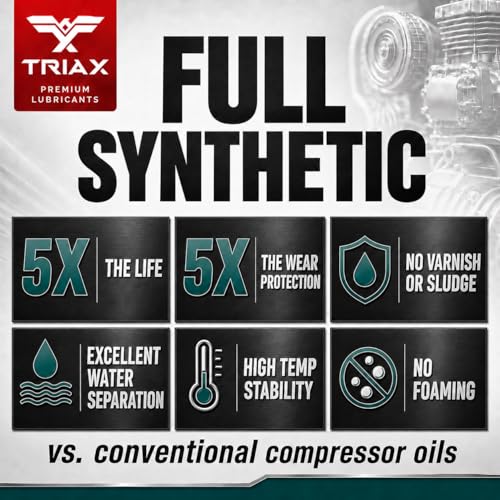
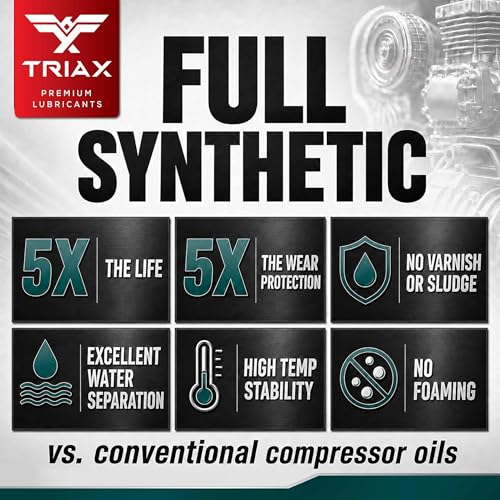
The debate between synthetic and petroleum-based oils is common, and for good reason. Synthetic oils, like those from TRIAX, generally offer superior performance in extreme temperatures, longer service life, and better resistance to oxidation. They can handle higher operating temperatures and provide enhanced protection against wear and tear. While they come with a higher upfront cost, the extended drain intervals and reduced maintenance can offset this over time. For demanding applications or compressors operating in harsh conditions, a full synthetic is almost always the better choice. If you’re looking for a solid all-around option for air compressors for home use, a synthetic blend can be a good compromise.
Detergent vs. Non-Detergent: Understanding the Formulation
This is where things get a little more nuanced. Detergent oils contain additives designed to suspend contaminants, keeping internal components cleaner. However, in air compressors, these detergents can react with water vapor and form sludge, potentially harming the compressor. Non-detergent oils, like many specifically formulated for compressors, don’t have these additives and allow water to settle, making it easier to drain. Here’s a quick breakdown:
- Non-Detergent: Best for most air compressor applications, prevents sludge buildup.
- Detergent (Avoid): Suitable for automotive engines, but generally not recommended for air compressors.
- Consider your climate: In humid environments, a non-detergent oil paired with regular draining is especially important, as water contamination is more likely.
A compressor’s longevity isn’t just about how often you use it, but what you put inside it. Regular oil changes with the correct formulation are cheap insurance against costly repairs.
Air Compressor Oils Compared
Here’s a detailed comparison of the specifications for each air compressor oil.
| Product Title | Type | Viscosity | Temperature Range | Flash Point | Key Feature |
|---|---|---|---|---|---|
| TRIAX Kompressor Full Synthetic 1 Gallon | Synthetic | N/A | -49°F to 140°F+ | N/A | High Load Capacity |
| TRIAX Kompressor ISO 68 1 Gallon | Synthetic | ISO 68 | -49°F to 140°F+ | N/A | High-Temp Performance |
| TRIAX Kompressor ISO 46 1 Gallon | Synthetic | ISO 46 | -49°F to 140°F+ | N/A | All-Season Use |
| Mag 1 69885 Air Compressor Oil | Petroleum | N/A | N/A | N/A | Anti-Foam Agent |
| Milton 1002-32 Air Compressor Oil | N/A | N/A | -15°F (-26°C) and above | N/A | Wear Protection |
| POWERMATE Full Synthetic Extreme Duty | Synthetic | N/A | N/A | 460°F | Cold Start |
| DEWALT Compressor Oil 1-Quart | N/A | N/A | N/A | N/A | Brand-Specific |
Frequently Asked Questions
What oil viscosity is best for a reciprocating air compressor?
ISO 100 is a good starting point for many reciprocating compressors, but the ideal viscosity depends on your climate and operating temperature. Colder climates benefit from ISO 68, while hotter environments might perform better with ISO 150.
Can I use automotive oil in my air compressor?
No, automotive oils contain detergent additives that can create damaging sludge within an air compressor. Compressor oils are specifically formulated without these detergents and are designed to allow water to separate for easy draining.
How often should I change the oil in my air compressor?
Generally, change the oil every 3-5 months or 200-300 hours of operation, but synthetic oils can often go longer – up to a year or 800 hours. Always consult your compressor’s owner’s manual for specific recommendations.
What’s the benefit of using a full synthetic air compressor oil?
Full synthetic oils offer superior temperature stability, extended service life, and enhanced wear protection compared to petroleum-based options. This is especially beneficial for compressors operating in demanding conditions or for those wanting to reduce maintenance frequency.
What oil should I use in a quiet home compressors?
A full synthetic oil like TRIAX Kompressor can help contribute to quieter operation by maintaining proper lubrication and reducing friction. However, noise level is heavily influenced by the compressor’s design and overall build quality.
The Bottom Line
Choosing an air compressor oil ultimately comes down to balancing upfront cost with long-term protection. While a petroleum-based oil like Mag 1 can get the job done for light use, I believe investing in a quality synthetic oil – particularly the TRIAX Kompressor Full Synthetic 1 Gallon – offers the best overall value by maximizing compressor life and minimizing potential downtime. It’s a small price to pay for peace of mind, especially considering the cost of compressor repairs.
For those on a tighter budget, the Milton 1002-32 Air Compressor Oil is a dependable choice. If you need a versatile option suited for a range of temperatures and applications, the TRIAX Kompressor ISO 46 1 Gallon strikes a good balance. And if you’re looking to maximize performance when powering air tools, the TRIAX Kompressor ISO 68 1 Gallon is worth considering.
Ultimately, don’t get too caught up in chasing the perfect viscosity grade or synthetic blend. Consistent oil changes, proper drainage of condensation, and selecting an oil specifically formulated for air compressors are far more vital than any single specification. These fundamentals are the key to keeping your compressor running reliably for years to come.
