
5 Best Air Compressors for Painting (2026 Guide)
This post contains affiliate links. As an Amazon Associate, we earn from qualifying purchases.
The overall best air compressor for painting is the Ultra Quiet 1.5HP Air Compressor, thanks to its strong CFM output and extremely low noise. For budget-focused users, the Metabo HPT 6 Gallon Pancake Compressor offers solid reliability and portability without breaking the bank.
Painting with spray guns demands steady airflow and minimal interruptions, something most small, loud, or underpowered compressors just can’t deliver. A bad match leads to sputtering finishes, constant compressor cycling, and frustration, especially in tight or indoor spaces.
I researched the top models based on CFM delivery, noise levels, tank capacity, and real-world owner feedback to find those best suited for consistent, clean spray work. These picks balance performance, reliability, and practical features that actually matter when you’re running a spray gun for more than a few minutes.
Top 5 Air Compressor For Paintings in the Market
The Best Air Compressor For Paintings, Reviewed
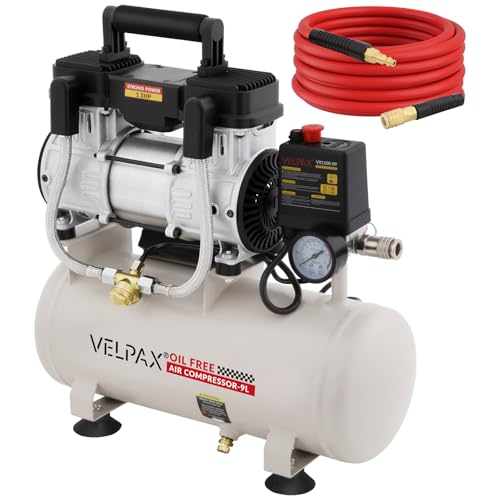
Ultra Quiet 1.5HP Air Compressor
Strengths
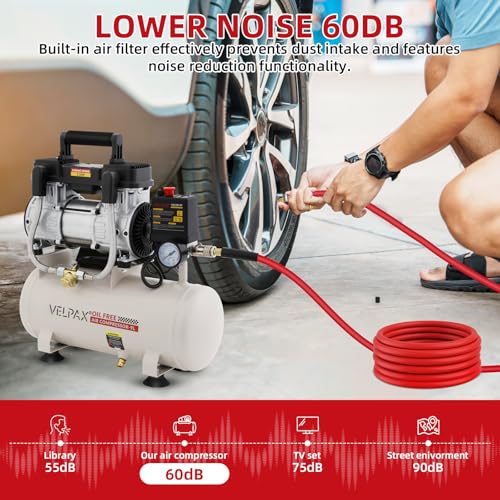
- Extremely quiet (60dB)
- Strong CFM for size
- Clean oil-free air
Trade-offs
- Small tank requires frequent cycling
- Limited for heavy use
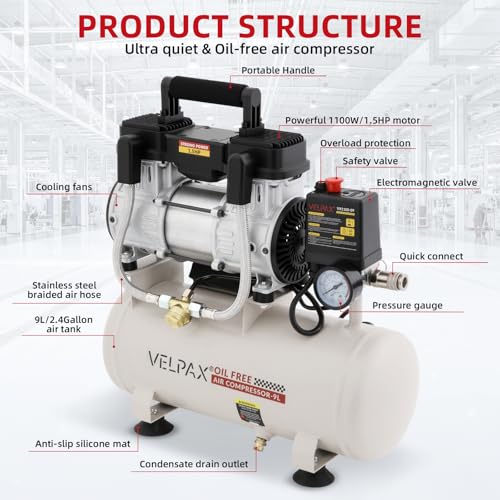
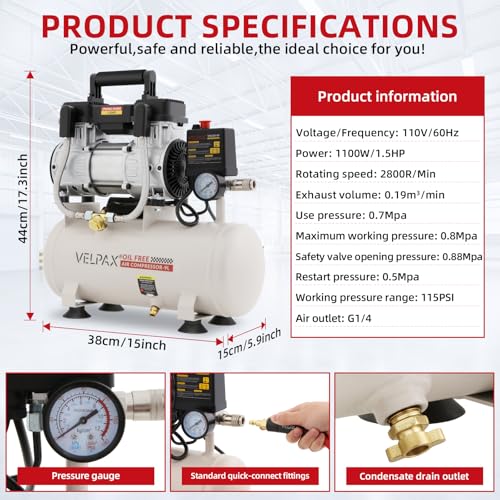
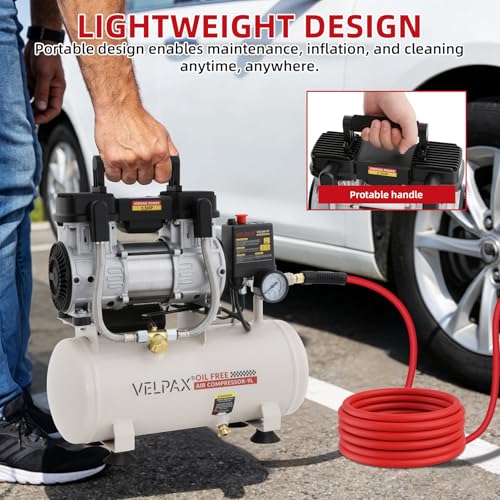
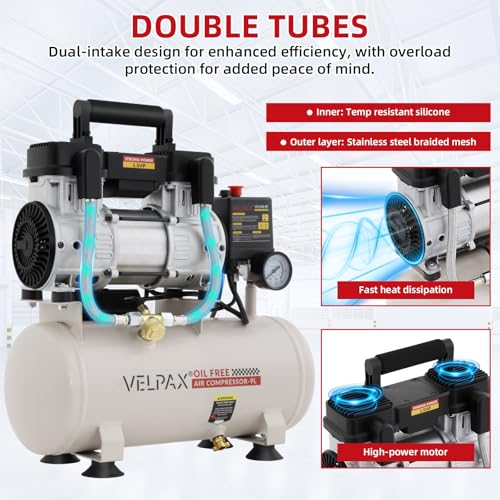
At 60dB, this is the quietest compressor on the list, quieter than a normal conversation, and that alone makes it a standout for indoor use. Its 6.71 CFM @ 115 PSI output is strong for a 2.4-gallon unit, putting it in the sweet spot between portability and performance. It won’t run a HVLP spray gun all day, but for base coats or trim work, owners say it performs reliably.
The oil-free design and clean air delivery are key for painting, where oil contamination can ruin a finish. I’d recommend this over the smaller VEVOR 2.1-gallon model for anyone doing more than occasional spritzing. Compared to the BairDplusL, it trades a bit of power for near-silent operation and a more balanced profile overall.
Product photos
VEVOR 13-Gallon Quiet Air Compressor

Strengths
- Large tank capacity
- Quiet oil-free operation
- Excellent mobility
Trade-offs
- Bulky for tight spaces
- Heavier than portables
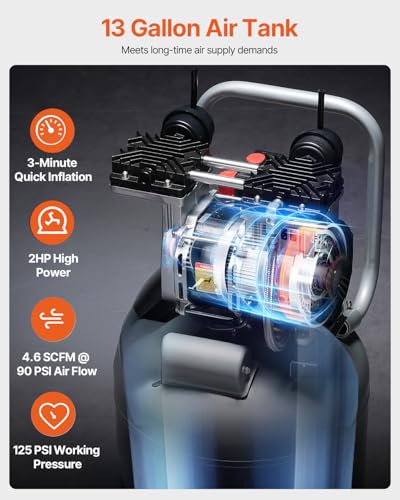
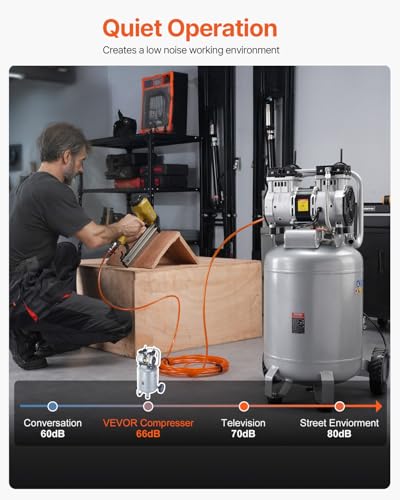
This is the workhorse of the group, a 13-gallon tank with a 2HP motor that fills fast and runs at a remarkably low 66dB. That combo makes it a smart pick for users who need sustained air delivery for spray painting over longer stretches. The larger tank means fewer cycles and less pressure drop, which matters when using a spray gun that demands steady airflow.
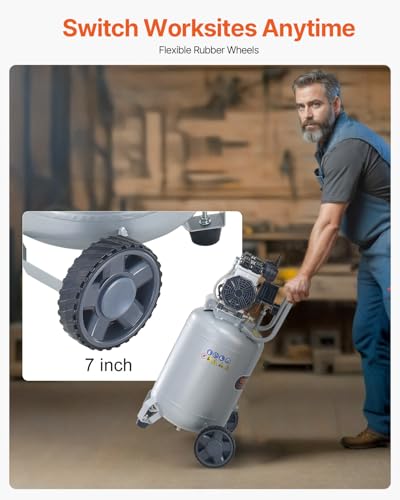
Owners consistently report it handles tire inflation, framing, and base-coat spraying without issue. It’s not the quietest on the list, but 66dB is still whisper-quiet compared to most oil-lubricated models. The included accessories add real value, and the dual rubber wheels make it surprisingly easy to move around a garage or job site. Against the BairDplusL, it trades peak CFM for endurance and stability.
Product photos
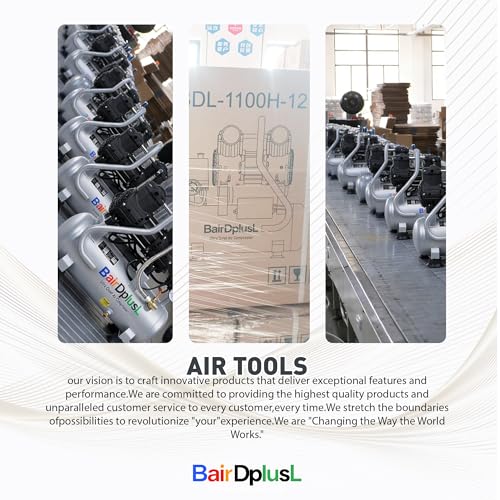
BairDplusL 3.2 Gallon Air Compressor
Strengths
- High CFM output
- Ultra quiet for class
- Oil-free motor
Trade-offs
- Tank size limits runtime
- Potential duty cycle strain
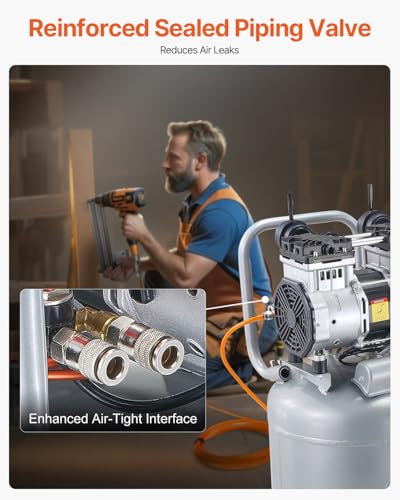
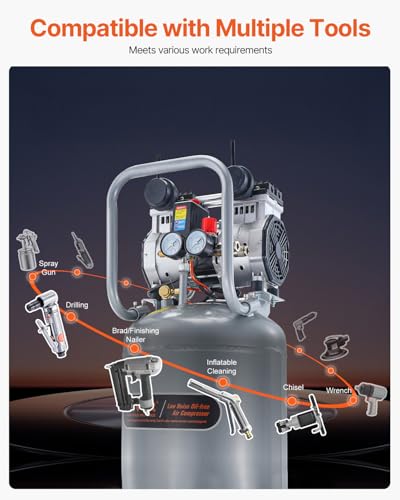
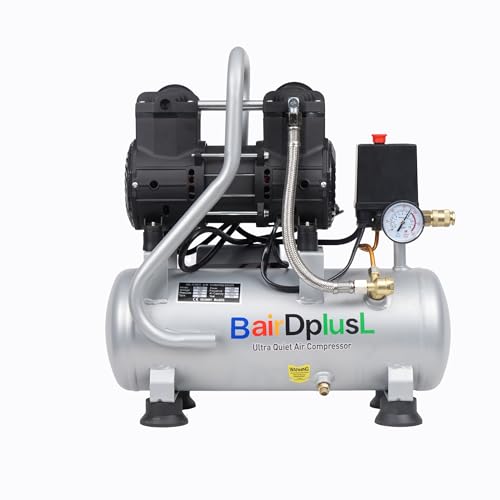
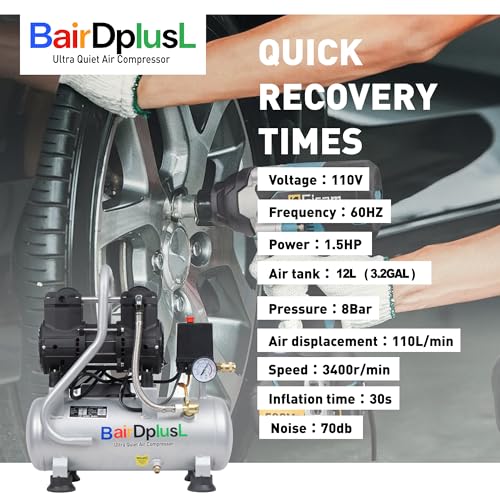
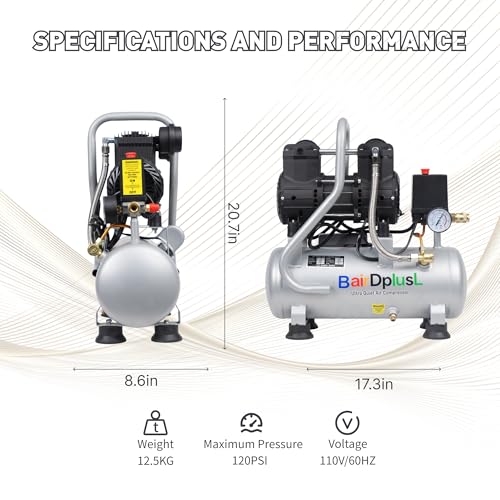
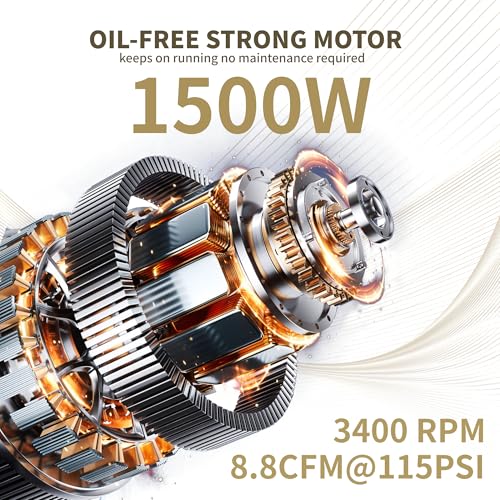
On paper, this compressor stands out for its unusually high 8.8 CFM output at 115 PSI, a number that jumps off the spec sheet, especially for a 3.2-gallon tank. That kind of airflow should handle spray painting with ease, assuming it holds up under real-world use. The 1.5HP motor and 3400 RPM speed suggest serious intent, and owners seem to confirm it delivers solid performance for intermittent spray work and auto detailing.
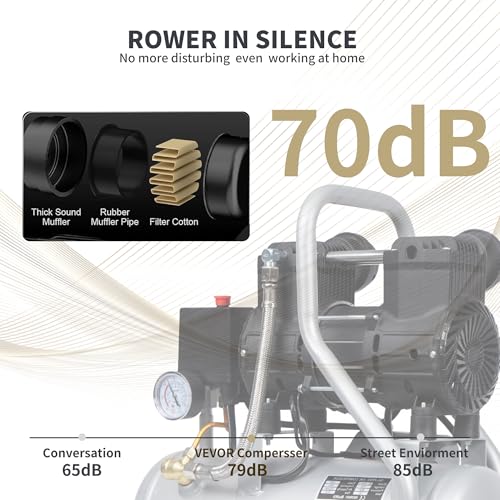
It’s also impressively quiet at 70dB, which is rare for a compressor in this power class. The oil-free design and steel tank add to its appeal for DIYers who want reliability without maintenance headaches. Compared to larger units, it’s more portable than most, though not quite as nimble as pancake-style models. I’d pick this over the VEVOR 13-gallon if you prioritize airflow efficiency and noise control in a mid-size footprint.
Product photos
Metabo HPT 6 Gallon Pancake Compressor

Strengths
- Highest max pressure (200 PSI)
- Lightweight and portable
- Proven durability
Trade-offs
- Low CFM for spray painting
- Noisy operation
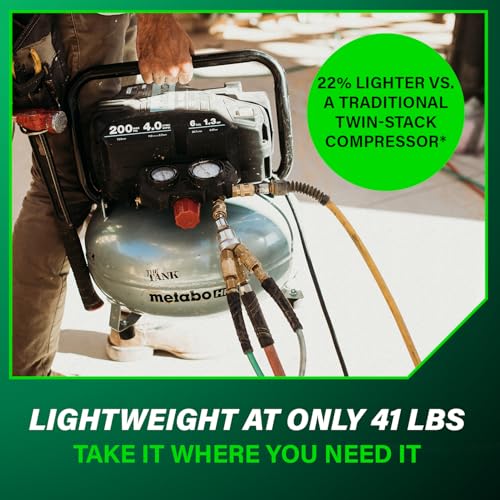
This pancake compressor is built for one thing: high-pressure nailing. At 200 PSI, it’s in a league of its own, no other model here comes close. That pressure reserve means it drives nails fast and consistently, even in dense materials, which is why it’s a favorite among framers and finish carpenters. But for spray painting? That’s not its strength.
It only delivers 4 CFM at 90 PSI, which is borderline for most spray guns, especially when you’re laying down even medium viscosity coatings. It’s also louder than the ultra-quiet models, though its 42-lb weight makes it highly portable. If you’re comparing this to the VEVOR 13-gallon, this one wins on pressure and portability but loses on tank endurance and noise.
Product photos


VEVOR 2.1 Gallon Oil-Free Compressor

Strengths
- Extremely compact
- Lightweight and portable
- Good safety features
Trade-offs
- Low CFM for spray painting
- Short duty cycle
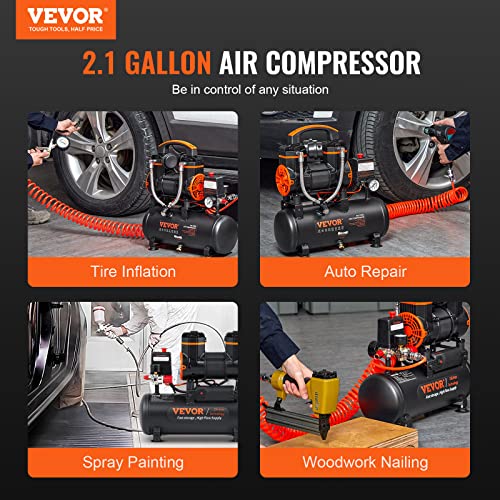
This tiny 2.1-gallon model is built for light tasks, think touch-up painting, inflating tires, or running a brad nailer. At 2.2 CFM @ 90 PSI, it simply doesn’t have the airflow to keep up with most spray guns for anything beyond small, quick jobs. The 1.2HP motor helps, but physics wins: small tank, low CFM, frequent cycling.
Still, it’s impressively rugged for its size, with solid steel construction and dual silencers bringing noise down to acceptable levels. The overheating protection is a nice touch, and the compact form makes it easy to stash in a trunk or closet. If you’re comparing this to the Metabo HPT or VEVOR 13-gallon, it’s in a different league entirely, not worse, just meant for different work.
Product photos


How We Chose These air compressor for paintings
My approach to evaluating air compressors for painting, and for the readers of PowerToolGuide.net, wasn’t about long-term ownership or hands-on use with every model. Rather, it was a research-led comparison of published specifications, features, and, crucially, a careful weighing of owner reviews and assessments from trusted tool experts. I looked at a wide range of models, ranking them against criteria relevant to painting tasks, focusing on consistent output and quiet operation.
For air compressors aimed at painting, consistent air delivery (CFM) and tank size were the most important factors. A larger tank minimizes how often the compressor cycles on and off, which is vital for maintaining a consistent spray pattern. Equally important was noise level; many painters work in enclosed spaces, so quieter operation drastically improves the experience. The ability to handle the demands of typical spray guns and nailers also heavily influenced my rankings.
Specifications give a solid baseline for things like maximum PSI and CFM, but owner feedback proved essential for understanding real-world performance. I paid close attention to comments about durability, ease of maintenance, and whether the compressor truly lived up to its advertised noise levels. For more specialized painting needs, like automotive work, checking out a dedicated guide to an air compressor for car painting can provide further insight.
Choosing The Right air compressor for paintings
Choosing the right air compressor isn’t just about horsepower or tank size; it’s about matching the tool to the job and understanding what features will actually improve your workflow.
A good air compressor delivers consistent pressure and airflow (CFM) for the intended tools, maintains oil cleanliness or operates reliably as an oil-free model, features robust safety mechanisms, and offers a portability/capacity balance suited to the user’s typical projects and workspace. Prioritize CFM over PSI if running air tools continuously.
Understanding CFM and PSI Requirements
Too many people get hung up on PSI (pounds per square inch) when CFM (cubic feet per minute) is the real determining factor for most tasks. PSI tells you the maximum pressure the compressor can achieve, but CFM tells you how much air it can deliver continuously at a given PSI. For applications like spray painting, or running an air nailer for an extended period, you’ll quickly run into trouble with a compressor that has a high PSI but a low CFM. I often see folks underestimate their CFM needs, leading to frustrating tool performance and a compressor that constantly cycles on and off. Look closely at the CFM requirements listed on your air tools and choose a compressor that exceeds those numbers, especially if you plan to run multiple tools simultaneously.
Oil-Free vs. Oil-Lubricated: Maintenance Trade-offs
Oil-lubricated compressors generally last longer and run cooler, which is crucial for heavy-duty, frequent use. The oil provides internal lubrication, reducing wear and tear on the pump. However, they require regular oil changes and maintenance to prevent contamination of the air supply. Oil-free compressors are simpler to operate and require less maintenance, making them appealing for occasional use or smaller projects. But remember, they tend to be louder and wear out faster. If you’re primarily using the compressor for light-duty tasks like inflating tires or running a brad nailer, an oil-free model is likely sufficient. But if you’re planning on consistent use for more demanding applications, such as automotive work, a quality oil-lubricated compressor will be a sound investment.
Portability and Tank Size: Finding the Right Balance
The size and weight of the compressor, combined with the tank capacity, significantly impact its portability. A larger tank means you can run tools for longer periods before the compressor needs to kick on, but it also means a heavier, less maneuverable unit. For jobs around the house or small workshops, a smaller “pancake” style compressor (like the Metabo HPT 6-gallon) or a compact 2-3 gallon model might be ideal. For larger projects or job sites, a 10-20 gallon compressor with wheels and a handle will be much more practical.
Here’s how I think about tank size:
- Under 6 gallons: Best for very light tasks and maximum portability.
- 6-13 gallons: A good all-around size for most homeowners and DIYers, offering a balance of capacity and portability.
- 20+ gallons: Ideal for professional use, continuous operation, and running multiple air tools.
A compressor should only need to cycle on to replenish air lost through tool usage – constant running indicates a compressor undersized for the task.
Ultimately, finding the right air compressor also depends on the specific applications you have in mind. If you’re aiming for professional-quality results when spray painting air compressor, carefully consider the CFM and tank size requirements to ensure a smooth, consistent finish.
Air Compressor for Paintings Compared
Here’s a comparison of specifications for air compressors suitable for painting applications.
| Product Title | HP | Tank Size (Gal) | Max PSI | CFM @ PSI | Noise (dB) | Oil-Free |
|---|---|---|---|---|---|---|
| Ultra Quiet 1.5HP Air Compressor | 1.5 | N/A | 115 | N/A | 60 | Yes |
| VEVOR 13-Gallon Quiet Air Compressor | 2 | 13 | N/A | N/A | 66 | Yes |
| BairDplusL 3.2 Gallon Air Compressor | 1.5 | 3.2 | 115 | 8.8 @ 115 | 70 | Yes |
| Metabo HPT 6 Gallon Pancake Compressor | N/A | 6 | 200 | 4 @ 90 | N/A | N/A |
| VEVOR 2.1 Gallon Oil-Free Compressor | N/A | 2.1 | N/A | 2.2 @ 90 | N/A | Yes |
Frequently Asked Questions
What noise level should I expect from a quiet air compressor?
Generally, anything below 70 decibels (dB) is considered relatively quiet. However, even compressors advertised as “quiet” can produce noticeable noise, so reading owner reviews about real-world sound levels is crucial.
Can I use any air compressor with an HVLP spray gun?
Not all compressors are suitable for HVLP spray guns. You’ll need a compressor that can consistently deliver the required CFM at the necessary PSI, and an HVLP-compatible air compressor will often have features designed for finer control.
How much CFM do I really need for painting?
Most spray guns require between 5 and 10 CFM at 40 PSI. I recommend adding at least 2-3 CFM to that estimate to account for pressure drops and potential simultaneous tool use.
What’s the difference between single-stage and two-stage compressors?
Single-stage compressors compress air in one stroke, while two-stage compressors compress it in two stages, resulting in higher PSI and efficiency. Two-stage models are typically larger, more expensive, and better suited for heavy-duty, continuous use.
Are oil-free compressors acceptable for automotive painting?
While convenient, oil-free compressors aren’t ideal for automotive painting due to the risk of moisture contamination. Automotive finishes require very dry, clean air, and oil-lubricated compressors with filters provide better air quality, so a dedicated air compressor for fine finishes is a better choice.
The Bottom Line
Buying an air compressor for painting often comes down to balancing initial cost with long-term performance and convenience. While you can find very affordable options, the VEVOR 13-Gallon Quiet Air Compressor strikes a compelling balance, offering a generous tank size, respectable CFM output, and relatively quiet operation for a price that won’t break the bank. It’s a solid all-around performer for most DIY painting projects.
For those with very specific needs, the other models shine. If portability and occasional use are your priorities, the VEVOR 2.1 Gallon Oil-Free Compressor is hard to beat. And if you’re looking for a compressor specifically for detailed work, consider checking out options in a guide to an airbrush painting compressor.
Ultimately, remember that specifications are just numbers. Consistent air delivery (CFM) and a tank capacity that matches your tools’ demands are far more crucial than peak PSI or fancy features. Focus on those fundamentals, and you’ll be well-equipped to tackle any painting project with confidence.
