
8 Best Rotary Laser Levels of 2026
This post contains affiliate links. As an Amazon Associate, we earn from qualifying purchases.
The Lipril Rotary Laser Level Kit is the overall best choice for most users, combining solid accuracy, durability, and a full kit out of the box. For those watching their budget, the Firecore FRL300R delivers reliable performance at a lower price, while the Topcon RL-H5A stands out as the top pick for long-range outdoor work where maximum visibility and extended runtime matter most.
If you’re standing in a hardware store or scrolling through listings, it’s easy to feel lost in a sea of specs and claims that sound too good to be true. Most people just want a laser that sets up quickly, stays accurate, and won’t quit halfway through a job.
After comparing the field and weighing specs against real-world owner feedback, I focused on models that deliver consistent performance, rugged builds, and practical features for both DIYers and pros. This guide cuts through the noise to highlight the ones that actually hold up when you need them most.
Top 8 Rotary Laser Levels in the Market
The Best Rotary Laser Levels, Reviewed
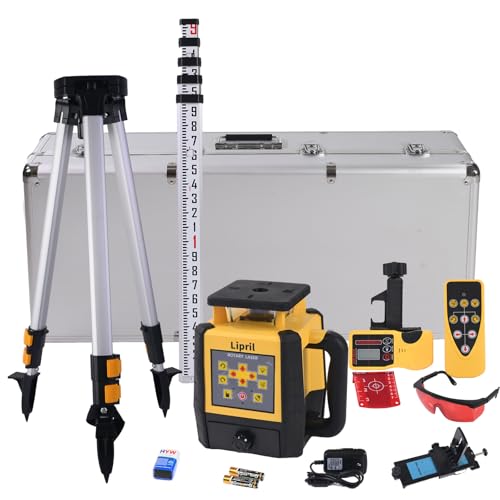
Lipril Rotary Laser Level Kit
Strengths
- ±1/16″ accuracy
- Swappable battery
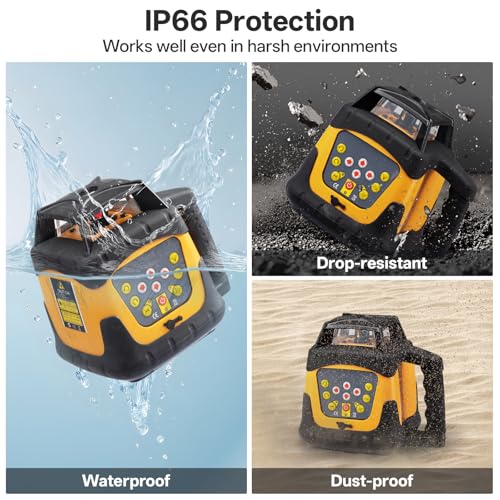
- IP66 rated
Trade-offs
- Red beam only
- No green option
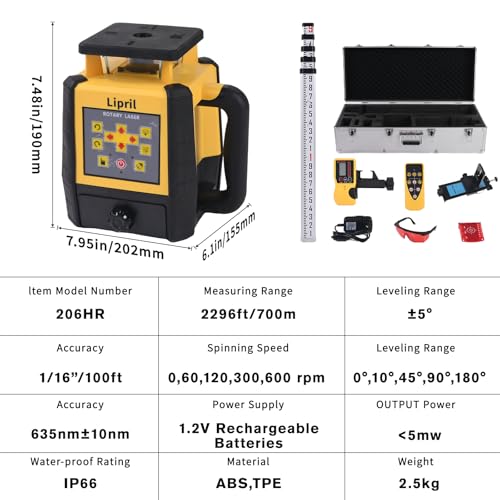
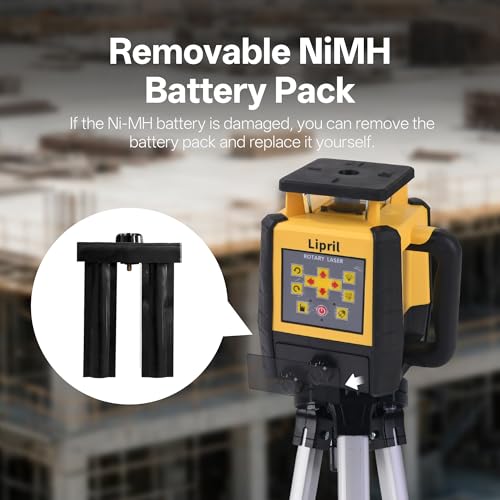
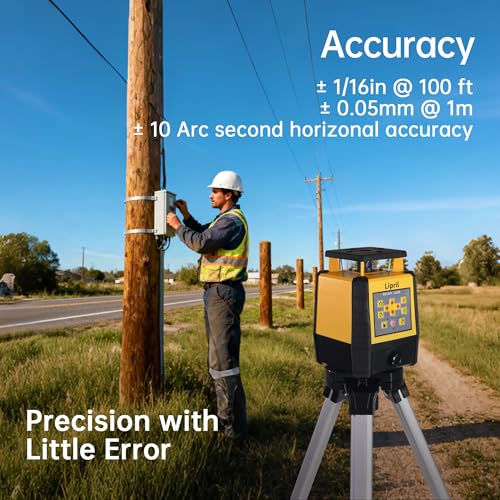
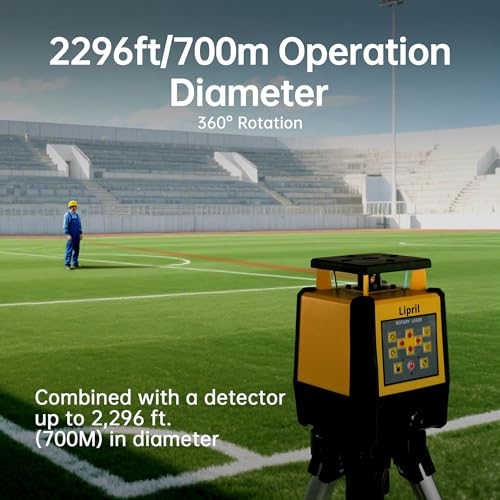
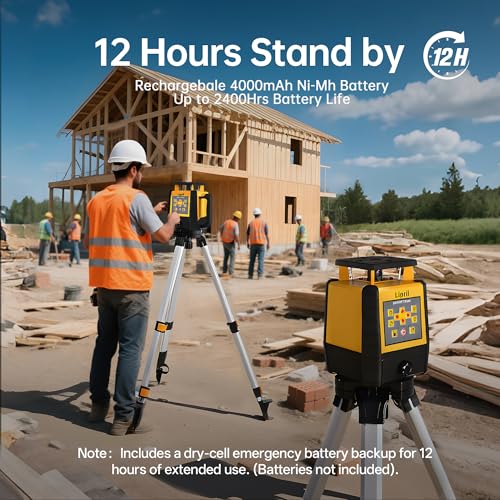
If I had to pick one laser for a mix of accuracy, durability, and versatility, this Lipril-branded kit would be my go-to. The ±1/16 inch at 100 feet accuracy matches Topcon’s benchmark, and the 2,296-foot range is more than enough for most construction sites. The real standout is the swappable battery system, 4000mAh NiMH with an alkaline adapter, so you can keep going without charging. That’s a huge win on remote job sites.
It’s IP66 rated, includes a full 11-piece kit, and the build quality aligns with pro expectations. Owners consistently report it holds up to daily abuse. While it lacks a green beam, the red laser performs well with the receiver. For most contractors, this is the smarter buy over pricier names that don’t offer the same flexibility.
Product photos
Klein Tools 93RLS Green Laser
Strengths
- 24-hour battery life
- Plumb spot included
- Impact sensing
Trade-offs
- 1,150 ft range
- Higher price point
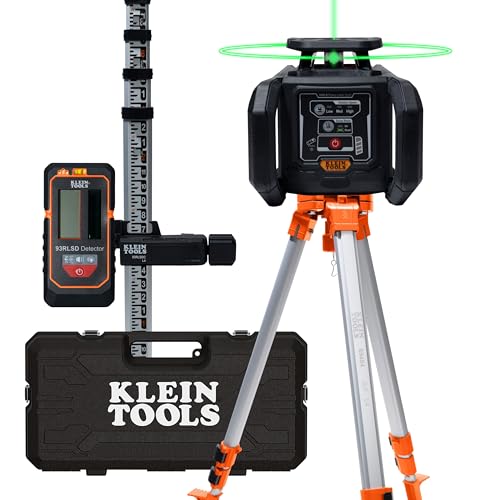
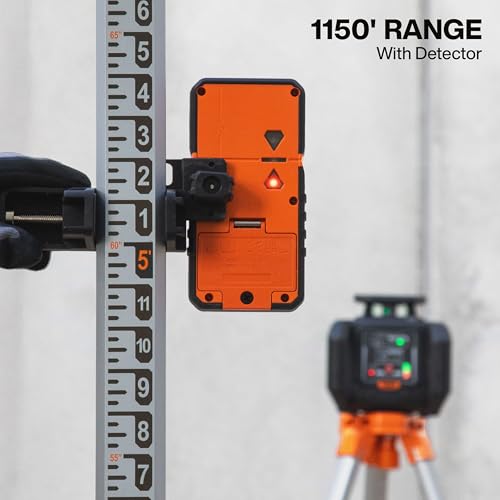
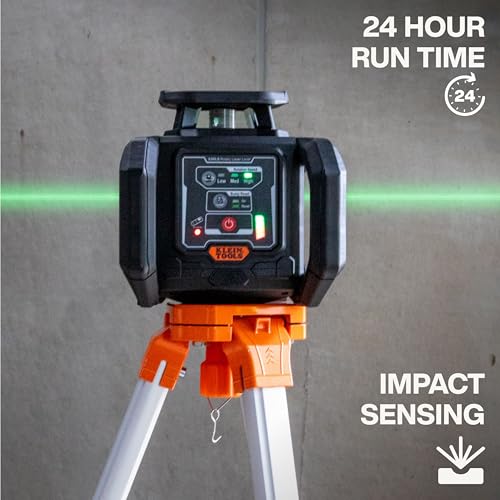
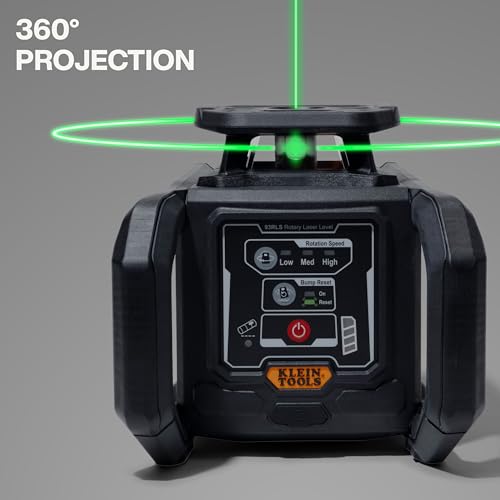
Klein Tools brings their reputation for reliability to this green rotary laser, and the headline feature, 24-hour runtime, is no exaggeration based on owner reports. That kind of endurance is rare and makes it ideal for multi-day pours or long layout sessions without charging anxiety. The green beam is bright and visible up to 1,150 feet with the detector, and the plumb spot adds real value for wall framing or drop-ceiling work.
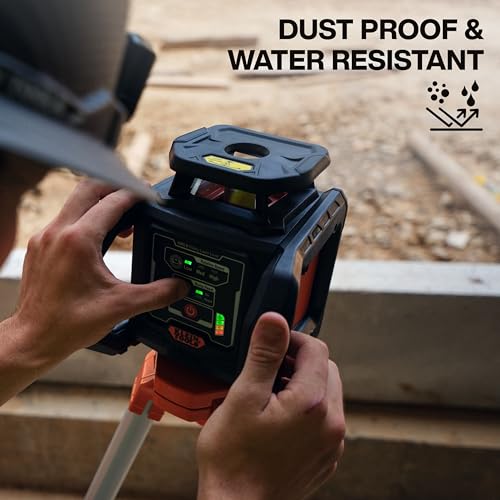
It’s IP66 rated and has impact sensing, which automatically pauses the laser if bumped, critical for active sites. But the range is shorter than others here, and the 360-degree vertical line is useful but not unique. Still, for finish carpenters or electricians who need long runtime and indoor/outdoor flexibility, this is a standout.
Product photos
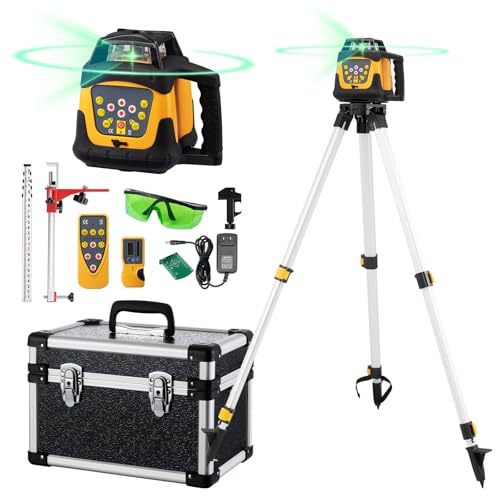
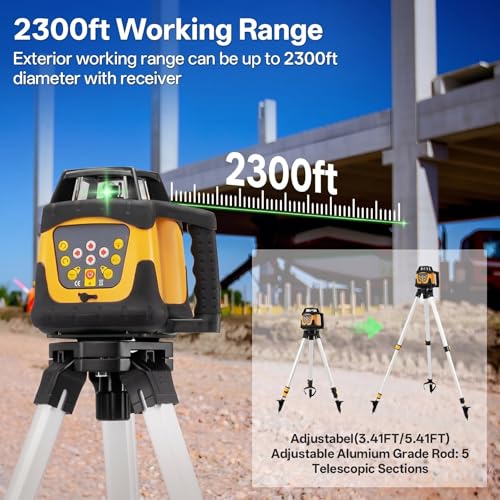
Green Rotary Laser 2300ft Range
Strengths
- 2,300 ft range
- Green beam
- Complete kit
Trade-offs
- Unknown long-term reliability
- No plumb spot
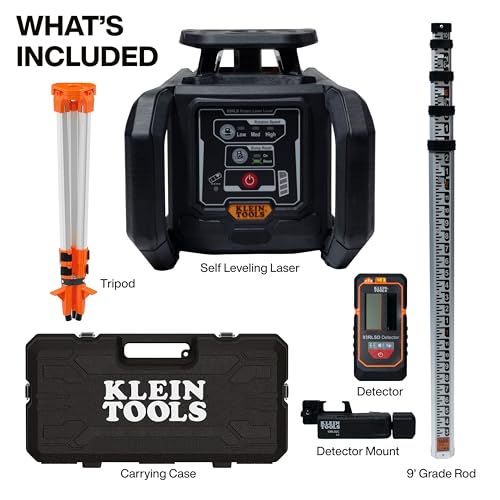
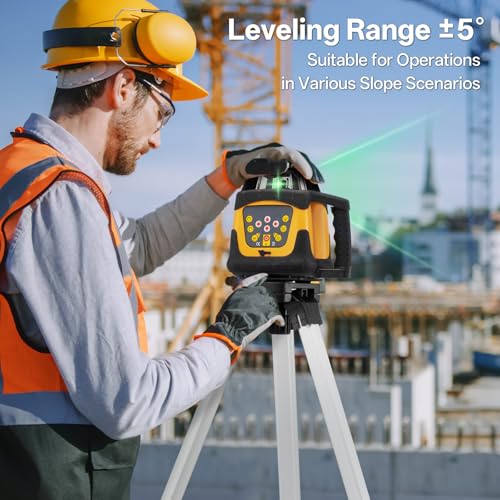
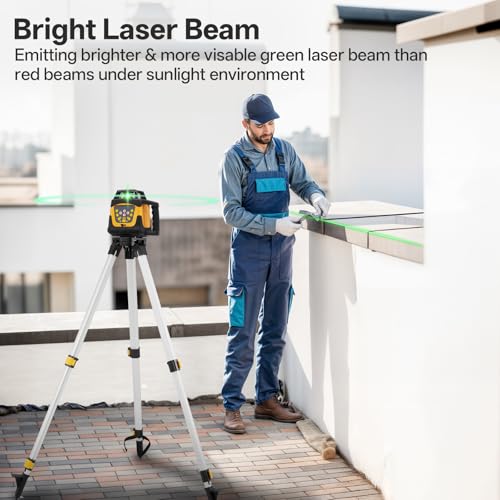
This 2,300-foot green laser kit hits a sweet spot between range and usability for large commercial or agricultural sites. The Class II green laser is FDA-compliant and easier to see in daylight than red, and the IP66 rating means it won’t flinch at rain or dust. Owners report solid performance on acreage grading and barn construction, where long-distance leveling matters.
The included kit is well-rounded, tripod, grade rod, receiver, and remote control, so it’s ready to go out of the box. Accuracy at ±1/10 inch per 100 feet is good, though not class-leading. It doesn’t have the brand pedigree of Topcon or Klein, but for a no-name green laser that delivers on specs, it’s a strong contender for serious DIYers or small pros.
Product photos
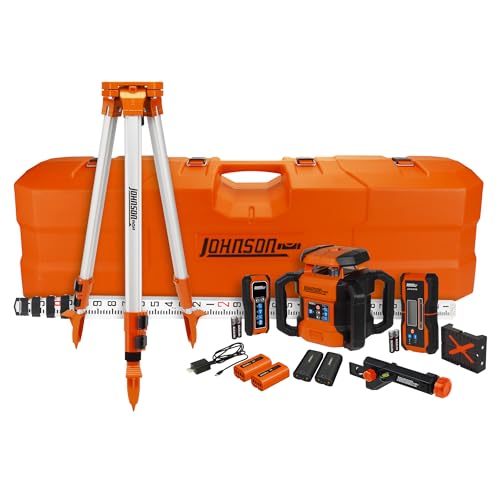
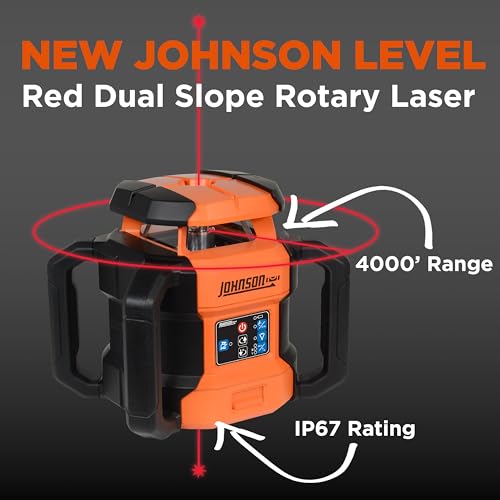
Johnson JRT300-RDHV-S Red Laser
Strengths
- 4,000 ft range
- IP67 rated
- 5 rotation speeds
Trade-offs
- Red beam visibility
- Heavy for extended carry
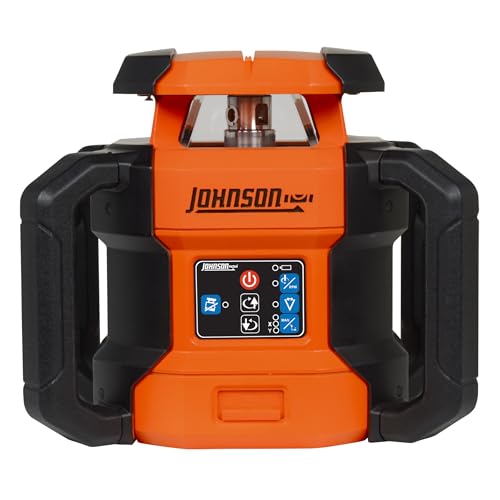
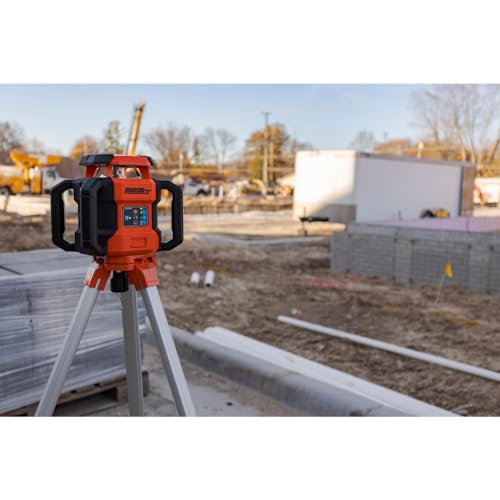
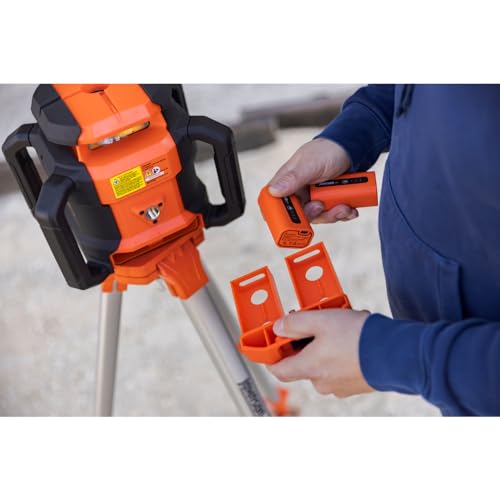
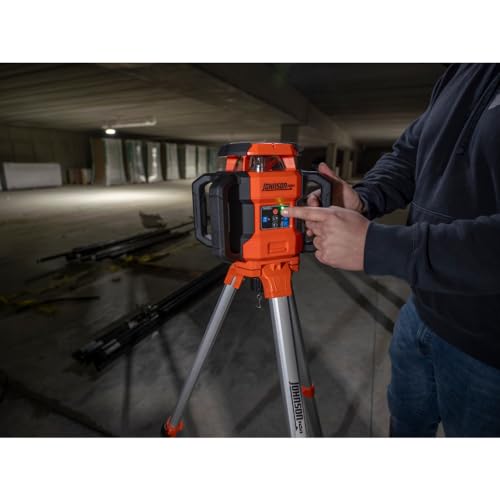
With a staggering 4,000-foot range, the Johnson JRT300-RDHV-S pushes the envelope for coverage, more than any other model here. On paper, that’s a standout for wide-open sites like large landfills or road grading, but owners note that real-world performance with the detector caps out a bit lower, still well over 3,000 feet under ideal conditions. The five-speed rotation (up to 1,200 RPM) is rare at this level and gives users flexibility for fine alignment or fast sweeps.
It’s built tough with an IP67 rating and 6-foot drop resistance, so it can handle serious abuse. But the red beam and Class 3R classification mean visibility in sunlight isn’t as strong as green alternatives. If you’re working massive sites where distance trumps all, this laser makes sense, but for most, the range is overkill.
Product photos
Firecore FRL300R Rotary Laser
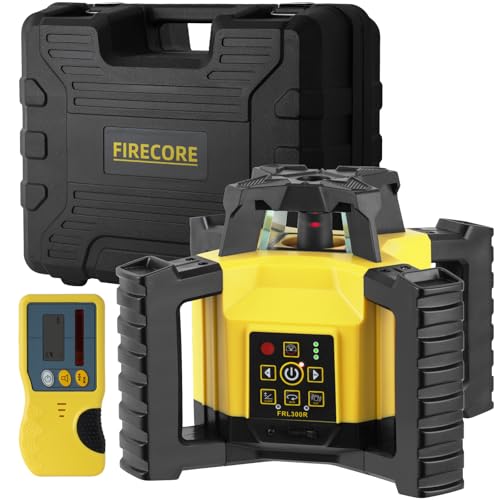
Strengths
- Affordable full kit
- Rechargeable Li-ion
- Vibrate mode
Trade-offs
- IP55 rating
- Shorter battery life
- Less rugged
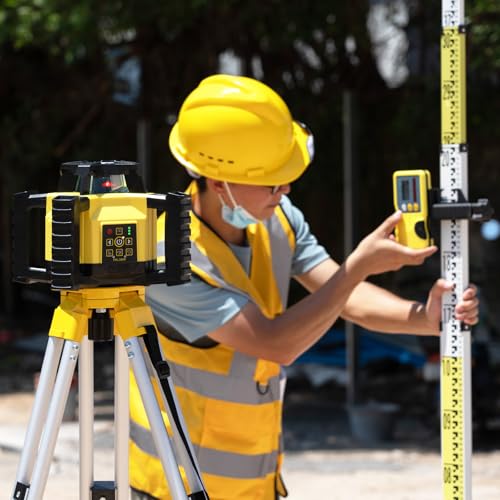
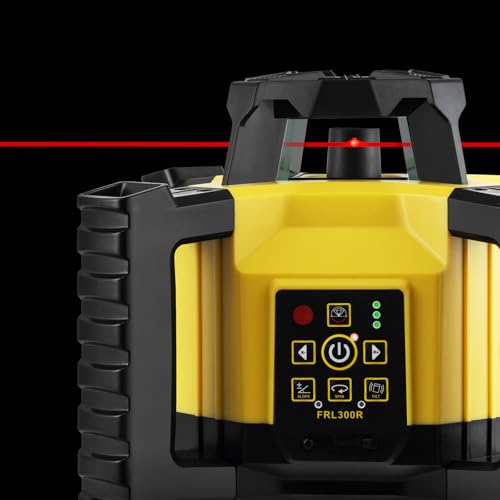
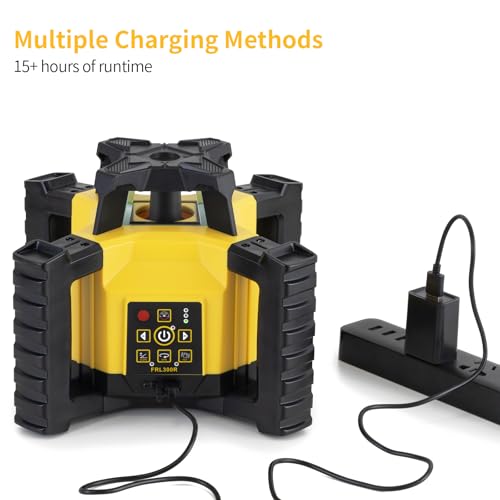
At this price, the Firecore FRL300R packs a lot into the box, rechargeable battery, receiver, remote, tripod, and case, for a true value-packed kit. The 1,969-foot range and ±1/8 inch accuracy make it competitive for small to mid-sized jobs, and the 15-hour runtime is solid for a Li-ion unit. The vibrate mode, which locks the beam at an angle, is a useful feature for sloped grading.
But it’s IP55, not IP66, so it’s less sealed against dust and water. The build feels a bit lighter than premium models, and some owners report the remote has limited range. Still, for a DIYer or handyman starting out, or a pro needing a backup unit, it’s hard to beat the included accessories and low cost.
Product photos
LotaTools Red Laser 2000ft
Strengths
- ±1/8″ accuracy
- Full professional kit
- IP66 rated
Trade-offs
- Red beam only
- No green option
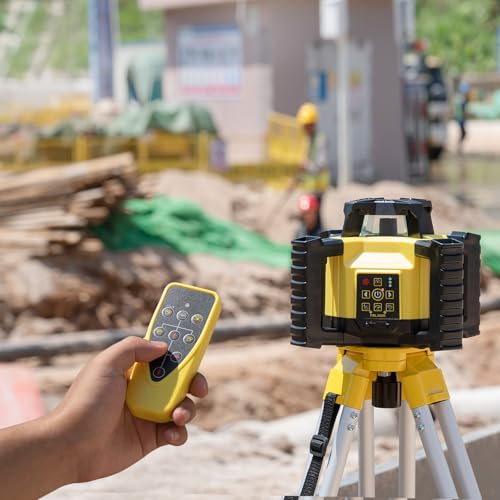
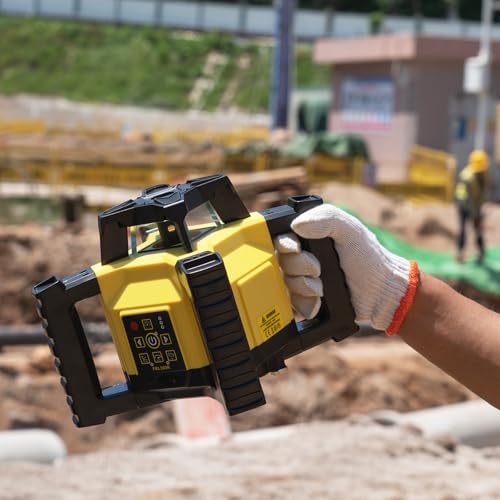
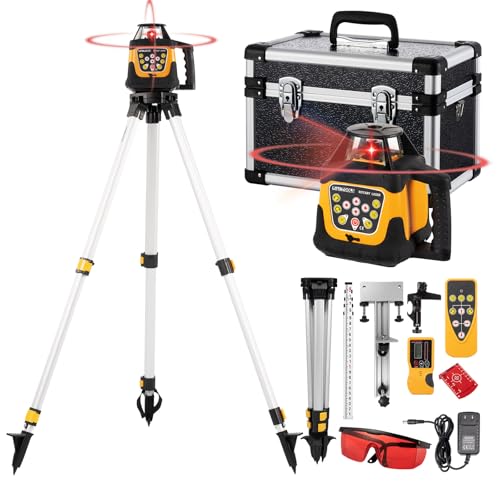
LotaTools delivers ±1/8 inch accuracy at 100 feet, which is impressive for a red laser in this price range. Owners praise its consistency on foundation work and concrete forms, where that level of precision prevents costly rework. The 2,000-foot range with receiver is solid, and the IP66 rating means it handles wet or dusty conditions without issue.
The full kit includes a heavy-duty case, tripod, grade rod, and remote, everything you need to start working. While it lacks a green beam, the red laser performs well with the detector. For users who prioritize accuracy over visibility, this is a strong contender. It doesn’t have the brand recognition of Klein or Topcon, but on specs and owner feedback, it punches above its weight.
Product photos
VEVOR Green Laser 2000ft

Strengths
- Green beam visibility
- Multiple scan modes
- Good kit value
Trade-offs
- NiMH battery life
- Multi-package shipping
- Less rugged than premium brands
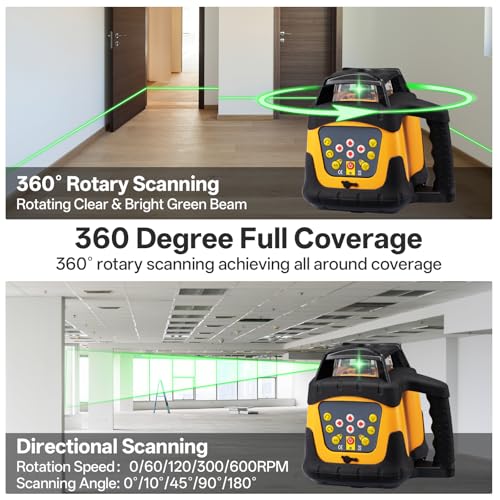
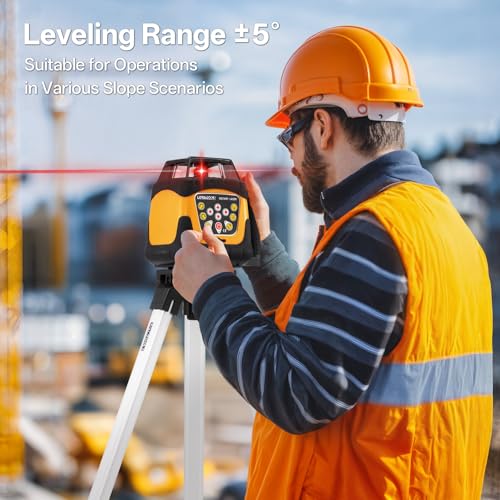
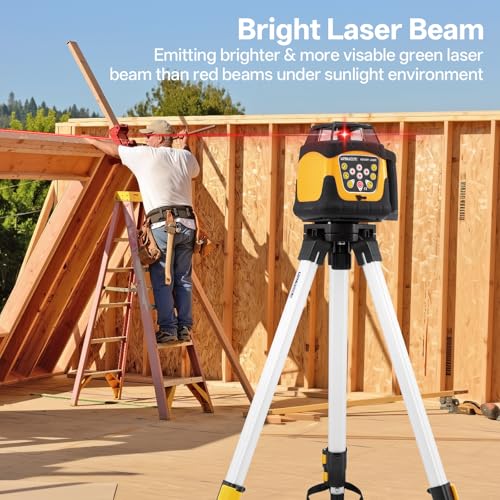
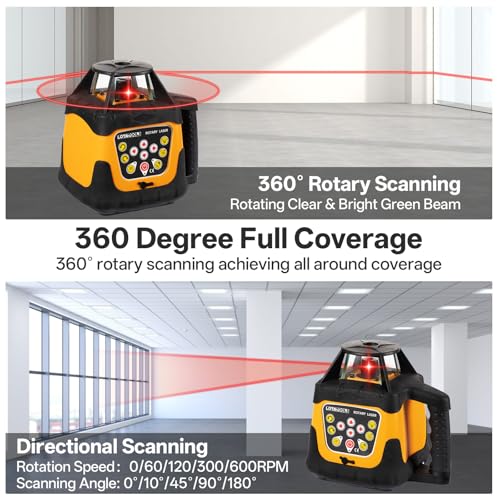
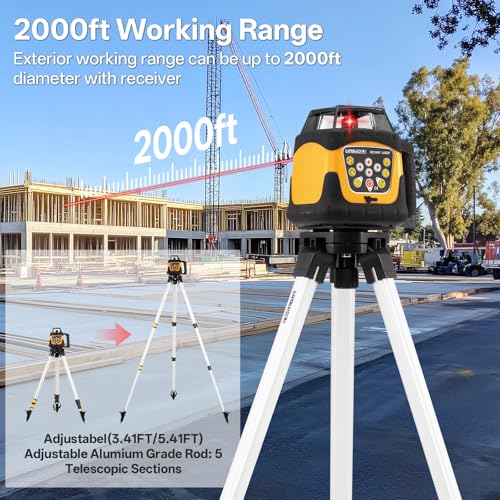
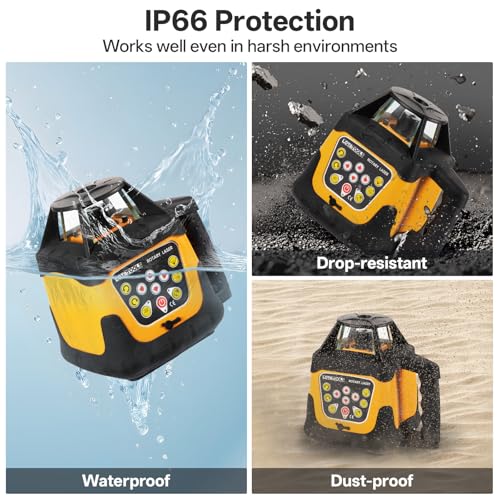
VEVOR’s green rotary laser is built for visibility. The Class 2 green beam (520nm) cuts through ambient light better than red lasers, and at 2,000 feet, it covers mid to large sites effectively. Owners appreciate the multiple scanning modes, especially the 10° and 45° partial arcs for indoor framing or drop ceilings. The 600 RPM max speed helps in fast layout scenarios, and the remote control adds convenience.
But this is a value-first tool. The NiMH battery lasts 8–12 hours, which is decent but lags behind some competitors. Build quality is acceptable for the price, but not on par with Topcon or Spectra. It ships in three packages, which can delay setup. Still, for a DIYer or small contractor wanting green beam benefits without pro-grade pricing, it’s a logical step up.
Product photos


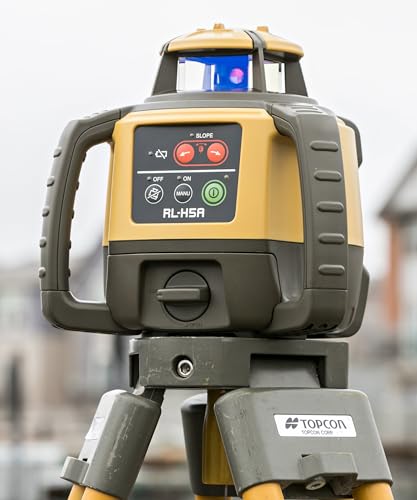
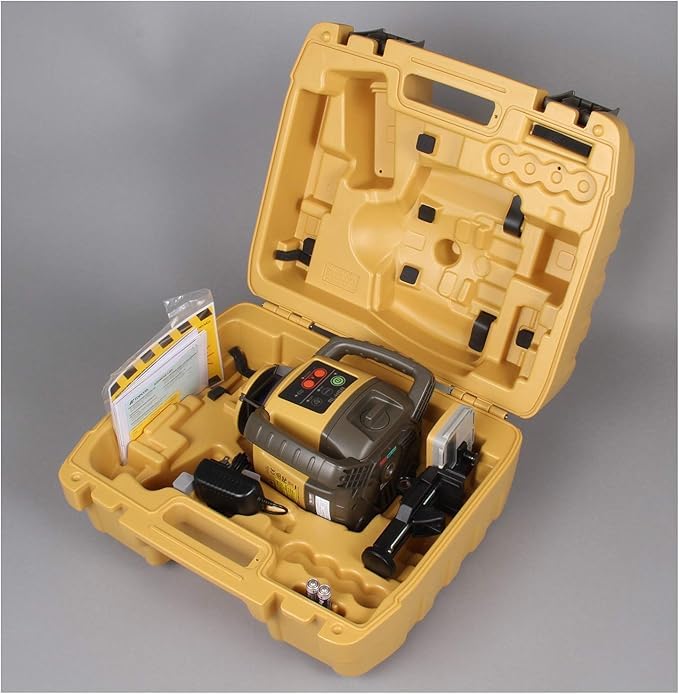
Topcon RL-H5A with Receiver
Strengths
- IP66 rated
- 2,600 ft range
- Topcon reliability
Trade-offs
- Red beam only
- No green visibility
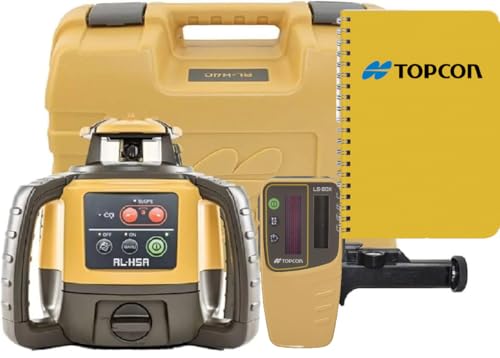
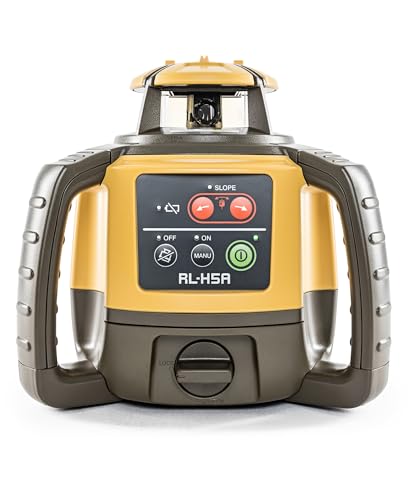
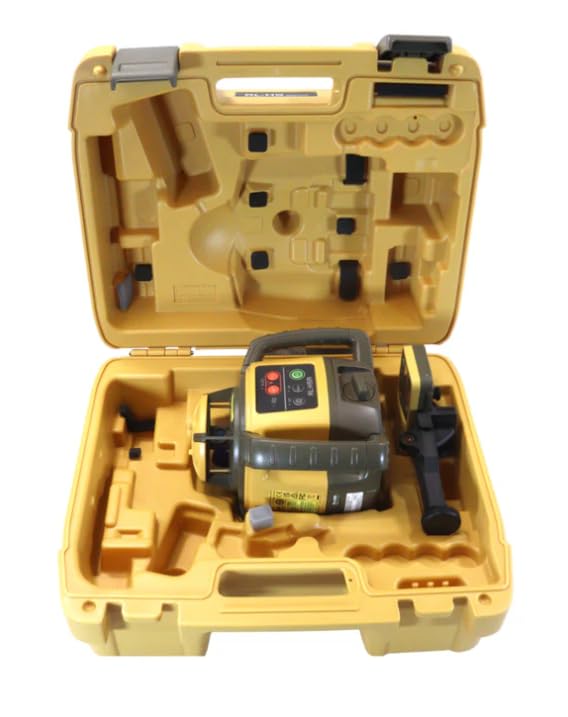
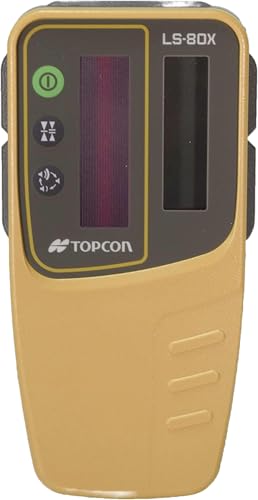
When durability and field reliability are essential, the Topcon RL-H5A stands out in owner feedback and spec sheets alike. The IP66 rating isn’t just marketing fluff, this unit consistently performs in torrential rain and dusty grading sites, and the 2,600-foot range with the LS-80 receiver keeps it relevant on large outdoor jobs. The ±1/16 inch at 100 feet accuracy is solid, and the H.I. alert system is a smart touch for grading crews who can’t afford elevation drift.
Topcon’s reputation for precision optics and long-term service support gives this laser extra weight, especially for pros who hate downtime. While it uses a red beam (less visible than green in bright light), the trade-off is proven ruggedness and battery life that owners say lasts through multi-day site work. It’s not flashy, but it’s the kind of tool you rely on when the job won’t wait.
Product photos
How We Chose These rotary laser levels
Rather than a hands-on lab test, my research for these recommendations focused on a detailed comparison of published specifications and features across numerous models. I weighed owner reviews from multiple sources – including major retailers and dedicated tool forums – alongside expert reviews from sites specializing in construction and surveying equipment. My assessment also drew on 15+ years of experience working with power tools and understanding leveling needs on job sites. I ranked each level against criteria important to a range of users, from DIYers to professionals.
For rotary laser levels, runtime, accuracy, and durability consistently emerged as the most important factors. Long runtime minimizes downtime, especially on larger projects, and is often tied to battery technology. Accuracy dictates the quality of work, so I prioritized levels with specifications of ±1/8 inch or better at 100 feet. Finally, a robust build – with features like IP66 dust and water resistance – is essential for withstanding the demands of a typical jobsite. You’ll find more about choosing the right tools for your work in our best laser measuring tools.
Specifications reliably indicate a laser’s theoretical range, accuracy, and leveling speed. However, I placed greater emphasis on owner feedback regarding real-world usability and long-term reliability. Reputation, particularly among professional users, was also a key consideration. While specs tell you what a level can do, owner reviews reveal how well it performs over time and in practical applications, and are often covered in our laser level and measurer reviews.
How To Pick The Right rotary laser levels
Picking the right rotary laser level can dramatically improve accuracy and efficiency on a job site, but with so many options available, it’s easy to get overwhelmed.
A quality rotary laser level delivers consistent, accurate measurements over a specified range. Key considerations include leveling accuracy (typically expressed as inches per 100 feet), operating range with and without a receiver, battery life, durability against jobsite conditions (dust, water, impacts), and the completeness of the included kit. Look for self-leveling capabilities and a clear, visible beam, especially if you’ll be working outdoors.
Understanding Leveling Accuracy
Accuracy is paramount, and it’s the first thing I look at when evaluating these tools. While many lasers advertise similar accuracy specs, pay attention to how that spec is achieved. Some use more sophisticated internal components – like those found in the Lipril model with its Microchip IC and Nexperia control chips – to maintain consistent leveling. Don’t assume all “±1/16″ at 100ft” lasers are created equal. Consider your typical project size. For smaller indoor jobs, a basic level might suffice, but larger outdoor projects demand tighter tolerances.
Battery Life & Runtime Considerations
Runtime can be a major headache on long jobs, so don’t underestimate this factor. The Klein Tools 93RLS stands out with its impressive 24-hour runtime. But beyond that, think about battery type. Ni-MH batteries, like those in the Firecore FRL300R, are reliable and easy to maintain, though they need recharging. Some models offer adapters for standard alkaline batteries, offering flexibility if you forget a charger.
Here’s how I break down the battery considerations: * Rechargeable: Best for frequent use and lower long-term cost. * Alkaline Compatibility: Good for occasional use or remote sites without power. * Battery Life: Consider the stated runtime and whether it meets your typical job duration.
A good rule of thumb: always carry a spare, fully charged battery (or a supply of alkalines) to avoid downtime.
Range, Durability, and Included Accessories
Range is often a primary driver in selection, and for large sites, the Green Rotary Laser 2000ft and Topcon RL-H5A are strong contenders. However, a longer range isn’t useful if the beam is difficult to see. Green lasers, like the VEVOR Green Laser 2000ft, are generally more visible than red lasers, particularly in bright sunlight. Equally important is durability. Look for an IP66 or higher rating for dust and water resistance. If you’re rough on tools, the Johnson JRT300-RDHV-S, with its impact resistance, might be a good choice. Finally, carefully examine what’s included in the kit. A complete kit – like the Lipril – with a receiver, tripod, grade rod, and carrying case saves you the cost and hassle of buying accessories separately. If you’re still unsure, check out our [rotary laser level buying guide] (https://powertoolguide.net/best-rotary-lasers/) for more in-depth comparisons and recommendations.
Rotary Laser Levels Compared
Here’s a spec comparison to help you evaluate different rotary laser levels.
| Product Title | Range (ft) | Accuracy (@100ft) | Self-Leveling | IP Rating | Battery Life |
|---|---|---|---|---|---|
| Lipril Rotary Laser Level Kit | N/A | ±1/16″ | Yes | IP66 | 12 hrs |
| Klein Tools 93RLS Green Laser | 1150 | N/A | Yes | IP66 | 24 hrs |
| Green Rotary Laser 2300ft Range | 2300 | N/A | ±5° | IP66 | N/A |
| Johnson JRT300-RDHV-S Red Laser | 4000 | N/A | Yes | IP67 | N/A |
| Firecore FRL300R Rotary Laser | 1969 | ±1/8″ | Yes | IP55 | 15 hrs |
| LotaTools Red Laser 2000ft | 2000 | ±1/8″ | ±5° | IP66 | N/A |
| VEVOR Green Laser 2000ft | 2000 | N/A | ±5° | IP66 | 8-12 hrs |
| Topcon RL-H5A with Receiver | 2600 | ±1/16″ | Yes | IP66 | 100 hrs |
Frequently Asked Questions
What accuracy should I look for in a rotary laser level?
An accuracy of ±1/8 inch at 100 feet is generally sufficient for most DIY and general construction tasks, but professionals often prefer ±1/16 inch for greater precision. Higher accuracy levels, like those found in the Topcon RL-H5A, are especially valuable for projects requiring tight tolerances.
Are green beam lasers really better than red beam lasers?
Yes, green laser beams are typically more visible than red beams, especially in bright sunlight. This improved visibility is due to the human eye’s greater sensitivity to green light, making green lasers like the Klein Tools 93RLS a better choice for outdoor projects.
What does an IP66 rating mean for a rotary laser level?
An IP66 rating means the laser is completely dust-tight and protected against powerful water jets. This level of protection, common in models like the Lipril, is crucial for maintaining functionality on demanding job sites where dust and moisture are present.
How important is self-leveling functionality?
Self-leveling is extremely important as it automatically compensates for minor unevenness in the setup surface. Models with this feature, such as the Johnson JRT300-RDHV-S, save significant time and effort compared to manually leveling the device, and ensure accuracy.
What should I do if I need to use a rotary laser level over a very long distance?
For distances exceeding 1000 feet, you’ll need a laser level specifically designed for extended range, like the Green Rotary Laser 2300ft Range. Also, consider that longer ranges often require a receiver to detect the beam effectively, and be aware of environmental factors that can affect beam visibility, as discussed in our best laser measure models.
The Bottom Line
Choosing a rotary laser level often comes down to balancing upfront cost with the features you genuinely need. While high-end models like the Topcon RL-H5A offer exceptional accuracy and runtime, the Lipril Rotary Laser Level Kit provides a strong all-around performance for most homeowners and serious DIYers, delivering a good mix of features and value. It’s a solid choice for those who want a dependable tool without breaking the bank.
For specific needs, the Klein Tools 93RLS stands out for extended runtime, making it ideal for large projects. If you prioritize long-distance visibility, the Green Rotary Laser 2000ft is a strong contender, and for those working in particularly harsh conditions, the Johnson JRT300-RDHV-S offers excellent durability. Don’t forget to check out our guide to the best laser distance meters for other helpful tools.
Ultimately, remember that specifications aren’t everything. Accuracy, runtime, and durability are crucial, but a level’s usefulness hinges on how well it fits your projects and skill level. Focus on finding a tool that feels comfortable and intuitive to use, and don’t hesitate to invest in quality accessories like a sturdy tripod and reliable receiver – these often make a bigger difference than chasing the highest-end laser.
