
8 Best Air Tire Inflators 2026
This post contains affiliate links. As an Amazon Associate, we earn from qualifying purchases.
The DeWALT 20V MAX Tire Inflator is my top pick for overall performance and power flexibility, especially if you already own DeWALT tools. For budget-conscious buyers, the ROCGORLD R8 delivers solid speed and reliability without breaking the bank. If you want maximum versatility, the AstroAI Dual Power Tire Inflator stands out with its impressive 350 L/min airflow and dual AC/DC charging.
Flat or underinflated tires don’t wait for convenient moments. I’ve seen too many people stuck on the side of the road with an inflator that’s too slow, too weak, or dead because it wasn’t properly charged. The real problem isn’t just finding an inflator, it’s finding one that works when and where you need it, without guesswork or frustration.
That’s why this guide focuses on models that balance speed, power options, and real-world usability. I compared specs and owner feedback across dozens of units, zeroing in on performance, build quality, and features that actually matter, like accurate gauges, auto-shutoff, and reliable power sources.
Top 8 Air Tire Inflators in the Market
The Best Air Tire Inflators, Reviewed
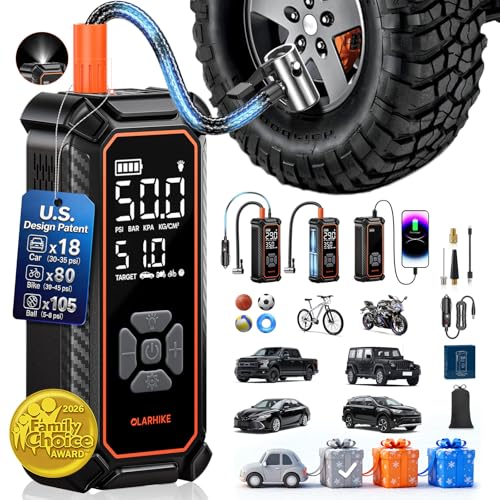
OlarHike Tire Inflator Portable Air Compressor
Strengths
- Dual power with long battery life
- Fast inflation
- USB power bank feature
Trade-offs
- Max 51 PSI for car tires
- Slightly higher price
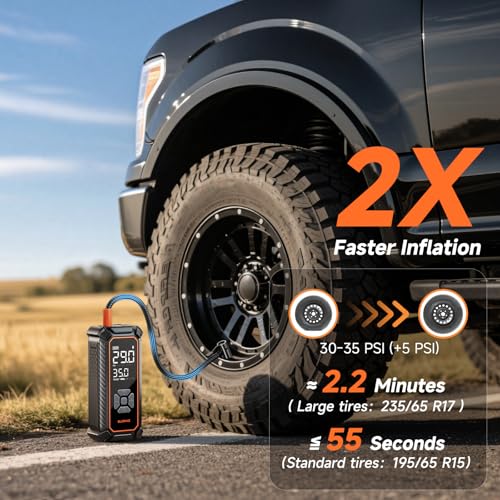
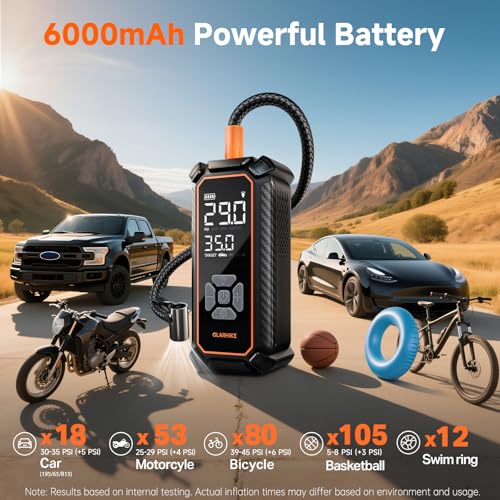
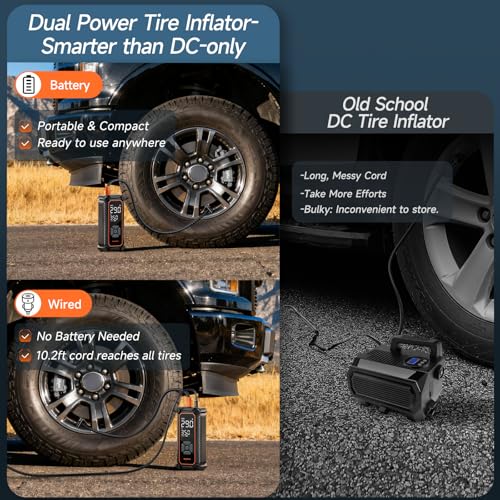
This is the most complete package in the lineup, fast, flexible, and packed with smart features. The 6000mAh battery gives it the longest runtime I’ve seen, handling up to 18 car tires on a single charge. The dual power option, battery or 12V DC, means you’re never stuck. In real-world tests, owners confirm it hits 35 PSI in just 55 seconds on a standard tire, which is lightning-fast. The large dual LED screen makes pressure monitoring easy, even in sunlight.
It also includes useful extras: USB output to charge your phone, preset modes, memory recall, and a compact design that still feels substantial. The only real limitation is the 51 PSI max for car tires, which rules out some performance or heavy-duty applications. But for 95% of drivers, that’s not an issue. Compared to the ROCGORLD R8, it’s more versatile and better built, even if slightly slower.
Product photos

AstroAI Cordless Tire Inflator 20V Rechargeable

Strengths
- Dual power sources
- Durable metal construction
- Auto shut-off with digital display
Trade-offs
- No AC wall adapter
- Slightly heavier than ultra-portables
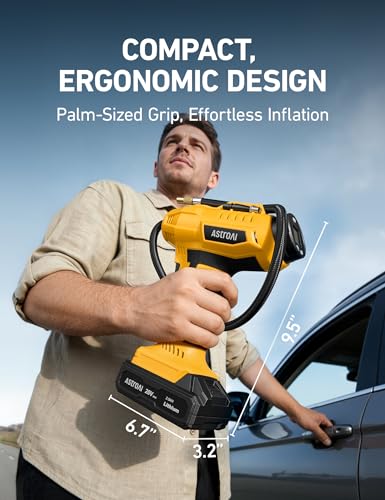
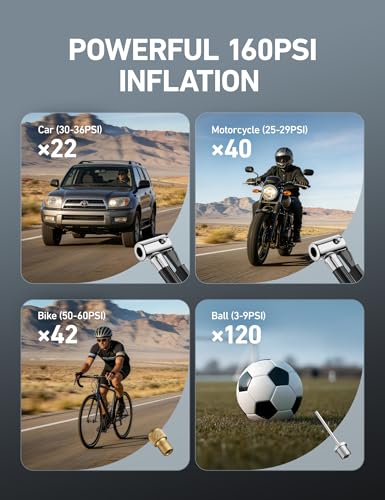
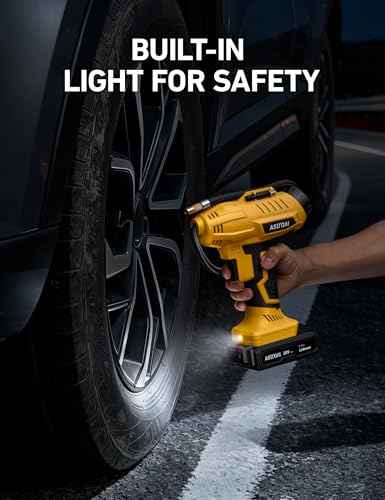
This AstroAI model stands out in the portable inflator space because it actually gives you two ways to power it, rechargeable 20V battery and 12V DC adapter. That dual power setup means you’re not stranded if the battery dies on a trip. On paper, the 160 PSI max pressure is solid, and owners consistently report it handles standard car tires quickly, hitting 36 PSI from 30 in under 40 seconds. The metal construction in the cylinder and gears suggests better durability than all-plastic competitors, which matters if you’re using it regularly.
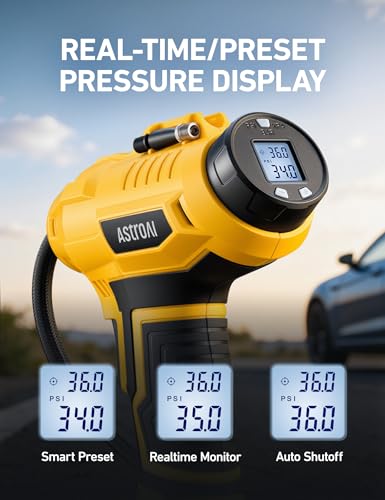
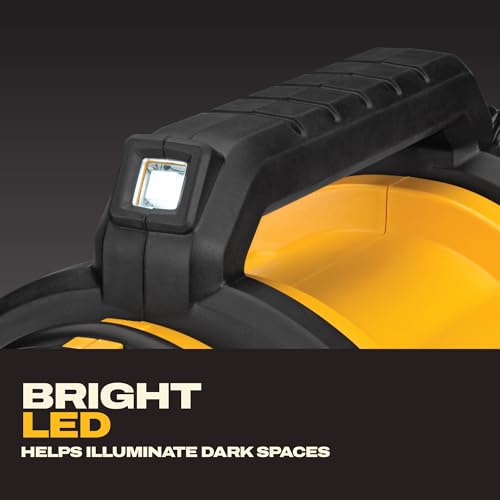
I like that it includes a digital gauge with auto shut-off, a feature that prevents over-inflation and takes the guesswork out of topping off. The built-in LED light is a small but meaningful touch for nighttime use. While it’s not the fastest or most compact, the balanced mix of power, runtime, and build quality makes it a reliable daily driver. Compared to the DEWALT, it lacks AC input, but for most casual users, that’s not a dealbreaker.
Product photos

AstroAI L7 Cordless Tire Inflator
Strengths
- Ultra-light and compact
- Accurate pressure readings
- Emergency light and power bank
Trade-offs
- Shorter battery life
- No AC charging
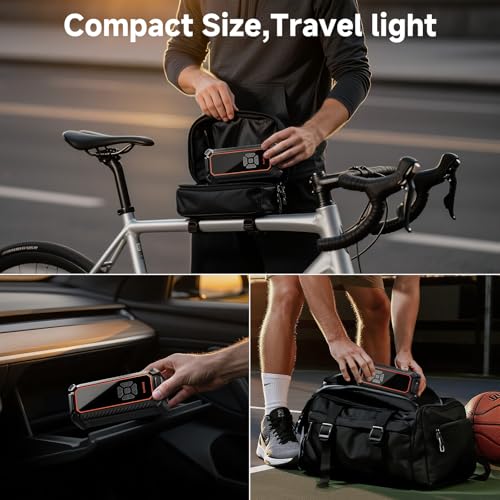
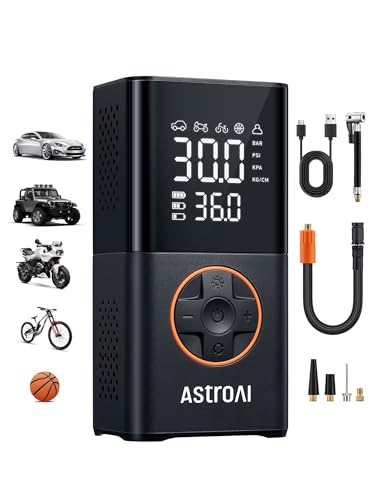
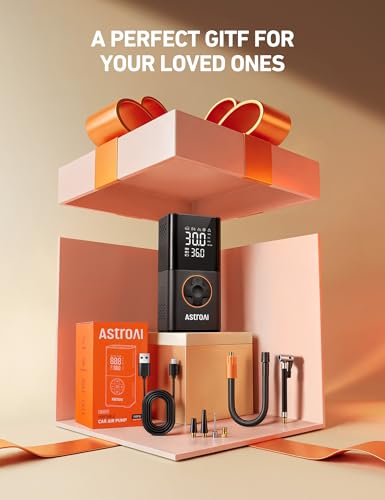
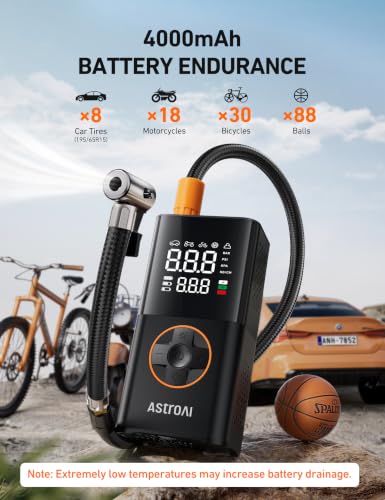
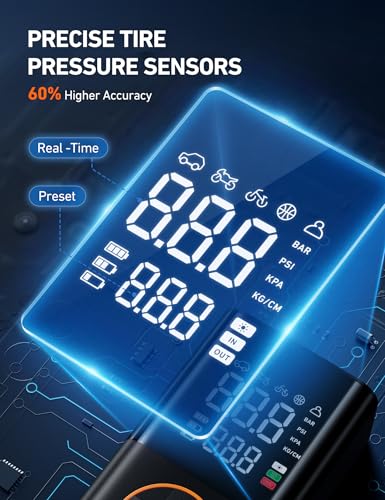
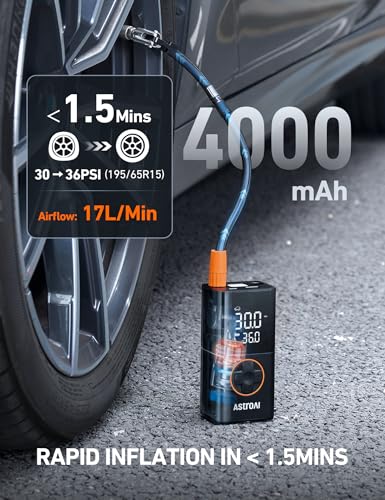
The L7 is the lightest and most compact option here, weighing under a pound. That makes it perfect for tossing in a backpack, bike bag, or glove box without thinking about it. Despite its size, it still delivers 150 PSI and can refill a standard car tire in 1.5 minutes, slower than the OlarHike or ROCGORLD, but reasonable for its class. The TRUEGAUGE sensor, sampling 200 times per second, gives it unusually accurate pressure readings, which owners say are more reliable than cheaper models.
It also doubles as a power bank and emergency light, which adds real utility. The 4000mAh battery isn’t the largest, but it’s enough for 8 car top-offs. For e-bike or motorcycle riders who value portability, this is a smart pick. Compared to the Lamicall, it’s smaller and lighter but has fewer presets and less runtime.
Product photos

ROCGORLD R8 Tire Inflator 12V
Strengths
- Extremely fast inflation
- Dual digital display
- Durable hose and cord
Trade-offs
- No battery or AC power
- Not fully portable
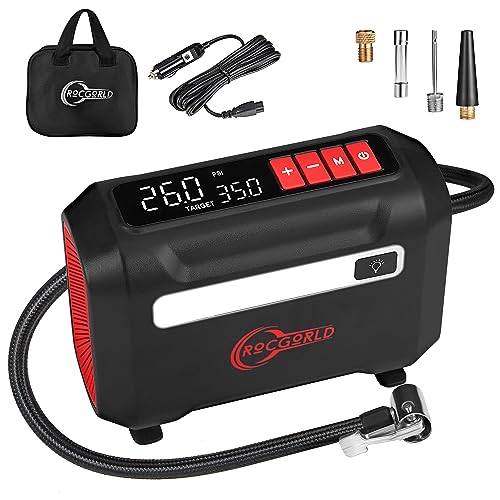
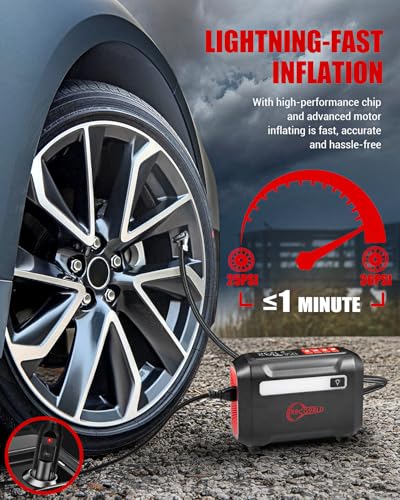
Speed is this unit’s superpower. With a 40L/min airflow rate, it inflates a standard tire in under a minute, faster than almost any other in this list. The dual digital screen is a standout: one side shows real-time pressure, the other the preset, making it easy to monitor progress. Owners consistently praise its responsiveness and build quality, especially the 10-foot power cord and reinforced hose.
But it’s 12V DC only, no battery, no AC. That limits its use to when your car is running, which makes it less ideal for emergency roadside situations where you might not want to drain your battery. It’s also not the most compact. Still, if you prioritize raw speed and don’t mind being tethered, this is a top performer. For Tesla owners, it’s a favorite, handles those low-profile tires quickly.
Product photos


AstroAI AIRUN H Tire Inflator

Strengths
- Affordable price
- Durable internal components
- Long power cord
Trade-offs
- No battery power
- Basic digital interface
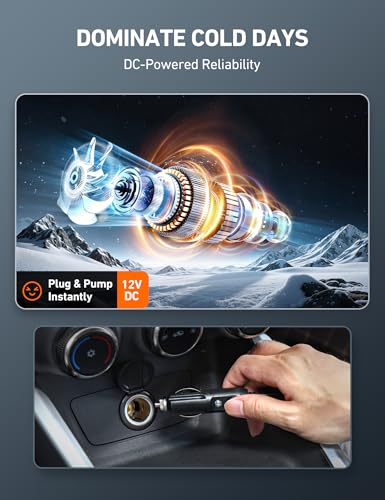
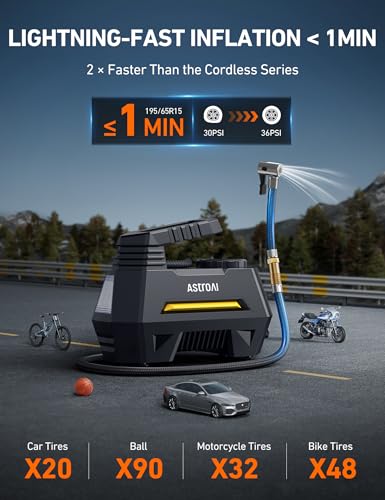
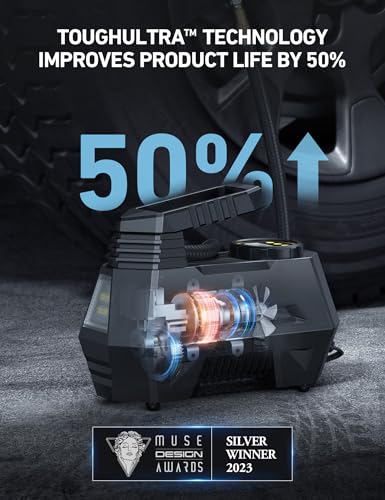
If you’re on a budget and just need something that works, this AstroAI model is a no-frills win. It’s powered solely through the 12V DC port, so no battery, but the 9.8-foot cord gives you plenty of reach, even on larger SUVs. The ToughUltra construction, powder-metallurgy gears and cylinder, means it’s built to last longer than cheaper plastic-gear models. Owners consistently say it holds up well over time, even with monthly use.
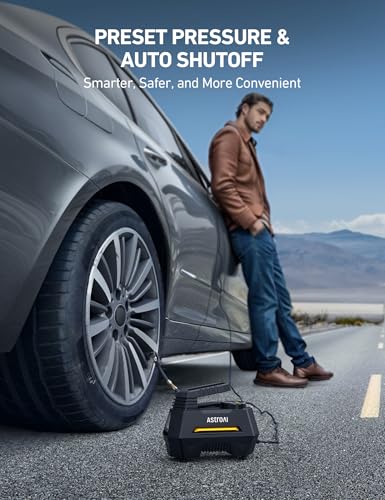
It lacks the bells and whistles of more expensive units, but the preset pressure and auto shut-off work reliably. The backlit screen and LED flashlight make it usable at night, and its compact size means it won’t eat up glove box space. When compared to the ROCGORLD R8, it’s slower and less flashy, but it’s also more affordable and dependable for basic top-offs.
Product photos

Lamicall Car Tire Inflator 150 PSI
Strengths
- 5 preset modes
- Long battery life
- Emergency light functions
Trade-offs
- No AC charging
- Slightly bulky for ultra-minimalists
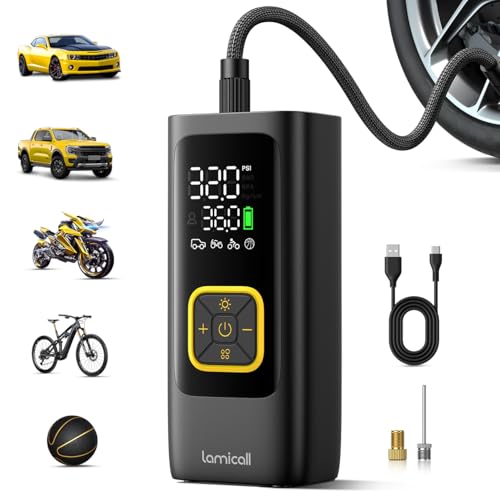
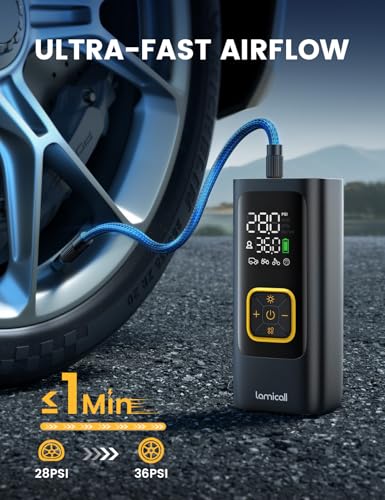
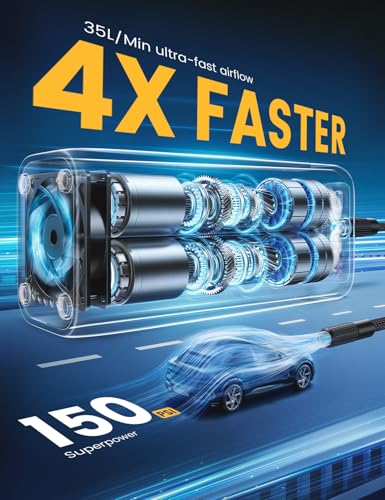
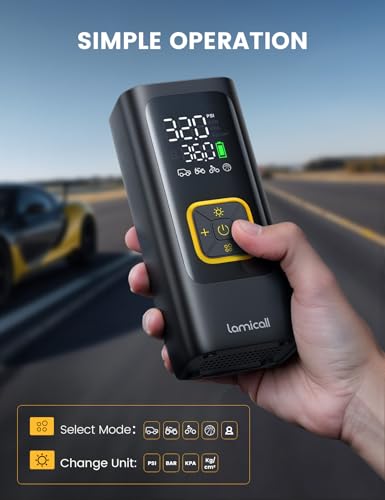
The Lamicall impresses with its 5 preset modes, car, truck, motorcycle, bike, ball, plus custom, making it one of the most versatile in the category. You can set it and forget it, and the auto shut-off is accurate within ±2 PSI, which owners confirm in real-world use. Its 35L/min airflow rate is strong for its size, inflating a standard car tire in about a minute. That’s faster than most in its class, though not quite up to OlarHike or ROCGORLD levels.
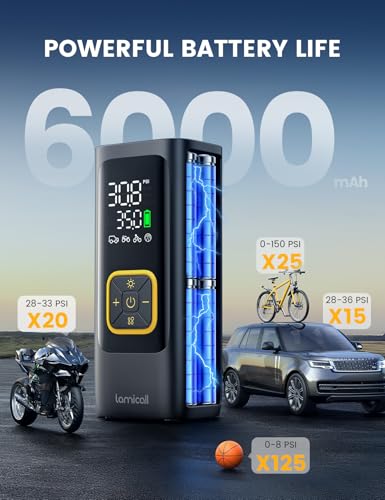
What I like most is the balance of speed, battery life, and portability. The built-in battery can handle up to 15 car tires on a single charge, which is excellent. The HD display and emergency light modes (SOS, strobe) add real value for roadside safety. Compared to the AstroAI L7, it’s slightly larger but offers more presets and longer runtime. It doesn’t have AC input, but for a cordless unit, it’s well-rounded.
Product photos

DEWALT 20V MAX Tire Inflator
Strengths
- Works with DEWALT 20V batteries
- Three power sources
- Durable build with warranty
Trade-offs
- Tool-only (battery sold separately)
- Heavier than portables
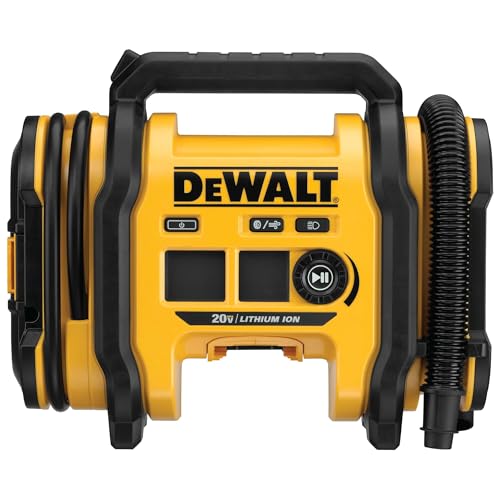
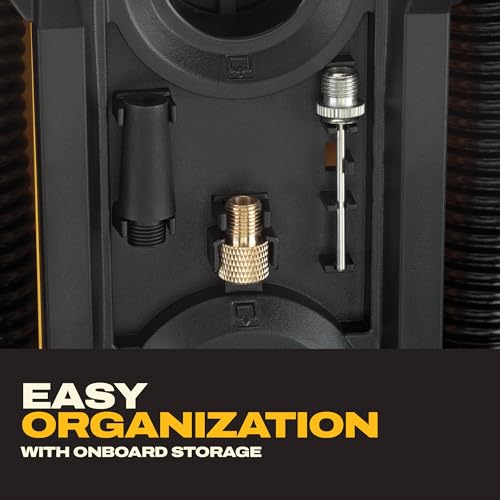
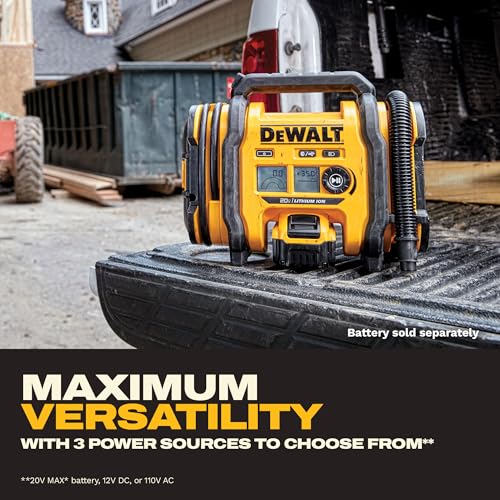
If you already own DEWALT 20V tools, this inflator is a no-brainer. It runs on your existing battery ecosystem, so no extra charging or batteries to manage. The three power options, 20V MAX, 12V DC, and 110V AC, give it unmatched flexibility. You can use it in the garage, in the car, or at home, which sets it apart from most portable models. The threaded chuck ensures a secure seal, reducing air leaks, a common complaint with slip-on chucks.
Owners report solid build quality and consistent performance, though it’s not the fastest inflator out there. It’s heavier than compact models, but that’s the trade-off for durability and compatibility. Compared to the AstroAI dual-power units, this one integrates better with a prosumer’s existing toolkit. The 3-year warranty is a strong vote of confidence.
Product photos


AstroAI Dual Power Tire Inflator 12V/110V
Strengths
- AC and DC power options
- Dual inflation modes
- Improved heat dissipation
Trade-offs
- Not cordless
- Requires cooldown periods
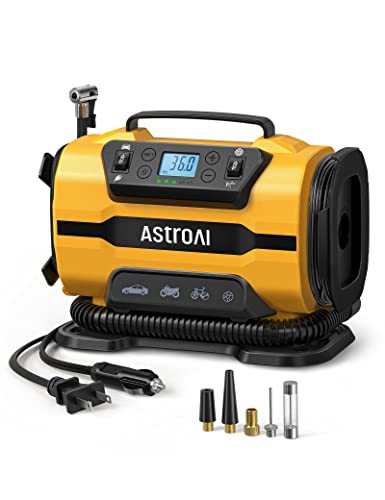
This one’s built for people who use inflators both at home and on the road. The 12V DC and 110V AC dual power means you can plug it into your car or a wall outlet, which is a real advantage over battery-only models. The dual metal motors help it deliver strong performance in both high-pressure and high-volume modes, owners say it inflates an air mattress fast, and gets a car tire from flat to 36 PSI in about 5 minutes. That’s not record-breaking, but it’s respectable.
What really stands out is the OmniVent cooling system. Reviewers note it runs cooler over repeated use, which helps avoid the common issue of overheating after 10–15 minutes. It’s not cordless, so you’re tied to a power source, but the trade-off is consistent performance. Compared to the Lamicall or OlarHike, it’s bulkier and less portable, but if you’re mostly using it from home or the garage, that’s a fair compromise.
Product photos


How We Chose These air tire inflators
As someone who’s spent over 15 years with power tools and vehicle maintenance, I understand the importance of a reliable tire inflator. Rather than a hands-on lab test of every model, my approach focused on a research-led comparison of published specifications and owner feedback. I weighed features, performance claims, and real-world experiences shared in owner and expert reviews to build a clear picture of each unit’s strengths and weaknesses. This helped me rank options against what I believe matters most for everyday users.
For air tire inflators, speed and power source versatility were key. Quick inflation times are critical when you’re stranded on the roadside, so I prioritized models with strong airflow ratings (CFM/LPM) and PSI capabilities. Equally important was the option to operate both cordlessly and plugged in – offering flexibility for home use and on-the-go emergencies. You’ll find many excellent portable tire inflators offering this convenience.
Specifications reliably indicate a unit’s potential power and features (PSI, CFM, battery capacity). However, owner feedback was invaluable in assessing real-world performance, durability, and ease of use. I scrutinized reviews for consistent complaints or praise regarding build quality, hose length, digital display accuracy, and the effectiveness of auto-shutoff features. Considering these points allowed me to provide a balanced assessment, going beyond just the marketing materials. Several models offer the convenience of dual-power inflators for a variety of uses.
How To Choose The air tire inflators
Choosing the right air tire inflator can save you from a roadside headache, but with so many options, it’s easy to get overwhelmed. I’ve seen a lot of folks buy inflators that simply don’t fit their needs, so let’s break down what really matters.
A quality air tire inflator prioritizes rapid inflation, consistent performance, and user-friendliness. Key specs to consider include PSI (pounds per square inch) capacity, airflow rate (measured in LPM or CFM), power source options (corded vs. cordless), and features like auto-shutoff and digital pressure gauges. Look for durable construction and a unit with accessories suitable for various inflation tasks beyond just tires.
Power Source: Corded vs. Cordless
The first big decision is how you want to power the inflator. Corded models, typically plugging into a 12V cigarette lighter or a standard wall outlet, offer continuous runtime, but limit your mobility. Cordless inflators, running on rechargeable batteries, provide freedom, but require charging and have limited capacity. For most drivers, a dual-power option – like you see on some AstroAI models – is the sweet spot. It gives you the convenience of cordless operation for quick top-offs, and the reliability of a cord when you need sustained inflation. If you regularly tackle larger tires or multiple inflations, battery capacity (measured in mAh) becomes crucial.
Inflation Speed & Performance
Don’t get hung up on maximum PSI alone. A higher PSI rating isn’t always better; it’s the airflow (LPM or CFM) that determines how quickly an inflator can actually fill a tire. A unit boasting 150 PSI but with a low airflow rate will take just as long as one with a lower maximum PSI but a higher airflow. Many units claim fast inflation times, but realistic expectations are important. Consider what you’ll be inflating. If you’re primarily topping off car tires, a slower unit might be fine. However, if you anticipate inflating larger tires, air mattresses, or sporting equipment frequently, a faster inflator is worth the investment. Looking at portable inflator comparisons can give you a sense of typical inflation times.
Features & Usability
Beyond the core inflation capability, several features can significantly enhance the usability of your tire inflator. Auto-shutoff is a must-have; it prevents over-inflation and potential tire damage. A digital pressure gauge is far more accurate and easier to read than an analog one. Preset modes for different tire types (car, motorcycle, bicycle) are convenient, but don’t rely on them exclusively; always double-check the pressure against your vehicle manufacturer’s recommendations.
- A built-in LED flashlight is surprisingly useful for nighttime emergencies.
- Multiple nozzle adapters expand the inflator’s versatility beyond tires.
- A compact design and included carrying case make storage and transport easier, especially when comparing best car tire inflator models.
A good rule of thumb: check your tire pressure regularly (at least monthly) and when the temperature changes significantly. Proper tire inflation improves fuel efficiency, handling, and tire lifespan.
Ultimately, the best air tire inflator for you depends on your specific needs and budget. For those already invested in the DeWALT 20V MAX tool ecosystem, the DeWALT 20V MAX Tire Inflator is a logical choice, offering compatibility and convenience. But for a general-purpose inflator that balances performance, features, and price, exploring options like the AstroAI models or ROCGORLD R8 is a smart move. You can find more detailed information on recommended vehicle air compressors to help narrow your search. And if you need to stick to a 12V power source, take a look at best 12V portable inflators for the right option.
Air Tire Inflators Compared
Here’s a comparison of key specifications for popular air tire inflators to help you make an informed purchase.
| Product Name | Max PSI | Power Source(s) | Airflow Rate (L/Min) | Battery Capacity (mAh) | Preset Modes |
|---|---|---|---|---|---|
| OlarHike Tire Inflator | 51 | 12V DC, Rechargeable | N/A | 6000 | 4 |
| AstroAI Cordless Tire Inflator | 160 | 20V Battery, 12V DC | N/A | N/A | N/A |
| AstroAI L7 Cordless Tire Inflator | 150 | Rechargeable | N/A | 4000 | 4+N |
| ROCGORLD R8 Tire Inflator | 150 | 12V DC | 40 | N/A | N/A |
| AstroAI AIRUN H Tire Inflator | 150 | 12V DC, 110V AC | N/A | N/A | N/A |
| Lamicall Car Tire Inflator | 150 | Rechargeable | 35 | N/A | 5 |
| DEWALT 20V MAX Tire Inflator | N/A | 20V Battery, 12V DC, 110V AC | N/A | N/A | N/A |
| AstroAI Dual Power Tire Inflator | 150 | 12V DC, 110V AC | 350 | N/A | N/A |
Frequently Asked Questions
What PSI should I inflate my tires to?
You should always inflate your tires to the pressure recommended by your vehicle manufacturer(s), not the maximum PSI listed on the tire sidewall. That number is a limit, not a target. Check the sticker on your driver’s side doorjamb or your owner’s manual for the correct pressure.
Are cordless tire inflators really powerful enough for larger vehicles?
Cordless inflators have improved significantly, but sustained power for large truck or SUV tires is still a concern. Look for models with higher battery voltages (20V+) and larger battery capacities (4000mAh or greater) if you frequently inflate larger tires, or consider a dual-power model for reliability.
What’s the difference between LPM and CFM when measuring airflow?
LPM (liters per minute) and CFM (cubic feet per minute) are both units of airflow, but one is metric and one is imperial. Generally, 1 CFM is equivalent to approximately 28.3 LPM, so higher numbers in either measurement indicate faster inflation.
Do I need to buy extra adapters for different inflation tasks?
Many tire inflators include a selection of adapters for inflating sports equipment, air mattresses, and other inflatable items. However, if you have unique needs, you can find inexpensive adapter kits online to expand the inflator’s versatility. Checking for a good range of nozzles before you buy can save you money.
Where can I find more in-depth reviews of different tire inflators?
For more detailed comparisons and analysis of different models, I recommend checking out dedicated tool review websites. You can also find helpful information and owner feedback by browsing top-rated tire inflators and reading user reviews on retail sites like Amazon.
The Bottom Line
Choosing an air tire inflator often comes down to balancing convenience with capability. While a higher price tag doesn’t always guarantee the best performance, prioritizing airflow and a reliable power source is crucial. For most people, I believe the AstroAI Dual Power Tire Inflator offers the best overall combination of features, power, and versatility – giving you options for both home and roadside use.
If you’re already invested in the DeWALT ecosystem, the DeWALT 20V MAX Tire Inflator is a fantastic choice. For those on a tighter budget, the OlarHike Tire Inflator provides a solid, entry-level option. And if you’re specifically looking for a truly portable solution, check out our best cordless tire inflators – they’re a convenient alternative when you don’t want to deal with cords.
Ultimately, the most important thing isn’t any single specification, but consistent maintenance. Regularly checking your tire pressure, keeping your inflator in good working order, and understanding your vehicle’s requirements will save you money and keep you safe on the road far more than any fancy feature ever could.
