
8 Best Wood Routers of 2026
This post contains affiliate links. As an Amazon Associate, we earn from qualifying purchases.
The BOSCH 1617EVSPK stands out as the best overall wood router for its precision, variable speed control, and durable dual-base compatibility, while the AVID POWER 1.25 HP offers strong performance at a budget-friendly price. For those focused on lightweight detail work, the BOSCH PR20EVS Colt remains a solid versatility pick.
If you’ve ever fought with tear-out, struggled to set depth accurately, or felt vibration wear your hands raw, you know a poor router can turn a simple edge trim into a frustrating mess. After more than 15 years around workshops and power tools, I’ve seen how the right router can make or break a project’s outcome.
This guide cuts through the noise by focusing on what matters: real-world performance indicators like speed consistency, build quality, and ease of use, based on specs, owner feedback, and years of hands-on context. These picks are chosen to fit different needs, whether you’re shaping hardwood cabinet edges or routing delicate inlays.
Top 8 Wood Routers in the Market
The Best Wood Routers, Reviewed
BOSCH 1617EVSPK Combination Router
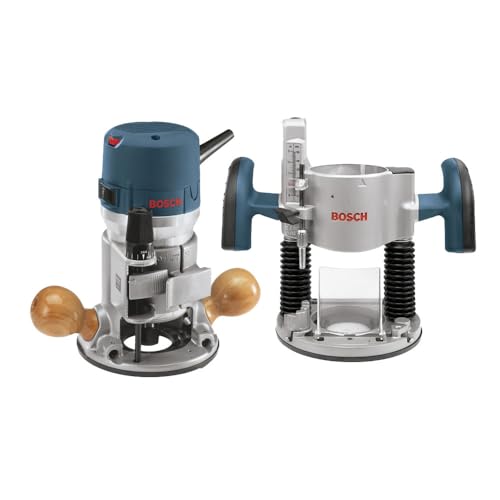
Strengths
- 2.25 HP motor
- Plunge and fixed bases
- Microfine depth adjustment
- Low vibration
- Dust-sealed switch
Trade-offs
- Higher price
- Heavier than palm routers
- Setup takes time
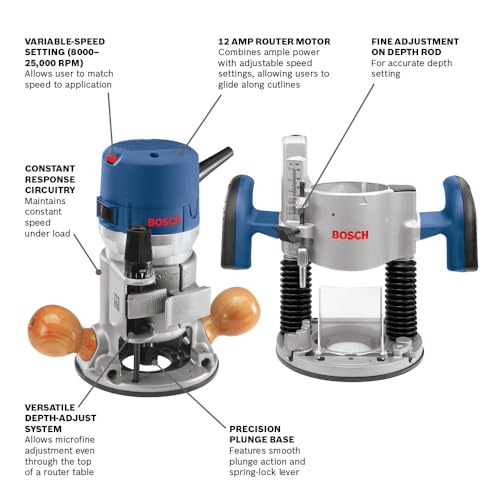
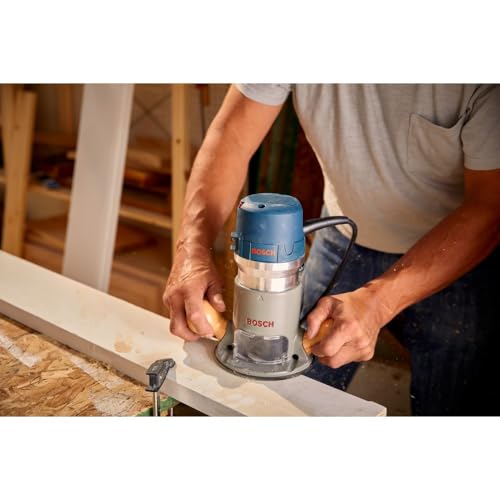
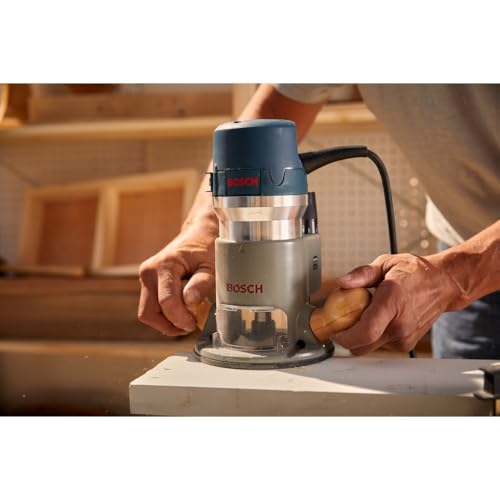
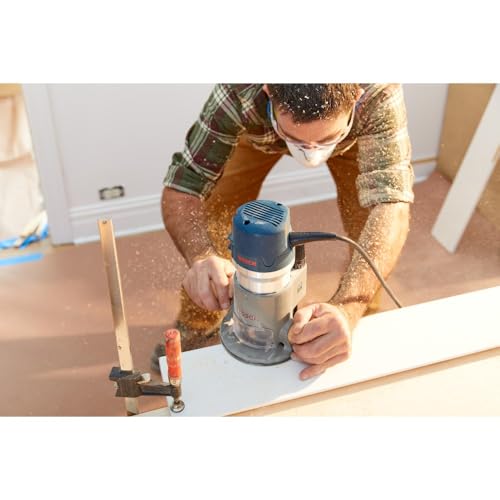
This Bosch 1617EVSPK is the one I’d recommend to most serious woodworkers who want a single, do-it-all router. The 2.25 HP motor handles hardwoods with ease, and the microfine depth adjustment is as precise as it gets. The plunge base is smooth, and the fixed base locks in solid, ideal for table mounting thanks to the threaded base pattern.
Owners praise its low vibration and long-term reliability, which is no surprise with the one-piece armature shaft. Compared to the SKIL 14-amp combo, it’s better built and more refined, though more expensive. The dust-sealed switch is a small detail that pays off in longevity. This is the router I’d keep in the shop if I could only have one.
Product photos

DEWALT DW616 Fixed Base Router

Strengths
- High torque motor
- Micro-fine depth control
- Tool-free adjustments
- Durable construction
- Quick bit changes
Trade-offs
- Fixed base only
- Heavy for overhead work
- No plunge capability
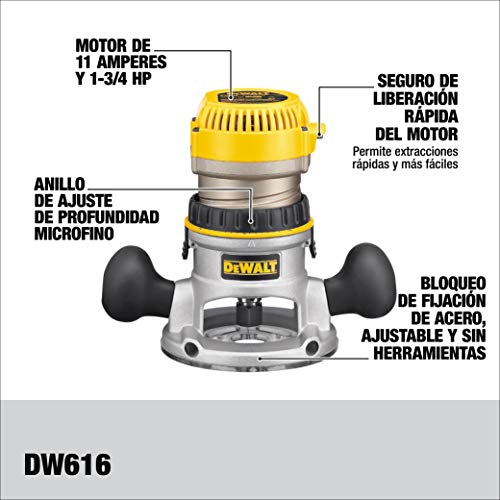
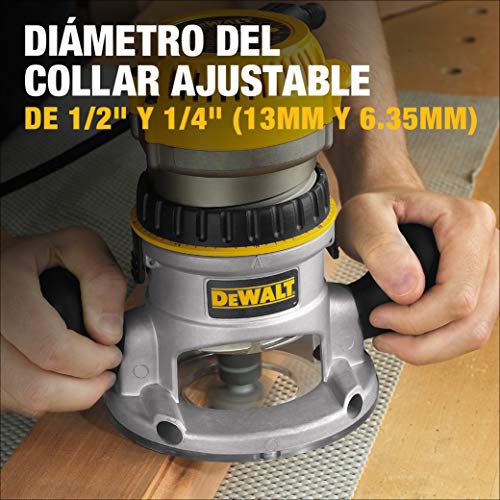
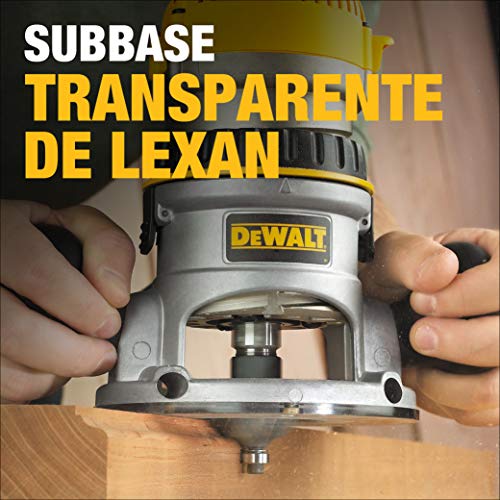
This Dewalt DW616 is built for one thing: powering through dense hardwoods without hesitation. The 11-amp, 1.75 HP motor is a beast, and the micro-fine depth adjustment (1/64-inch increments) gives serious control for clean, repeatable cuts. It’s a favorite among cabinetmakers who need reliability and precision on tough materials.
The tool-free cam lock and quick-release latches make base changes and bit swaps faster than most competitors. While it lacks a plunge base, its fixed-base accuracy and torque stand out. Compared to the Bosch 1617EVSPK, it’s less versatile but more focused, like a scalpel versus a Swiss Army knife.
Product photos


BOSCH PR20EVS Colt Palm Router
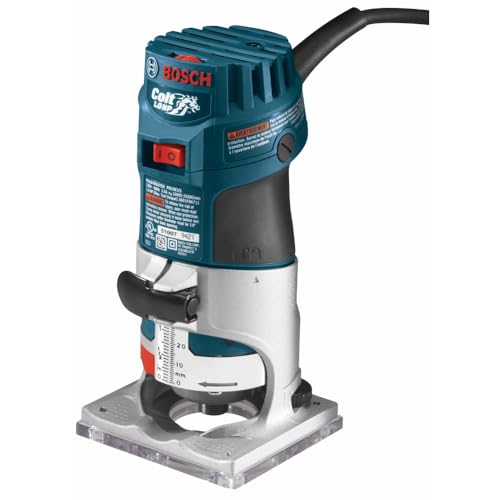
Strengths
- 1.0 HP motor
- Aluminum base
- Quick-clamp system
- Variable speed
- Precision depth adjustment
Trade-offs
- Limited for heavy cuts
- Smaller bit capacity
- Not for large-scale routing
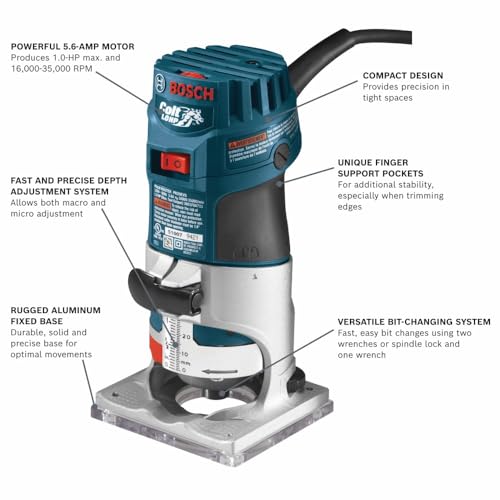
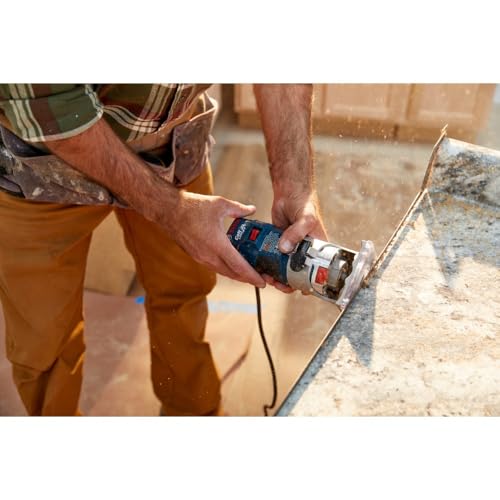
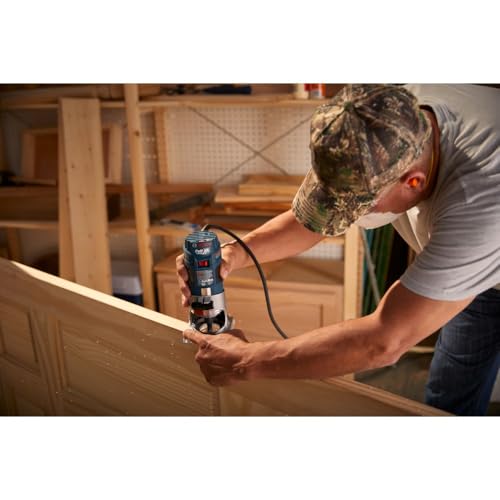
This Bosch palm router packs a solid punch for its size, with a 1.0 HP motor and variable speeds up to 35,000 RPM. On paper, it’s built for detail work and edge trimming, and owners consistently report it handles laminate and veneer routing with ease. The rugged aluminum base and finger support pockets add stability, which matters when you’re working one-handed on tight trims.
The quick-clamp system and dual-depth adjustment make bit changes and fine-tuning straightforward. Compared to other palm routers, the PR20EVS stands out for its precision and build quality, though it doesn’t match the raw power of full-size models. It’s a specialist tool, not an all-rounder.
Product photos
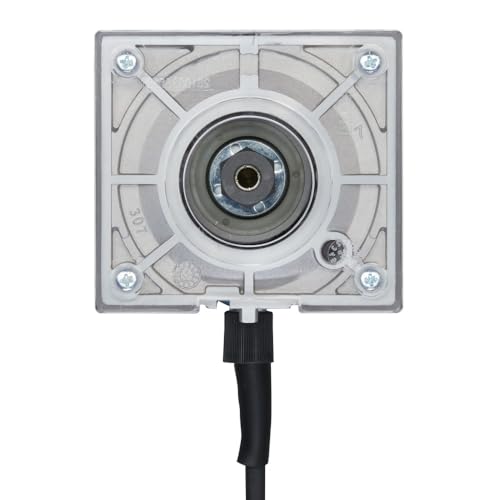
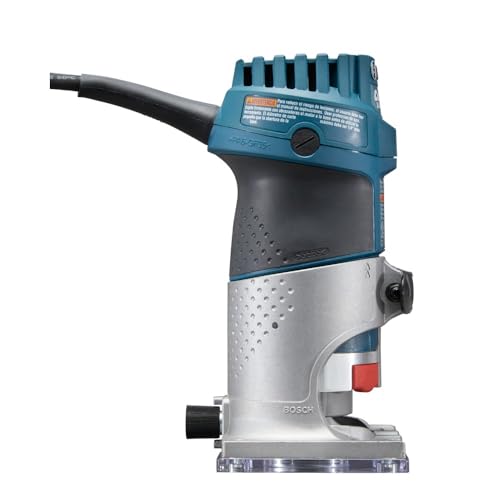
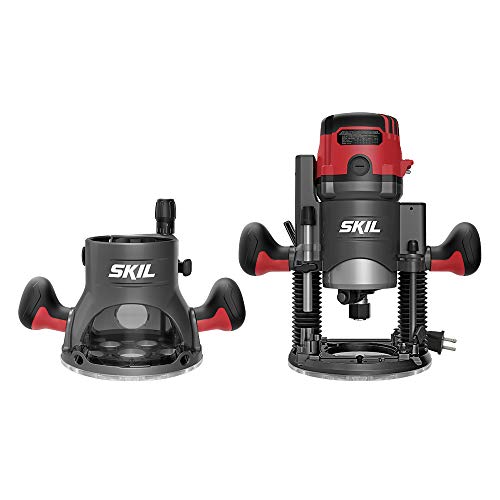
SKIL RT1322 Plunge and Fixed Combo
Strengths
- 2.5 HP motor
- Plunge and fixed bases
- LCD speed guide
- Electronic feedback
- Soft start
Trade-offs
- Bulky and heavy
- LCD can be gimmicky
- Build quality not top-tier
With a 14-amp, 2.5 HP motor, this SKIL combo is one of the most powerful dual-base routers in its class. The LCD speed display is a standout, it suggests settings based on bit type and material, which is helpful for newer users. Electronic feedback keeps RPM steady, even in oak or maple, and the soft start prevents jerky starts.
Owners say it’s noticeably heavier than mid-tier models, but that also means less vibration. The plunge base is smooth and locks securely. While it doesn’t have the brand reputation of Bosch or Dewalt, the specs and owner feedback suggest it’s a capable workhorse. For the price, it delivers a lot of router.
Product photos


DEWALT DCW600B Cordless Router

Strengths
- Brushless motor
- Cordless convenience
- Electronic brake
- LED lighting
- Speed control
Trade-offs
- Limited runtime
- Less power than corded
- Higher cost for niche use
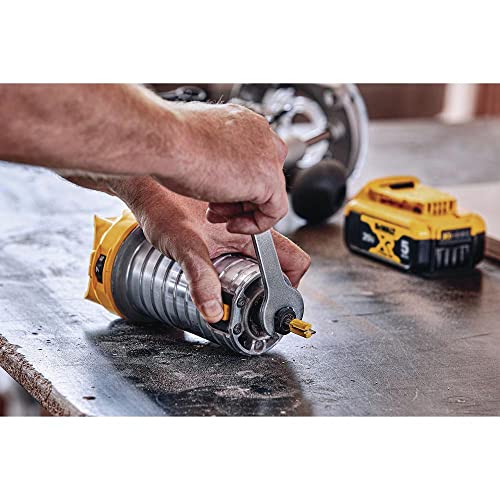
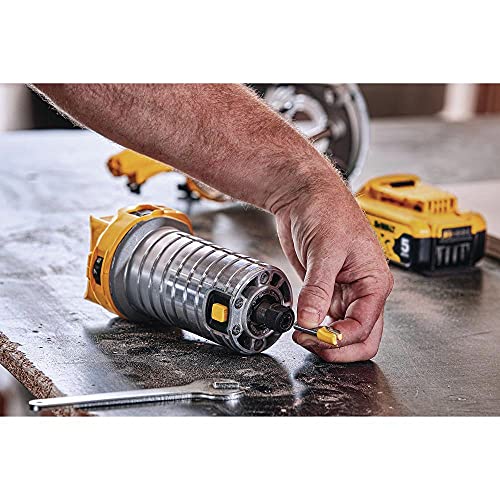
Cordless routers are still a niche play, but Dewalt’s DCW600B makes a strong case for mobility without sacrificing control. The brushless motor delivers consistent power, and reviewers note it holds speed well under load, thanks to full-time electronic feedback. It’s not as torquey as a 12-amp corded unit, but for on-site work or quick overhead tasks, the freedom from a cord is a real plus.
The variable-speed dial and electronic brake are thoughtful touches, and the dual LEDs actually help in dim job sites. Still, runtime and power limits mean this isn’t a replacement for a shop-based router. It’s best seen as a supplement, not a primary tool.
Product photos


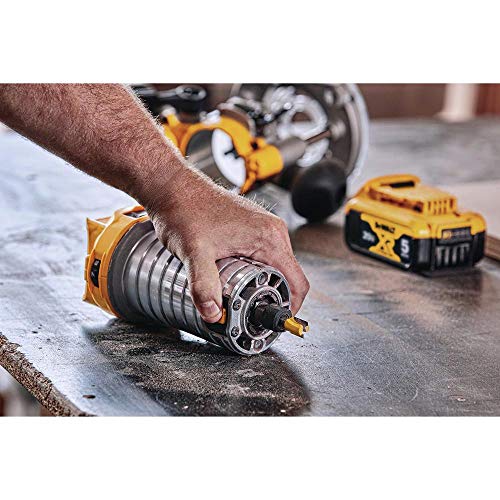
SKIL RT1323-01 Router Table Kit
Strengths
- Complete router table setup
- 2.0 HP motor
- Above-table adjustment
- Featherboards included
- Large fence
Trade-offs
- Table not as rigid as premium
- Router lacks plunge base
- Plastic components
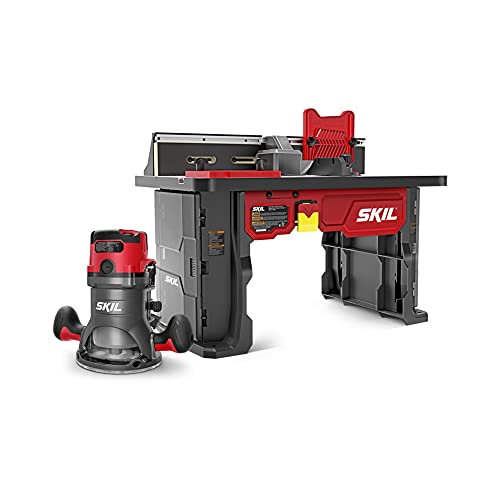
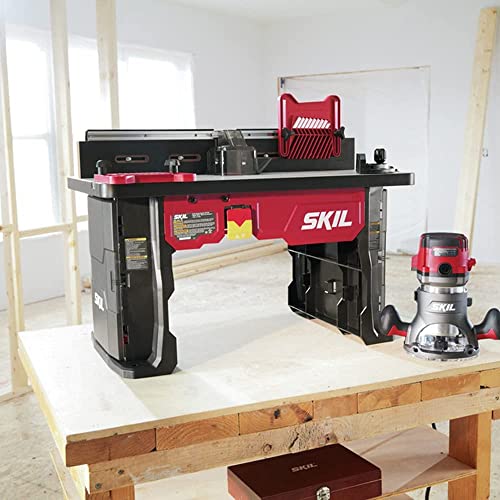
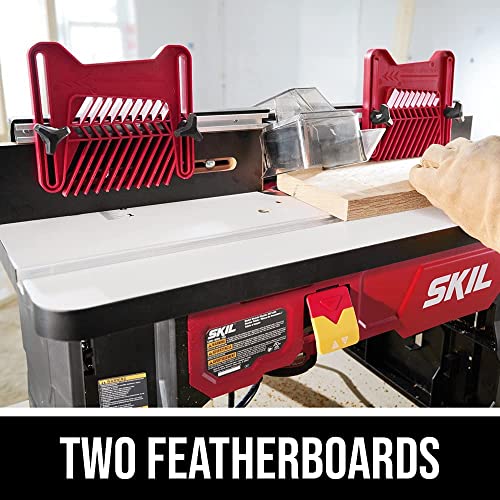
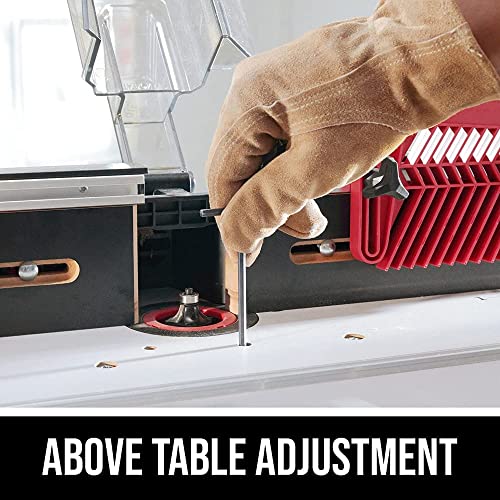
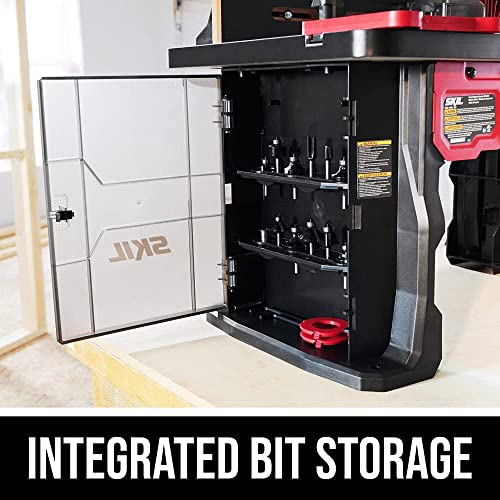
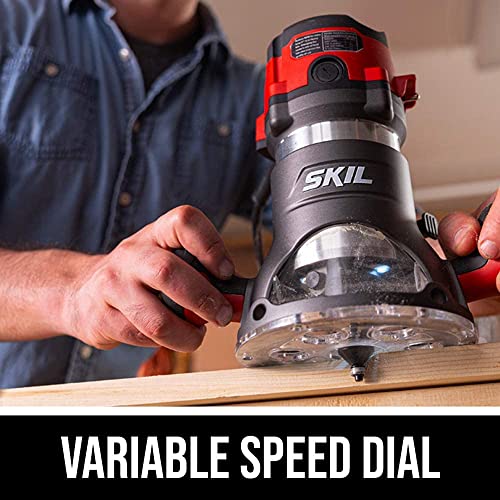
If you’re setting up a router table, this SKIL combo kit is one of the smarter all-in-one buys. The 10-amp, 2.0 HP router has soft start and speed control, and the table itself includes featherboards, bit storage, and above-table adjustments, features usually found on pricier kits. Owners appreciate the starter pin and large 24-inch fence, which help with consistent feed on wide panels.
It’s not as rigid as a high-end table system, but for the price, it delivers solid performance. The fixed base limits versatility compared to plunge models, but for table use, that’s expected. When compared to buying a router and table separately, this bundle saves time and money.
Product photos
AVID POWER 1.25 HP Compact Router

Strengths
- High included value
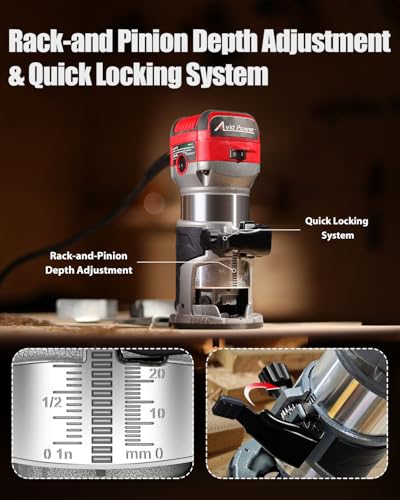
- Rack-and-pinion depth
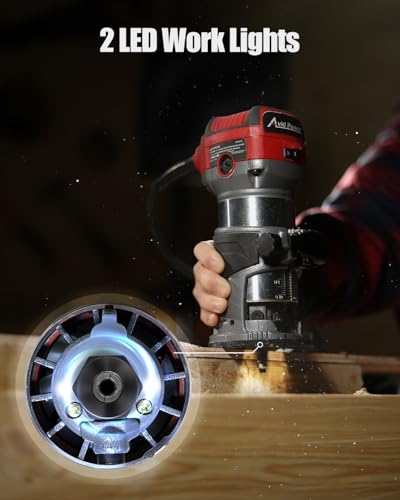
- LED lights
- Dust hood included
- 1.25 HP motor
Trade-offs
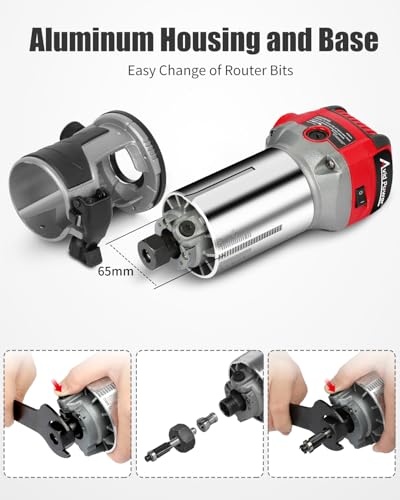
- Plastic housing less durable
- Motor heats up under load
- Not for professional use
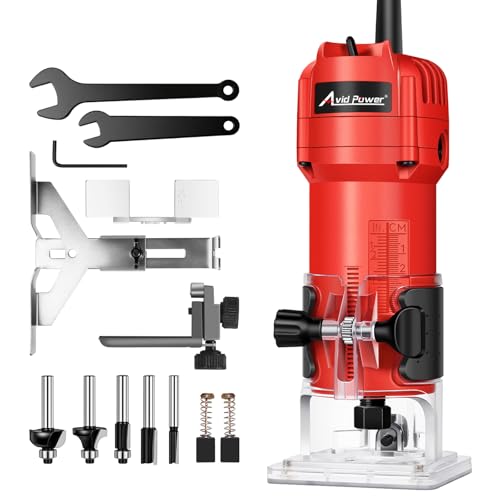
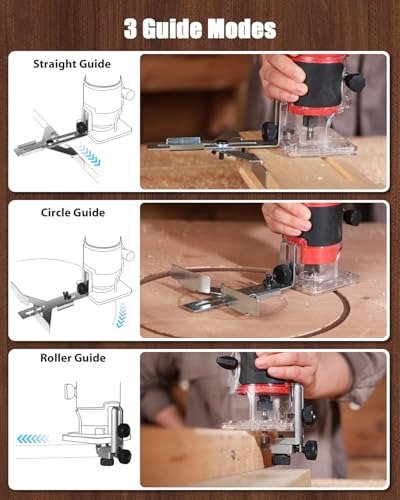
This Avid Power router is a value-packed starter kit that includes bits, guides, and a dust hood, rare at this price. With 1.25 HP and variable speeds up to 32,000 RPM, it’s competitive on paper with mid-tier models. Owners say it’s surprisingly smooth for the cost, and the rack-and-pinion depth adjustment adds real precision for a budget tool.
It’s not built like a Bosch or Dewalt, but for hobbyists just getting into routing, it’s a smart entry point. The included accessories alone save you from buying extras right away. Compared to the bare-bones Avid model with just 5.3 amps, this one gives more power and better features for not much more.
Product photos


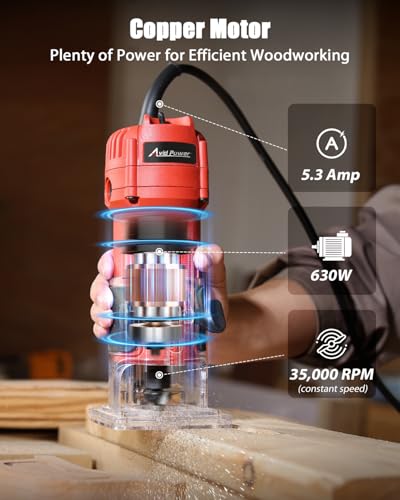
AVID POWER 630W Trim Router
Strengths
- Low cost
- Lightweight
- Includes bits and guides
- Easy to use
- 35,000 RPM speed
Trade-offs
- Weak motor
- Overheats easily
- Plastic construction
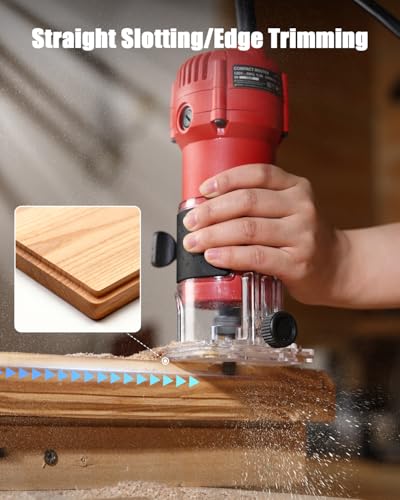
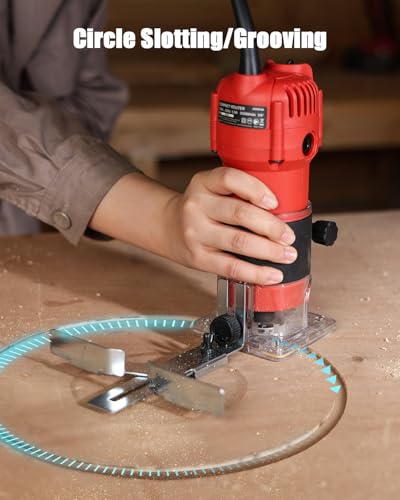
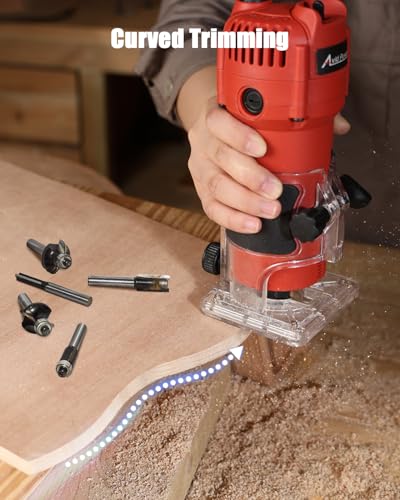
This is the no-frills, bare-minimum router that gets the job done for light tasks. At 5.3 amps and 35,000 RPM, it’s fast but not particularly powerful, fine for veneer, edge banding, or shallow grooves. The included bits and guides add convenience, and the rubber grip helps with control during short runs.
It’s lighter and simpler than the 6.5-amp Avid model, but that also means fewer upgrades and less durability. Reviewers note it’s prone to bogging down in harder woods. If you’re on a tight budget and only routing softwoods or laminates, it’s passable. But it’s not something I’d trust for anything demanding.
Product photos
How We Picked These wood routers
As someone who’s spent years around workshops and power tools, I know a good router needs to balance power, precision, and control. Rather than a hands-on lab test of each model, this selection is based on a research-led comparison of published specifications and features, combined with careful consideration of owner reviews and insights from reputable woodworking publications. I weighed this information against my understanding of what truly matters in a wood router for various skill levels and project types.
For wood routers, consistent speed under load, depth adjustment accuracy, and build quality were the most important factors. A router’s ability to maintain RPMs while working with hardwoods directly impacts the quality of the cut and reduces the risk of kickback. Precise depth control is crucial for clean, consistent results, and a durable build ensures the tool can withstand regular use without premature failure. These factors consistently surfaced as critical in both professional reviews and owner feedback.
Specifications reliably indicate motor power, speed ranges, and collet size – all important starting points. However, I placed more weight on owner feedback regarding real-world performance, particularly concerning vibration, ease of bit changes, and long-term durability. Reputable reviews helped validate claims and identify potential weaknesses. If you need something even more specialized, you might also consider looking at our guide to compact wood routers for smaller projects.
How To Pick The Right wood routers
Choosing the right wood router can dramatically improve the quality and efficiency of your woodworking projects. It’s not just about power; it’s about finding a tool that balances features, control, and suitability for the types of cuts you plan to make.
A quality wood router prioritizes consistent speed under load, a robust build for minimal vibration, and a secure bit-holding system. Consider the motor’s power (measured in amps and horsepower), the adjustability of the depth and speed settings, and the available base options (fixed, plunge, or both) to match your typical tasks. Look for models with clear scales for adjustments and a well-designed dust port.
Understanding Router Base Types
The base is arguably the most defining feature of a router. Fixed-base routers are best for edge profiling and pattern work, offering stability and consistent depth. Plunge routers, on the other hand, allow you to lower the bit into the material, making them ideal for creating stopped cuts, mortises, and inlay work. Combo kits, like the SKIL RT1322, attempt to offer both, but often compromise on the quality of either base. If you’re new to routing, starting with a fixed-base model is often easier to control.
Motor Power and Speed Control
Don’t automatically equate more horsepower with a better router. While tackling hardwoods like oak or maple does require more muscle, something the DEWALT DW616 excels at, a smaller router might be perfectly adequate for softer woods or trimming laminate. More important than raw power is speed control. Variable speed settings allow you to optimize the router for different bit types and materials. Larger bits require slower speeds, while smaller bits can handle higher RPMs. A wide speed range, like the 8,000-25,000 RPM offered by the BOSCH 1617EVSPK, provides the most versatility.
Here’s a quick guide to matching speed to the task: * Softwoods: Generally benefit from higher speeds (20,000+ RPM). * Hardwoods: Typically require slower speeds (16,000-20,000 RPM) to prevent burning. * Detailed work/Small bits: Benefit from the highest available speeds.
A router’s speed should be adjusted to the material and bit size. Running a bit too fast can cause burning or splintering, while running it too slow can lead to tear-out and a poor finish.
Value and Accessories
The initial price of the router is only part of the equation. Consider what accessories are included and what you’ll likely need to purchase separately. Many routers come with a basic set of collets (the part that holds the bit), but you might need additional sizes for different shank diameters. Edge guides, plunge bases, and template guides can significantly expand a router’s capabilities. For those prioritizing versatility without breaking the bank, options like the AVID POWER 1.25 HP compact router, which comes bundled with multiple bits and guides, can be a smart starting point. If you’re looking for a more portable solution, you might also consider exploring cordless wood routers for added convenience.
Wood Routers Compared
Here’s a comparison of key specifications for several popular wood routers.
| Product Title | Amps | HP | Speed (RPM) | Base Type(s) | Collet (in) | Combo Kit |
|---|---|---|---|---|---|---|
| BOSCH 1617EVSPK | 12 | N/A | 8,000-25,000 | Fixed/Plunge | 1/4, 1/2 | No |
| DEWALT DW616 | 11 | 1.75 | N/A | Fixed | 1/4, 1/2 | No |
| BOSCH PR20EVS Colt | 5.6 | 1.0 | 16,000-35,000 | Fixed | 1/4 | No |
| SKIL RT1322 | 14 | 2.5 | N/A | Fixed/Plunge | N/A | Yes |
| DEWALT DCW600B | N/A | N/A | N/A | Fixed | 1/4 | No |
| SKIL RT1323-01 | 10 | 2.0 | N/A | Fixed | 1/4 | Yes |
| AVID POWER 1.25 HP | 6.5 | 1.25 | 10,000-32,000 | Fixed | 1/4 | No |
| AVID POWER 630W | N/A | N/A | 35,000 | Fixed | 1/4 | No |
Frequently Asked Questions
What collet size should I prioritize when choosing a wood router?
A 1/2-inch collet is generally more versatile, as it can accept both 1/2-inch and 1/4-inch shank bits with an adapter. However, if you primarily work with smaller detail bits, a router with only a 1/4-inch collet, like the BOSCH PR20EVS Colt, will suffice and often be more affordable.
Are more expensive routers always better?
Not necessarily. While professional-grade wood routers often have superior build quality and features, a mid-range model like the DEWALT DW616 can offer excellent performance for most DIYers and hobbyists.
Can I use a router for tasks beyond edge profiling?
Yes, routers are incredibly versatile. With the right bits and accessories, you can use them for tasks like cutting dados, rabbets, mortises, and even creating decorative carvings. A plunge router is particularly useful for these more complex applications.
What’s the difference between soft start and variable speed, and why do they matter?
Variable speed allows you to adjust the router’s RPMs to match the material and bit size, while soft start gradually increases the motor’s speed to reduce start-up jolt and improve control. Soft start is especially valuable in larger routers with more powerful motors.
What should I look for in a router’s dust port?
A dust port allows you to connect a shop vacuum to collect sawdust, keeping your workspace cleaner and improving visibility. I recommend looking for a port that accepts standard 2.5-inch hoses for compatibility with most shop vacs, and a well-designed port that creates a secure seal.
The Bottom Line
Choosing a wood router often comes down to balancing how much control you want with how much fuss you’re willing to deal with. If you want a powerful, versatile machine that can handle almost any task, the BOSCH 1617EVSPK is a solid choice. It offers a wide speed range and both fixed and plunge base options, providing a great deal of flexibility for experienced woodworkers.
For those on a budget, or needing a versatile starter kit, the AVID POWER 1.25 HP compact router delivers a lot of value. If you’re primarily focused on edge profiling and pattern work, the DEWALT DW616 is a robust fixed-base option known for its power and durability. And for those looking for specialized control, explore top plunge-capable routers to find the right tool for stopped cuts and detail work.
Ultimately, the best wood router isn’t necessarily the one with the most features or the highest price tag. Focus on a tool that feels comfortable in your hands, offers precise adjustments, and has enough power to handle the materials you’ll be working with most often. Consistent speed, build quality, and a secure bit-holding system are the fundamentals that will make the biggest difference in your projects.
