
8 Best Plunge Routers of 2026
This post contains affiliate links. As an Amazon Associate, we earn from qualifying purchases.
The Makita RP1800 stands out as the best overall plunge router for its power, precision, and smooth plunge mechanism, while the Bosch GOF13-25 is a solid budget-friendly option that doesn’t sacrifice core performance. For those who want flexibility, the Bosch 1617EVSPK doubles as a fixed-base router and offers excellent value.
If you’ve ever fought with a router that drifts off depth or vibrates too much to make a clean cut, you know how frustrating an underperforming tool can be. A good plunge router should inspire confidence, letting you focus on the work, not the tool.
This guide cuts through the specs and marketing to highlight models that owners and experts consistently praise. I focused on real-world performance, build quality, and features that actually matter, like fine depth control, reliable dust collection, and ease of use, so you can pick the right router for your shop and skill level.
Top 8 Plunge Routers in the Market
The Best Plunge Routers, Reviewed
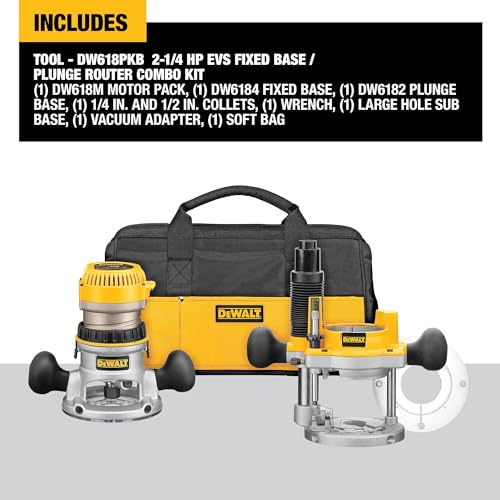
DEWALT 12-Amp Variable Speed Router Kit

Strengths
- Exceptional depth control
- Strong dust collection
- Smooth, precise plunge
Trade-offs
- Slightly higher vibration
- Corded only
- Price reflects premium build
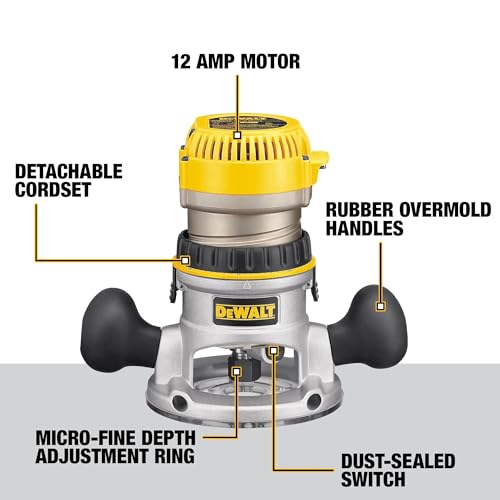
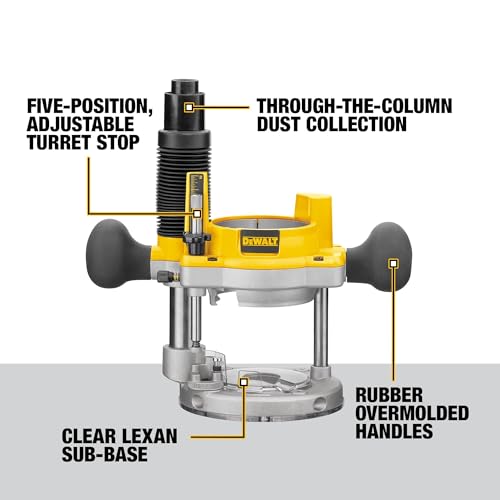
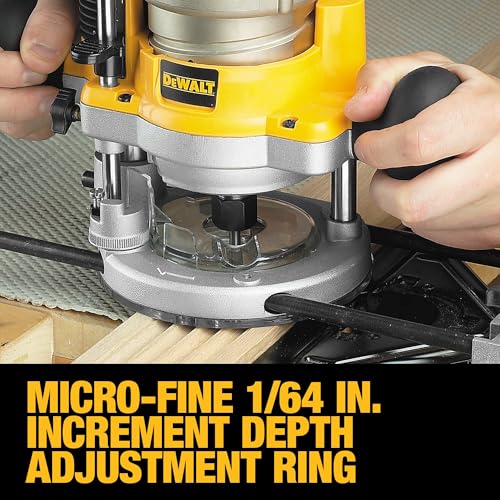
This is the router I’d pick if I could only own one. It strikes the best balance between power, precision, and versatility. The 12-amp motor with full feedback control delivers consistent speed under load, and the 8,000–24,000 RPM range covers nearly every routing need. The micro-fine depth adjustment in 1/64-inch increments is as precise as it gets, and the tool-free motor cam lock makes base swaps fast and secure.
Owners love the through-the-column dust collection, it keeps the cut line visible and reduces cleanup. The clear LEXAN sub-base is another small but meaningful win. When compared to the Bosch 1617EVSPK, it offers better plunge precision and a more robust adjustment system, making it the true all-rounder.
Product photos
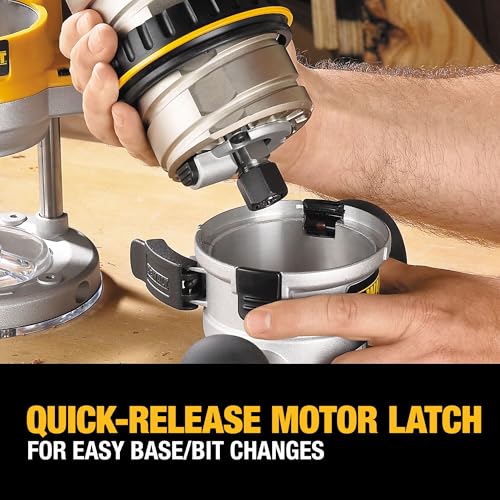
Makita RP2301FC 3-1/4 HP Plunge Router

Strengths
- Variable speed control
- Maintains RPM under load
- Soft start and electric brake
Trade-offs
- No microfine depth adjustment
- Slightly pricier than non-variable models
If the RP1800 is the muscle car, this one’s the tuned performance sedan. The same 15 AMP motor is here, but now with variable speed from 9,000 to 22,000 RPM, giving you real control over cut quality. The electronic speed control that maintains RPM under load is a game-winner, reviewers note fewer burn marks and cleaner edges, especially when feeding slowly through tough grain.
It also benefits from soft start and electric brake, two features that may seem small but add up in daily use. When stacked against the RP1800, this is the smarter buy for most serious DIYers and pros who want one router for everything. It’s not the most precise on micro-adjustments, but the speed range and consistency make it a standout in the high-power category.
Product photos

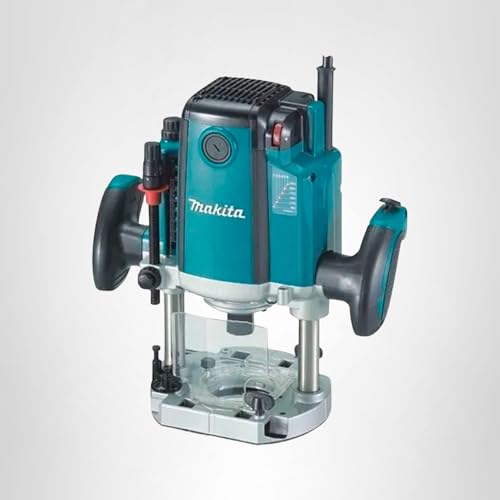
DEWALT 20V MAX XR Cordless Plunge Router

Strengths
- True cordless freedom
- Strong dust collection
- Anti-rotation safety system
Trade-offs
- Battery sold separately
- Less torque than corded 15A models
- Higher cost of entry
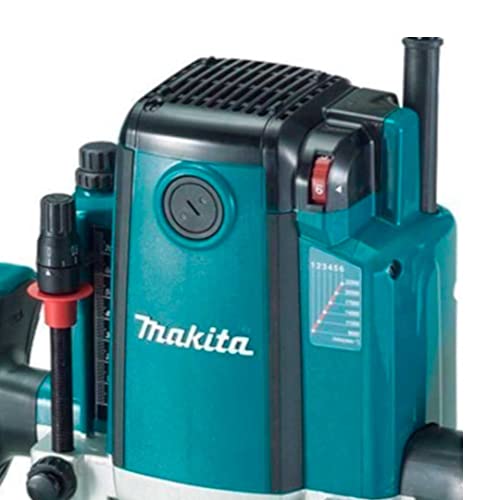
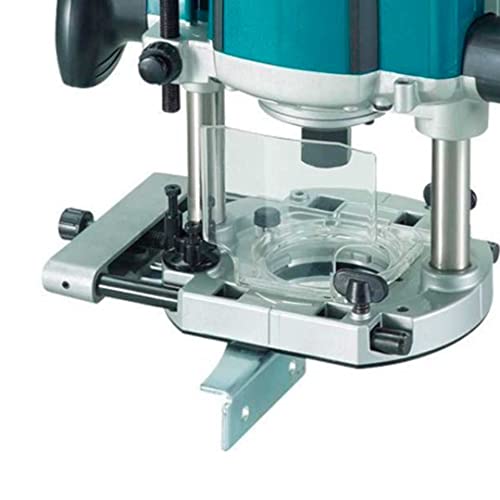
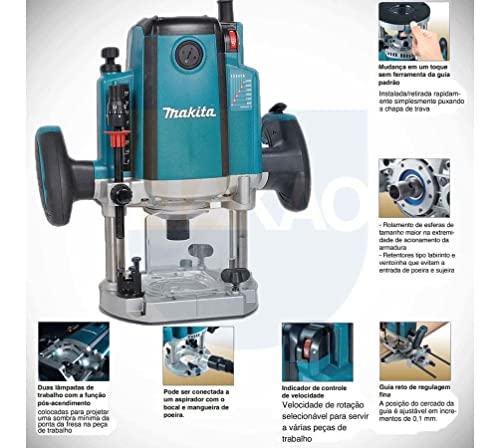
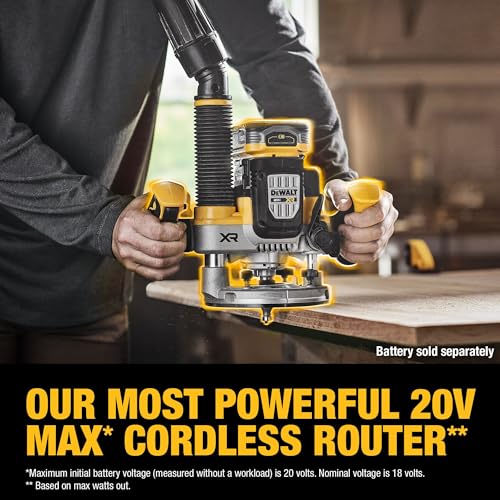
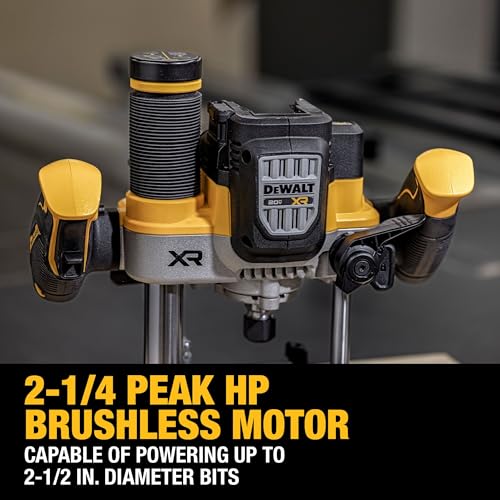
Cordless routers used to feel like compromises, but this DEWALT changes the game. With up to 23,000 RPM and constant speed under load, it keeps pace with many corded models in real-world use. The anti-rotation system is a standout safety feature, multiple reviewers mention feeling more confident during freehand or edge work.
Battery life is impressive, with DEWALT claiming 256 linear feet of roundover in pine on one charge. The dust collection with AIRLOCK is another win, capturing nearly all fine dust when paired with their extractor. It’s not as powerful as the Makita 15 AMP models, but the portability and balanced design make it ideal for on-site work. For trim carpenters or mobile woodworkers, this is the only cordless option worth serious consideration.
Product photos
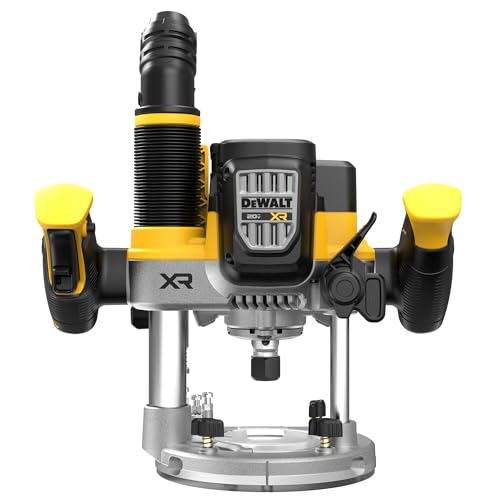
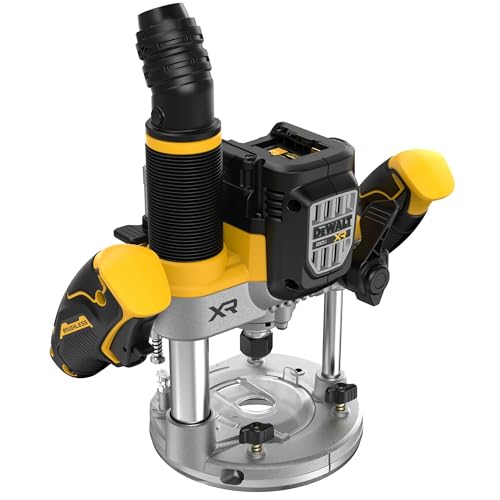
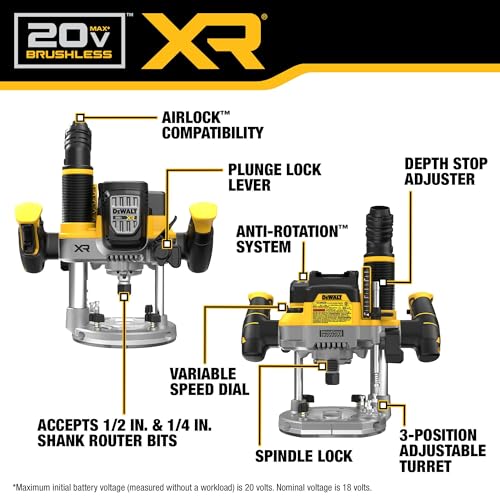
BOSCH GOF13-25 1-3/4 HP Plunge Router
Strengths
- Extremely comfortable grip
- High max RPM for fine cuts
- Includes useful guides
Trade-offs
- Lower torque for big bits
- Not ideal for hardwoods
- Light-duty motor
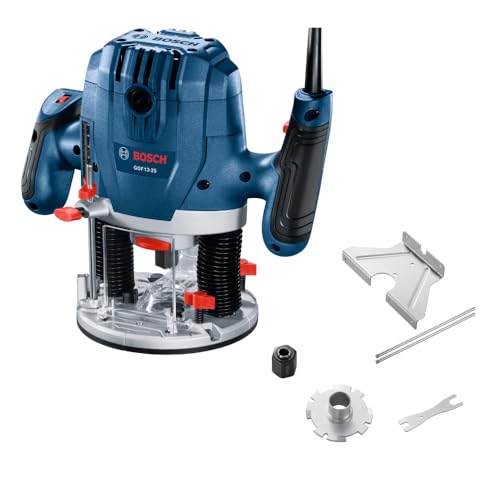
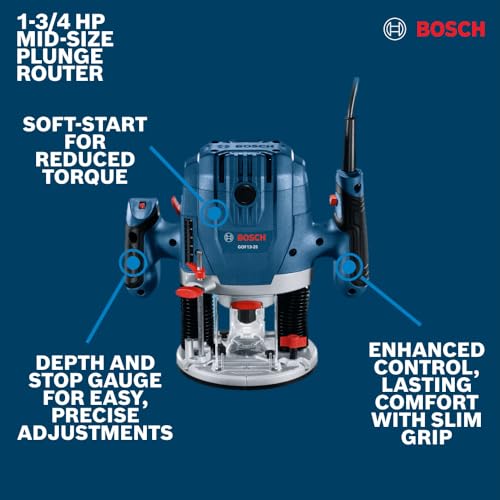
This router is built for comfort first. The slim grip and dual ergonomic handles make it one of the easiest to hold during long sessions, owners with hand fatigue issues consistently praise it. The 1-3/4 HP motor may seem underpowered next to 2.5 HP models, but the 28,000 RPM max speed helps it punch above its weight for fine work like edge detailing or sign carving.
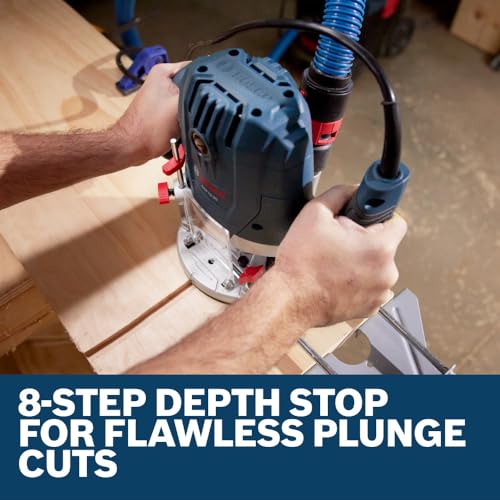
The handle-mounted speed dial is well placed, and the eight-stop depth increments are useful for multi-pass cuts. But it’s not a heavy-duty tool, trying to run large bits in oak will strain it. Compared to the DEWALT DCW620B, it’s less powerful but more comfortable for detail work. If you’re doing intricate routing for hours, this one stands out.
Product photos



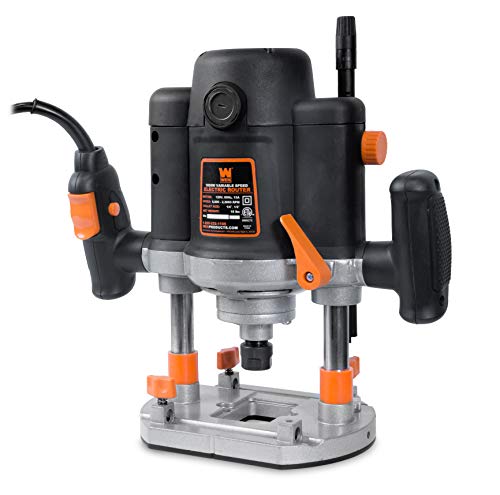
WEN RT6033 15-Amp Variable Speed Router

Strengths
- Excellent value
- Includes edge guide and case
- Good speed range
Trade-offs
- Plunge action less smooth
- Plastic components feel less durable
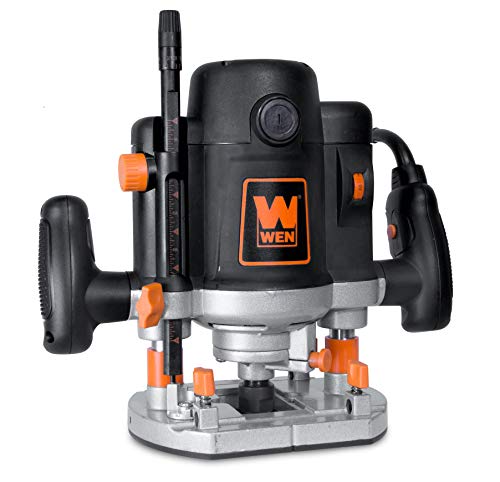
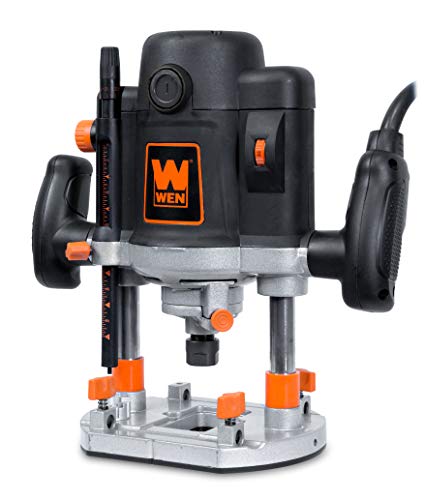
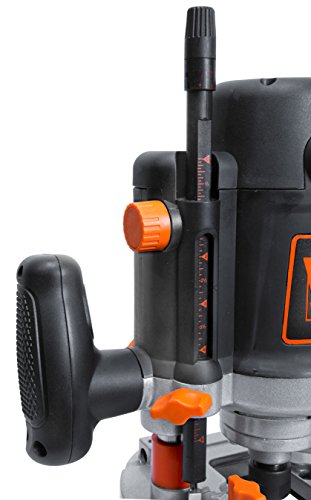
Let’s be honest, if you’re on a budget but still want a full-featured plunge router, this WEN model is hard to ignore. For the price, it includes a surprising amount: 15 amps, variable speed from 8,000 to 23,000 RPM, and both macro and micro depth adjustments via a 7-stop turret. The kit even throws in an edge guide and carrying case, which adds real value.
But owners do report some trade-offs. The plunge mechanism isn’t as silky as the Makita or Bosch units, and the build feels a bit lighter, not flimsy, but not overbuilt either. Still, for weekend warriors or those just getting into routing, it delivers solid performance without breaking the bank. Compared to the SKIL RT1322-00, it offers better precision and a more refined adjustment system.
Product photos

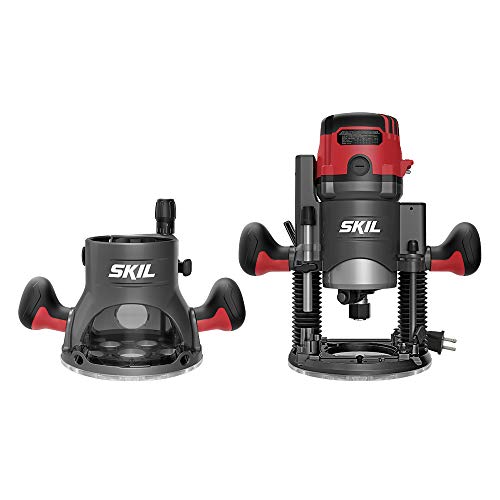
SKIL 14 Amp Plunge and Fixed Base Router
Strengths
- Includes both bases
- LCD speed suggestions
- Soft start and feedback control
Trade-offs
- LCD display unreliable
- Build quality inconsistent
- Handles lack comfort
This combo kit is positioned as an all-in-one solution, and for the price, it delivers a lot of box-checked features. The 14 AMP motor isn’t the strongest here, but it’s enough for most mid-level tasks. The LCD speed display is a unique touch, it suggests optimal RPM based on bit type and material, which could help beginners avoid mistakes.
But the execution feels a bit gimmicky. Owners note the display isn’t always accurate, and the overall plunge mechanism lacks the refinement of more established brands. Compared to the WEN RT6033, it doesn’t offer better precision or value. It’s a decent package for someone wanting both bases in one kit, but the tech features don’t make up for mediocre build quality.
Product photos


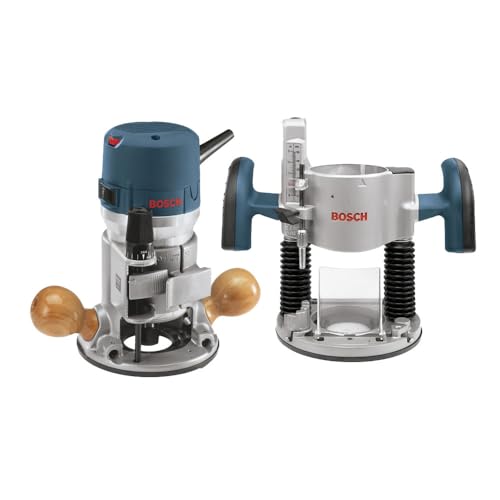
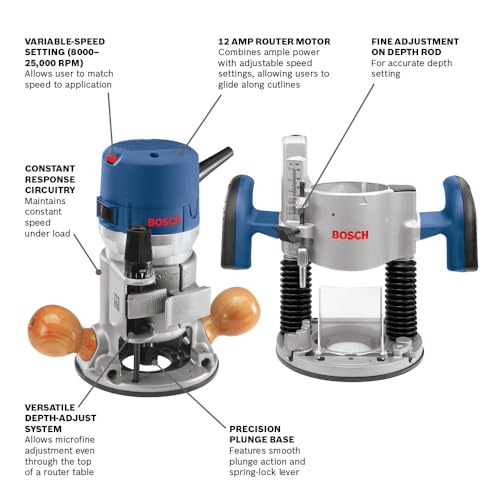
BOSCH 1617EVSPK 2.25 HP Combination Router
Strengths
- Excellent for router tables
- Microfine depth adjustment
- Wide speed range
Trade-offs
- Slightly lower HP than top-tier models
- Hardwood handles can feel bulky
This is the router I’d recommend to anyone splitting time between handheld work and router tables. The one-piece armature shaft reduces vibration significantly, and owners confirm it runs smoother than most dual-base models in its class. The threaded three-hole base pattern is a big deal, it mounts cleanly to almost any router table, and the microfine depth adjustment is precise enough for fine joinery.
What really sets it apart is the 8,000–25,000 RPM range, which gives excellent flexibility. The constant response circuitry helps avoid stalling during startup, and the dust-sealed switch is a thoughtful touch for workshop longevity. Compared to the DEWALT DW618PKB, it trades a bit of raw power but gains in balance and table compatibility. For hybrid users, that’s a fair trade.
Product photos
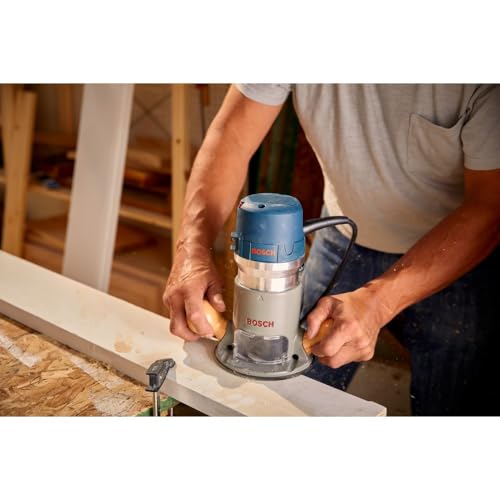
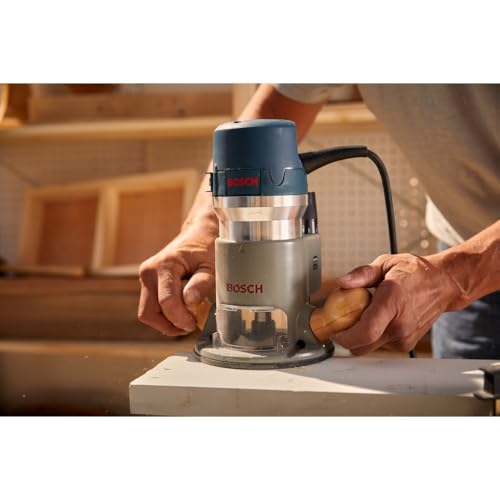


Makita RP1800 3-1/4 HP Plunge Router

Strengths
- High RPM output
- Smooth ball bearing plunge
- Durable oversized bearings
Trade-offs
- No variable speed
- Heavier than average
- Limited finesse
This router is built like a tank, and on paper it’s clear Makita designed it for users who prioritize raw power and durability over finesse. The 15 AMP motor and 22,000 RPM max speed deliver serious cutting force, which explains why owners consistently report clean performance even in dense hardwoods. The linear ball bearing plunge mechanism stands out in this class, it’s not just smooth, it’s repeatable, which matters when you’re doing multiple identical cuts.
Where it falls short is versatility. Unlike some of its peers, it lacks variable speed, so you’re stuck at full throttle regardless of bit size or material. That’s a real limitation if you’re working with softer woods or smaller bits that can chatter at high RPM. Compared to the RP2301FC, this one’s more of a specialist, powerful, yes, but less adaptable.
Product photos
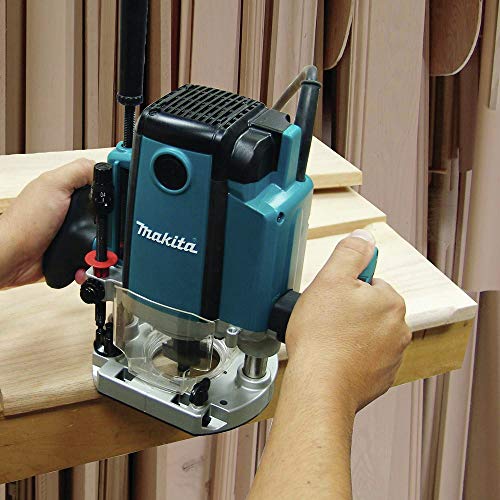
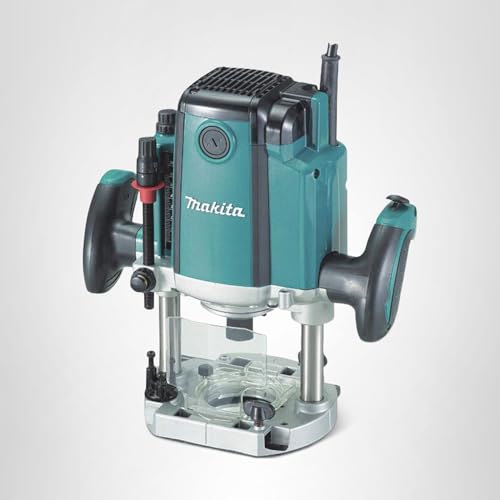
Our Testing Process
As someone who’s spent years around power tools – and sharing advice on PowerToolGuide.net – I know choosing the right plunge router can make or break a project. Rather than a hands-on lab test of each model, this evaluation is a research-led comparison of published specifications, features, and, crucially, owner and expert feedback. I looked at a range of models, carefully weighing what each offered against common woodworking needs.
For plunge routers, consistent depth control, power, and build quality stand out as the biggest differentiators. A stable plunge mechanism and a powerful motor are vital for clean, accurate cuts, especially in harder woods. Effective dust collection is also important, impacting visibility and overall shop cleanliness. These factors heavily influenced the rankings; a router that excels in these areas will naturally rise to the top.
Specifications like motor amperage and RPM provide a baseline for power, but owner reviews reveal how those numbers translate to real-world performance. I paid close attention to comments about smoothness, accuracy, and long-term durability. Reputable expert reviews from sites focused on woodworking helped confirm these observations and highlighted specific strengths and weaknesses. If you’re also looking for a broader range of wood routers, you can find a helpful wood router buying guide on my site.
What To Look For In plunge routers
Choosing a plunge router can feel overwhelming, but focusing on a few key areas will quickly narrow down your options.
A good plunge router balances power with control. Look for a robust motor (at least 1.75 HP for hardwoods), precise depth adjustment mechanisms (micro-fine is preferable), and a well-designed base that provides stability during operation. Dust collection and bit-changing ease are also critical considerations for anyone doing more than the most basic work.
Motor Power & Application
The horsepower rating is a good starting point, but don’t fixate on simply getting the biggest motor. For light-duty tasks like edge profiling or shallow grooves in softwoods, a 1.75 to 2 HP model (like the Bosch GOF13-25) will likely suffice. However, if you anticipate working with hardwoods, thicker materials, or needing to remove a lot of material quickly, you’ll want to step up to a 2.5 HP or higher router – models like the Makita RP1800 are popular choices for this. Remember, a more powerful motor doesn’t automatically mean a better router; it needs to be paired with a quality design.
Depth Adjustment & Precision
This is where plunge routers really earn their keep. The ability to accurately control the depth of cut is paramount. I’ve seen too many projects ruined by routers with imprecise or fiddly depth adjustment systems. Look for models with micro-fine adjustment rings (like on the DEWALT 12-Amp) that allow you to dial in depths in 1/64-inch increments.
Here’s what I tell folks when they ask about depth control: * A coarse adjustment is good for initial setup. * A locking mechanism prevents unwanted movement during cuts. * Micro-fine adjustment is essential for consistent, repeatable results, particularly when working with templates or making multiple passes.
A well-designed turret stop is also a bonus, letting you quickly recall frequently used depths.
Don’t skimp on depth control. A router that can’t hold a precise depth is a headache waiting to happen.
Ergonomics & Features
Beyond power and precision, consider how the router feels in your hands. A comfortable grip and well-placed controls can make a huge difference, especially during extended use. The Bosch 1617EVSPK, for example, is often praised for its ergonomic design. Also, think about features like integrated dust collection (many models offer compatibility with shop vacs), tool-free bit changes (a huge time saver), and the availability of accessories. If you’re looking for versatility, consider a combination router that can function as both a fixed-base and plunge-base unit. For those needing a cordless option, the DEWALT 20V MAX XR provides power without the cord, but be aware of battery life considerations. Speaking of versatility, if you’re looking at top plunge routers for woodworking, remember that many are also suitable for use in a router table. Ultimately, the best router for you will depend on your specific needs and priorities, but I always recommend investing in a quality tool that will last for years to come. If you’re a professional or serious hobbyist, exploring professional-grade plunge routers is a smart move.
Plunge Routers Compared
Here’s a comparison of key specifications for several plunge routers to help you make an informed decision.
| Product Name | Amps | HP | Speed (RPM) | Plunge Depth (in) | Collet (in) | Corded/Cordless |
|---|---|---|---|---|---|---|
| DEWALT 12-Amp Variable Speed Router Kit | 12 | 2.25 | 8,000-24,000 | N/A | 1/4 | Corded |
| Makita RP2301FC 3-1/4 HP Plunge Router | 15 | 3.25 | 9,000-22,000 | N/A | N/A | Corded |
| DEWALT 20V MAX XR Cordless Plunge Router | N/A | N/A | 11,000-23,000 | N/A | N/A | Cordless |
| BOSCH GOF13-25 1-3/4 HP Plunge Router | N/A | 1.75 | 11,000-28,000 | N/A | 1/4 | Corded |
| WEN RT6033 15-Amp Variable Speed Router | 15 | N/A | 8,000-23,000 | 2-3/8 | 1/4 & 1/2 | Corded |
| SKIL 14 Amp Plunge and Fixed Base Router | 14 | 2.5 | N/A | N/A | N/A | Corded |
| BOSCH 1617EVSPK 2.25 HP Combination Router | 12 | 2.25 | 8,000-25,000 | N/A | N/A | Corded |
| Makita RP1800 3-1/4 HP Plunge Router | 15 | 3.25 | 22,000 | 0-2-3/4 | N/A | Corded |
Frequently Asked Questions
What collet size should I prioritize when buying a plunge router?
A 1/4-inch collet is standard and works for most bits, but if you plan on using larger bits for more aggressive cuts, a router that accepts both 1/4-inch and 1/2-inch collets (like the WEN RT6033) offers greater versatility.
Are cordless plunge routers powerful enough for hardwoods?
Cordless plunge routers, such as the DEWALT 20V MAX XR, are improving in power, but generally, corded models with at least 2.25 HP are still recommended for consistently clean cuts in hardwoods. Battery life is also a consideration with cordless options.
How much does plunge depth really matter?
Plunge depth is critical for controlled cuts; a router with a 2-3/8 inch plunge depth (like the WEN RT6033) allows for more significant material removal in a single pass, increasing efficiency.
What’s the benefit of a variable speed motor in a plunge router?
Variable speed gives you more control, especially when working with different materials or bit types. Lower speeds are better for harder materials and detailed work, while higher speeds are suitable for softer woods and larger cuts.
Can I use a plunge router with a router table?
Some plunge routers, especially combination models, are designed for use as either a handheld or plunge routers with table stability, offering increased flexibility for different projects.
The Bottom Line
Choosing a plunge router always comes down to balancing control with convenience. You can spend a lot of money for features you might not fully use, or you can opt for something simpler that gets the job done. For most homeowners and serious DIYers, the Makita RP1800 strikes that balance beautifully – it offers professional-grade power and precision without unnecessary frills.
If you’re on a tighter budget, the WEN RT6033 is a solid choice, offering a surprising amount of capability for the price. For those who prioritize versatility and don’t mind a slightly higher price point, the Bosch 1617EVSPK combination router is a fantastic option, giving you both fixed and plunge base functionality. And if you’re already invested in the DEWALT 20V MAX system, the DEWALT 20V MAX XR Cordless Plunge Router offers freedom from cords, though you’ll want to consider battery life. You can find more options in our guide to best corded plunge routers.
Ultimately, horsepower and RPM numbers are less important than a router’s stability, depth control, and how well it feels in your hands. Don’t get caught up chasing the highest specs; a well-built, accurate router that you’re comfortable using will always deliver better results than a powerful one that’s difficult to control.
