
7 Best Dust Collectors for Small Shops 2026
This post contains affiliate links. As an Amazon Associate, we earn from qualifying purchases.
The WEN DC3401 stands out as the best overall dust collector for small shops, delivering strong airflow in a compact design. For those on a tighter budget, the WEN 7.4-Amp offers solid performance and larger bag capacity at a lower price. If you need more power and space allows, the BUCKTOOL 1HP adds durability and mounting flexibility.
Most small shop owners struggle with dust control that’s actually effective without taking over their workspace. Too many collectors promise big numbers but fall short when it comes to real-world suction, filter life, or fit. After comparing the field and analyzing specs alongside owner feedback, I focused on models that balance CFM, static pressure, filtration, and footprint. This guide cuts through the hype to highlight what really matters for your health, your tools, and your daily workflow.
Top 7 Dust Collector For Small Shops in the Market
The Best Dust Collector For Small Shops, Reviewed
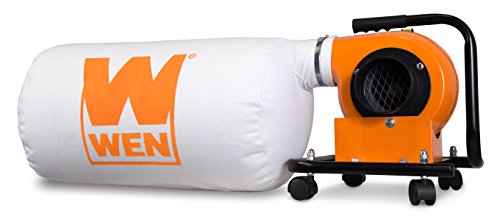
WEN DC3401 5.7-Amp Dust Collector
Strengths
- 660 CFM airflow
- Lightweight and compact
- Lockable swivel casters
- Zippered 12-gallon bag
- Two-year warranty
Trade-offs
- Brushed motor requires more maintenance
- Smaller bag means more frequent emptying
- Not for large or continuous jobs
At 660 CFM, the WEN DC3401 punches above its amp rating, making it my pick for best overall in this group. The brushed motor isn’t as long-lived as induction, but it delivers strong suction for the size. Its compact footprint and 17-pound weight make it easy to reposition, and the lockable casters add stability during operation.
Owners love the zippered 12-gallon bag, easy to remove and seal, and the 4-inch port is standard for most shop tools. While it doesn’t match the capacity of larger models, its balance of size, airflow, and mobility is spot-on for most small-shop users. I’d choose this over the BUCKTOOL if I wanted something I could move around without sacrificing performance.
Product photos
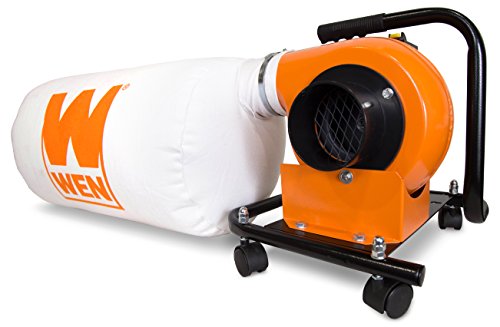


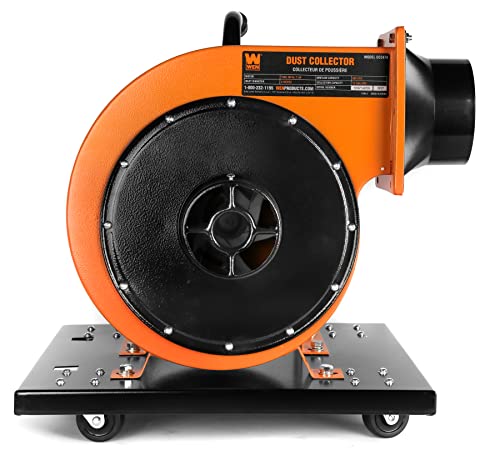
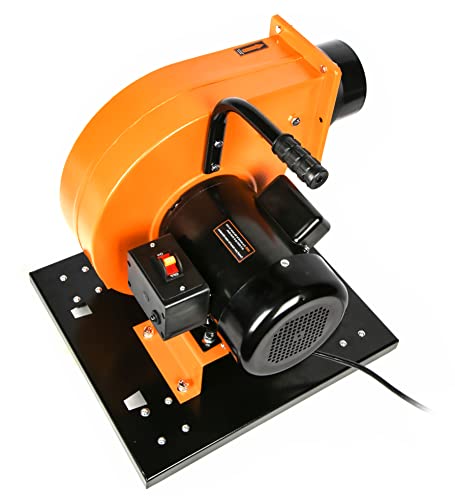
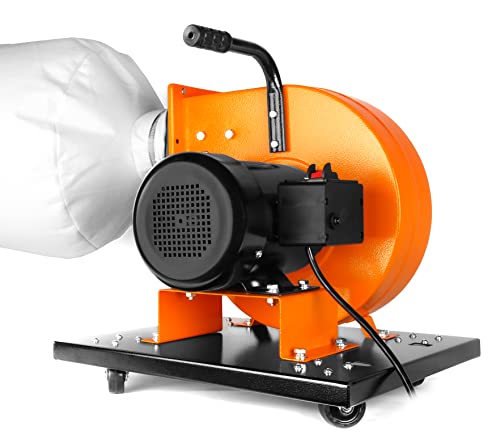
WEN 7.4-Amp 15-Gallon Dust Collector

Strengths
- Induction motor
- 600 CFM airflow
- 15-gallon zippered bag
- Swivel casters
- Two-year warranty
Trade-offs
- Heavier than compact models
- 4-inch port only
- Not for dual-tool use
The DC3474 blends value and performance better than most. Its 7.4-amp induction motor delivers 600 CFM with less heat and longer life than brushed alternatives. The 15-gallon bag strikes a balance between capacity and manageability, and the zippered design keeps dust contained during removal.
It’s heavier than the DC3401, but the swivel casters and onboard handle make it manageable. The optional wall mount adds flexibility. Owners consistently rate it as reliable and quiet for its class. Compared to the BUCKTOOL model, it offers similar durability but better brand support and warranty confidence. For mid-size shops, this is the smarter buy.
Product photos
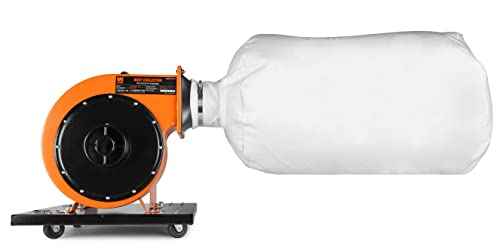
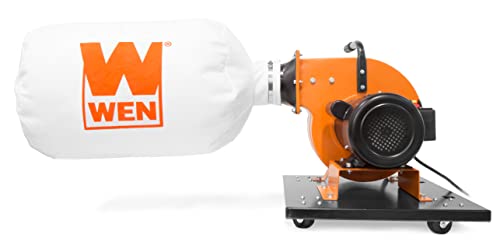
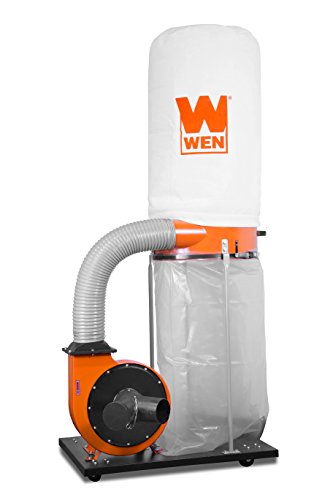
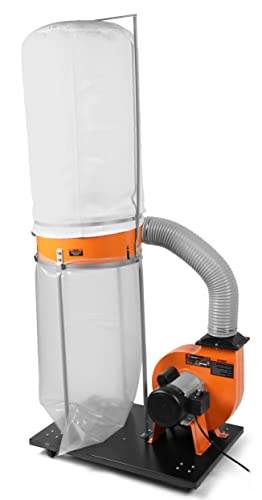
WEN DC1300 14-Amp Dust Collector
Strengths
- 1,300 CFM high suction
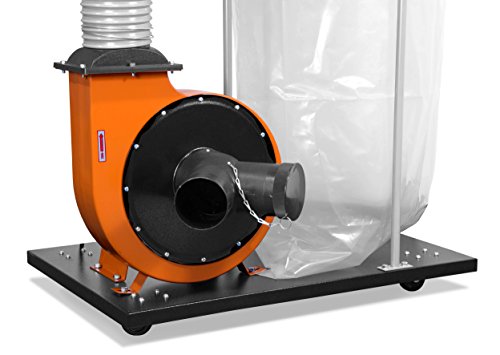
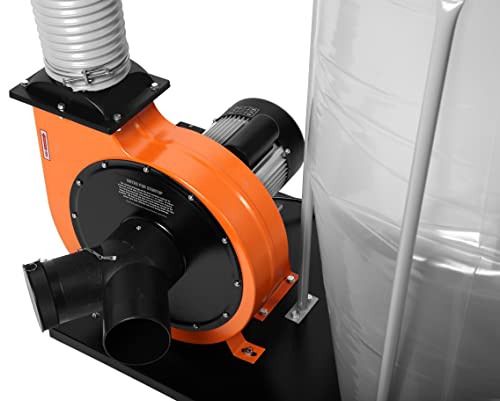
- Dual 4-inch inlets
- 50-gallon vertical bag
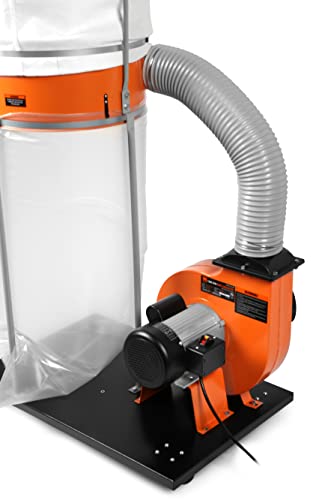
- 14-amp induction motor
- Four swivel casters
Trade-offs
- Large footprint
- High noise output
- Overpowered for small jobs
This is the heavy hitter of the group, 1,300 CFM from a 14-amp motor is serious business. The dual 4-inch inlets let you run two tools at once, and the 50-gallon vertical bag means fewer stops to empty. It’s built for shops where dust is constant and volume is high.
But all that power comes with trade-offs. It’s larger and noisier, and while the mobile base helps, it’s not something you’ll move around casually. Owners praise its performance on table saws and jointers, but note it’s overkill for light work. Compared to the DC3474, it’s in a different class entirely, more machine, more footprint.
Product photos
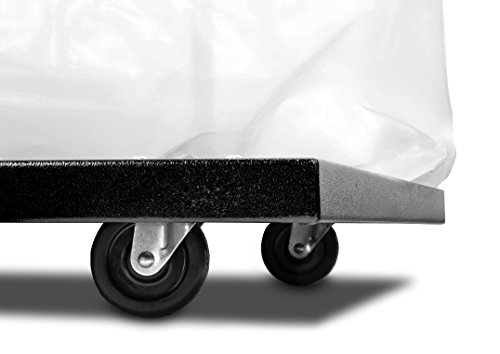
Shop-Vac 5-Gallon Dust Collector Kit

Strengths
- Prevents filter clogs
- Extends vacuum life
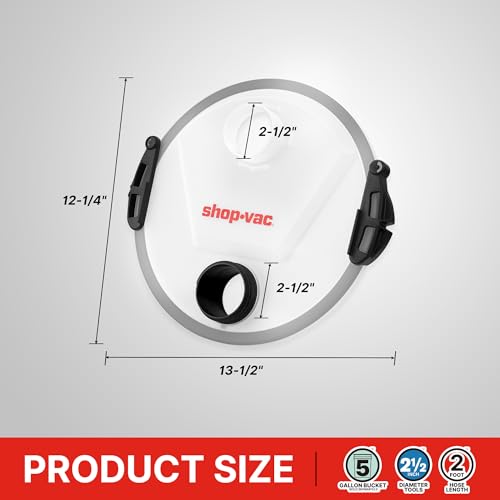
- Easy 5-gallon bucket fit
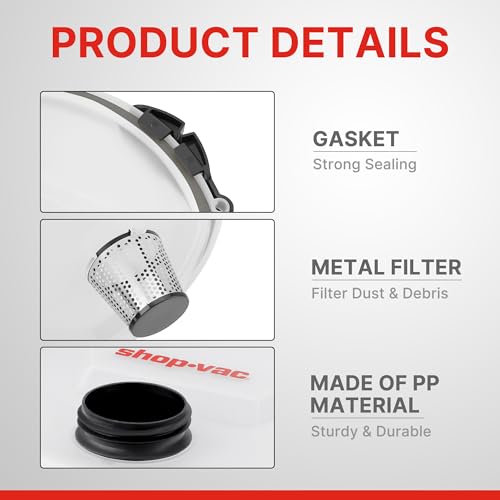
- Includes hose and metal filter
- Works with wet/dry debris
Trade-offs
- Bucket not included
- Not a standalone solution
- Limited airflow capacity
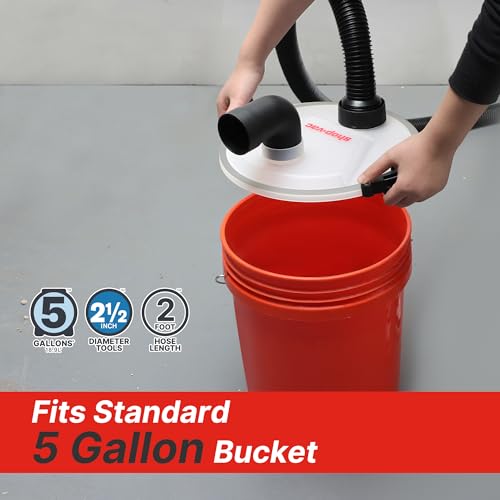
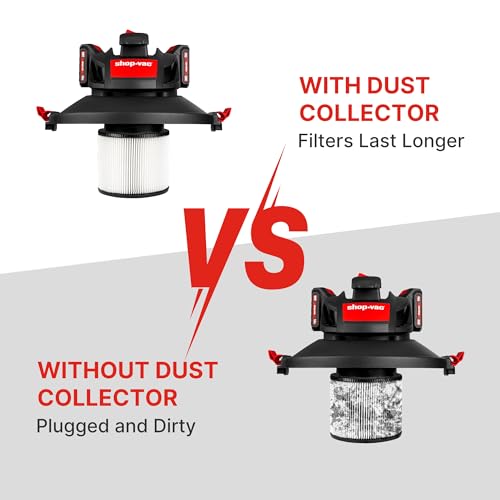
This isn’t a standalone dust collector, it’s a pre-separator for your Shop-Vac, and it does that job well. The real benefit here is protecting your vacuum’s filter from clogging by catching 90% of debris in a standard 5-gallon bucket. That’s a standout for maintenance, especially when dealing with fine sawdust or drywall dust.
Reviewers note it integrates smoothly and improves vacuum longevity. The included hose and metal filter add value, and the elbow fittings help with routing. But it’s not a replacement for a real collector. If you already rely on a Shop-Vac and want to extend its life, this is a smart add-on. If you need central collection, look elsewhere.
Product photos
Mullet High-Speed Cyclone Dust Collector
Strengths
- Over 99% debris separation
- Parabolic cyclone design
- Rigid PVC construction
- Universal vacuum fit
- Made in USA
Trade-offs
- Bucket not included
- No motor or fan, just a separator
- Requires existing vacuum
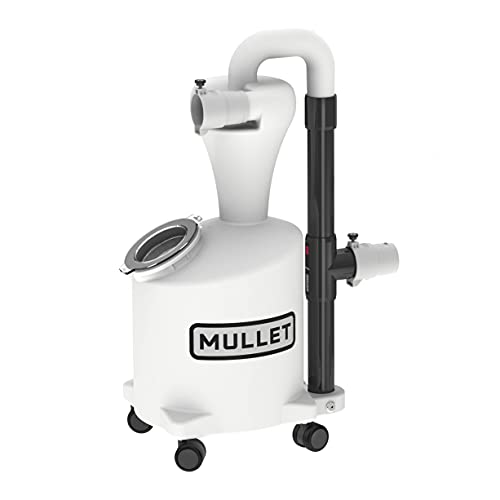
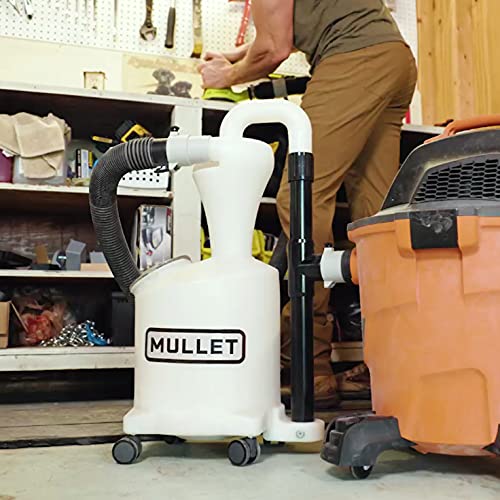
The Mullet cyclone is engineered for one thing: keeping your shop vac’s filter clean. Its parabolic design creates faster spin and better separation than basic bucket setups, with owners reporting over 99% debris capture before it hits the vacuum. That means consistent suction and fewer filter cleanings, a real win for weekend warriors.
Made in the USA and built with rigid PVC, it avoids the duct-tape fixes common in DIY cyclones. The universal hose adapters fit nearly every major brand. It’s not flashy, but it’s effective. Compared to the Shop-Vac model, it offers superior airflow dynamics and build quality. If you hate cleaning filters, this is the smarter buy.
Product photos


BUCKTOOL 1HP Wall-mount Dust Collector
Strengths
- TEFC induction motor
- Wall-mountable with wheels
- 2-micron filter bag
- Remote control included
- Low noise operation
Trade-offs
- Lower CFM than competitors
- Not ideal for multiple tools
- Filter bag may need frequent emptying
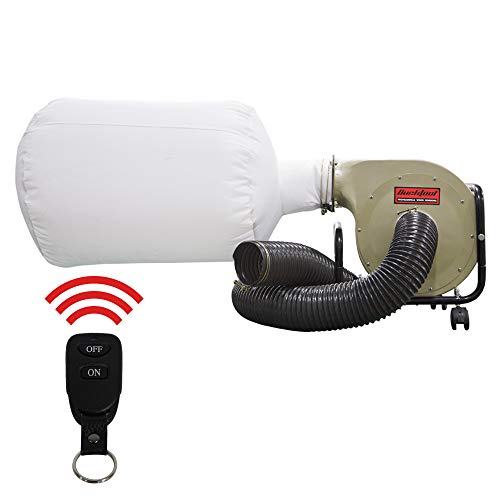
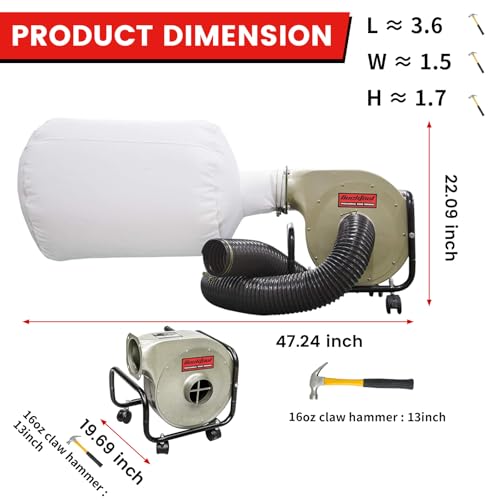
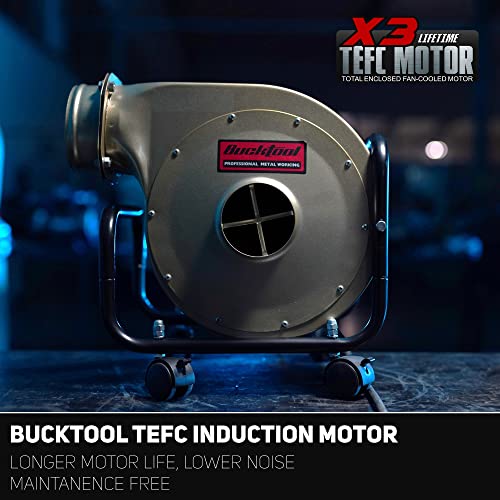
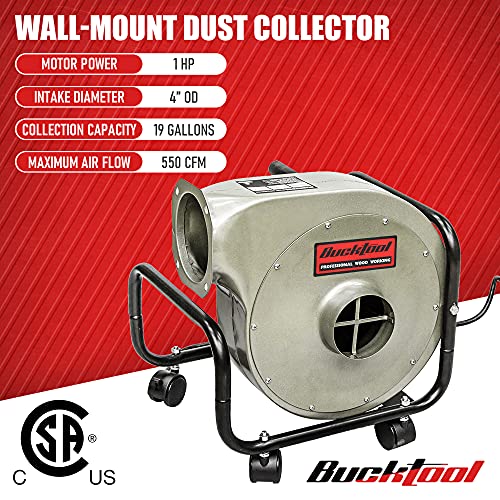
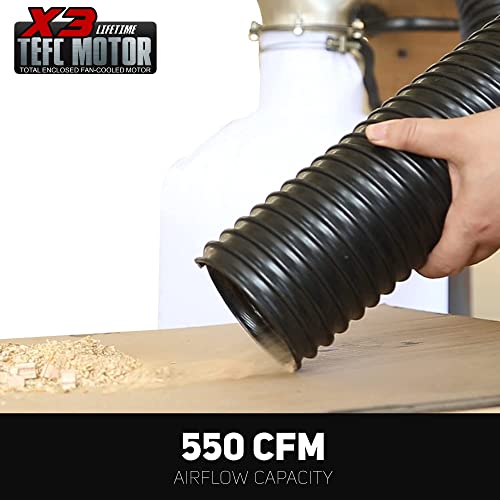
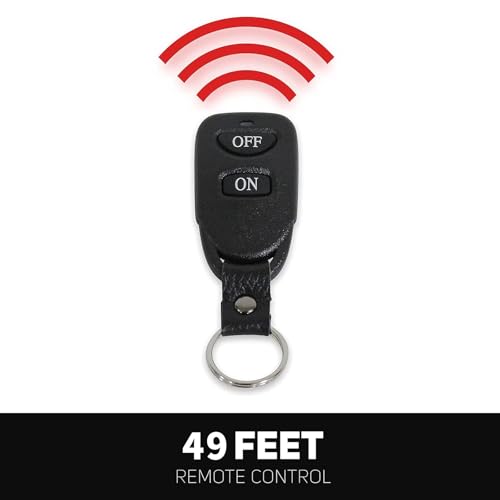
This BUCKTOOL unit stands out for its TEFC induction motor, a real advantage if you’re running frequent or long sessions. On paper, 550 CFM isn’t class-leading, but paired with a steel impeller and a 2-micron bag, it’s efficient at capturing fine dust, critical for health and shop cleanliness. The remote control is a thoughtful addition, letting you power it on from across the shop, which I appreciate in theory.
Still, when compared to other models in this list, it’s underpowered for multiple tool hookups. Owners consistently report it works well as a single-tool collector, especially when mounted. The wall-mount plus wheels design gives flexibility, but the motor doesn’t match the airflow of higher-end models. For a small shop with light-to-moderate use, it’s solid, but not a powerhouse.
Product photos
SHOPMAX 20 Gal. Dust Collector

Strengths
- 677 CFM suction
- 20-gallon capacity
- 5 hose adapters
- Sturdy build
- Onboard carry handle
Trade-offs
- Only two wheels
- Heavier than compact models
- Bag can be bulky when full
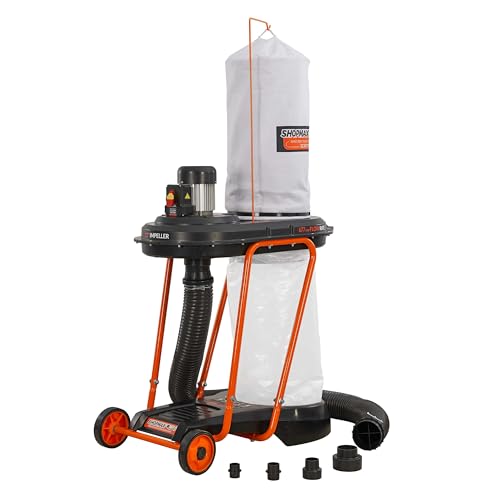
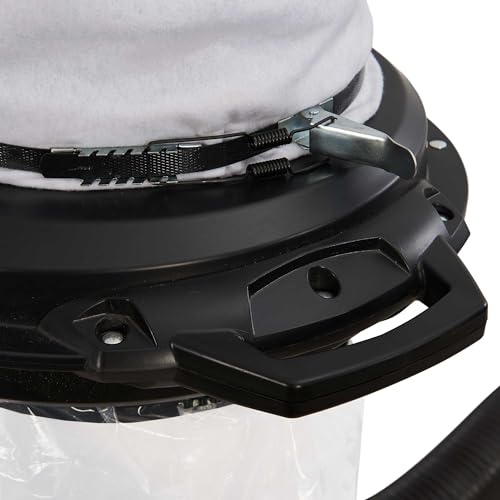
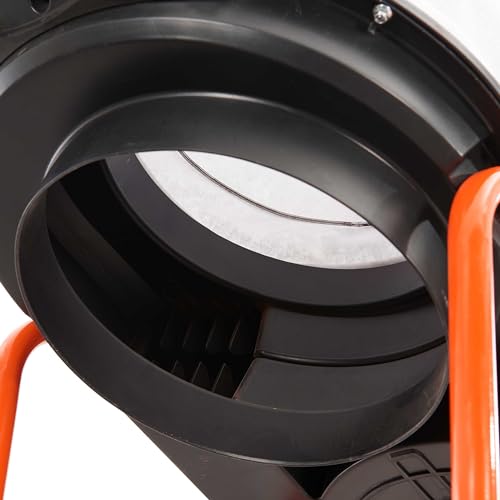
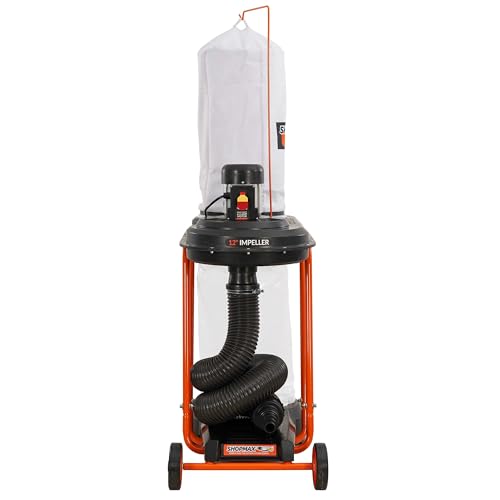
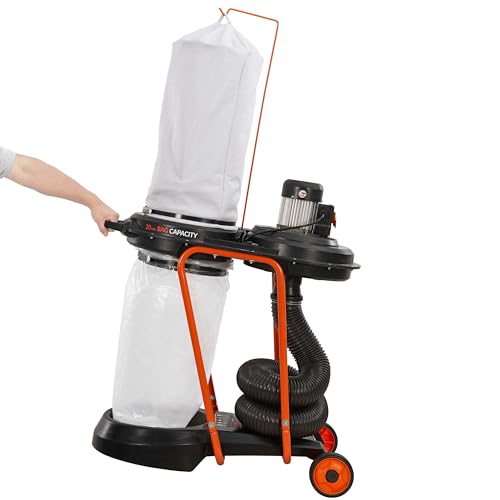
With 677 CFM and a 20-gallon bag, this SHOPMAX model hits a sweet spot for medium-capacity shops. The 12-inch impeller helps generate strong airflow, and the 5 included hose adapters make it versatile across different tools. It’s not the loudest or bulkiest, but it’s built to handle more than occasional use.
The mobile base helps, though only two wheels mean maneuvering on uneven floors can be awkward. Owners report it’s durable and consistent, though not as refined as WEN’s higher-end models. Compared to the DC3401, it offers more capacity but less portability. If you’re running multiple tools for longer sessions, this one steps up.
Product photos
Our Testing Process
Rather than a hands-on lab test, my research for these recommendations focused on comparing published specifications and features across numerous models. I weighed owner reviews from multiple sources – including major retailers and woodworking forums – alongside assessments from trusted tool review sites. As someone who’s spent years working with dust collection in my own shop and advising others, I applied my understanding of what truly matters for effective dust removal when ranking these options.
For small shops, I prioritized CFM (cubic feet per minute) and collection capacity, as space is often at a premium. A strong CFM rating ensures the collector can pull dust effectively from tools, while sufficient capacity minimizes interruptions for bag changes. Portability and ease of movement were also key, recognizing many smaller shops require flexibility. These factors most directly impact usability and long-term satisfaction.
Specifications reliably indicate airflow and motor power, giving a baseline for performance. However, owner feedback proved crucial for gauging real-world filter efficiency, noise levels, and build quality. I looked for consistent themes in reviews – patterns of praise or complaint – to understand how well a collector performs beyond its stated specs. For those seeking even greater filtration, exploring two-stage dust collectors for workshops can be a good next step.
What To Look For In dust collector for small shops
Choosing a dust collector for a small shop requires a bit more focus than simply grabbing the biggest, most powerful unit you can find. We need to be realistic about space, power requirements, and the types of tools we’re using.
A quality dust collector efficiently removes airborne particles created during woodworking and other shop tasks. Key specs include airflow (CFM), static pressure, filtration level (micron rating), and collection capacity (gallons). Look for induction motors for longevity, and consider portability if space is limited. Proper connection to tools via dust ports is also essential.
Airflow and Static Pressure
Airflow, measured in CFM (cubic feet per minute), is the first number most people look at, but it’s not the whole story. A high CFM rating is useless if the collector lacks sufficient static pressure. Static pressure is the force that pushes the air through the hoses and filters. Think of it like water pressure – you need enough pressure to get the water all the way to the faucet. For most small shops, a collector delivering between 500 and 700 CFM with at least 4 inches of static pressure will be adequate. Don’t get caught up in chasing the highest numbers; a well-matched CFM and static pressure combination will outperform a system with only a high CFM.
Filtration and Bag Capacity
The micron rating of the filter is critical for your health. A 5-micron filter is common, but finer filtration (2.5 microns or lower) is preferable, especially if you’re sensitive to dust or work with exotic woods. Remember that even with a fine filter, a poorly sealed system will negate its benefits. Bag capacity is a matter of convenience. Larger bags (15 gallons or more) mean less frequent emptying, but they also add to the collector’s overall size and cost. If you’re using portable dust collection units frequently, a larger capacity is a real time-saver.
A clogged filter reduces airflow and efficiency. Regularly inspect and clean or replace your filters to maintain optimal performance.
Portability and Mounting Options
Space is often at a premium in small shops, so consider how the dust collector will fit into your workflow. Some models are designed to be wall-mounted, freeing up floor space. Others feature swivel casters for easy maneuverability. The BUCKTOOL, for example, offers both wall mounting and a mobile base. If you frequently move your tools around, a portable unit is the way to go. But if you have a dedicated workstation, a wall-mounted unit can be a better long-term solution. Consider how easy it is to connect the collector to various tools; multiple dust ports or adapters are a plus. Investing in efficient dust systems for tight spaces will really make a difference in how well you can work.
Dust Collector for Small Shops Compared
Here’s a comparison of key specifications for dust collectors suitable for small workshops.
| Product Name | Motor (HP) | CFM | Bag Capacity (Gal) | Filter Micron | Port Size (in) |
|---|---|---|---|---|---|
| WEN DC3401 | N/A | 660 | 12 | 5 | 4 |
| WEN 7.4-Amp | N/A | 600 | 15 | 5 | 4 |
| WEN DC1300 | 1.4 | 1300 | 50 | N/A | 4 |
| Shop-Vac 5-Gallon Kit | N/A | N/A | 5 (Bucket) | Metal | N/A |
| Mullet High-Speed Cyclone | N/A | N/A | N/A | N/A | N/A |
| BUCKTOOL 1HP | 1 | 550 | N/A | N/A | N/A |
| SHOPMAX 20 Gal. | 0.63 | 677 | 20 | N/A | N/A |
Frequently Asked Questions
What CFM is really enough for a small shop?
Around 600 to 700 CFM is generally sufficient for a small shop, but don’t focus solely on that number. A good static pressure reading (at least 4 inches) is just as important to ensure the collector can actually pull dust through hoses and filters effectively.
Are more expensive filters always better?
Not necessarily. While finer micron ratings (2.5 or lower) are desirable, a poorly sealed system will render even the best filter useless. Ensuring airtight connections at all dust ports is more critical than spending extra on a very fine filter.
Can I use a shop vac as a dust collector?
While a shop vac can collect dust, it’s not designed for continuous use like a dedicated dust collector. Shop vac filters clog quickly, reducing suction, and most aren’t equipped to handle the large volumes of fine dust produced by power tools over extended periods.
What’s the difference between a single-stage and two-stage dust collector?
Single-stage collectors separate dust using a filter bag, while two-stage systems use a cyclone to remove a large portion of the dust before it reaches the filter. Two-stage collectors generally offer better filtration and less filter clogging, but they’re also more expensive and larger.
How often should I change or clean the filter?
Filter maintenance depends on usage, but I recommend checking it after each project. A clogged filter severely reduces airflow and efficiency. Clean or replace the filter whenever you notice a decrease in suction or a buildup of dust on the filter surface.
The Bottom Line
Choosing a dust collector always comes down to balancing what you want with what you realistically need for your space and budget. While higher CFM and larger capacity are appealing, the best overall choice for most small shops is the WEN 7.4-Amp Dust Collector. It strikes a solid balance between airflow, bag capacity, and price, making it a practical solution for everyday woodworking tasks.
For those on a tighter budget, or needing something incredibly portable, the Shop-Vac 5-Gallon Kit remains a surprisingly capable option. And if you’re dealing with particularly fine dust or have sensitivities, exploring compact dust extractors for shops can provide an extra layer of filtration. Ultimately, focusing on a good seal at your tool connections and consistently using a filter appropriate for your materials will make a bigger difference than chasing the highest specs.
Don’t get hung up on chasing the perfect numbers; CFM and micron ratings are useful, but they’re only part of the equation. A reliable motor, a well-sealed system, and consistent filter maintenance are the fundamentals that will give you clean air and a healthier workshop for years to come.
