
9 Best Chainsaw Chain Sharpeners of 2026
This post contains affiliate links. As an Amazon Associate, we earn from qualifying purchases.
The Sharp Pebble Cordless Electric Chainsaw Sharpener is our top pick for most users, delivering consistent results without needing to remove the chain. For those on a budget, the Oregon Universal 7pc Field Sharpening Kit offers reliable manual sharpening in a portable package. If you want maximum versatility, the PRETEC 54-Piece Electric Chainsaw Sharpener doubles as a full rotary tool system.
A dull chainsaw chain isn’t just frustrating, it’s dangerous. Kickback, excessive vibration, and poor cutting performance often stem from inconsistent or incorrect sharpening. Many people don’t realize how much technique matters until they’re fighting a blade that won’t bite clean.
In this guide, I break down the best chainsaw chain sharpeners based on specs, owner feedback, and real-world usability. These picks reflect what matters most: accuracy, durability, and ease of use, whether you’re in the garage or deep in the woods.
Top 9 Chainsaw Chain Sharpeners in the Market
The Best Chainsaw Chain Sharpeners, Reviewed
Sharp Pebble Cordless Electric Chainsaw Sharpener

Strengths
- True cordless freedom
- Ergonomic, fatigue-reducing design
- Consistent sharpening results
Trade-offs
- Battery life varies with use
- Higher price point
- Slight learning curve
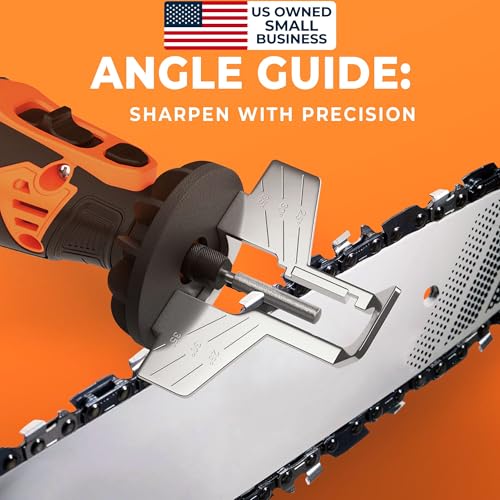
This is the most balanced electric sharpener in the lineup, cordless convenience, solid build, and consistent results. The ability to move freely around the yard or job site without hunting for an outlet makes it ideal for active users. It includes the same four file sizes and angle guide as the corded model, and the motor delivers enough stability to keep sharpening even across long chains. Owners consistently report clean, uniform edges after just a few passes, and the ergonomic shape reduces hand fatigue.
When compared to the OMCCHK or EzzDoo models, this one strikes the best balance between portability, power, and precision. It’s not the cheapest, but it’s the one I’d recommend to most people. The included eBook is a nice touch, especially for beginners, and the tool feels like it’s built to last. For overall performance and ease of use, it’s the top pick.
Product photos




Sharp Pebble Electric Chainsaw Sharpener Kit

Strengths
- Stable, vibration-free motor
- Ergonomic two-hand design
- Comes with helpful eBook
Trade-offs
- Cord limits mobility
- No battery backup
- Slightly heavier
This corded electric sharpener hits a sweet spot between power and precision. The motor runs smoothly, and owners praise the stable bearings that keep the wheel from vibrating, even during long sessions. With four file-size bits (5/32″, 3/16″, 7/32″) and an adjustable angle guide, it handles most chains without fuss. The ergonomic design works well for both left- and right-handed users, and the included eBook is actually useful, more than just marketing fluff.
Compared to the cordless Sharp Pebble model, this one delivers slightly more consistent power since it’s not limited by battery drain. It’s not portable, but in a garage or workshop, that’s a fair trade. The lack of battery also means no recharge downtime, which matters if you’re sharpening multiple chains. I’d pick this over the cordless version if you have a fixed workspace.
Product photos


PRETEC 54-Piece Electric Chainsaw Sharpener
Strengths
- 54-piece accessory kit
- 6-speed motor control
- Multi-use beyond chains
Trade-offs
- Angle guide less sturdy
- Overkill for simple sharpening
- Bulkier setup
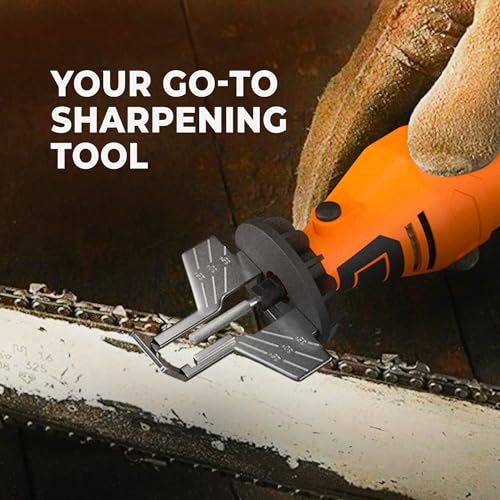
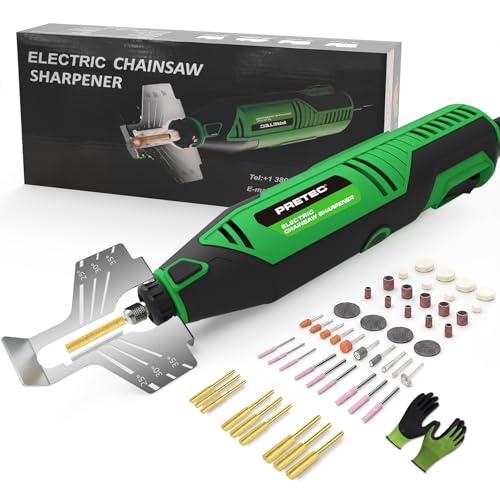
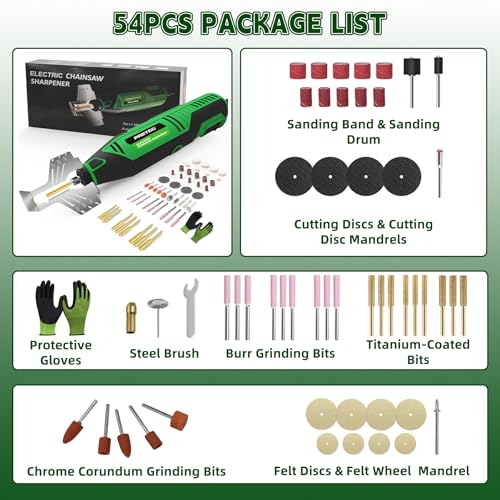
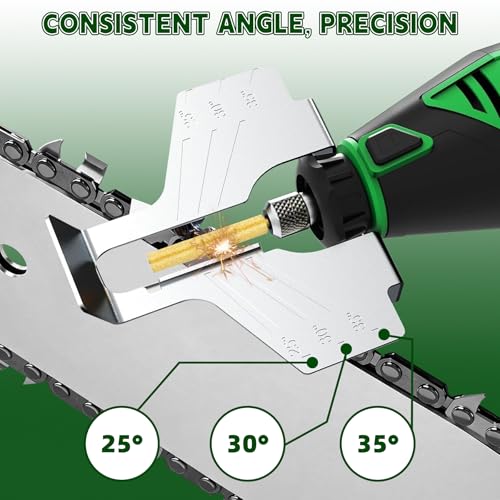
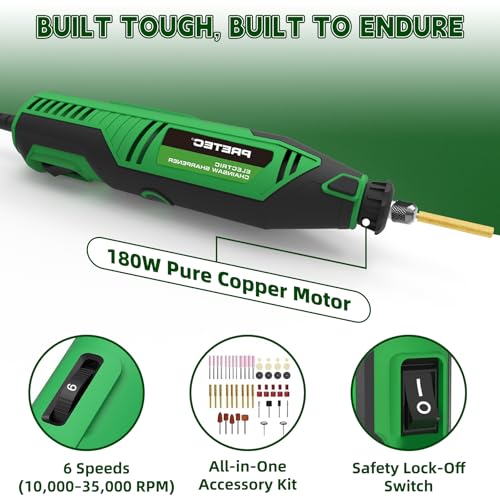
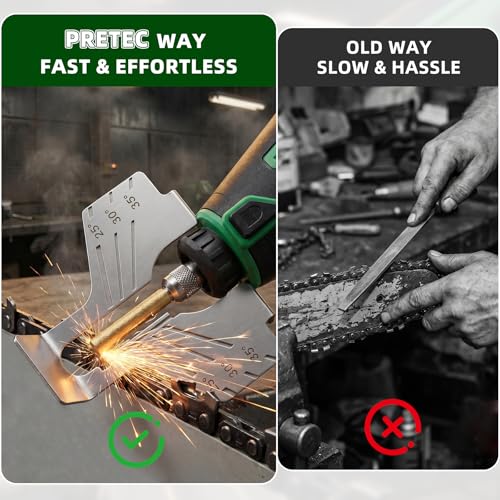
This isn’t just a chainsaw sharpener, it’s a full rotary tool system disguised as one. With 54 accessories, including cutting discs, polishing wheels, and an angle attachment, it’s the most versatile option here. The 6-speed motor (1000–35,000 RPM) gives real control, letting you dial in speed for delicate grinding or aggressive reshaping. The preset angles (25°, 30°, 35°) help maintain consistency, and the copper motor runs cool during extended sessions, which reviewers say makes it feel more durable than similarly priced tools.
But its strength is also its weakness. If all you want is chainsaw sharpening, the sheer number of extras can feel overwhelming. Some owners note that the angle guide isn’t as rigid as dedicated sharpeners like the Sharp Pebble models. Still, if you’re into DIY crafts, metalwork, or need a go-to tool for workshop touch-ups, this is a smarter buy than buying a separate rotary tool and sharpener.
Product photos
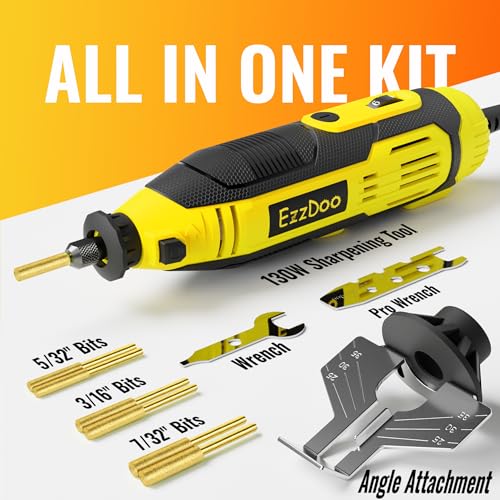
EzzDoo Handheld Electric Chainsaw Sharpener
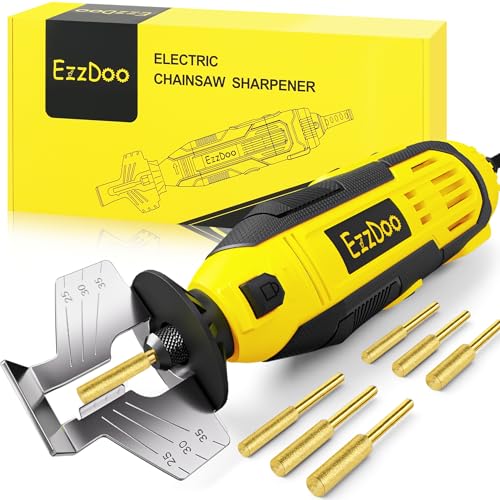
Strengths
- No chain removal needed
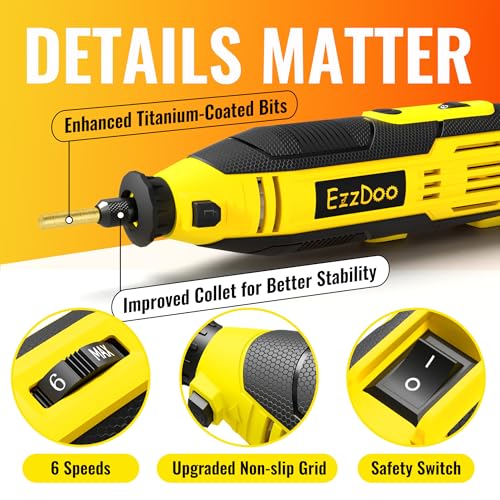
- Honeycomb anti-slip grip
- 6 durable titanium bits
Trade-offs
- Angle drift possible
- Less rigid than bench tools
- Requires steady hand
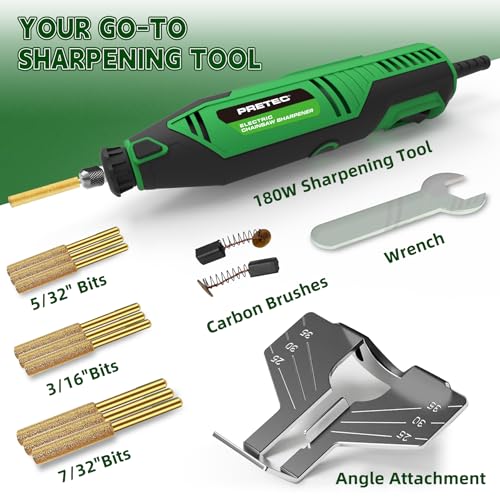
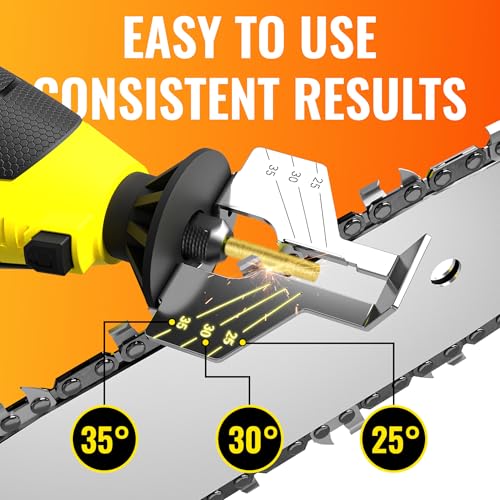
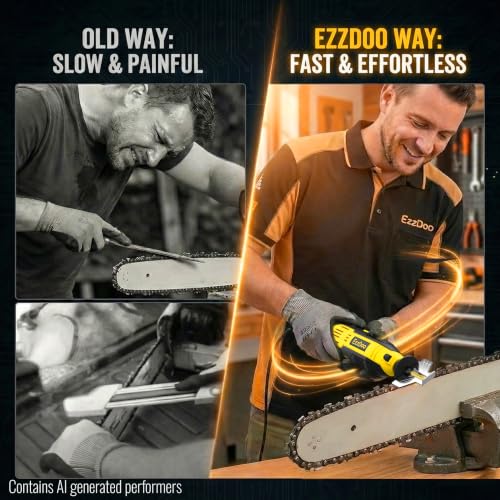
The no-removal feature is what makes this one special. You clamp it directly onto the bar and sharpen the chain in place, no disassembly, no tension loss, no reassembly errors. That alone saves 10–15 minutes per session, which adds up over time. The 2026 grip upgrade with honeycomb texture actually shows in owner feedback, users say it stays put even with oily gloves. The 6 titanium-coated bits last longer than standard ones, and reviewers confirm one bit can handle 5+ chains with proper speed settings.
It’s not perfect. The collet system, while improved, still occasionally slips if you’re aggressive with pressure. And because it’s handheld, maintaining perfect angle consistency takes practice. But for speed and convenience, it’s unmatched. If you hate taking your chain off, this is the closest thing to a field-level electric grinder.
Product photos

Oregon Professional Compact Bench Grinder

Strengths
- Bench-mounted stability
- Handles all major chain types
- Includes dressing brick and guides
Trade-offs
- Fixed installation only
- Larger space requirement
- Overkill for light use
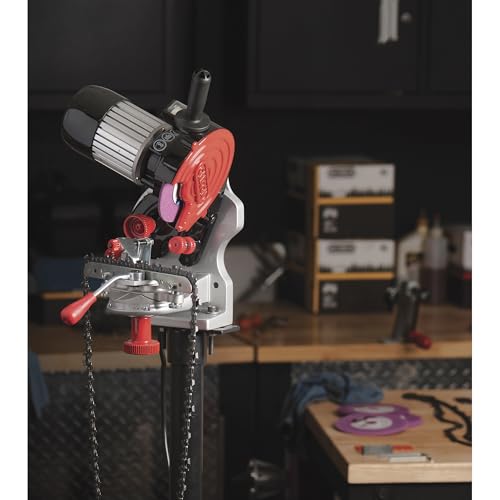
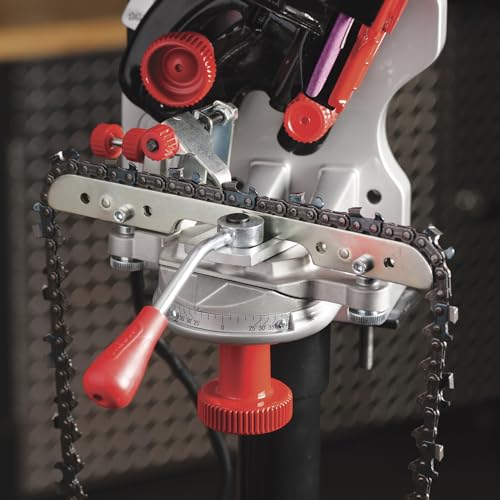
This is the serious user’s choice, a real bench grinder built for consistency and durability. It handles up to .404” pitch chains, so it works with nearly every pro-grade saw from Stihl, Husqvarna, and Oregon. Mount it on a wall or bench, and you’ve got a permanent sharpening station. The one-way motor rotation reduces kickback risk, and the manual clamping vice keeps the chain stable during grinding. Owners love that it restores factory-level edges, not just field fixes.
It’s overkill for occasional users. You can’t take it to the woods, and setup takes time. But if you go through chains fast, like splitting firewood weekly or running a small logging side gig, this pays for itself in saved chain replacements. Compared to handheld electric tools, it’s in a different league for precision.
Product photos
Oregon Universal 7pc Field Sharpening Kit
Strengths
- Trusted Oregon quality
- All essential files included
- Durable canvas roll
Trade-offs
- Requires skill to use well
- Slower than motorized tools
- Manual effort needed
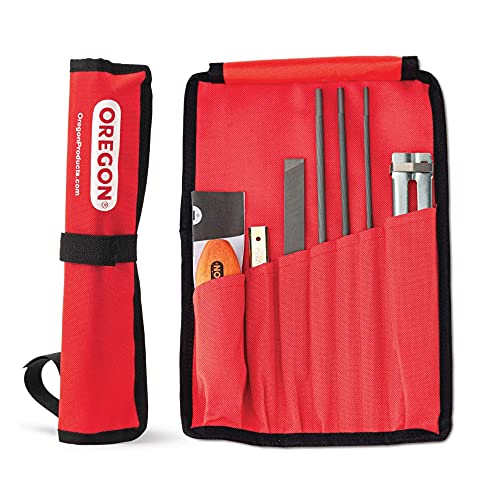
If you’re serious about manual sharpening, this is the gold standard. Oregon has been making chains and sharpening tools for decades, and this kit reflects that expertise. The rolled canvas pouch keeps everything organized and durable, and the universal handle fits all three round files (5/32″, 3/16″, 7/32″) plus the flat file. The included filing guide ensures proper depth and angle, which is critical for safety and chain life. Owners say it’s the most reliable way to keep a chain sharp in the field, no batteries, no moving parts, just control.
Compared to jigs with grinding stones, this one requires more skill and effort. It’s not fast, and it won’t produce a mirror finish. But for those who value precision, control, and reliability in remote locations, nothing beats a well-executed file job with this kit. It’s the choice of seasoned arborists and foresters for a reason.
Product photos


Chainsaw Sharpening Jig Kit with 3 Stones
Strengths
- Affordable entry point
- Lightweight and portable
- Rust-resistant build
Trade-offs
- Fixed 30° angle only
- Fewer accessories included
- Less precise than file kits
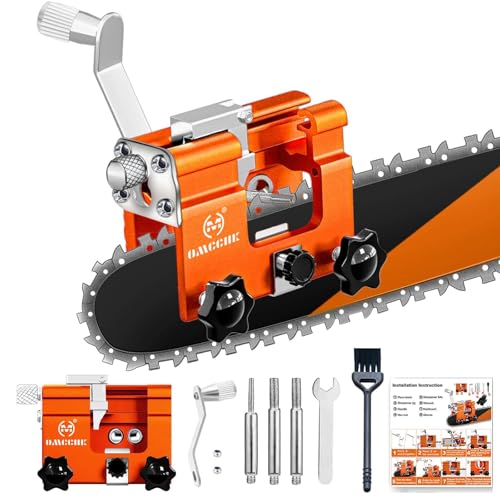
This is the bare-bones manual jig that gets the job done, nothing more, nothing less. With just three grinding stones and a fixed 30° angle, it’s clearly aimed at budget-conscious users who only sharpen a few times a year. The rust-resistant alloy build holds up well in damp garages or sheds, and owners consistently report it restores enough edge to get through a weekend of firewood cutting. It’s lightweight, simple to set up, and the 3–5 second sharpening claim per tooth isn’t far off when the chain is only slightly dull.
Still, the lack of adjustable angles limits its flexibility. If your chain uses a 25° or 35° rake, this won’t match it. And while the kit includes a wrench and brush, it doesn’t offer the kind of precision seen in Oregon’s manual kits. For a true field fix, I’d still lean toward Oregon’s full file kit. But if you just need a basic, no-frills jig and already know your chain’s angle, this one works.
Product photos

OMCCHK Chainsaw Sharpener with 10 Diamond Bits
Strengths
- Wide compatibility
- 10 included diamond bits
- Carrying bag included
Trade-offs
- Guide sleeve may wobble
- Slower than electric options
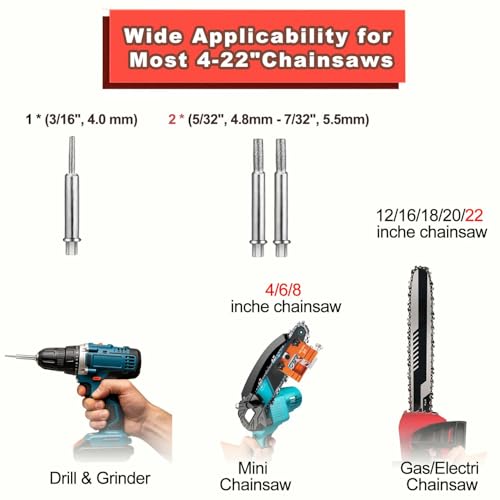
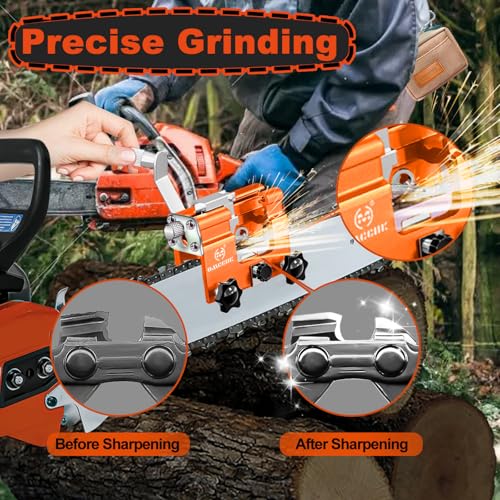
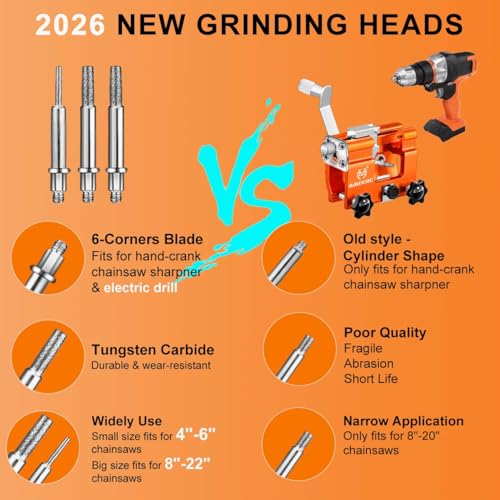
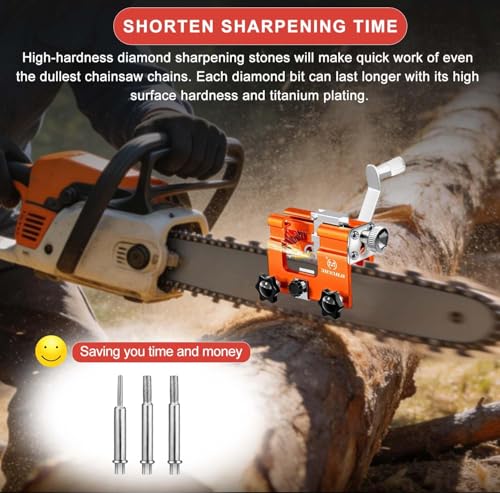
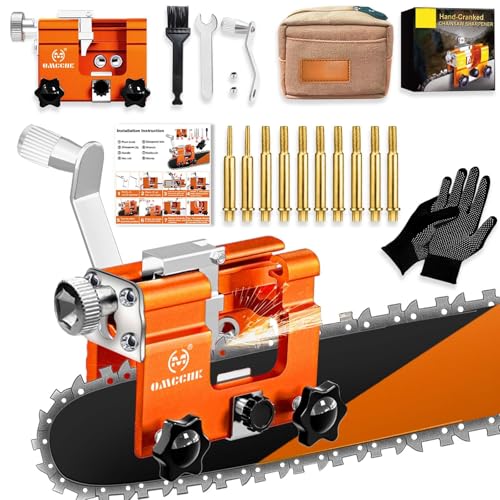
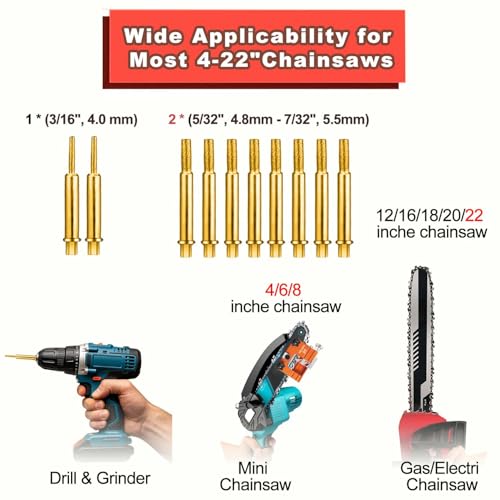
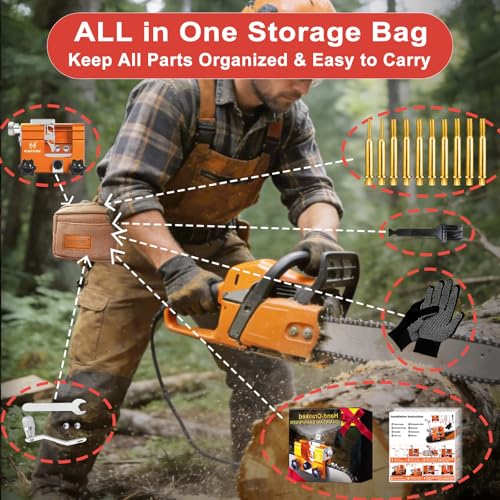
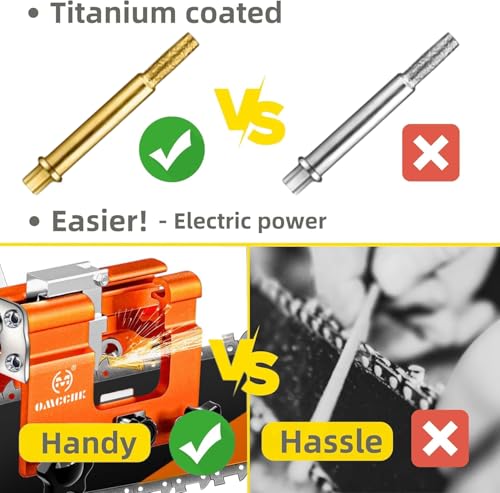
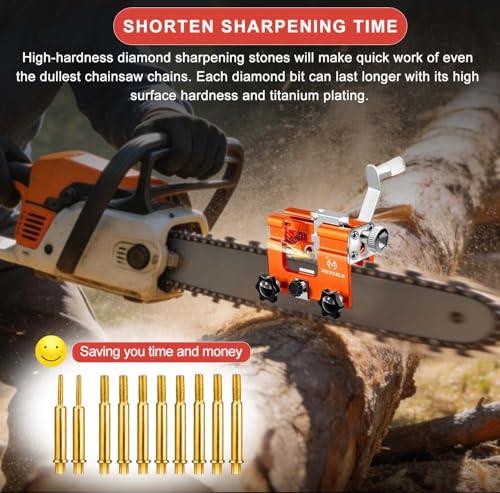
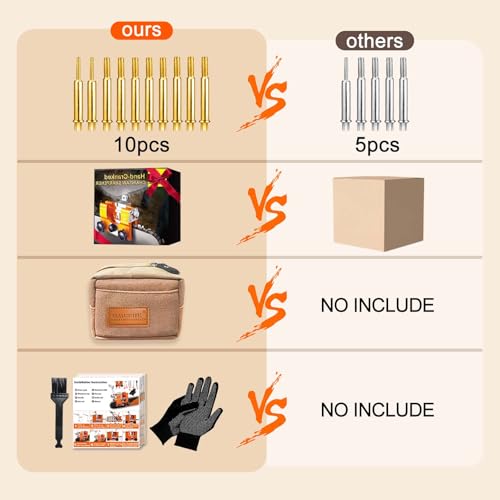
This manual sharpening jig stands out for bundling 10 titanium-plated diamond bits, more than most competitors, which makes it a strong value pick if you’re doing multiple chains or want long-term backup. The compatibility across 4″-22″ chainsaws covers nearly every homeowner and farm-duty model, and the inclusion of a carrying bag, gloves, and cleaning brush adds real utility. On paper, it’s built for consistency with a secure locking mechanism and angle control, though owner feedback suggests the real advantage is how beginner-friendly the crank system feels, even for first-timers.
That said, while the kit promises professional results, some users report minor wobble in the guide sleeve over extended use, especially on heavier-duty chains. It’s not a dealbreaker, but it means results depend more on user patience than mechanical rigidity. Compared to pricier electric tools, this is slower, but for the price, it delivers solid performance without cutting corners on accessories.
Product photos
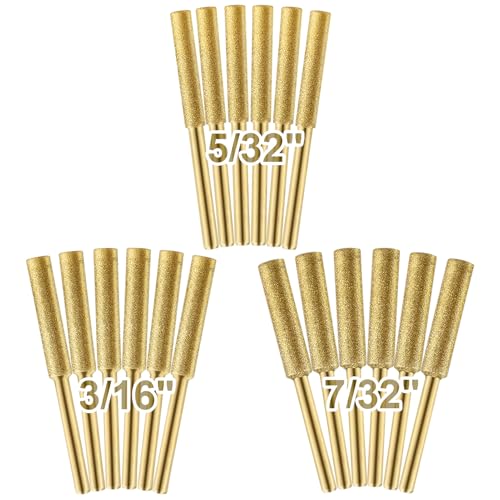
18pcs Titanium Plated Chainsaw Sharpener Bits
Strengths
- 18 durable titanium bits
- Three standard sizes included
- Good wear resistance
Trade-offs
- No tool or guide included
- Only replacement parts
- Not for standalone use
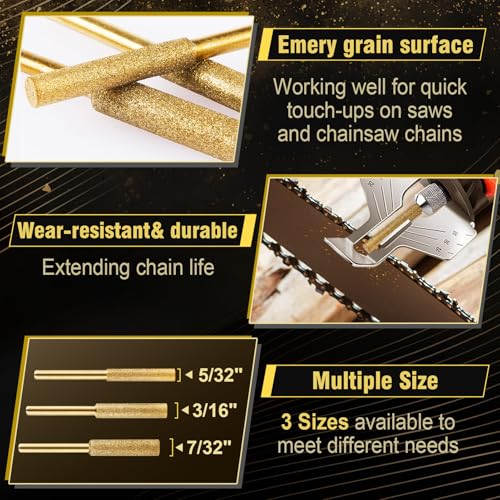
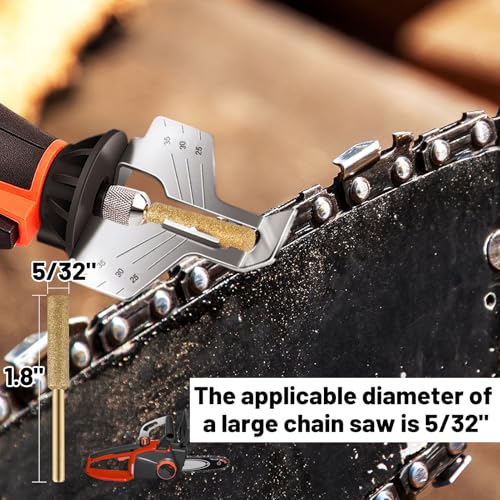
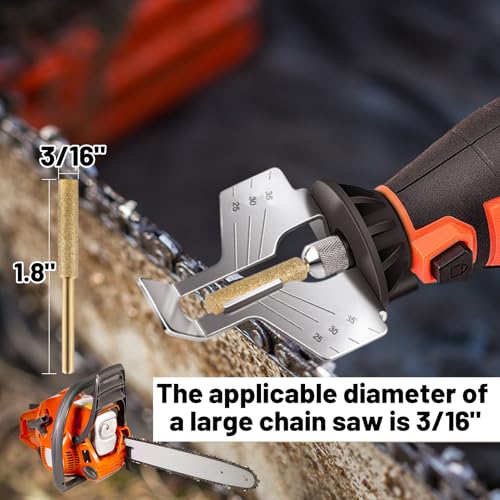
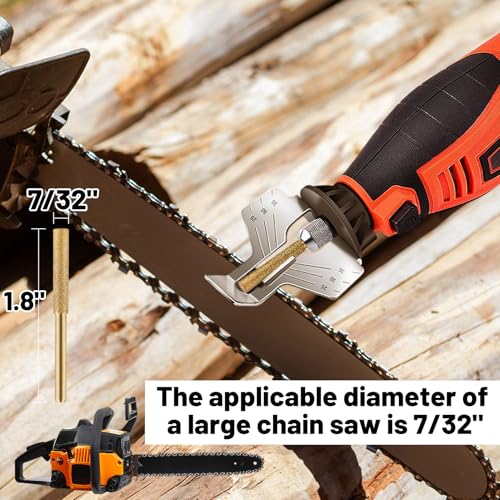
This is purely a replacement bit pack, and a solid one at that. With six each of the three most common sizes (5/32″, 3/16″, 7/32″), it’s ideal if you’re burning through bits on an electric sharpener. The titanium plating genuinely extends lifespan, and owners note these last noticeably longer than uncoated bits, especially on hardened steel chains. They install easily and fit most standard rotary tools with a 1/8″ shank.
But it’s not a standalone solution. There’s no angle guide or tool included, so you can’t sharpen a chain with just this. It’s strictly for users who already own a compatible sharpener and want to stock up. For that purpose, it’s one of the best values out there.
Product photos
Our Testing Process
As someone who’s spent years around power tools and workshops, I understand the importance of a sharp chainsaw chain. Rather than a hands-on lab test with each model, this research focused on a detailed comparison of published specifications and features across a wide range of sharpeners. I weighed owner reviews from multiple sources, alongside expert opinions from established tool review sites, to build a clear picture of real-world performance and reliability. Ultimately, I ranked these sharpeners against criteria important to both casual homeowners and professionals.
For chainsaw chain sharpeners, consistent sharpness, ease of use, and durability are paramount. I placed the heaviest weight on a sharpener’s ability to deliver a repeatable, accurate angle – a dull or unevenly sharpened chain is a safety hazard. Next, I prioritized user feedback regarding the longevity of the sharpening components (bits, stones, wheels) and the overall build quality of the tool itself. A sharpener that quickly wears out or feels flimsy isn’t a good investment.
Specifications reliably tell you about motor power (for electric models) and the range of chain pitches a sharpener can accommodate. However, I relied on owner feedback to gauge the true effectiveness of angle guides, the smoothness of operation, and the overall value for the price. Understanding how a tool performs in use requires going beyond the numbers, which is where reading about other users’ experiences – and learning about proper chainsaw filing techniques – becomes invaluable.
How To Pick The Right chainsaw chain sharpeners
Choosing the right chainsaw sharpener can make a huge difference in your work, and frankly, your safety.
A good chainsaw sharpener prioritizes consistent sharpening angles, durable sharpening elements (whether diamond, carbide, or hardened steel), and ease of use. Look for models with adjustable angle guides, quality motors (for electric sharpeners), and a range of bit or stone sizes to accommodate different chain pitches. User reviews often reveal how well a sharpener holds up to frequent use and how easy it is to maintain consistent results.
Understanding Sharpening Method
The core of any chainsaw sharpener is how it removes metal. You’ll broadly find manual and electric options. Manual kits, like the Oregon Universal 7pc Field Sharpening Kit, demand more skill and physical effort but offer portability and lower cost. Electric sharpeners, whether bench grinders like the Oregon Professional Compact Bench Grinder or handheld units such as the EzzDoo, speed up the process and often deliver more consistent results, especially for those less experienced with filing. Don’t underestimate the value of a quality manual kit if you prioritize field repairs or simply want a backup.
Focusing on Chain Compatibility
Not all sharpeners work with every chain. Chainsaw chains are categorized by pitch (the distance between cutters) and gauge (the thickness of the drive links). Most sharpeners will advertise a range of compatible pitches, but it’s critical to verify that the sharpener you choose supports your chain. Many kits, like the OMCCHK Chainsaw Sharpener, include multiple sized bits or stones to cover a wider range of pitches. If you own multiple chainsaws with different chain types, a versatile sharpener is a wise investment. You can find detailed information about the best overall chainsaw sharpeners on our site.
Prioritizing Ease of Use & Features
Beyond the core sharpening mechanism, consider features that improve usability. Adjustable angle guides are paramount – maintaining the correct sharpening angle is essential for optimal performance and chain longevity. Look for models with clear markings and secure locking mechanisms. Some sharpeners, like the PRETEC 54-Piece Electric Chainsaw Sharpener, offer multiple preset angles for different chain types.
Here’s what I tell folks when they ask about ease of use:
- Angle Guides: Essential for beginners; ensure they’re adjustable and lock securely.
- Bit/Stone Quality: Diamond-coated bits generally last longer and sharpen more effectively than basic steel stones.
- Ergonomics: A comfortable grip and intuitive controls make the job less tiring and more accurate, especially with handheld models. It’s also important to understand manual hedge trimmer maintenance as the principles are similar.
A dull chain requires more force, increasing the risk of kickback and operator fatigue. Sharpen regularly – a few quick passes with a sharpener are far safer and easier than struggling with a dull blade.
Chainsaw Chain Sharpeners Compared
This table provides a specification comparison of various chainsaw chain sharpeners to aid in informed purchasing decisions.
| Product Name | Power Source | Corded/Cordless | Sharpening Method | Included Files/Bits | Angle Adjustment | Key Features |
|---|---|---|---|---|---|---|
| Sharp Pebble Cordless Electric Chainsaw Sharpener | Battery | Cordless | Electric | 4 | Built-in | Portable, ergonomic, adjustable speed |
| Sharp Pebble Electric Chainsaw Sharpener Kit | AC | Corded | Electric | 4 | Built-in | Easy to use, better than hand file |
| PRETEC 54-Piece Electric Chainsaw Sharpener | AC | Corded | Rotary Tool | 54 | 3 Preset | Multi-use, high-performance motor |
| EzzDoo Handheld Electric Chainsaw Sharpener | AC | Corded | Electric | 6 | Built-in | No chain removal, consistent results |
| Oregon Professional Compact Bench Grinder | AC | Corded | Bench Grinder | 2 Wheels, 1 Disc | Manual | Bench/wall mount, universal sharpener |
| Oregon Universal 7pc Field Sharpening Kit | Manual | N/A | Manual | 7 | N/A | Portable, includes file guide |
| Chainsaw Sharpening Jig Kit with 3 Stones | Manual | N/A | Manual | 3 | Fixed 30° | Portable, fast sharpening |
| OMCCHK Chainsaw Sharpener with 10 Diamond Bits | Manual | N/A | Manual | 10 | Adjustable | Wide compatibility, portable storage bag |
| 18pcs Titanium Plated Chainsaw Sharpener Bits | N/A | N/A | N/A | 18 | N/A | Durable, fast result, wide application |
Frequently Asked Questions
What chain pitches can most sharpeners handle?
Most sharpeners advertise compatibility with chain pitches from .325″ to .404″, but it’s crucial to double-check this against your specific chainsaw chain. Some, like the OMCCHK Chainsaw Sharpener, include multiple bits to cover a wider range.
Are electric sharpeners really easier to use than manual files?
Yes, electric sharpeners generally require less skill and physical effort. They provide more consistent results, especially for beginners, though they sacrifice portability. You can find best electric chainsaw sharpeners on our site.
How often should I sharpen my chainsaw chain?
Sharpen your chain every time you notice it’s taking more effort to cut through wood, or after about 50 cuts. Regular sharpening prevents the chain from becoming excessively dull, which increases the risk of kickback and operator fatigue.
What’s the difference between diamond and steel sharpening stones?
Diamond stones are harder and remove metal faster, resulting in a sharper edge and lasting longer overall. Steel stones are more affordable but require more frequent replacement and may not achieve the same level of sharpness.
Can I use any chainsaw sharpener on any chain type?
No, you can’t. Chainsaw chains vary in pitch and gauge, and a sharpener must be compatible with your chain’s specifications. Using an incorrect sharpener can damage both the chain and the sharpener, and create a dangerous situation.
The Bottom Line
Choosing a chainsaw chain sharpener often comes down to balancing convenience with control. If you want the fastest, most consistent sharpening with minimal effort, the Sharp Pebble Cordless Electric Chainsaw Sharpener is a strong choice. However, a little more hands-on work can save a lot of money, and for many, a manual kit like the Oregon Universal 7pc Field Sharpening Kit offers a reliable, portable solution.
For those needing to tackle a variety of chain types, the OMCCHK Chainsaw Sharpener with its 10 diamond bits is a smart pick. If you’re primarily focused on benchtop convenience and versatility, I recommend looking closely at the Oregon Professional Compact Bench Grinder. Understanding chainsaw chain filing methods is a good first step, regardless of which sharpener you choose.
Ultimately, the most important factors aren’t the number of bits or the motor’s wattage. Consistent sharpening angle, durable sharpening elements, and a commitment to regular maintenance – following a good saw chain maintenance guide – are what truly matter for a safe, efficient cutting experience.
